U4L2 - Lecture Presentation - Cellular Respiration
Presentation
•
Biology
•
9th - 12th Grade
•
Practice Problem
•
Easy
+3
Standards-aligned
Bryan Vaughan
Used 12+ times
FREE Resource
16 Slides • 9 Questions
1
Lesson 2
2
3
4
5
6
7
8
9
10
11
12
13
14
15
16
17
Multiple Choice
[B-LS1-7] Cellular Respiration 2 - Skill/Concept (SPT)
Which statement is true about aerobic and anaerobic cellular respiration?
Both aerobic and anaerobic cellular respiration produce ATP, which stores energy for the cell.
Both aerobic and anaerobic cellular respiration produce ATP in the absence of oxygen.
Aerobic cellular respiration produces ATP, while anaerobic cellular respiration does not produce any ATP.
Anaerobic cellular respiration produces ATP, while aerobic cellular respiration does not produce any ATP.
18
Multiple Choice
[B-LS1-7] Cellular Respiration 1 - Recall
Which molecule is used by cells as an energy source?
ATP
DNA
phosphate
oxygen
19
Multiple Choice
[B-LS1-7] Cellular Respiration1 - Recall
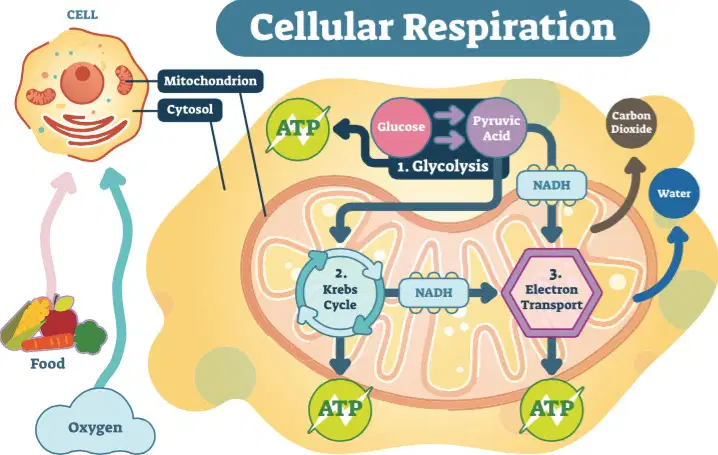
Most of the ATP made during cellular respiration is produced in which organelle?
ribosomes
Krebs cycle
mitochondria
Golgi apparatus
20
Multiple Choice
[B-LS1-7] Cellular Respiration 1 - Recall
What substance is a reactant, along with oxygen, in cellular respiration?
fat
sugar
water
carbon dioxide
21
Multiple Choice
[B-LS1-7] Cellular Respiration 1 - Recall
The chemical process for respiration...
releases ADP.
releases oxygen.
releases glucose.
releases energy.
22
Multiple Choice
[B-LS1-7] Cellular Respiration 2 - Skill/Concept (SPT)
The diagram shows how sheep use food and oxygen to begin the process of cellular respiration.
Which statement best describes the total number of carbon atoms during cellular respiration in the sheep?
The total number of carbon atoms stays the same because the carbon from the carbon-containing food molecules is used to make molecules such as carbon dioxide.
The total number of carbon atoms decreases because the carbon from the carbon-containing food molecules changes into other types of atoms.
The total number of carbon atoms increases because the carbon-containing molecules from the food are used to make smaller carbon dioxide molecules.
The total number of carbon atoms decreases because the carbon-containing molecules from the food are destroyed during digestion.
23
Multiple Choice
[B-LS1-7] Cellular Respiration 1 - Recall
The animals in the food web release _____________ into the environment, which plants then use for ___________.
oxygen:
respiration
carbon dioxide:
respiration
water vapor:
photosynthesis
carbon dioxide:
photosynthesis
24
Multiple Choice
[B-LS1-7] Cellular Respiration 1 - Recall
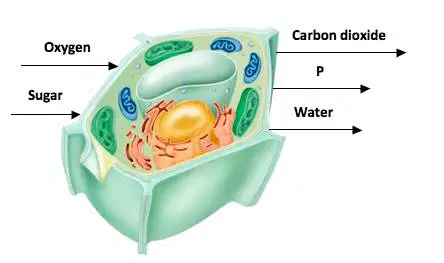
What is the product P?
Energy
Glucose
Hydrogen
Nitrogen
25
Multiple Choice
[B-LS1-7] Cellular Respiration1 - Recall
Most of the ATP made during cellular respiration is produced in which organelle?
Responses
A
ribosomes - no response given
B
Krebs cycle - no response given
C
mitochondria - not selected, this is the correct answer
D
ribosomes
Krebs cycle
mitochondria
Golgi apparatus
Lesson 2
Show answer
Auto Play
Slide 1 / 25
SLIDE

Similar Resources on Wayground
21 questions
Photosynthesis
Presentation
•
9th - 12th Grade
20 questions
Environmental Science Biospheres
Presentation
•
9th - 12th Grade
17 questions
Nuclear Decay
Presentation
•
9th - 12th Grade
17 questions
Intro to Blood Flow
Presentation
•
9th - 12th Grade
16 questions
Cell Cycle and Cancer Lesson
Presentation
•
9th - 12th Grade
20 questions
Properties of Water
Presentation
•
9th - 12th Grade
20 questions
Structure and Function: How Living Things Work
Presentation
•
9th - 12th Grade
16 questions
Cellular Respiration
Presentation
•
9th - 12th Grade
Popular Resources on Wayground
10 questions
HCS SCI 03 Summer School Review 4
Quiz
•
3rd Grade
11 questions
HSMS - Standard Response Protocol
Quiz
•
6th - 8th Grade
16 questions
1.1-1.2 Quiz Review
Quiz
•
9th - 12th Grade
12 questions
Exponent Expressions
Quiz
•
6th Grade
20 questions
Adding and Subtracting Integers
Quiz
•
6th - 7th Grade
11 questions
Northeast States
Quiz
•
3rd - 4th Grade
10 questions
Characterization
Quiz
•
3rd - 7th Grade
10 questions
Common Denominators
Quiz
•
5th Grade