
Gas Exchange, Shark Eyes, and Otoliths
Authored by Dana Betancur
Science
12th Grade
NGSS covered
Used 5+ times


AI Actions
Add similar questions
Adjust reading levels
Convert to real-world scenario
Translate activity
More...
Content View
Student View
10 questions
Show all answers
1.
MATCH QUESTION
5 mins • 3 pts
Match the following eye structures with their function.
Contains rods and cones
Retina
Closes like an eyelid to protect eye
Iris
Constricts and dilates the pupil
Tapetum Lucidum
Reflects light through retina 2nd time
Nictitating Membrane
Stretches and condenses to focus light
Lens
2.
CATEGORIZE QUESTION
5 mins • 7 pts
Organize these visual features into the right categories
Groups:
(a) Shark Eye
,
(b) Both
,
(c) Human Eye
Nictitating membrane acts as a bottom eyelid
Spherical lens (very round)
Retina contains rods for black and white vision and cones for color vision
Two eyelids protect the eye and use eyelashes to block debris
Visual accommodation can last 30 min - few hours
Iris dilates pupil to allow more light when dim and constricts to limit light when bright
Lens accommodates far vision by stretching and close vision by condensing
Optical nerve carries visual information to the brain for interpretation
Tapetum lucidum enables night vision by bouncing light through retina an extra time
Aqueous humor in anterior chamber
Vitreous humor in posterior chamber
Visual accommodation takes seconds
Lens with flattened surface
3.
LABELING QUESTION
5 mins • 3 pts
Label the structures involved in gas exchange.
Caudal Gills
Gill Filaments
Dorsal Gills
Gill Rakers
Spiracle
Gill Arch
Lamellae
Operculum
4.
REORDER QUESTION
5 mins • 3 pts
Put the steps of gas exchange in an osteichthyan in order from earliest to latest.
The fish closes its mouth and constricts its buccal cavity
Countercurrent gas exchange occurs as water moves over the gills the opposite direction of blood flow
The fish opens its mouth and expands its buccal cavity
The resulting high pressure forces water to pass over the gill filaments on its way out the operculum
The low pressure created by the large cheek/mouth cavity draws water in
Tags
NGSS.HS-LS1-3
5.
DRAG AND DROP QUESTION
10 mins • 3 pts
Both Branchial Pumping and Ram Ventilation are strategies to (a) the speed of water as it passes over the gills in order to (b) the slowing force of friction. Branchial pumping involves muscular compressions of the pharynx that create (c) pressure and force water over the gills faster. Ram ventilation involves the fish swimming continuously forward to keep water moving into the mouth and out through the gill slits or operculum. (d) ram ventilators can never stop swimming because they would (e) to access oxygen if they did. However, some fish can switch between strategies.
Tags
NGSS.MS-LS2-3
6.
DRAW QUESTION
3 mins • 1 pt
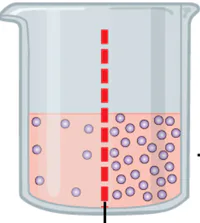
Draw arrows showing the direction the purple particles would passively move.
7.
MULTIPLE CHOICE QUESTION
3 mins • 1 pt
What is the name of the stone-like bones responsible for balance, orientation, and hearing?
Otoliths
Tapetum lucidums
Cephalic regions
Lithogenous sediments
Scleras
Access all questions and much more by creating a free account
Create resources
Host any resource
Get auto-graded reports

Continue with Google

Continue with Email

Continue with Microsoft
or continue with

%20(1).png)
Apple

Others
By signing up, you agree to our Terms of Service & Privacy Policy
Already have an account?


