
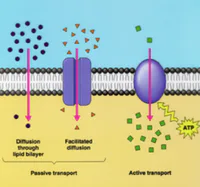
Copy of TWC - Cellular Transport 1_2025

Presentation
•
Science
•
9th Grade
•
Practice Problem
•
Easy
Standards-aligned

Donielle Alexander-Blake
Used 4+ times
FREE Resource
19 Slides • 16 Questions
1
2
3
4
Multiple Choice
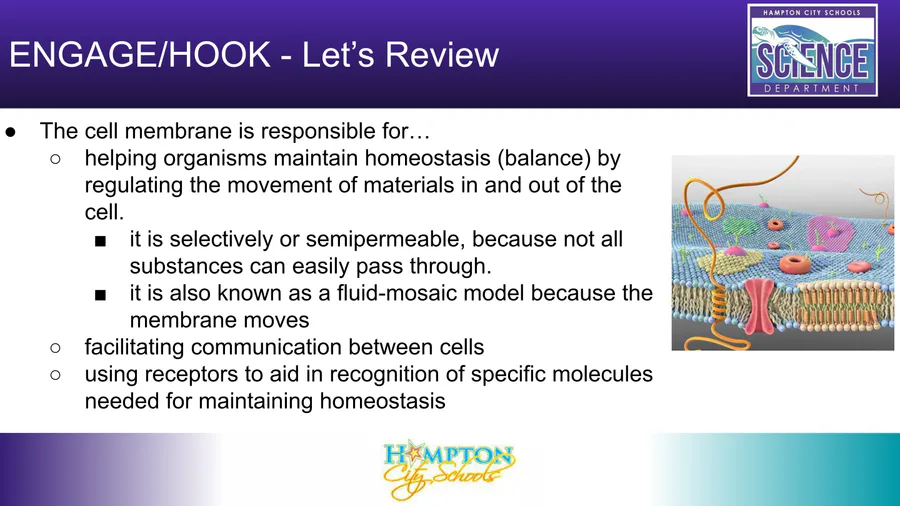
Which of the following is NOT a function of the cell membrane?
Facilitating communication between cells
Regulating movement of materials in and out of the cell
Producing energy for the cell
Using receptors to recognize specific molecules
5
6
7
8
9
Multiple Choice
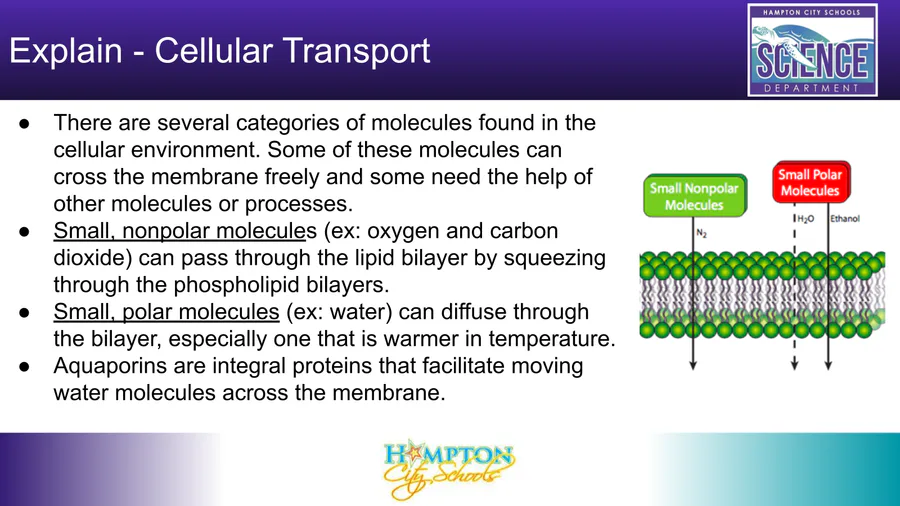
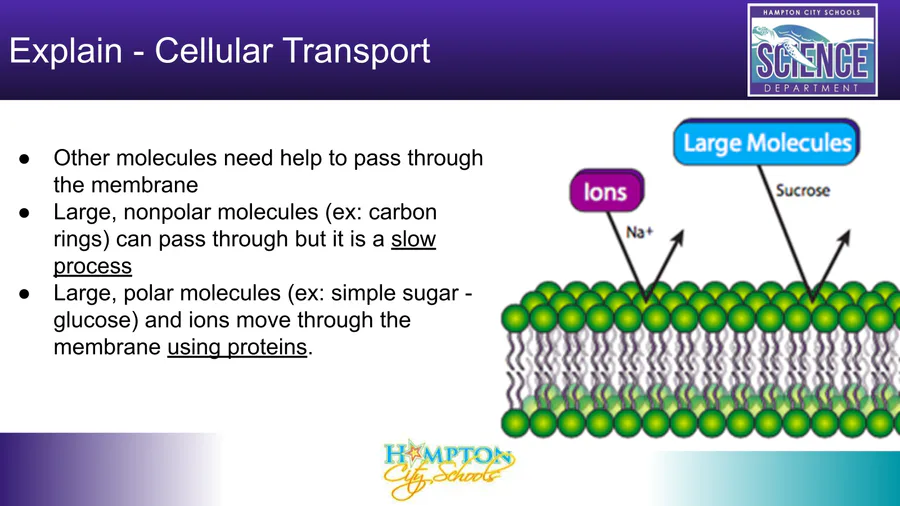
Which molecules can pass freely through the lipid bilayer of the cell membrane?
Large polar molecules
Small nonpolar molecules
Ions
Proteins
10
11
Multiple Select
Select all statements that correctly describe how molecules move across the cell membrane. (pick 3)
Small nonpolar molecules can pass freely through the lipid bilayer.
Large polar molecules require proteins to move through the membrane.
Aquaporins help move water molecules across the membrane.
Ions can pass through the membrane without any help.
12
Fill in the Blanks
Large polar molecules and ions move through the cell membrane using
13
14
Multiple Choice
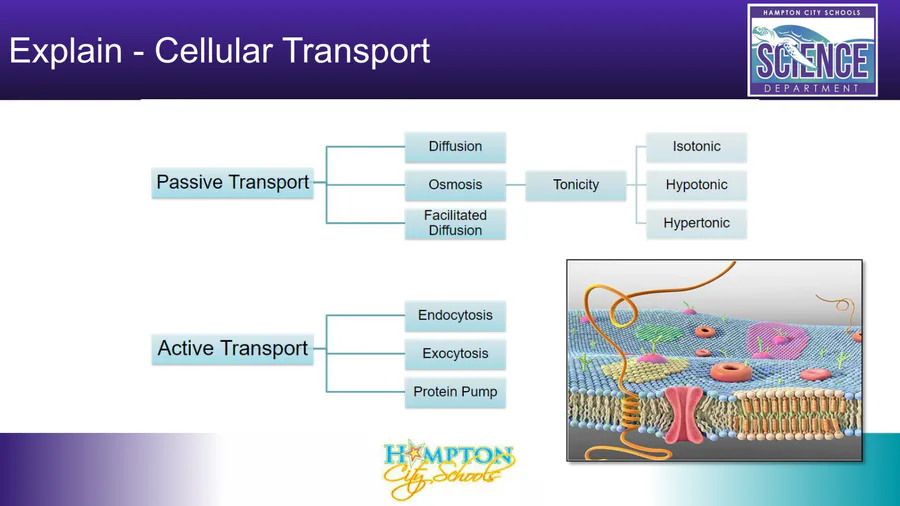
Which of the following is NOT a type of passive transport?
Diffusion
Osmosis
Facilitated diffusion
Endocytosis
15
16
Multiple Select
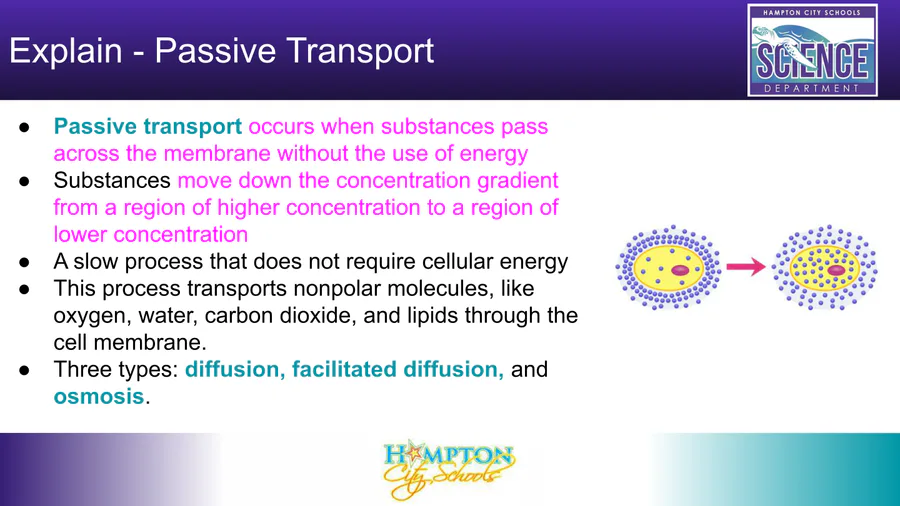
Which of the following molecules can be transported by passive transport? (pick 3)
Oxygen
Glucose
Water
Carbon dioxide
17
Open Ended
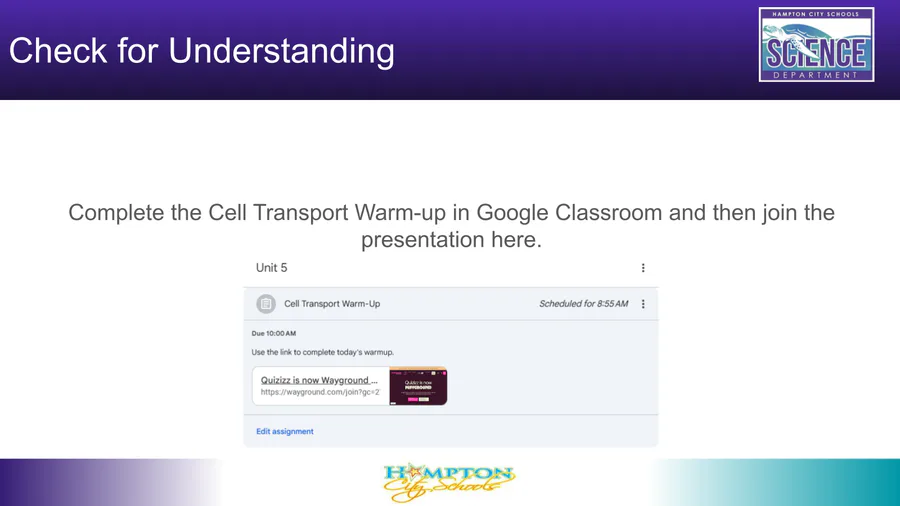
Explain how passive transport differs from active transport in terms of energy usage and direction of molecule movement.
18

19
Fill in the Blanks
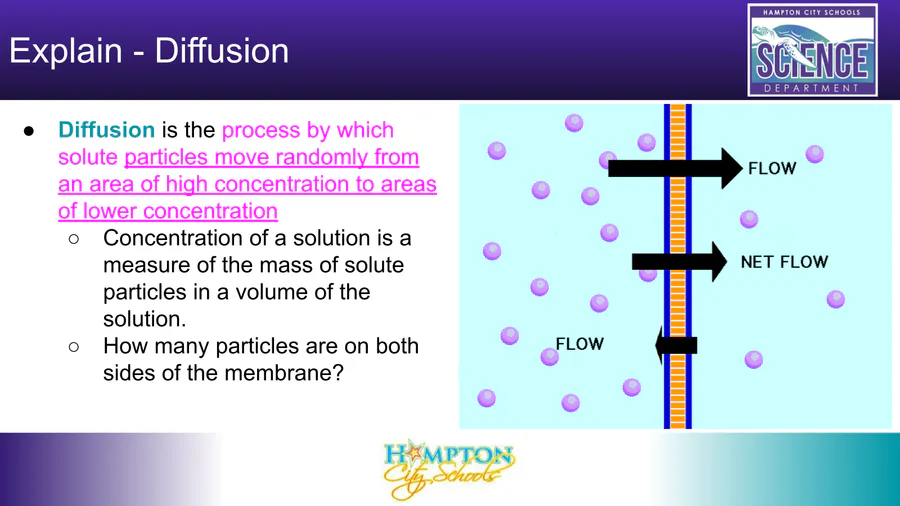
Diffusion is the process by which solute particles move randomly from an area of
20
21
Open Ended
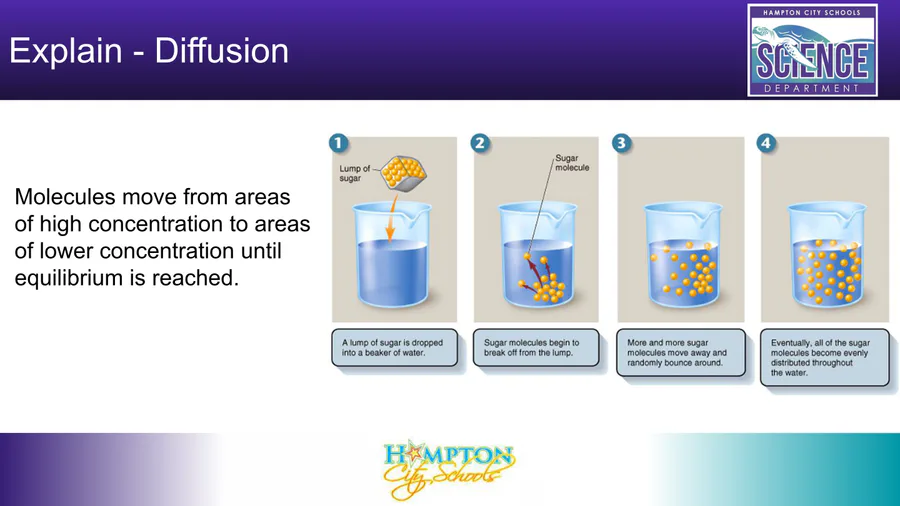
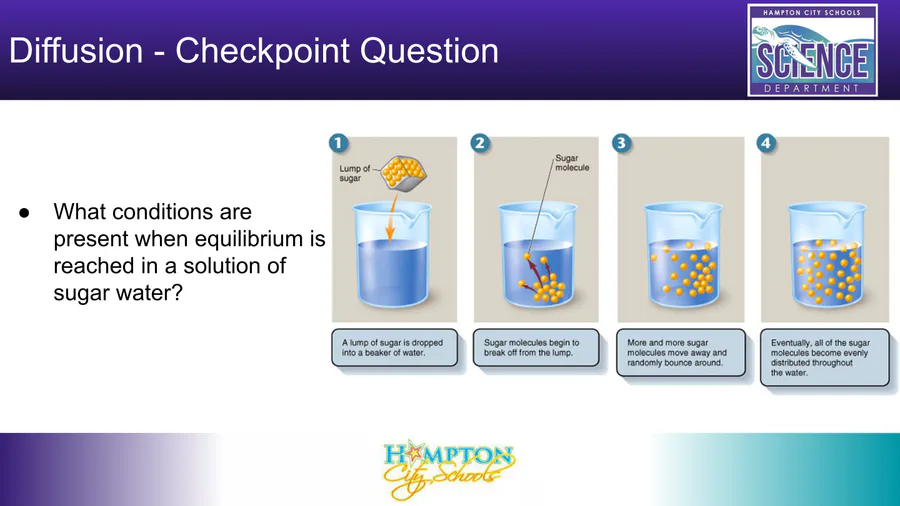
Describe what happens to sugar molecules when a lump of sugar is dropped into water, according to the process of diffusion.
22
23
24
Multiple Choice
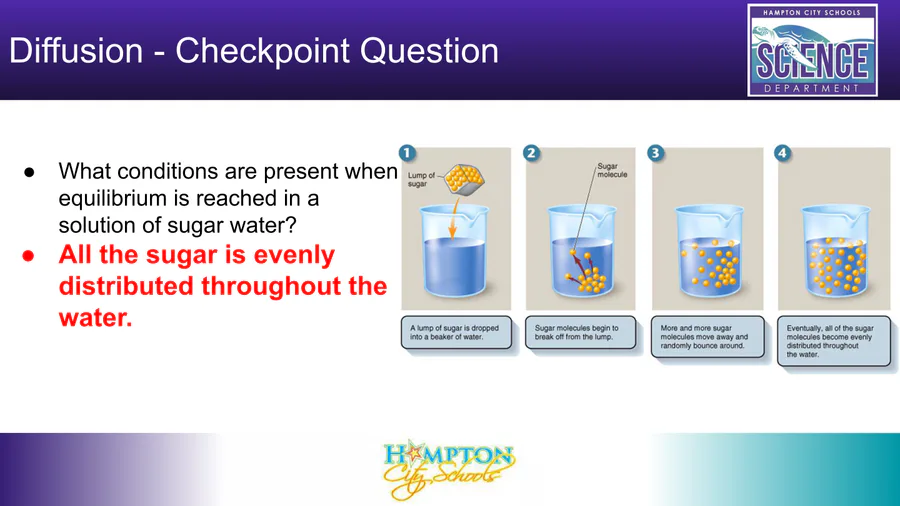
What conditions are present when equilibrium is reached in a solution of sugar water?
All sugar is evenly distributed throughout the water
25
26
Multiple Choice
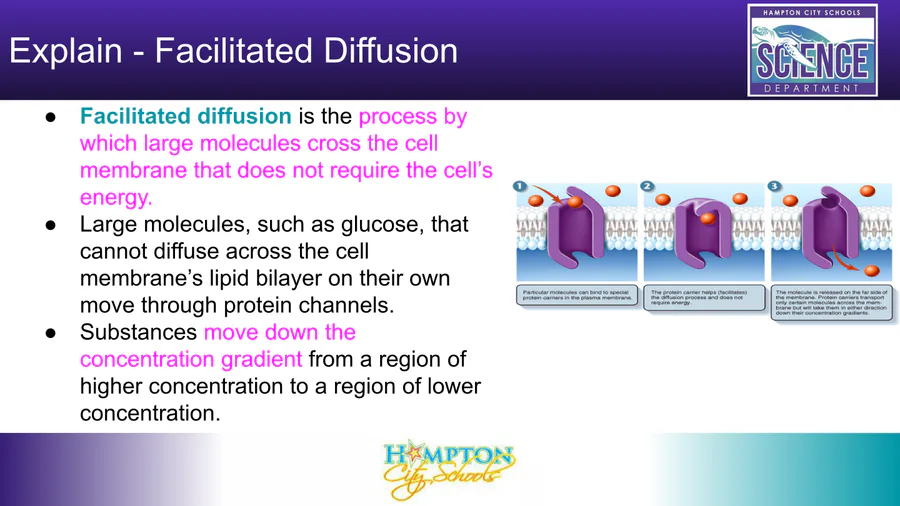
Which process allows large molecules like glucose to cross the cell membrane without using the cell's energy?
Active transport
Facilitated diffusion
Osmosis
Simple diffusion
27
28
Fill in the Blanks
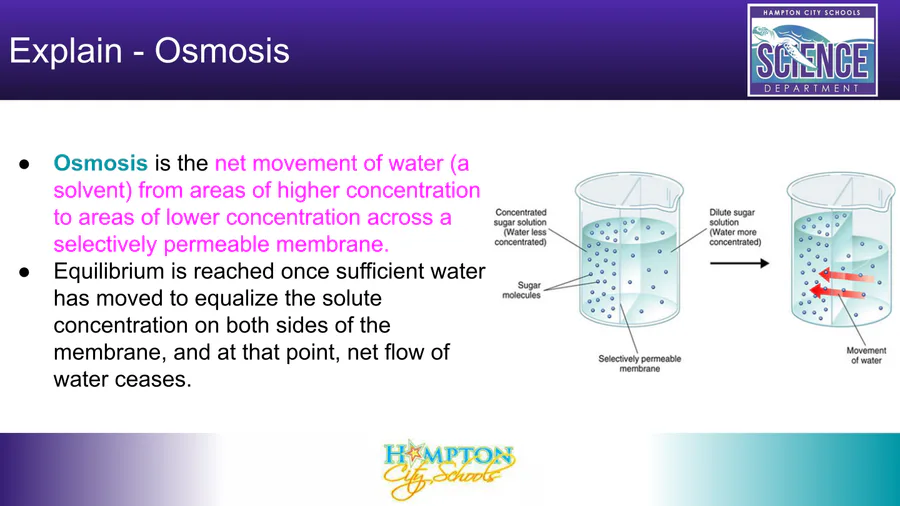
The net movement of WATER across a selectively permeable membrane is called
29
Open Ended
Explain how osmosis helps achieve equilibrium in a cell. What role does the selectively permeable membrane play in this process?
30
31
Multiple Select
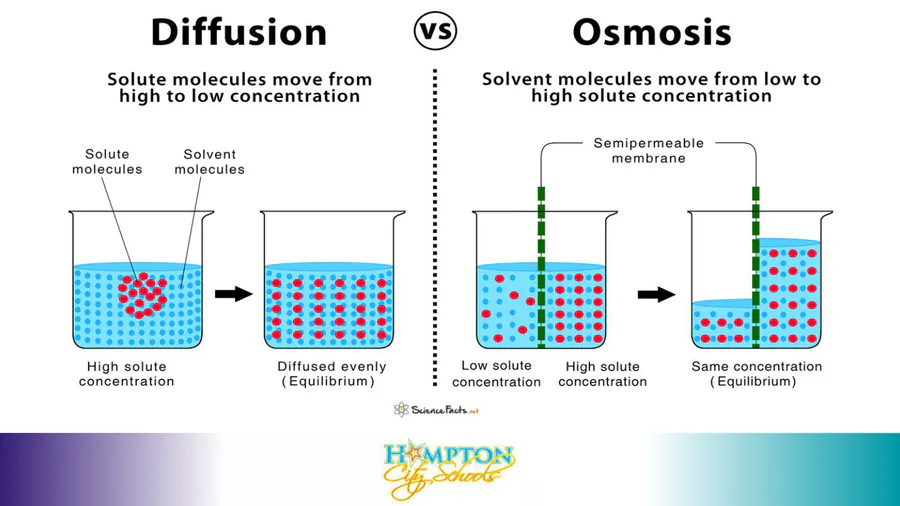
Which of the following statements are true about the movement of molecules in diffusion and osmosis? (pick 3)
Diffusion involves solute molecules moving from high to low concentration.
Osmosis involves solvent molecules moving from low to high solute concentration.
Both processes reach equilibrium.
Osmosis requires a semipermeable membrane.
32
33
Fill in the Blanks
Cellular transport is essential for maintaining
34
Open Ended
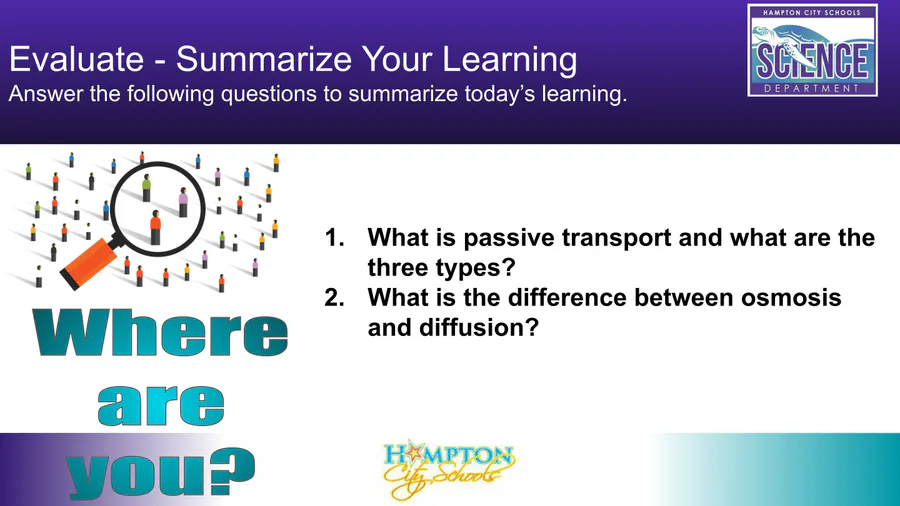
What questions do you still have about cellular transport after today's lesson?
35
Show answer
Auto Play
Slide 1 / 35
SLIDE
Similar Resources on Wayground

31 questions
Light Waves
Presentation
•
8th - 9th Grade
29 questions
Plate Tectonics
Presentation
•
9th Grade
29 questions
Cohesion, Adhesion, and Surface Tension
Presentation
•
8th Grade
28 questions
Atoms and the Periodic Table Review
Presentation
•
8th Grade
27 questions
Modeling Chemical Reactions
Presentation
•
8th Grade
30 questions
Wetlands
Presentation
•
9th Grade
31 questions
Understanding Chemical Reactions
Presentation
•
9th Grade
28 questions
Transcription and Translation
Presentation
•
9th - 10th Grade
Popular Resources on Wayground
10 questions
Safety Day 2026 – Student Review

Quiz
•
9th Grade
21 questions
Continents and Oceans
Quiz
•
6th Grade
20 questions
Parts of Speech
Quiz
•
5th Grade
16 questions
Subject & Predicate
Quiz
•
5th Grade
25 questions
Multiplication Facts
Quiz
•
5th Grade
12 questions
Map Skills
Quiz
•
3rd Grade
22 questions
Continents and Oceans
Quiz
•
5th Grade
15 questions
Rounding Decimals
Quiz
•
5th Grade
Discover more resources for Science
10 questions
Exploring Chemical and Physical Changes

Interactive video
•
6th - 10th Grade
20 questions
Atomic Structure
Quiz
•
9th Grade
10 questions
Exploring the Electromagnetic Spectrum for Middle School Science
Interactive video
•
6th - 10th Grade
10 questions
Exploring Force and Motion Concepts
Interactive video
•
6th - 10th Grade
10 questions
Exploring Air Masses and Weather Fronts
Interactive video
•
6th - 10th Grade
10 questions
Exploring the States of Matter
Interactive video
•
6th - 10th Grade
10 questions
Exploring Forces: Net Force, Normal Force, Gravity, and Friction
Interactive video
•
6th - 10th Grade
10 questions
Differentiating Thermal Energy and Temperature
Interactive video
•
6th - 10th Grade