Search Header Logo
Muscular System Revision

Muscular System Revision

Assessment

Presentation

•

Physical Ed

•

11th Grade

•

Practice Problem

•

Hard

Created by

Jade Burke

FREE Resource

19 Slides • 19 Questions

1
media

2

media

3

media

4

media

5

media

6

Multiple Choice

Question image
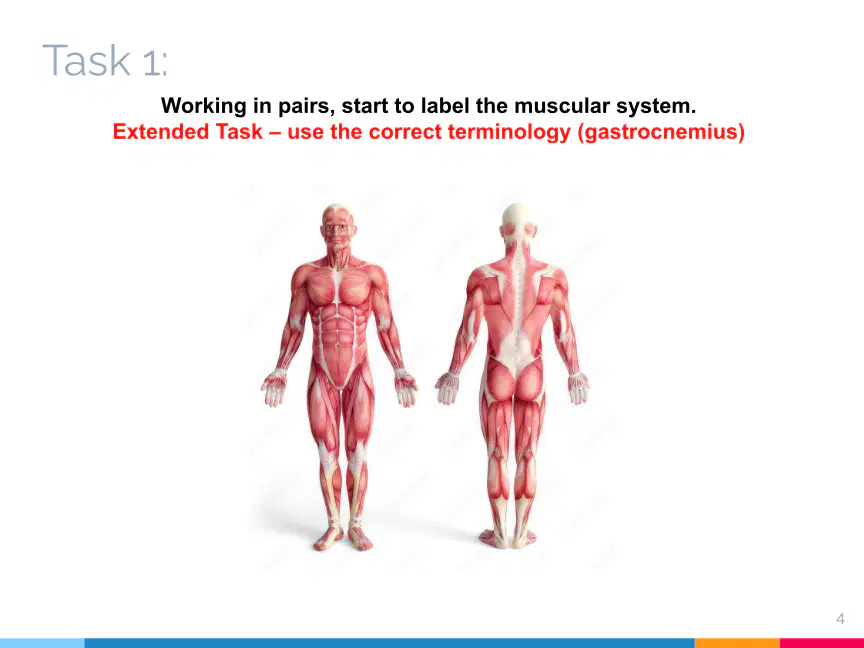
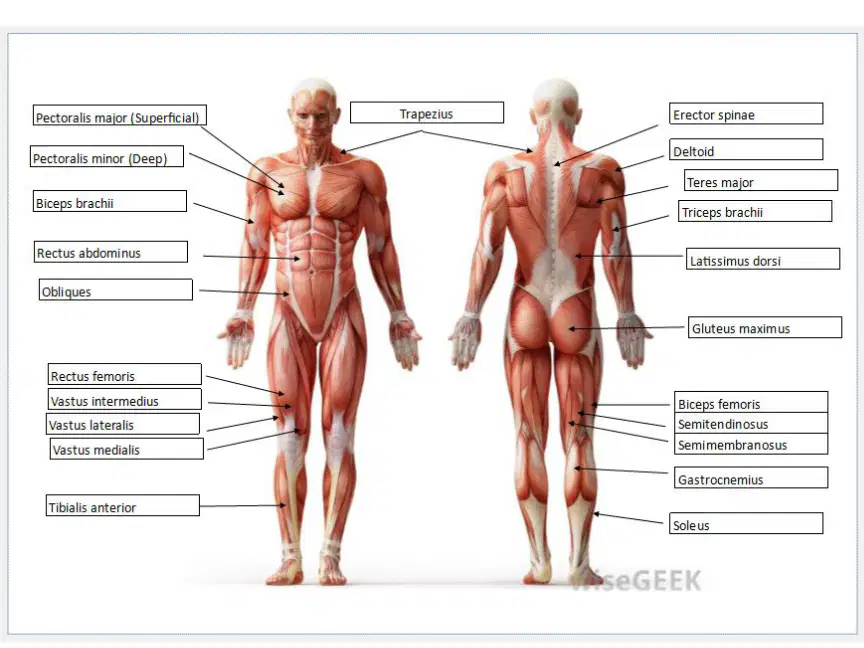
Identify this muscle:
1
latissimus dorsi
2
pectoralis major
3
gluteus maximus
4
masseter

7

media

8

Multiple Choice

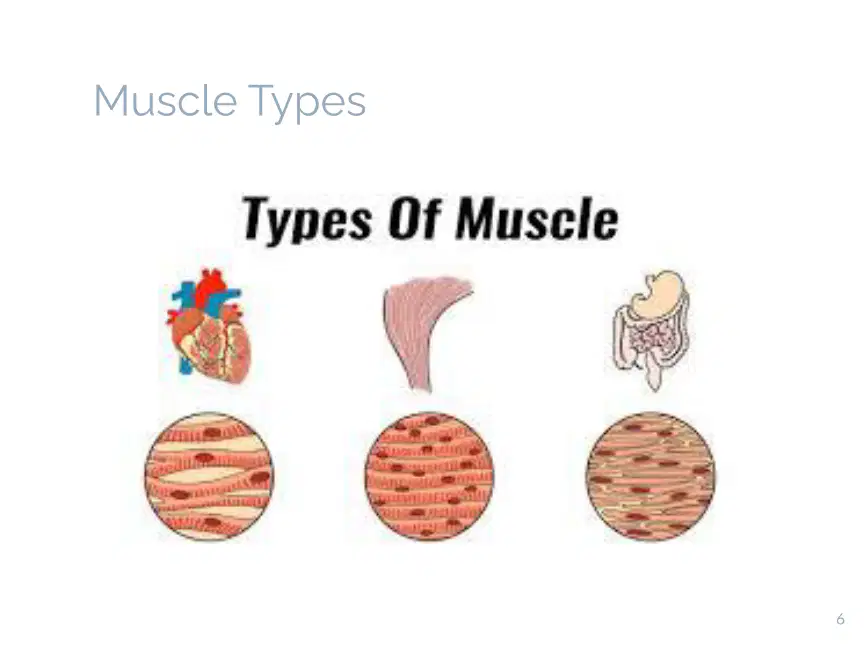
What are the three types of muscle shown in the image?

1

Cardiac Muscle

2

Skeletal Muscle

3

Smooth Muscle

4

Nervous Muscle

9

media

10

Multiple Choice

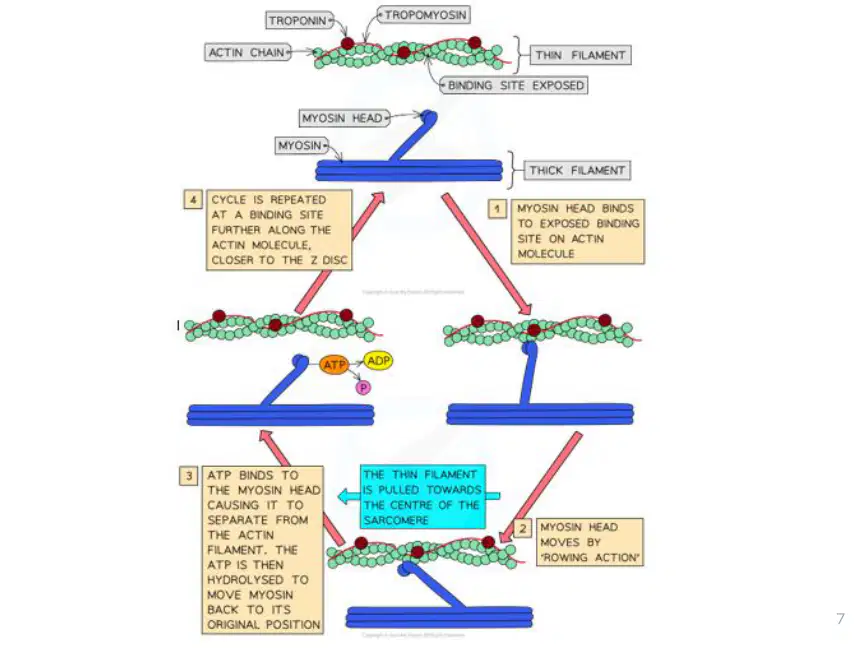
What is the role of ATP in the muscle contraction cycle as illustrated in the image?

1

To bind to the myosin head

2

To expose binding sites on actin

3

To pull the thin filament towards the center of the sarcomere

4

To hydrolyze and move myosin back to its original position

11

media

12

Multiple Choice

What is the definition of isometric contraction?

1

Muscle length stays the same whilst contracting

2

Muscle length increases during contraction

3

Muscle length decreases during contraction

4

Muscle length varies during contraction

13

media

14

Multiple Choice

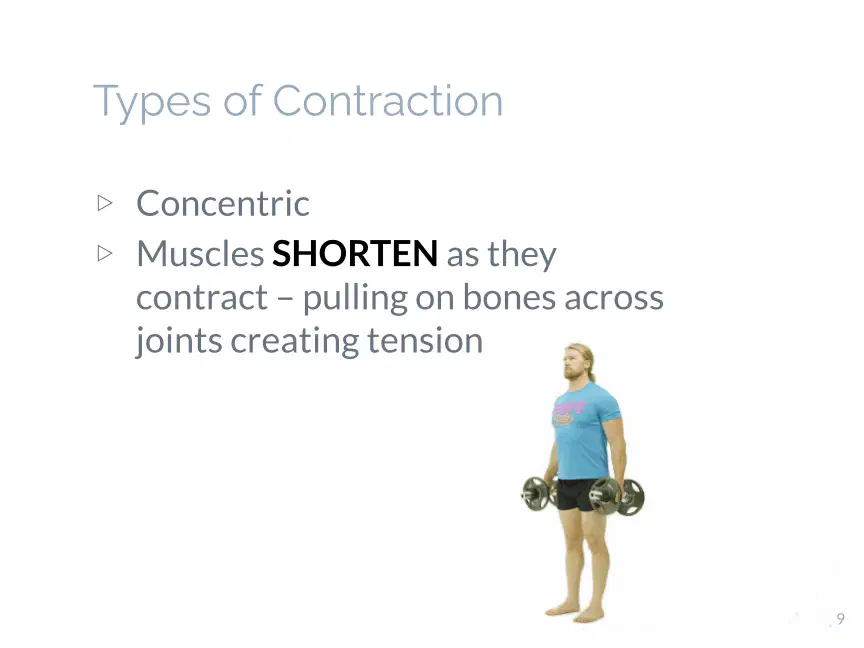
What happens to muscles during concentric contraction?

1

They lengthen

2

They shorten

3

They stay the same

4

They relax

15

media

16

Multiple Choice

What is the type of muscle contraction where muscles work against gravity and lengthen?

1

Concentric

2

Eccentric

3

Isometric

4

Static

17

media

18

Multiple Select

Question image

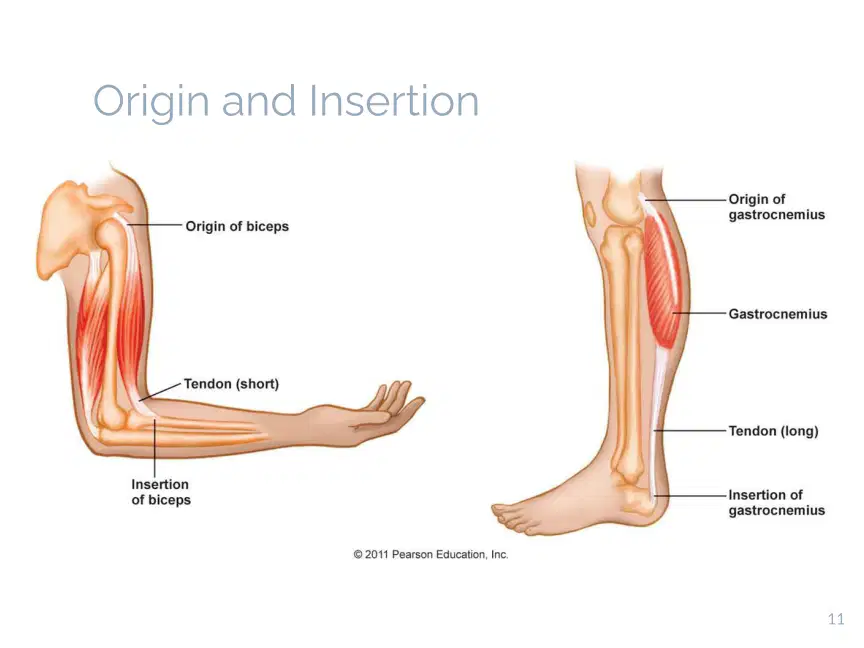
Your bicep muscle is attached to the scapula at one end and the radius at the other. When you contract the bicep muscle, the scapula remains stationary, while the radius, a bone of your forearm, moves. Which of the following statements about the origin and insertion of the bicep muscle is true? Select all that apply.

1

Origin of the muscle is the end attached to the scapula

2

Insertion of the muscle is the end attached to the scapula

3

Origin of the muscle is the end attached to the radius

4

Insertion of the muscle is the end attached to the radius

19

media

20

Multiple Choice

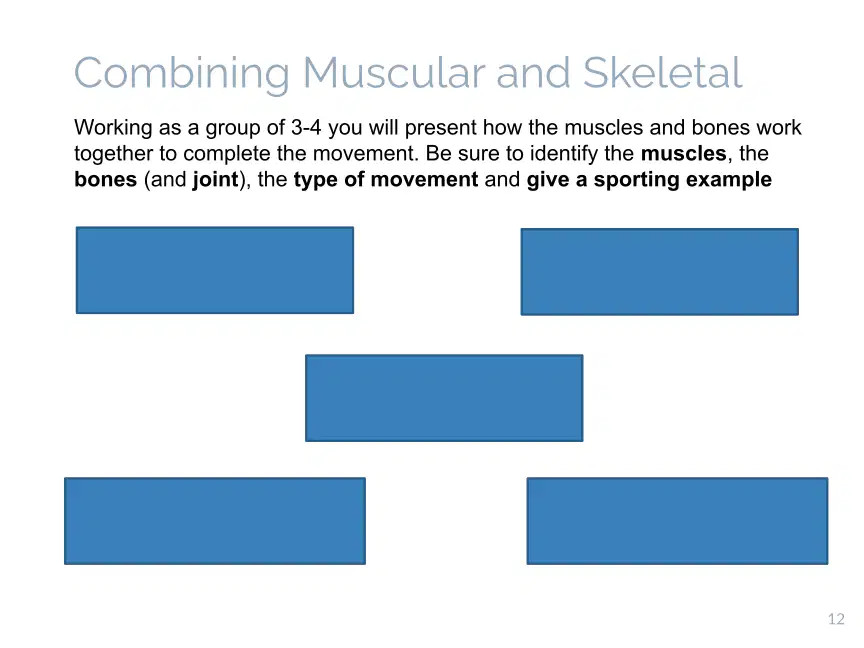
What are the muscles and bones involved in a specific movement? Provide a sporting example.

1

Muscles

2

Bones

3

Type of movement

4

Sporting example

21

media

22

media

23

Multiple Choice

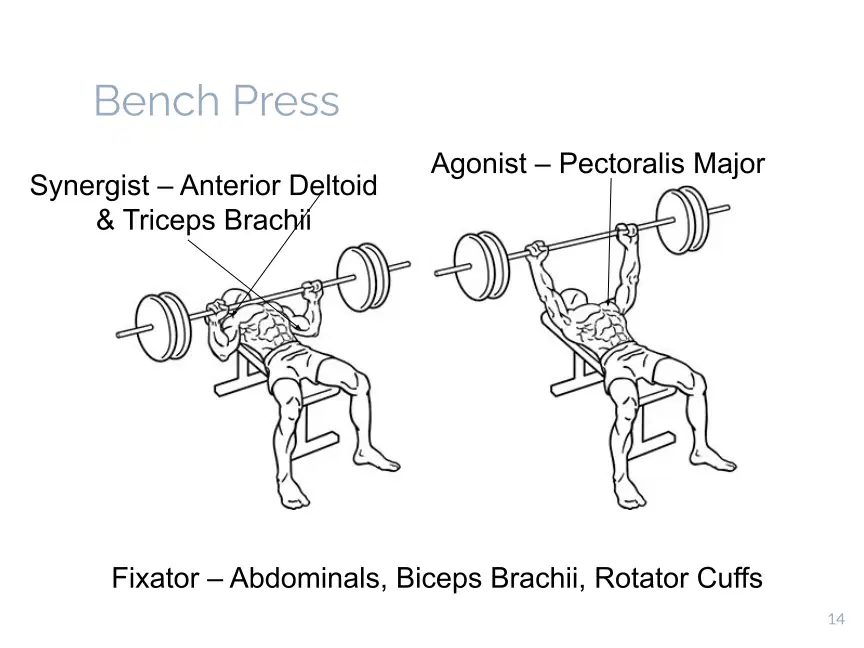
What are the roles of the muscles involved in the bench press?

1

Agonist

2

Synergist

3

Fixator

4

Antagonist

24

Multiple Choice

Which of these muscle pairs are agonists (aka: synergists)?

1

rhomboids /

serratus anterior

2

levator scapulae /

pec minor

3

biceps / brachioradialis

4

pectoralis major / deltoid

25

media

26

Multiple Choice

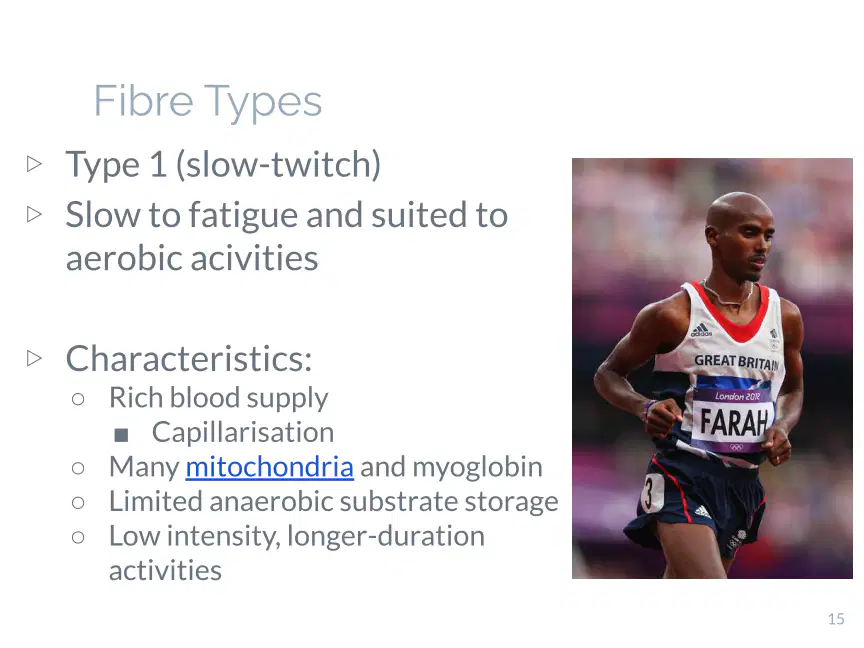
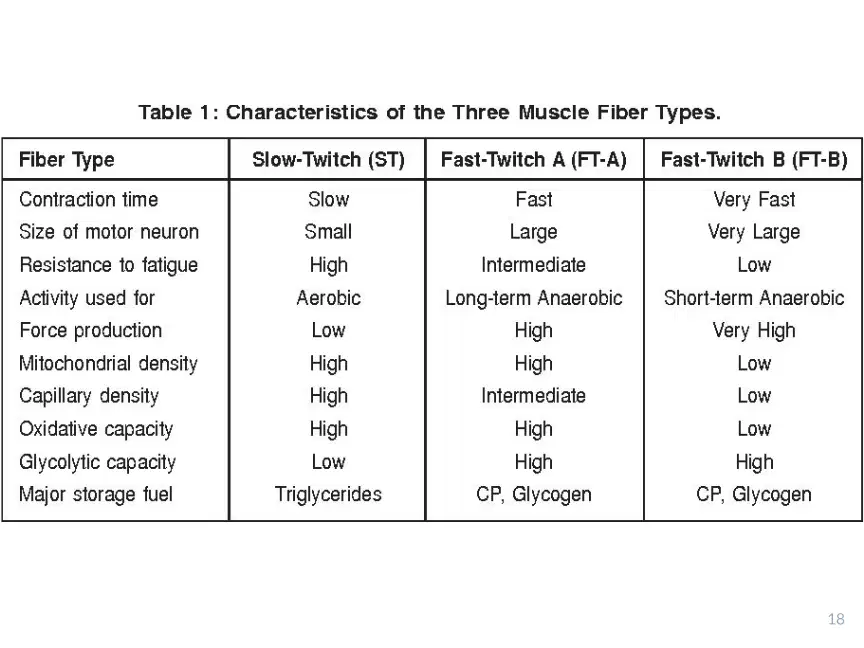
What are the characteristics of Type 1 (slow-twitch) muscle fibers?

1

Rich blood supply

2

Limited anaerobic substrate storage

3

Many mitochondria and myoglobin

4

Low intensity, longer-duration activities

27

media

28

Multiple Choice

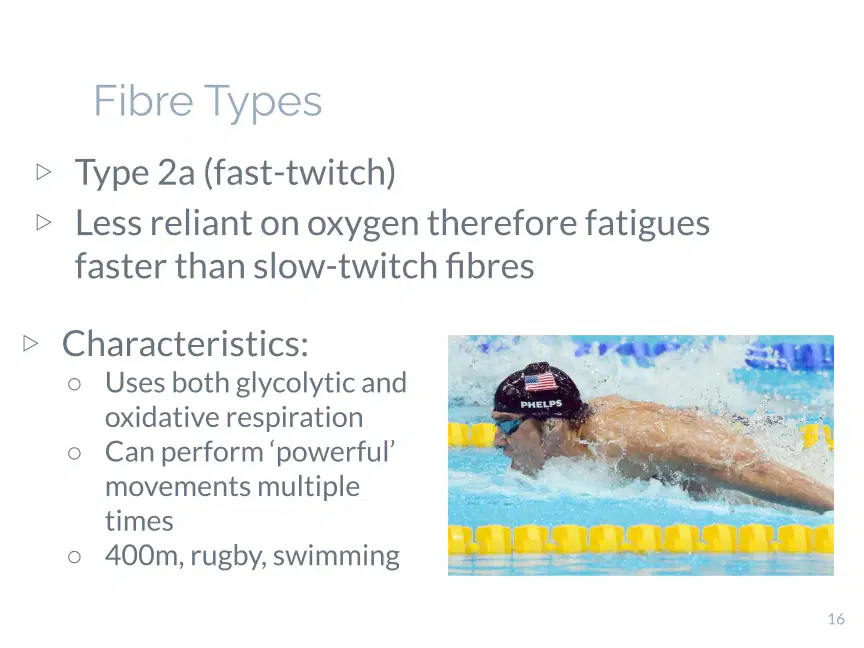
What are the characteristics of Type 2a (fast-twitch) muscle fibers?

1

Uses only glycolytic respiration

2

Fatigues slower than slow-twitch fibers

3

Can perform powerful movements multiple times

4

More reliant on oxygen than slow-twitch fibers

29

media

30

Multiple Choice

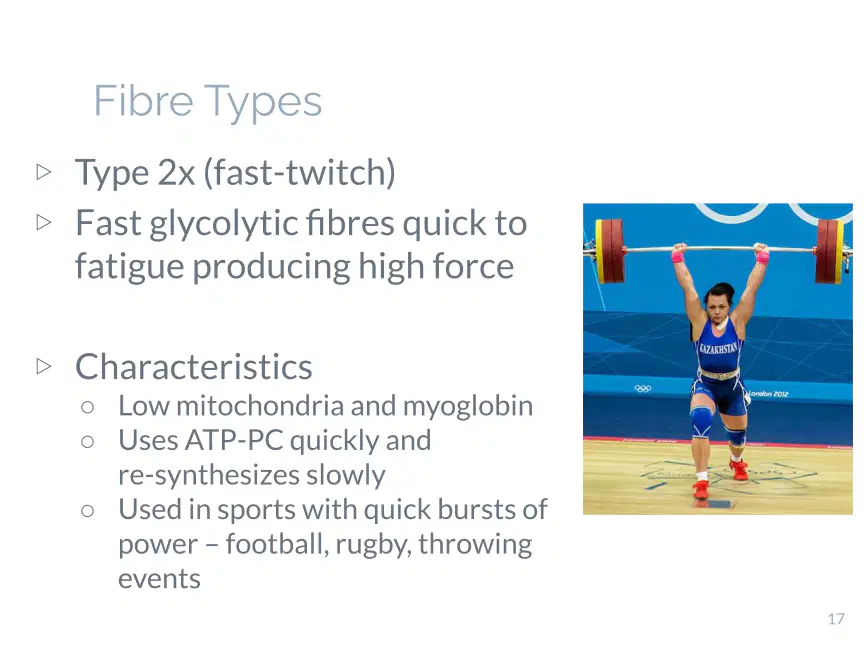
What are the characteristics of Type 2x (fast-twitch) muscle fibers?

1

Low mitochondria and myoglobin

2

Uses ATP-PC quickly and re-synthesizes slowly

3

Used in sports with quick bursts of power

4

High endurance and low force production

31

media

32

Multiple Choice

Which muscle fiber type has the highest resistance to fatigue?

1

Slow-Twitch (ST)

2

Fast-Twitch A (FT-A)

3

Fast-Twitch B (FT-B)

4

All have the same resistance

33

media

34

Multiple Choice

What is the All or None Law in muscle contraction?

1

It states that a muscle can contract partially

2

It states that a muscle will only contract if it receives a nerve impulse

3

It states that all muscle fibers will contract regardless of the stimulus

4

It states that a muscle can contract without a nerve impulse

35

Multiple Choice

______ motor units allow for more precise motor control

1

Slow

2
Large
3
Small
4
Fast

36

Multiple Choice

The A band in a myofibril is an area of:

1

thin filaments

2

thick filaments

3

transverse tubules

4

motor end plates

37

Multiple Choice

When recruitment occurs, the number of motor units being activated

1

increases

2

decreases

38

Poll

How confident do you feel about this topic now?

Very confident
Somewhat confident
Not confident
pattern-tertiary
media

Show answer

Auto Play

Slide 1 / 38

SLIDE