

Ch 4 Criminal Law

Presentation
•
Social Studies
•
10th Grade
•
Practice Problem
•
Easy

Michael Clifford
Used 1+ times
FREE Resource
30 Slides • 25 Questions
1
2
3
Multiple Choice
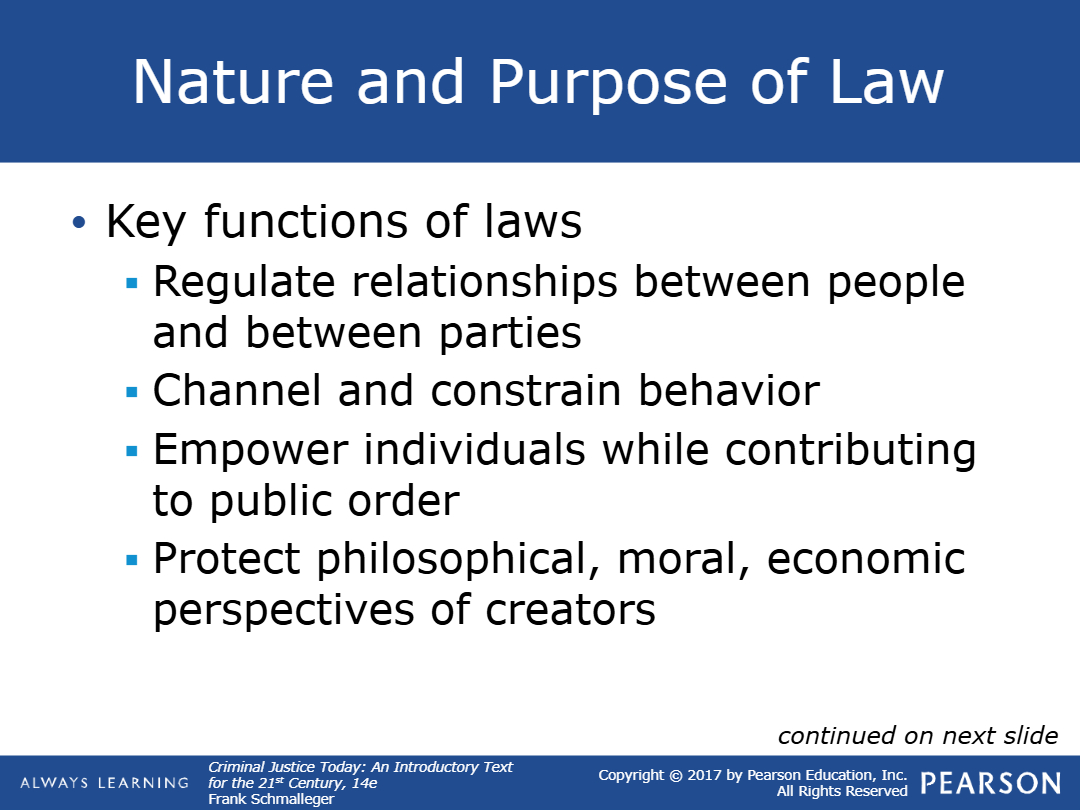
Which of the following is a key function of law?
To regulate relationships between people and parties
To increase economic inequality
To discourage public order
To limit philosophical perspectives
4
5
Multiple Choice
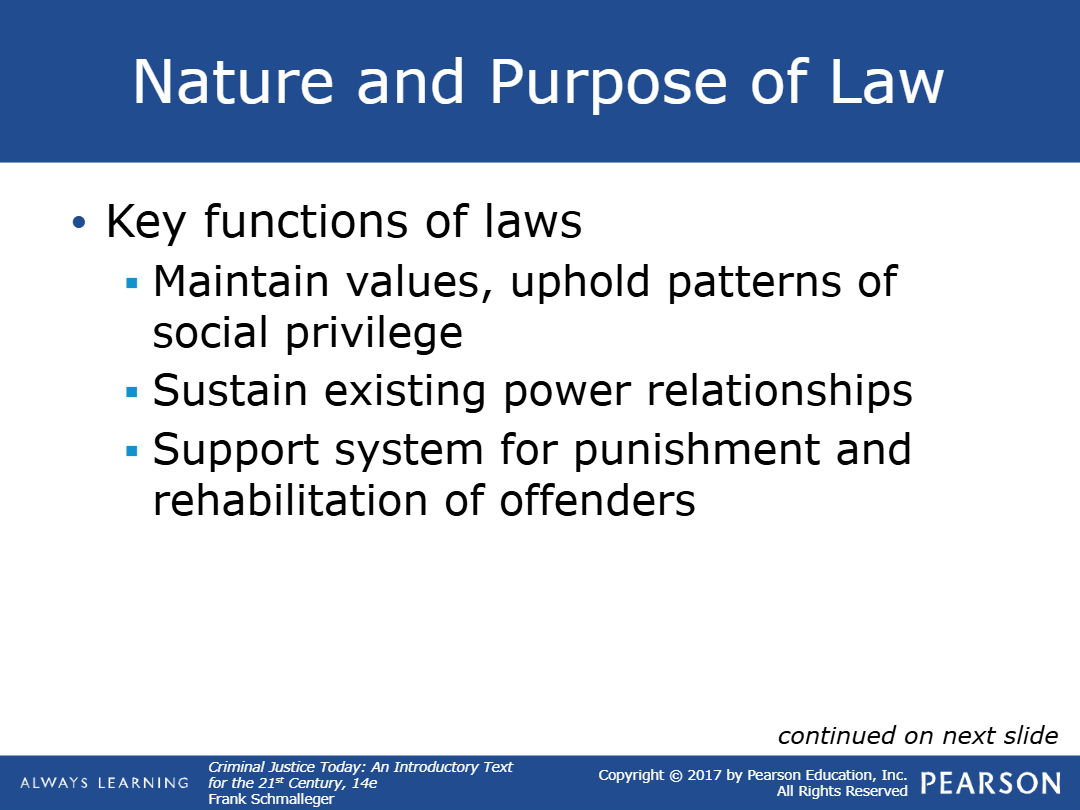
Which of the following is NOT a key function of law as described in the slides?
Maintain values and uphold patterns of social privilege
Sustain existing power relationships
Support system for punishment and rehabilitation of offenders
Promote economic growth and technological innovation
6
7
Open Ended
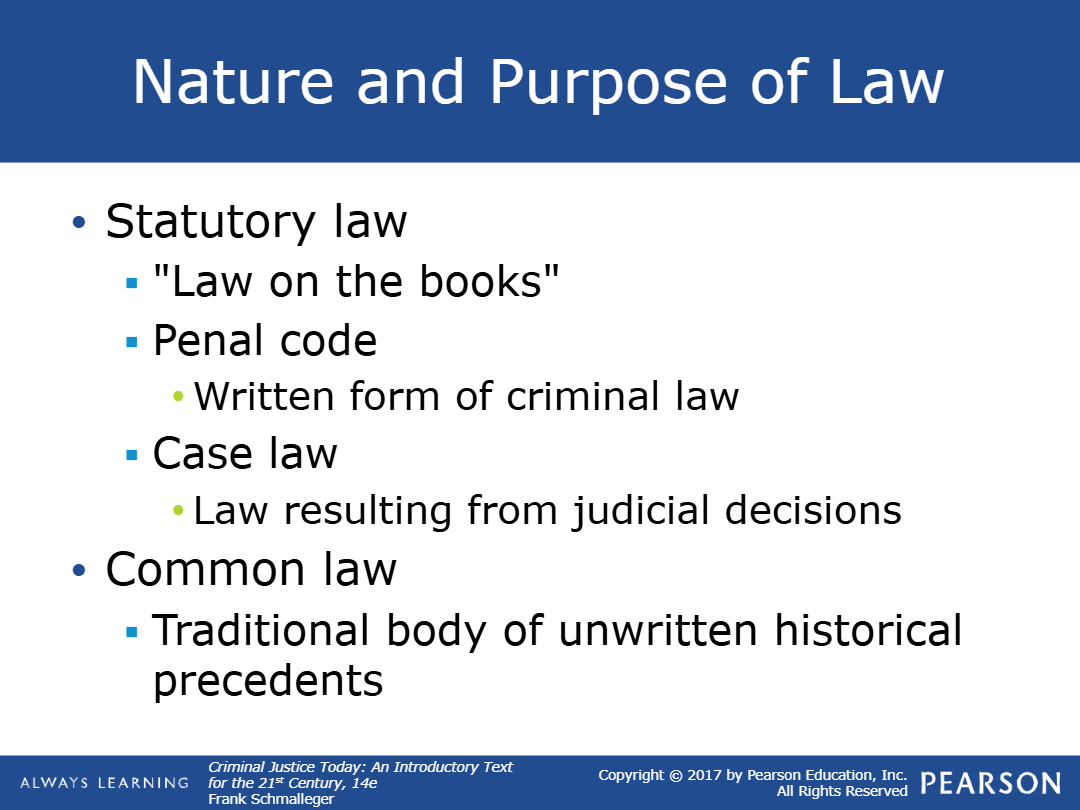
Explain how statutory law and common law differ in their sources and application.
8
9
Multiple Choice
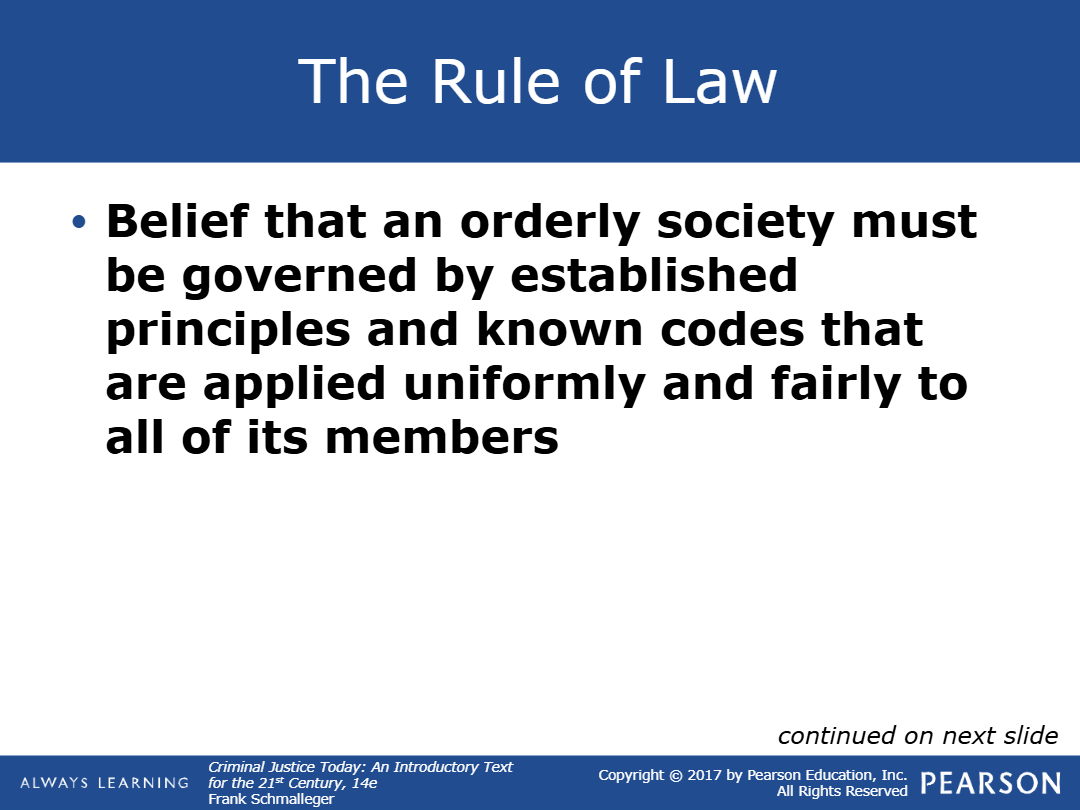
According to the slides, what is the belief underlying the rule of law?
Society should be governed by the strongest individuals
Established principles and known codes must be applied uniformly and fairly to all members
Laws should only apply to government officials
Laws should be unwritten and based on tradition
10
11
Multiple Select
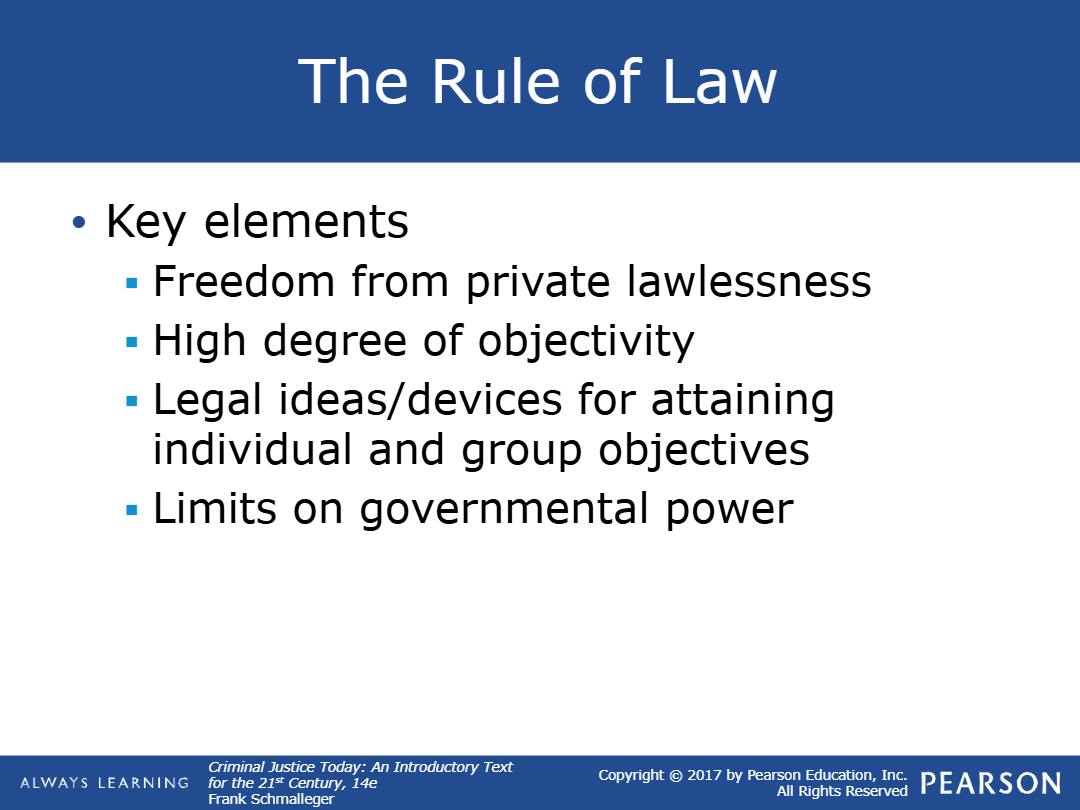
Select all the key elements of the rule of law as described in the slides.
Freedom from private lawlessness
High degree of objectivity
Unlimited governmental power
Legal ideas/devices for attaining objectives
12
13
Fill in the Blanks
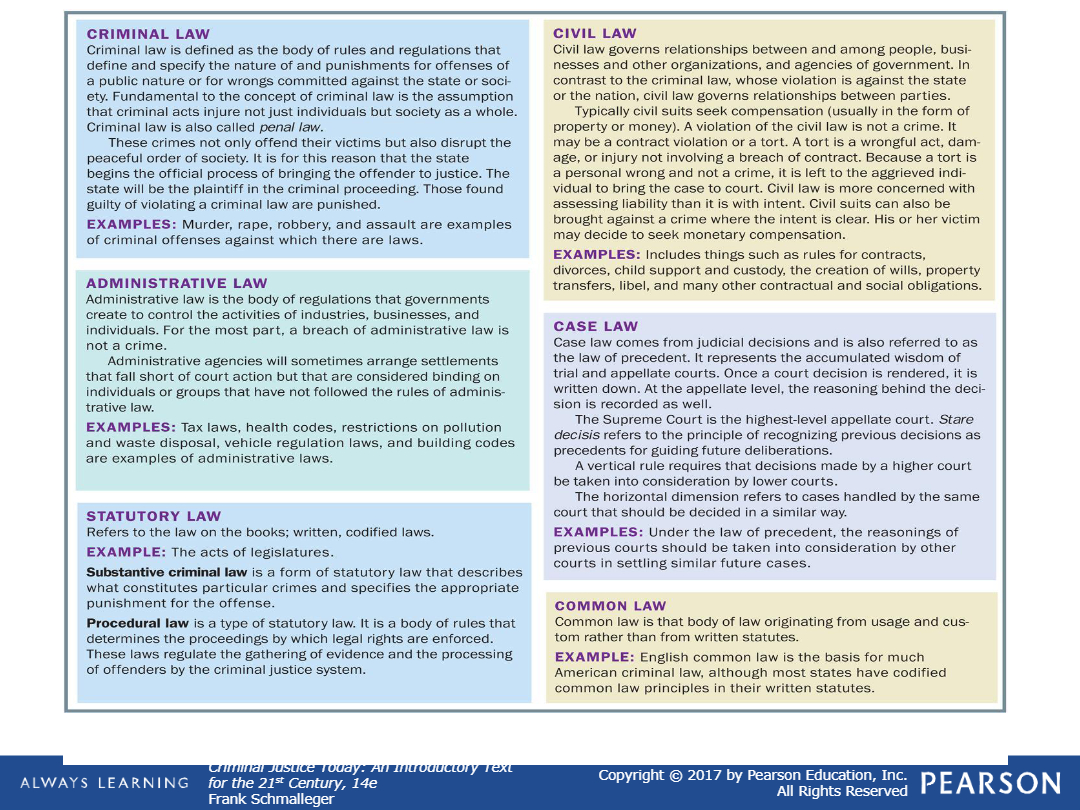
Fill in the blank: Case law comes from judicial decisions and is also referred to as the law of
Type answer...
14
15
Open Ended
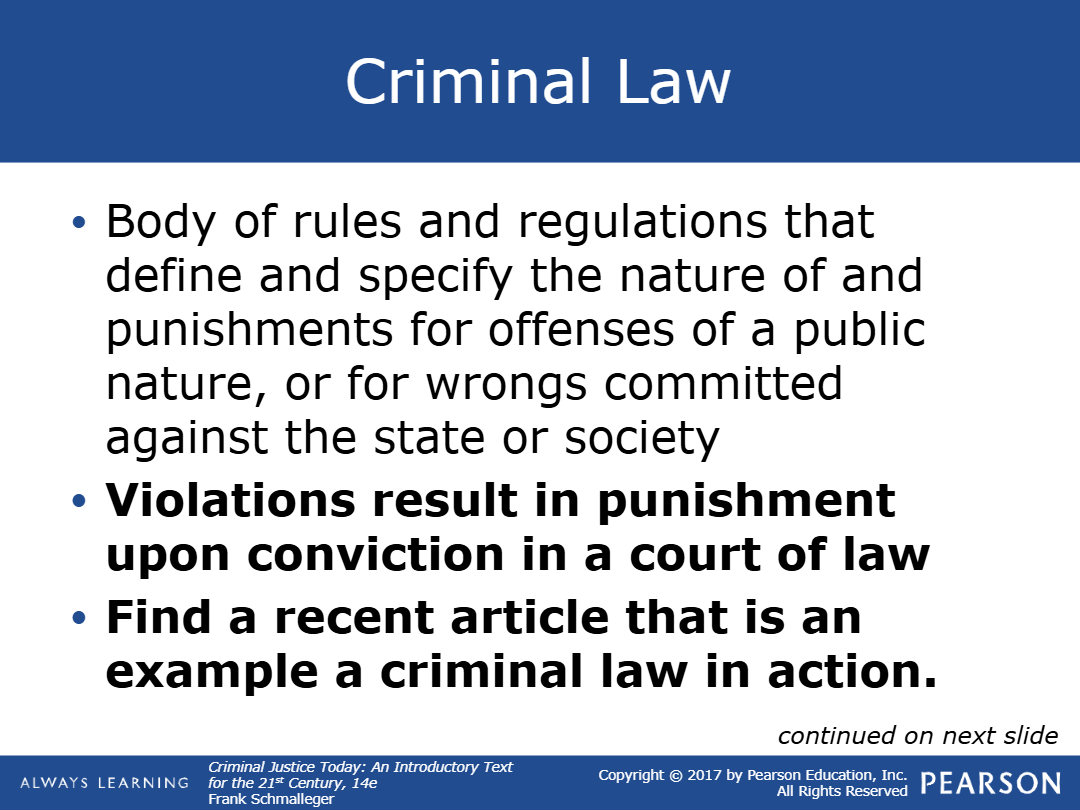
Find a recent article that is an example of a criminal law in action. Summarize how the law was applied in that case.
16
17
Multiple Choice
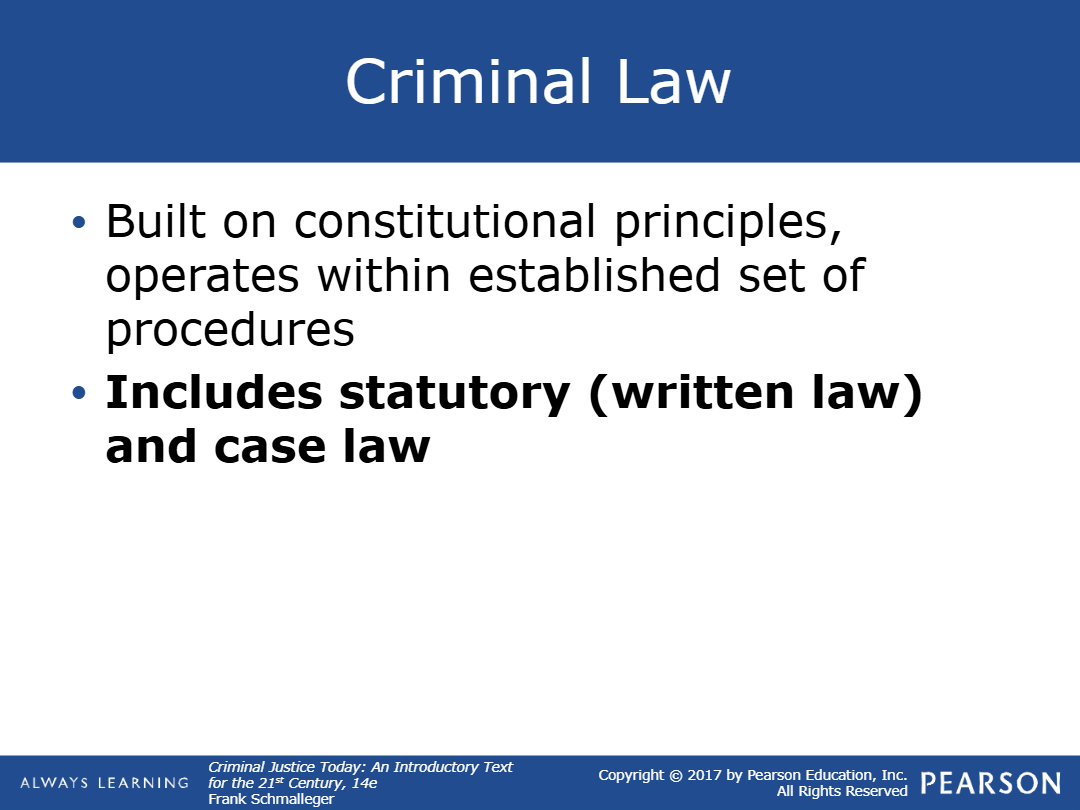
Which of the following is included in criminal law?
Statutory law and case law
Civil law and administrative law
Procedural law and substantive law
Precedent and compensation
18
19
Open Ended
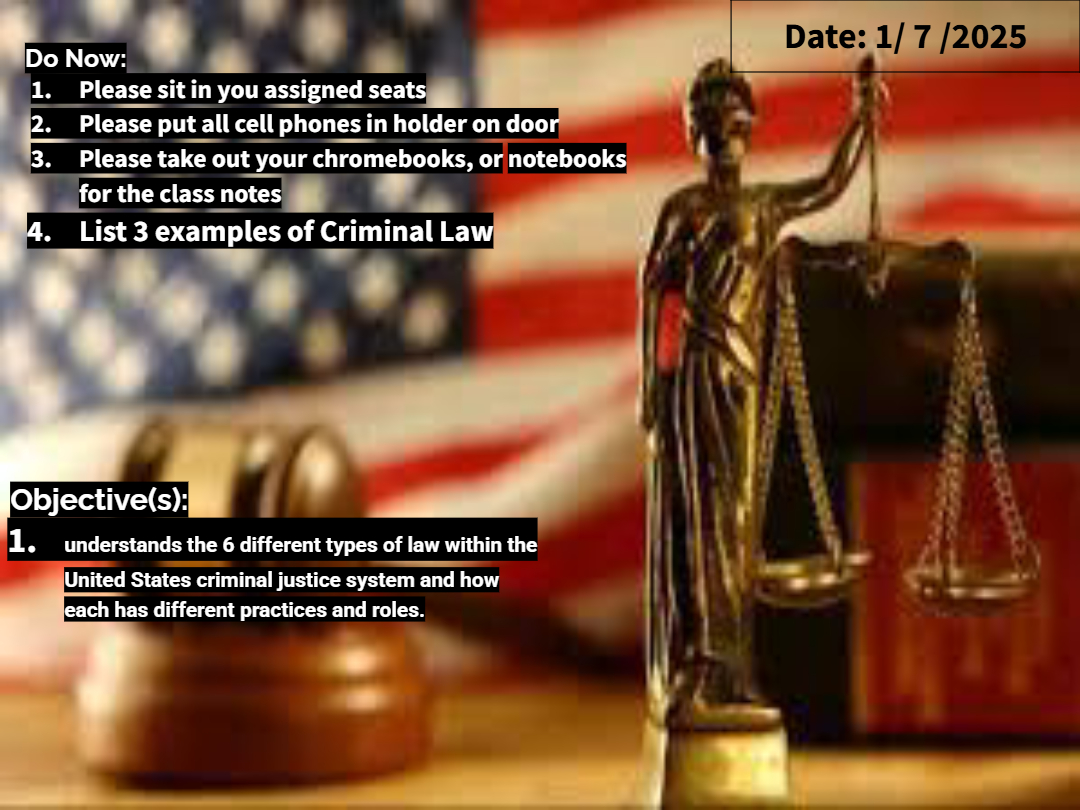
List 3 examples of Criminal Law.
20
21
Multiple Choice
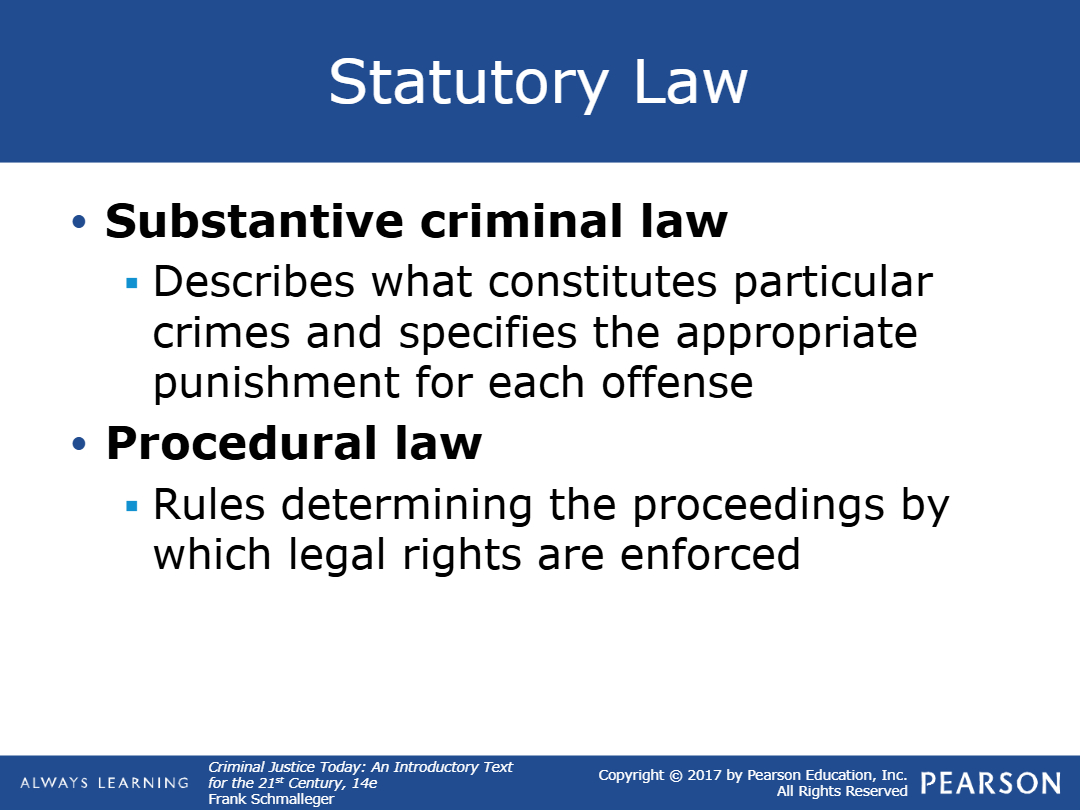
Which of the following best describes substantive criminal law?
Describes what constitutes particular crimes and specifies the appropriate punishment for each offense
Rules determining the proceedings by which legal rights are enforced
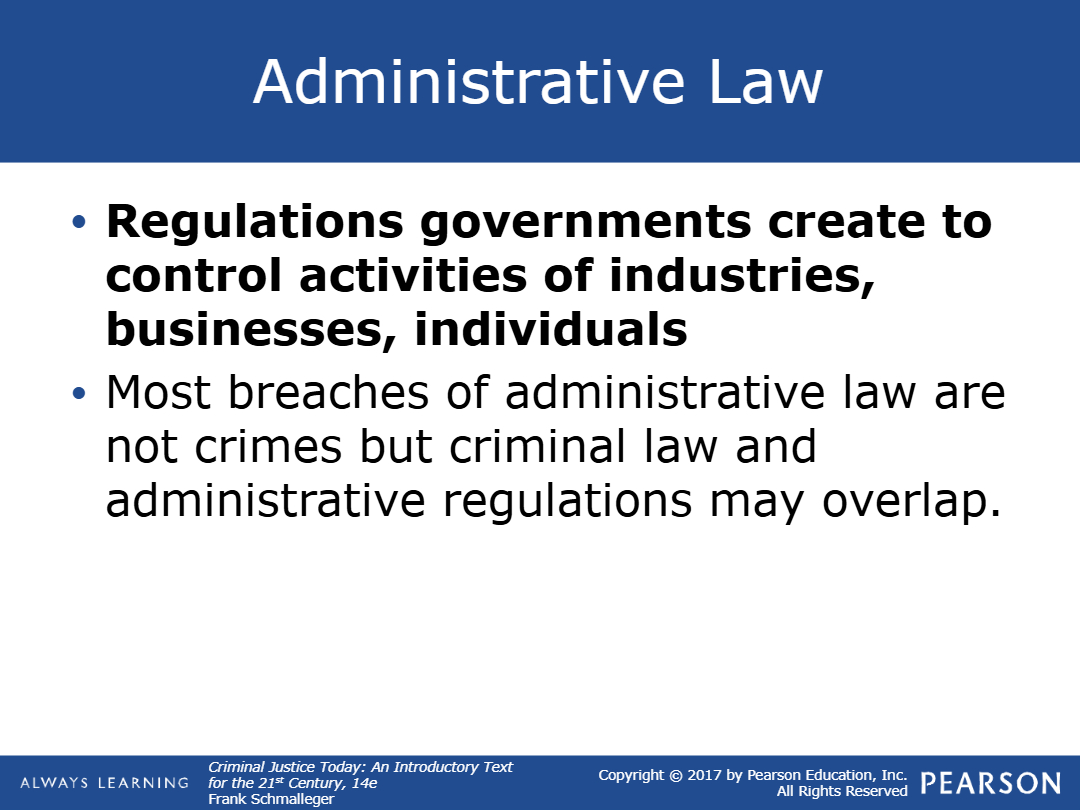
Regulations governments create to control activities of industries
Law of precedent
22
23
Multiple Choice
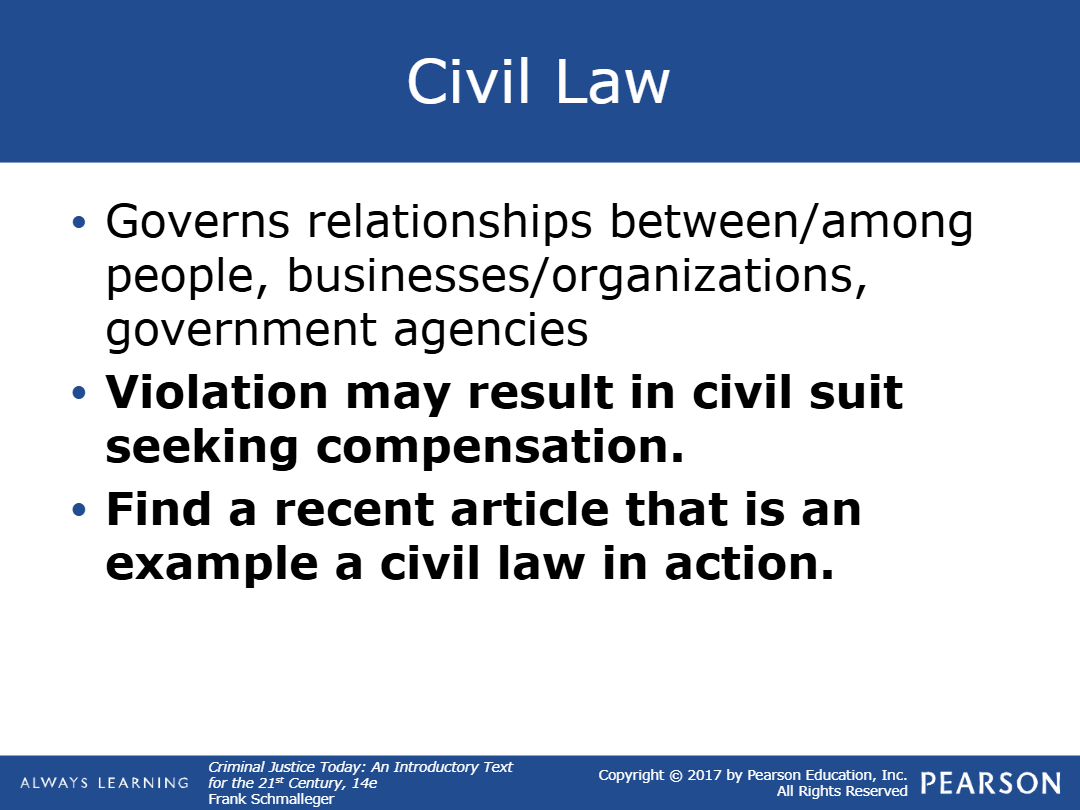
Which types of law govern relationships between people, businesses, and government agencies, and may result in compensation for violations?
Civil law
Criminal law
Case law
Administrative law
24
25
26
Open Ended
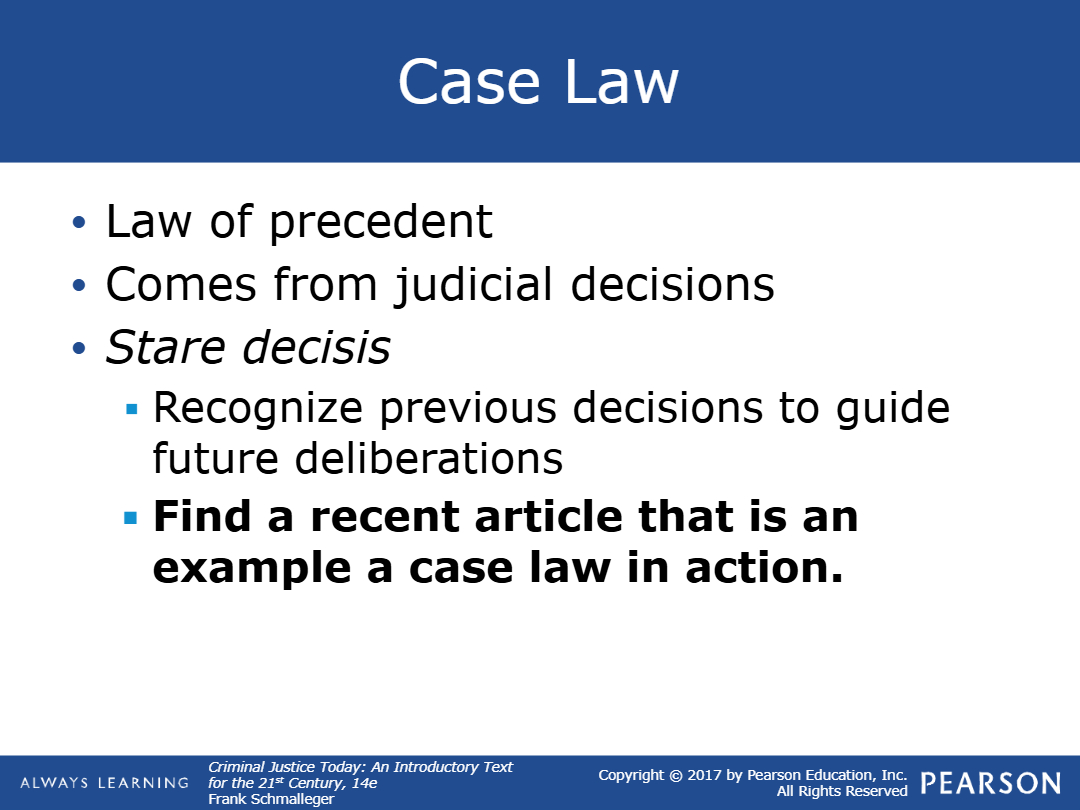
Compare and contrast statutory law and case law in terms of their sources and roles in the criminal justice system.
27
Fill in the Blanks
Fill in the blank: The law of precedent, also known as
Type answer...
28
29
30
31
Multiple Choice
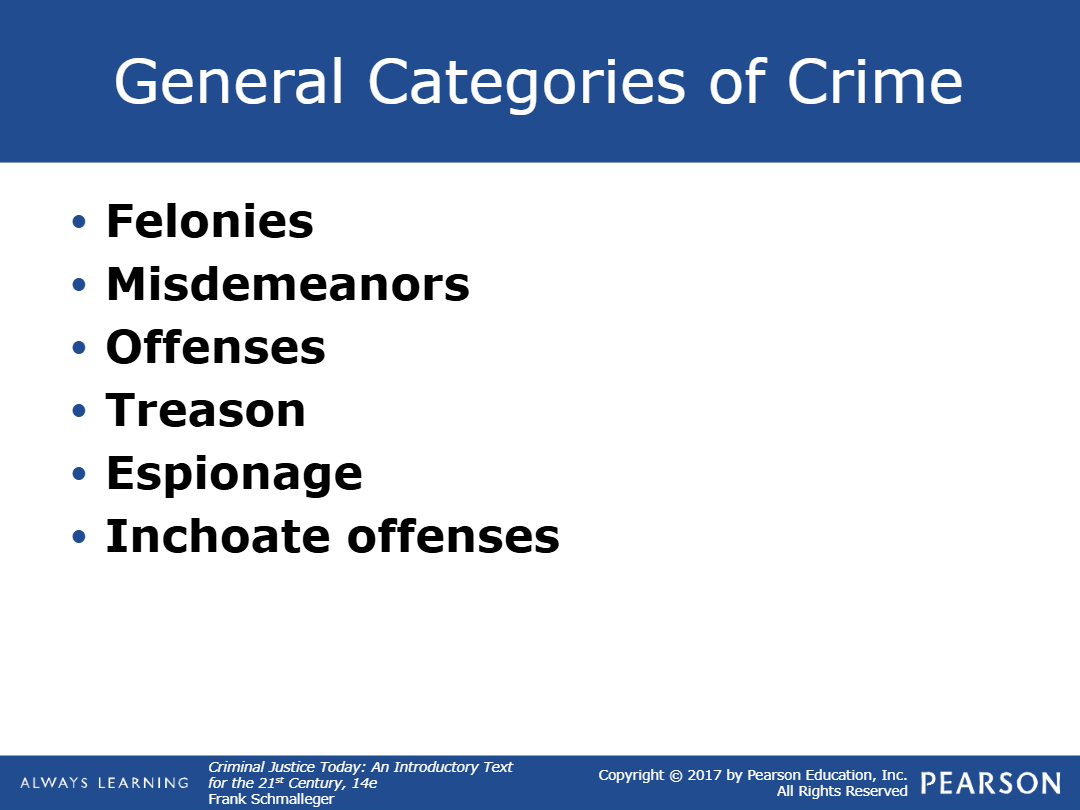
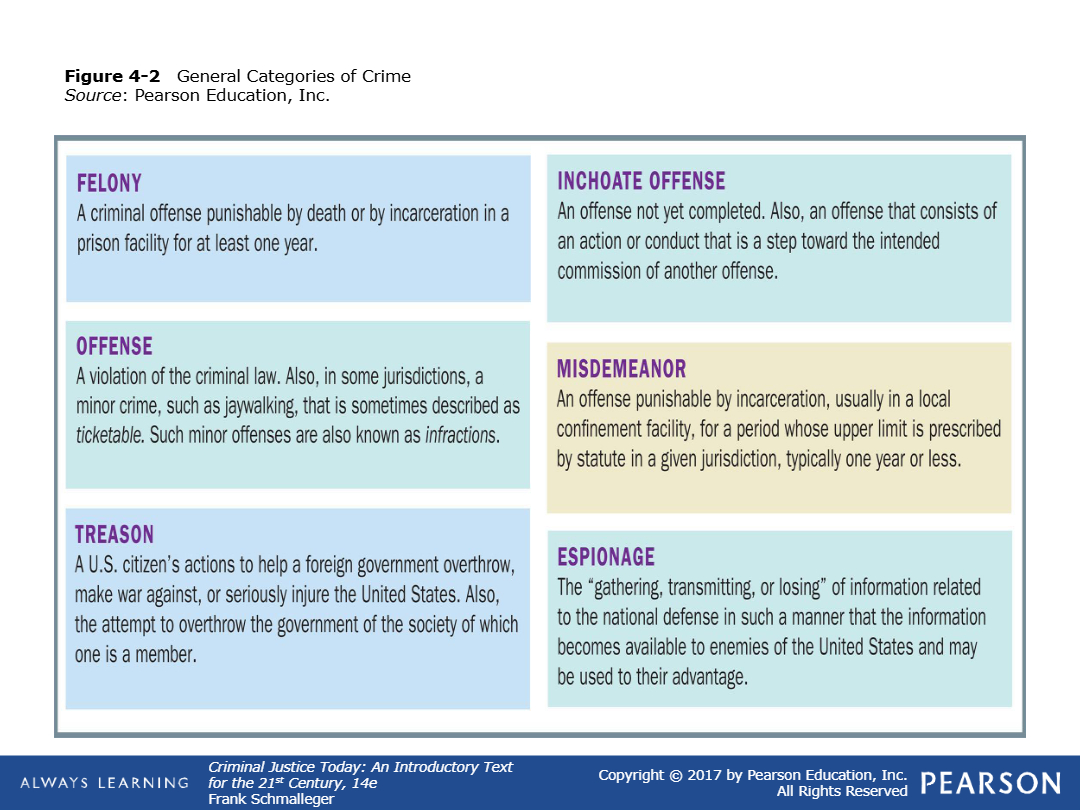
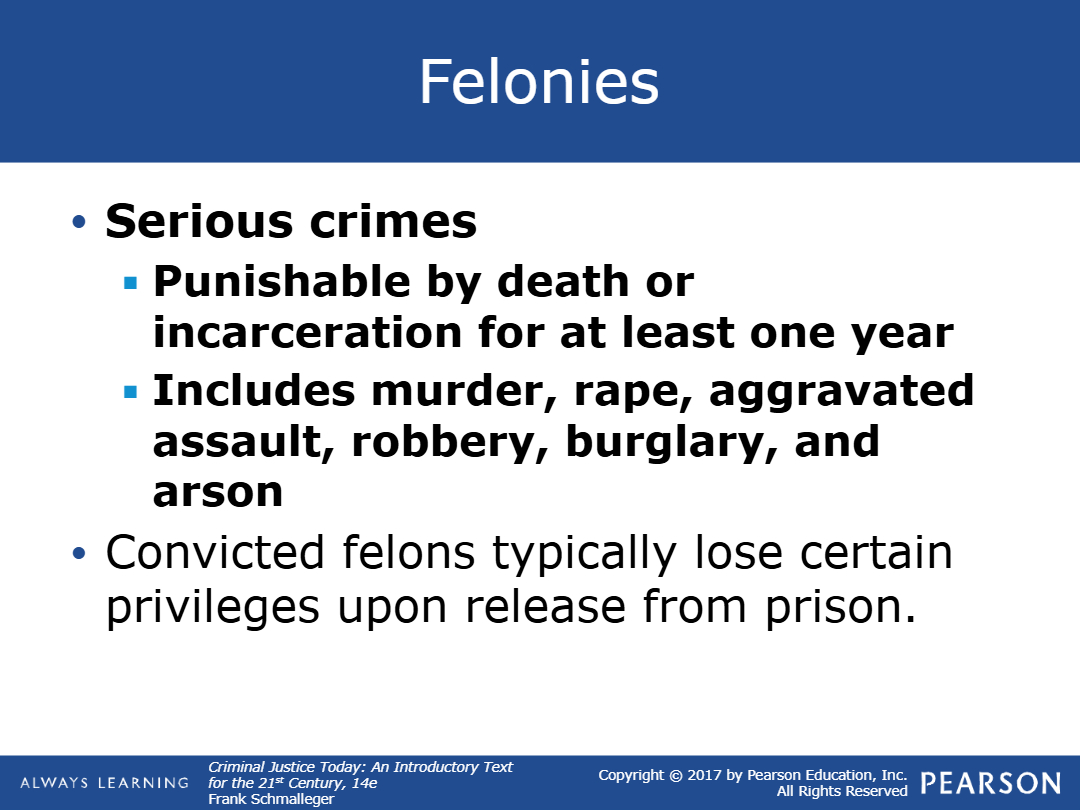
Which of the following is considered a serious crime punishable by death or incarceration for at least one year?
Felony
Misdemeanor
Offense
Inchoate offense
32
33
Multiple Select
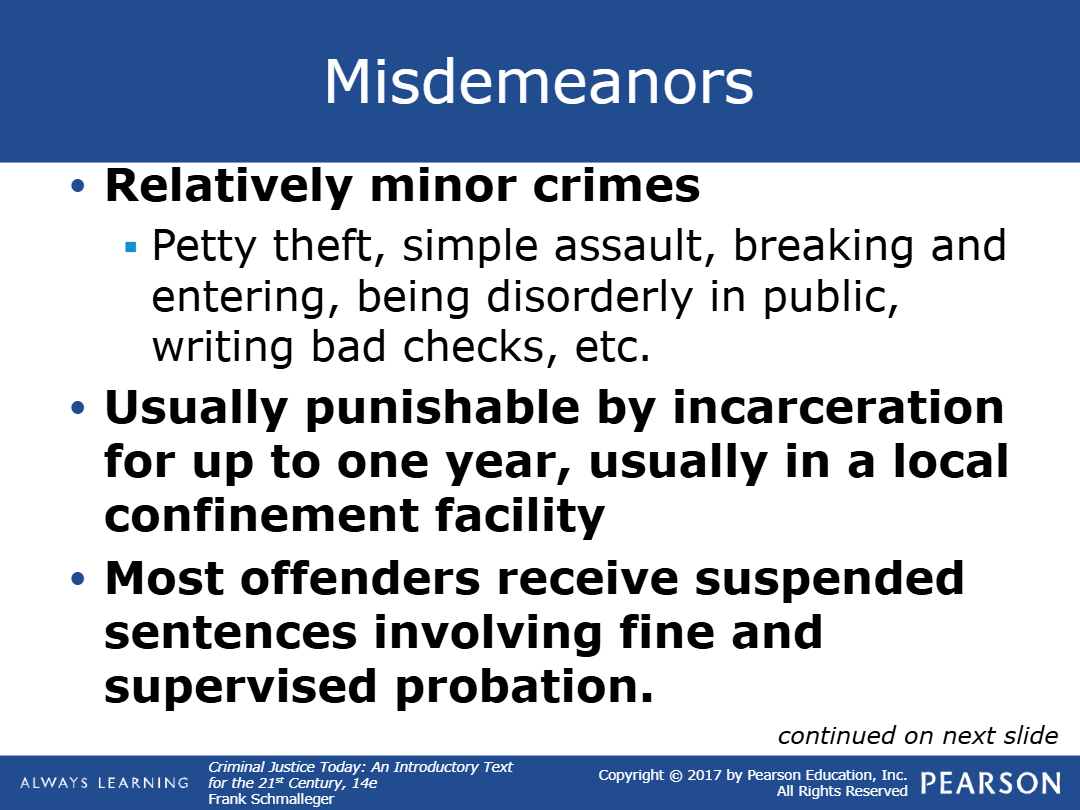
Select all that apply: Which of the following crimes are typically classified as felonies?
Murder
Jaywalking
Robbery
Writing bad checks
34
35
Open Ended
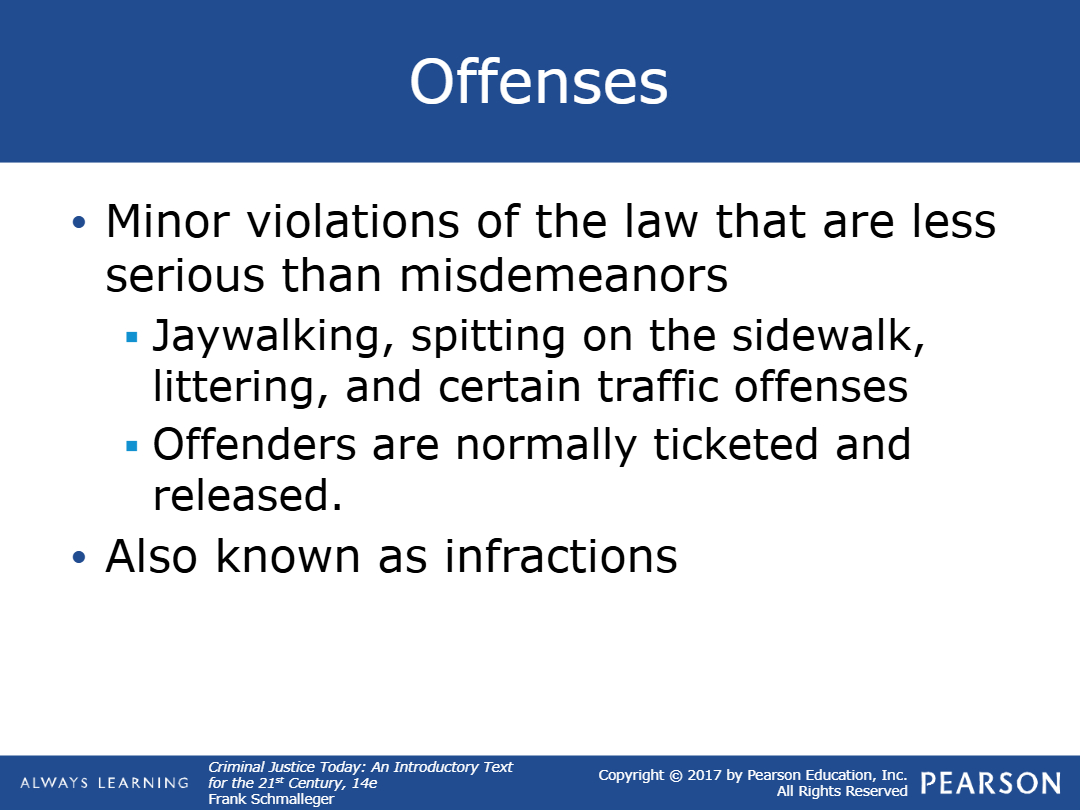
Describe the main characteristics that distinguish felonies, misdemeanors, and offenses from each other.
36
Fill in the Blanks
A violation of the criminal law that is sometimes described as ticketable and also known as
Type answer...
37
38
Multiple Choice
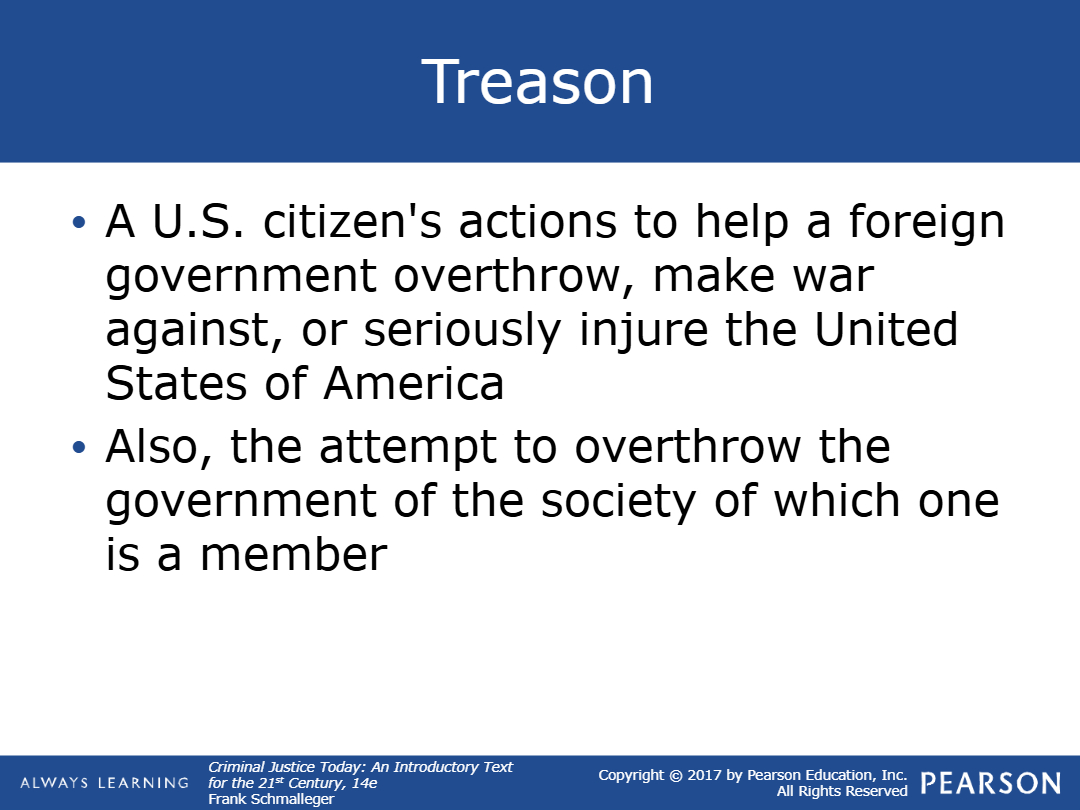
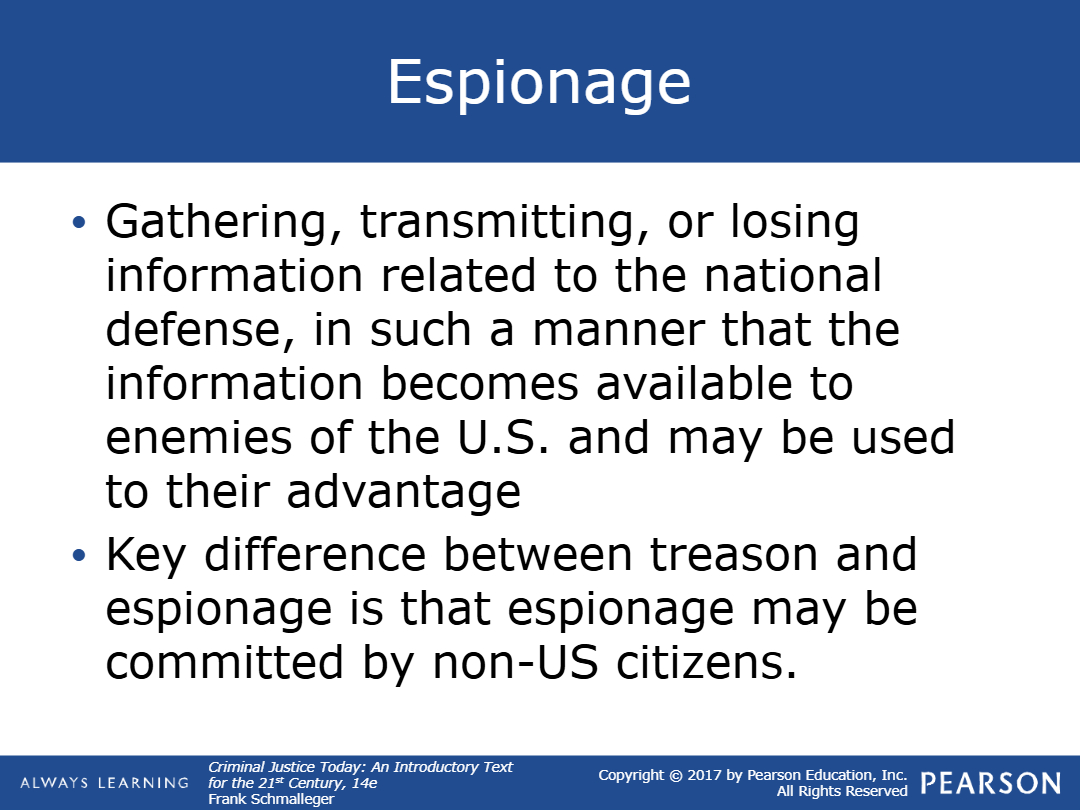
Which category of crime involves actions to help a foreign government overthrow, make war against, or seriously injure the United States?
Treason
Espionage
Felony
Offense
39
40
Multiple Choice
Which of the following best describes the key difference between treason and espionage?
Treason can only be committed by non-US citizens, while espionage can only be committed by US citizens.
Espionage can only be committed by government officials.
Treason involves betraying one's own country, while espionage may be committed by non-US citizens.
Espionage is always a violent act, while treason is not.
41
42
Open Ended
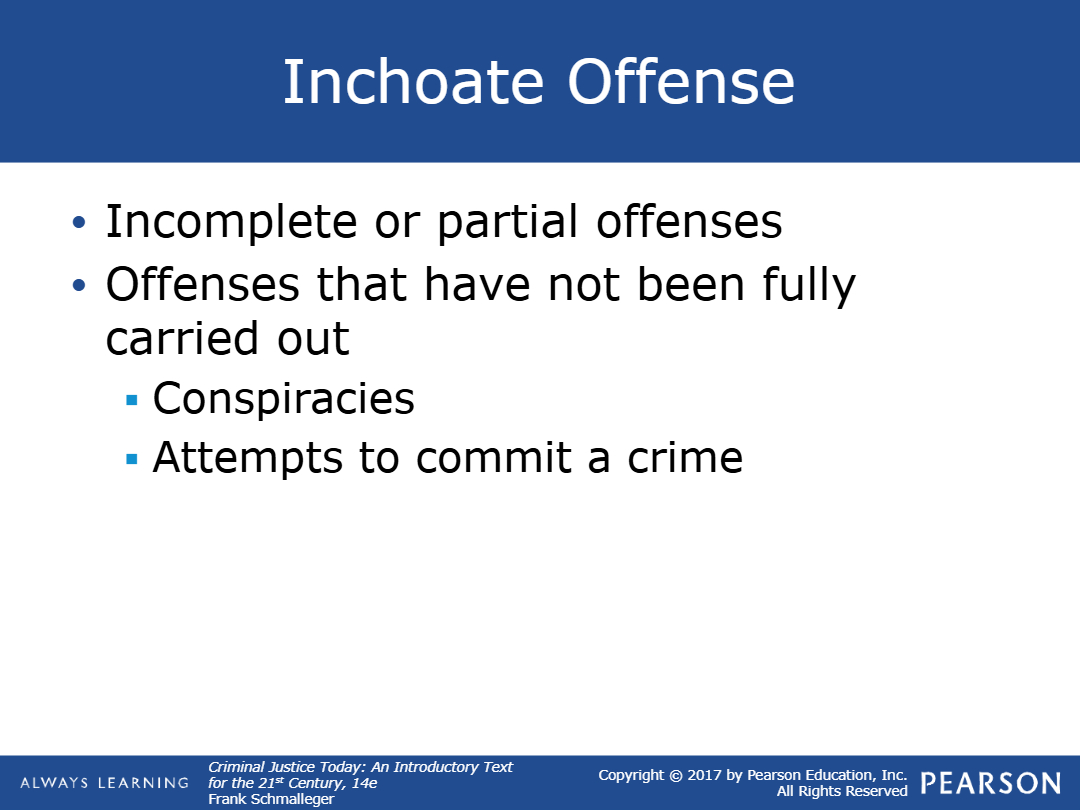
Explain the concept of inchoate offenses and provide examples of such offenses.
43
44
Multiple Choice
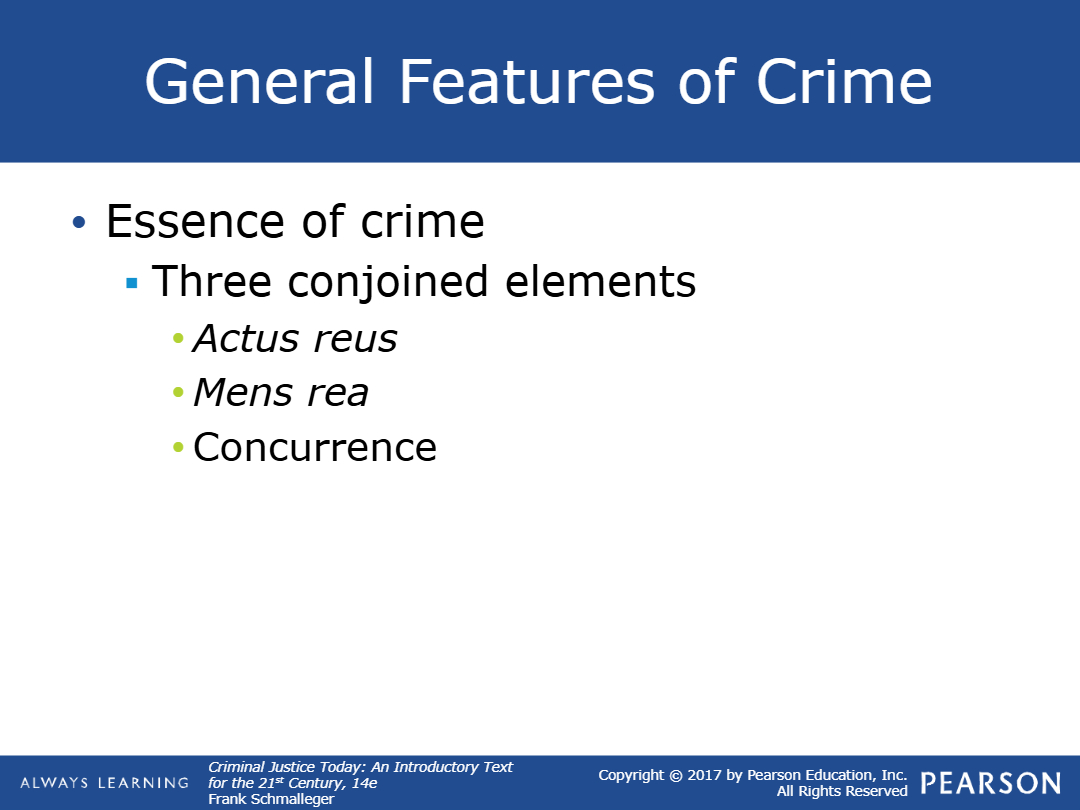
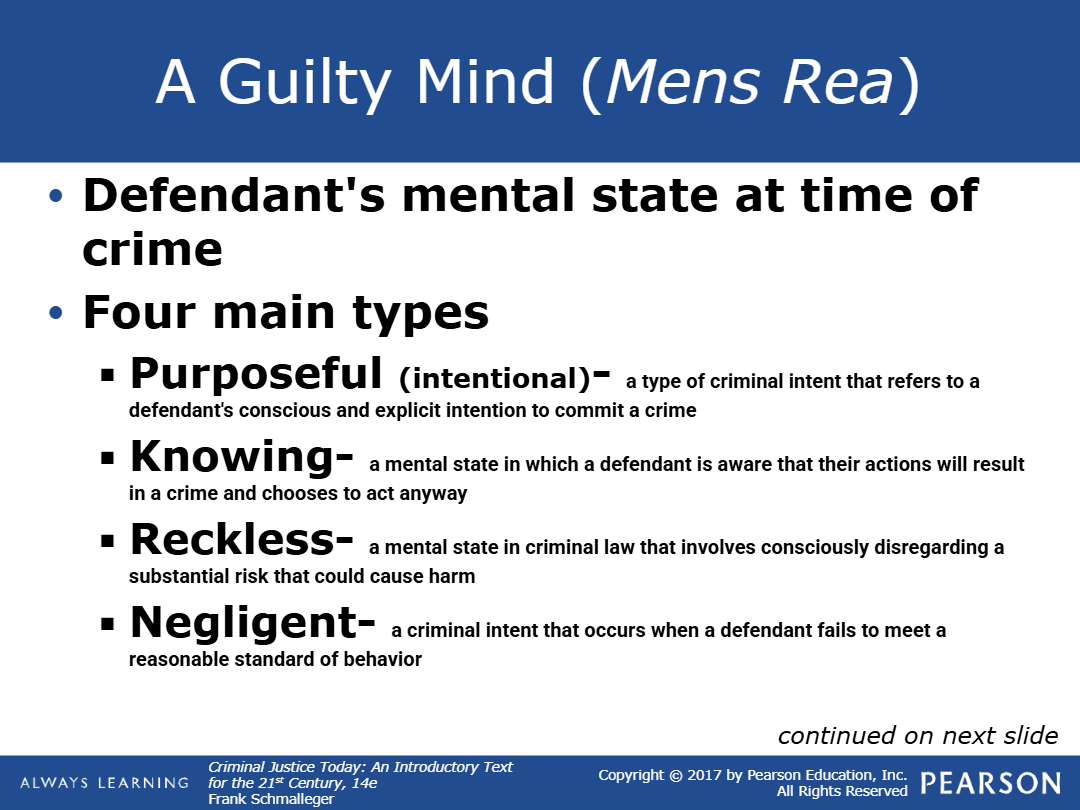
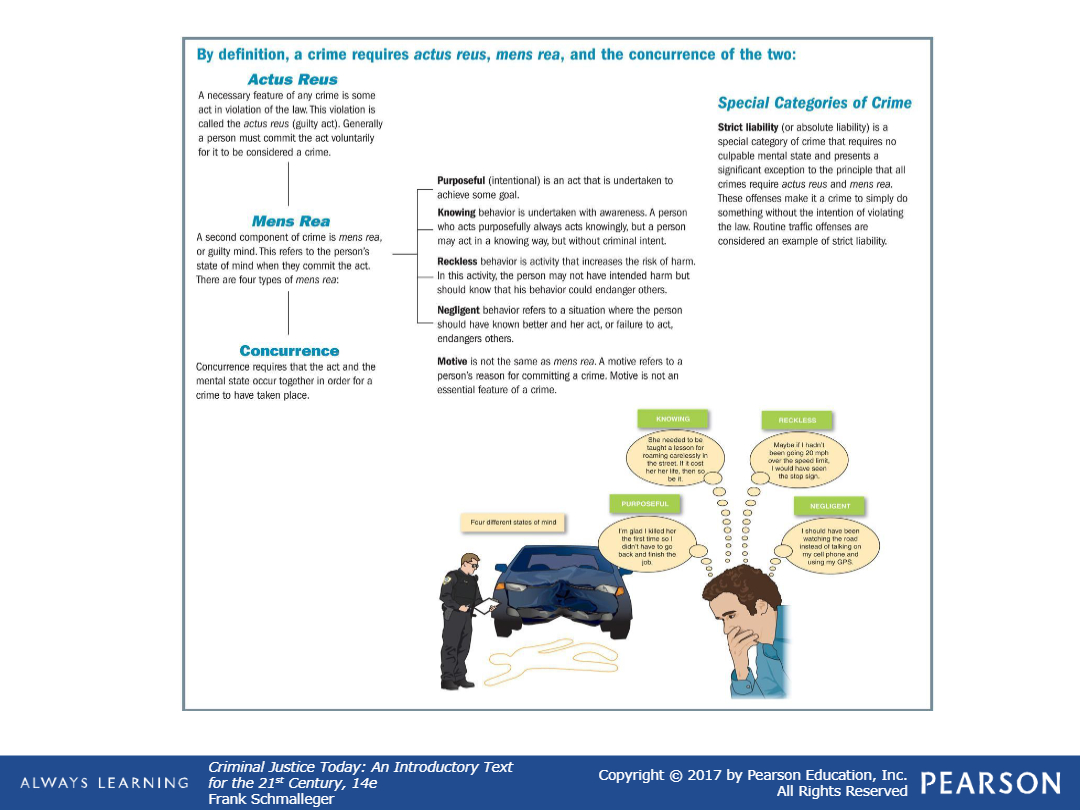
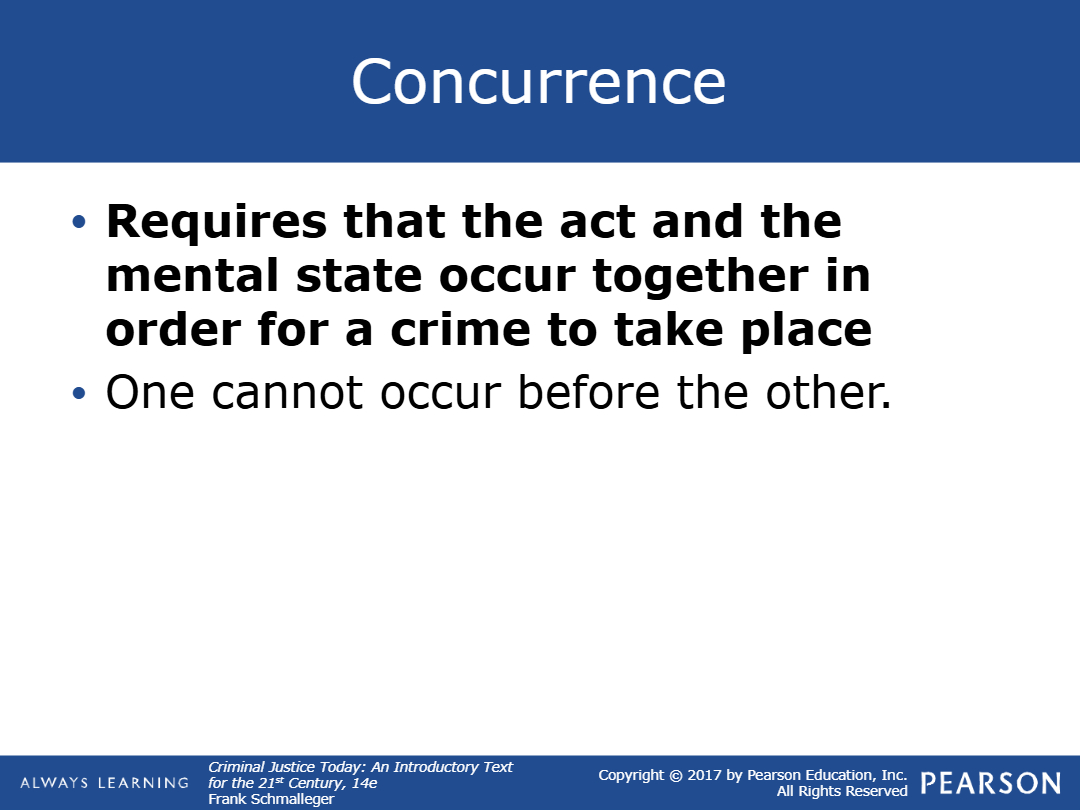
Which of the following are conjoined elements of the essence of crime?
Actus reus, Mens rea, Concurrence
Mens rea, Motive, Conspiracy
Actus reus, Attempt, Negligence
Concurrence, Motive, Recklessness
45
46
Fill in the Blanks
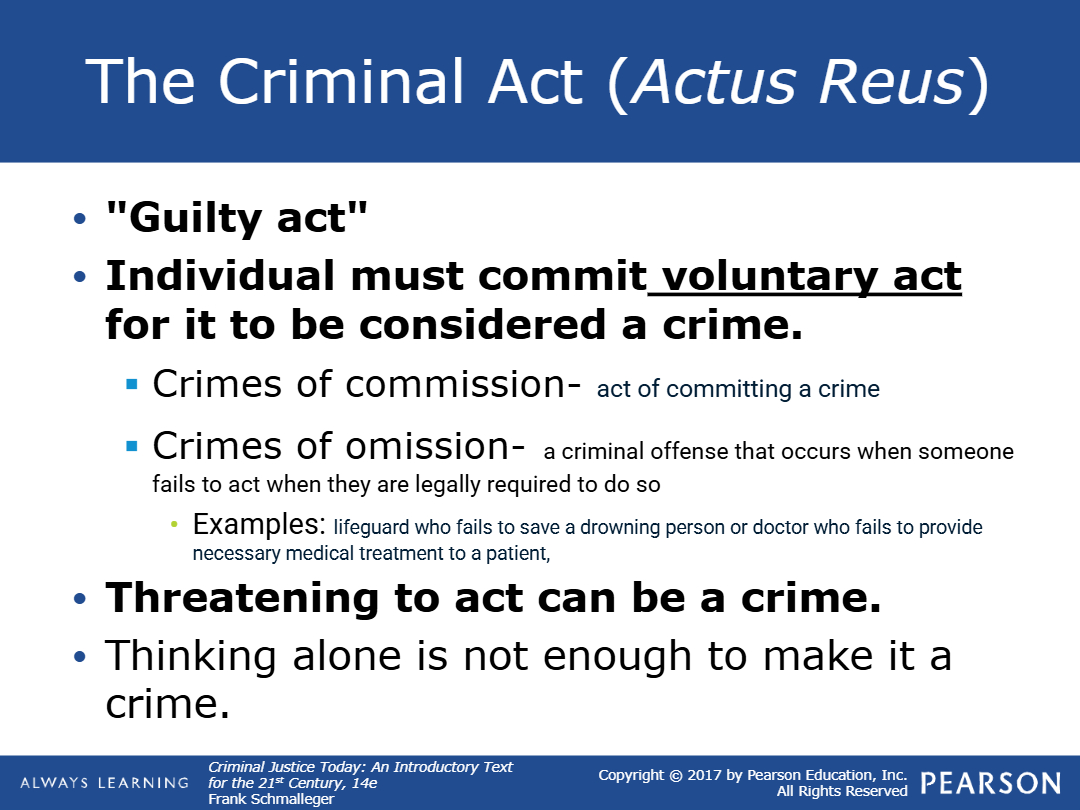
A criminal offense that occurs when someone fails to act when they are legally required to do so is called a crime of
Type answer...
47
48
49
Fill in the Blanks
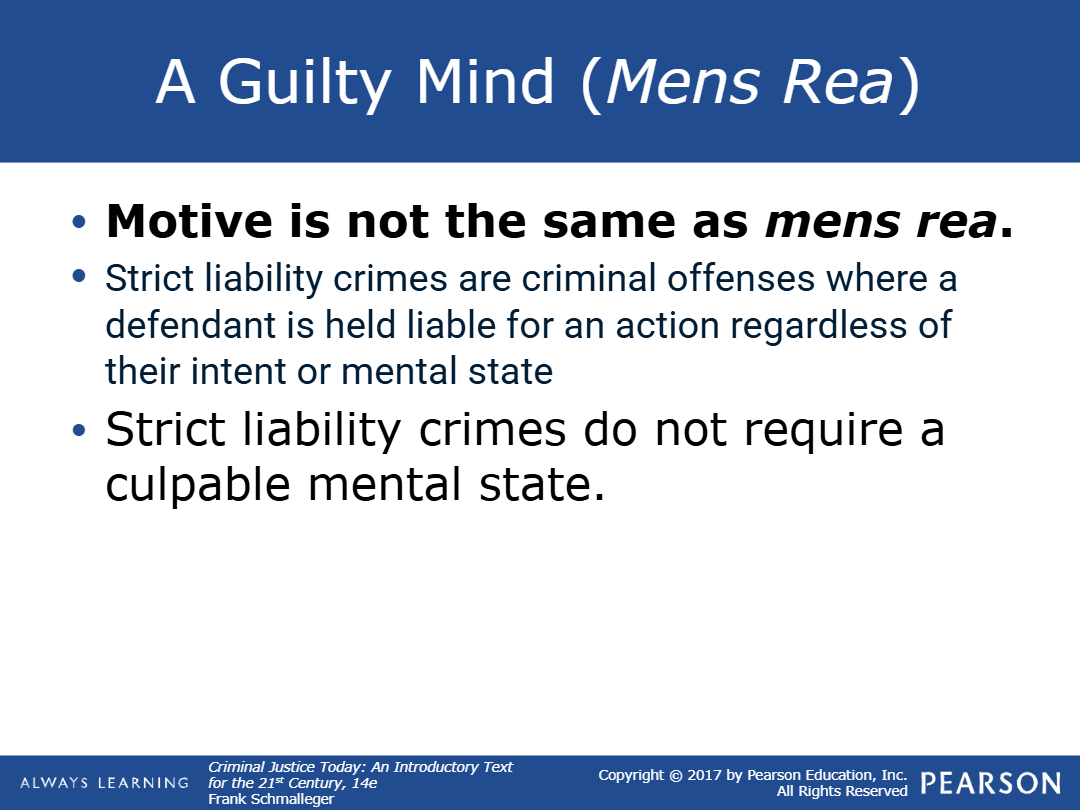
Strict liability crimes do not require a
Type answer...
50
51
52
53
54
Open Ended
Reflecting on today's lesson about the nature and purpose of law, what is one way you think laws impact your daily life or the society you live in?
55
Multiple Choice
Which of the following is NOT a key function of law as described in the lesson?
Regulate relationships between people and parties
Channel and constrain behavior
Empower individuals while contributing to public order
Increase government spending
Show answer
Auto Play
Slide 1 / 55
SLIDE
Similar Resources on Wayground

52 questions
Unit 4 AP Exam Review
Presentation
•
9th Grade
50 questions
Unit 3 Ocean Wonders Lesson A
Presentation
•
10th Grade
47 questions
Latin Revolutions Lecture
Presentation
•
10th Grade
50 questions
PRODUCTION
Presentation
•
9th Grade
50 questions
Produksyon
Presentation
•
9th Grade
50 questions
Unit 1 B Forms of Government
Presentation
•
9th Grade
52 questions
STAAR Testing Strategies
Presentation
•
10th Grade
51 questions
Cooperation and Conflict Natives
Presentation
•
10th Grade
Popular Resources on Wayground
10 questions
Safety Day 2026 – Student Review

Quiz
•
9th Grade
21 questions
Continents and Oceans
Quiz
•
6th Grade
20 questions
Parts of Speech
Quiz
•
5th Grade
16 questions
Subject & Predicate
Quiz
•
5th Grade
25 questions
Multiplication Facts
Quiz
•
5th Grade
12 questions
Map Skills
Quiz
•
3rd Grade
22 questions
Continents and Oceans
Quiz
•
5th Grade
15 questions
Rounding Decimals
Quiz
•
5th Grade
Discover more resources for Social Studies
10 questions
Exploring the Age of Exploration: Key Events and Figures

Interactive video
•
6th - 10th Grade
9 questions
Exploring Ancient Mesopotamia and Its Civilizations
Interactive video
•
10th Grade
10 questions
Debating the Legacy of Christopher Columbus
Interactive video
•
6th - 10th Grade
22 questions
U3T2 Vocab FAC: Domestic Policy
Quiz
•
10th Grade
25 questions
Gilded Age Gallery Walk
Presentation
•
9th - 12th Grade
50 questions
Progressive Era and Urbanization
Quiz
•
10th Grade
10 questions
U3T2D1 Daily Quiz
Quiz
•
10th Grade
10 questions
Exploring the 13 Colonies Regions
Interactive video
•
6th - 10th Grade