

Translocation

Presentation
•
Biology
•
9th - 12th Grade
•
Practice Problem
•
Easy

Ifa Muzdalifah
Used 5+ times
FREE Resource
23 Slides • 25 Questions
1
2
Open Ended

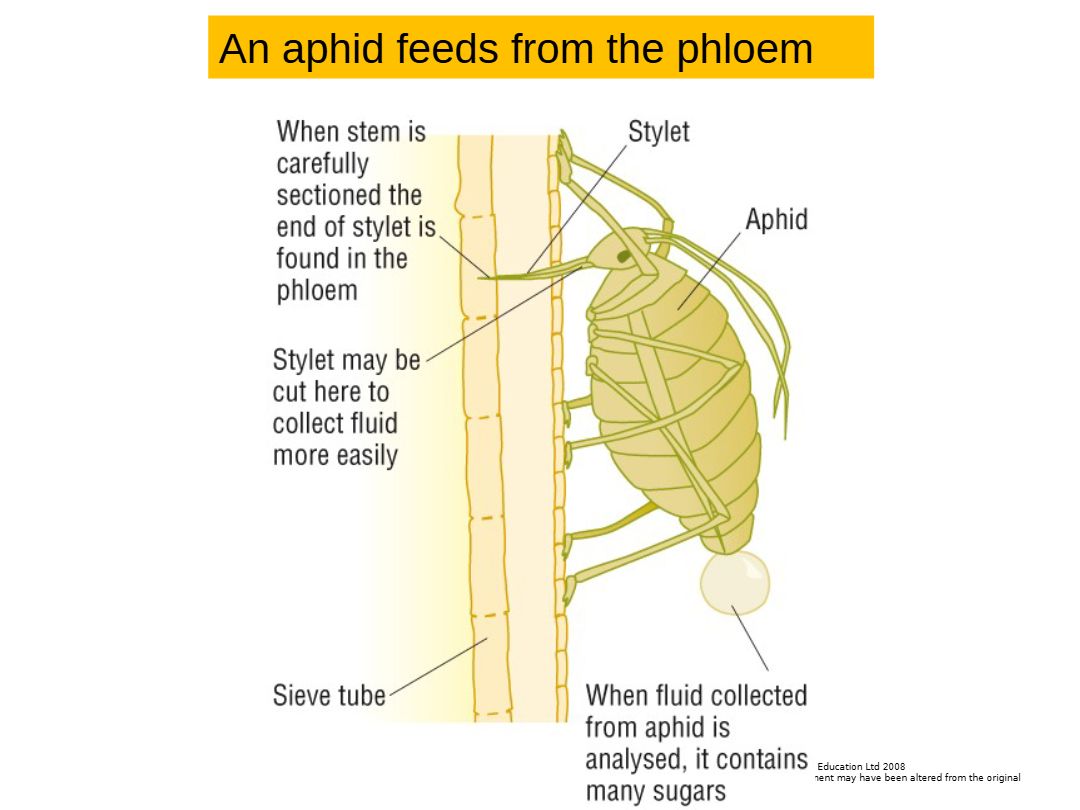
what nutrients are this insect trying to get?
3
Multiple Choice
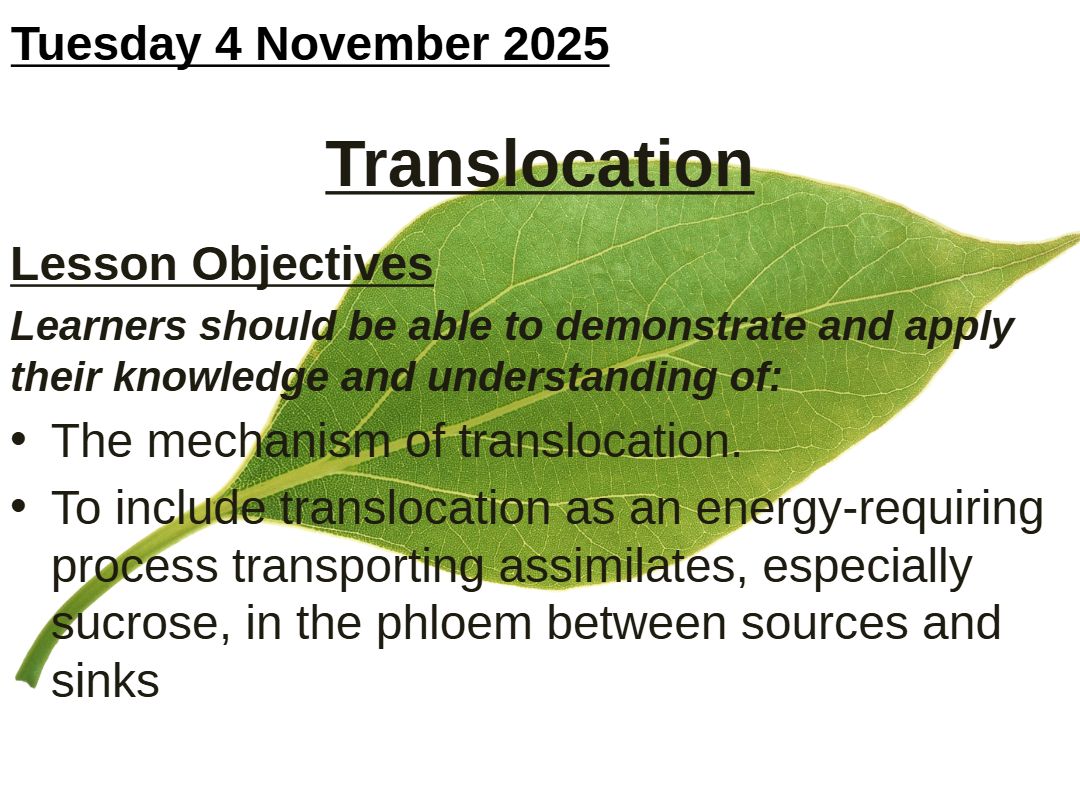
Why is translocation important for plants?
It helps in photosynthesis
It enables the transport of water
It allows movement of assimilates like sucrose from sources to sinks
It provides structural support
4
5
Open Ended
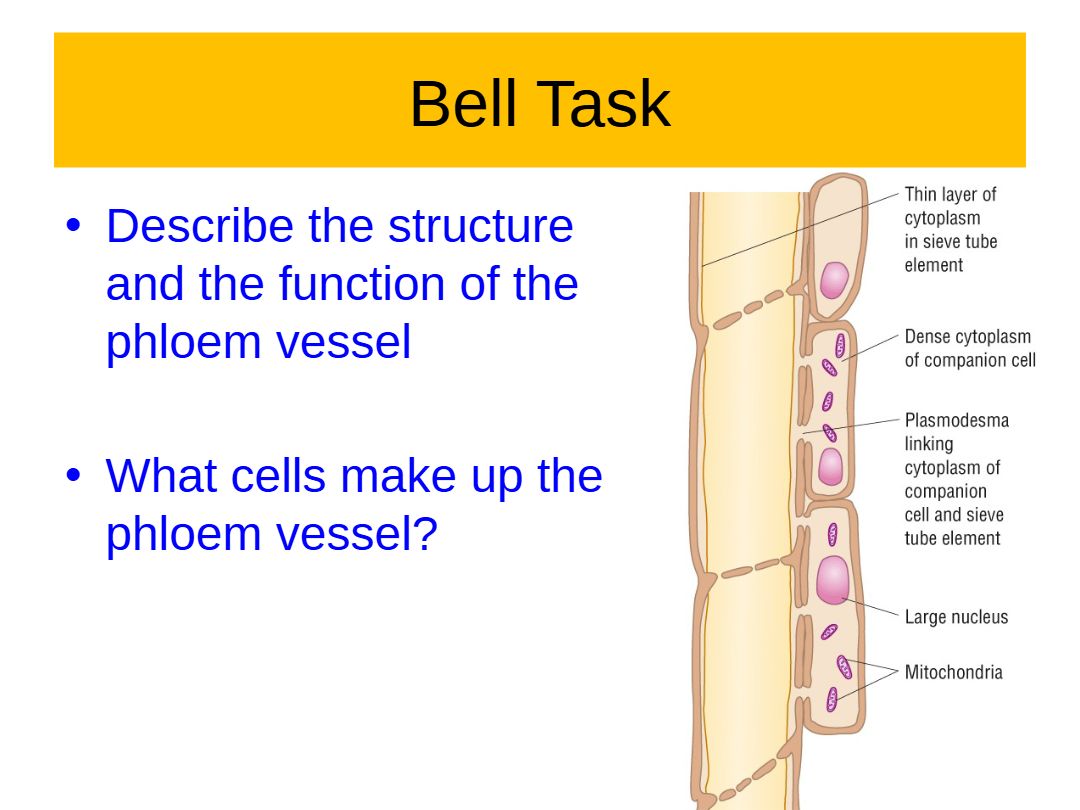
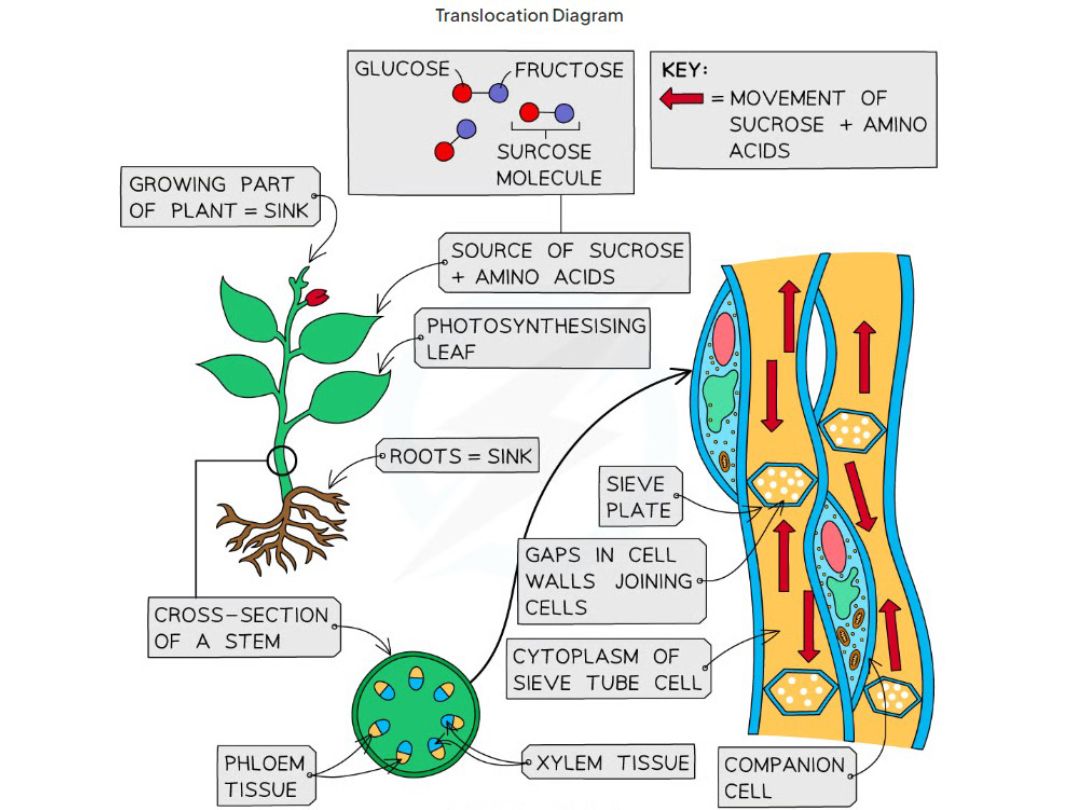
Describe the structure and the function of the phloem vessel.
6
7
Multiple Choice
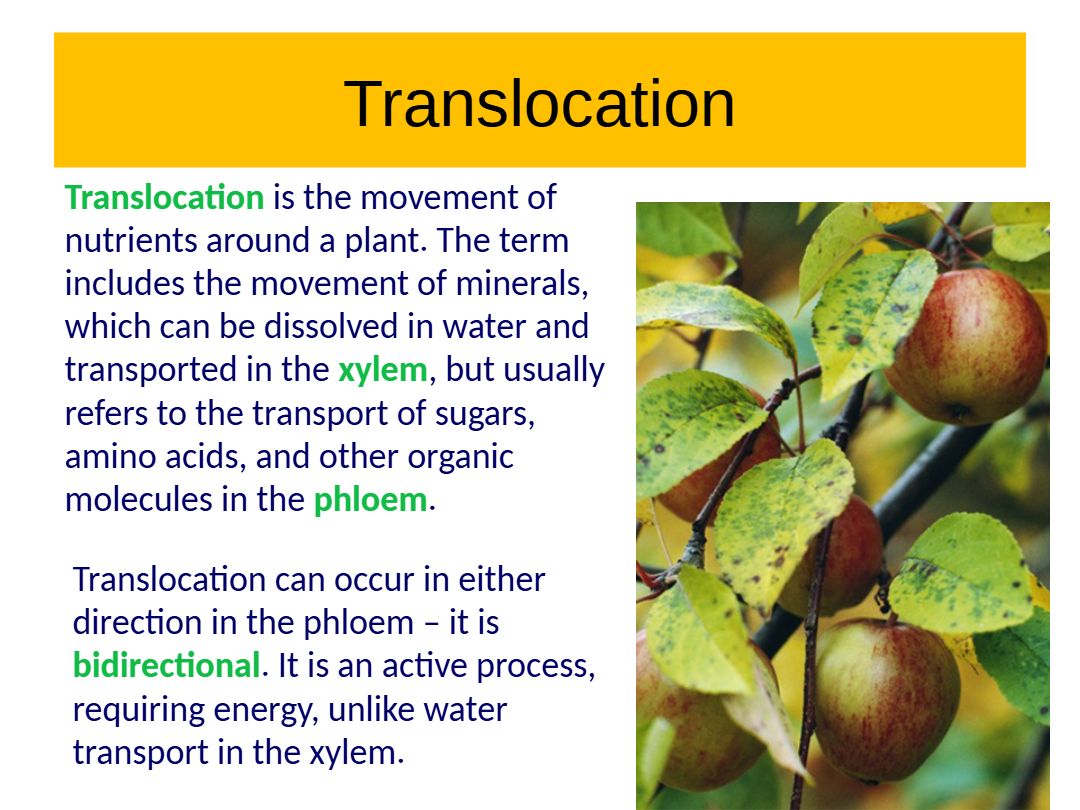
Which tissue is primarily responsible for the bidirectional transport of sugars and amino acids in plants?
Xylem
Phloem
Cambium
Epidermis
8
9
Fill in the Blanks
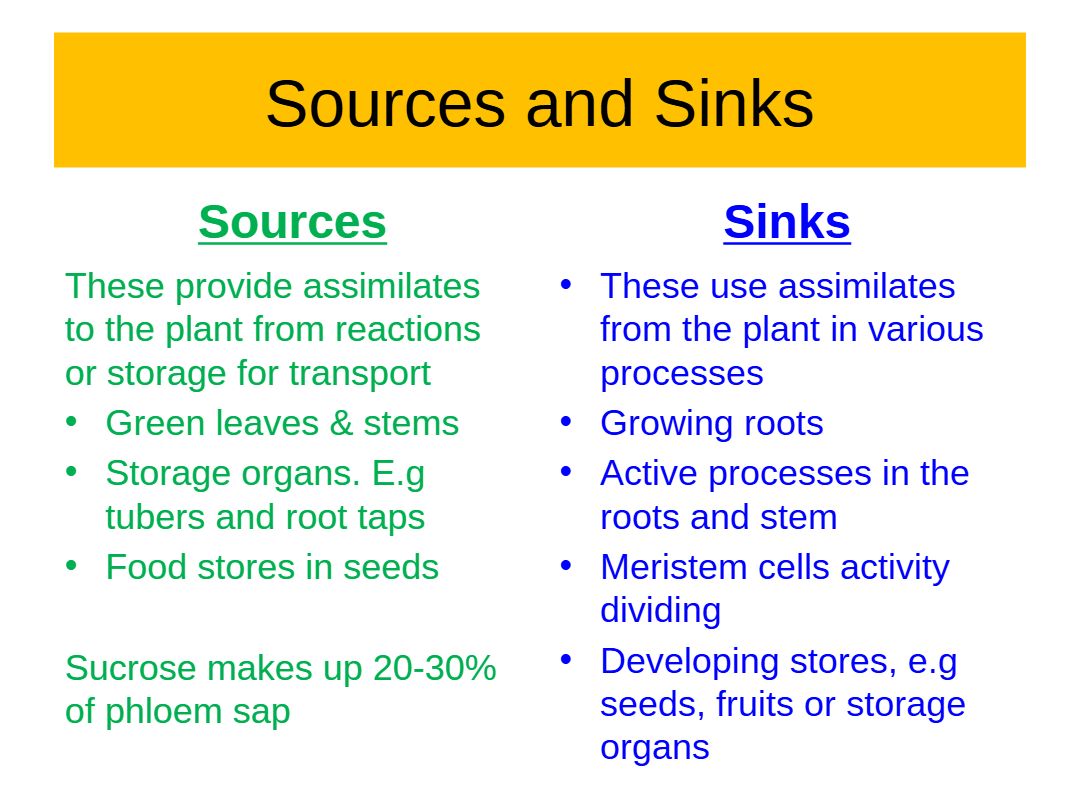
Fill in the blank: Sucrose makes up
Type answer...
10
Open Ended
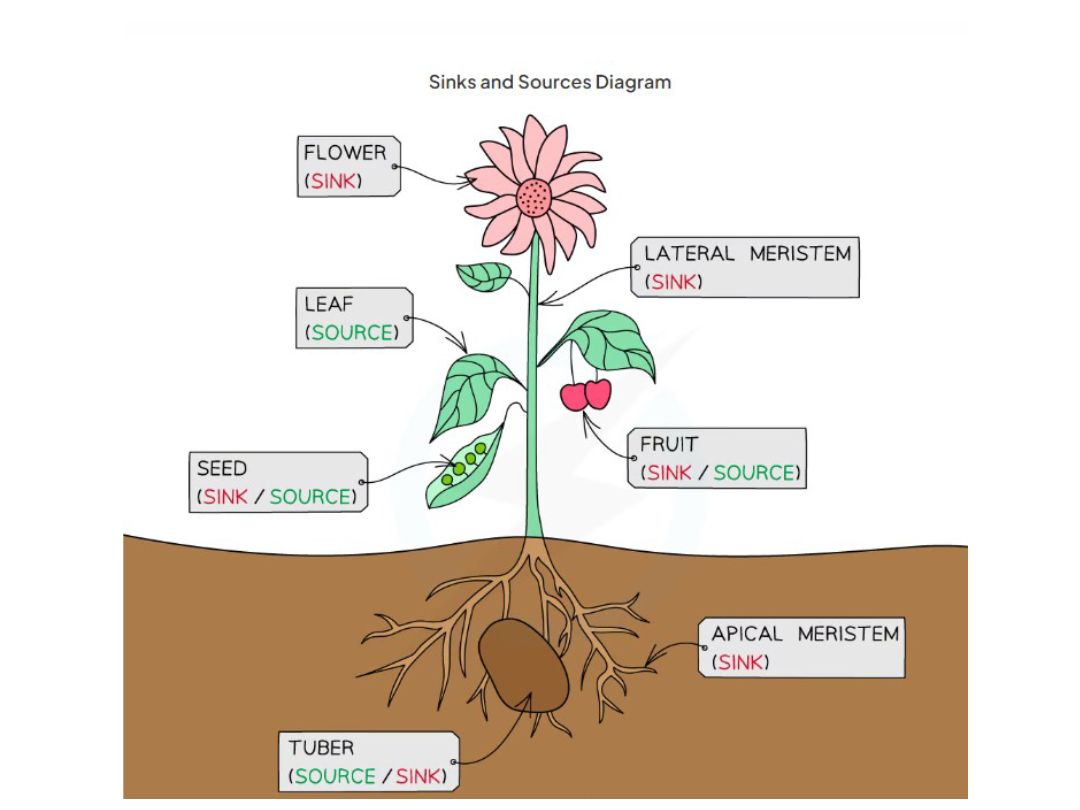
Explain the difference between a source and a sink in the context of plant translocation.
11
12
Multiple Choice
Which of the following plant parts can act as both a source and a sink?
Leaf
Flower
Seed
Apical meristem
13
14
Multiple Choice
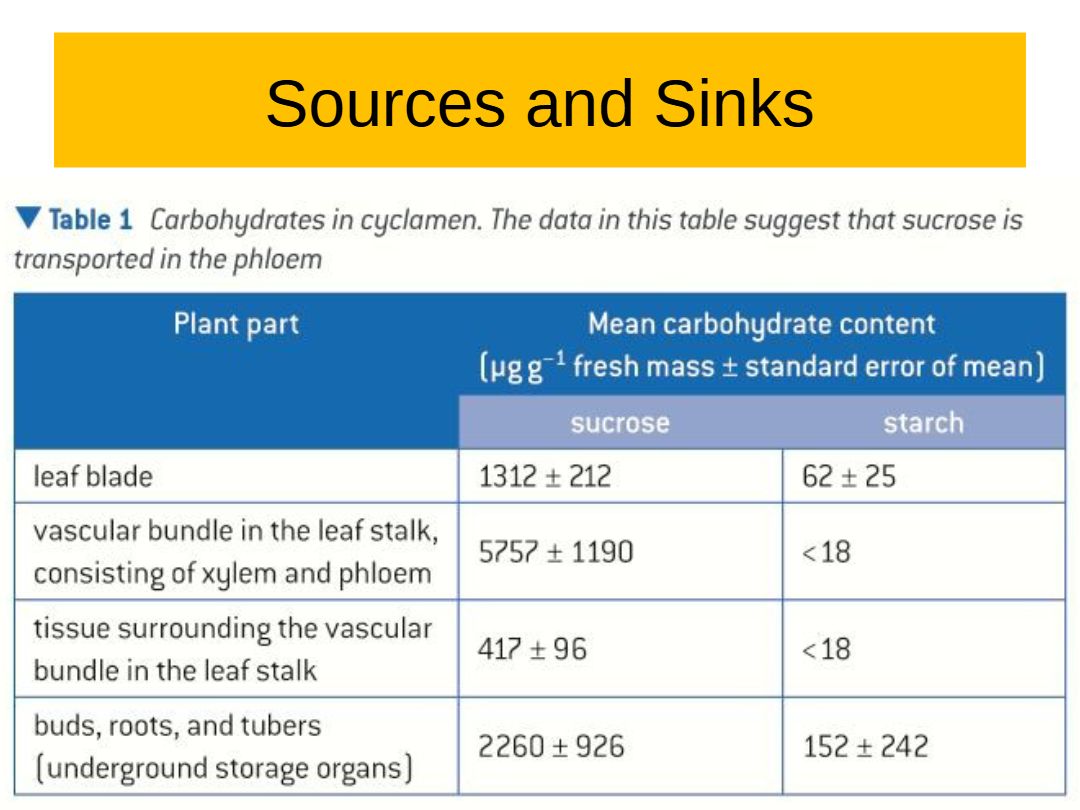
Based on the carbohydrate content table, which plant part contains the highest amount of sucrose?
Leaf blade
Vascular bundle in the leaf stalk
Tissue surrounding the vascular bundle
Buds, roots, and tubers
15
16
17
Open Ended
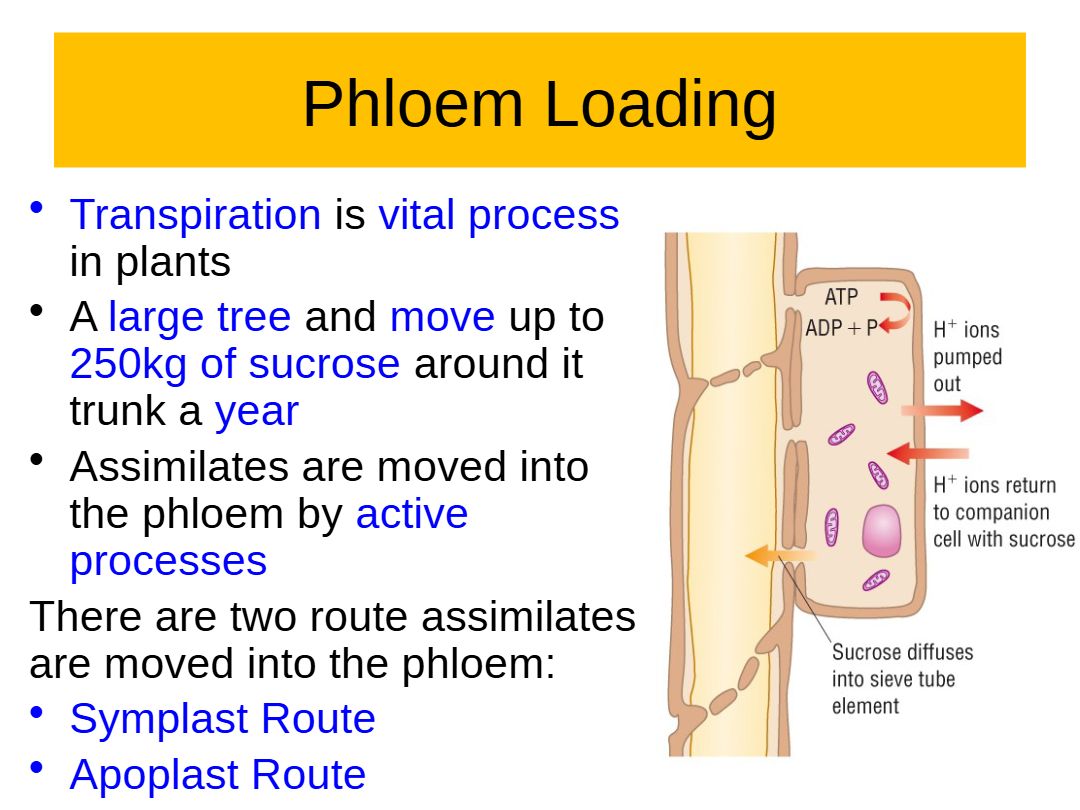
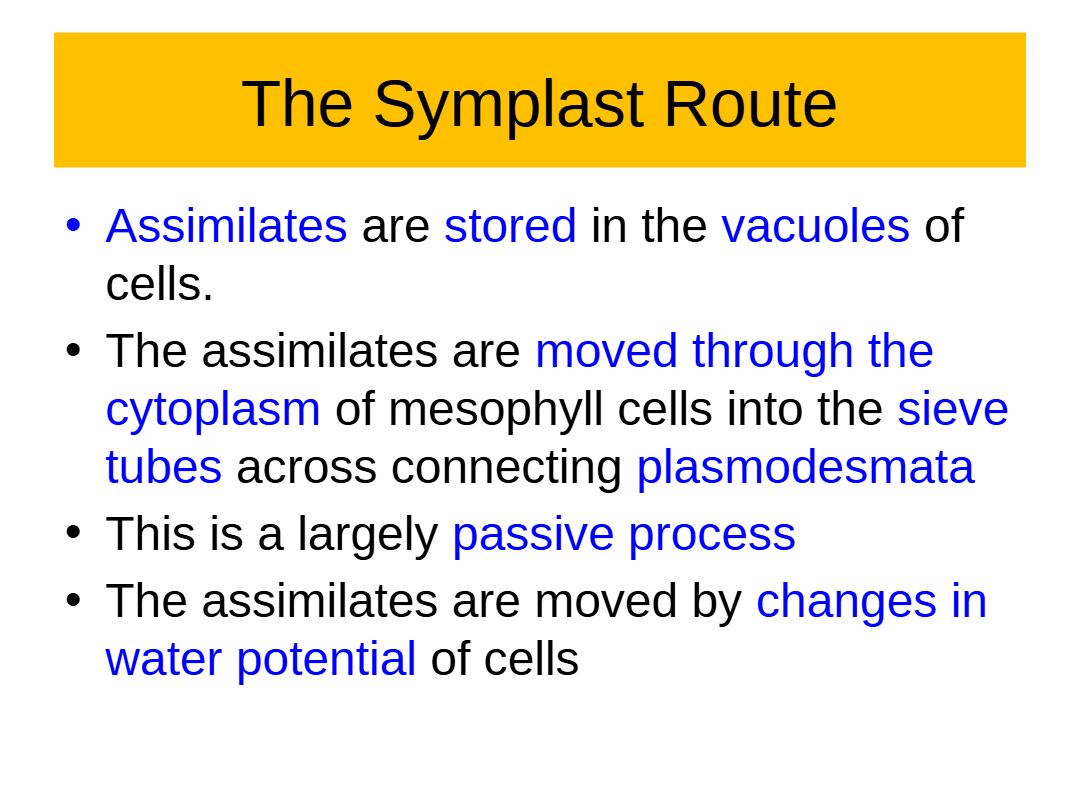
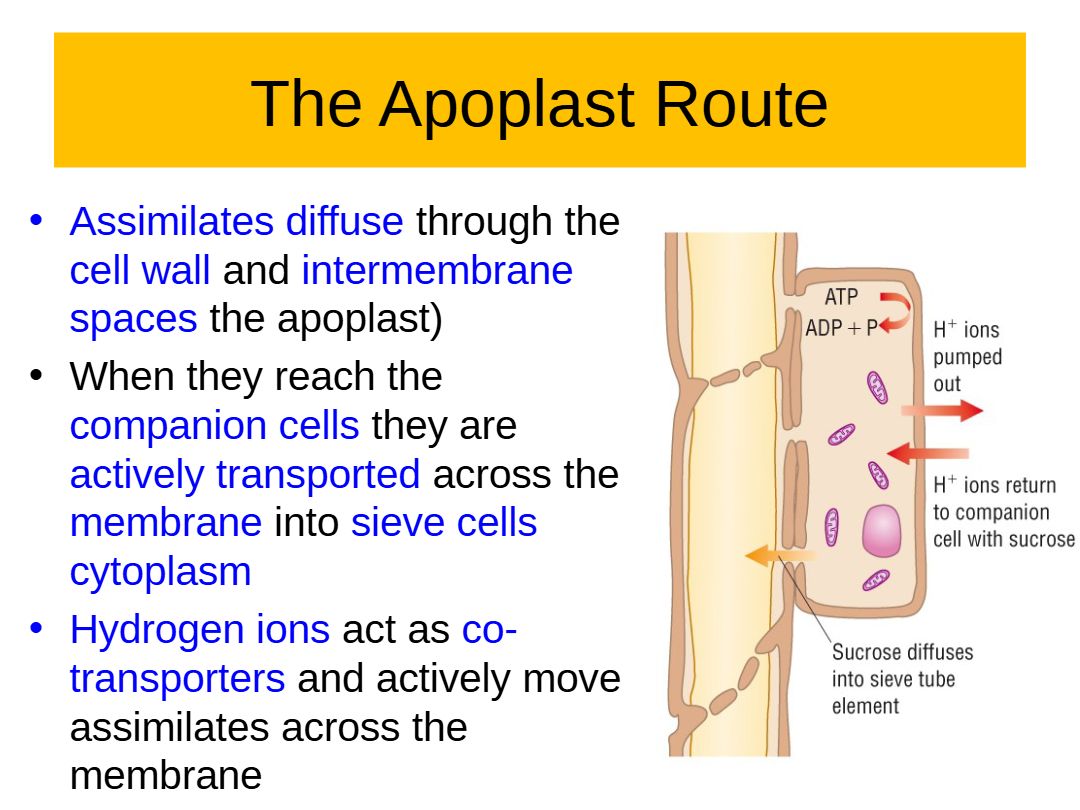
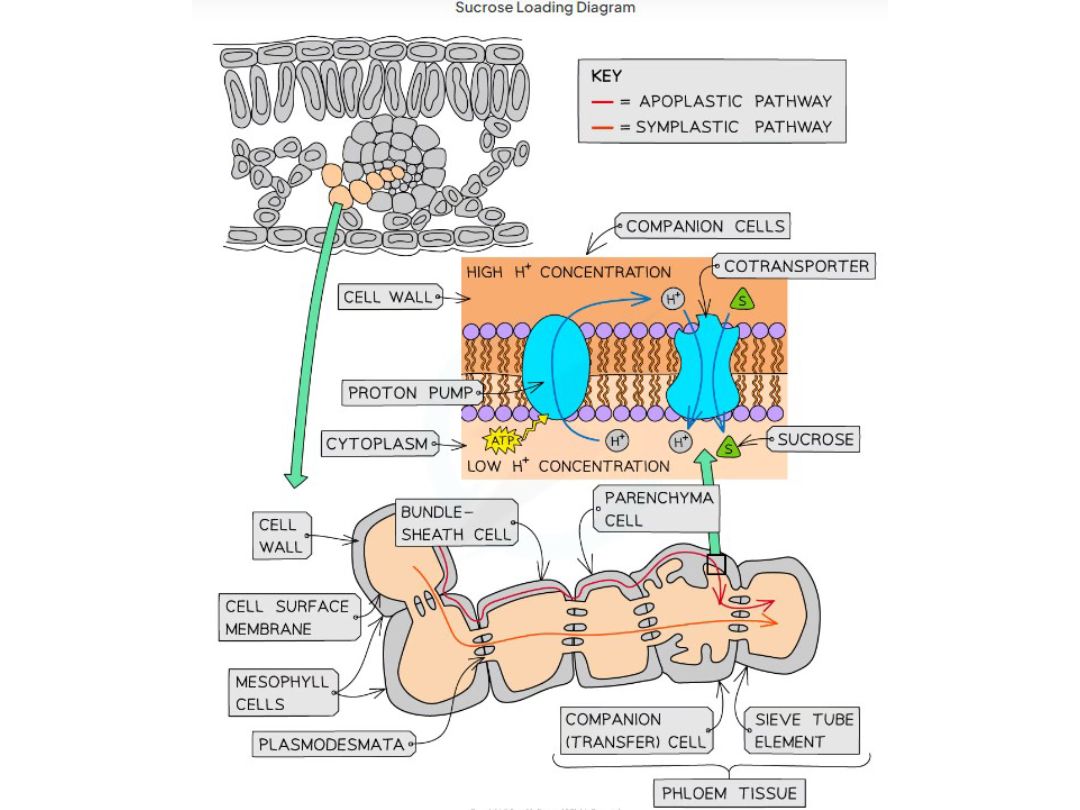
Describe the process by which assimilates are loaded into the phloem, mentioning the two main routes.
18
19
Multiple Choice
Which of the following statements correctly describes the symplast route for assimilate movement in plants?
Assimilates are stored in the vacuoles and moved through the cytoplasm via plasmodesmata in a passive process.
Assimilates diffuse through the cell wall and are actively transported across the membrane.
Hydrogen ions act as co-transporters to move assimilates across the membrane.
Assimilates are moved by mass flow due to hydrostatic pressure.
20
21
Fill in the Blanks
Fill in the blank: In the apoplast route, assimilates diffuse through the cell wall and intermembrane spaces before being actively transported into the sieve cells by
Type answer...
22
Open Ended
Compare and contrast the symplast and apoplast routes for sucrose loading into the phloem. What are the key differences in their mechanisms?
23
24
Multiple Select
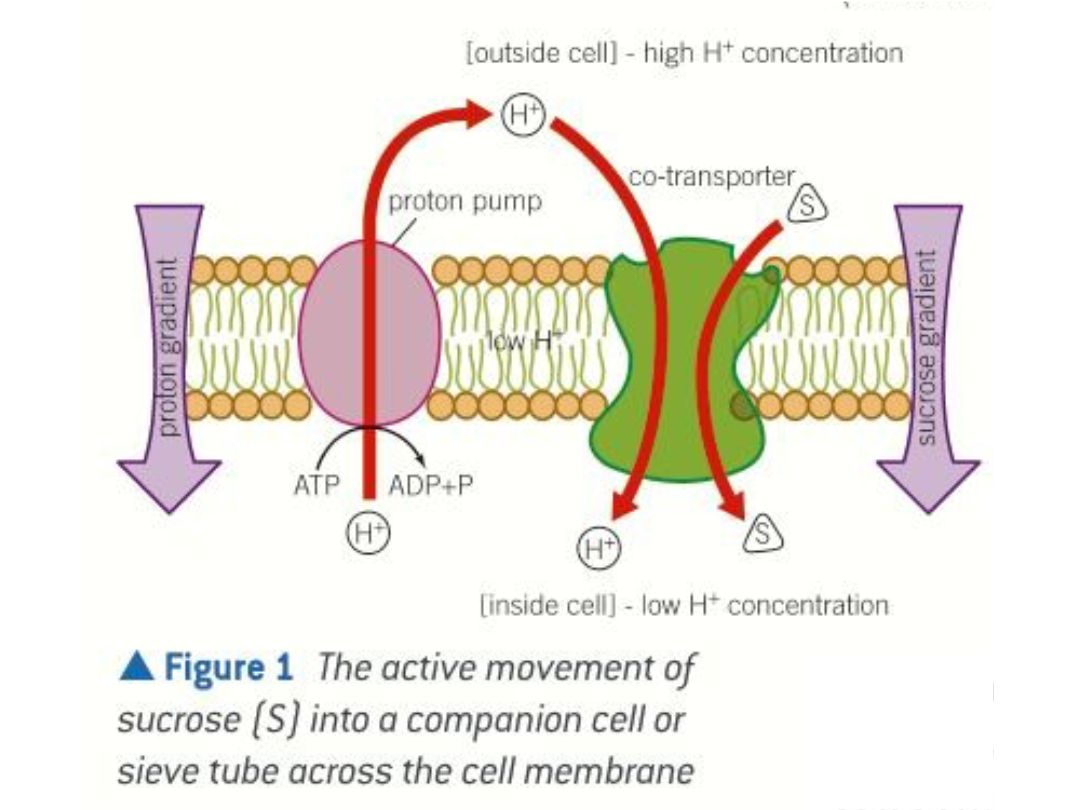
Which of the following are involved in the active movement of sucrose into a companion cell or sieve tube across the cell membrane?
Proton pump
Co-transporter
ATP
Plasmodesmata
25
26
27
Multiple Choice
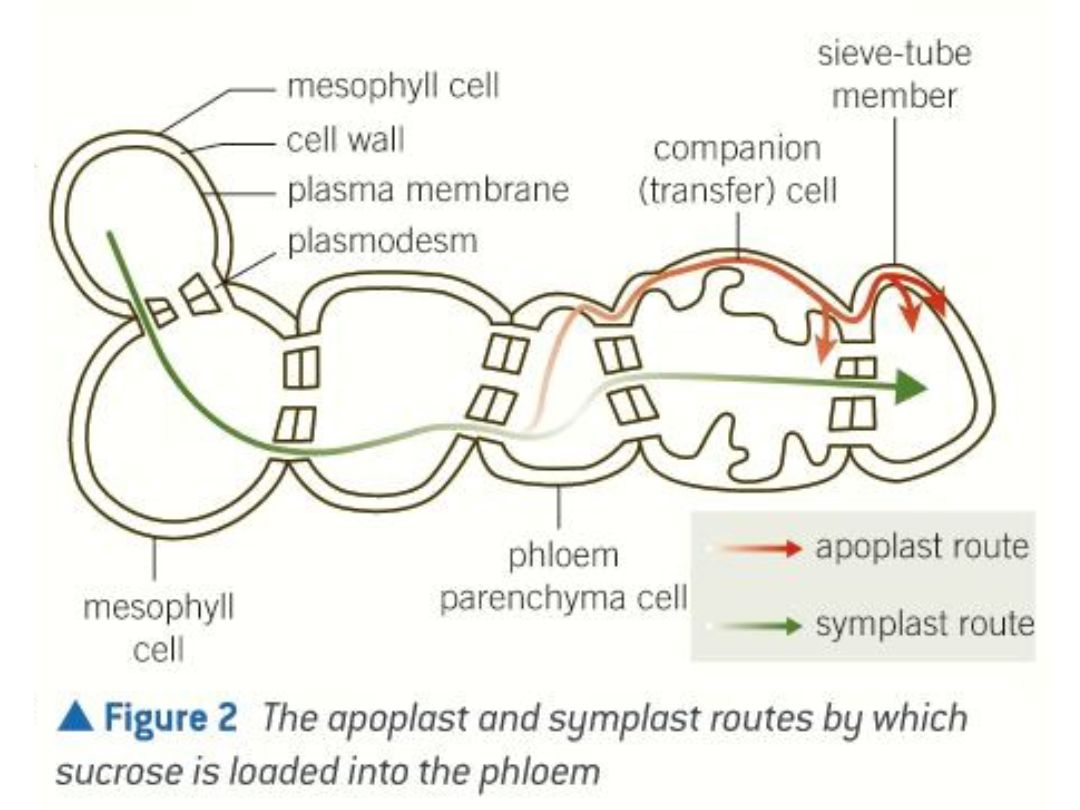
Based on the diagrams, which route (apoplast or symplast) involves the movement of assimilates through plasmodesmata?
Apoplast route
Symplast route
Both routes
Neither route
28
29
Open Ended
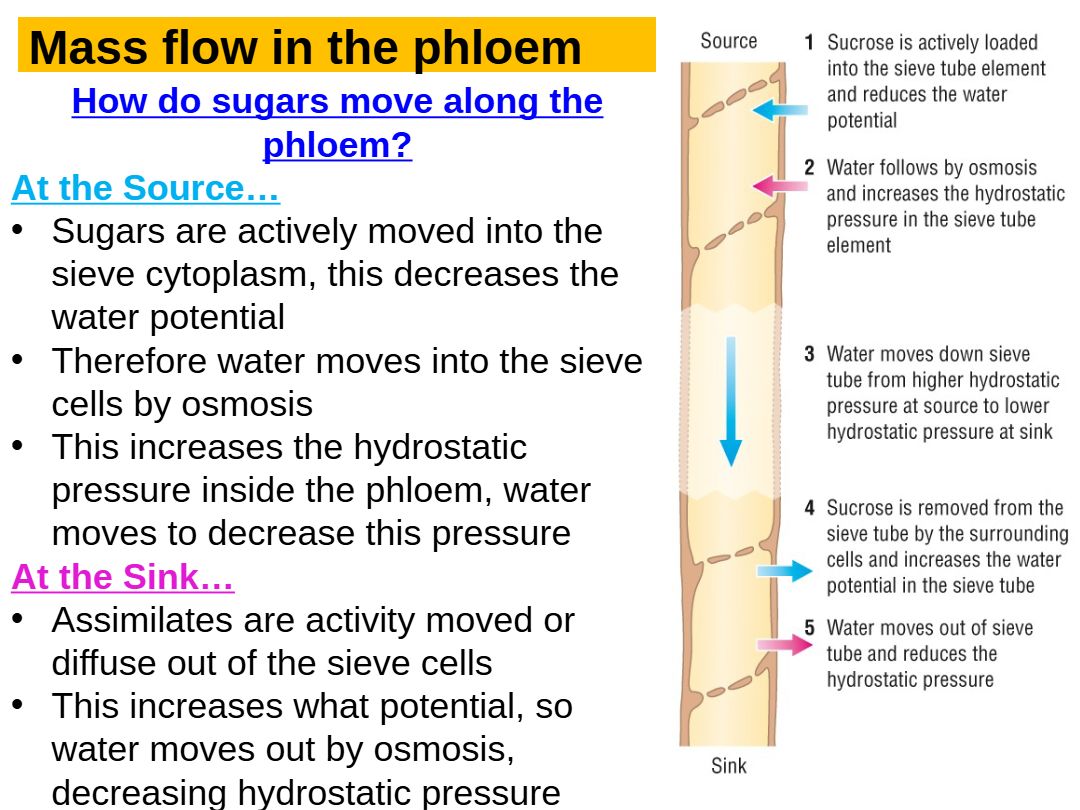
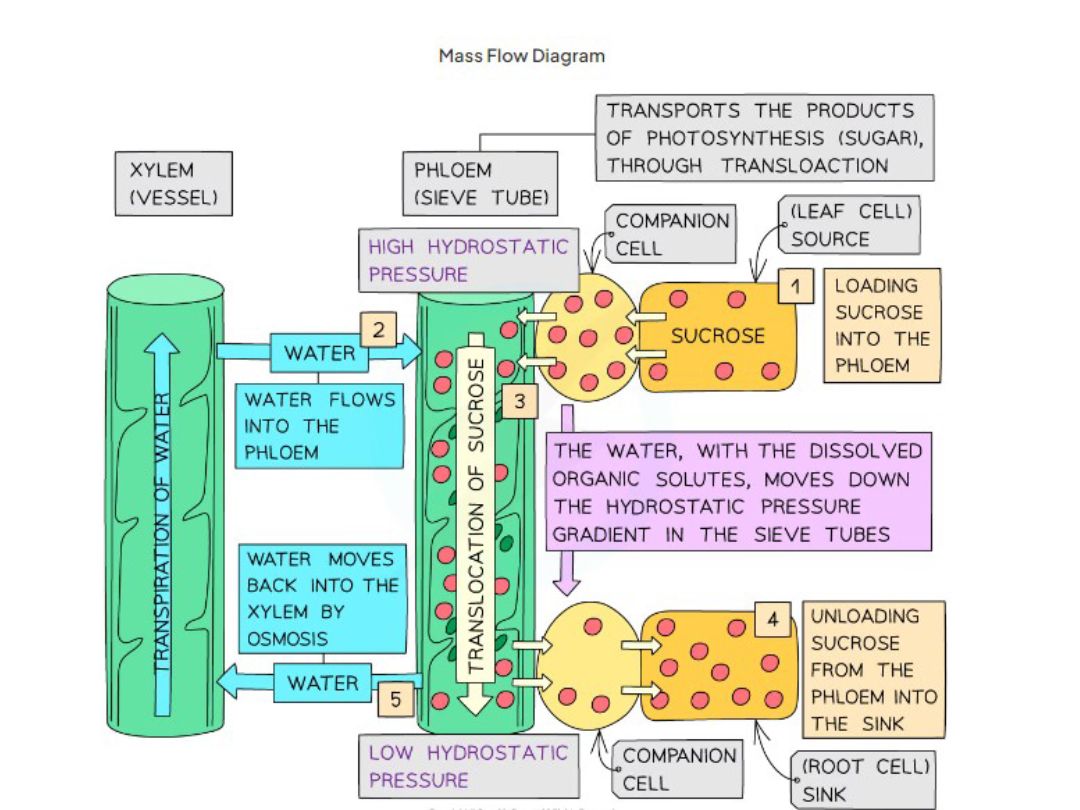
Explain how mass flow in the phloem is driven by changes in water potential at the source and the sink.
30
31
Open Ended
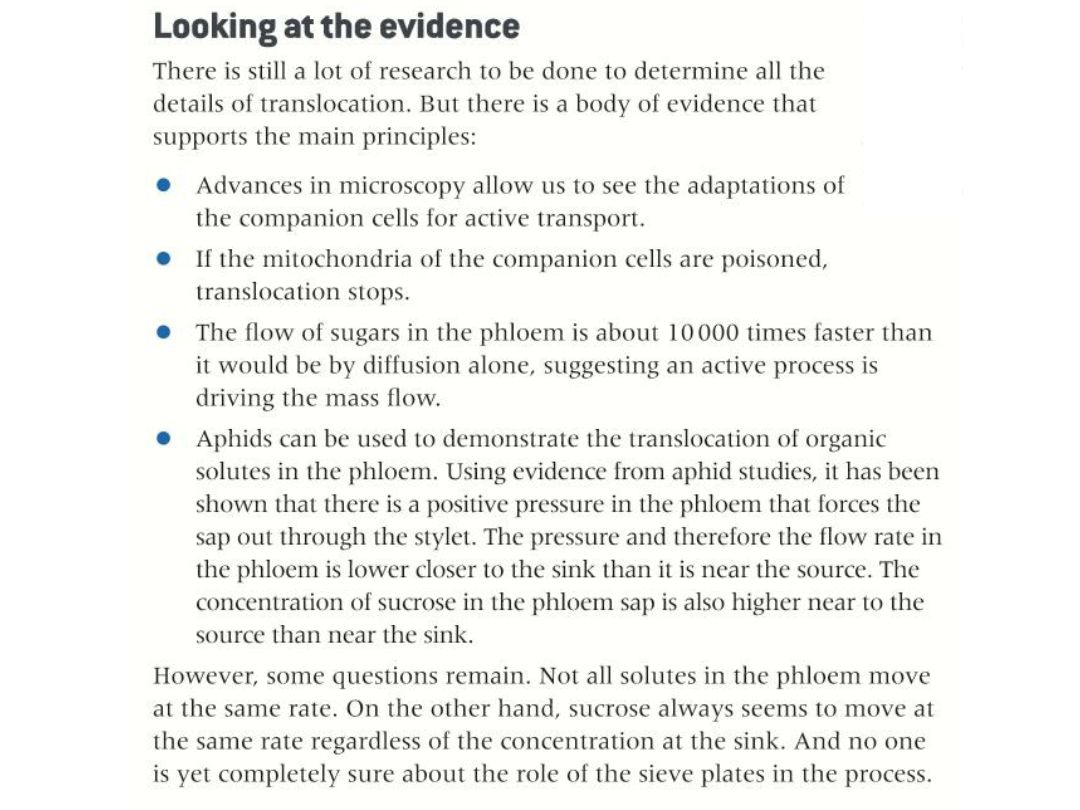
Why might the theory of mass flow not be correct?
32
Open Ended
Explain how the evidence for mass flow suggests the theory is correct.
33
34
Multiple Choice
Which of the following is NOT evidence supporting the mass flow hypothesis in plants?
Advances in microscopy show adaptations for active transport in companion cells.
Poisoning mitochondria in companion cells stops translocation.
The flow of sugars in the phloem is about 10,000 times faster than diffusion alone.
All solutes in the phloem move at the same rate.
35
36
Multiple Choice
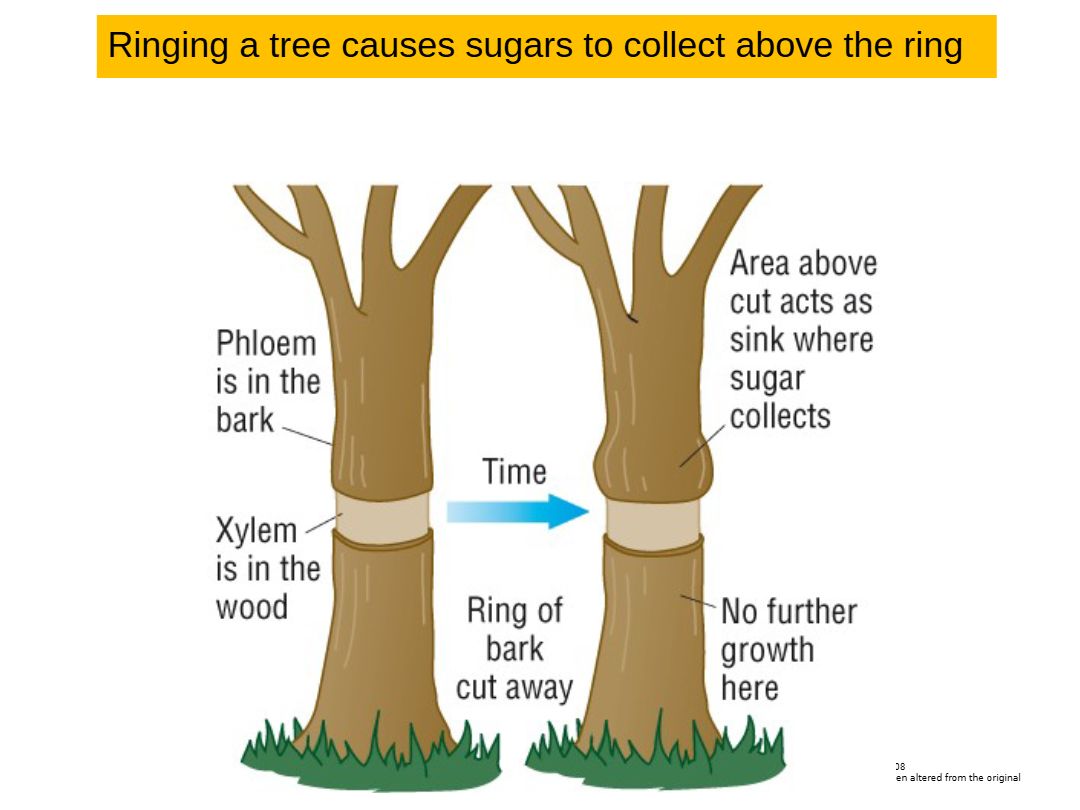
What happens to the distribution of sugars in a tree when a ring of bark is cut away from the trunk?
Sugars collect below the ring.
Sugars collect above the ring.
Sugars are evenly distributed throughout the tree.
Sugars stop moving entirely.
37
38
39
Multiple Choice
Which structures are directly involved in the translocation of sucrose in plants?
Xylem vessels
Phloem sieve tubes
Root hairs
Guard cells
40
41
42
Multiple Choice
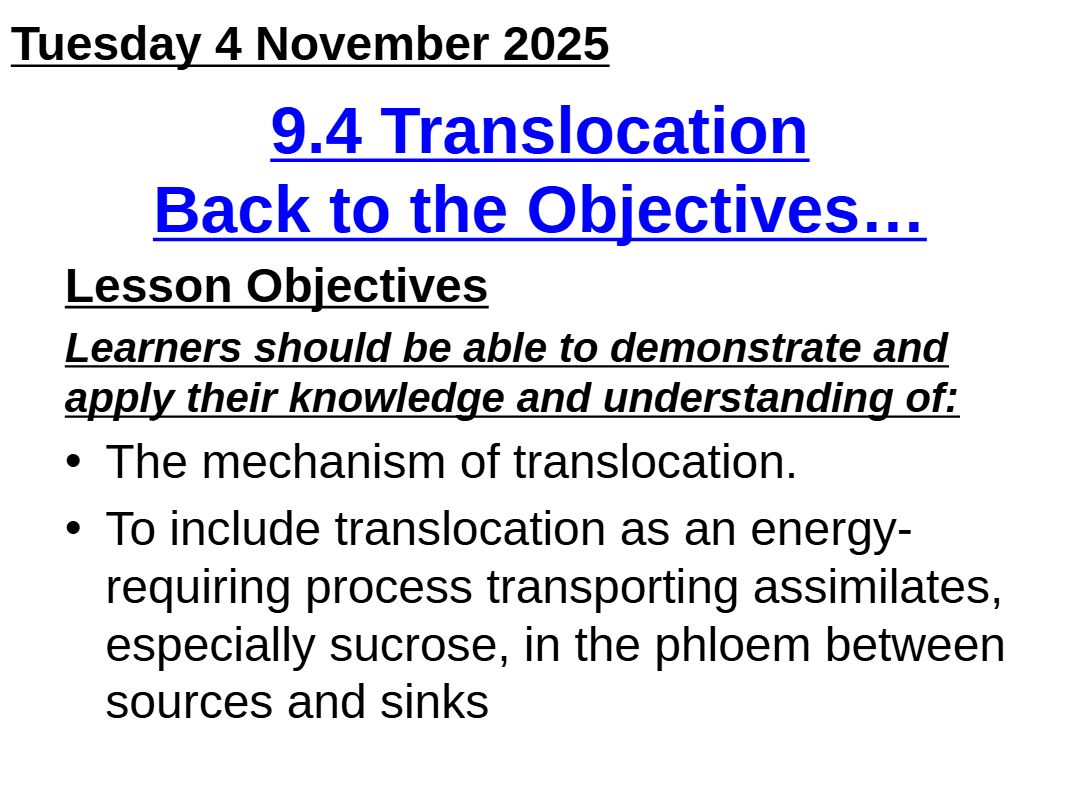
Which of the following best describes the process of translocation in plants?
Movement of water from roots to leaves through xylem
Transport of assimilates, especially sucrose, in the phloem between sources and sinks
Exchange of gases in the stomata
Absorption of minerals from soil
43
44
Open Ended
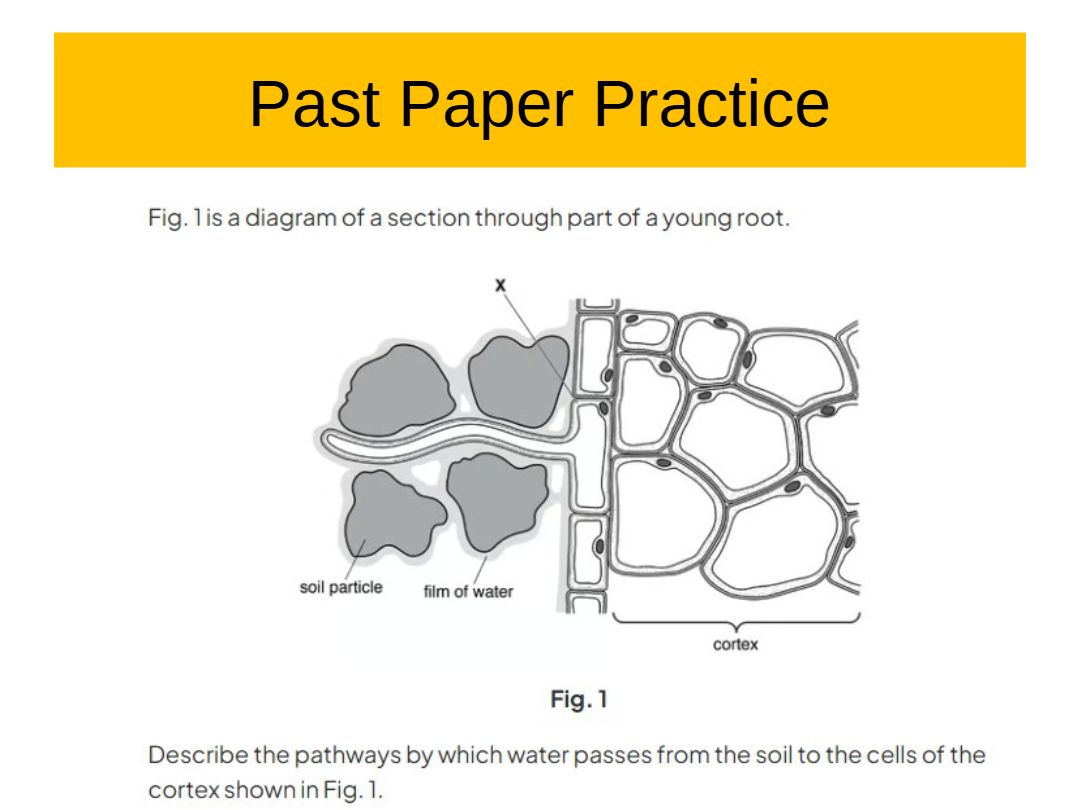
Describe the pathways by which water passes from the soil to the cells of the cortex shown in Fig. 1.
45
46
Open Ended
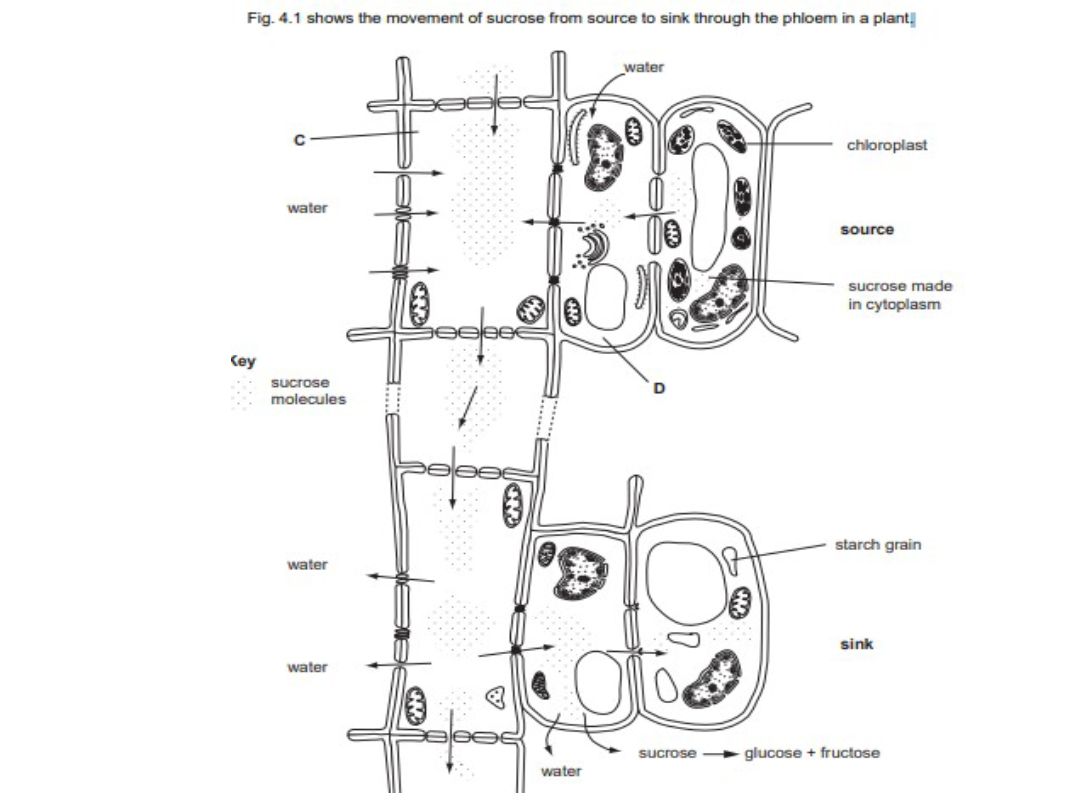
With reference to Fig. 4.1, explain how sucrose travels from the source to cell C, and from cell C to the sink.
47
Multiple Choice
What are the main types of cells found in the phloem vessel?
Sieve tube elements and companion cells
Xylem vessels and tracheids
Guard cells and epidermal cells
Parenchyma and sclerenchyma
48
Open Ended
Summarize how translocation works in plants and why it is considered an energy-requiring process.
Show answer
Auto Play
Slide 1 / 48
SLIDE
Similar Resources on Wayground

44 questions
Unit 2 Review Honors 2024
Presentation
•
9th - 12th Grade
41 questions
Biology Honors Chapter 3.1 - introduction to Global Systems
Presentation
•
9th - 12th Grade
46 questions
Photosynthesis
Presentation
•
9th - 12th Grade
44 questions
EOC- supporting standards review
Presentation
•
9th - 12th Grade
44 questions
ALGEBRA STAAR REVIEW
Presentation
•
9th - 12th Grade
41 questions
Epithelial Tissues
Presentation
•
9th - 12th Grade
43 questions
Evolution for Zoology Part 2
Presentation
•
9th - 12th Grade
Popular Resources on Wayground
10 questions
Safety Day 2026 – Student Review

Quiz
•
9th Grade
21 questions
Continents and Oceans
Quiz
•
6th Grade
20 questions
Parts of Speech
Quiz
•
5th Grade
16 questions
Subject & Predicate
Quiz
•
5th Grade
25 questions
Multiplication Facts
Quiz
•
5th Grade
12 questions
Map Skills
Quiz
•
3rd Grade
22 questions
Continents and Oceans
Quiz
•
5th Grade
15 questions
Rounding Decimals
Quiz
•
5th Grade
Discover more resources for Biology
20 questions
Cell organelles and functions
Quiz
•
10th Grade
20 questions
Cell Transport
Quiz
•
9th - 12th Grade
25 questions
photosynthesis and cellular respiration
Quiz
•
9th Grade
20 questions
Cell Cycle
Quiz
•
9th Grade
8 questions
DNA vs. RNA
Presentation
•
9th - 12th Grade
14 questions
Ecological Succession: Primary and Secondary
Quiz
•
9th Grade
20 questions
Macromolecules
Quiz
•
10th Grade
20 questions
Characteristics of Life
Quiz
•
9th - 10th Grade