Chemistry 101
Presentation
•
Science
•
6th Grade
•
Medium
+4
Standards-aligned
Kaitlin Siler
Used 5+ times
FREE Resource
24 Slides • 27 Questions
1
2
3
Multiple Choice
Which of the following best describes a mixture?
A combination of two or more substances that are chemically combined.
A combination of two or more substances that are mixed together but not chemically combined.
A substance that cannot be separated into simpler substances.
A substance that changes from a liquid to a gas at room temperature.
4
Fill in the Blanks
The temperature at which a substance changes from a liquid to a gas is called the
5
6
The Periodic Table is divided into groups and periods.
Groups run up and down.
Periods run side to side.
REMEMBER: "The groups! The groups! The groups are in columns! The rows! The rows! The rows are periods!
7
Multiple Choice
Groups run:
up and down
left to right
8
Multiple Choice
Periods run:
up and down
left to right
9
Groups are also called "families"
REMEMBER*: Groups are in "columns!"
Groups share common characteristics; i.e. All group 1 elements explode in water. All group 18 elements DON'T react.
Fluorine and Chlorine are in the same GROUP (17), SO, they share the same PROPERTIES.
10
Periods run in rows.
Each period has the same number of electron shells. i.e. Hydrogen and Helium have 1 electron shell. Lithium and Boron have 2.
This means each period has the same number of ENERGY LEVELS!
11
Luster (shiny)
Malleable (bends)
Good conductor (moves heat & electricity)
12
Luster (shiny)
Brittle (breaks)
Semi-conductor (kind of moves heat & electricity)
13
Dull (not shiny)
Brittle (breaks)
Insulators (does not move heat & electricity)
14
Multiple Choice
What is an atom?
A large molecule
Largest piece of matter
Smallest piece of matter
A molecule made of ions
15
Multiple Choice
What is the center of an atom called?
Proton
Neutron
Electron
Nucleus
16
Multiple Select
Which of these below are CANNOT be an element? (check all that apply)
d
H
He
HE
C
17
18
19
Multiple Choice
What is the atomic number of the element oxygen?
O
8
15.999
20
21
22
Multiple Choice
What is the atomic mass of the element potassium?
K
39.098
19
23
Multiple Choice
What is a proton?
A subatomic particle that is negatively charged
A subatomic particle that is positively charged
A subatomic particle that has no charge
A subatomic particle that is located outside of the nucleus
24
Multiple Choice
What is a neutron?
A subatomic particle that is negatively charged
A subatomic particle that is positively charged
A subatomic particle that has no charge
A subatomic particle that is located outside of the nucleus
25
26
Multiple Select
Choose all of the correct answers about electrons.
Electrons are positively charged subatomic particles inside the nucleus
Electrons are negatively charged subatomic particles
Electrons are subatomic particles with no charge
Electrons are located outside of the nucleus in the electron cloud
27
Multiple Select
Which subatomic particles are found inside the nucleus?
Protons
Neutrons
Electrons
Quarks
28
Multiple Choice
True or False: The number of protons and neutrons are always the same
False
True
29
30
Multiple Choice
What is atomic mass?
Protons + neutrons
Protons + electrons
Neutrons + electrons
Neutrons + quarks
31
Multiple Choice
How many protons does an atom of Nitrogen have?
7
14
21
32
Multiple Choice
If Carbon has an atomic mass of 12 and has 6 protons, how many electrons does it have?
18
6
12
33
Multiple Choice
What is the atomic number of this atom?
3
6
9
34
Multiple Choice
What is the atomic mass of this element?
1
2
3
35
Replace with sub-header
Replace this with your body text. Duplicate this text as many times as you would like. All provided templates can be reused multiple times. Wish you a good day.
Happy teaching!
36
Atoms are made of the subatomic particles.
Protons and neutrons are in the center of the atom. The center of the atom is called the nucleus.
Electrons move around the outside layer of the atom. This area is called the electron cloud
37
Electrons are located on the outside of the atom.
This area is referred to as the electron cloud or as orbits.
The electrons have a negative charge and move around the nucleus.
38
The molar mass of any element is the same number as the atomic mass on the periodic table.
The molar mass is how many grams of the substance are in one mole of the substance. Its unit is g/mol.
39
Multiple Choice
What is the atomic mass of this atom?
14
21
7
40
Multiple Choice
How many electrons are in Helium?
2
4
41
All matter have properties.
42
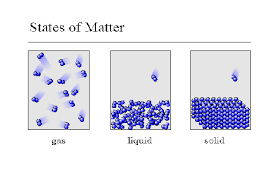
The three basic states of matter
43
44
Multiple Choice
At higher temperatures
particles in an object have less energy
particles in an object move faster
a gas contracts
45
Multiple Choice
Which of the following is a sign that a chemical reaction has occurred?
change in shape
melting
formation of a gas
dissolving
46
Multiple Choice
What is the symbol for gold?
G
Au
g
Go
47
Multiple Choice
What is the chemical symbol for Iron?
I
i
Fe
FE
48
Fill in the Blanks
The smallest unit of matter that makes up the universe
Type answer...
49
Multiple Choice
At what point does a substance change from a solid to a liquid?
Boiling Point
Freezing Point
Melting Point
Condensation Point
50
51
Show answer
Auto Play
Slide 1 / 51
SLIDE

Similar Resources on Wayground
47 questions
Non-renewable energy lesson
Presentation
•
6th Grade
44 questions
Naica Crystal Caves
Presentation
•
6th Grade
41 questions
Ecosystems 6.L.2
Presentation
•
6th Grade
45 questions
Unit 1 Lesson 3: Erosion and Deposition by Water
Presentation
•
6th Grade
43 questions
Intro to the Solar System
Presentation
•
6th Grade
43 questions
Newton's 3 Laws of Motion Guided Lesson
Presentation
•
6th Grade
48 questions
Earth's Movements (Seasons, Day/Night)
Presentation
•
6th Grade
42 questions
Module F Unit 2 Lesson 3 Ocean Currents
Presentation
•
6th Grade
Popular Resources on Wayground
10 questions
Safety Day 2026 – Student Review
Quiz
•
9th Grade
21 questions
Continents and Oceans
Quiz
•
6th Grade
20 questions
Parts of Speech
Quiz
•
5th Grade
16 questions
Subject & Predicate
Quiz
•
5th Grade
25 questions
Multiplication Facts
Quiz
•
5th Grade
12 questions
Map Skills
Quiz
•
3rd Grade
22 questions
Continents and Oceans
Quiz
•
5th Grade
15 questions
Rounding Decimals
Quiz
•
5th Grade
Discover more resources for Science
20 questions
Elements, compounds, and mixtures
Quiz
•
6th Grade
10 questions
6.6D - Relative Density Review
Quiz
•
6th Grade
10 questions
Exploring Chemical and Physical Changes
Interactive video
•
6th - 10th Grade
20 questions
CONDUCTION,CONVECTION AND RADIATION
Quiz
•
6th Grade
20 questions
Rocks and The Rock Cycle
Quiz
•
6th Grade
19 questions
Describing and Classifying Matter
Presentation
•
6th Grade
21 questions
Waves and Wave Properties
Quiz
•
6th - 8th Grade
20 questions
Phases of the Moon
Quiz
•
6th Grade