

genetics

Presentation
•
Biology
•
11th Grade
•
Easy

jeddy sinsuan
Used 2+ times
FREE Resource
65 Slides • 26 Questions
1

2
Multiple Choice
Why is the study of genetics significant for understanding living organisms?
It helps us understand how traits are inherited and how organisms evolve.
It explains only the physical appearance of organisms.
It is only important for plants, not animals.
It is unrelated to the study of DNA.
3

4

5
Multiple Choice
Which of the following best describes the difference between genotype and phenotype?
Genotype is the observable trait, phenotype is the genetic code.
Genotype is the genetic make-up, phenotype is the observable characteristic.
Genotype is the environment, phenotype is the DNA sequence.
Genotype and phenotype mean the same thing.
6

7
Open Ended
Explain how genetic engineering can alter the phenotype of an organism.
8

9
Multiple Choice
The blue color of the strawberry in the image is most likely a result of:
Natural mutation
Genetic engineering
Environmental factors
Selective breeding
10

11
Fill in the Blanks
Strawberries with antifreeze genes are an example of
Type answer...
12

13

14
Open Ended
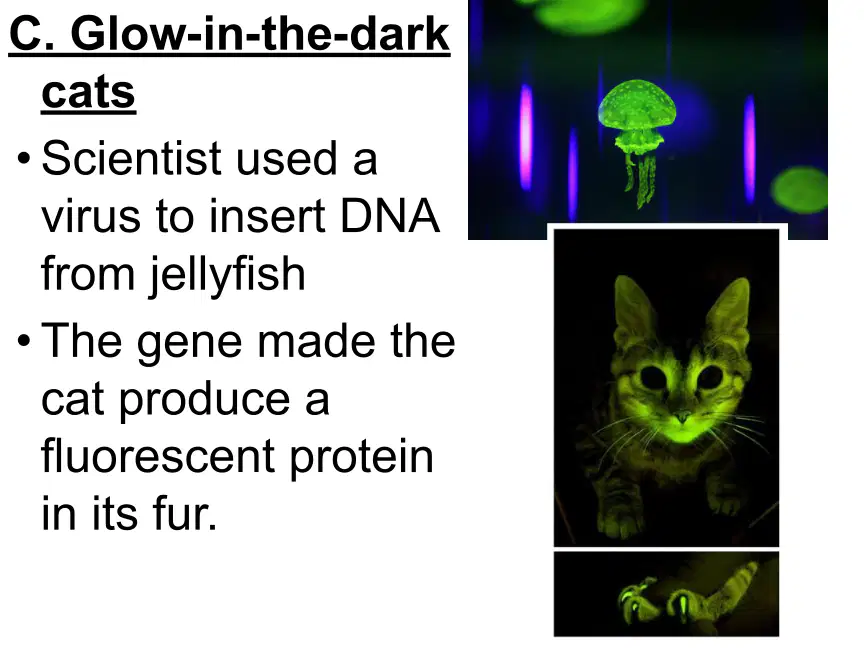
Describe how the introduction of a new gene can result in a tobacco plant that glows in the dark.
15
Multiple Select
Which of the following are possible outcomes of genetic engineering in plants?
Plants that glow in the dark
Plants with increased resistance to pests
Plants with reduced nutritional value
Plants that can survive extreme temperatures
16
17

18
Multiple Choice
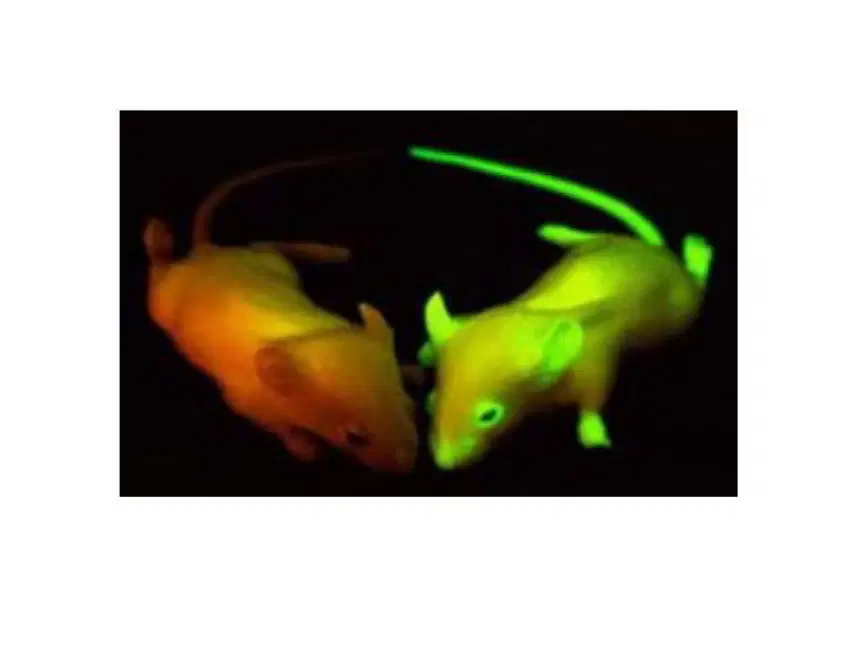
Why might scientists create 'glow in the dark' rats as shown in the images?
To study gene expression and genetic modification
To create pets that are easier to find at night
For entertainment purposes only
To increase the lifespan of rats
19

20
Multiple Choice
What is the main purpose of genetic engineering?
To artificially manipulate, modify, and recombine DNA to modify organisms
To allow organisms to glow in the dark
To create new species through natural selection
To prevent any changes in DNA
21

22
Multiple Choice
Which of the following is an example of a Genetically Modified Organism (GMO)?
Bacteria that produce human insulin
Wild-type bacteria
A naturally occurring hybrid plant
A cloned sheep
23

24
Multiple Select
Which of the following are techniques used in genetic engineering?
Artificial selection
Cloning
Gene splicing
Photosynthesis
25

26
Fill in the Blanks
The process in which breeders choose which organism to mate to produce offspring with desired traits is called
Type answer...
27

28
Multiple Select
Which of the following are examples of selective breeding?
Champion race horses
Cows with tender meat
Wild wolves
Large juicy oranges on a tree
29
Multiple Choice
What is the main goal of selective breeding in animals?
To produce offspring with desired traits
To create new species
To increase the population size
To prevent animals from breeding
30

31

32
Fill in the Blanks
Dachshunds were bred to hunt
Type answer...
33
Open Ended
How does selective breeding help in developing dog breeds for specific purposes?
34

35

36
Multiple Choice
What is the purpose of breeding Angus cows as mentioned in the example?
To increase muscle mass for more meat
To produce more milk
To make them run faster
To make them disease resistant
37

38
Open Ended
Explain how hybridization can result in a plant with both disease resistance and high food production capacity. Use the example of the Burbank potato in your answer.
39
40
Multiple Choice
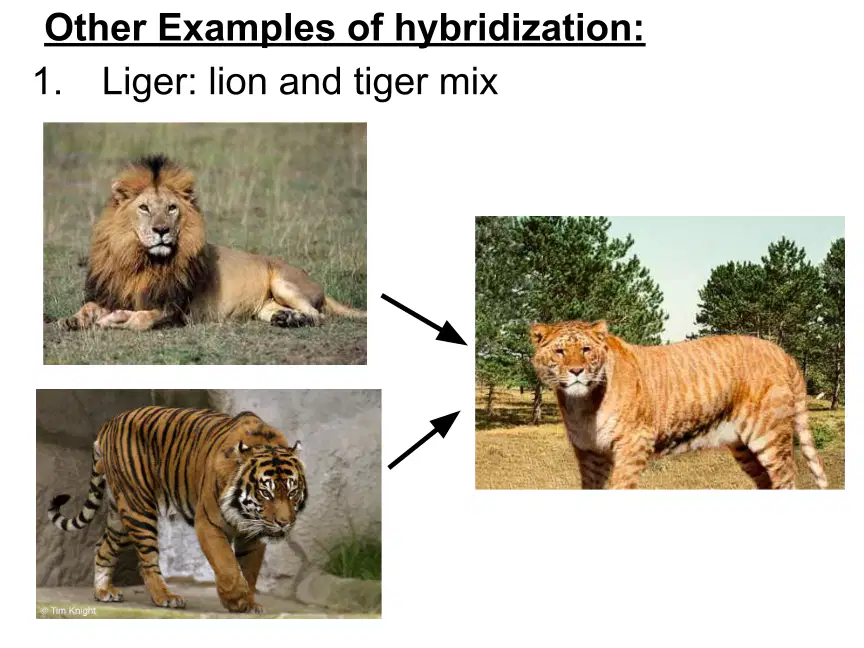
What is a liger an example of?
Hybridization between a lion and a tiger
Inbreeding between two lions
Cloning of a tiger
Variation in tigers
41

42
Multiple Select
Which of the following are true about a grapple fruit?
It tastes like grapes
It looks like an apple
It is a result of hybridization
It is a type of citrus fruit
43

44
Multiple Choice
What is the main risk associated with inbreeding in dogs?
Increased genetic disorders
Increased variation
Stronger immune system
Faster growth rate
45

46
Fill in the Blanks
Inbreeding decreases
Type answer...
47

48

49
Multiple Choice
Which process involves removing a single cell from a parent organism to grow an entire new individual?
Cloning
Hybridization
Inbreeding
Variation
50
Open Ended
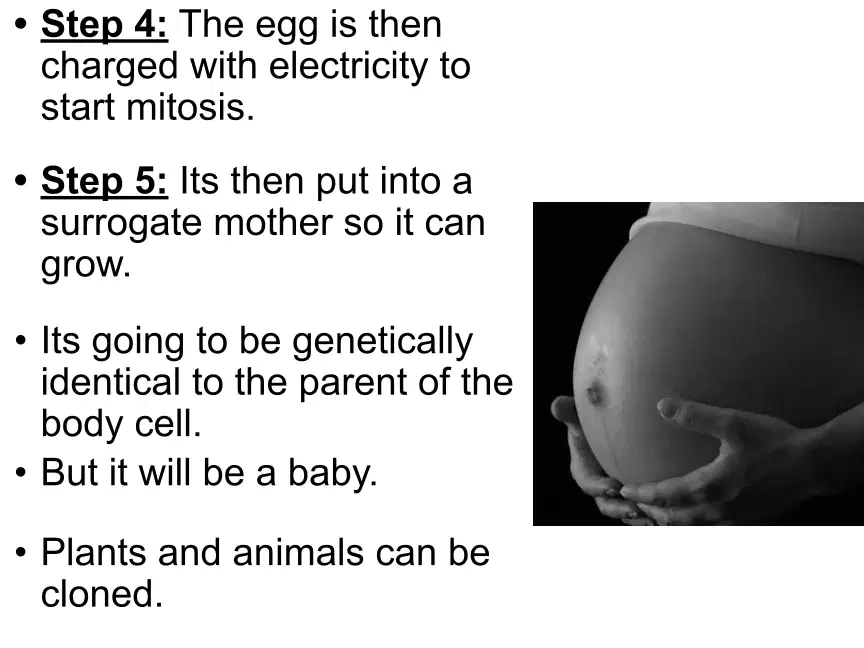
Explain how cloning results in organisms with identical DNA to the parent. Use information from the slides to support your answer.
51

52

53

54

55

56

57

58
59

60

61

62

63

64

65

66

67

68

69

70

71

72

73

74
75

76
77

78

79

80

81
82
83
84
85
86
87
88

89

90
Open Ended
How do chromosomes, DNA, and genes work together to determine the traits of an organism?
91
Multiple Choice
What is the primary function of DNA in living organisms?
To provide energy for cellular processes
To carry instructions for assembling proteins and determining traits
To protect cells from external damage
To transport nutrients within the cell
Show answer
Auto Play
Slide 1 / 91
SLIDE
Similar Resources on Wayground

82 questions
1GENBIO2_RESPIRATORY SYSTEM
Presentation
•
11th Grade
87 questions
JUPAS TALK (2024 DSE and beyond)
Presentation
•
11th Grade
84 questions
heliocentric VS geocentric
Presentation
•
KG
87 questions
ESL: My Family (RUS)
Presentation
•
KG
87 questions
Congress Part 1
Presentation
•
11th - 12th Grade
84 questions
Anatomy of Root, Stem and Leaves
Presentation
•
11th Grade
86 questions
plate tectonics earthquakes and volcanoes
Presentation
•
10th Grade
89 questions
Biomolecules
Presentation
•
11th Grade
Popular Resources on Wayground
10 questions
Safety Day 2026 – Student Review

Quiz
•
9th Grade
21 questions
Continents and Oceans
Quiz
•
6th Grade
20 questions
Parts of Speech
Quiz
•
5th Grade
16 questions
Subject & Predicate
Quiz
•
5th Grade
25 questions
Multiplication Facts
Quiz
•
5th Grade
12 questions
Map Skills
Quiz
•
3rd Grade
22 questions
Continents and Oceans
Quiz
•
5th Grade
15 questions
Rounding Decimals
Quiz
•
5th Grade
Discover more resources for Biology
20 questions
Cell Transport
Quiz
•
9th - 12th Grade
8 questions
DNA vs. RNA
Presentation
•
9th - 12th Grade
16 questions
Epithelial tissues
Quiz
•
11th - 12th Grade
15 questions
DNA Structure and Replication
Quiz
•
9th - 12th Grade
20 questions
Ecological Succession Review
Quiz
•
9th - 12th Grade
22 questions
Photosynthesis and Cellular Respiration Review
Quiz
•
9th - 11th Grade
3 questions
Enzymes & Energy
Quiz
•
9th - 12th Grade
38 questions
Mitosis & Meiosis
Quiz
•
9th - 12th Grade