

Plate Tectonic

Presentation
•
Science
•
9th Grade
•
Practice Problem
•
Medium
+4
Standards-aligned

Yaw Boakye
Used 4+ times
FREE Resource
19 Slides • 32 Questions
1
Multiple Choice
Which of the following is NOT one of the objectives for students learning about plate tectonics in this lesson?
Define the important terms and concepts related to plate tectonics.
Understand the scientific processes that led to the plate tectonic theory.
Describe the processes involved in the theory of seafloor spreading.
Explain the process of photosynthesis.
2
3
4
5
Open Ended
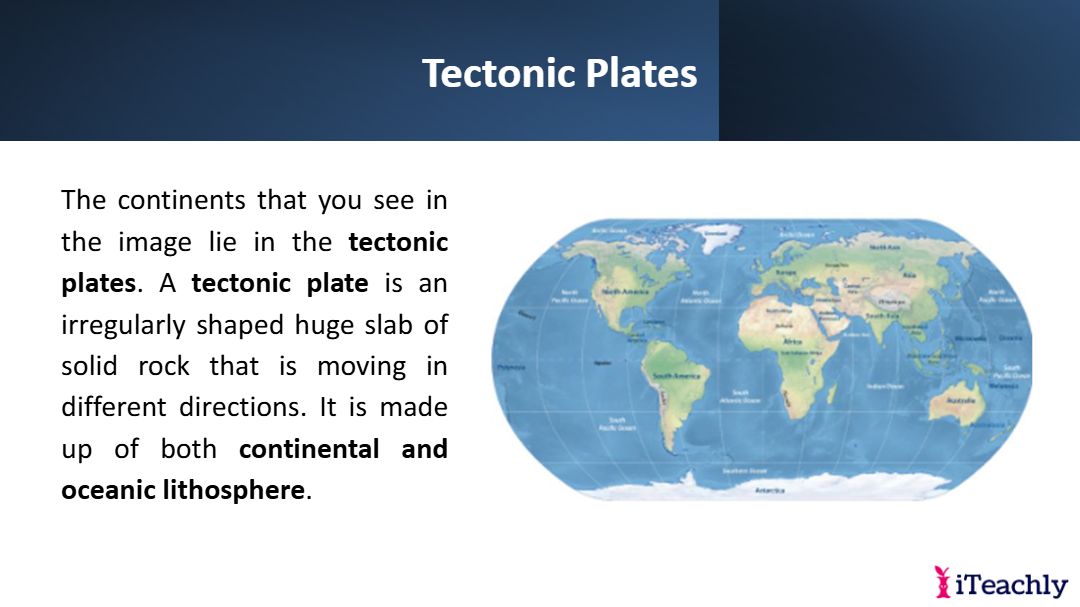
What are tectonic plates?
6
7
Multiple Choice
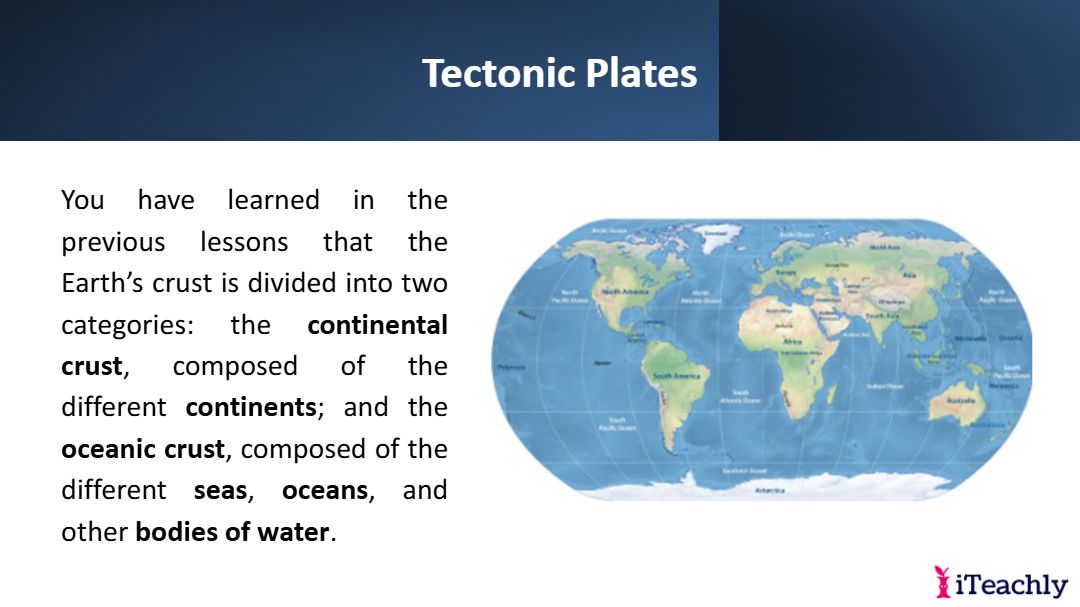
Which of the following statements best describes the difference between continental crust and oceanic crust?
Continental crust forms continents, while oceanic crust forms ocean floors.
Continental crust is found under oceans, while oceanic crust is found under continents.
Both continental and oceanic crust are found only in the Northern Hemisphere.
Oceanic crust is thicker than continental crust.
8
9
Multiple Select
Select all the correct statements about tectonic plates:
Tectonic plates are made up of both continental and oceanic lithosphere.
Tectonic plates are stationary and do not move.
Tectonic plates are huge slabs of solid rock.
Tectonic plates are irregularly shaped.
10
Multiple Choice
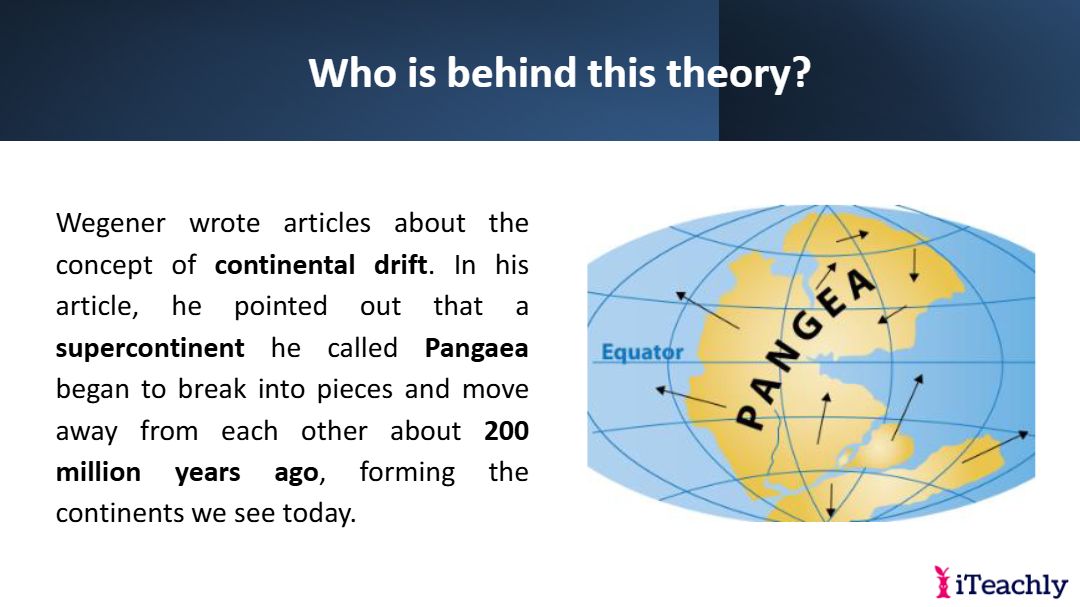
Which of the following is the name of the ancient supercontinent formed 280 million years ago?
Pangea
Gondwanda
Laurasia
Neverland
11
Multiple Choice
Which tectonic plate is located at the center of the ring of fire?
Pacific
Eurasian
African
North American
12
Multiple Choice
Exists between two tectonic plates that are moving away from each other
Divergent Boundary
Convergent Boundary
Transform Boundary
Plate Boundary
13
Multiple Choice
14
Multiple Choice
During a science project discussion, Grace asked Arjun and Abigail, 'When did the Earth form?'
3.5 million years ago
4.6 billion years ago
6,000 years ago
300 million years ago
15
Multiple Choice
Which of the following is a process involved in the theory of seafloor spreading?
Formation of new oceanic crust at mid-ocean ridges
Erosion of mountains by wind
Melting of polar ice caps
Formation of deserts
16
Open Ended
Why is the study of plate tectonics important for understanding the Earth's surface and its changes over time?
17
Multiple Choice
Which of the following terms refers to the process where new oceanic crust is formed at mid-ocean ridges and slowly moves away from the ridge?
Seafloor Spreading
Subduction Zones
Convection
Continental Drift
18
Fill in the Blanks
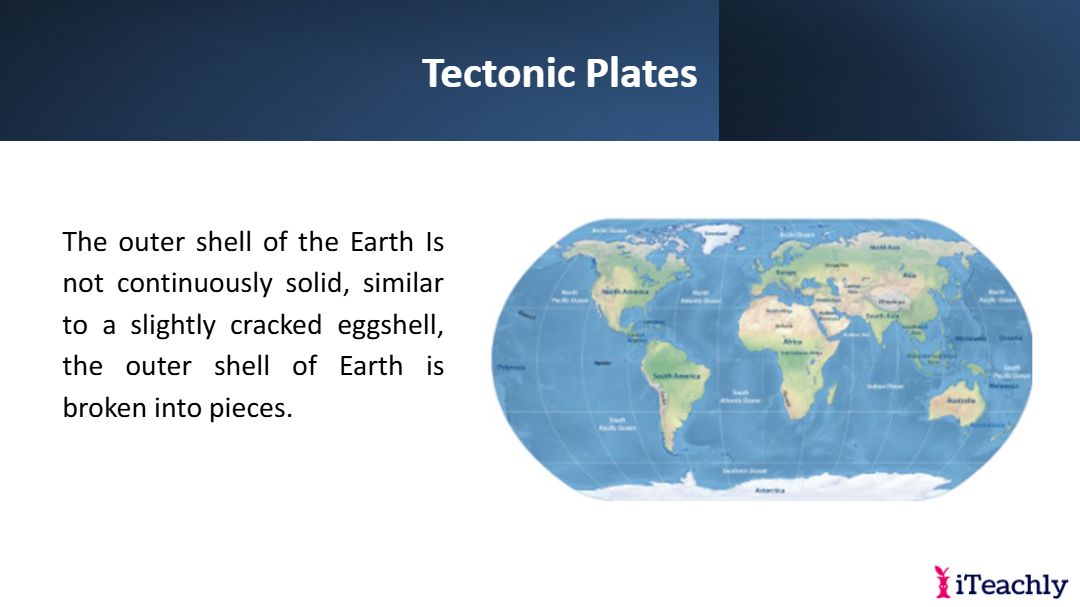
The Earth's outer shell is not continuously solid, but is broken into pieces called
19
Open Ended
Explain how the movement of tectonic plates can affect the Earth's surface. Provide at least two examples.
20
21
22
Open Ended
Explain how the movement of tectonic plates can lead to natural disasters such as earthquakes and volcanic eruptions.
23
Multiple Choice
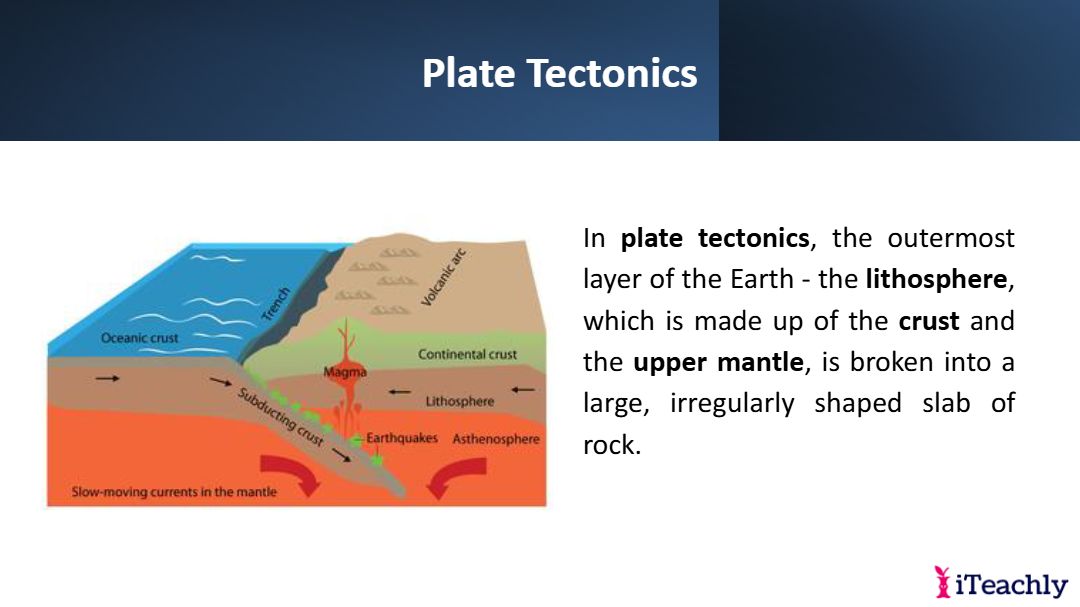
Which layer of the Earth is made up of the crust and the upper mantle in plate tectonics?
Lithosphere
Asthenosphere
Core
Magma
24
25
Fill in the Blanks
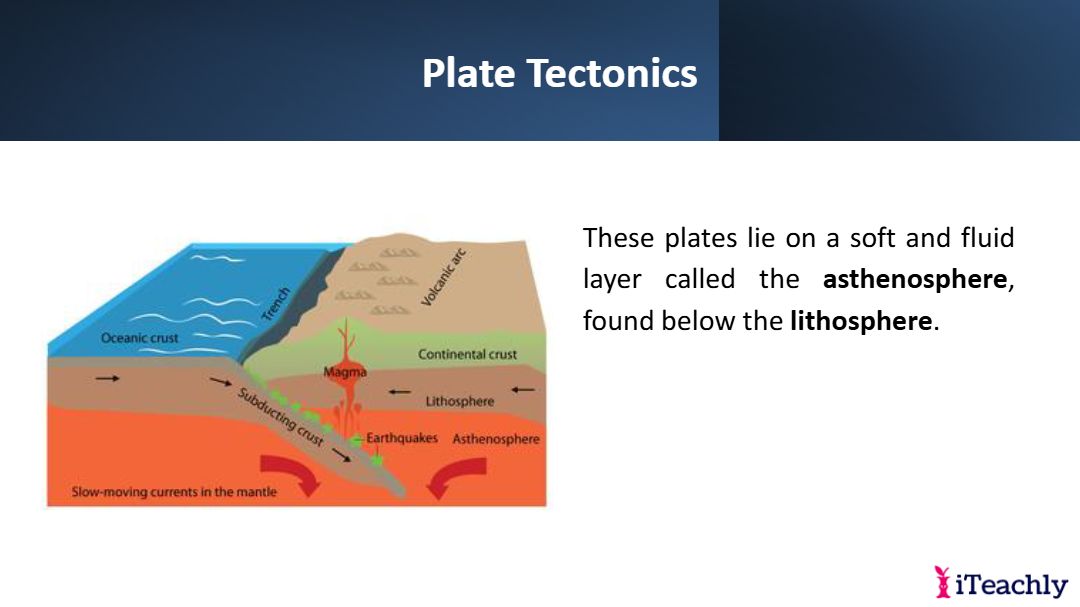
The plates of the Earth's lithosphere lie on a soft and fluid layer called the
26
27
Multiple Choice
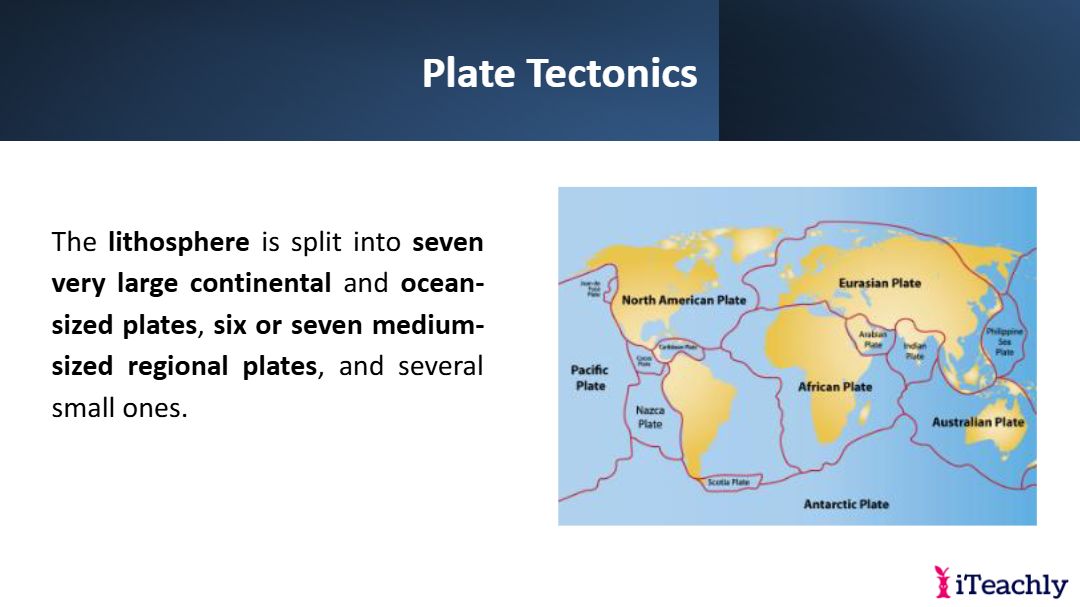
How many very large continental and ocean-sized plates is the lithosphere split into?
Five
Seven
Ten
Twelve
28
Multiple Select
Select all the correct statements about the lithosphere and tectonic plates:
The lithosphere is made up of the crust and upper mantle.
The lithosphere is split into several plates.
The asthenosphere is above the lithosphere.
Tectonic plates can be continental or oceanic.
29
30
Open Ended
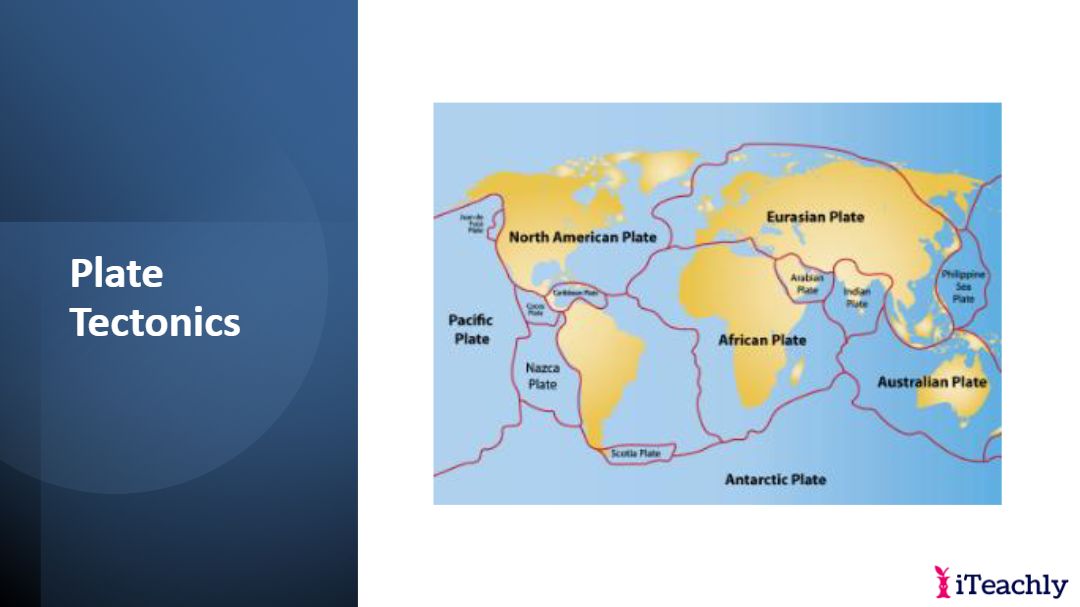
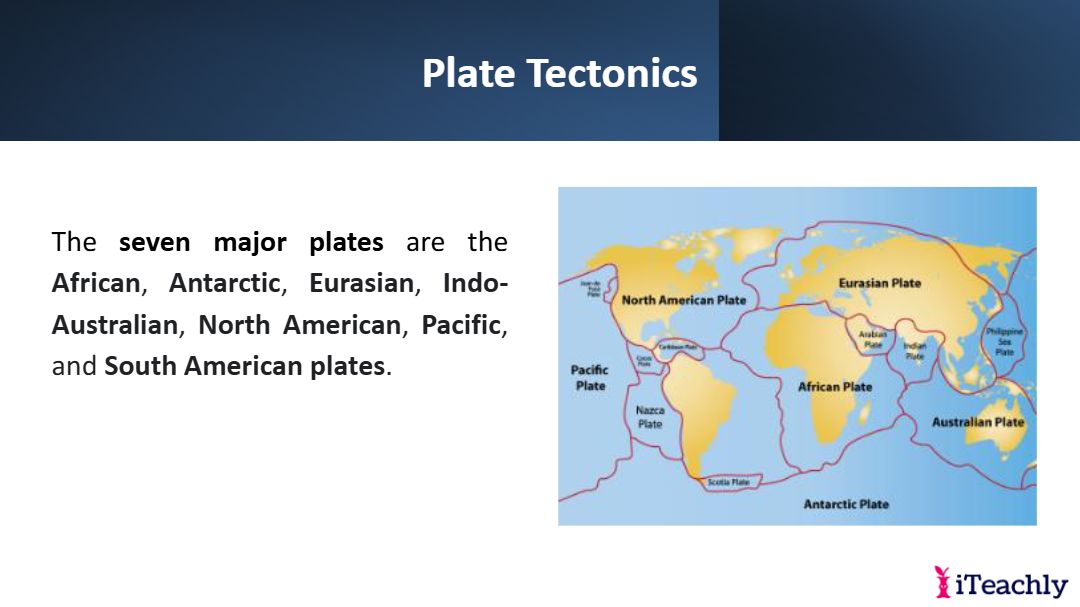
Name three of the seven major tectonic plates of the Earth's lithosphere.
31
32
Multiple Choice
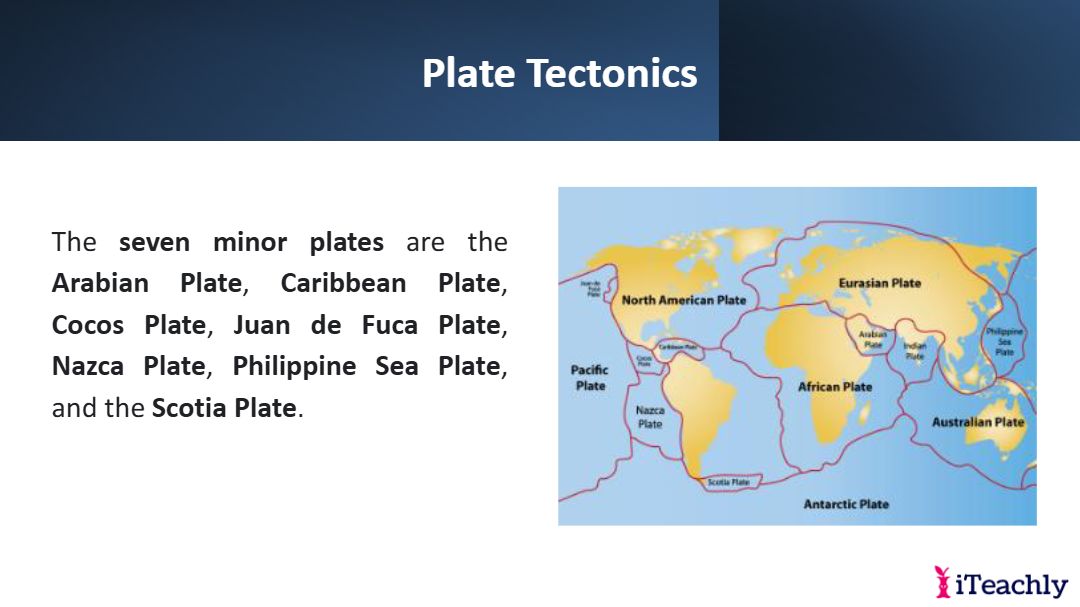
Which of the following is NOT one of the seven minor tectonic plates?
Arabian Plate
Caribbean Plate
Pacific Plate
Scotia Plate
33
34
Open Ended
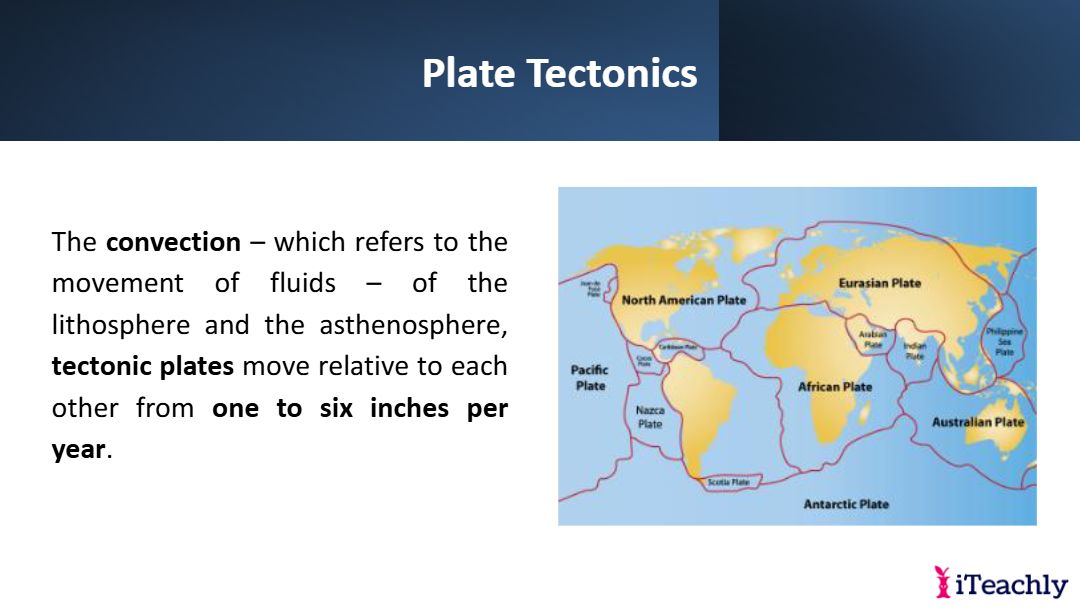
Explain how convection in the lithosphere and asthenosphere causes tectonic plates to move.
35
36
Multiple Select
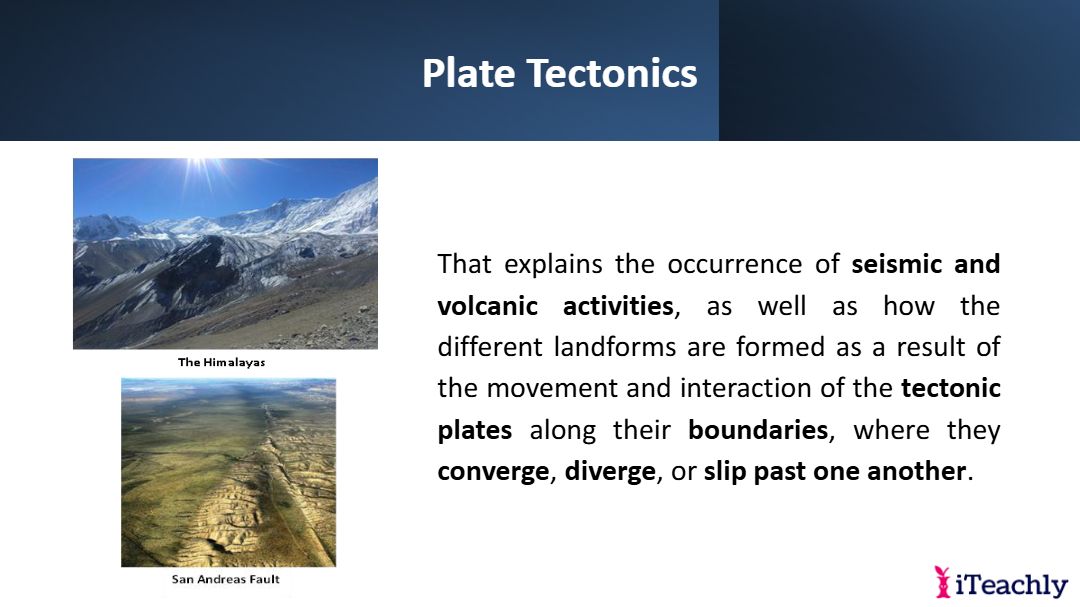
Which of the following are results of the movement and interaction of tectonic plates along their boundaries?
Formation of mountain ranges
Occurrence of earthquakes
Creation of ocean currents
Volcanic activities
37
38
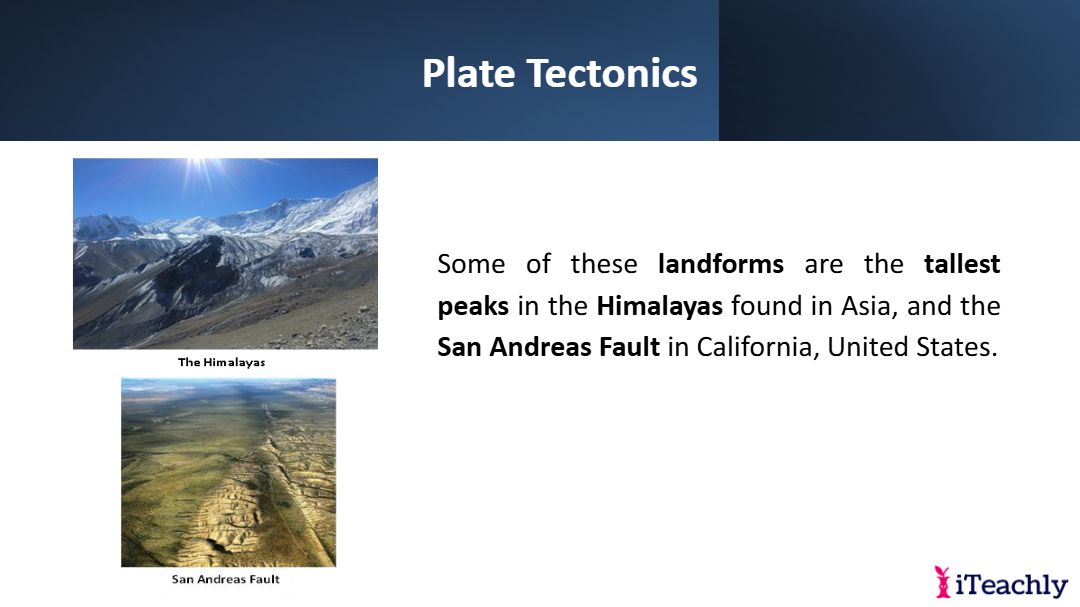
Fill in the Blanks
The tallest peaks in the Himalayas are found in
39
40
Multiple Choice
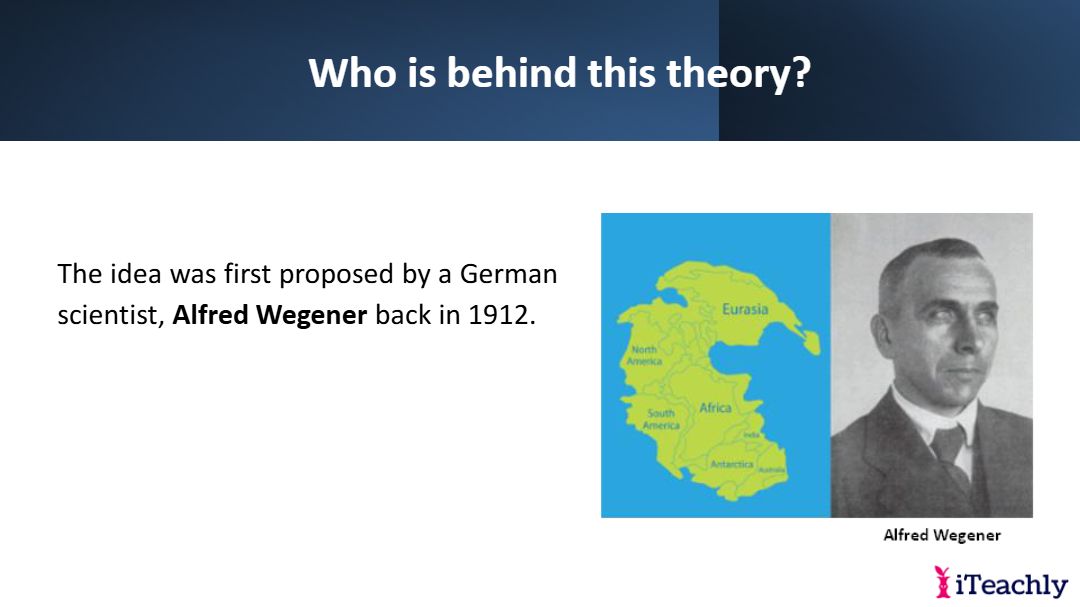
Who first proposed the idea behind the theory of plate tectonics?
Charles Darwin
Alfred Wegener
Isaac Newton
Marie Curie
41
42
Open Ended
Describe the concept of continental drift and its significance in the formation of present-day continents.
43
44
Multiple Choice
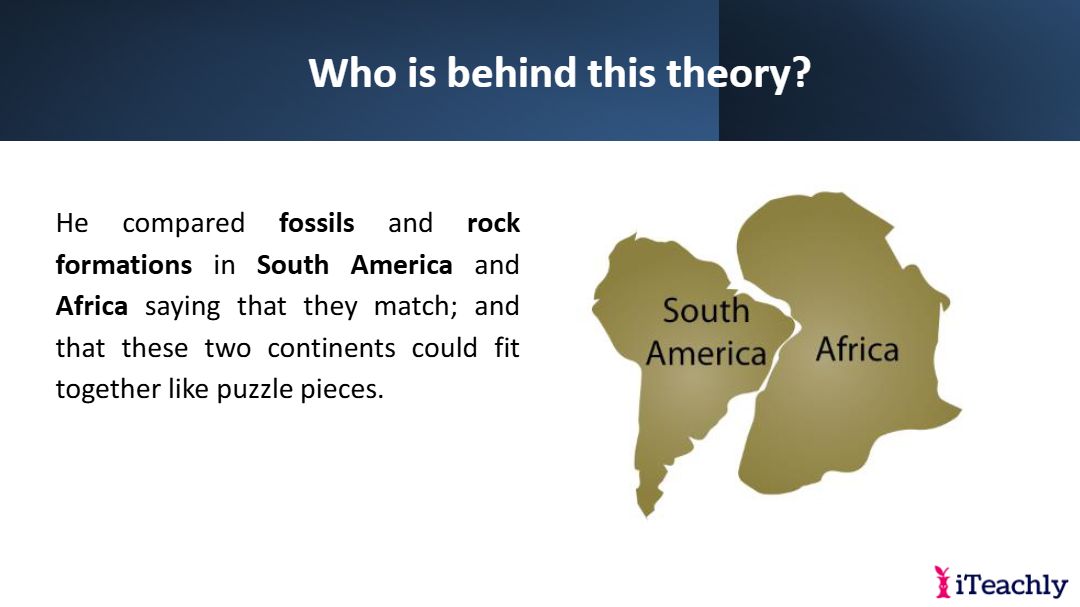
Which evidence did the scientist use to support the idea that South America and Africa were once connected?
Matching fossils and rock formations
Similar climates
Same languages spoken
Identical animal species today
45
46
Multiple Select
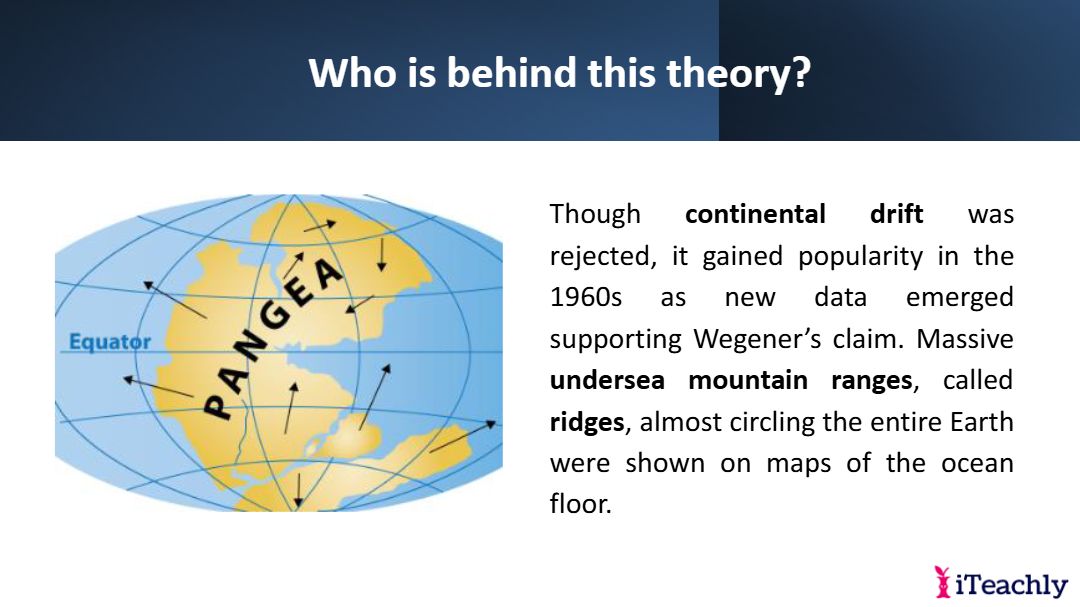
Which of the following statements about continental drift and Pangaea are correct?
The idea was initially rejected by scientists.
Pangaea was a supercontinent.
Undersea mountain ranges support the theory.
The theory was never accepted.
47
48
Fill in the Blanks
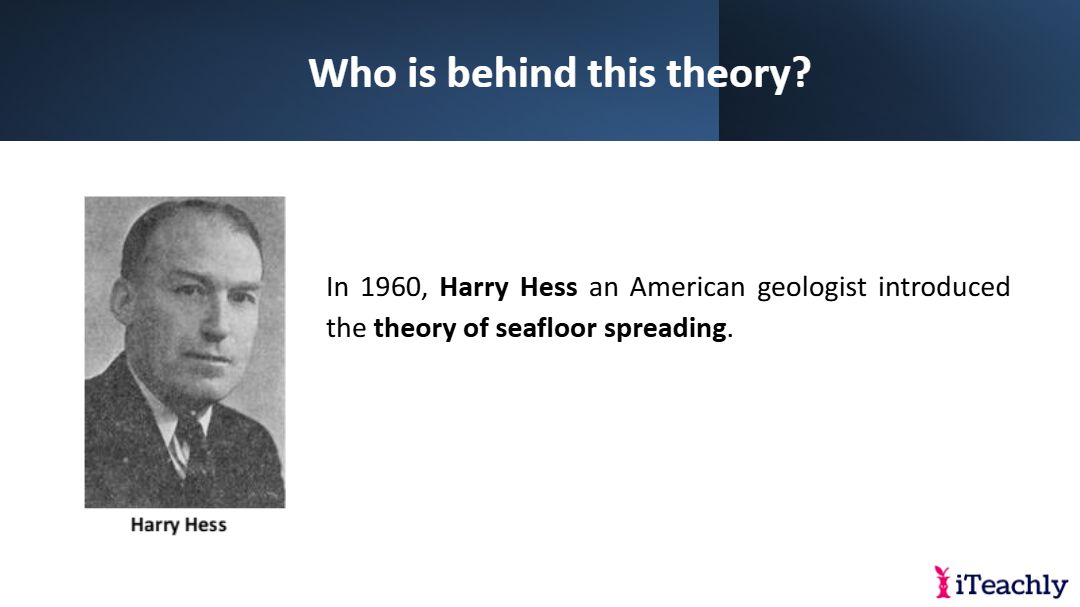
In 1960,
49
Multiple Choice
What is the process called where the oceanic crust moves away from the ridge in a conveyor-belt motion?
Seafloor spreading
Continental drift
Subduction
Plate tectonics
50
Open Ended
Explain how new oceanic crust is formed at mid-oceanic ridges and what happens to it over time.
51
Open Ended
How do you think the theory of plate tectonics has impacted our understanding of Earth's surface and its changes over time?
Which of the following is NOT one of the objectives for students learning about plate tectonics in this lesson?
Define the important terms and concepts related to plate tectonics.
Understand the scientific processes that led to the plate tectonic theory.
Describe the processes involved in the theory of seafloor spreading.
Explain the process of photosynthesis.
Show answer
Auto Play
Slide 1 / 51
MULTIPLE CHOICE
Similar Resources on Wayground

47 questions
Chemical reactions and equations
Presentation
•
8th Grade
46 questions
Ch 17 Elements and their Properties
Presentation
•
9th Grade
47 questions
Elkhorn History Images
Presentation
•
KG
44 questions
EOC Biology Review 2 - Cell Cycle & Biomolecules
Presentation
•
9th Grade
45 questions
Health and Skill Related Components
Presentation
•
9th - 10th Grade
50 questions
Water Properties Review
Presentation
•
8th Grade
49 questions
Leaves Live
Presentation
•
9th Grade
49 questions
Photosynthesis Lecture
Presentation
•
9th Grade
Popular Resources on Wayground
10 questions
Safety Day 2026 – Student Review

Quiz
•
9th Grade
21 questions
Continents and Oceans
Quiz
•
6th Grade
20 questions
Parts of Speech
Quiz
•
5th Grade
16 questions
Subject & Predicate
Quiz
•
5th Grade
25 questions
Multiplication Facts
Quiz
•
5th Grade
12 questions
Map Skills
Quiz
•
3rd Grade
22 questions
Continents and Oceans
Quiz
•
5th Grade
15 questions
Rounding Decimals
Quiz
•
5th Grade
Discover more resources for Science
10 questions
Exploring Chemical and Physical Changes

Interactive video
•
6th - 10th Grade
20 questions
Atomic Structure
Quiz
•
9th Grade
10 questions
Exploring the Electromagnetic Spectrum for Middle School Science
Interactive video
•
6th - 10th Grade
10 questions
Exploring Force and Motion Concepts
Interactive video
•
6th - 10th Grade
10 questions
Exploring Air Masses and Weather Fronts
Interactive video
•
6th - 10th Grade
10 questions
Exploring the States of Matter
Interactive video
•
6th - 10th Grade
10 questions
Exploring Forces: Net Force, Normal Force, Gravity, and Friction
Interactive video
•
6th - 10th Grade
10 questions
Differentiating Thermal Energy and Temperature
Interactive video
•
6th - 10th Grade