

Cell Division

Presentation
•
Science
•
1st Grade
•
Practice Problem
•
Hard

Wayground Resources
FREE Resource
27 Slides • 29 Questions
1
2
3
Multiple Choice
Which of the following is NOT a function of cell division in living organisms?
Tissue replacement
Specialisation of cells into tissues
Production of energy
Organismal growth
4
Open Ended
Why is cell division considered essential for the growth and development of multicellular organisms?
5
6
Multiple Choice
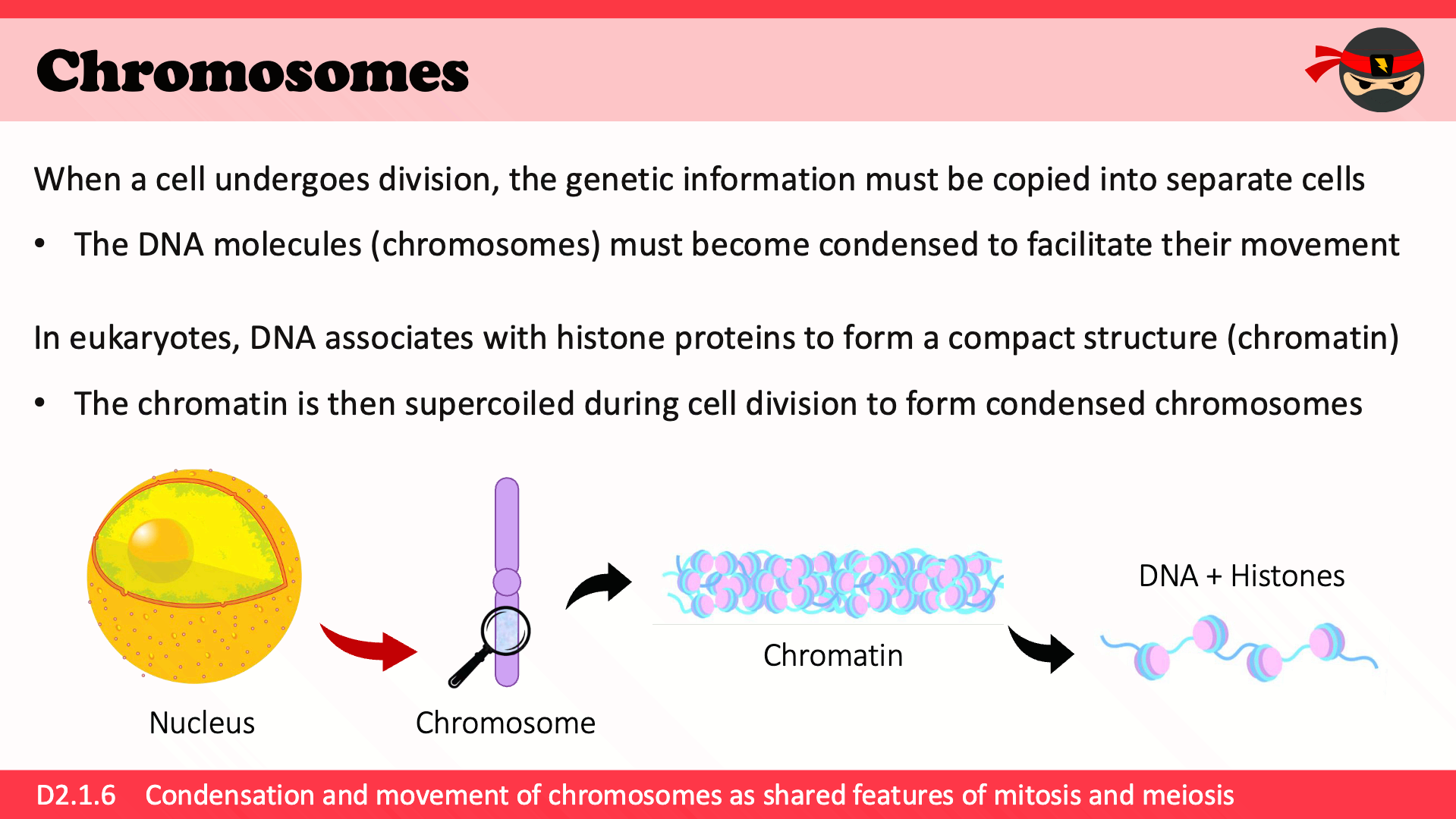
What is the role of histone proteins in the formation of chromosomes during cell division?
They help DNA form a compact structure called chromatin.
They break down DNA into smaller fragments.
They replicate DNA during cell division.
They transport chromosomes to daughter cells.
7
8
Multiple Select
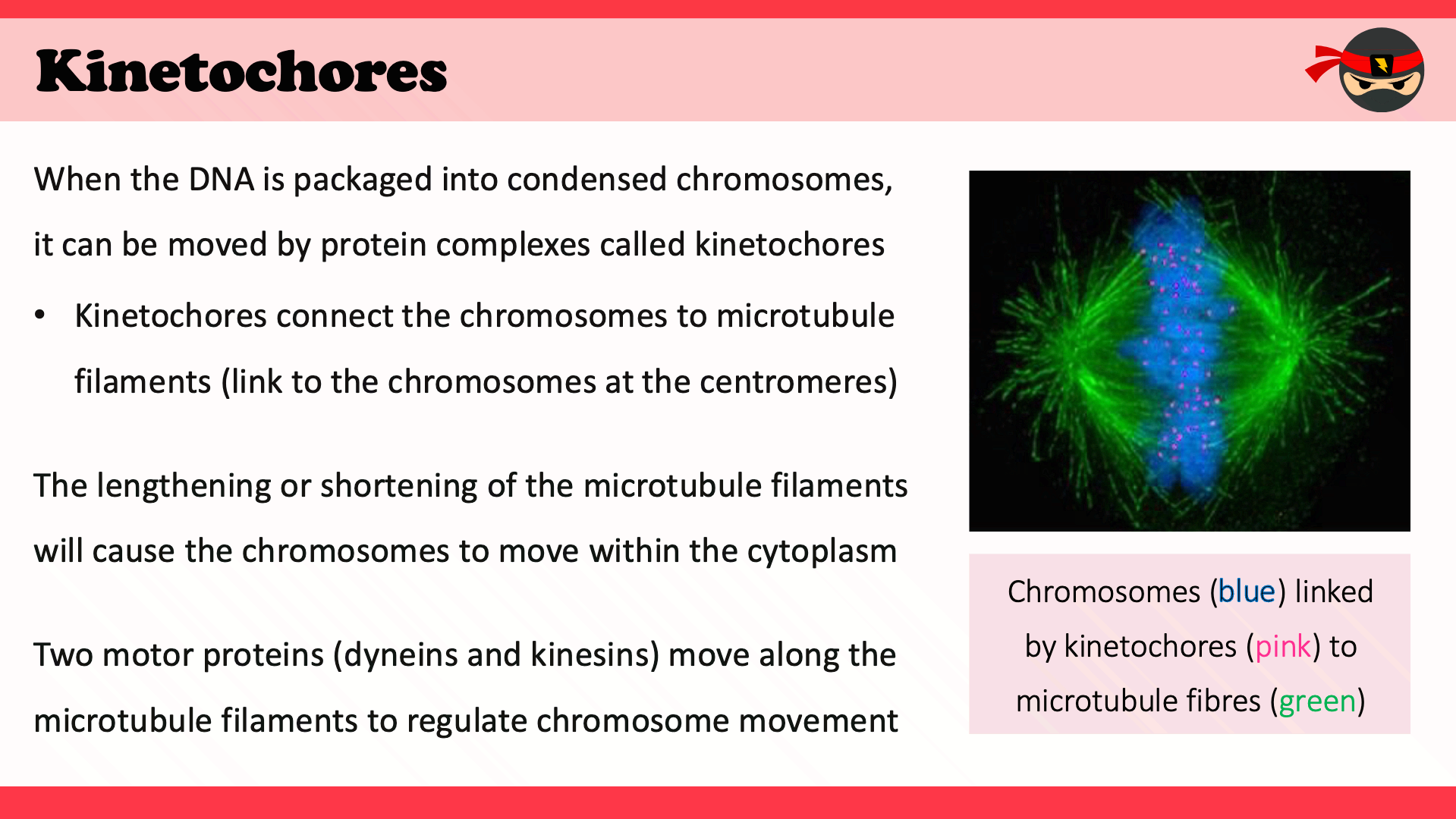
Which of the following statements about kinetochores are correct?
Kinetochores connect chromosomes to microtubule filaments.
Kinetochores are responsible for DNA replication.
Kinetochores regulate chromosome movement via motor proteins.
Kinetochores are found only in prokaryotic cells.
9
10
11
Fill in the Blanks
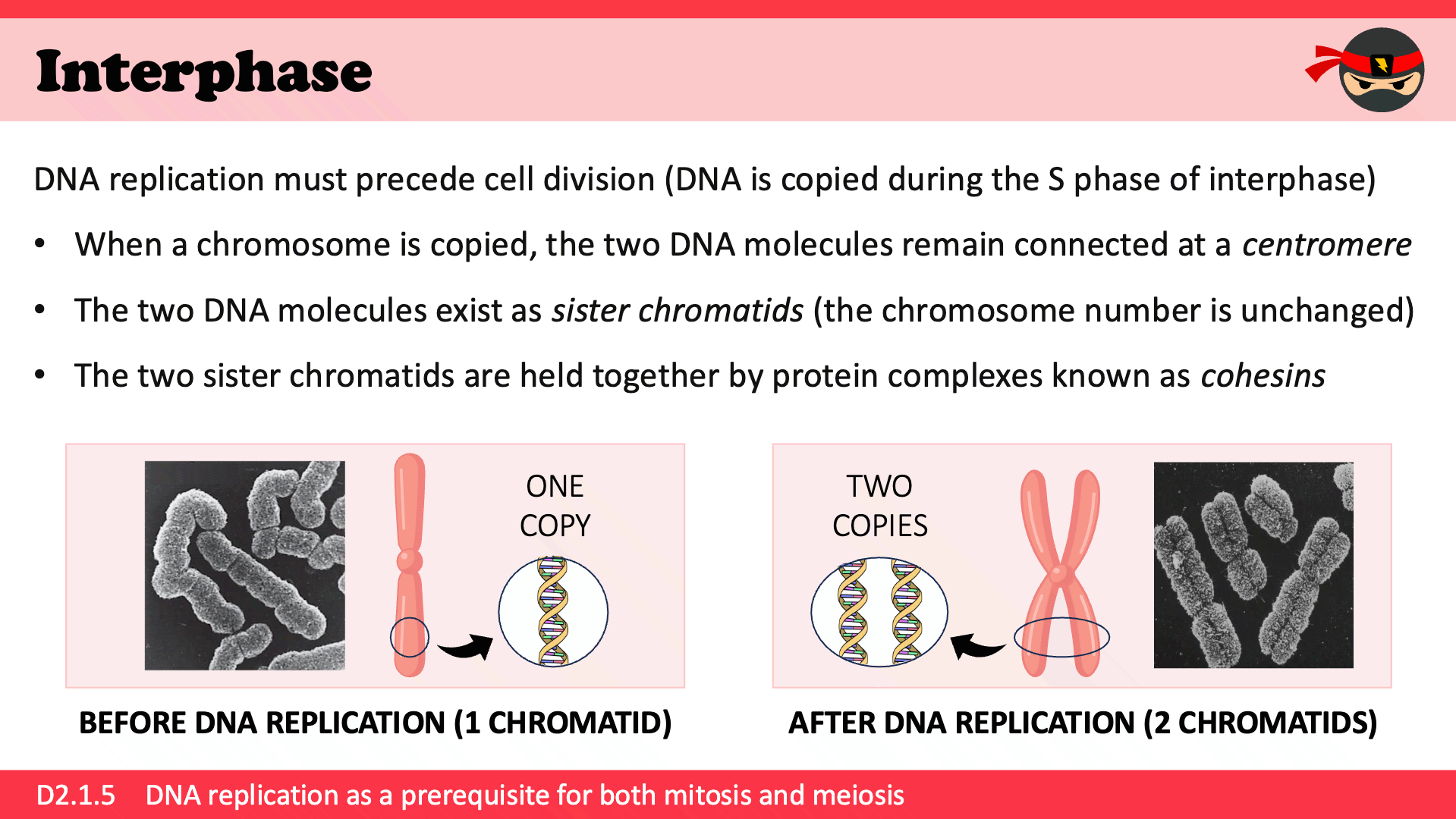
The two DNA molecules that result from chromosome replication are held together by protein complexes known as
Type answer...
12
Open Ended
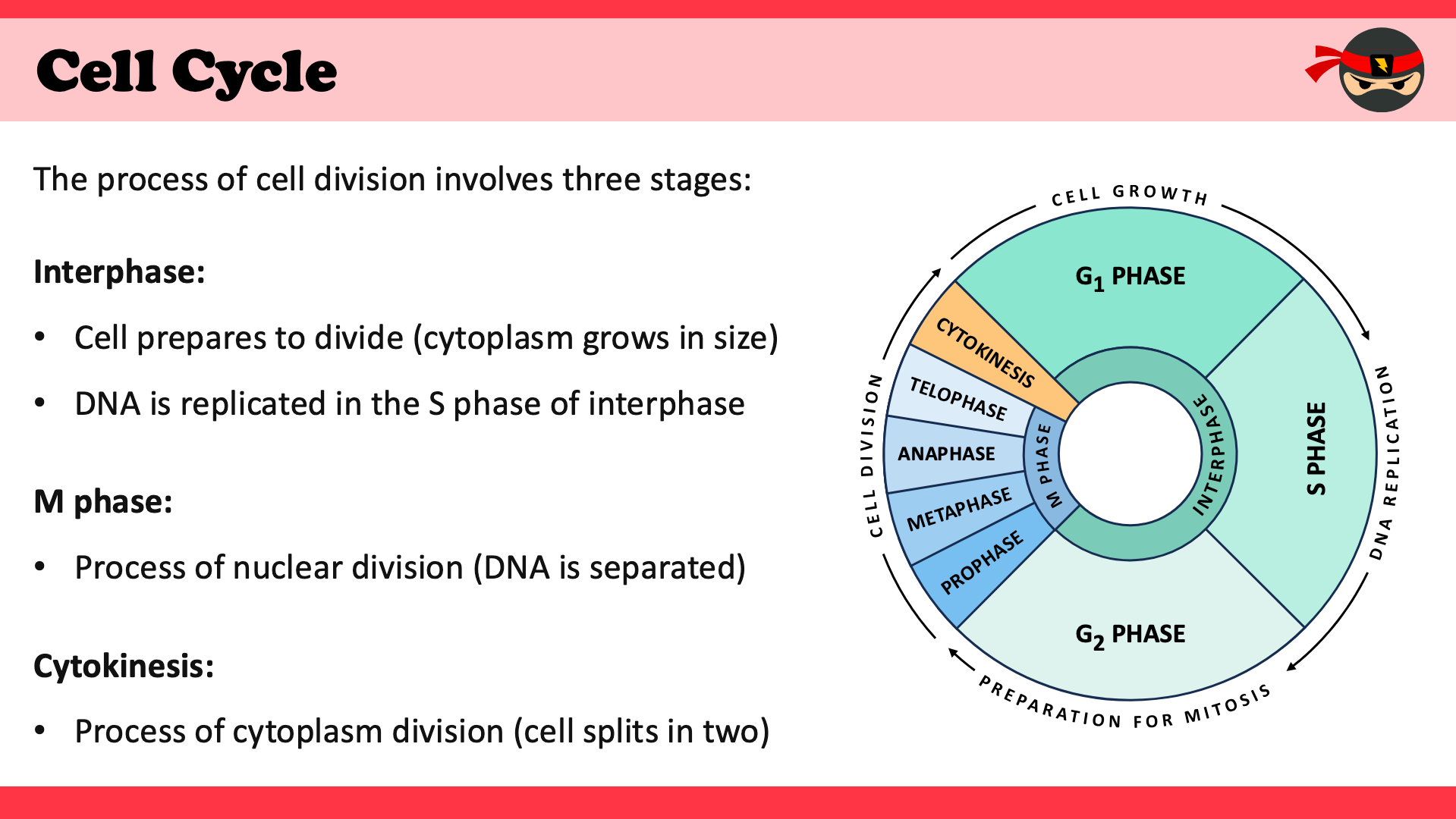
Explain the significance of the S phase during interphase in the cell cycle.
13
14
Multiple Choice
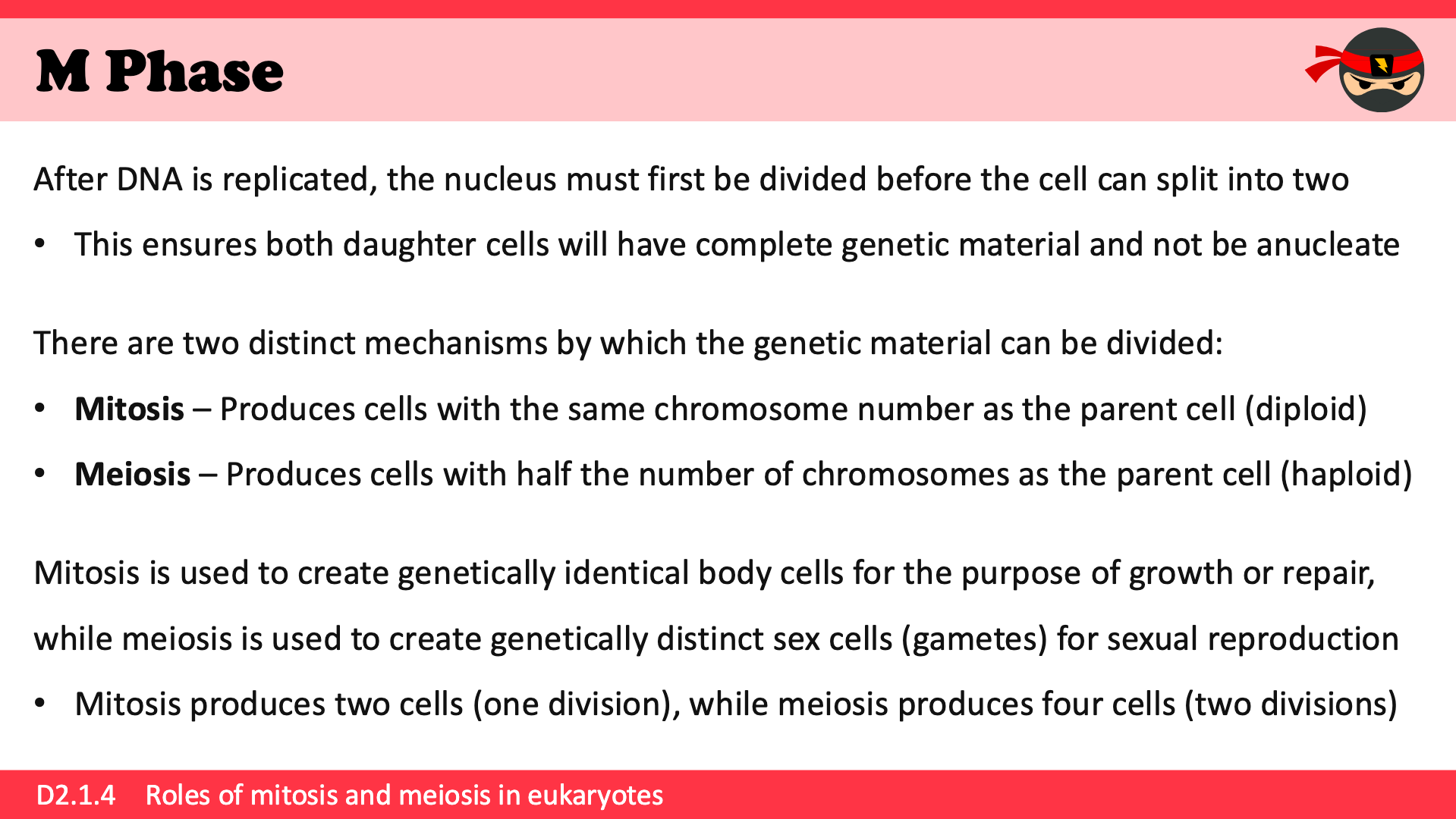
Which process produces cells with half the number of chromosomes as the parent cell?
Mitosis
Meiosis
Cytokinesis
Interphase
15
16
Open Ended
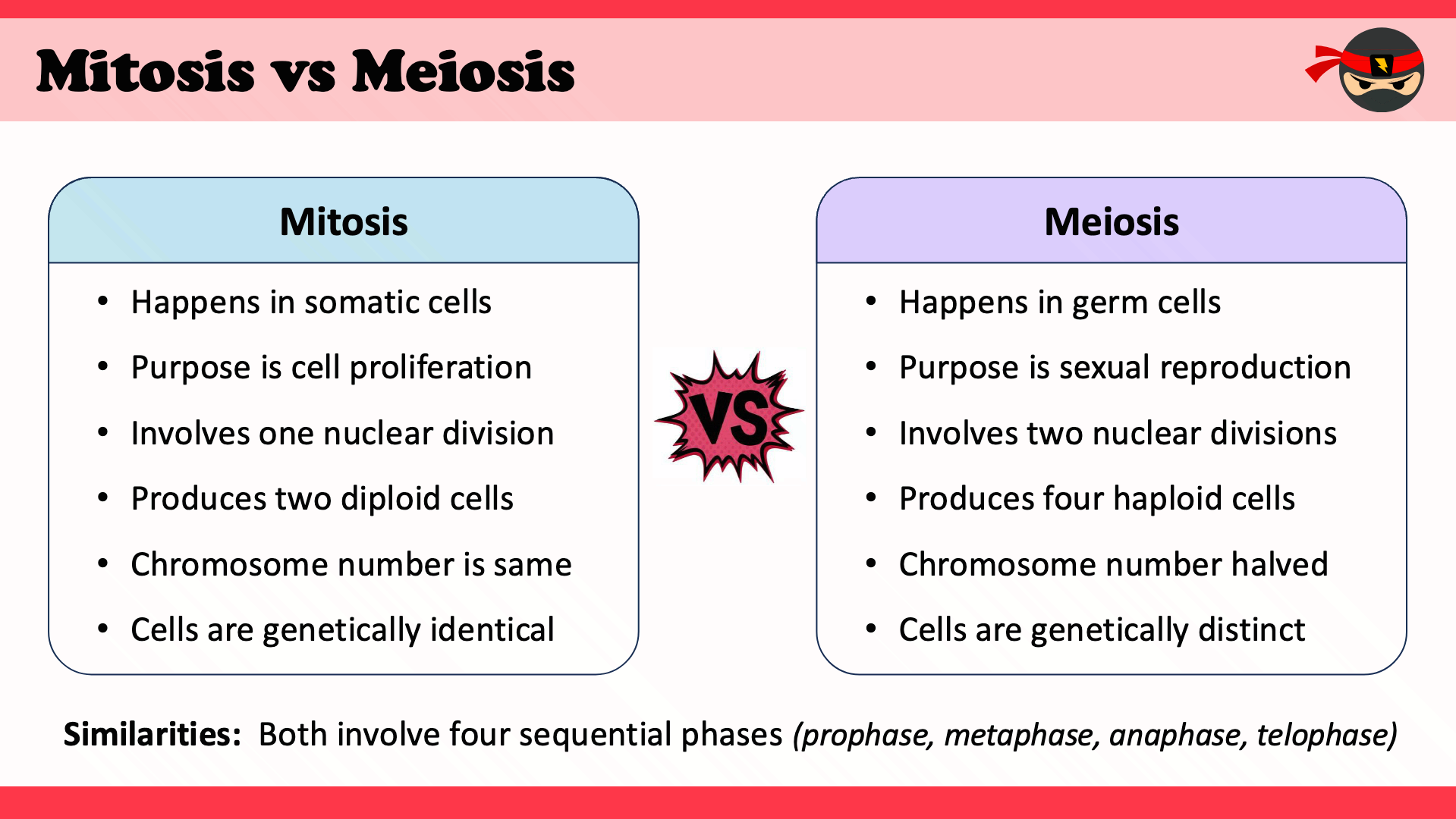
Compare and contrast the outcomes of mitosis and meiosis in terms of chromosome number and genetic identity of the resulting cells.
17
18
Multiple Choice
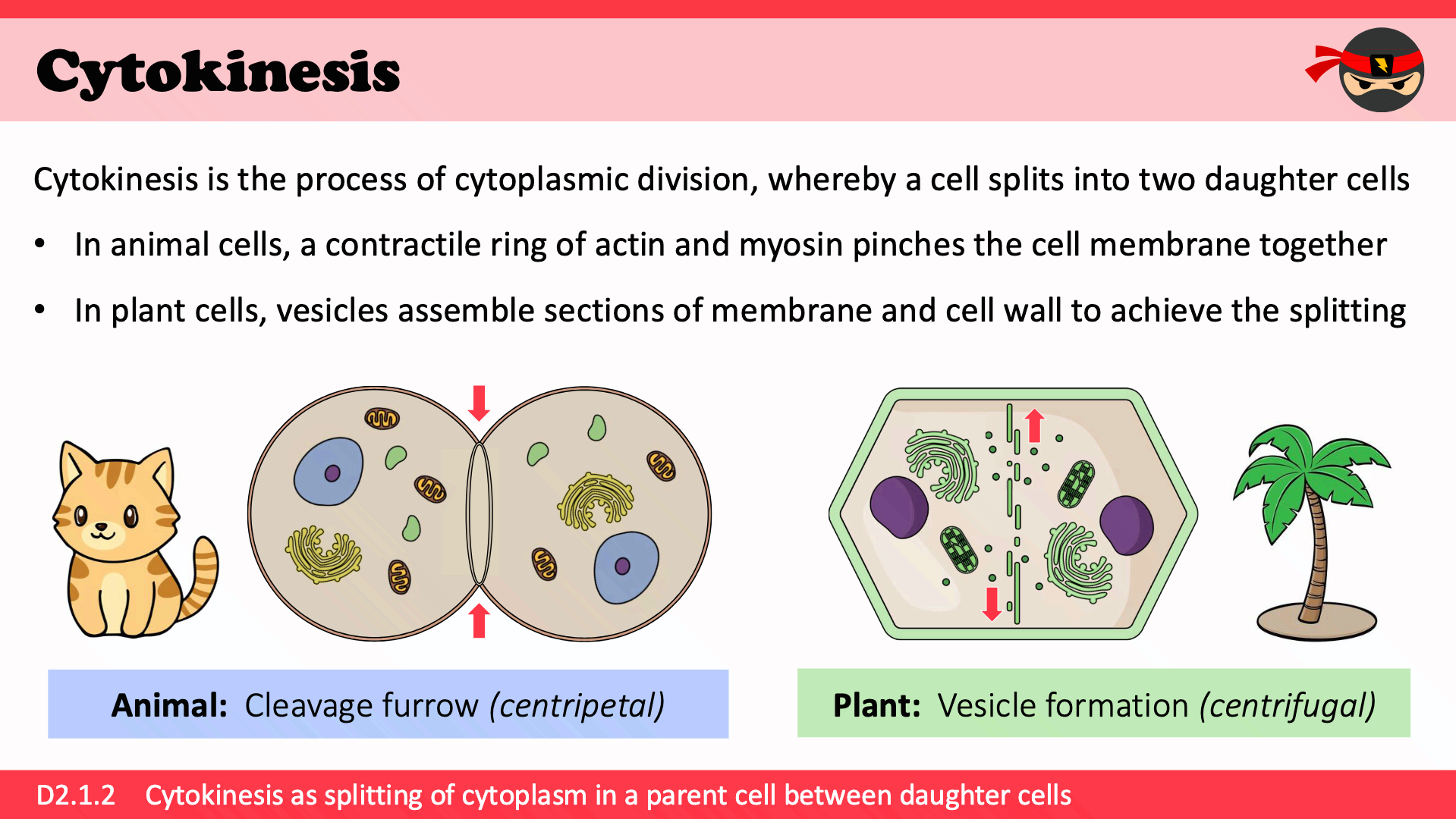
Which of the following best describes the main difference between cytokinesis in animal cells and plant cells?
Animal cells form a cleavage furrow, while plant cells form a cell plate through vesicle fusion.
Animal cells form a cell plate, while plant cells form a cleavage furrow.
Both animal and plant cells use vesicle formation to divide.
Both animal and plant cells use a contractile ring to pinch the membrane.
19
20
Multiple Select
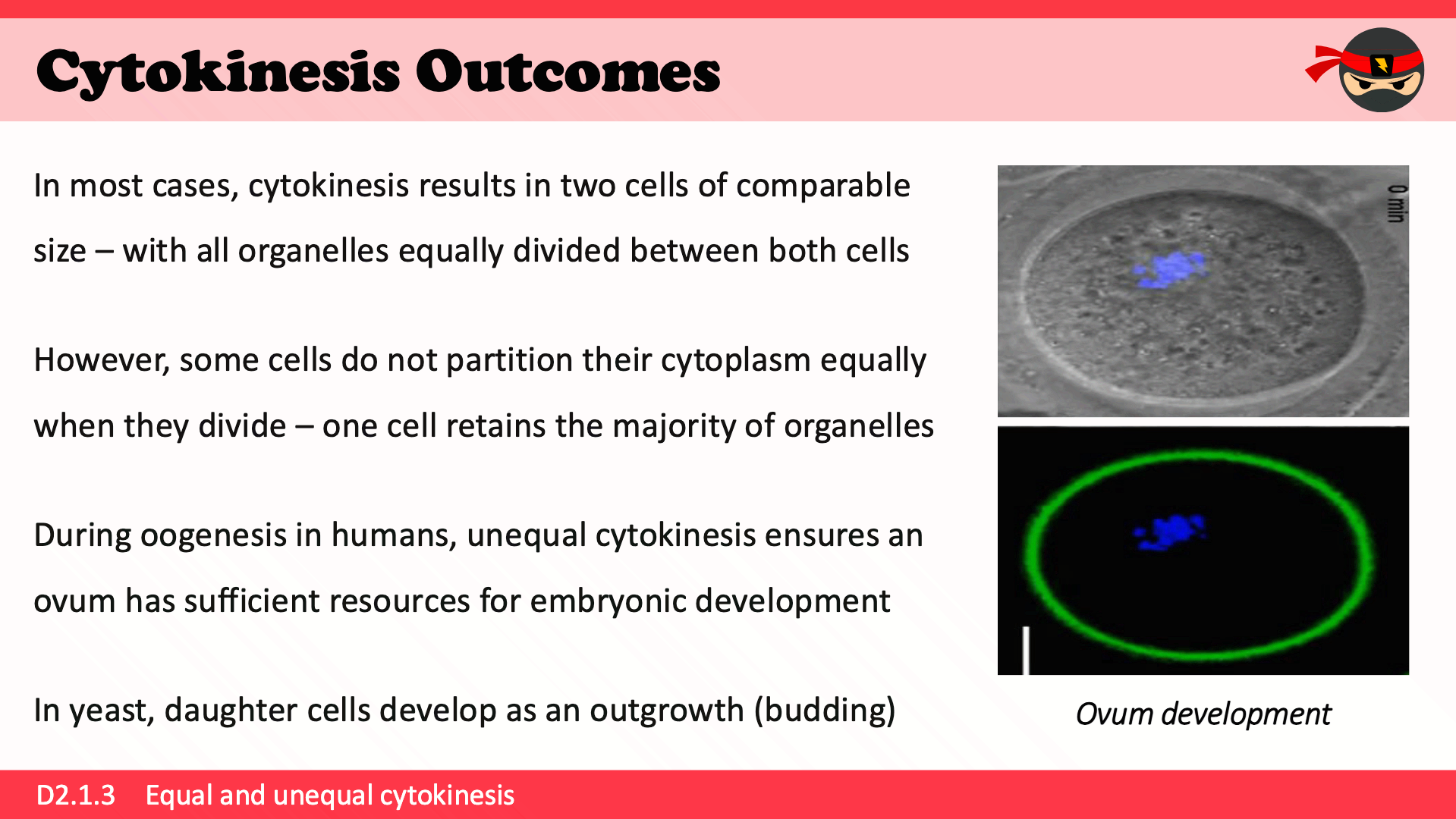
Which of the following statements about the outcomes of cytokinesis are correct?
Most cells divide their cytoplasm equally, resulting in two similar daughter cells.
Some cells undergo unequal cytokinesis, with one cell retaining most organelles.
Unequal cytokinesis in humans ensures the ovum has enough resources for development.
In yeast, daughter cells develop as an outgrowth called budding.
21
22
Fill in the Blanks
During mitosis, the division of the nucleus produces cells with the
Type answer...
23
24
Open Ended
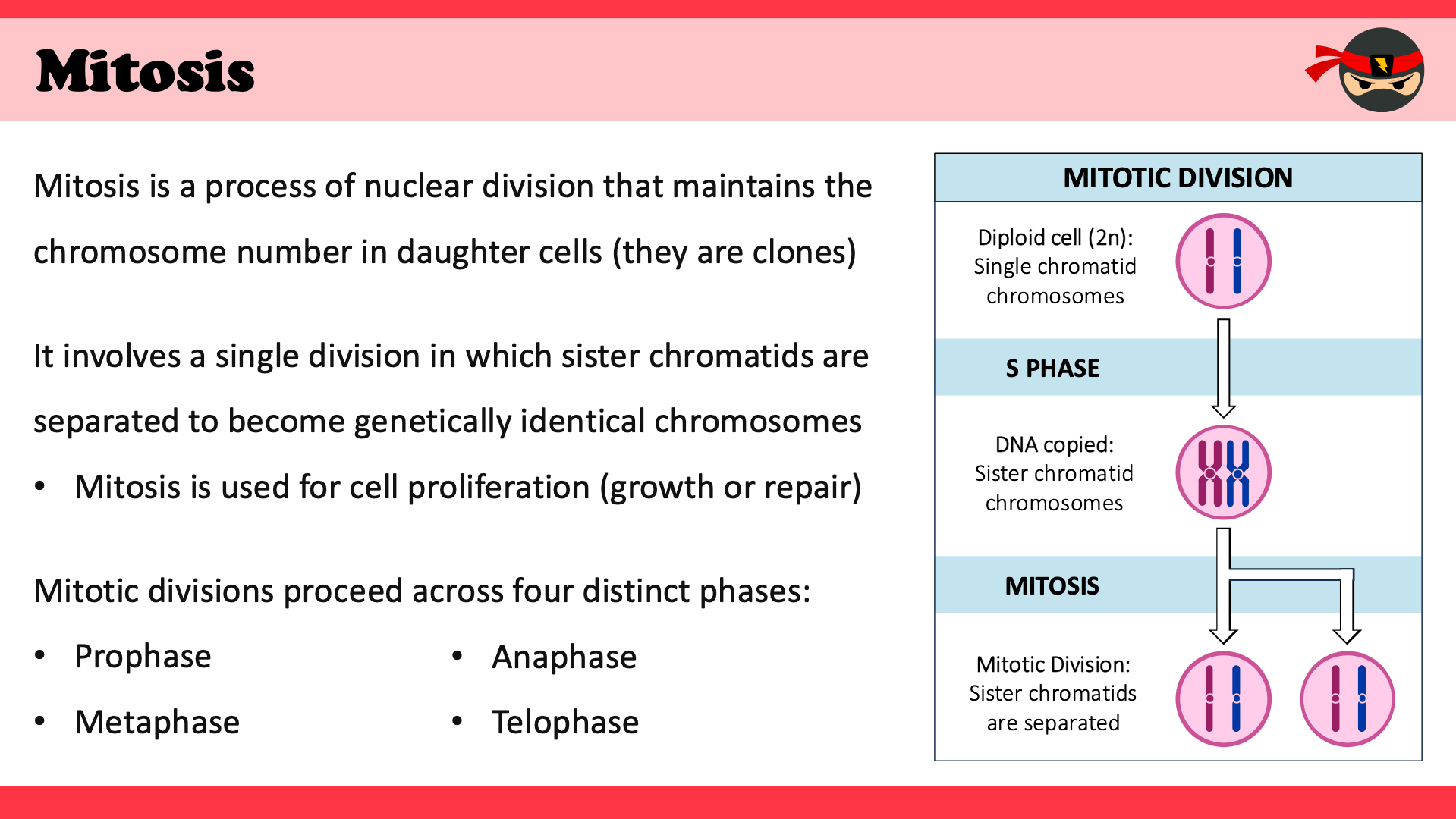
Explain why mitosis is important for multicellular organisms. Provide at least two reasons based on the process and outcomes of mitosis.
25
26
Multiple Choice
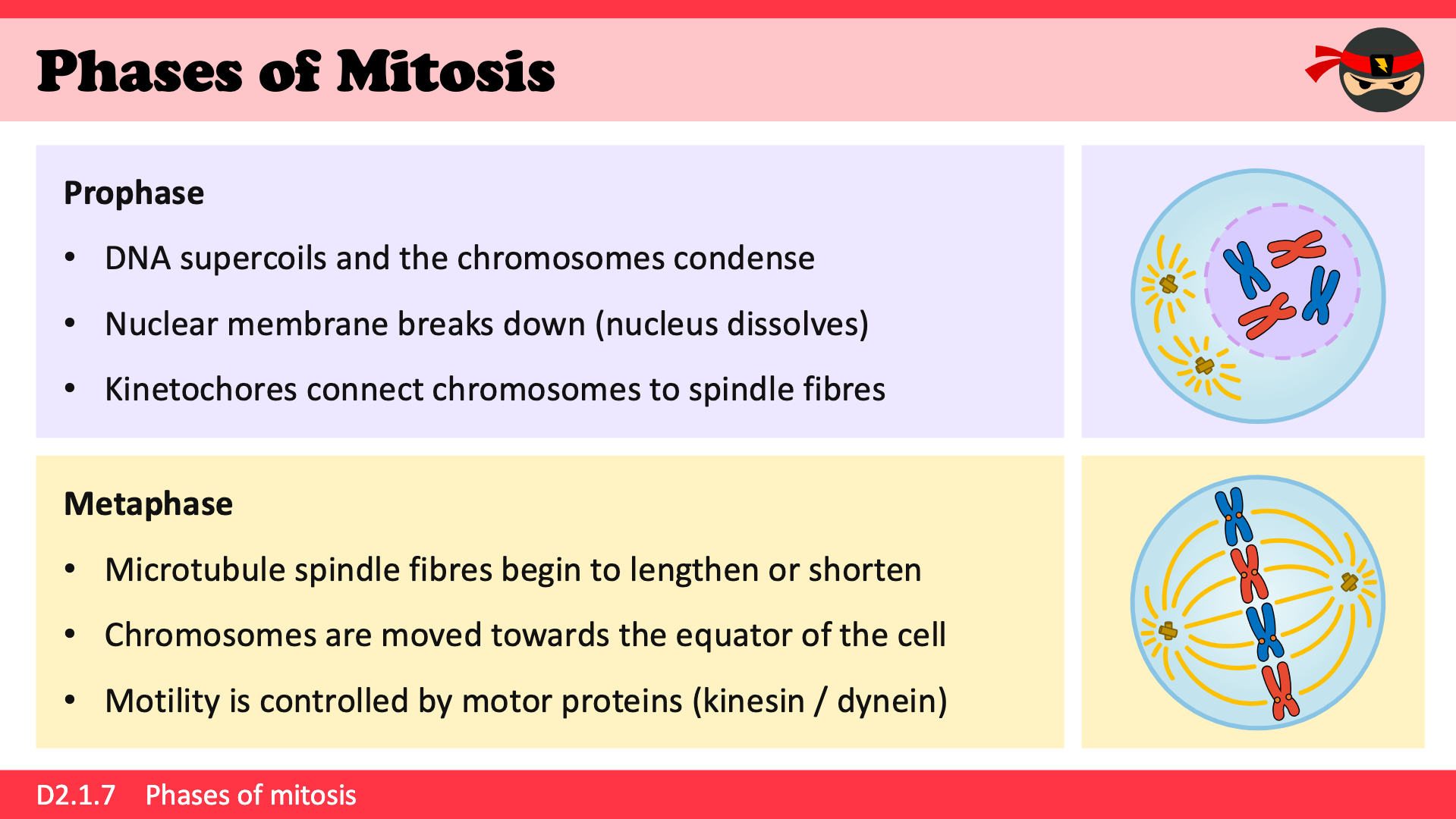
Which phase of mitosis is characterized by chromosomes aligning at the equator of the cell?
Prophase
Metaphase
Anaphase
Telophase
27
28
Multiple Select
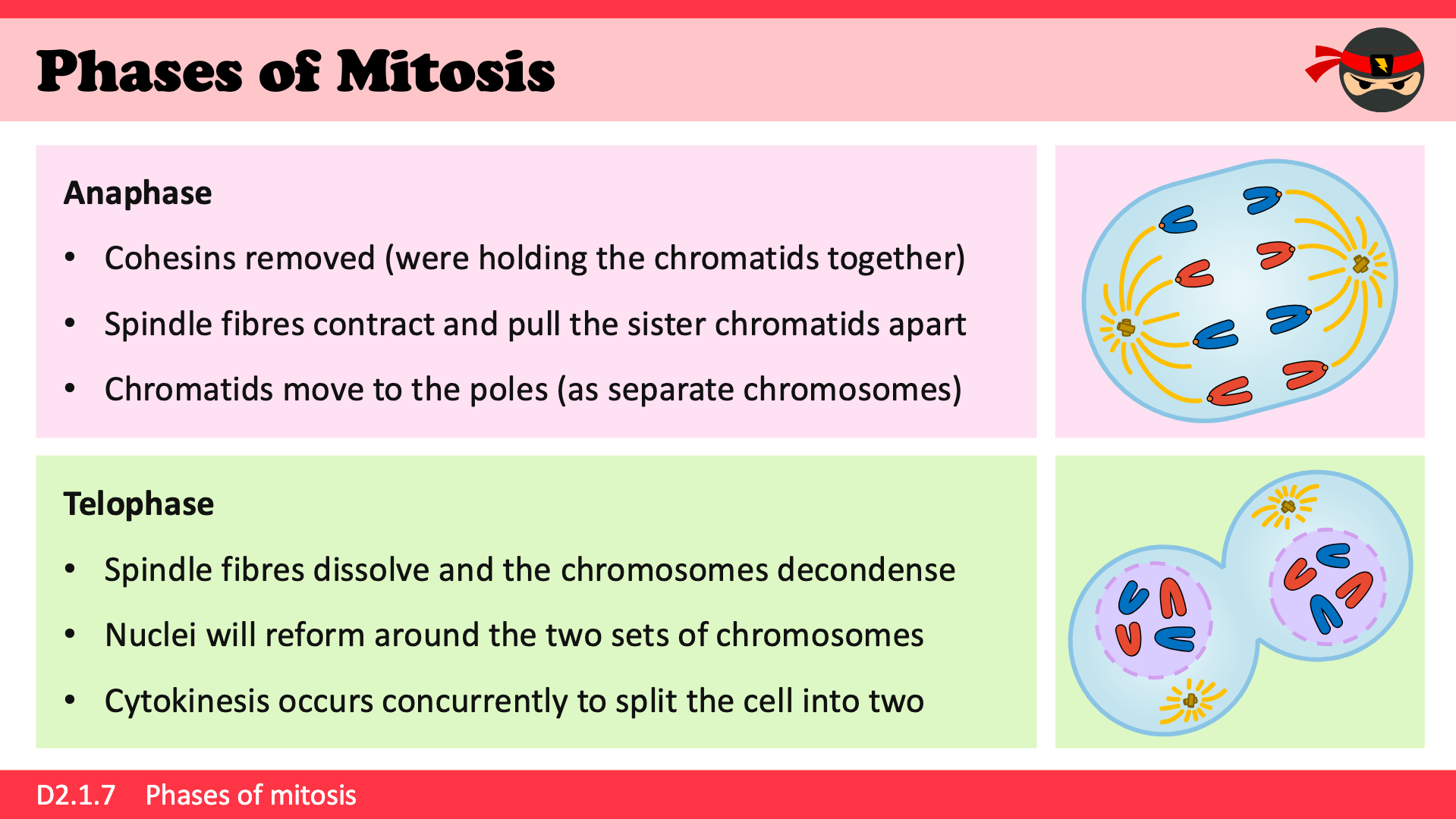
Which of the following events occur during anaphase of mitosis?
Cohesins are removed from chromatids.
Spindle fibres contract and pull sister chromatids apart.
Chromatids move to the poles as separate chromosomes.
Nuclear membrane reforms around chromosomes.
29
30
Multiple Choice
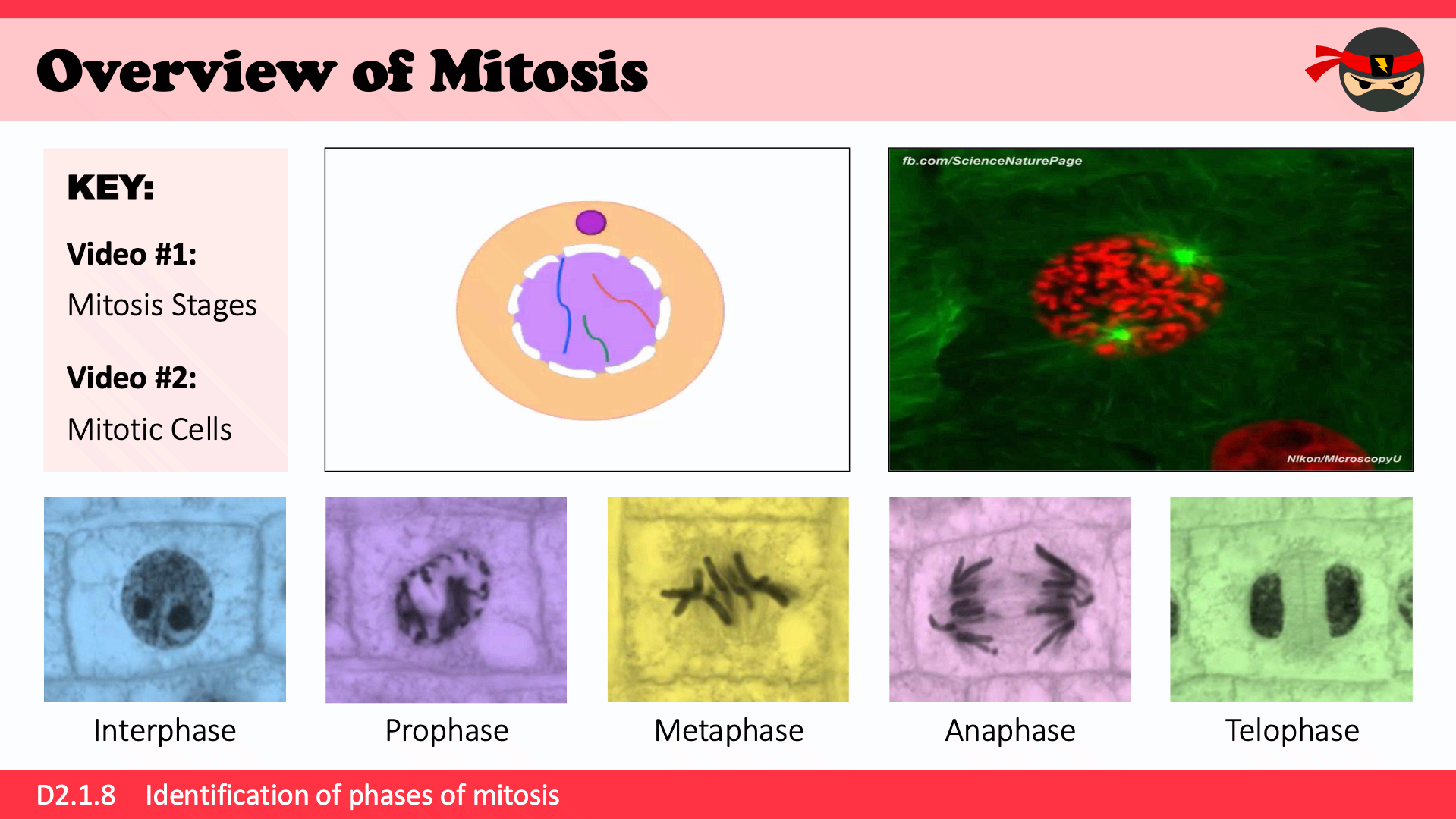
Which phase of mitosis is characterized by chromosomes aligning in the center of the cell?
Prophase
Metaphase
Anaphase
Telophase
31
32
Multiple Select
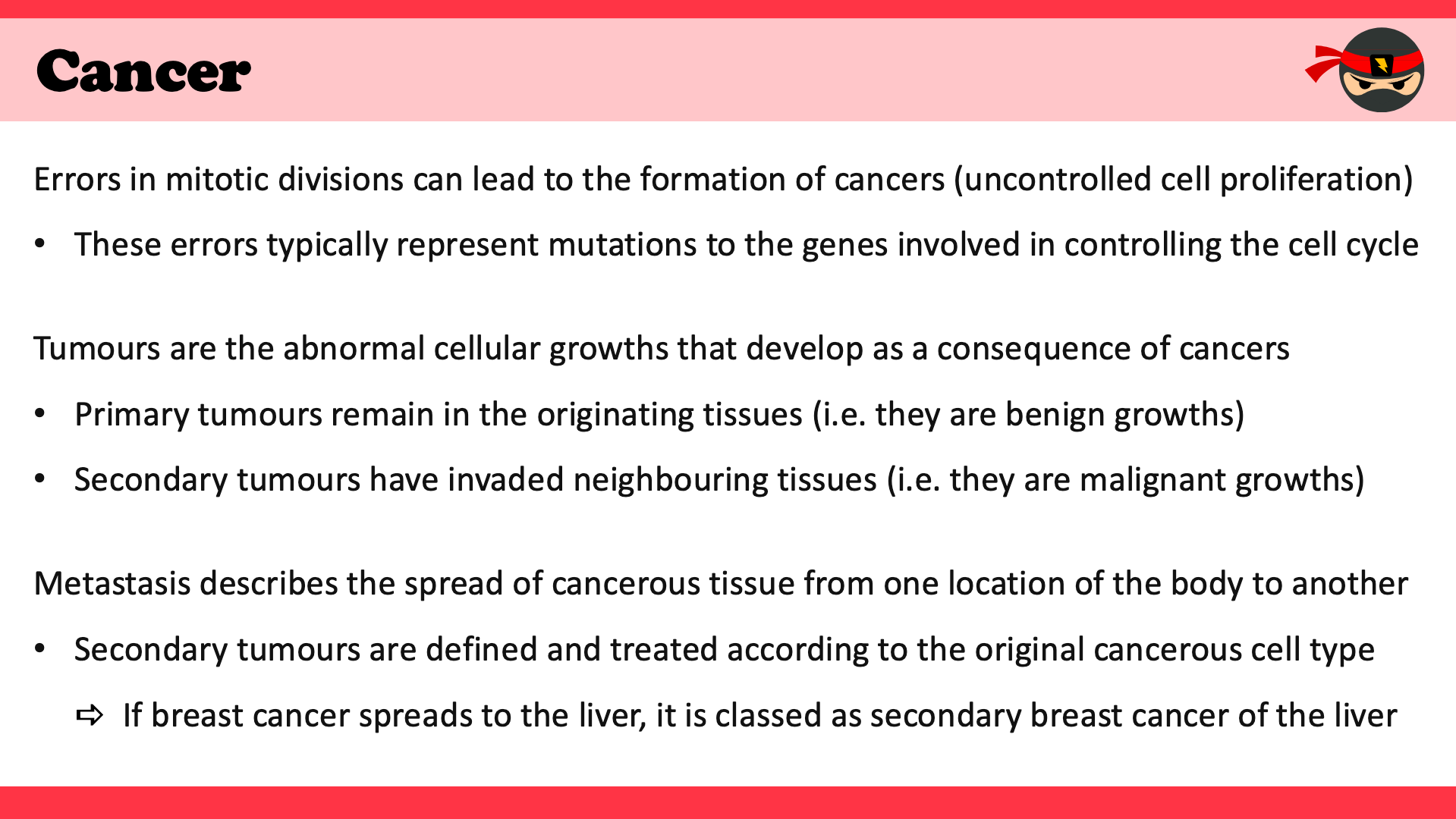
Which of the following statements about cancer and tumors are correct?
Errors in mitotic divisions can lead to cancer.
Primary tumors invade neighboring tissues.
Secondary tumors are benign.
Metastasis describes the spread of cancerous tissue to another location.
33
34
35
Fill in the Blanks
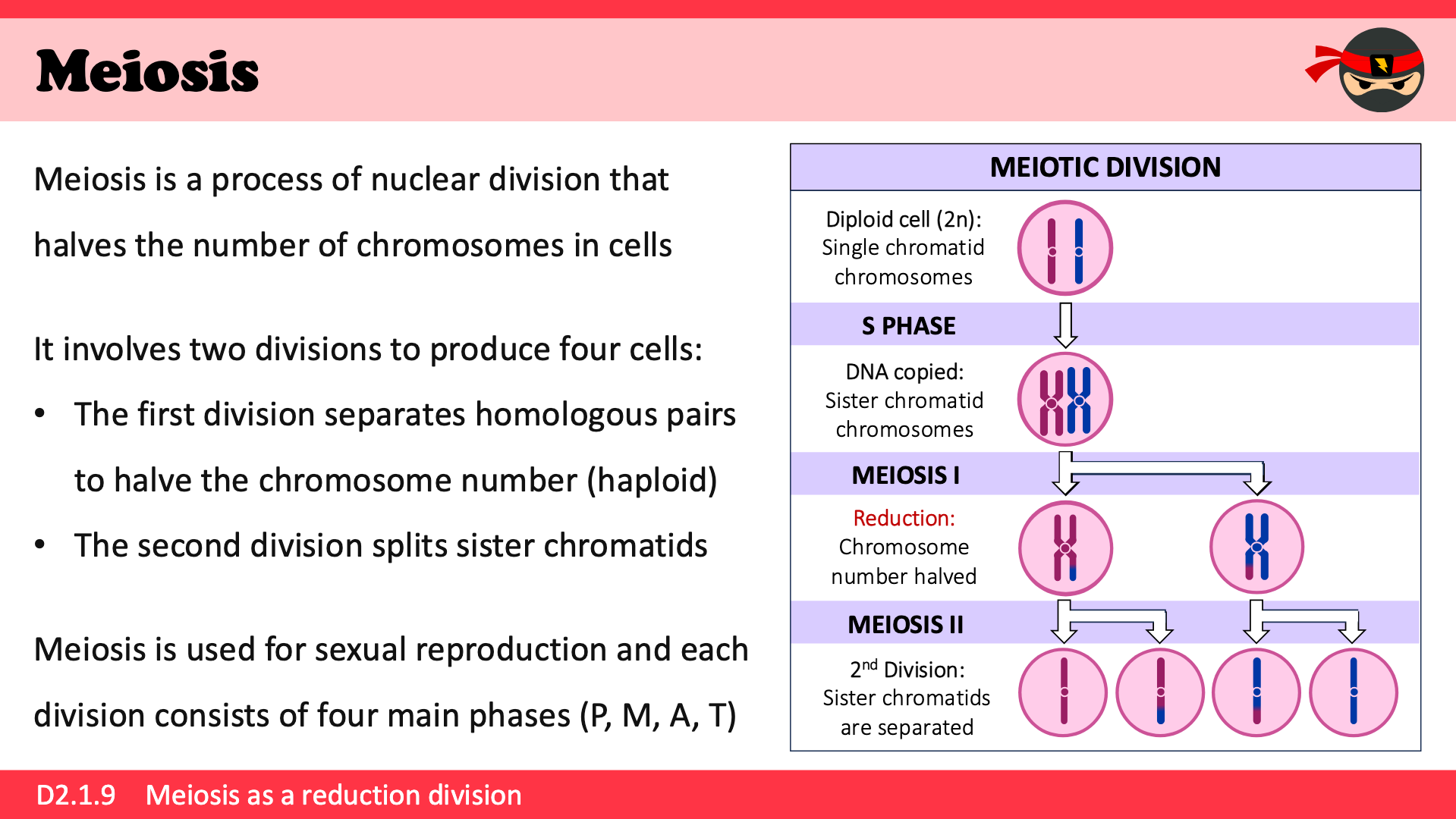
Meiosis produces cells with
Type answer...
36
37
Multiple Choice
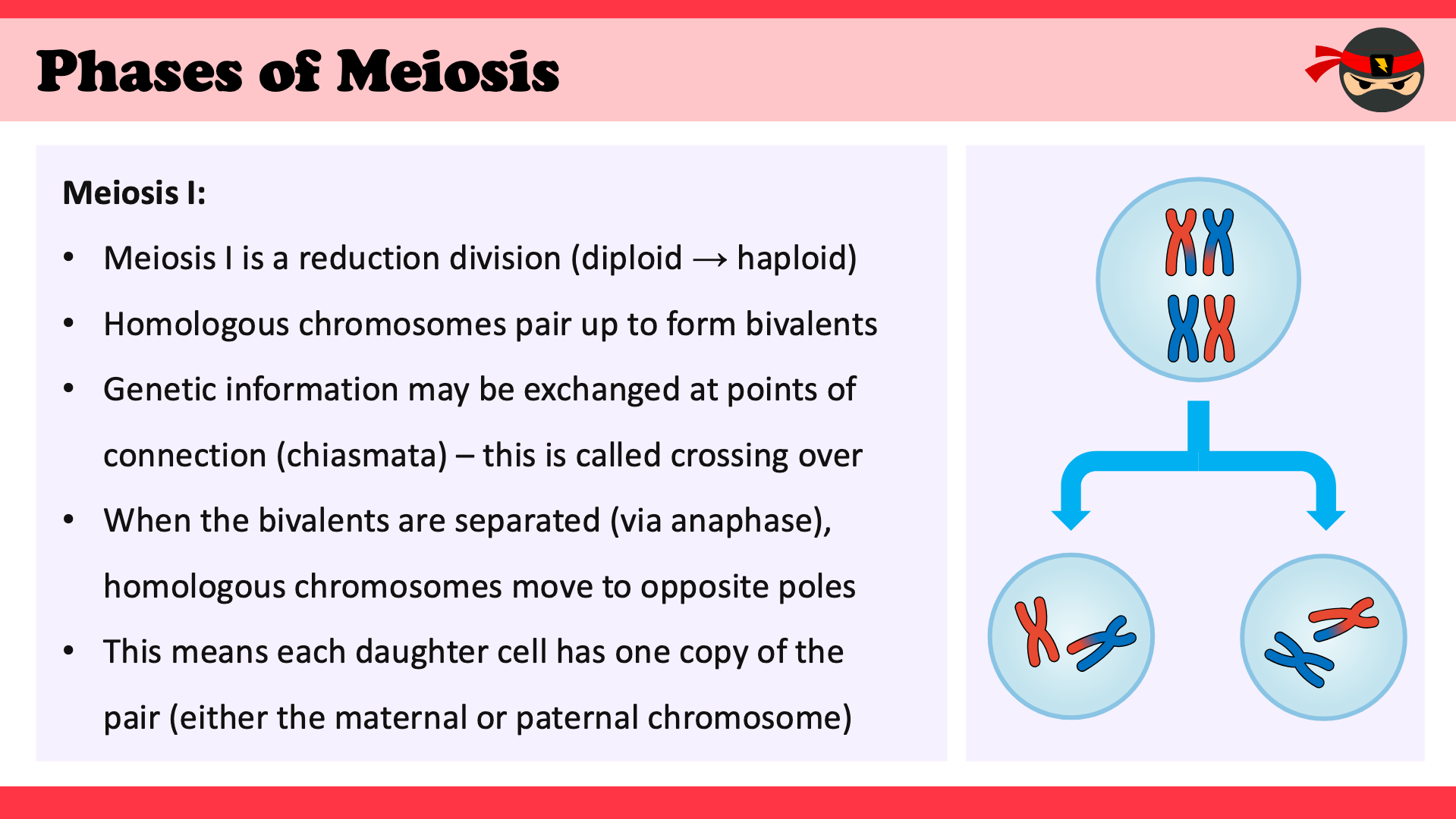
During which phase of meiosis does crossing over of genetic information occur?
Meiosis I
Meiosis II
S Phase
Telophase
38
Open Ended
Explain the difference between the first and second divisions in meiosis, including what is separated in each division and the resulting chromosome number.
39
40
Multiple Select
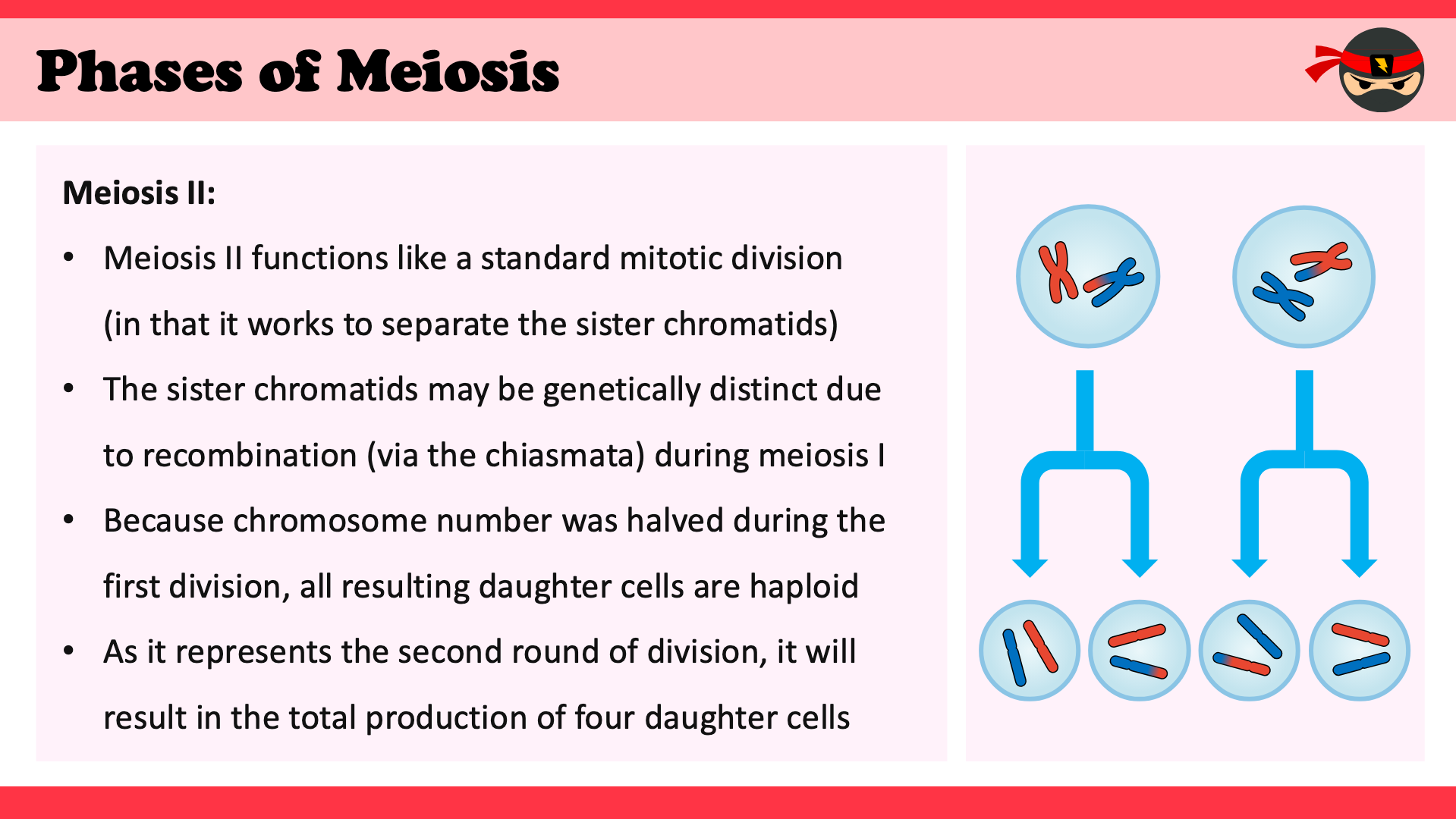
Which of the following are true about Meiosis II?
It separates sister chromatids.
It results in four haploid daughter cells.
It is identical to mitosis in function.
It doubles the chromosome number.
41
42
Multiple Choice
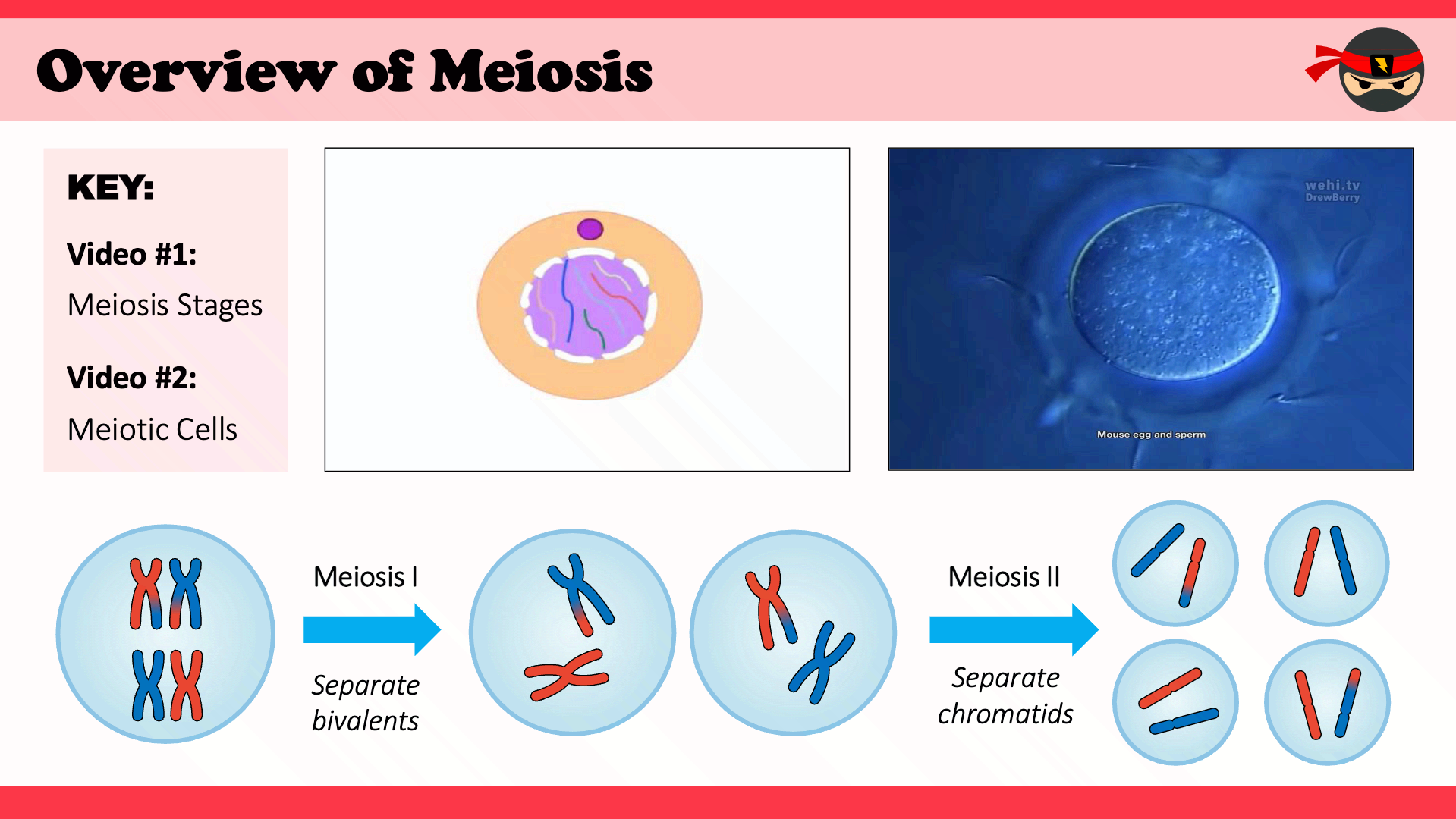
Which of the following best describes the main difference between Meiosis I and Meiosis II?
Meiosis I separates bivalents, while Meiosis II separates chromatids.
Meiosis I separates chromatids, while Meiosis II separates bivalents.
Both Meiosis I and II separate chromatids.
Both Meiosis I and II separate bivalents.
43
44
Open Ended
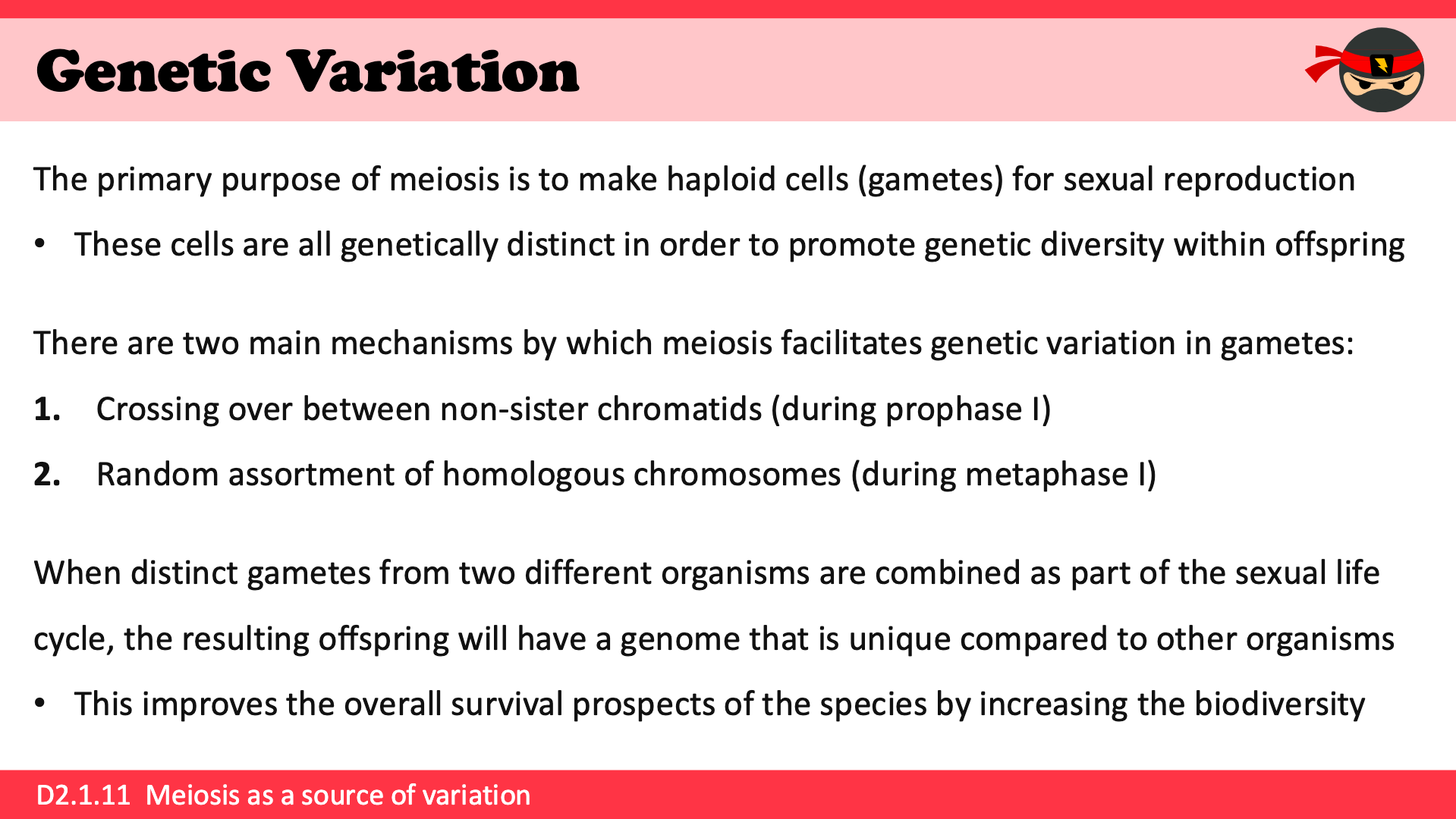
Explain how meiosis contributes to genetic variation in offspring.
45
46
Multiple Choice
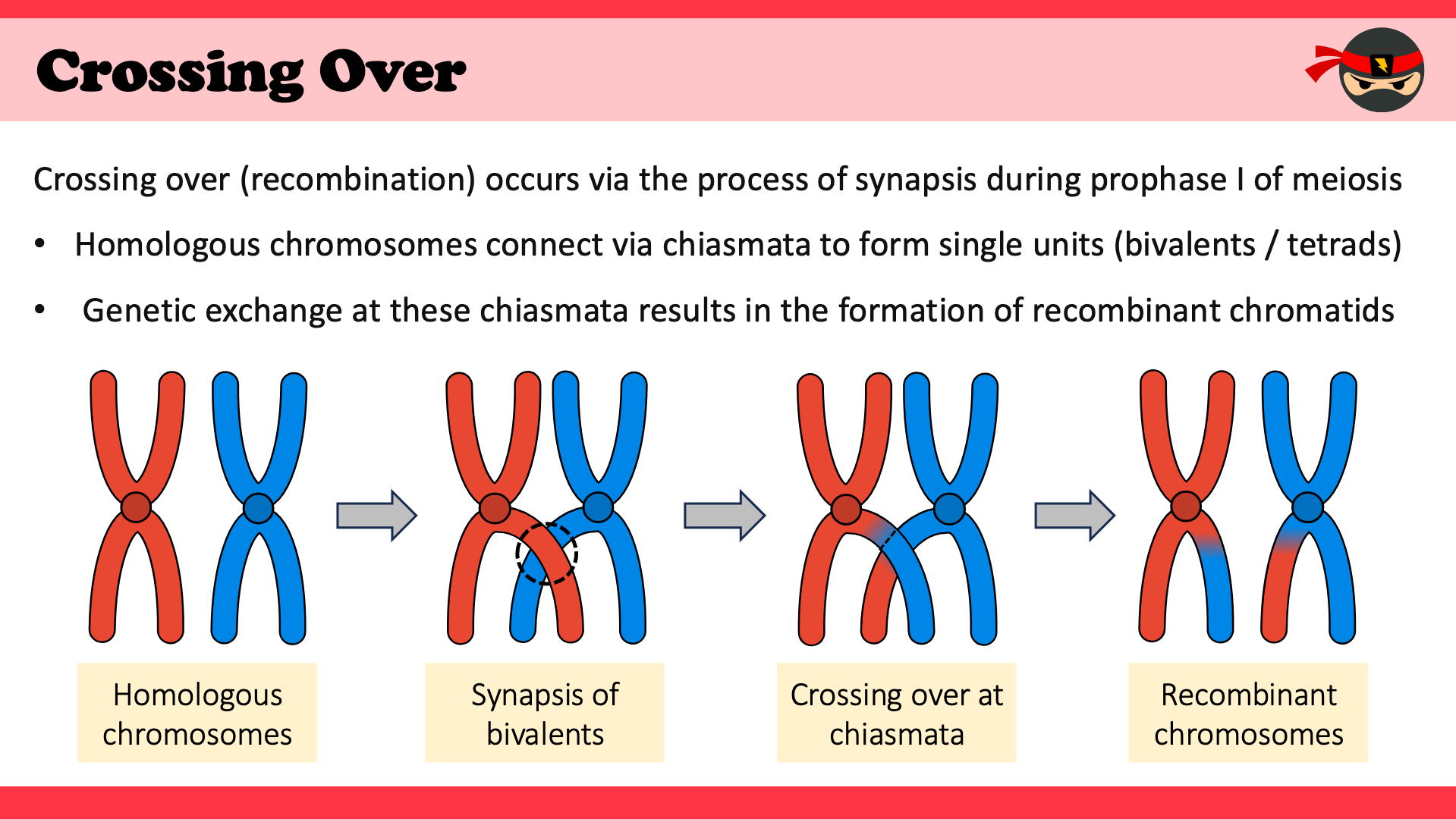
Which of the following events occurs during prophase I of meiosis and contributes to genetic diversity?
Crossing over between non-sister chromatids
Random assortment of homologous chromosomes
Separation of chromatids
Formation of gametes
47
48
Fill in the Blanks
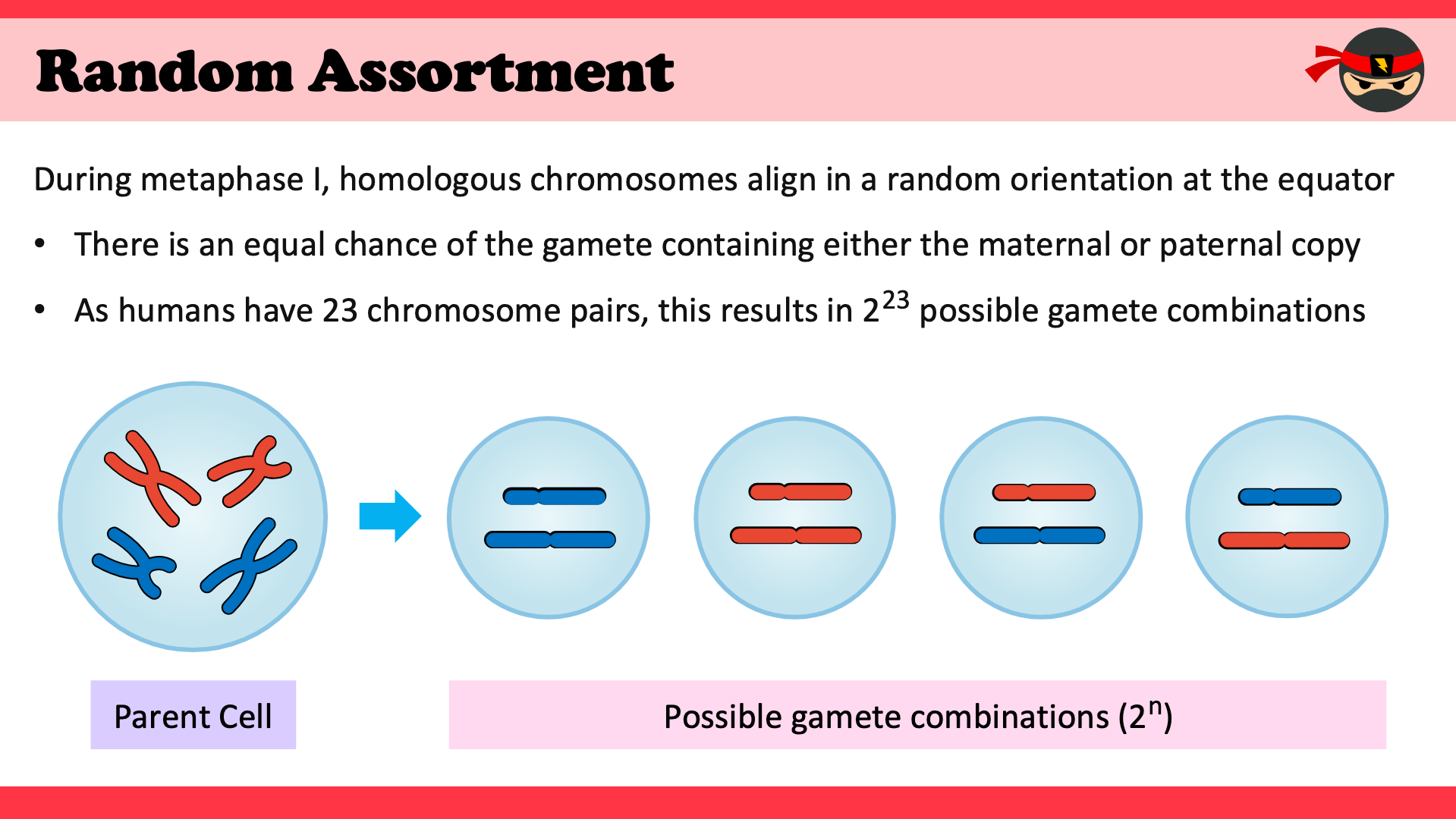
During metaphase I, homologous chromosomes align in a random orientation at the equator. This process is known as
Type answer...
49
50
Multiple Select
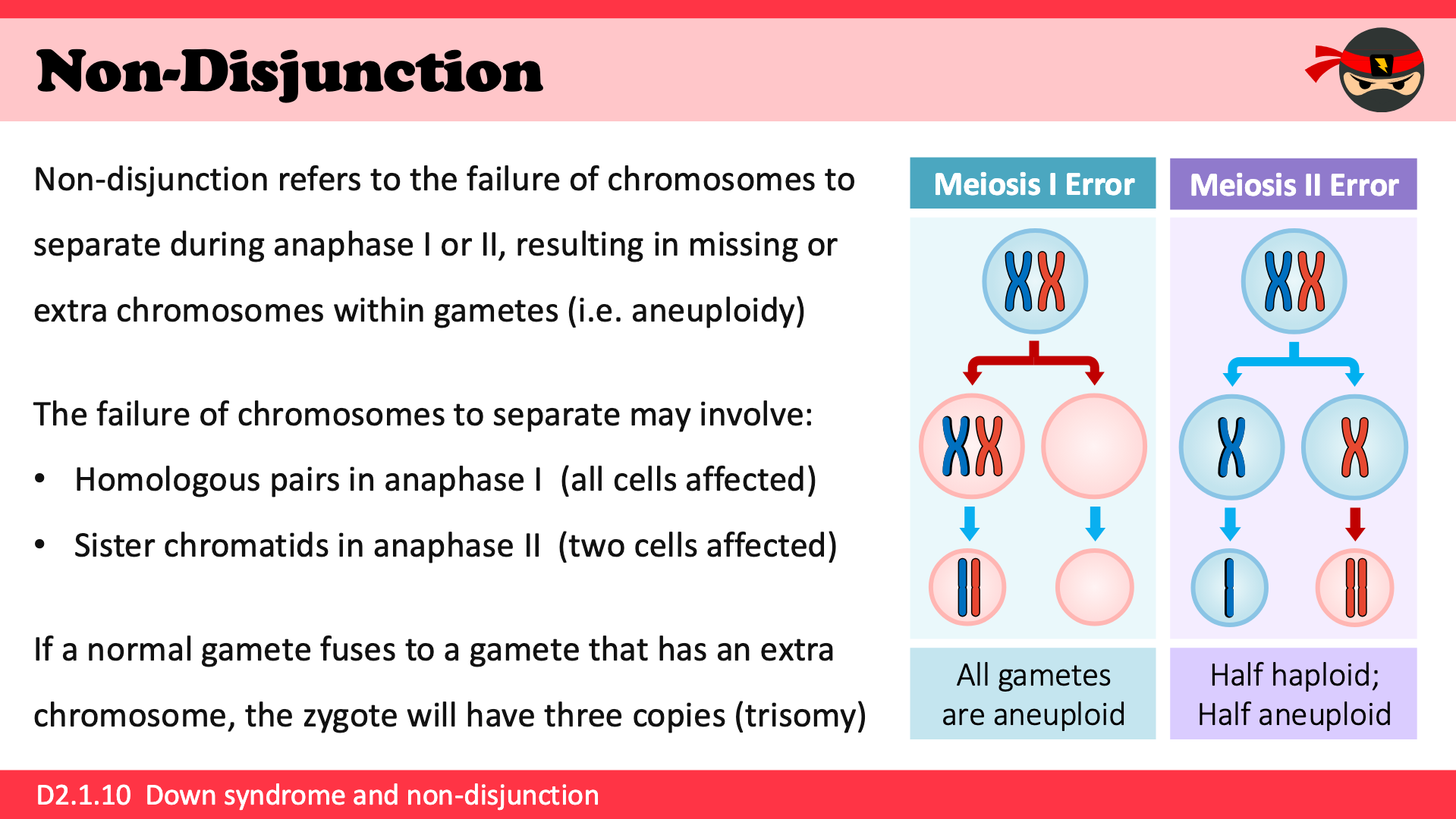
Select all statements that are true about non-disjunction.
It can occur during anaphase I or II of meiosis.
It results in gametes with missing or extra chromosomes.
It only affects homologous chromosomes in anaphase II.
It can lead to conditions such as trisomy.
51
52
Open Ended
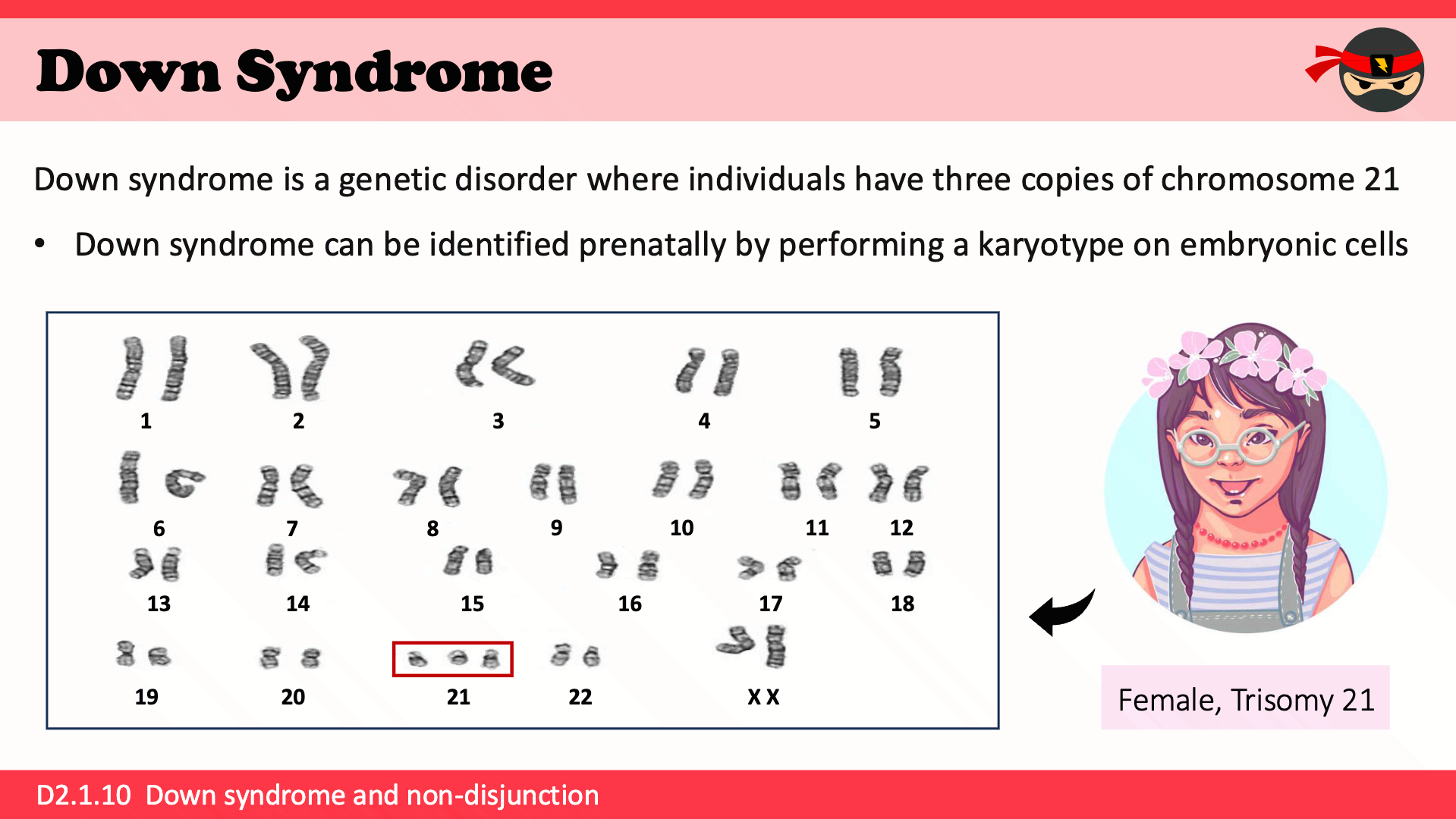
How can Down syndrome be identified prenatally, and what chromosomal abnormality is associated with it?
53
54
Open Ended
What questions do you still have about the process of cell division or its role in living organisms?
55
Open Ended
Summarize the main reasons why cell division is important for living organisms.
56
Open Ended
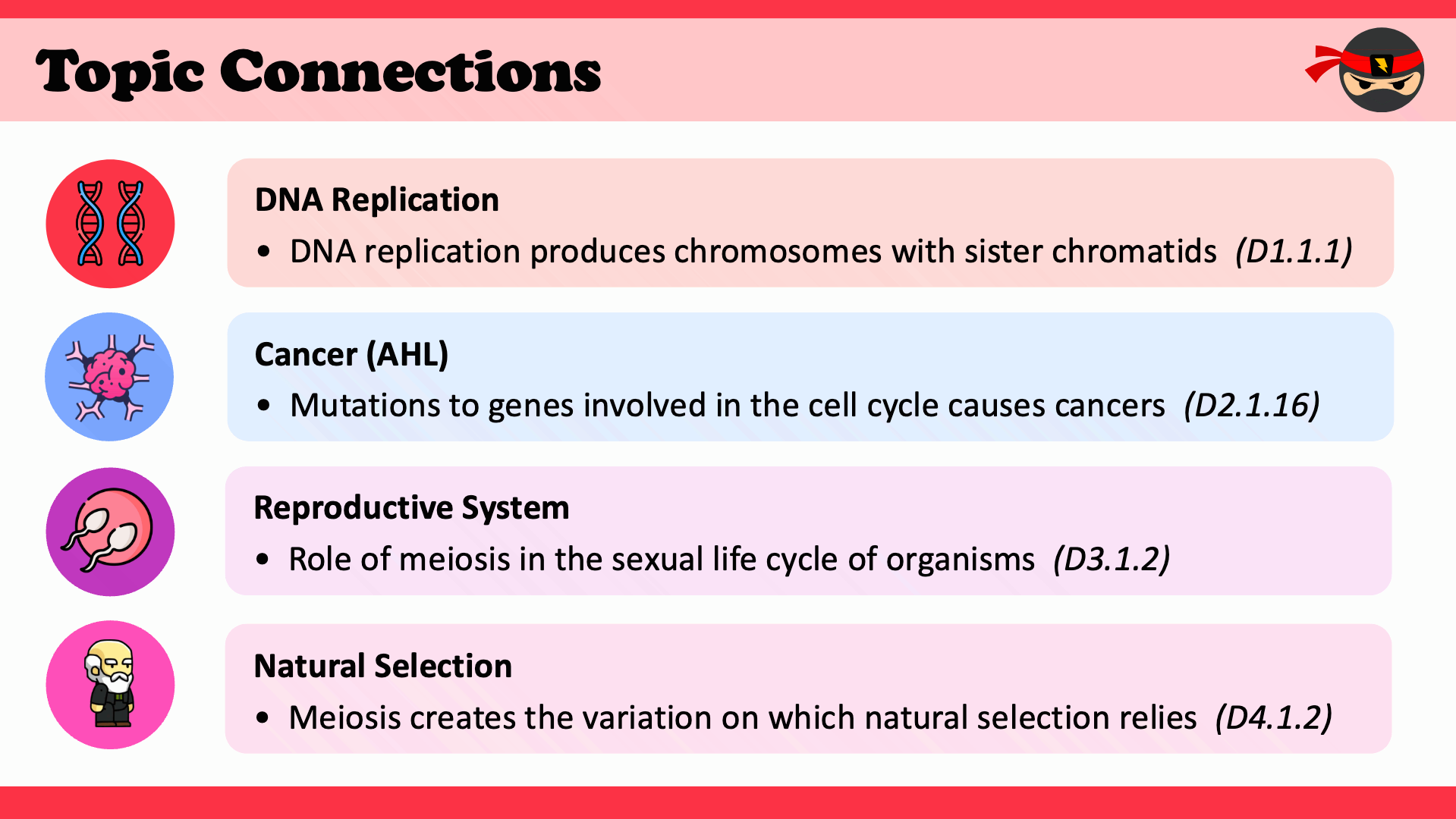
How are the processes of DNA replication, cancer development, the reproductive system, and natural selection interconnected in the context of meiosis and genetic variation?
Show answer
Auto Play
Slide 1 / 56
SLIDE
Similar Resources on Wayground

51 questions
Language Review for AASA - Day 1
Presentation
•
KG
53 questions
Celebrando Dia de los Muertos
Presentation
•
2nd Grade
51 questions
Topic 3
Presentation
•
University
50 questions
rockPaperScissors
Presentation
•
1st Grade
51 questions
8.7 THE ADDITION AND SUBTRACTION OF COLOURED LIGHT
Presentation
•
1st Grade
50 questions
9.3 MAIN PROCESSES OF THE EARTH
Presentation
•
1st Grade
50 questions
NIK2- REVIEW UNIT 5
Presentation
•
2nd Grade
50 questions
CKLA 2nd Domain 6 Lesson 3
Presentation
•
2nd Grade
Popular Resources on Wayground
10 questions
Safety Day 2026 – Student Review

Quiz
•
9th Grade
21 questions
Continents and Oceans
Quiz
•
6th Grade
20 questions
Parts of Speech
Quiz
•
5th Grade
16 questions
Subject & Predicate
Quiz
•
5th Grade
25 questions
Multiplication Facts
Quiz
•
5th Grade
12 questions
Map Skills
Quiz
•
3rd Grade
22 questions
Continents and Oceans
Quiz
•
5th Grade
15 questions
Rounding Decimals
Quiz
•
5th Grade
Discover more resources for Science
4 questions
K-2 Force and Motion Lesson
Presentation
•
KG - 2nd Grade
10 questions
Identifying Physical and Chemical Changes

Interactive video
•
1st - 5th Grade
7 questions
Human Body Pausing Point Quiz
Quiz
•
1st Grade
5 questions
All About Maps
Presentation
•
1st - 5th Grade
10 questions
Exploring the Conservation of Mass in Everyday Life
Interactive video
•
1st - 5th Grade
8 questions
Water Cycle
Presentation
•
1st - 5th Grade
6 questions
Gravity
Quiz
•
1st Grade
12 questions
Energy Quiz 1 (Forms/Transformations)
Quiz
•
1st - 5th Grade