

Rhetorical Devices: Logos, Ethos, Pathos

Presentation
•
English
•
8th - 10th Grade
•
Hard

Joseph Anderson
FREE Resource
19 Slides • 7 Questions
1
Ethos, Pathos, Logos
2
3
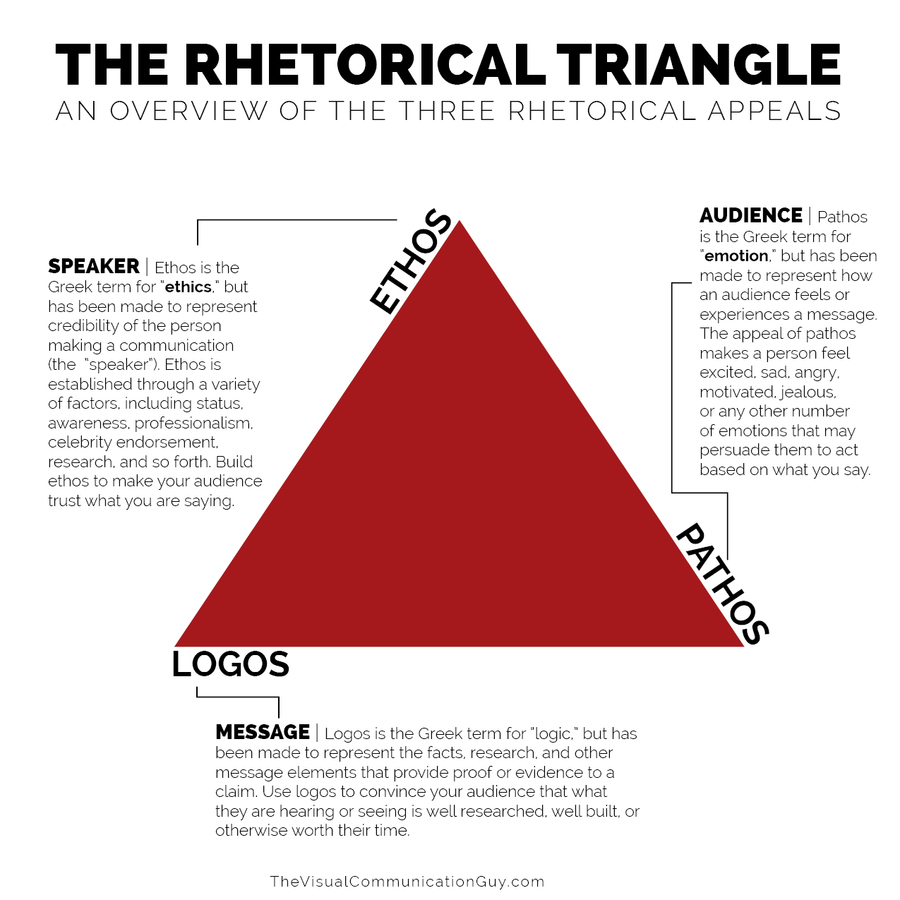
Aristotle's Rhetorical Triangle
4
ETHOS
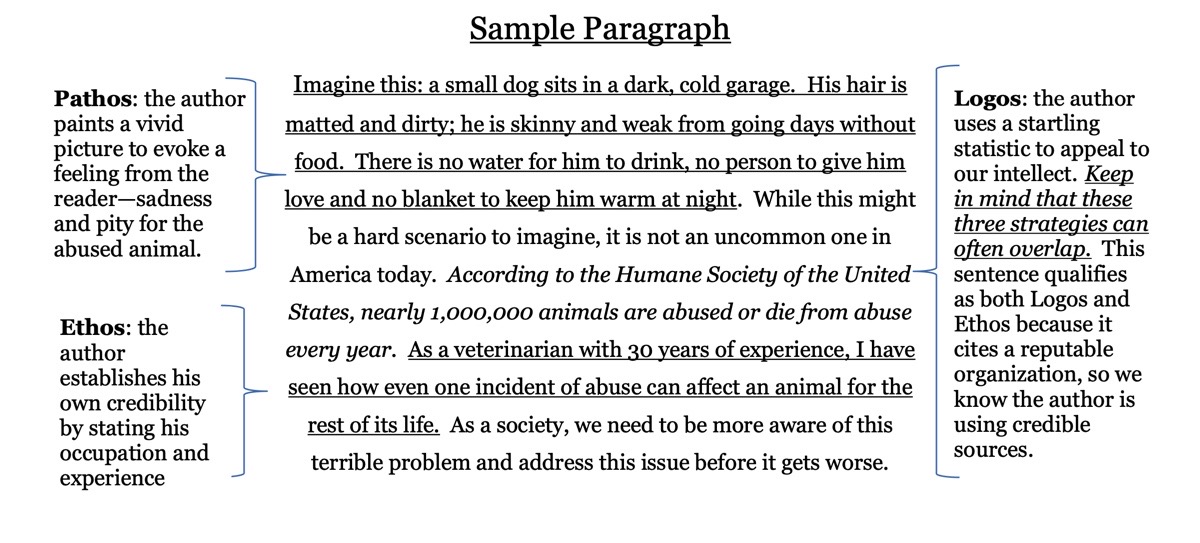
Ethos is used to convey the writer’s credibility and authority. When evaluating a piece of writing, the reader must know if the writer is qualified to comment on this issue. The writer can communicate their authority by using credible sources; choosing appropriate language; demonstrating that they have fairly examined the issue (by considering the counterargument); introducing their own professional, academic or authorial credentials; introducing their own personal experience with the issue; and using correct grammar and syntax.
5
Examples of How to Build Ethos:
Use appropriate and professional language for your intended audience
Conduct sound and ethical research (and cite all sources)
Use appropriate jargon to demonstrate awareness of the field and your audience
Use celebrity endorsements (get credible and well established people on board with your idea)
Make logical connections between ideas and avoid logical fallacies at all costs
6
PATHOS
Pathos, or the appeal to emotion, means to persuade an audience by purposely evoking certain emotions to make them feel the way the author wants them to feel. Authors make deliberate word choices, use meaningful language, and use examples and stories that evoke emotion. Authors can desire a range of emotional responses, including sympathy, anger, frustration, or even amusement.
7
Examples of Ways to Use Pathos:
Use humor to keep people engaged
Use images/examples that evoke strong emotions
Choose words that get people excited or emotionally charged
8
LOGOS
Logos, or the appeal to logic, means to appeal to the audiences’ sense of reason or logic. To use logos, the author makes clear, logical connections between ideas, and includes the use of facts and statistics. Using historical and literal analogies to make a logical argument is another strategy. There should be no holes in the argument, also known as logical fallacies, which are unclear or wrong assumptions or connections between ideas.
9
Examples of How to Use Logos:
Use statistics or established facts
Name features of a product or service
Reference research in support of your claim
Make logical connections between concepts
Be specific (when appropriate, be as specific as possible and avoid generalizations)
10
11
Identifying Ethos, Pathos, and Logos
Watch the following commercials and identify what rhetorical appeal(s) are used.
12
13
Multiple Choice
What appeal is used?
Ethos
Pathos
Logos
14
15
Open Ended
What appeal(s) are used in Dale Perterson's ad?
16
17
Multiple Select
What rhetorical appeal is used in the Campbell Soup ad?
Ethos
Logos
Pathos
18
19
Multiple Select
What is the main appeal in the ASPCA announcement?
Ethos
Pathos
Logos
20
21
Multiple Choice
What is the main appeal in the Colgate commercial?
Ethos
Pathos
Logos
22
23
Open Ended
The MAC commercial uses logos to appeal by pointing out the safety flaws of a PC. Explain what other appeal is used.
24
One more video
25
26
Multiple Choice
Who wrote "Rhetoric: The Three Means of Persuasion"?
Kant
Plato
Aristotle
Pythagorus
Ethos, Pathos, Logos
Show answer
Auto Play
Slide 1 / 26
SLIDE
Similar Resources on Wayground

20 questions
Health problems
Presentation
•
9th - 10th Grade
21 questions
Pixar Short "Hair" - Plot Elements Study
Presentation
•
8th - 10th Grade
19 questions
NARRATIVE TEXT
Presentation
•
9th - 10th Grade
20 questions
PREFIX & SUFFIX
Presentation
•
9th - 11th Grade
20 questions
Semicolons
Presentation
•
7th - 9th Grade
20 questions
Present Perfect and Past Simple
Presentation
•
7th - 9th Grade
20 questions
How Many - How Much
Presentation
•
9th Grade
21 questions
Characterization
Presentation
•
7th - 10th Grade
Popular Resources on Wayground
10 questions
Safety Day 2026 – Student Review

Quiz
•
9th Grade
21 questions
Continents and Oceans
Quiz
•
6th Grade
20 questions
Parts of Speech
Quiz
•
5th Grade
16 questions
Subject & Predicate
Quiz
•
5th Grade
25 questions
Multiplication Facts
Quiz
•
5th Grade
12 questions
Map Skills
Quiz
•
3rd Grade
22 questions
Continents and Oceans
Quiz
•
5th Grade
15 questions
Rounding Decimals
Quiz
•
5th Grade
Discover more resources for English
25 questions
Making Inferences
Quiz
•
6th - 8th Grade
10 questions
Test Your Knowledge on Bullying
Quiz
•
9th Grade
20 questions
Figurative Language Review
Quiz
•
8th Grade
20 questions
Sentences, Fragments, and Run-ons
Quiz
•
8th Grade
16 questions
Ethos, Pathos, Logos Practice
Quiz
•
9th Grade
30 questions
The Outsiders Day Activity
Quiz
•
8th Grade
20 questions
Context clues
Quiz
•
10th Grade
27 questions
1st Nine Weeks: ELA Final Exam Study Guide
Quiz
•
6th - 8th Grade