Analyzing Graphs
Presentation
•
Mathematics
•
6th - 11th Grade
•
Hard

Joseph Anderson
FREE Resource
7 Slides • 22 Questions
1
Math 1: Analyzing Graphs
by Kaitlin Murphy
2
Characteristics of Graphs
All graphs are different!
So, we have a lot of ways to describe what they look like and mean.
This lesson will go over some of the vocab used to describe characteristics of graphs.
3
y-intercept
The y-intercept is the place where the graph of the function crosses the y-axis.
The function to the right has a
y-intercept of -6.
Sometimes we use b as the variable for the y-intercept.
4
Multiple Choice
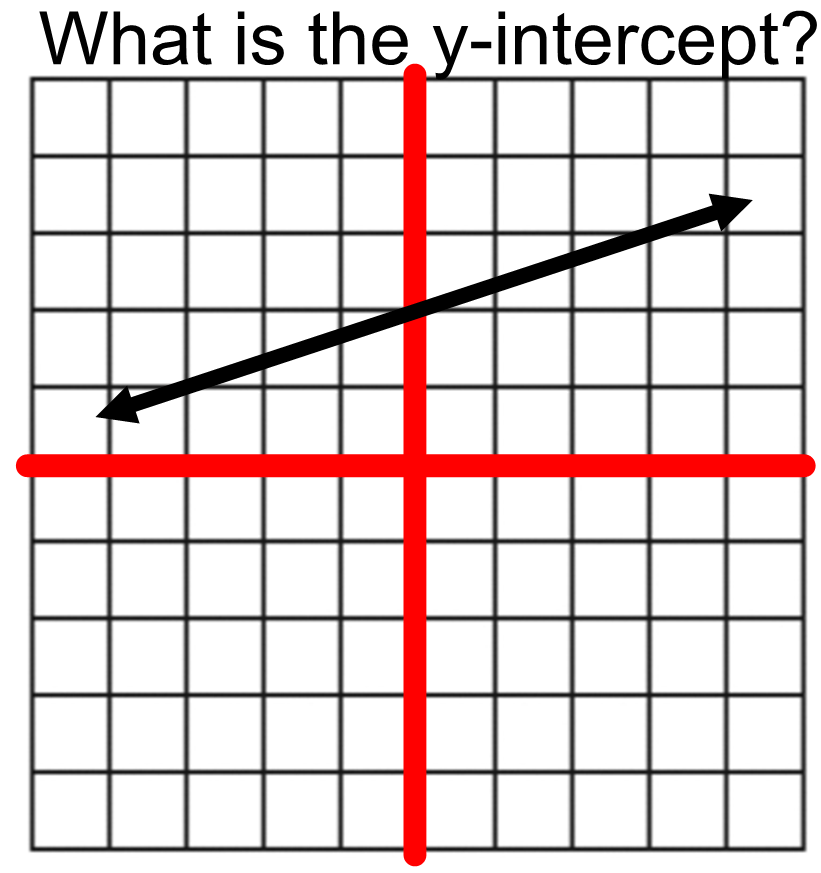
What is the y-intercept shown on the graph?
(0, -2)
(3, 0)
(0, 3)
None of these.
5
Multiple Choice
b=2
m=3
b=-3
m=-2
6
Fill in the Blanks
Type answer...
7
x-intercept(s)
An x-intercept is any place at which the graph of a function crosses the x-axis. It is possible for functions to have more than one x-intercepts (or zero!).
The function to the right has three
x-intercepts at -3, -2, and 1.
X-intercepts can also be called roots, solutions, or zeroes.
8
Fill in the Blanks
Type answer...
9
Fill in the Blanks
Type answer...
10
Multiple Choice
What are all the x-intercepts?
(-2.55, 0), (2.55, 0)
(-3,0), (-2,0), (2,0), (3,0)
(0, 36)
(-∞,∞)
11
Multiple Choice
Find the zeros.
x = 0 and 4
x = 0 and -4
x = 0
x = -4
12
Multiple Select
What are the zeros for the given polynomial? (Check all that apply)
HInt: where does the graph cross the X-axis
-4
-3
-2
-1
2
13
Positive/Negative Intervals
It can be interesting to tell when a function is positive (above the x-axis) vs. when it is negative (below the x-axis). Remember to read the graph from left to right!
The function to the right is negative on the intervals (-infinity, -3) and (-2,1).
It is positive from (-3,-2) and (1, infinity).
14
Multiple Choice
Write the interval that represents the negative portion of the function?
(-2,1)
(-0.5,-3.5)
(−∞,−2); (1,∞)
(-3,0)
15
Multiple Choice
Where is the function positive?
(-∞,5]
(0, ∞)
(-∞,2]
(-∞,0)
16
Multiple Choice
Where is the function negative?
(-∞,1)
(-∞,∞)
(1,∞) and (-∞,1)
(-1,∞)
17
Increasing/Decreasing Intervals
Besides positive and negative, it can be interesting to tell when a function is increasing vs. decreasing.
The function to the right is increasing from (-infinity, -2.5ish) and (0, infinity).
It is decreasing (sloping downward) from (-2.5, 0).
18
Multiple Choice
What is the increasing interval for the function below?
(−∞,∞)
(−∞,2]
(−∞,6]
(−6,6)
19
Multiple Choice
What is/are the increasing interval(s) for the function shown?
(−3, 1)
(4, 8)
(−∞,1) and (−3, 1)
20
Multiple Choice
What is the decreasing interval on the function shown?
(−∞, 1)
(−∞, 2)
(2, ∞)
(1, ∞)
21
Multiple Choice
How many increasing and decreasing intervals are there in this graph?
2 increasing, 2 decreasing
1 increasing, 2 decreasing
2 increasing, 1 decreasing
1 increasing, 1 decreasing
22
Multiple Choice
Over what interval is this function constant?
-5 < x < ∞
-3 < x < 4
4 < x < ∞
-5
23
maximum and minimum
Often we want to know when the graph reaches a maximum or minimum value.
The graph to the right has a local max at -2.5 with a value of about 1.
It also has a local minimum at 0 with a value of about -6.
A global max/min would be the highest or lowest point of the entire graph. This graph does not have those since it keeps going down forever to the left and up forever to the right.
24
Multiple Choice
Does this graph have a minimum or maximum? What point?
minimum at (-3, -5)
minimum at (3, 5)
maximum at (-3, -5)
maximum at (3, 5)
25
Multiple Choice
Does this graph have a minimum or maximum? What point?
Minimum at (0, 0)
Minimum at (0, 2)
Maximum at (0, 0)
Maximum at (0, 2)
26
Multiple Choice
Which ordered pair identifies the *absolute minimum* point on this function?
(-1, 0)
(0, -3)
(1, -4)
(4, 0)
27
Multiple Choice
Which coordinate would qualify as the *absolute maximum* of this function?
∞
(0, 4)
3
(4, 0)
28
Multiple Choice
What is the minimum value (y-values only)?
0
-5
-3
-1
29
Multiple Choice
What is the maximum value (y-value only)?
2
5
-1
0
Math 1: Analyzing Graphs
by Kaitlin Murphy
Show answer
Auto Play
Slide 1 / 29
SLIDE

Similar Resources on Wayground
20 questions
SOLVING EQUATIONS USING DISTRIBUTIVE PROPERTY
Presentation
•
7th - 10th Grade
20 questions
Algebra Review
Presentation
•
7th - 10th Grade
19 questions
Decimal and Percent Conversions
Presentation
•
6th - 12th Grade
22 questions
Modal Verbs
Presentation
•
6th - 10th Grade
22 questions
Sequence
Presentation
•
6th - 12th Grade
24 questions
Writing Linear Equations from Tables
Presentation
•
6th - 12th Grade
21 questions
Simplifying Radicals
Presentation
•
7th - 12th Grade
Popular Resources on Wayground
24 questions
PBIS-HGMS Day 10
Quiz
•
6th - 8th Grade
10 questions
HCS SCI 03 Summer School Review 3
Quiz
•
3rd Grade
11 questions
Home Scope
Quiz
•
7th - 8th Grade
15 questions
HCS SCI 05 Summer School Assessment 3 Review
Quiz
•
5th Grade
35 questions
Lufkin Road Middle School Student Handbook & Policies Assessment
Quiz
•
7th Grade
18 questions
Geo 11.3 Area of Circles and Sectors
Quiz
•
9th - 11th Grade