
Properties of Matter: Chemical Properties

Presentation
•
Science
•
6th - 8th Grade
•
Practice Problem
•
Medium
+7
Standards-aligned

Jeanette Rodriguez
Used 6+ times
FREE Resource
9 Slides • 4 Questions
1

Slide 167 / 177
Properties of Matter:
Chemical Properties
Return to Table
of Contents
2
Slide 168 / 177
Chemical Properties
We have spent some time discussing physical properties.
A chemical property is a characteristic of a pure substance that
describes its ability to change into a new substance.
Chemical properties can only be observed if the matter undergoes a
chemical reaction resulting in chemical change.
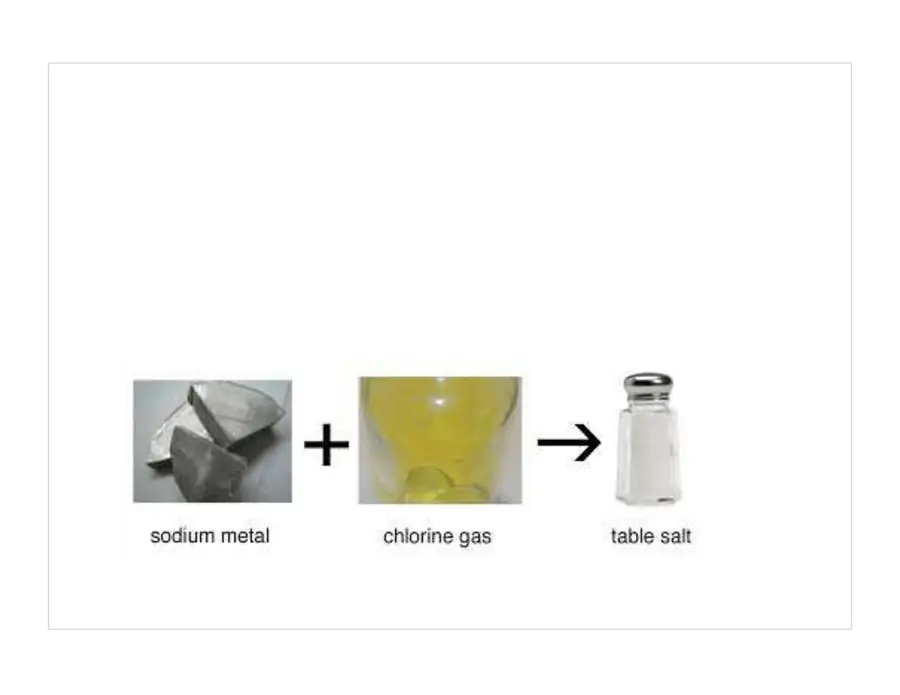
A chemical reaction between a metal and gas makes table salt.
3

Slide 169 / 177
Some chemical properties include flammability (or the ability
to burn), the ability to rust, corrosion (or breaking down) and
reactivity (or the ability to bond with other substances).
Matches ignite when you strike them because of a mixture of two
substances:
phosphorus and potassium chlorate.
These substances are highly flammable, but you would not be
able to tell until you lit them on fire!
Examples of Chemical Properties
4
5

Slide 170 / 177
A banana ripens and turns brown as a result of chemical
reactions, therefore, ripening is a chemical change.
Examples of Chemical Properties
This one is trickier, so it's helpful to think about the properites of a
banana before and after ripening. Fill in the characteristics below:
Before a banana ripens:
color:
texture:
taste:
After a banana ripens:
color:
texture:
taste:
6
Slide 171 / 177
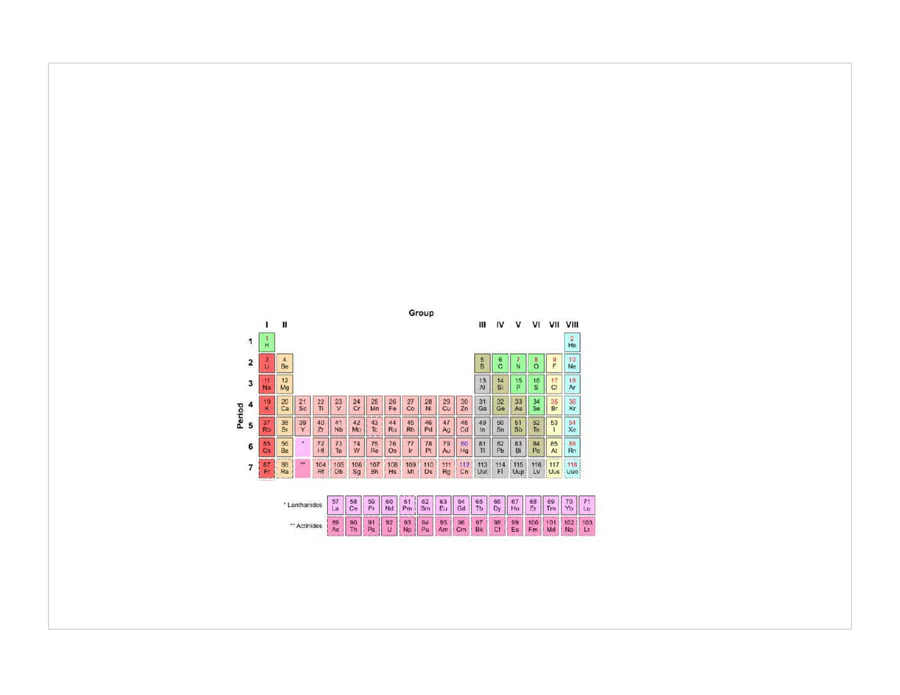
Reactivity is the ease and speed with which an element is able to
combine or react with another element.
Elements in Groups 1 and 7 are very reactive and elements in Group 8
will hardly ever react.
Reactivity of Elements
7
Slide 172 / 177
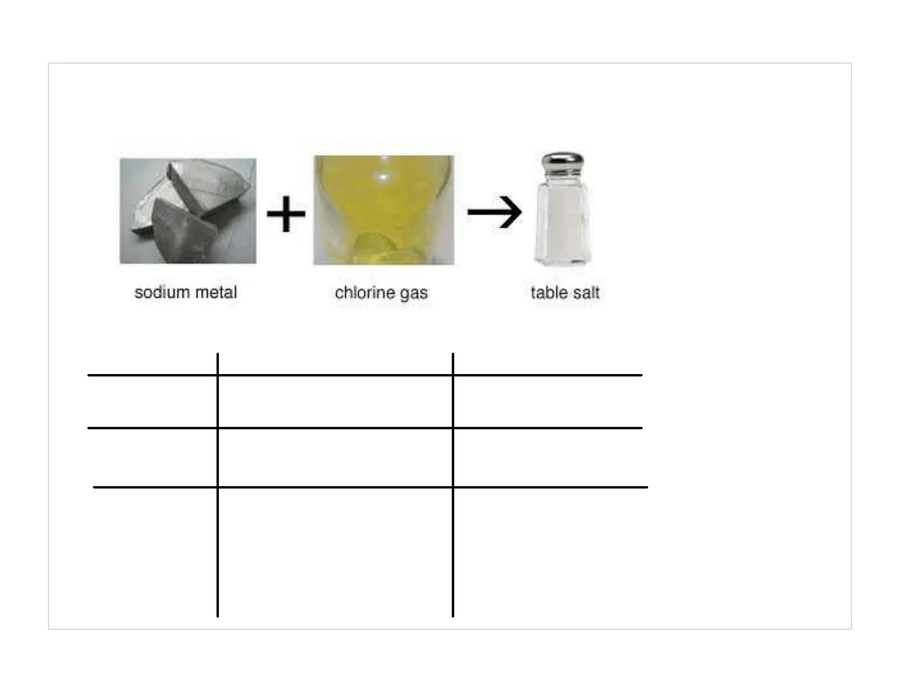
Physical vs Chemical Properties
Physical Properties
Chemical Properties
sodium metal
chlorine gas
table salt
shiny, soft
very reactive
very stable
(does not react
with other
substances)
very reactive
8
9
Multiple Choice
Elements in group 8 are the most reactive.
true
false
10
Multiple Choice
Attraction to magnets is a physical property.
True
False
11
Multiple Choice
The ability to corrode (or break down) is a physical
property.
True
False
12
Multiple Choice
Which of the following is an example of a physical
change, but not a chemical change?
Ice melting into liquid water
A candle burning
An exposed metal pipe rusting
An apple slice turning brown
13

Slide 177 / 177
Slide 167 / 177
Properties of Matter:
Chemical Properties
Return to Table
of Contents
Show answer
Auto Play
Slide 1 / 13
SLIDE
Similar Resources on Wayground

7 questions
Chemical Changes
Presentation
•
6th - 8th Grade
11 questions
Chemical Properties
Presentation
•
7th - 8th Grade
9 questions
Physical or Chemical Property
Presentation
•
7th Grade
13 questions
Matter and New Substances
Presentation
•
6th - 8th Grade
9 questions
Learning how to create a quiz.
Presentation
•
KG
11 questions
Mineralogy
Presentation
•
7th Grade
9 questions
wave properties
Presentation
•
6th Grade
7 questions
Chemical vs Physical Reactions
Presentation
•
6th - 8th Grade
Popular Resources on Wayground
10 questions
Safety Day 2026 – Student Review

Quiz
•
9th Grade
21 questions
Continents and Oceans
Quiz
•
6th Grade
20 questions
Parts of Speech
Quiz
•
5th Grade
16 questions
Subject & Predicate
Quiz
•
5th Grade
25 questions
Multiplication Facts
Quiz
•
5th Grade
12 questions
Map Skills
Quiz
•
3rd Grade
22 questions
Continents and Oceans
Quiz
•
5th Grade
15 questions
Rounding Decimals
Quiz
•
5th Grade
Discover more resources for Science
20 questions
Newton's Laws of Motion
Quiz
•
8th Grade
20 questions
Elements, compounds, and mixtures
Quiz
•
6th Grade
10 questions
6.6D - Relative Density Review
Quiz
•
6th Grade
15 questions
potential and kinetic energy
Quiz
•
8th Grade
21 questions
Newton's Laws of Motion
Quiz
•
8th Grade
20 questions
Elements, Compounds and Mixtures
Quiz
•
8th Grade
10 questions
Exploring Chemical and Physical Changes

Interactive video
•
6th - 10th Grade
20 questions
CONDUCTION,CONVECTION AND RADIATION
Quiz
•
6th Grade