CFE Review #1
Presentation
•
Chemistry
•
9th - 12th Grade
•
Medium
+3
Standards-aligned
Justin Hall
Used 2+ times
FREE Resource
3 Slides • 30 Questions
1
Unit 1.2 and Unit 1.3
2
Unit 1.2 - Matter and Change
Phases of Matter (Chapter 2, Lesson 1)
Physical / Chemical Properties and Changes (Chapter 2, Lesson 2)
Elements, Compounds, and Mixtures (Chapter 2, Lesson 3)
Mixtures and Separations (Chapter 2, Lesson 4)
Standard: SC.912.P.8.2
3
Multiple Choice
Which state of matter has definite volume but not definite shape?
Solid
Liquid
Gas
4
Multiple Choice
Which state of matter has no definite size or shape?
Solid
Liquid
Gas
5
Multiple Choice
doesn't really change much
is easily reversible
6
Multiple Choice
Bubbling and steam escaping from boiling water is a
Physical change
Chemical change
7
Multiple Choice
Splitting logs into pieces with an axe to make firewood is a
Physical change
Chemical change
8
Multiple Choice
FIrewood burning in a fire is a
Physical change
Chemical change
9
Multiple Choice
Fizzy gas bubbles produced as a powder is added to a clear liquid is a
Physical change
Chemical change
10
Multiple Choice
11
Multiple Choice
12
Multiple Choice
13
Multiple Choice
14
Multiple Choice
A type of mixture that has the SAME composition in every part is
homogenous
heterogeneous
15
Unit 1.3 - Atomic Structure and the Periodic Table
Atomic Theory (Chapter 3, Lesson 1)
Atomic Structure (Chapter 3, Lesson 2)
Protons, Neutrons, and Electrons (Chapter 3, Lesson 3)
Development of the Periodic Table (Chapter 5, Lesson 1)
Groups, Periods, and Blocks of the Periodic Table (Chapter 5, Lesson 2)
Periodic Trends (Chapter 5, Lesson 3)
Standards: SC.912.P.8.3, SC.912.P.8.4, SC.912.P.8.5
16
Multiple Choice
17
Multiple Choice
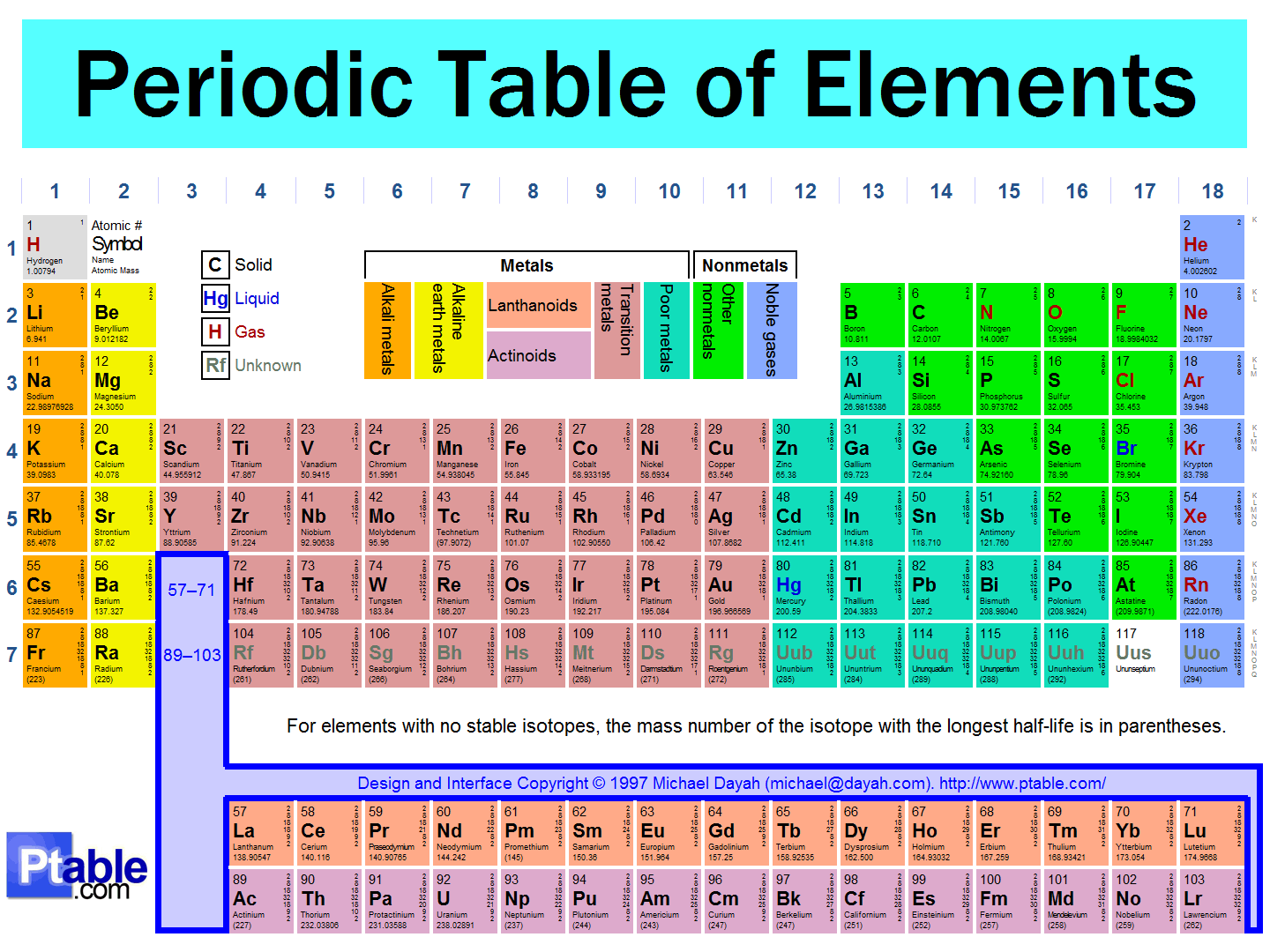
Which element in Period 2 has the greatest atomic radius?
Be
C
Na
Li
18
Multiple Choice
19
Multiple Choice
Electronegativity __________ from left to right within a period and __________ from top to bottom within a group.
decreases, increases
increases, increases
increases, decreases
stays the same, increases
20
Multiple Choice
The vertical (up and down) columns in the Periodic Table are called
groups
towers
periods
atomic numbers
21
Multiple Choice
Which has the greater electronegativity:
H or F?
22
Multiple Choice
How many valence electrons does carbon have?
4
5
6
8
23
Multiple Choice
24
Multiple Choice
25
Multiple Choice
How many protons does sulfur have?
32
16
48
12
26
Multiple Choice
In a neutral atom, the number of protons is equal to the number of ____________.
energy levels
neutrons
neurons
electrons
27
Multiple Choice
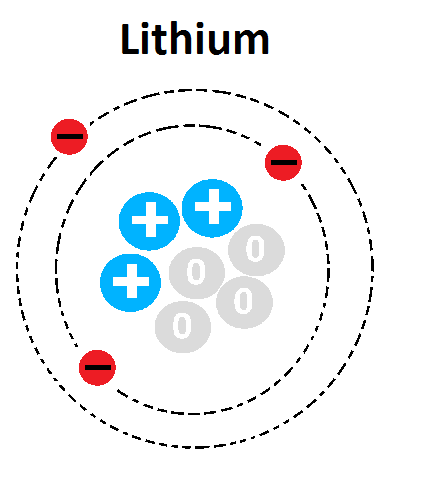
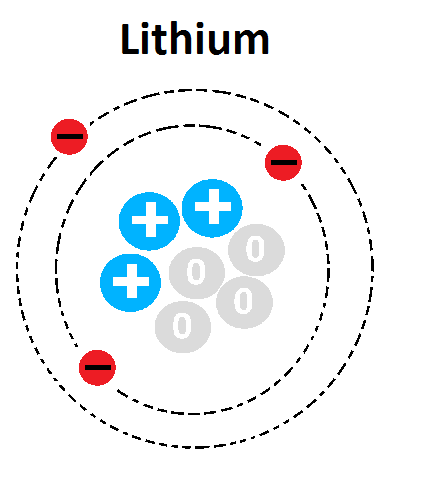
What is the atomic number of this atom?
1
3
4
7
28
Multiple Choice
What is the mass number of this atom?
1
3
4
7
29
Multiple Choice
30
Multiple Choice
Add the number of electrons and protons together
Subtract the number of electrons from the number of protons
Subtract the number of protons from the mass number
Add the mass number to the number of electrons
31
Multiple Choice
Which of the following determines the identity of an element?
number of protons
atomic mass
number of neutrons
number of shells
32
Multiple Choice
Isotopes of an element have a different number of...
Protons
Neutrons
Electrons
Mass
33
Multiple Choice
Unit 1.2 and Unit 1.3
Show answer
Auto Play
Slide 1 / 33
SLIDE

Similar Resources on Wayground
24 questions
Atomic Structure
Presentation
•
9th - 12th Grade
26 questions
Matter cycles
Presentation
•
9th - 12th Grade
27 questions
DNA RNA
Presentation
•
9th - 12th Grade
25 questions
Periodic Table Families and Properties
Presentation
•
9th - 12th Grade
25 questions
2.9 Covalent Bonding
Presentation
•
9th - 12th Grade
28 questions
Atomic Structure Notes
Presentation
•
9th - 12th Grade
28 questions
Stoichiometry
Presentation
•
9th - 12th Grade
24 questions
Atomic Models
Presentation
•
9th - 12th Grade
Popular Resources on Wayground
10 questions
Safety Day 2026 – Student Review
Quiz
•
9th Grade
21 questions
Continents and Oceans
Quiz
•
6th Grade
20 questions
Parts of Speech
Quiz
•
5th Grade
16 questions
Subject & Predicate
Quiz
•
5th Grade
25 questions
Multiplication Facts
Quiz
•
5th Grade
12 questions
Map Skills
Quiz
•
3rd Grade
22 questions
Continents and Oceans
Quiz
•
5th Grade
15 questions
Rounding Decimals
Quiz
•
5th Grade
Discover more resources for Chemistry
20 questions
electron configurations and orbital notation
Quiz
•
9th - 12th Grade
20 questions
Periodic Table Trends
Quiz
•
11th Grade
25 questions
Writing and Naming Binary Ionic compounds
Quiz
•
10th Grade
20 questions
COUNTING ATOMS
Quiz
•
10th Grade
50 questions
Unit 3: Atomic Assault Summative Review
Quiz
•
11th Grade
20 questions
Physical or Chemical Change/Phases
Quiz
•
8th Grade - University
15 questions
Periodicity Module Exam Practice Quiz
Quiz
•
9th - 12th Grade
20 questions
Naming Ionic Compounds
Quiz
•
10th Grade