
Salads Lesson

Presentation
•
Life Skills
•
9th Grade
•
Practice Problem
•
Hard

Jay Cee
Used 4+ times
FREE Resource
24 Slides • 0 Questions
1

Family and Consumer Science
Salads
This Photo by Unknown Author is licensed under CC BY-SA
2

Objectives
At the end of the lesson, students will be able to:
Define the term “salad”.
State at least 3 functions of a salad on a menu.
Identify the four main parts of a salad.
Describe any four of six types of salads.
Differentiate between the three types of salad dressings.
Create a list of food items that can be used as garnishes on
salads.
3

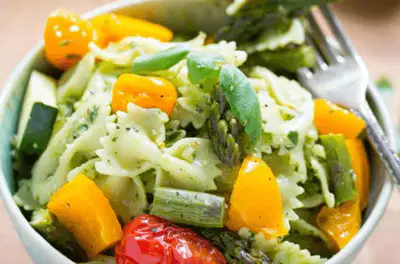
A salad is usually a mixture of raw vegetables and
fruits, but cooked and pickled foods can also be
included.
What is a Salad?
This Photo by Unknown Author is licensed under CC BY
4

Salads are an important part of a meal:
They add color
Give a variety of textures and flavors
Provide endless possibilities to the creative
cook
Supply water and fiber
Functions of a Salad
5

Parts of a Salad
The four (4) main parts of a salad includes the
Base: usually leafy greens which other foods
are built on
Body: the food or food combination placed
on top of the base. This is the largest part of
the salad
Dressing: To give additional flavor you may
add a salad dressing
Garnish
6

Salads may be served at any point
during a Meal:
Appetizer
Accompaniment / Side
Entrée
Dessert
7
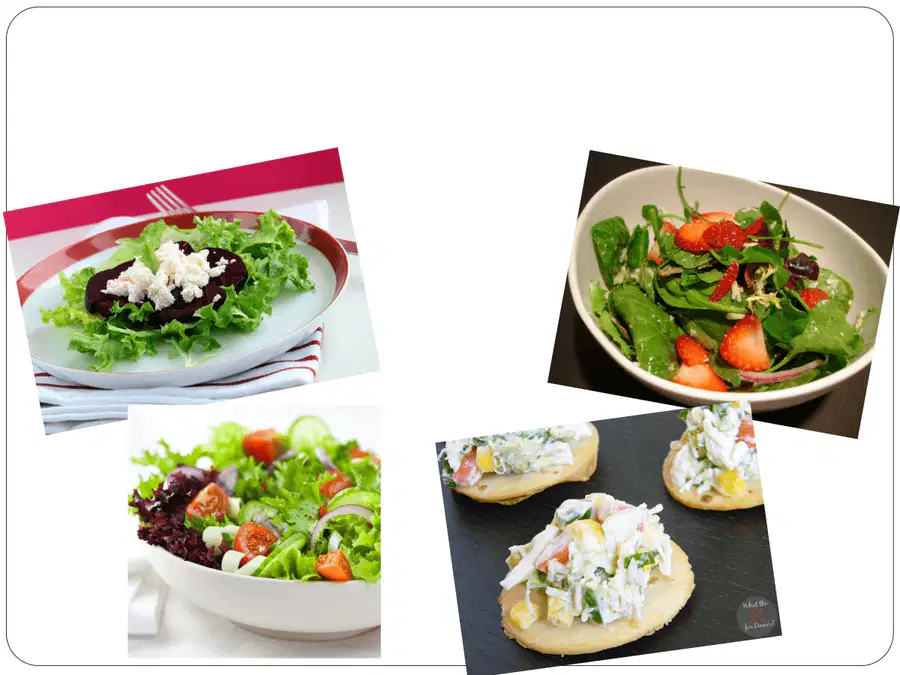
Salads as Appetizers
8

Salad as a Main Dish
9

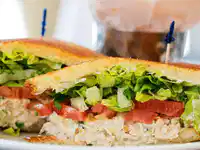
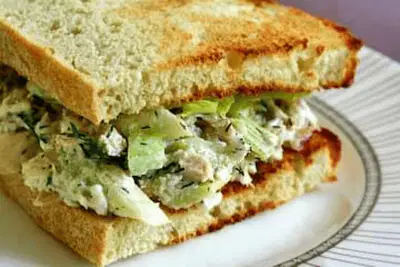
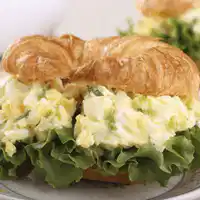
Filling a Sandwich
10



Vegetarian Salads
11

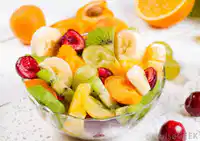
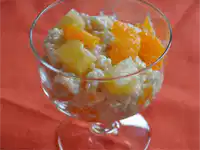
Salads as Desserts
12

Types of Salads
Green Salad
Vegetable Salad
Bound Salad
Entrée Salads
Fruit Salads
Dessert Salads
13
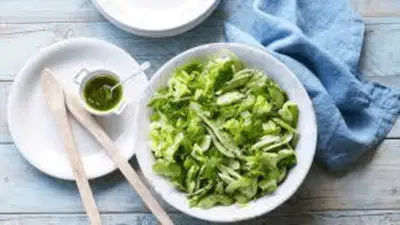
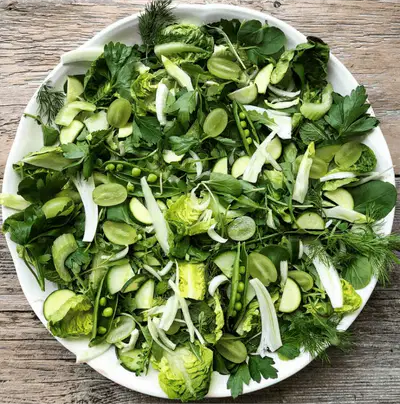
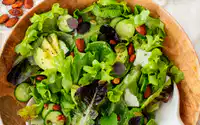
Green Salad
The “green salad” or “garden salad” is most often
composed of leafy vegetables, such as lettuce varieties,
spinach or rocket (arugula). Due to their low caloric
density, green salads are a common diet food.
14
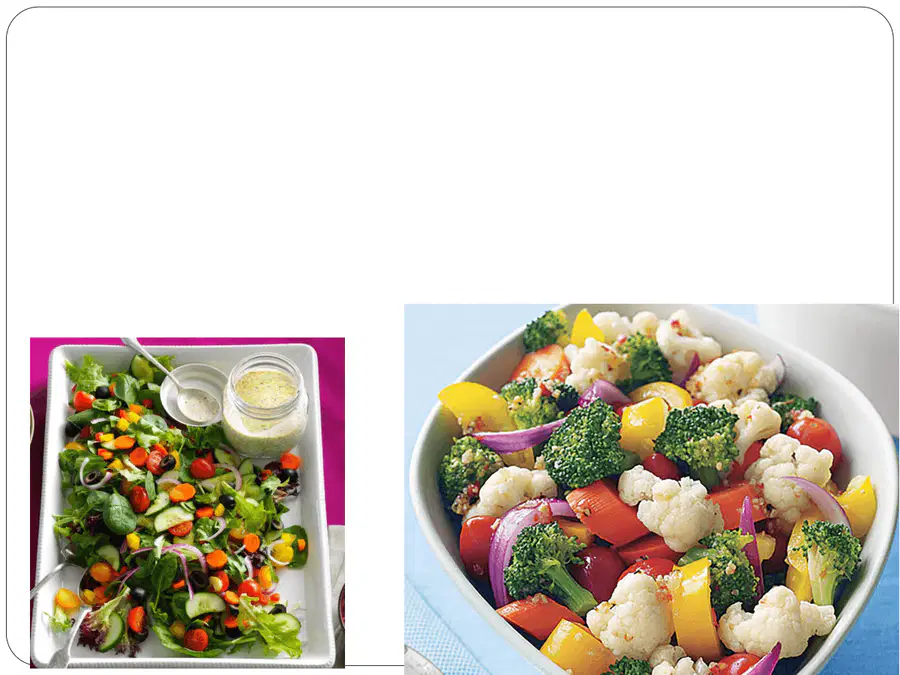
Vegetable Salad
Vegetables other than greens may be used in a salad.
Common vegetables used in a salad include cucumbers,
peppers, tomatoes, mushrooms, onions, spring onions,
red onions, avocado, carrots, celery, and radishes.
15
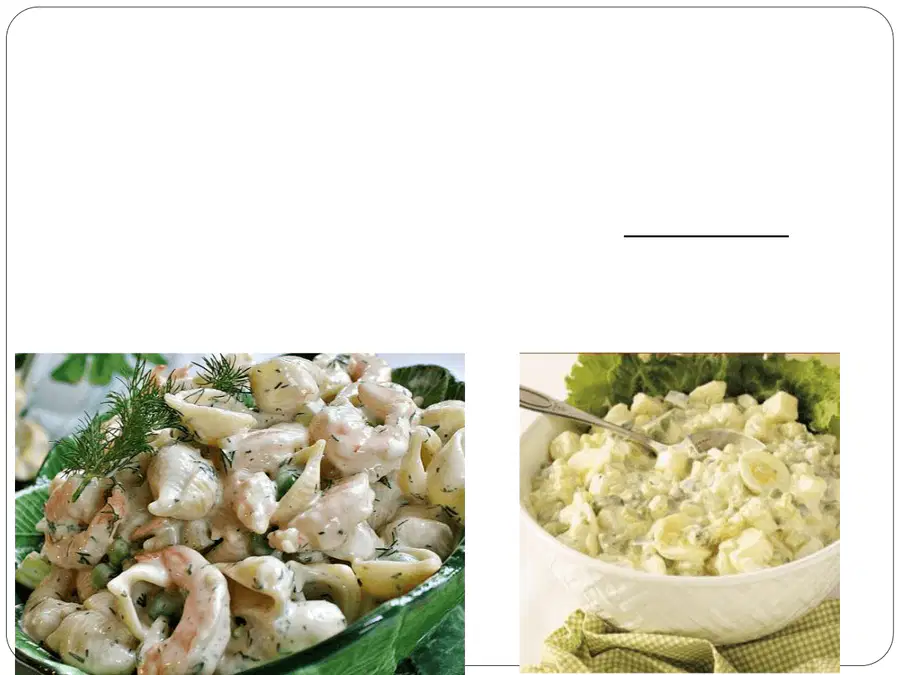
Bound Salad
A “bound” salad can be composed (arranged) or tossed
(put in a bowl and mixed with a thick dressing). They
are assembled with thick sauces such as mayonnaise.
One portion of a true bound salad will hold its shape
when placed on a plate with an ice-cream scoop.
16

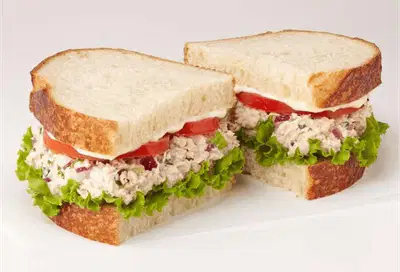
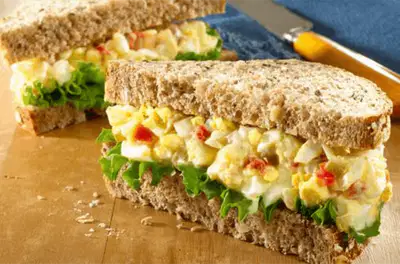
Bound Salad
Examples of bound salad include tuna salad, pasta
salad, chicken salad, egg salad and potato salad
Bound salads are often used as sandwich fillings. They
are also popular at picnics and barbecues, because they
can be made ahead of time and refrigerated.
17

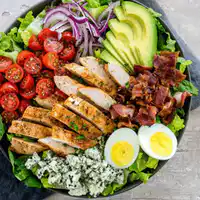
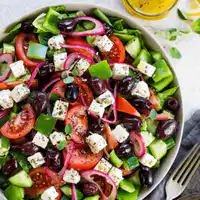
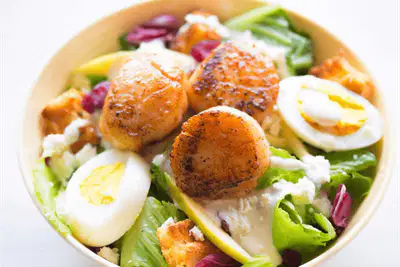
Entrée Salads
Entrée salads or “dinner salads” may contain grilled or fried
chicken pieces, seafood such as grilled or fried shrimp or a fish
steak such as tuna, mahi-mahi, or salmon. Sliced steak, such as
sirloin, can be placed upon the salad. Caesar salad, Chef salad,
Cobb salad, and Greek salad are types of dinner salads.
18

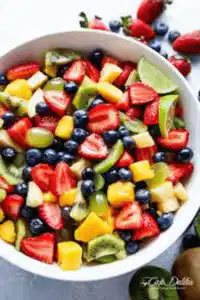
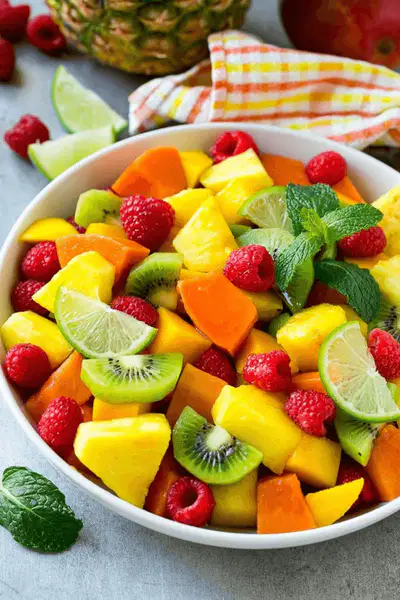
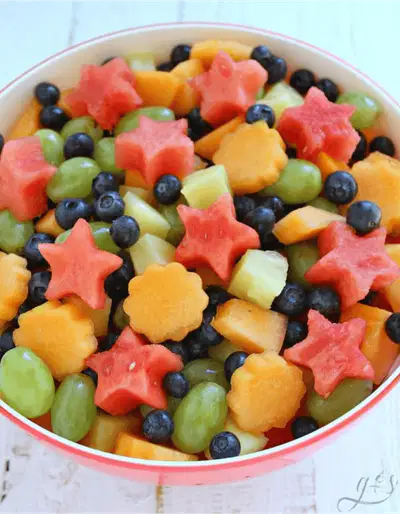
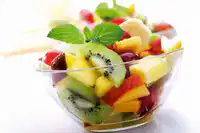
Fruit Salads
Fruits salads are made of fruits and include
the fruit cocktail that can be made fresh or
canned fruit.
19

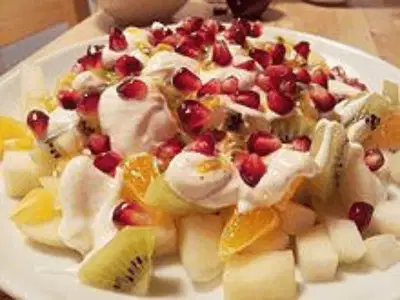
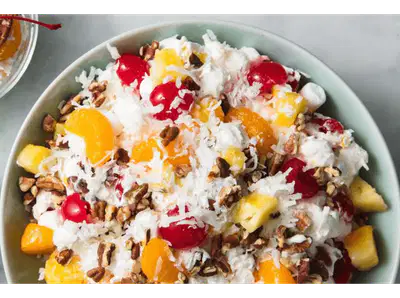
Dessert Salads
Dessert salads rarely include leafy greens and are often
sweet. Common variants are made with gelatin or
whipped cream (often times with the brand products
Jell-O and/or Cool Whip) e.g. jello salad, pistachio
salad and ambrosia.
20

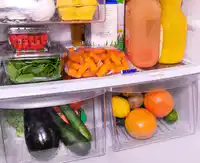
Store in an airtight container in the cooler
section of the refrigerator in order to keep
the ingredients fresh and crisp.
Avoid storing salad that has dressing on it
for long periods as a loss in nutrients may
have occurred, as well as a change in
texture has taken place.
Storage of Salads
21

1. Ingredients should be crisp, fresh, well clean and
refreshing
2. Ingredients should be prepared just before consumption
to preserve their freshness, crispness and nutritive value
3. A variety of colors, flavors and textures should be
included to make the salad interesting to eat
4. Ingredients should be attractively and neatly served with
the minimum of handling
5. Salad should be easy to serve and eat
Rules for Making Salads
22

Should have an attractive, unhandled
appearance.
The shape of foods should be retained
Ingredients should be thoroughly
chilled
Vegetables should be crisp and fresh
and served with a suitable dressing
Qualities of a Good Salad
23

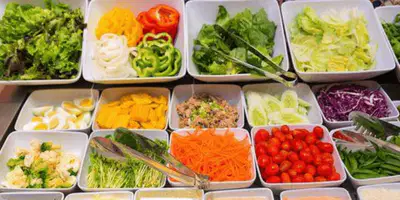
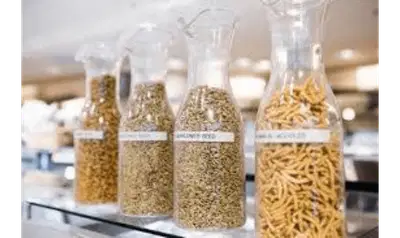
Toppings and Garnishes
Popular salad garnishes are nuts, croutons, anchovies, bacon
bits (real or imitation), garden beet, bell peppers, shredded
carrots, diced celery, sliced cucumber, parsley, sliced
mushrooms, sliced red onion, radish, sunflower seeds
(shelled), real or artificial crab meat and cherry tomatoes.
24

Toppings and Garnishes (cont’d)
Various cheeses, berries, seeds and other ingredients can also
be added to green salads. Cheeses, in the form of cubes,
crumbles or grated are often used, including blue-cheese,
Parmesan cheese and feta cheese. Color considerations are
sometimes addressed by using edible flowers, red radishes,
carrots, various colors of peppers and other colorful
ingredients.
Family and Consumer Science
Salads
This Photo by Unknown Author is licensed under CC BY-SA
Show answer
Auto Play
Slide 1 / 24
SLIDE
Similar Resources on Wayground

20 questions
respiratory system bio lesson
Presentation
•
9th Grade
20 questions
Sustainability Lesson with Videos
Presentation
•
9th Grade
20 questions
States of Matter Review
Presentation
•
3rd Grade
20 questions
Advertisement
Presentation
•
9th Grade
20 questions
GOOGLE APPS
Presentation
•
9th Grade
20 questions
Lesson 1 Review :Introductions/Greetings
Presentation
•
9th Grade
19 questions
Parallel and Perpendicular Lines Review
Presentation
•
9th Grade
18 questions
Central Idea vs. Theme
Presentation
•
9th Grade
Popular Resources on Wayground
10 questions
HCS SCI 03 Summer School Review 4

Quiz
•
3rd Grade
11 questions
HSMS - Standard Response Protocol
Quiz
•
6th - 8th Grade
16 questions
1.1-1.2 Quiz Review
Quiz
•
9th - 12th Grade
12 questions
Exponent Expressions
Quiz
•
6th Grade
20 questions
Adding and Subtracting Integers
Quiz
•
6th - 7th Grade
11 questions
Northeast States
Quiz
•
3rd - 4th Grade
10 questions
Characterization
Quiz
•
3rd - 7th Grade
10 questions
Common Denominators
Quiz
•
5th Grade