Probability (Sample Space and Complement)
Presentation
•
Mathematics
•
6th - 8th Grade
•
Medium
+4
Standards-aligned
Gavin Young
Used 1+ times
FREE Resource
4 Slides • 23 Questions
1
Multiple Choice
2
Multiple Choice
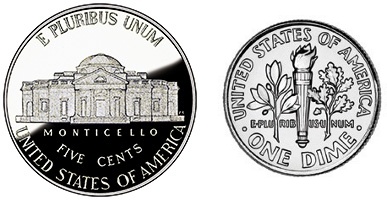
A bag contains 5 quarters, 2 dimes, and 4 pennies. What is the P(Quarter), or the probability of picking a quarter?
5-11
3
Explanation Slide...
4
5
Multiple Choice
Which shows the sample space for flipping two coins?
H = heads, T = tails
sample space includes all possible combinations
6
Multiple Choice
TW, CW, PW, MT, TS, PM
TW, TM, PC, CS, CW, PW
7
Multiple Choice
Three coins are tossed. Use the Sample Space provided. What's the probability of landing on the same side on all 3 coins? (Remember to simplify your answer).
⅛
1/4
⅓
⅞
8
Multiple Choice
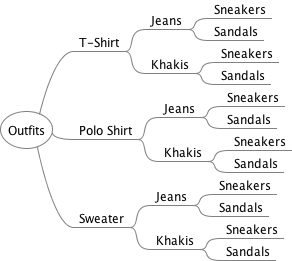
The sample space tree diagram for a team of three students is shown. What is the probability that the team would consist of at least2 girls? (Simplify your answer).
½
⅜
¾
⅙
9
Multiple Choice
10
Multiple Choice
11
Multiple Choice
12
Multiple Choice
13
Multiple Choice
14
Multiple Choice
15
Multiple Choice
16
Multiple Choice
17
Multiple Choice
18
Multiple Choice
Max is ordering a salad for lunch. He can choose one of chicken, tofu, hard-boiled eggs, or turkey to have on the salad. He can also pick one vegetable topping. The vegetable choices are sprouts, tomatoes, or olives. How many different combinations can Max create?
7 combinations
12 combinations
3 combinations
4 combinations
19
Multiple Choice
What is the probability of rolling two dice and getting 10?
1/12
1/10
1/9
5/36
20
21
Complement of an Event
The complement of an event is like the opposite of that event happening. Let's say the event is "It will rain tomorrow." The complement of this event would be "It will not rain tomorrow." So, if you add up the probability of an event happening and the probability of its complement happening, you always get 1.
22
Multiple Choice
A bag of candy contains 2 red, 4 yellow, and 4 green candies.
P(red or yellow) =
3/5
1/5
2/5
4/5
23
Multiple Choice
A bag of candy contains 2 red, 4 yellow, and 4 green candies.
P(NOT red or yellow) = The Complement
3/5
1/5
2/5
4/5
24
Multiple Choice
P(even) =
5/7
1/7
2/7
4/7
25
Multiple Choice
P(NOT even) = The Complement
5/7
1/7
2/7
4/7
26
Multiple Choice
There are 14 girls and 12 boys in a class.
P(boy) =
7/13
6/13
4/13
12/25
27
Multiple Choice
There are 14 girls and 12 boys in a class.
P(NOT boy) = The Complement
7/13
6/13
4/13
12/25
Show answer
Auto Play
Slide 1 / 27
MULTIPLE CHOICE

Similar Resources on Wayground
19 questions
Tax, Tips and Mark Ups
Presentation
•
6th - 8th Grade
20 questions
Theoretical and Experimental Probability
Presentation
•
7th - 8th Grade
21 questions
Complementary and Supplementary Angles
Presentation
•
7th - 8th Grade
21 questions
Solving and Graphing Inequalities: One Step Add/Sub
Presentation
•
6th - 9th Grade
22 questions
Compare Proportional Relationships
Presentation
•
7th - 8th Grade
19 questions
Review of Rational Numbers
Presentation
•
6th - 8th Grade
19 questions
Identify the Part, Percent, & Whole
Presentation
•
6th - 8th Grade
20 questions
Percents: Lesson 1
Presentation
•
6th - 8th Grade
Popular Resources on Wayground
24 questions
PBIS-HGMS Day 10
Quiz
•
6th - 8th Grade
10 questions
HCS SCI 03 Summer School Review 3
Quiz
•
3rd Grade
11 questions
Home Scope
Quiz
•
7th - 8th Grade
15 questions
HCS SCI 05 Summer School Assessment 3 Review
Quiz
•
5th Grade
35 questions
Lufkin Road Middle School Student Handbook & Policies Assessment
Quiz
•
7th Grade
18 questions
Geo 11.3 Area of Circles and Sectors
Quiz
•
9th - 11th Grade