
Exploring the Circulatory System

Presentation
•
Science
•
6th - 8th Grade
•
Practice Problem
•
Hard
+6
Standards-aligned

Deb Fitzgibbons
FREE Resource
10 Slides • 4 Questions
1
A fascinating journey through the intricate network of blood vessels, the circulatory system is responsible for transporting oxygen, nutrients, and hormones throughout the body. Join us as we delve into the wonders of this vital system.
2
Vocab
Blood: Mixture of liquid and cells
Plasma: Pale yellow liquid, mostly water, nutrients
Hemoglobin / Red Blood Cells: Shaped like a doughnut, carries oxygen around the body
Platelets / White Blood Cells: Germ-fighters
Arteries: Carry blood away from the heart
Veins: Carry blood back to the heart
Capillaries: Where materials are exchanged between blood and body cells
3
Vocabulary
Transfusion: Blood taken from a healthy person and given to another person who needs it
Donor: Person who gives blood
Recipient: Person who receives blood
Antigens: Chemical on the surface of blood
4
Multiple Choice
What is the function of platelets?
Carry blood away from the heart
Carry blood back to the heart
Germ-fighters
Where materials are exchanged between blood and body cells
5
Platelets: Germ-fighters
Trivia: Platelets are not only involved in blood clotting, but they also play a crucial role in fighting off germs. These tiny cell fragments release chemicals that help activate the immune system and prevent infections. Platelets are true superheroes of the bloodstream!
Did you know?
6
Exploring the Circulatory System
7
Multiple Choice
Which blood type can receive all other blood types?
A
B
AB
O
8
Universal Recipient
Trivia: The blood type AB is known as the universal recipient because it can receive blood from any other blood type. This is because AB blood type has both A and B antigens on its red blood cells, making it compatible with all other blood types. In contrast, type O is considered the universal donor, as it can donate blood to any other blood type.
9
Exploring the Circulatory System
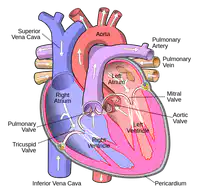
Fist: Located in Rib Cage
Four Chambers: Atrium (Upper Right and Left Chambers), Ventricle (Lower Right and Left Chambers)
Heart Beat: Special cells send signals to make the heart contract and relax, 70 to 80 times a minute
How Blood Travels: Blood enters through the Vena Cava, Drops off waste, Travels through the atrium to the ventricle, Goes through the Pulmonary Artery, Blood travels to the Lungs, Returns to the heart through the Pulmonary Vein, Travels through the left atrium to the left ventricle, Goes out
10
Multiple Choice
How does blood travel through the circulatory system?
Through the Vena Cava, atrium, ventricle, pulmonary artery, lungs, pulmonary vein, left atrium, left ventricle, and out
Through the Vena Cava, atrium, ventricle, pulmonary vein, lungs, pulmonary artery, left atrium, left ventricle, and out
Through the Vena Cava, atrium, ventricle, pulmonary artery, lungs, pulmonary vein, right atrium, right ventricle, and out
Through the Vena Cava, atrium, ventricle, pulmonary vein, lungs, pulmonary artery, right atrium, right ventricle, and out
11
How Blood Travels
Trivia: Did you know that blood travels through the circulatory system in a specific order? It starts with the Vena Cava, then moves to the atrium, ventricle, pulmonary artery, lungs, pulmonary vein, left atrium, left ventricle, and finally out of the body. It's a fascinating journey!
12
Exploring the Circulatory System
13
Multiple Choice
Which blood vessel carries blood to the body?
AORTA
Pulmonary Vein
White Blood Cells
Platelets
14
The Aorta:
The aorta is the largest artery in the body, carrying oxygen-rich blood away from the heart to all parts of the body. It is about the size of a garden hose and can withstand high pressure. Without the aorta, our organs wouldn't receive the vital oxygen and nutrients they need to function properly.
A fascinating journey through the intricate network of blood vessels, the circulatory system is responsible for transporting oxygen, nutrients, and hormones throughout the body. Join us as we delve into the wonders of this vital system.
Show answer
Auto Play
Slide 1 / 14
SLIDE
Similar Resources on Wayground

9 questions
Borax Snowflakes Lab
Presentation
•
6th - 8th Grade
8 questions
Punnett Square Practice
Presentation
•
6th - 8th Grade
9 questions
The Immune System
Presentation
•
7th Grade
11 questions
Forest
Presentation
•
5th - 8th Grade
10 questions
Homeostasis
Presentation
•
6th - 8th Grade
12 questions
Living Things
Presentation
•
KG
12 questions
Biotechnology - GMO - 1/5/2020
Presentation
•
6th - 7th Grade
9 questions
Genotype and Phenotype + Dominant and Recessive Review
Presentation
•
6th - 8th Grade
Popular Resources on Wayground
10 questions
Safety Day 2026 – Student Review

Quiz
•
9th Grade
21 questions
Continents and Oceans
Quiz
•
6th Grade
20 questions
Parts of Speech
Quiz
•
5th Grade
16 questions
Subject & Predicate
Quiz
•
5th Grade
25 questions
Multiplication Facts
Quiz
•
5th Grade
12 questions
Map Skills
Quiz
•
3rd Grade
22 questions
Continents and Oceans
Quiz
•
5th Grade
15 questions
Rounding Decimals
Quiz
•
5th Grade
Discover more resources for Science
20 questions
Newton's Laws of Motion
Quiz
•
8th Grade
20 questions
Elements, compounds, and mixtures
Quiz
•
6th Grade
10 questions
6.6D - Relative Density Review
Quiz
•
6th Grade
15 questions
potential and kinetic energy
Quiz
•
8th Grade
21 questions
Newton's Laws of Motion
Quiz
•
8th Grade
20 questions
Elements, Compounds and Mixtures
Quiz
•
8th Grade
10 questions
Exploring Chemical and Physical Changes

Interactive video
•
6th - 10th Grade
20 questions
CONDUCTION,CONVECTION AND RADIATION
Quiz
•
6th Grade