

How to start a conversation

Presentation
•
English
•
Professional Development
•
Practice Problem
•
Easy

Alexandra Stolyarova
Used 2+ times
FREE Resource
21 Slides • 8 Questions
1

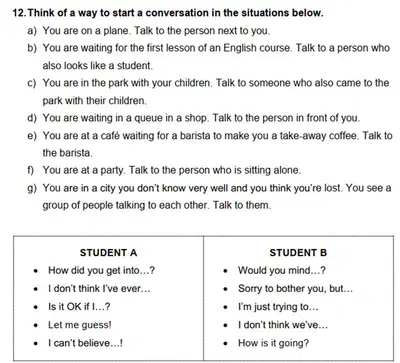
How to start a conversation with a stranger

2
Complete the gaps in the conversation starters with one word each.
3
Fill in the Blanks
4
Fill in the Blanks
5
Fill in the Blanks
6
Fill in the Blanks
7
Fill in the Blanks
8
Fill in the Blanks
9
Fill in the Blanks
10

11


12

13
Try to guess the answers to the questions
below
a) Why didn’t some people want to talk to the man?
b) What did the man talk about with people?
14

15

16

17
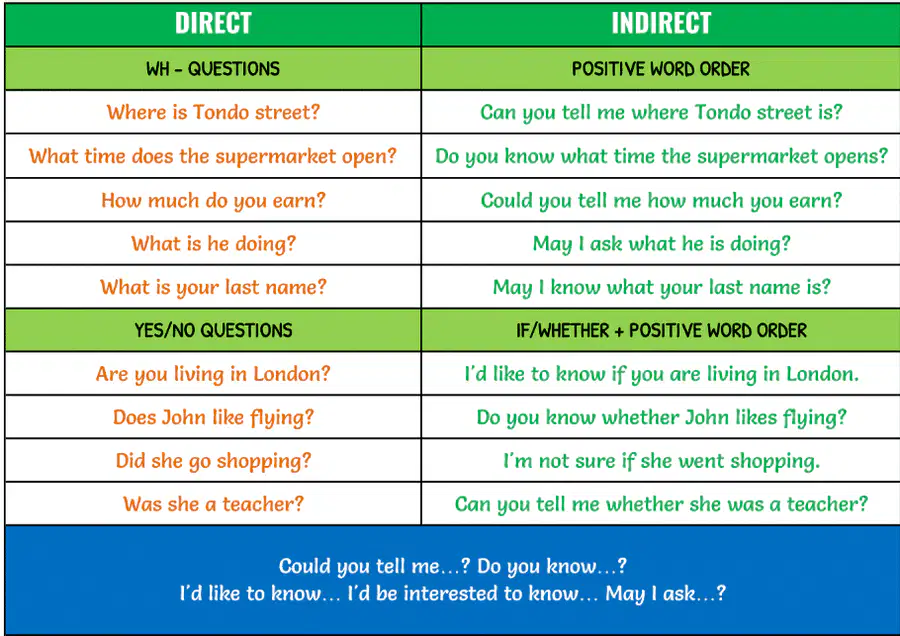
Requests, suggestions and questions
18
We soften requests, and suggestions and questions by using past forms, continuous forms or both.
Direct: ‘Pick me up on your way to the party this evening!’ More polite: ‘I was wondering if you could give me a lift later.’
We can also make requests softer by using a negative question with a question tag. ‘You couldn’t give me a lift later, could you?’ or ‘I don’t suppose you could pick me up tonight, could you?’
19
Giving Opinions
20
We use verbs like reckon, guess, feel to make your opinions less direct. You can also use vague expressions like ‘sort of’, ‘kind of’, ‘a little bit’.
Direct: 'You're too young to get married!' More polite: 'I reckon you're a little young to be getting married!
It also helps if you make it into a question: ‘Aren’t you kind of young to be getting married?’
21
Discussing Problems
22
We introduce problems with verbs like seem and appear to soften them.
Direct: ‘You've made a mistake in this report!’ More polite: ‘You seem to have made a mistake here.’
You can also use these to introduce your own problems. ‘I seem to have lost those reports you wanted’
23
Saying No!
24
We find it really hard to say no! So instead we use tentative language to soften it.
Direct: ‘No, I'm not coming to your party this evening.’
More polite: ‘I’m not sure I'll be able to make it to your party this evening…’
25
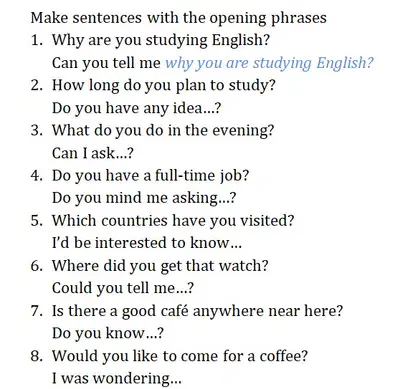
Say the following sentences in a more diplomatic way:
1. Can you leave him a message?
2. I won't be able to finish the report today. I'm busy.
3. The price is too high for us.
4. I'm going to be late.
5. Mr. Johnson is at lunch. Call back later.
6. You don't understand my idea.
7. If we implement this idea, we will have a problem.
8. Can I speak to the manager, please? It's urgent.
9. Speak louder. I can't hear you.
10. We should close down our old factory.
26
27
28
29
Draw
Who are You after the Lesson?
How to start a conversation with a stranger
Show answer
Auto Play
Slide 1 / 29
SLIDE
Similar Resources on Wayground

19 questions
Past Perfect Tense
Presentation
•
Professional Development
26 questions
Articles & prepositions
Presentation
•
Professional Development
22 questions
RELATIVE CLAUSES
Presentation
•
University
21 questions
Present Simple and Present Continuous
Presentation
•
University
22 questions
Kids 1 Part 4 Lesson 29
Presentation
•
Professional Development
23 questions
Possessive Pronouns
Presentation
•
Professional Development
20 questions
Future Tenses
Presentation
•
University
20 questions
Present perfect continuous
Presentation
•
University
Popular Resources on Wayground
24 questions
PBIS-HGMS Day 10

Quiz
•
6th - 8th Grade
10 questions
HCS SCI 03 Summer School Review 3
Quiz
•
3rd Grade
11 questions
Home Scope
Quiz
•
7th - 8th Grade
15 questions
HCS SCI 05 Summer School Assessment 3 Review
Quiz
•
5th Grade
35 questions
Lufkin Road Middle School Student Handbook & Policies Assessment
Quiz
•
7th Grade
18 questions
Geo 11.3 Area of Circles and Sectors
Quiz
•
9th - 11th Grade