

MS Music Exploring the Voice Unit 4

Presentation
•
Arts
•
6th - 8th Grade
•
Easy
Laura Johnson
Used 1+ times
FREE Resource
18 Slides • 3 Questions
1

Mrs. Johnson - Lessons 1 and 2
2

Do you have Unit 3 complete? You had the Unit 3 activity, discussion 1 and the quiz to be complete by today.
Assignments
3

4
It's more than sound
Every instrument needs to be protected, and many require a large case to carry them around in. But the voice has a little advantage over all other instruments: It is always with you, and it doesn’t cost a thing! When we sing, we feel a connection to others and a power in our own voices. Vocal music started developing thousands of years ago as a natural way for early humans to communicate. Today, we use our voices to speak our minds either through music or words.
5
When you were learning to read, how did you know what to focus on? At first, we don’t know how to pick up a book, how to hold it, or where to start looking. Do we read right to left? Up to down? Is the name of the publisher as important as the words in the body of the book? It can all be very overwhelming at first, can’t it?
The same is true when we approach sight reading music for the first time. We can start at the very beginning by learning how to read a musical score or written copy of the music. In vocal music (music made with the voice), scores can be either for one person to sing (a solo) or for many individuals (a choral octavo). For now, we will focus on the choral octavo.
6

7
8

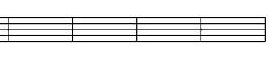
Remember we have a staff with five lines and four spaces. This is the road map for what we sing. We read notes left to right, just like reading a book. It can be the treble clef like shown here, or the bass clef.
Key signatures
9

Everything above middle C.
Space notes spell FACE
Line notes, notes on the lines are E, G, B, D and F.
Treble clef
10

Notes we sing/play below middle C.
Again, read left to right -
Space notes are A, C, E, G
Line Notes are G, B, D, F and A.
Bass clef
11
12
Multiple Choice
Bass Clef
Staff
Treble clef
Half Note
13
Multiple Choice

1
3
5
7
14
Multiple Choice

How many "spaces" does a staff have?
3
2
5
4
15
16
17
You can think of changing keys kind of like driving a car home. The route that you take will be determined by where you start, right? If you start at a restaurant, you will take a certain route home. If you start at school, it will be a different set of streets. Either way, you end up at the same place: home! Keys work much the same way. A major scale will always sound like a major scale no matter what key we start on; we will just have to take a different “route,” by changing some of the keys to black keys.

18
Just like there is a secret code to the major scale, there is also a secret code to key signatures. We look at the space directly to the right of the clef sign and observe if there are any sharps or flats. If there are sharps or flats on lines or spaces, any note written on that line or space is considered raised (sharp) or lowered (flat). We do not write sharps and flats next to the notes each time they appear.
The secret code is:
No sharps or flat - if there are no sharps or flats, the music is in C Major
Sharps: For music with one or more sharps, follow these steps:
Find the name of the line or space that the last sharp is sitting on (reading from left to right).
If that sharp is on a space, go up to the next line. If that sharp is on a line, go up to the next space.
The name of the key is the note you just moved to!
19
If there is one flat, the music is in the key of F.
For keys with two or more flats, follow these steps:
Find the second to last flat (reading from left to right).
The name of the key is that note + “flat”!
Flats
Sharps: For music with one or more sharps, follow these steps:
Find the name of the line or space that the last sharp is sitting on (reading from left to right).
If that sharp is on a space, go up to the next line. If that sharp is on a line, go up to the next space.
The name of the key is the note you just moved to!
Sharps
20

Think about the line names!!
21

Be sure you have your Unit 3 assignments in.
Before class next week, read lessons 3-5 in Unit 4 - do not do any assignments in Unit 4 yet.
Exit ticket - in the chat tell me one thing you learned today.
Remember - Study hall is on Monday at 3:00 or email me and we will set up a study time.
Exit ticket and assignment
Mrs. Johnson - Lessons 1 and 2
Show answer
Auto Play
Slide 1 / 21
SLIDE
Similar Resources on Wayground

16 questions
Types of Solutions
Presentation
•
6th - 8th Grade
16 questions
The Geography of China
Presentation
•
6th - 8th Grade
16 questions
Plagiarism
Presentation
•
6th - 8th Grade
16 questions
Bass Clef
Presentation
•
6th - 8th Grade
12 questions
Pablo Picasso
Presentation
•
6th - 8th Grade
19 questions
Basic Rhythm
Presentation
•
5th - 8th Grade
17 questions
Solfege AND Letter Names
Presentation
•
6th - 8th Grade
16 questions
Intro to Circles
Presentation
•
6th - 8th Grade
Popular Resources on Wayground
10 questions
Safety Day 2026 – Student Review

Quiz
•
9th Grade
21 questions
Continents and Oceans
Quiz
•
6th Grade
20 questions
Parts of Speech
Quiz
•
5th Grade
16 questions
Subject & Predicate
Quiz
•
5th Grade
25 questions
Multiplication Facts
Quiz
•
5th Grade
12 questions
Map Skills
Quiz
•
3rd Grade
22 questions
Continents and Oceans
Quiz
•
5th Grade
15 questions
Rounding Decimals
Quiz
•
5th Grade