

Water in the Atmosphere Reteaching

Presentation
•
Science
•
6th Grade
•
Easy
+3
Standards-aligned

Heather Samonds
Used 14+ times
FREE Resource
22 Slides • 11 Questions
1

There are three main parts of the water cycle: Evaporation, Condensation, Precipitation
The Water Cycle
2
Labeling
Label the following
3

The process by which a liquid changes into a gas.
Water evaporates from oceans, lakes, rivers, and more.
Heat and wind cause evaporation.
Evaporation
4

The process by which water vapor is transferred from plants to the atmosphere
Tiny water droplets are released from the leaves of plants into the atmosphere
This is another way water gets into the atmopshere.
Transpiration
5

The process by which a gas changes to a liquid
When the temperature decreases, water vapor turns back into liquid water
These tiny water droplets from clouds
Condensation
6

Any type of liquid or solid water that falls to Earth's surface
Precipitation comes from clouds
Rain is the most common form of precipitation
Precipitation
7
Multiple Choice
The process by which a gas changes to a liquid
Precipitation
Transpiration
Condensation
Evaporation
8
Multiple Choice
Any type of liquid or solid water that falls to Earth's surface.
Precipitation
Transpiration
Condensation
Evaporation
9
Multiple Choice
The process by which water vapor is transferred from plants to the atmosphere.
Precipitation
Transpiration
Condensation
Evaporation
10
Multiple Choice
The process by which a liquid changes into a gas.
Precipitation
Transpiration
Condensation
Evaporation
11
Rain, Sleet, Snow, Freezing Rain, Hail

12

Liquid water falling through air above freezing
Rain
13

Small spheres of ice smaller that 5mm in diameter.
These melt and then refreeze on their way to the ground
Sleet
14

Snow forms in clouds as ice crystals.
It stays frozen all the way to the ground.
Snow
15

This precipitation falls passes through warm air and turns into rain.
It doesn't freeze until it hits a surface and instantly turns into ice.
Freezing Rain
16

Hail is larger pieces of ice 5mm or larger in diameter.
Hail only forms in thunderstorms.
Hail
17
Match
Rain
Sleet
Snow
Hail
Freezing Rain
Rain
Sleet
Snow
Hail
Freezing Rain
18

Clouds form in the atmosphere during the process of condensation. There are 6 types of clouds you are responsible for knowing: Cumulus, Cirrus, Stratus, Cumulonimbus, Nimbostratus, and Fog.
19

In order for a cloud to form, three things need to be present:
Water vapor
Cooling air
Dust or smoke
Cloud Formation
20
Open Ended
What must be present in order for a cloud to form?
21

Low level clouds
resembles balls of cotton
associated with fair weather
Cumulus Clouds
22

Upper level clouds
Wispy
often called "horse tails"
associated with fair weather
Cirrus Clouds
23
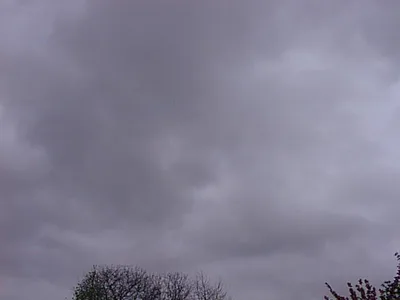
Low level clouds
Cover the entire sky
Block out the sun
Light rain or snow
Stratus Clouds
24

Vertically developed clouds
Thunderstorms with lightning, hail, and heavy rain
anvil shape
Cumulonimbus Clouds
25

Low level clouds
Cover the sky
Give long periods of steady rain or snow
Nimbostratus Clouds
26
Labeling
Label the clouds in the image
27

28

The measure of the amount of water vapor in the air
Humidity
29

The percentage of water vapor in the air compared to the maximum amount the air can hold.
Relative Humidity
30

The temperature at which condensation begins
Dew Point
31
Match
Relative humidity
Dew Point
Humidity
The percentage of water vapor in the air compared to the maximum amount the air can hold
The temperature at which condensation begins
The measure of the amount of water vapor in the air
The percentage of water vapor in the air compared to the maximum amount the air can hold
The temperature at which condensation begins
The measure of the amount of water vapor in the air
32
Dropdown
33
Dropdown
There are three main parts of the water cycle: Evaporation, Condensation, Precipitation
The Water Cycle
Show answer
Auto Play
Slide 1 / 33
SLIDE
Similar Resources on Wayground

26 questions
Graphing Changes in Motion Notes
Presentation
•
6th Grade
26 questions
Layers of the Atmosphere S6E4 A Review
Presentation
•
6th Grade
26 questions
RFMS Science: Producers, Consumers, Decomposers Lesson 2022
Presentation
•
6th Grade
28 questions
Animal Classification and Web
Presentation
•
6th Grade
26 questions
Thunderstorms and Tornados
Presentation
•
6th Grade
28 questions
Unit 3 Lesson 3 - Types of Rocks
Presentation
•
6th Grade
26 questions
#1-25 Final F/E, A/S,C/H Study Guide for Test
Presentation
•
6th Grade
26 questions
Rock Cycle
Presentation
•
6th Grade
Popular Resources on Wayground
10 questions
Safety Day 2026 – Student Review

Quiz
•
9th Grade
21 questions
Continents and Oceans
Quiz
•
6th Grade
20 questions
Parts of Speech
Quiz
•
5th Grade
16 questions
Subject & Predicate
Quiz
•
5th Grade
25 questions
Multiplication Facts
Quiz
•
5th Grade
12 questions
Map Skills
Quiz
•
3rd Grade
22 questions
Continents and Oceans
Quiz
•
5th Grade
15 questions
Rounding Decimals
Quiz
•
5th Grade
Discover more resources for Science
20 questions
Elements, compounds, and mixtures
Quiz
•
6th Grade
10 questions
6.6D - Relative Density Review
Quiz
•
6th Grade
10 questions
Exploring Chemical and Physical Changes

Interactive video
•
6th - 10th Grade
20 questions
CONDUCTION,CONVECTION AND RADIATION
Quiz
•
6th Grade
20 questions
Rocks and The Rock Cycle
Quiz
•
6th Grade
19 questions
Describing and Classifying Matter
Presentation
•
6th Grade
21 questions
Waves and Wave Properties
Quiz
•
6th - 8th Grade
20 questions
Phases of the Moon
Quiz
•
6th Grade