

Isotopes & Atomic Mass

Presentation
•
Science
•
10th Grade
•
Hard
Standards-aligned

John Oglesby
Used 5+ times
FREE Resource
9 Slides • 11 Questions
1
Mass Number
Atomic Mass

2
Consider the Atom Carbon, the atomic number tells us the number of protons.
How many protons in Carbon 12?

Mass No.
Nuclide Notation
Atomic No - Bottom Left
Mass No - Top Left
Charge if any is at top Right
3

Mass No.
Atomic No.
4
atoms with the SAME number of PROTONS but DIFFERENT number of NEUTRONS

5
Multiple Choice

The atomic number indicates the number of neutrons
The atomic number indicates the isotope number
The atomic number indicates the number of protons
The atomic number indicates the number of protons and neutrons
6
Multiple Choice
What is the correct definition for isotopes?
atoms with the same number of protons and neutrons
Atoms with the same number of protons but different number of neutrons
Atoms with the same number of neutrons but different number of protons
Atoms with no mass
7
Multiple Choice

If you want to determine the total number of protons and neutrons in an atom, you can refer to the
Mass Number
atomic number
symbol
charge
8
What do you notice with these 3 isotopes of Lithium?

9
Multiple Choice

What is the difference between these 3 Lithium isotopes?
no difference
they have the same atomic number
they have the same mass number and atomic number
they have different mass numbers
10
Fill in the Blanks
atomic number = number of electrons = number of
Type answer...
11
Fill in the Blanks
mass number = atomic number + number of
Type answer...
12
Fill in the Blanks
Atoms with the same number of protons but different numbers of neutrons are called
Type answer...
13

14
And why is it so important?
15
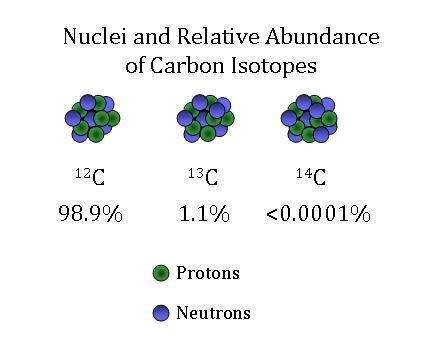
16

17
Multiple Choice
Nitrogen has three occurring isotopes: Nitrogen-13, Nitrogen-14, Nitrogen-15. Nitrogen has an Atomic Mass of 14.007 amu. Which isotope is the most abundant?
Nitrogen-13
Nitrogen-14
Nitrogen-15
Based on the information given, it cannot be determined
18
Multiple Choice
Calcium (Atomic Mass = 40.078) has three different isotopes. One has a mass of 35.00 amu; another has a mass of 41.00 amu; and another has a mass of 40.00 amu. Which isotope is the most abundant of the three?
40.00 amu
41.00 amu
35.00 amu
impossible to tell
19
Multiple Choice
Chlorine has two naturally occurring isotopes, Cl-35 and Cl-37, The atomic mass of chlorine is 35.45. Which of these two isotopes of chlorine is more abundant?
Cl-35
Cl-37
Cannot be determined from the information provided.
20
Multiple Choice
204
206
207
208
Mass Number
Atomic Mass
Show answer
Auto Play
Slide 1 / 20
SLIDE
Similar Resources on Wayground

15 questions
Pressure
Presentation
•
10th Grade
16 questions
Nationalism In Europe
Presentation
•
10th Grade
14 questions
EXERCISE VS DIET
Presentation
•
10th Grade
16 questions
Atomic Structure Notes
Presentation
•
10th Grade
15 questions
Bio: Lesson Three Chp 8.1
Presentation
•
10th Grade
17 questions
Determining Significant Figures
Presentation
•
10th Grade
16 questions
Mengenal Energi Potensial
Presentation
•
10th Grade
16 questions
Scientific Method Quiz
Presentation
•
9th - 10th Grade
Popular Resources on Wayground
10 questions
Safety Day 2026 – Student Review

Quiz
•
9th Grade
21 questions
Continents and Oceans
Quiz
•
6th Grade
20 questions
Parts of Speech
Quiz
•
5th Grade
16 questions
Subject & Predicate
Quiz
•
5th Grade
25 questions
Multiplication Facts
Quiz
•
5th Grade
12 questions
Map Skills
Quiz
•
3rd Grade
22 questions
Continents and Oceans
Quiz
•
5th Grade
15 questions
Rounding Decimals
Quiz
•
5th Grade
Discover more resources for Science
10 questions
Exploring Chemical and Physical Changes

Interactive video
•
6th - 10th Grade
10 questions
Exploring the Electromagnetic Spectrum for Middle School Science
Interactive video
•
6th - 10th Grade
10 questions
Exploring Force and Motion Concepts
Interactive video
•
6th - 10th Grade
10 questions
Exploring Air Masses and Weather Fronts
Interactive video
•
6th - 10th Grade
10 questions
Exploring the States of Matter
Interactive video
•
6th - 10th Grade
10 questions
Exploring Forces: Net Force, Normal Force, Gravity, and Friction
Interactive video
•
6th - 10th Grade
10 questions
Differentiating Thermal Energy and Temperature
Interactive video
•
6th - 10th Grade
10 questions
Exploring the States of Matter and Thermal Energy
Interactive video
•
6th - 10th Grade