Interim Assessment #2 Point Recovery
Presentation
•
Science
•
9th - 10th Grade
•
Medium
+5
Standards-aligned
Christy Rodriguez
Used 6+ times
FREE Resource
8 Slides • 32 Questions
1
Pro = NO
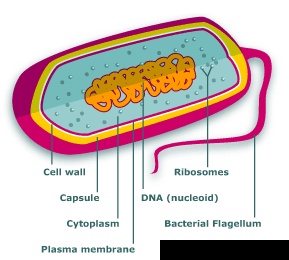
(no nucleus or membrane bound organelles)
Eu = DO
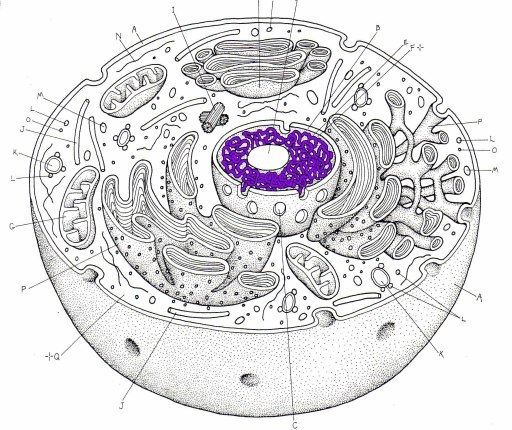
(do have a nucleus & membrane bound organelles
ALL CELLS HAVE:
cytoplasm, cell membrane, DNA, and ribosomes
2
Multiple Choice
ALL cells (prokaryotic and eukaryotic) have:
mitochondria
DNA
chloroplasts
golgi apparatus
3
Multiple Choice
ALL cells (prokaryotic and eukaryotic) have:
cell membrane
lysosomes
cytoskeletons
flagella
4
Multiple Choice
ALL cells (prokaryotic and eukaryotic) have:
endoplasmic reticulum
vacuoles
nuclear membrane
cytoplasm
5
Multiple Choice
6
Multiple Choice
7
Multiple Choice
8
Observe the cell membrane below & the types of transport occuring:
9
10
Multiple Choice
11
Multiple Choice
The movement of particles from low concentration to high concentration in a given space
The movement of particles from high concentration to low concentration in a given space
12
Multiple Choice
Homeostasis
13
Multiple Choice
14
15
Multiple Choice
What is the process in which plants capture the energy in sunlight and use it to make food?
cellular respiration
carbon dioxide
glucose
photosynthesis
16
Multiple Choice
What is the process in which glucose is broken down to release ATP energy?
photosynthesis
cellular respiration
chloroplasts
glucose
17
Multiple Choice
Plants make their own food called
glucose
oxygen
carbon dioxide
chloroplast
18
Multiple Choice
When does photosynthesis occur?
With sunlight
At night
All the time
19
Multiple Select
In cellular respiration, what are the reactants (input)?
oxygen
water
glucose
carbon dioxide
20
Multiple Select
In cellular respiration, what are the products (the output)?
water
carbon dioxide
ATP energy
glucose
21
Remind yourself of the details of the cell cycle.
Interphase consists of G1, S, and G2 phases.
Mitosis comes after Interphase (more info on next slide)
Cytokinesis occurs after Mitosis-- it is where the cell divides into 2 new daughter cells.
22
23
Multiple Select
What part of the cell cycle is considered interphase? Select all that apply.
G1
G2
S
M
24
Multiple Choice
25
Multiple Choice
26
Multiple Choice
27
Multiple Choice
In which stage of the cell cycle does the DNA replicate?
G1
S
G2
Mitosis
28
DNA Base Pairing Rules:
Apples in the Tree (A <--> T)
Cars in the Garage (C <--> G)
The monomer (building block of DNA) is a nucleotide:
The enzyme helicase unzips the DNA, then DNA polymerase adds complimentary base pairs
29
Multiple Choice
30
Multiple Choice
31
Multiple Choice
Which of the following monomers are repeatedly joined together to form a strand of DNA?
32
Multiple Choice
33
Protein Synthesis
TransCription:
1st step; occurs in the nucleus.
DNA transcribes into mRNA
TransLation:
2nd step; occurs at a ribosome out in the cytoplasm. mRNA codes for amino acids brought in by tRNA.
34
Multiple Choice
In what process is mRNA synthesized?
Transcription
Translation
DNA Replication
Mitosis
35
Multiple Choice
36
Multiple Select
How are DNA and RNA different? (CHECK ALL THAT APPLY)
Only DNA can leave the nucleus
RNA contains Thymine; DNA contains Uracil
DNA is double stranded, RNA is a single stranded
DNA contains Thymine, RNA contains Uracil
37
Multiple Choice
What brings the amino acids to the ribosome to assemble a protein?
DNA
38
Multiple Choice
How many nucleotides code for 1 amino acid?
1
2
3
4
39
Multiple Choice
Which anticodon would be placed in spot #2
GGC
CCA
GGA
GGT
40
Multiple Choice
How can a mutation in the DNA sequence result in NO change to the protein that is made?
There are multiple codons that can code for the same amino acid and result in the same protein
There is always a change in the protein when a mutation occurs
Only the mRNA is used in protein synthesis so a mutation in the DNA would have no effect on the protein
Pro = NO
(no nucleus or membrane bound organelles)
Eu = DO
(do have a nucleus & membrane bound organelles
ALL CELLS HAVE:
cytoplasm, cell membrane, DNA, and ribosomes
Show answer
Auto Play
Slide 1 / 40
SLIDE

Similar Resources on Wayground
36 questions
Cell Terms Part 3
Presentation
•
9th - 11th Grade
33 questions
The Rock Cycle
Presentation
•
9th Grade
34 questions
Collision Theory & Reaction Rate Experiment
Presentation
•
KG
32 questions
Big Bang Theory
Presentation
•
9th Grade
36 questions
Research Abstract
Presentation
•
9th - 10th Grade
32 questions
Energy Transfer in Ecosystems
Presentation
•
9th - 10th Grade
36 questions
Bit, byte, binary, decimal and hexadecimal
Presentation
•
10th Grade
34 questions
Motion Graphs
Presentation
•
9th Grade
Popular Resources on Wayground
24 questions
PBIS-HGMS Day 10
Quiz
•
6th - 8th Grade
10 questions
HCS SCI 03 Summer School Review 3
Quiz
•
3rd Grade
11 questions
Home Scope
Quiz
•
7th - 8th Grade
15 questions
HCS SCI 05 Summer School Assessment 3 Review
Quiz
•
5th Grade
35 questions
Lufkin Road Middle School Student Handbook & Policies Assessment
Quiz
•
7th Grade
18 questions
Geo 11.3 Area of Circles and Sectors
Quiz
•
9th - 11th Grade