

Unit 4 bonding lesson 4

Presentation
•
Chemistry
•
10th Grade
•
Medium
+1
Standards-aligned

Katie Smit
Used 6+ times
FREE Resource
18 Slides • 15 Questions
1
Announcements/Reminders
Agenda:
Monday 10/23- Lab on properties of ionic & covalent compounds
wed 10/25- Bonding and lab quiz on ionic/covalent
Thursday 11/2- Unit 4 Bonding test
Bonding "pre-test"
Lewis structure of covalent compounds
coordinate covalent bonds, polyatomic ions
Bellwork:
form on GC
2
3
If the difference in electronegativity is between:
1.8 to 4.0: Ionic
0.4 to 1.7: Polar Covalent
0.0 to 0.3: Non-Polar Covalent

4

A dipole moment is a measure of the polarity of a molecule.
5
Total all valence electrons
Determine the central atom (usually the element that there is only 1 of)
Draw single bonds to central atom
Assign remaining valence electrons as lone pairs to outer atom
Move electrons to create double bonds and triple bonds as needed to make all atoms "happy" (give all atoms an octet)
6
H2O
NH3
F2 O2 N2
HCN-1
CO2
Total all valence electrons
Determine the central atom (usually the element that there is only 1 of)
Draw single bonds to central atom
Assign remaining valence electrons as lone pairs to outer atom
Move electrons to create double bonds and triple bonds as needed to give all atoms an octet
Draw the Lewis dot diagram of each atom
Label each atom with the # of electrons it needs to be happy
Start with the atom that needs the least and draw a line to represent the covalent bond between the 2 atoms
Continue adding bonds between the atoms until all atoms are “happy”
Move electrons to create double bonds and triple bonds as needed
7
Draw the Lewis dot diagram of each atom
Label each atom with the # of electrons it needs to be happy
Start with the atom that needs the least and draw a line to represent the covalent bond between the 2 atoms
Continue adding bonds between the atoms until all atoms are “happy”
Move electrons to create double bonds and triple bonds as needed
Some text here about the topic of discussion
8

9
Monoatomic Ions vs Polyatomic Ions
Monoatomic ions are made up of one type of atom
Li+1, Mg+2, Cl-1
Polyatomic ions have either multiple atoms and/or different types of atoms
NO3-1 =Nitrate
Follow the same rules for forming compounds as monoatomic ions
Experience Chemistry | Lesson 3.1
10
11

12

13

14

15
Video: coordinate covalent bonds
(watch first 6 minutes, last 3 are optional)
16

17
Form between the cations of the metal(s).
Orbitals overlap, electrons free to roam
Sea of electrons

18
Alloys "solution of metals"

19
Multiple Choice
The chemical bond between a Ba and a Br will be a(n) _____ bond.
metal
ionic
covalent
polar
20
Multiple Choice
The chemical bond between N and another Br will be a ________ bond.
metal
ionic
covalent
polar
21
Multiple Choice
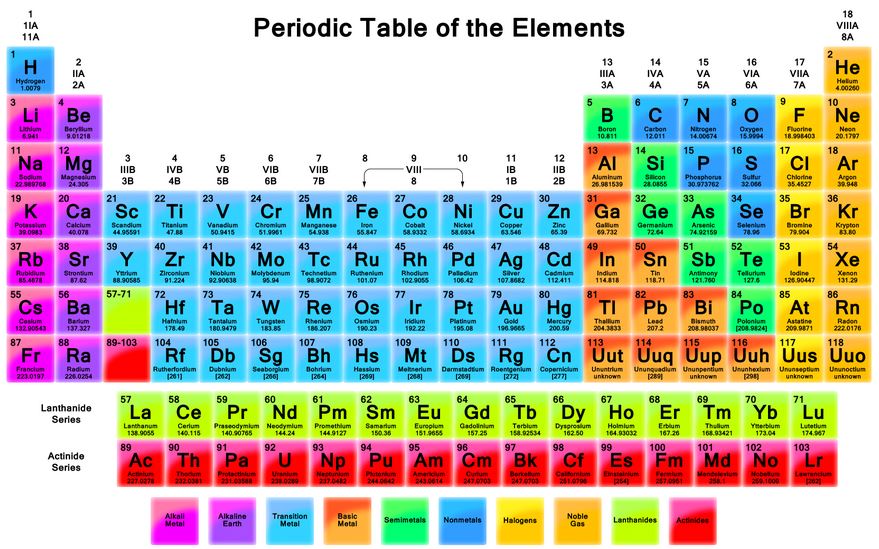
22
Multiple Choice
23
Multiple Choice
What type of bond will conduct electricity in a dissolved state?
ionic
covalent
24
Multiple Choice
In metallic bonds electrons:
shared
move around the nuclei randomly
transferred
25
Multiple Choice
Alloys are important because
their properties are often superior to the component elements
their properties are a blend of the component elements
they never corrode
they are less expensive than their component elements.
26
Multiple Choice
Why are metals good conductors?
they have mobile electrons
they have mobile atoms
they have crystal structures that can rearrange
they have mobile protons
27
Multiple Choice
In metals, the valence electrons are
attached to the most positive ions
shared by all of the atoms
are bonded to the least electronegative element
shiny
28
Multiple Choice
Which type of bond creates a "sea" of electrons between atoms?
Ionic Bonds
Covalent Bonds
Metallic Bonds
Saving Bonds
29
Multiple Choice
30
Multiple Choice
31
Multiple Choice
32
Multiple Choice
33
Multiple Choice
Is this compound Ionic or Covalent: Ca3(PO4)2
ionic
covalent
Announcements/Reminders
Agenda:
Monday 10/23- Lab on properties of ionic & covalent compounds
wed 10/25- Bonding and lab quiz on ionic/covalent
Thursday 11/2- Unit 4 Bonding test
Bonding "pre-test"
Lewis structure of covalent compounds
coordinate covalent bonds, polyatomic ions
Bellwork:
form on GC
Show answer
Auto Play
Slide 1 / 33
SLIDE
Similar Resources on Wayground

23 questions
Covalent Bonds Notes
Presentation
•
10th Grade
26 questions
Nomenclature
Presentation
•
9th Grade
24 questions
Lesson 6: The Development of a New Atomic Model
Presentation
•
10th Grade
22 questions
Metallic Bonds
Presentation
•
10th - 11th Grade
26 questions
review aliphatic hydrocarbons
Presentation
•
10th Grade
28 questions
Chemical Nomenclature Lessons
Presentation
•
10th Grade
28 questions
Chemical Nomenclature
Presentation
•
10th Grade
28 questions
Chemistry Vesper
Presentation
•
10th Grade
Popular Resources on Wayground
10 questions
Safety Day 2026 – Student Review

Quiz
•
9th Grade
21 questions
Continents and Oceans
Quiz
•
6th Grade
20 questions
Parts of Speech
Quiz
•
5th Grade
16 questions
Subject & Predicate
Quiz
•
5th Grade
25 questions
Multiplication Facts
Quiz
•
5th Grade
12 questions
Map Skills
Quiz
•
3rd Grade
22 questions
Continents and Oceans
Quiz
•
5th Grade
15 questions
Rounding Decimals
Quiz
•
5th Grade
Discover more resources for Chemistry
20 questions
electron configurations and orbital notation
Quiz
•
9th - 12th Grade
25 questions
Writing and Naming Binary Ionic compounds
Quiz
•
10th Grade
20 questions
COUNTING ATOMS
Quiz
•
10th Grade
20 questions
Physical or Chemical Change/Phases
Quiz
•
8th Grade - University
15 questions
Periodicity Module Exam Practice Quiz
Quiz
•
9th - 12th Grade
20 questions
Naming Ionic Compounds
Quiz
•
10th Grade
45 questions
Chem Unit 3 Review
Quiz
•
10th Grade
16 questions
History of the Atomic Theory
Quiz
•
10th Grade