
Protein Synthesis
Presentation
•
Science
•
9th - 12th Grade
•
Medium
+5
Standards-aligned
Fabiano Souza
Used 59+ times
FREE Resource
6 Slides • 17 Questions
1
Protein Synthesis
By the end of this lesson, students will be able to understand Protein Synthesis and perform all questions with a 70% minimum level of accuracy
2
Agenda
SEL
ICE BREAK
WARM-UP
Questions Review
Lecture
Review
Exit Ticket
3
Poll
How are you feeling today?
I am feeling great!
: )
I'm good. ; )
I'm doing fine but could be better
I do not Know
4
Multiple Choice
ICE BREAK
Spot the lie!
60% of the Earth is covered in water
The driest place in the world — the Atacama Desert in northern Chile — is located next to the biggest body of water
The largest dinosaurs were vegetarians
It is impossible to lick your own elbow
5
Multiple Choice
By the end of this lesson, you will?
Understand Protein Synthesis
perform all questions
70% minimum level of accuracy
All alternatives
6
Multiple Choice
WARM-UP
_____________________ carries information for inherited traits.
7
Multiple Choice
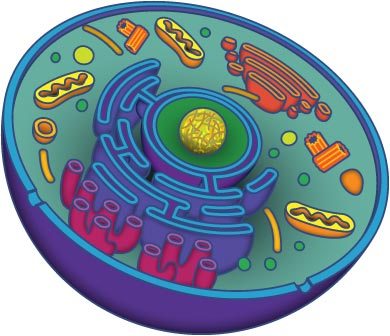
REVIEW
All living things are made up of...
cells
tissues
organ
organ systems
8
Multiple Choice
The genetic material that provides instructions for all cell processes
Cell membrane
Cytoplasm
DNA
Eukaryote
9
All living things must have DNA or a genetic code.
DNA is a molecule called a nucleic acid
DNA can come in various forms such as chromatin or chromosomes
DNA contains the directions for how the organism operates
10
Characteristics of DNA
•DNA is shaped like a twisted ladder, which is called a double helix.
•The sides of the ladder are made of sugar and phosphate molecules, while the rungs are made of nitrogen bases (adenine, thymine, cytosine & guanine).
•A always bonds with T and C always bonds with G. This is called the principle of base pairing.
11
Multiple Choice
Which of the four macromolecules is DNA?
Carbohydrate
Lipid
Protein
Nucleic Acid
12
What happens during Trasncription?
• Transcription is the process of converting the DNA code into an mRNA message.
• The DNA template is easy to follow because of the base-pairing rule.
• Whenever the DNA sequence contains A, however, a uracil (U) is made rather than a T.
13
SUMMARY
•The genetic information of the cell is encoded in the nitrogen bases of DNA molecules. This code can be used to form proteins through the processes of transcription and translation.
14
Multiple Choice
Where DNA is found (in some cell types)
Lysosome
Nucleus
Cell membrane
Golgi body
15
Multiple Choice
____________a membrane bound organelle that contains the cell’s DNA.
Cell Wall
Cell Membrane
Organelle
Nucleus
16
Multiple Choice
17
Multiple Choice
18
Multiple Choice
19
Multiple Choice
20
Multiple Choice
21
Multiple Choice
22
Poll
How confident do you feel about this topic?
Very confident
Somewhat confident
A little bit
Not very
Not at all
23
Open Ended
What are some questions or doubts that you have about this lesson?
Protein Synthesis
By the end of this lesson, students will be able to understand Protein Synthesis and perform all questions with a 70% minimum level of accuracy
Show answer
Auto Play
Slide 1 / 23
SLIDE

Similar Resources on Wayground
21 questions
Unit 7: Energy Transformations
Presentation
•
9th - 12th Grade
17 questions
Genetics Review Part 2 (Practice)
Presentation
•
6th - 9th Grade
19 questions
Marine and brackish biomes
Presentation
•
9th - 12th Grade
20 questions
Cell Differentiation and Specialized Cells
Presentation
•
9th - 12th Grade
18 questions
Passive and Active transport
Presentation
•
9th - 11th Grade
18 questions
INDLS Sedimentary Rocks
Presentation
•
8th - 12th Grade
17 questions
Waves
Presentation
•
9th - 11th Grade
20 questions
Evolution of Plant Transport System
Presentation
•
9th - 12th Grade
Popular Resources on Wayground
24 questions
PBIS-HGMS Day 10
Quiz
•
6th - 8th Grade
10 questions
HCS SCI 03 Summer School Review 3
Quiz
•
3rd Grade
11 questions
Home Scope
Quiz
•
7th - 8th Grade
15 questions
HCS SCI 05 Summer School Assessment 3 Review
Quiz
•
5th Grade
35 questions
Lufkin Road Middle School Student Handbook & Policies Assessment
Quiz
•
7th Grade
18 questions
Geo 11.3 Area of Circles and Sectors
Quiz
•
9th - 11th Grade