

EOG Review Biology Part 1

Presentation
•
Science
•
8th Grade
•
Hard
+5
Standards-aligned

Mitchell Tomlinson
Used 25+ times
FREE Resource
19 Slides • 14 Questions
1
EOG Review Biology Part 1

2
Open Ended

What are two things you remember from the biology unit? Think about vocab and use the picture to spark ideas!
3
Health
Photosynthesis- plants make their own food. Plants take in carbon dioxide (CO2), sunlight, & water (H2O) and produce glucose (C6H12O6) and oxygen (O2).

4
Cellular Respiration
Cellular Respiration- When an organism takes in glucose (food) and it is broken down to be used as energy (ATP) for the body.

5
Multiple Choice

What are the products of photosynthesis?
6
Multiple Choice

What are the products of cellular respiration?
7

8
Nutrition
Calorie- measure of energy in food
Do you have a balanced diet?- fruits, vegetables, meat, dairy, carbohydrates
Simple carbohydrates- provides your body with short lasting amounts of energy.

9
Nutrition
Complex carbohydrates- provides your body with long lasting amounts of energy.
Protein- meat, beans, fish, chicken, eggs, nuts
Dairy- milk, yogurt, cheese

10
Multiple Choice
11
Multiple Choice
12
Exercise
Exercise allows your body to bring in more oxygen.
Metabolism turns your food into energy.

13
Open Ended

What is your favorite exercise to stay healthy?
14
Ecosystems
Biotic factors= living (animals, plants, etc); Abiotic factors= non-living (sun, water, oxygen, etc)

15
Multiple Choice
16
Ecosystems
Niche= your role; Habitat= where you live
Density-dependent Factors- Limiting Factors that operate more strongly on large populations than small ones. (food, space, shelter, disease)

17
Ecosystems
Density-independent factors- Limiting factors that occur regardless of the population size. Mostly abiotic such as weather changes, natural disasters (fires)

18
Multiple Choice
19
Ecosystems
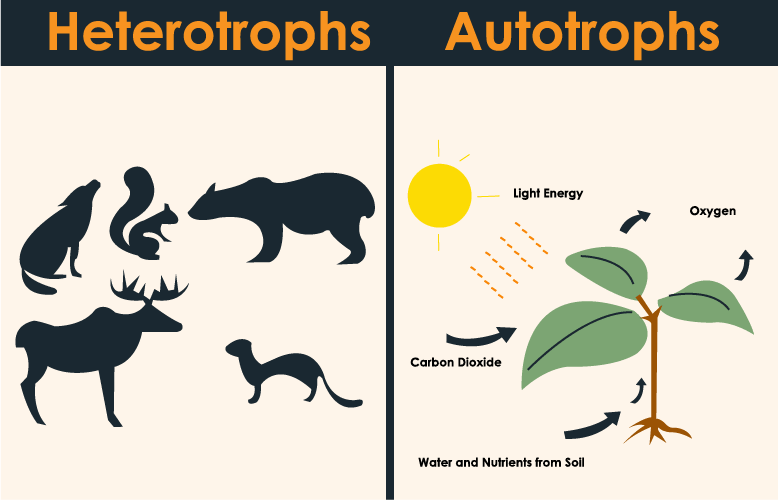
Autotroph/producer= makes its own food from sun
Heterotroph/consumer= has to eat other things for energy
Decomposer= breaks down dead & decaying organisms (bacteria; mushrooms)
20
Multiple Choice
21
Ecosystems
Be able to know food webs & food chains and how they change

22

23
Multiple Choice
24
Ecosystems
90% of energy is lost at each level as you move up the energy pyramid. Only 10% travels up.

25
Multiple Choice
26
Carbon Cycle
Carbon Cycle- goes to atmosphere through humans, decomposition, fossil fuels; carbon leaves atmosphere through plants

27
Nitrogen Cycle
Nitrogen Cycle- enters ground through organic matter and nitrogen fixation and returns to atmosphere through nitrification

28
Multiple Choice
29
Predators and Prey
Predators eat other animals for survival.
Prey are animals that could potentially end up being food for other animals!

30
Animal Relationships
Mutualism - An animal relationship in which each organism benefits from the interaction in some way.
Commensalism - An animal relationship in which one organism benefits from the other without harming it.

31
Animal Relationships
Parasitism is a symbiotic relationship between species, where one organism, the parasite, lives on or inside another organism, the host, causing it some har

32
Multiple Choice
33
Multiple Choice
EOG Review Biology Part 1
Show answer
Auto Play
Slide 1 / 33
SLIDE


