Electromagnets!
Presentation
•
Science
•
6th - 8th Grade
•
Practice Problem
•
Easy
Standards-aligned
Chelsea Walsh
Used 239+ times
FREE Resource
17 Slides • 16 Questions
1
Electromagnets!
2
Magnet facts
A magnet has two ends called poles, North and South.
Different poles attract (N sticks to S)
The same poles repel each other (push each other away)
Invisible field line connect the north to the south
3
4
Multiple Choice
What will happen when these magnets are brought close together? (image shows two magnets with the N end pointed towards each other)
They will attract each other.
They will repel each other.
Both the magnets will turn to the left.
Both the magnets will turn to the right.
5
Multiple Choice
Looking at the drawing. If you tried to move these 2 magnets closer together, what would you feel? (image shows two magnets with the N end pointed towards a S end)
Push Away
Pull Closer together
No Force
Let the Force be with YOU
6
Magnet facts
4 common types of metal are magnetic, (Iron, steel, cobalt and nickel)
The rare earth elements samarium, dysprosium and neodymium are also magnetic
The strong neodymium magnets are a mix of neodymium, iron and boron
7
8
Multiple Choice
9
Multiple Choice
Earth acts like a giant magnet because its center is made up MOSTLY of
Granite
Limestone
Iron
Nickel
10
Multiple Choice
11
What makes a magnet magnetic?
Inside magnetic materials are "domains"
Each domain has its own North and South pole
When all the domains line up in the same direction a stronger magnetic field is made
12
13
What is a domain?
The spinning of electrons around an atom's nucleus creates a magnetic field
In some materials like iron the atoms can get lined up so that their atoms generate a magnetic field in the same direction
Each section of atoms spinning the same direction is a domain
14
15
Multiple Choice
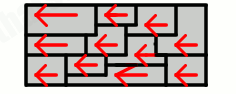
Would this substance be magnetized? (picture shows magnetic domains lined up in the same direction)
Yes because they all point to the left
Yes because they all point in the same direction
No because they all point in the same direction
No because magnets always point East not West
16
Multiple Choice
Magnetism is generated by moving
protons.
electrons.
neutrons.
elements.
17
Electricity
Electricity is the energy of moving electrons
18
Electromagnetism
An electrical current moving through a wire creates a magnetic field
19
Multiple Choice
Electric currents produce _____________
electron clouds
magnetic fields
sound waves
20
Why do it?
Electromagnets are useful because they can easily be turned on and off and they can be made stronger or weaker as needed
21
Electromagnets are used in many different ways
Cranes
Levitating trains
Electronic locks
MRI machines
22
Multiple Choice
What type of magnet that can turned on and off?
electromagnet
permanent magnet
electricity
battery
23
Multiple Choice
Magnets on refrigerator cannot be turned off. Which type of magnets they belong?
electromagnets
battery
permanent magnets
copper wire
24
25
Multiple Choice
Why doe the compass needle move when the electricity flows through the coiled wire?
Because a magnetic field is not produced, which do not attract to the needle.
Because a magnetic field is produced, which attracts the compass needle.
Because the battery produced magnetic field.
26
To make a simple electromagnet - try this at home
Wrap wire around a nail
Connect the wire to each end of a battery
Test: Different size batteries, different kinds of wire, longer or shorter wires
27
Multiple Choice
Moving electrical charge or current creates a
dead zone for magnets
magnetic field
28
Multiple Choice
More coils of wire gives you a
weaker magnetic field
stronger magnetic field
Doesn't change the field
29
Multiple Choice
A bigger battery gives you a
weaker magnetic field
stronger magnetic field
Doesn't change the field
30
Open Ended
What is another variable or part of the electromagnet you could try changing to change the strength of the magnet?
31
32
33
Open Ended
What questions do you still have about magnets or electromagnets?
Electromagnets!
Show answer
Auto Play
Slide 1 / 33
SLIDE

Similar Resources on Wayground
27 questions
Weathering and Erosion
Presentation
•
6th - 8th Grade
27 questions
Newton's Third Law of Motion
Presentation
•
6th - 8th Grade
25 questions
Human Impact
Presentation
•
6th - 8th Grade
26 questions
Bridges
Presentation
•
6th - 8th Grade
23 questions
Energy Transfer and Temperature
Presentation
•
6th - 8th Grade
23 questions
Human Impact on the Environment
Presentation
•
6th - 8th Grade
29 questions
1/23 - Valence Electrons and Reactivity (lesson)
Presentation
•
6th - 8th Grade
27 questions
Elements, Compounds, Mixtures
Presentation
•
6th - 8th Grade
Popular Resources on Wayground
24 questions
PBIS-HGMS Day 10
Quiz
•
6th - 8th Grade
10 questions
HCS SCI 03 Summer School Review 3
Quiz
•
3rd Grade
11 questions
Home Scope
Quiz
•
7th - 8th Grade
15 questions
HCS SCI 05 Summer School Assessment 3 Review
Quiz
•
5th Grade
35 questions
Lufkin Road Middle School Student Handbook & Policies Assessment
Quiz
•
7th Grade
18 questions
Geo 11.3 Area of Circles and Sectors
Quiz
•
9th - 11th Grade