

Unit 8- Enzymes

Presentation
•
Biology
•
10th - 12th Grade
•
Medium

oli barrow
Used 5+ times
FREE Resource
12 Slides • 15 Questions
1
Unit 8- Enzymes
What are enzymes?

2
Multiple Choice
3
Multiple Choice

A is the
4
Multiple Choice
5
Multiple Choice
6
Multiple Choice
7
Multiple Choice
8
Multiple Choice
9
Multiple Choice

10

11
Why is shape important?
The shape of an enzyme is very important because it has a direct effect on how it catalyzes a reaction.

12
Open Ended
13
Why is shape important?
An enzyme’s shape is determined by the sequence of amino acids in its structure, and the bonds which form between the atoms of those molecules.
Different types of enzymes have different shapes and functions because the order and type of amino acids in their structure is different.

14
Why are enzymes so specific?
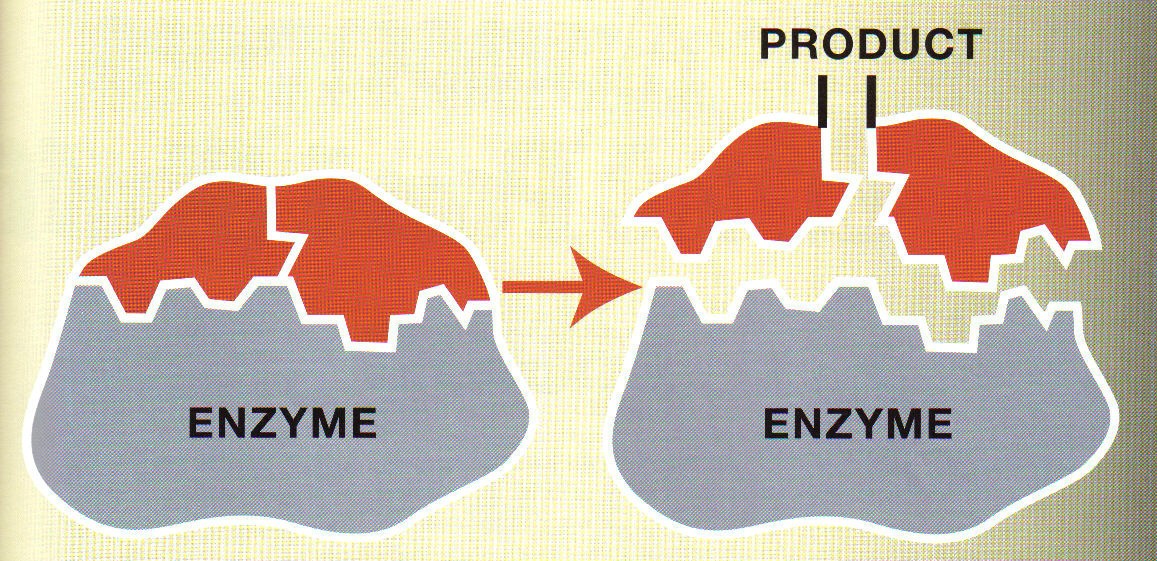
Enzymes are very specific about which reactions they catalyze.
Only molecules with exactly the right shape will bind to the enzyme and react.
These are the reactant, or substrate, molecules.

15
Multiple Choice
16
Why are enzymes so specific?
The part of the enzyme to which the reactant binds is called the active site.
This is a very specific shape and the most important part of the enzyme.
17
Activation energy
Enzymes reduce the activation energy of a reaction.
Ie. they reduce the amount of energy required for a reaction to take place.
Normally by bending substrate molecules in a way that facilitates bond-breaking

18
Multiple Choice

Question: Which is the best description of activation energy?
19

You have 5 minutes to complete this in your books
20
Open Ended
21
Induced fit hypothesis
The shape of Active Sites are not exactly Complementary, but change shape in the presence of a specific substrate to become Complementary

22
Induced fit hypothesis
When a substrate molecule collides with an enzyme, if its composition is specifically correct, the shape of the enzyme’s Active Site will change and an Enzyme-Substrate Complex can form.
The reaction is then catalysed and an Enzyme-Product Complex forms.

23
Multiple Choice
B is the
24
Multiple Choice
A is the
25
Multiple Choice
26
27
Tasks:
1) Draw a diagrams to show the induced fit model of enzyme activity:
2) Describe what is happening at each stage of the diagram
3) Research and compare the differences between the two models of enzyme activity
4) Explain the role of enzymes in the body. Make sure you use the words "activation energy" in your answer

Unit 8- Enzymes
What are enzymes?
Show answer
Auto Play
Slide 1 / 27
SLIDE

