
6°LESSON 2: Prime and Composite Numbers
Presentation
•
Mathematics
•
5th - 8th Grade
•
Practice Problem
•
Hard
Mr. Ramos
Used 4+ times
FREE Resource
14 Slides • 15 Questions
1
LESSON 2: Prime and Composite Numbers
2
What is a Prime Number?
A number with only two factors, 1 and the number itself.
It is called numeró primo in Spanish.
2 is a prime. Why? Becasue 2 can only be divided by 1 and 2
3 is a prime. Why? Because 3 can only be divided by 1 and 3
5 is a prime . Why? Because 5 can only be divided by 1 and 5
3
Notes:
0 and 1 are not prime numbers.
The first prime number is 2 and it is even. All the other prime numbers are odd.
There is an infinite number of primes. Mathematicians are often awarded huge amount of dollars in search of the largest prime.
4
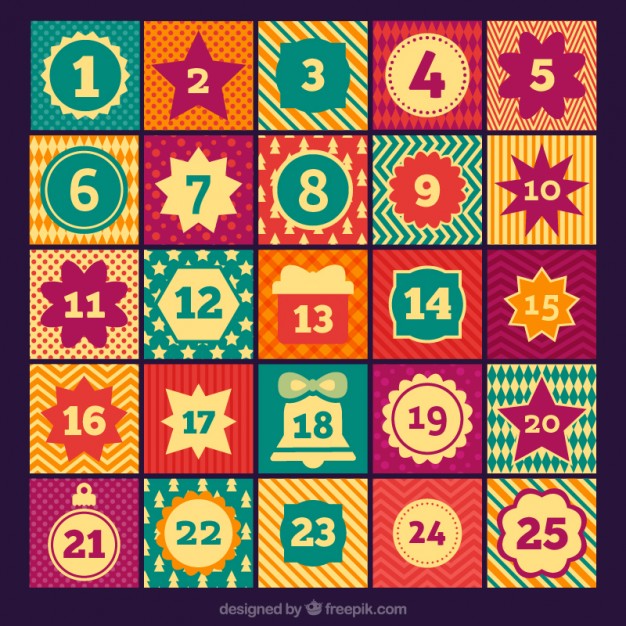
Identify all the prime numbers in the figure. How many prime numbers are there?
5
Multiple Choice
13 is a prime number.
True
False
6
Multiple Choice
15 is a prime number.
True
False
7
Multiple Choice
21 is a prime number.
True
False
8
Multiple Choice
27 is a prime number.
True
False
9
Multiple Choice
31 is a prime number.
True
False
10
Multiple Choice
1 is a prime number.
True
False
11
What is a Composite Number?
A number that is not a prime.
It has more than 2 factors.
It is called numeró compuesto in Spanish.
4 is a composite number. Why? Because it has the factors 1,2,4
12 is a composite number. Why? Because it has the factors 1,2,3,4,6,12
12
How many composite numbers are there in the figure? List them.
13
Multiple Choice
34
Prime
Composite
14
Multiple Choice
27
Prime
Composite
15
Multiple Choice
29
Prime
Composite
16
Multiple Choice
37
Prime
Composite
17
Multiple Choice
51
Prime
Composite
18
Multiple Choice
57
Prime
Composite
19
How to Find Prime Numbers?
Watch the video to find how to get the prime numbers using the Method of Eratosthenes.
20
Prime Factorization
Prime factorization is a way of writing the number as a product of its prime factors.
Example 1: 4=2⋅2
Example 2: 6 = 2⋅3
Example 3: 24 = 2⋅2⋅2⋅3
Example 4: 60 =2⋅2⋅3⋅5
21
How to Find Prime Factorization?
By the use of factor trees . See figure at the right for the prime factorization of 24 which is 2⋅2⋅2⋅3
22
Prime Factorization of 48
48=2⋅2⋅2⋅2⋅3
23
Prime Factorization of 42
42=2⋅3⋅7
24
Prime factorization of 16 using Factor Trees
25
Prime factorization of 30 using Factor Trees
26
Multiple Choice
Which is the prime factorization of 20 ?
4⋅5
2⋅10
2⋅2⋅5
1⋅20
27
Multiple Choice
Which is the prime factorization of 32 ?
2⋅4⋅4
2⋅2⋅⋅8
4⋅8
2⋅2⋅2⋅2⋅2
28
Multiple Choice
Which is the prime factorization of 50 ?
2⋅5⋅5
5⋅10
2⋅25
25⋅25
29
Activities in Lesson 2
WORKSHEET 2. Upload photos of your work for grading.
QUIZ 2. This is done in Socrative. Just click the link provided in Google Classroom.
LESSON 2: Prime and Composite Numbers
Show answer
Auto Play
Slide 1 / 29
SLIDE

Similar Resources on Wayground
20 questions
Topic 1.4 - 1.6 - Dividing Fractions and Mixed Numbers
Presentation
•
5th - 8th Grade
25 questions
Mixed and Improper Fractions Lesson - Review
Presentation
•
5th - 8th Grade
21 questions
Measures of Center
Presentation
•
6th - 8th Grade
21 questions
Review 7.3-1 Ratios & Proportions
Presentation
•
6th - 8th Grade
20 questions
Fracciones decimales
Presentation
•
5th - 7th Grade
20 questions
Estimating Square Roots
Presentation
•
6th - 8th Grade
20 questions
Desmos Grade 7 - Unit 8 Review
Presentation
•
6th - 8th Grade
23 questions
Operations with Integers
Presentation
•
5th - 8th Grade
Popular Resources on Wayground
24 questions
PBIS-HGMS Day 10
Quiz
•
6th - 8th Grade
10 questions
HCS SCI 03 Summer School Review 3
Quiz
•
3rd Grade
11 questions
Home Scope
Quiz
•
7th - 8th Grade
15 questions
HCS SCI 05 Summer School Assessment 3 Review
Quiz
•
5th Grade
35 questions
Lufkin Road Middle School Student Handbook & Policies Assessment
Quiz
•
7th Grade
18 questions
Geo 11.3 Area of Circles and Sectors
Quiz
•
9th - 11th Grade