

Properties of Matter

Presentation
•
Science
•
3rd - 5th Grade
•
Practice Problem
•
Medium
+1
Standards-aligned

Monica Coronado
Used 1K+ times
FREE Resource
13 Slides • 6 Questions
1
Properties of Matter
Science Camp

2
What is Matter?
Matter is anything that has weight and takes up space. Everything you can see and touch is made up of matter. Matter exists in three main forms: solids, liquids, and gases.

3
There are 6 Properties of Matter:
Mass, Physical State (solid, liquid, gas), Conductivity, Magnetism, Relative Density, and Solubility.

4
5
Solids
Solids are materials that have a defined shape and volume that stays the same.
Rocks are a good example of a solid – they have a rigid shape that isn’t easily changed.

6
Liquids
Liquids are a type of matter that changes shape depending on the shape of its container.
For example, when you pour milk into a cup, it takes up the cup’s inner shape.

7
Gases
Matter that spreads out to take up all the space available in the container is called a gas.
For example, air is a gas. So is helium, which is put inside birthday party balloons.

8
#2. Mass
It is the amount of matter or substance that makes up an object. It is measured in units called kilograms, which can be abbreviated kg.

9
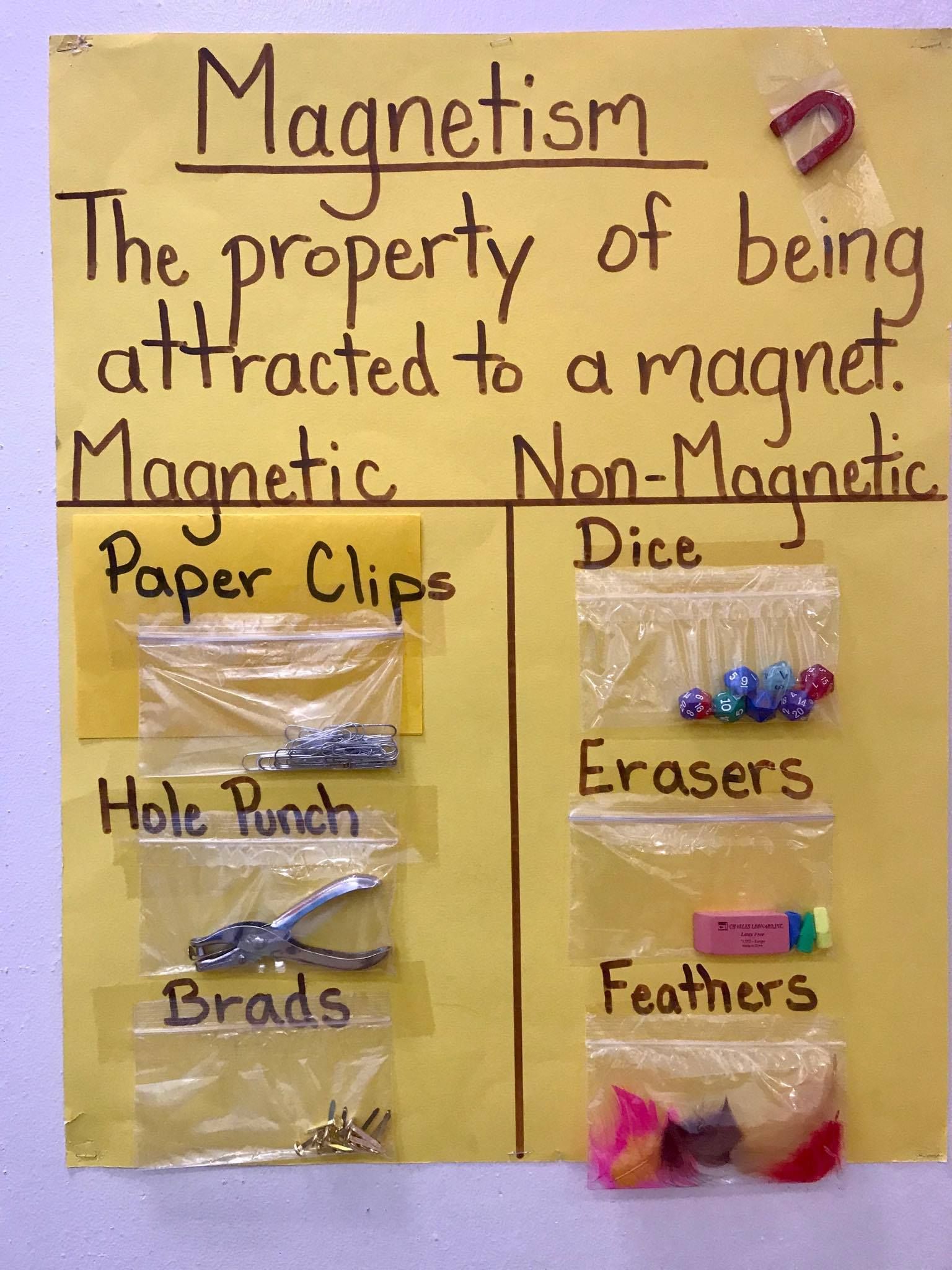
#3. Magnetism
It is the ability of a material to be attracted by a magnet. Only certain materials are attracted to magnets, like iron, nickel, and cobalt.
10
#4. Conductivity
Conductivity is how easily something can move through a substance.
Electrical conductivity refers to how easily an electrical current flows through a substance.
Thermal conductivity refers to how easily heat moves through a substance. Low thermal conductivity is called an insulator.

11
#5. Solubility
It is the ability to dissolve into (become a part of) another substance.
Something that dissolves, like the sugar in our example, is called a solute. The substance that it dissolves into, like the tea, is called the solvent. When a solute dissolves into the solvent, the end product is called a solution.

12
#6. Relative Density
An object’s density depends on how closely the tiny particles are packed together. Objects with a high density have particles that are more tightly packed than objects with a low density.
How something floats or sinks is related to its density.

13
14
Multiple Choice
15
Multiple Choice
16
Multiple Choice
17
Multiple Choice

18
Multiple Choice

19
Multiple Choice
Properties of Matter
Science Camp
Show answer
Auto Play
Slide 1 / 19
SLIDE

