Forces and Motion Review
Presentation
•
Science
•
6th Grade
•
Practice Problem
•
Medium
+5
Standards-aligned
Danielle Mack
Used 84+ times
FREE Resource
13 Slides • 25 Questions
1
Forces and Motion Review
2
Types of Forces
Forces can be categorized as:
1) Contact Forces
2) Non Contact Forces
3
Multiple Choice
A contact force is from
objects physically touching
far apart objects
not touching object
always a pull
4
Multiple Choice
A non-contact force is between
two objects that aren't touching
two objects that are touching
the ground and wheels
you and me
5
Multiple Choice
Applied force is an example of a _________________ force.
contact
non-contact
balanced
unbalanced
6
Multiple Choice
The force between the phone and the mount is a
contact force
non-contact force
7
Multiple Choice
Gravity is a
Contact Force
Myth
Non-contact Force
8
Friction
A type of force that happens between two objects that come in contact with one another.
Friction is an opposing force. It acts in the opposite direction of motion.
You must overcome friction to make stationary items move.
9
Multiple Select
What type of force is friction?
Contact force
Non-Contact force
10
Friction
The amount of friction force acting on an object depends on the weight of the object and the roughness of the surface that the object is in contact with.
11
Multiple Choice
12
Multiple Choice
The amount of friction depends on the weight of the objects pressing together.
True
False
13
Balanced and Unbalanced Forces
When the forces acting on an object are equal, they are called balanced forces. Balanced forces cancel each other out.
When the forces acting on an object are not equal, the forces are unbalanced. Unbalanced forces put things in motion.
14
Net Force
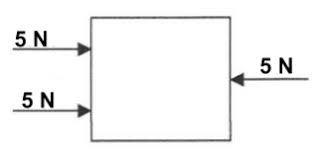
It is the sum of all forces acting on an object.
15
Multiple Choice
Is the Net Force balanced or Unbalanced?
Balanced
Unbalanced
16
Multiple Choice
What is the net force and to what direction.
210 N to the right
280 N to the right
110 N to the left
180 N to the left
17
Multiple Choice
How do you find the net force of this image.
Add up all the arrows
Add a green arrow and the orange arrow.
Subtract all the arrows.
Add the green arrows and subtract the orange arrow.
18
Multiple Choice
19
Multiple Choice
20
Motion
Forces Put Things in Motion
21
Multiple Choice
What type of forces put things in motion?
Balanced
Unbalanced
22
Describing Motions
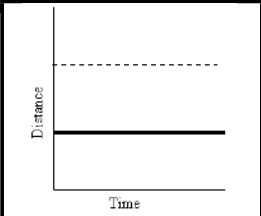
Velocity-speed and direction of an objects motion
Acceleration- change in speed or direction of an objects motion
Speed-distance an object has traveled in a given amount of time.
Motion Graphs- describe the motions an object has taken.
23
Multiple Choice
24
Multiple Choice
25
Multiple Choice
26
Newton's Laws of Motion
Three laws that describe how forces interact with objects and cause motion
27
1st Law of Motion
Objects at rest, remain at rest. Unless acted upon by an outside force.
Objects in motion, remain in motion. Unless acted upon by an outside force.
28
Open Ended
What is Isaac Newton telling us with this first law? Put the first law of motion in your own words.
29
2nd Law of Motion
The acceleration of an object depends on the net forces acting on the object and (inversely on) the mass of the object.
F = M x A
(force) = (mass) x (acceleration)
30
2nd Law of Motion
In simple term: to move a mass, you need a force.
More force=More acceleration
or we can say,
The more massive an object is the more force is needed to make the object accelerate.
31
3rd Law of Motion
For every action, there is an equal and opposite reaction.
32
Multiple Choice
33
Multiple Choice
34
Multiple Choice
35
Multiple Choice

This equation goes with which law?
Newton's first law of motion
Newton's second law of motion
Newton's third law of motion
None of these
36
Multiple Choice
Newton's third law states that any action will have a(n) _______ and ______ reaction
Equal and similar
Equal and opposite
Equal and different
Greater and opposite
37
Multiple Choice
What is Newton's First Law
F=ma
Every action has an equal and opposite reaction
An object at rest stays at rest, an object in motion stays in motion.
Friction
38
Multiple Choice
If a force of 26 N is exerted on two balls, one with a mass of 0.52 kg and the other with a mass of 0.78 kg, which ball will have the greater acceleration? (F=ma)
The one with a mass of .78 kg will have the greatest acceleration.
The one with a mass of .52 kg will have the greatest acceleration.
They will both accelerate at the same rate.
Forces and Motion Review
Show answer
Auto Play
Slide 1 / 38
SLIDE

Similar Resources on Wayground
30 questions
Characteristics of Life
Presentation
•
6th Grade
30 questions
Density
Presentation
•
6th Grade
30 questions
Balanced and Unbalanced Forces
Presentation
•
6th Grade
30 questions
Non Renewable Energy Resources Lesson
Presentation
•
6th Grade
31 questions
Matter and Energy in Earth's System
Presentation
•
6th Grade
33 questions
Lesson 26: The Shoot System
Presentation
•
6th Grade
33 questions
ENERGY TRANSFORMATION
Presentation
•
6th Grade
31 questions
Composition of the Atmosphere
Presentation
•
6th Grade
Popular Resources on Wayground
10 questions
Safety Day 2026 – Student Review
Quiz
•
9th Grade
21 questions
Continents and Oceans
Quiz
•
6th Grade
20 questions
Parts of Speech
Quiz
•
5th Grade
16 questions
Subject & Predicate
Quiz
•
5th Grade
25 questions
Multiplication Facts
Quiz
•
5th Grade
12 questions
Map Skills
Quiz
•
3rd Grade
22 questions
Continents and Oceans
Quiz
•
5th Grade
15 questions
Rounding Decimals
Quiz
•
5th Grade
Discover more resources for Science
20 questions
Elements, compounds, and mixtures
Quiz
•
6th Grade
10 questions
6.6D - Relative Density Review
Quiz
•
6th Grade
10 questions
Exploring Chemical and Physical Changes
Interactive video
•
6th - 10th Grade
20 questions
CONDUCTION,CONVECTION AND RADIATION
Quiz
•
6th Grade
20 questions
Rocks and The Rock Cycle
Quiz
•
6th Grade
19 questions
Describing and Classifying Matter
Presentation
•
6th Grade
21 questions
Waves and Wave Properties
Quiz
•
6th - 8th Grade
20 questions
Phases of the Moon
Quiz
•
6th Grade