
Outer Planets
Presentation
•
Science
•
4th Grade
•
Medium
Standards-aligned
Natalie Broome
Used 1K+ times
FREE Resource
10 Slides • 10 Questions
1
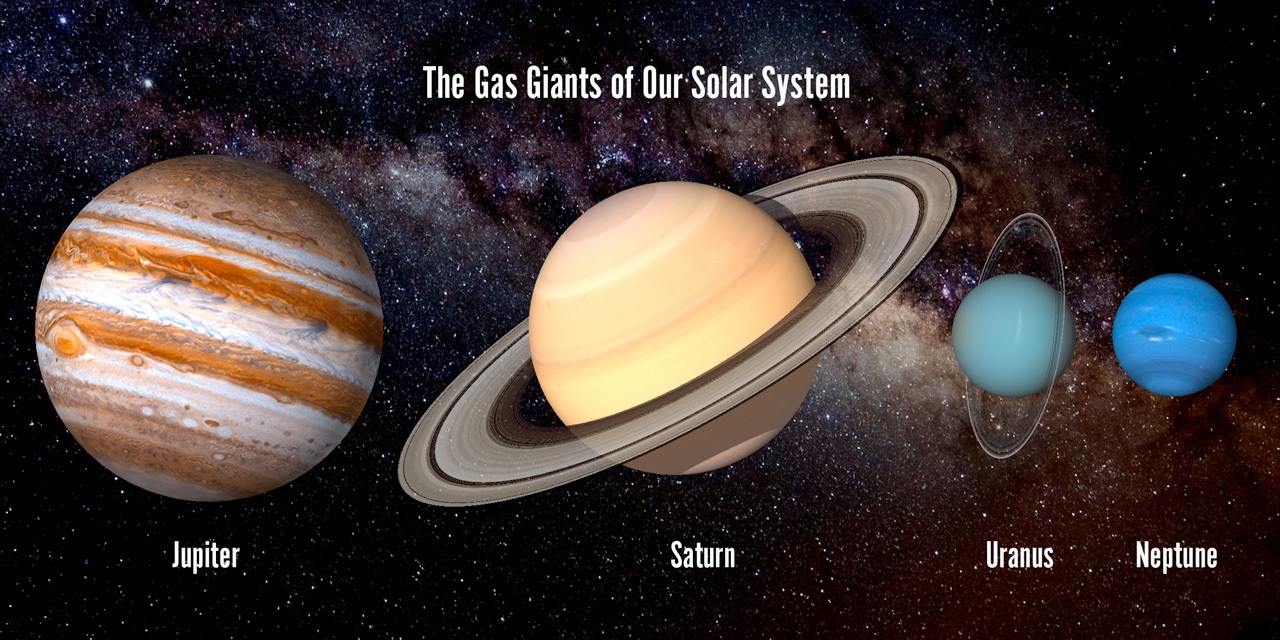
Outer Planets
What are their characteristics?
2
Outer Planets
Made Of: Gases
Size: Larger
Location: Farthest from the Sun
3
Multiple Choice
The outer planets are the largest in our solar system.
True
False
4
Multiple Choice
The outer planets are made mostly of
rock
gas
flames
5
Jupiter
Order from Sun: 5th
Number of Moons: 79 (53 named, 26 awaiting names)
Temperature: Coldest -260F, Warmest -150F
Atmosphere: Gases - hydrogen, helium, methane & ammonia, Stormiest (Great Red Spot)
6
Jupiter: Interesting Facts
-Largest Planet
-Thin, cold atmosphere becomes thicker and hotter and turns into a thick, dark fog which becomes so pressurized it turns into a liquid
-Named after the Roman sky-god
7
Multiple Choice
Jupiter's Great Red Spot is a
crater
storm
volcano
mountain
8
Multiple Select
Click all that is true about Jupiter.
has 79 moons
largest planet in our solar system
atmosphere is made mostly of nitrogen
named after Roman sky god
9
Saturn
Order from Sun: 6th
Number of Moons: 82 (most in solar system)
Temperature: Coldest -300F, Warmest -188F
Atmosphere: Gases - hydrogen and helium
10
Saturn: Interesting Facts
-Rings are made of ice crystals (some as big as houses) - must use a telescope on Earth to see them
-Named after the Roman god of agriculture
11
Multiple Choice
Which planet has the most moons in our solar system?
Mercury
Jupiter
Earth
Saturn
12
Multiple Select
Click all that are true about Saturn.
has large rings made of ice
named after Roman god of agriculture
has 102 moons
atmosphere is mostly made of oxygen
13
Uranus
Order from Sun: 7th
Number of Moons: 27
Temperature: Coldest -370F, Warmest -243F
Atmosphere: hydrogen & methane (absorbs red light and scatters blue light)
14
Uranus: Interesting Facts
-Coldest planet in our solar system
-Rotates like a barrell (on its side) instead of a top
-Named after Greek god of the sky
15
Multiple Choice
Uranus looks blue because methane gas in its atmosphere absorbs red light and scatters blue light.
True
False
16
Multiple Select
Click all that are true about Uranus.
coldest planet in our solar system
named after Greek god of sky
spins on its side like a barrel
has 27 moons
17
Neptune
Order from Sun: 8th
Number of Moons: 14
Temperature: Coldest -328F, Warmest -218F
Atmosphere: Gases - helium & methane, windiest
18
Neptune: Interesting Facts
-Most violent weather
-Triton - moon that orbits planet backward
-Named after Roman god of the sea
19
Multiple Choice
Neptune is the windiest planet in our solar system.
True
False
20
Multiple Select
Click all that are true about Neptune.
has the most moons in our solar system
Triton, one of its moons, orbits backward around Neptune
has very mild weather
named after Roman god of the heavens
Outer Planets
What are their characteristics?
Show answer
Auto Play
Slide 1 / 20
SLIDE

Similar Resources on Wayground
18 questions
Stars and Constellations
Presentation
•
4th Grade
15 questions
Renewable Resources
Presentation
•
4th Grade
19 questions
Electricity
Presentation
•
4th Grade
15 questions
Wed. March 24 Transfer of Energy
Presentation
•
4th Grade
13 questions
Solar System
Presentation
•
5th Grade
18 questions
Solar System Review
Presentation
•
3rd Grade
16 questions
SCIENCE 4 QUARTER 4 FOURTH SESSION
Presentation
•
4th Grade
14 questions
Discussion Questions
Presentation
•
4th Grade
Popular Resources on Wayground
24 questions
PBIS-HGMS Day 10
Quiz
•
6th - 8th Grade
10 questions
HCS SCI 03 Summer School Review 3
Quiz
•
3rd Grade
11 questions
Home Scope
Quiz
•
7th - 8th Grade
15 questions
HCS SCI 05 Summer School Assessment 3 Review
Quiz
•
5th Grade
35 questions
Lufkin Road Middle School Student Handbook & Policies Assessment
Quiz
•
7th Grade
18 questions
Geo 11.3 Area of Circles and Sectors
Quiz
•
9th - 11th Grade