
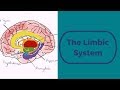
Limbic System Functions and Disorders

Interactive Video
•
Biology, Science, Other
•
9th - 10th Grade
•
Practice Problem
•
Hard

Patricia Brown
FREE Resource
Read more
10 questions
Show all answers
1.
MULTIPLE CHOICE QUESTION
30 sec • 1 pt
What is the primary role of the limbic system?
Regulating emotions and motivations
Controlling voluntary movements
Managing language comprehension
Processing visual information
2.
MULTIPLE CHOICE QUESTION
30 sec • 1 pt
Which structure is known as the emotional center of the brain?
Cingulate gyrus
Amygdala
Thalamus
Hippocampus
3.
MULTIPLE CHOICE QUESTION
30 sec • 1 pt
What condition results from damage to both amygdalae?
Kluver-Bucy syndrome
Alzheimer's disease
Anterograde amnesia
Parkinson's disease
4.
MULTIPLE CHOICE QUESTION
30 sec • 1 pt
What is the main function of the hippocampus?
Regulating body temperature
Controlling heart rate
Forming and storing new memories
Processing auditory information
5.
MULTIPLE CHOICE QUESTION
30 sec • 1 pt
What is anterograde amnesia?
Inability to recognize faces
Inability to form new memories
Inability to recall past memories
Inability to process emotions
6.
MULTIPLE CHOICE QUESTION
30 sec • 1 pt
Which structure connects the hippocampus to the hypothalamus?
Cerebellum
Corpus callosum
Fornix
Optic chiasm
7.
MULTIPLE CHOICE QUESTION
30 sec • 1 pt
What role does the hypothalamus play in the body?
Interpreting language
Coordinating muscle movements
Processing visual stimuli
Regulating the endocrine system
Access all questions and much more by creating a free account
Create resources
Host any resource
Get auto-graded reports

Continue with Google

Continue with Email

Continue with Microsoft
or continue with

%20(1).png)
Apple

Others
By signing up, you agree to our Terms of Service & Privacy Policy
Already have an account?


