

Plate Tectonics

Presentation
•
Science
•
9th - 12th Grade
•
Practice Problem
•
Hard

Christopher Miller
FREE Resource
30 Slides • 26 Questions
1

2
3
Multiple Choice
Which of the following best describes the concept of plate tectonics?
The movement of large plates that make up Earth's surface
The study of weather patterns
The process of rock formation
The classification of minerals
4
Multiple Choice
Why is the study of plate tectonics important for understanding Earth's history and natural phenomena?
5
6
Multiple Choice
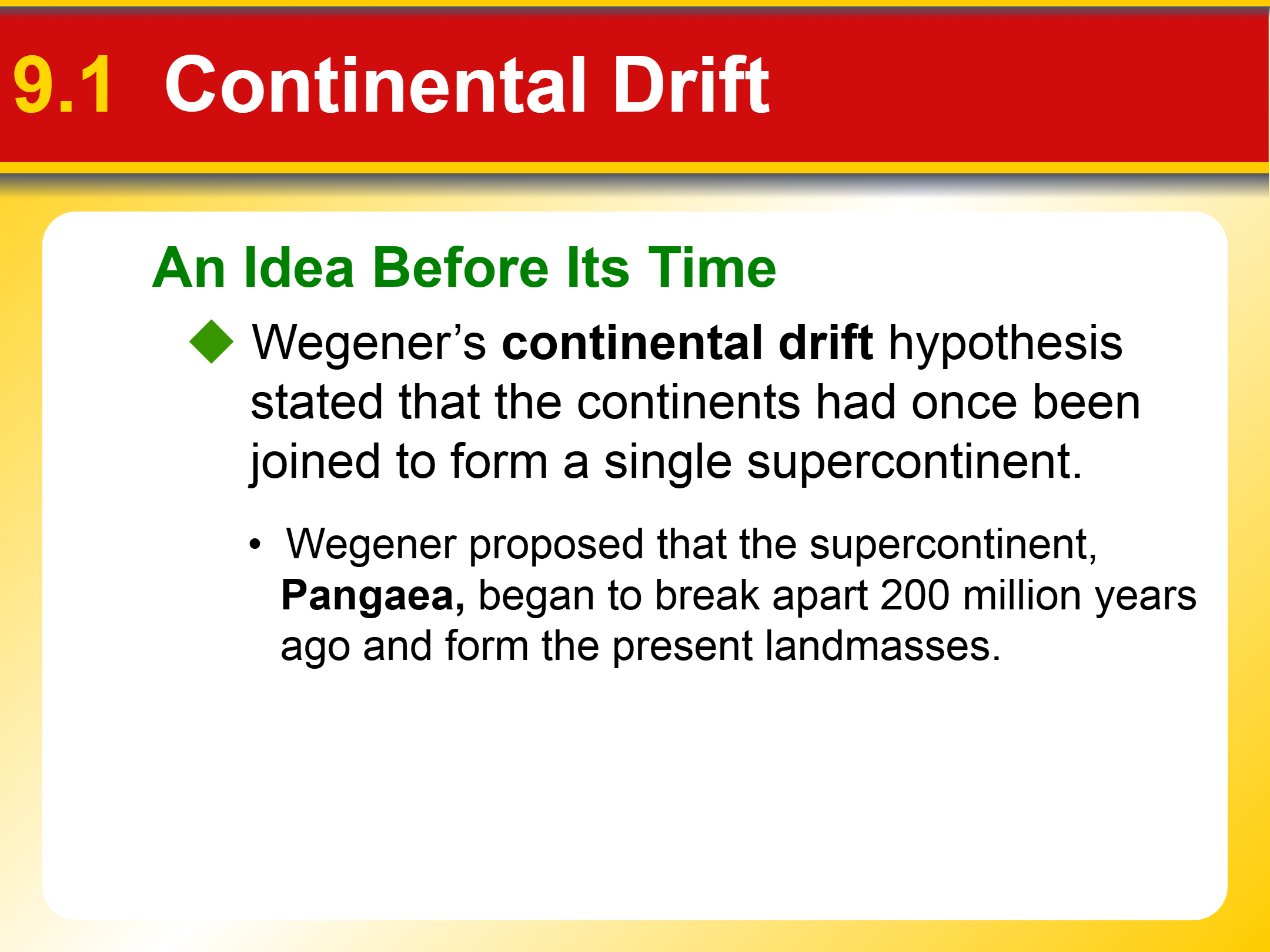
What was Wegener's hypothesis of continental drift?
That continents have always been in their current positions
That continents were once joined as a single supercontinent
That continents move due to ocean currents
That continents formed independently at different times
7
8
Multiple Choice
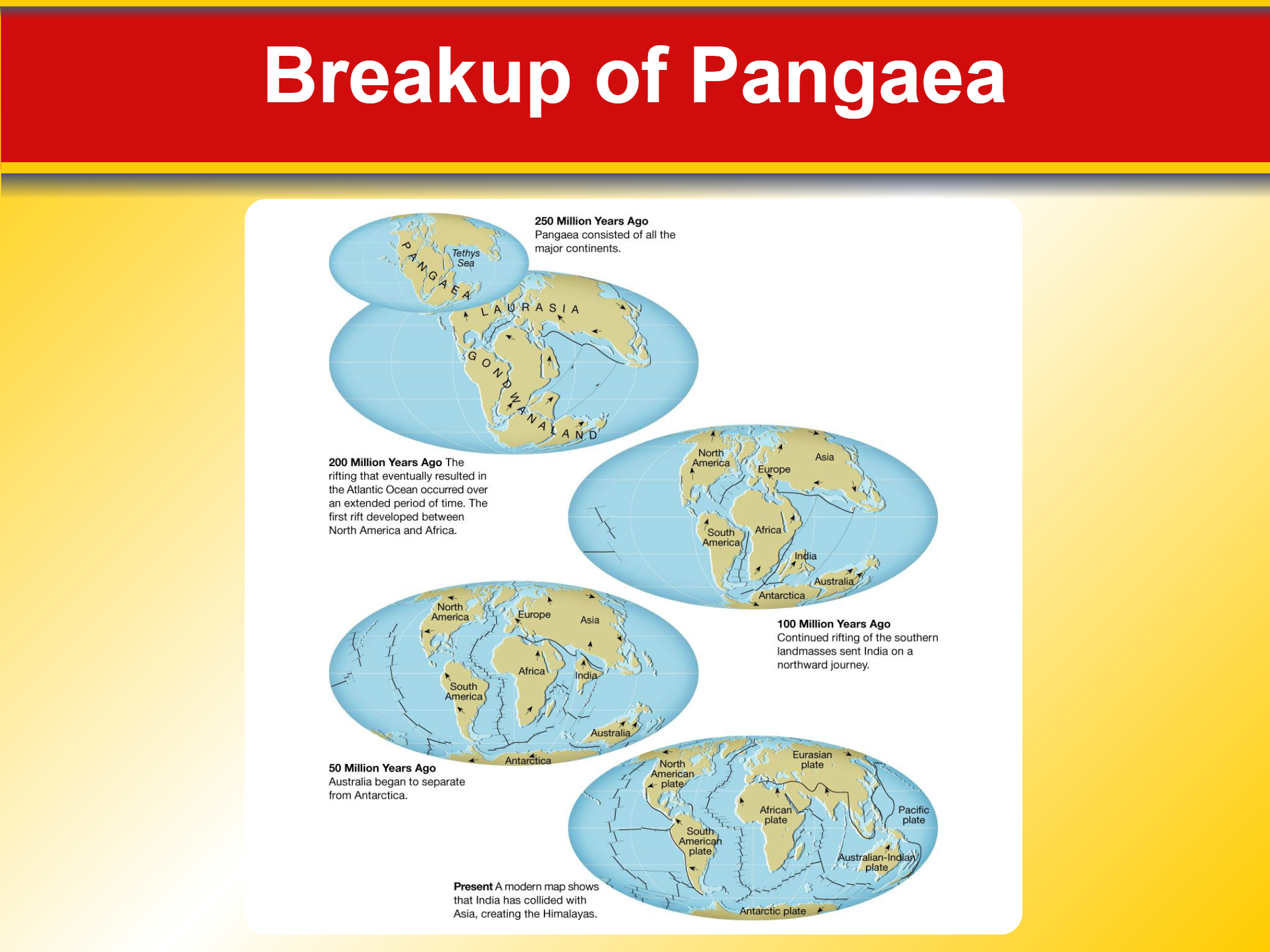
Describe the process of the breakup of Pangaea and how it led to the formation of present-day continents.
9
10
Fill in the Blanks
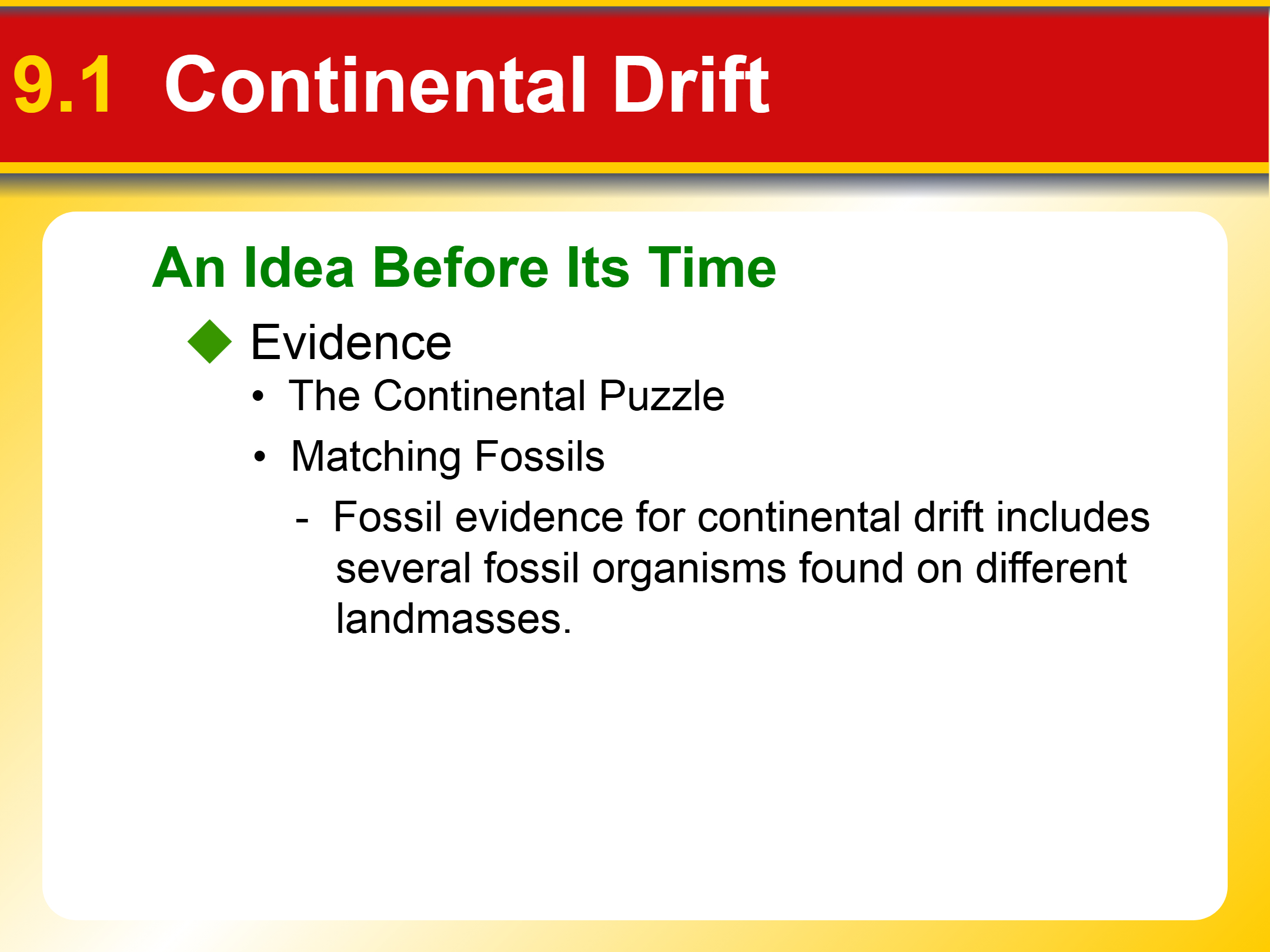
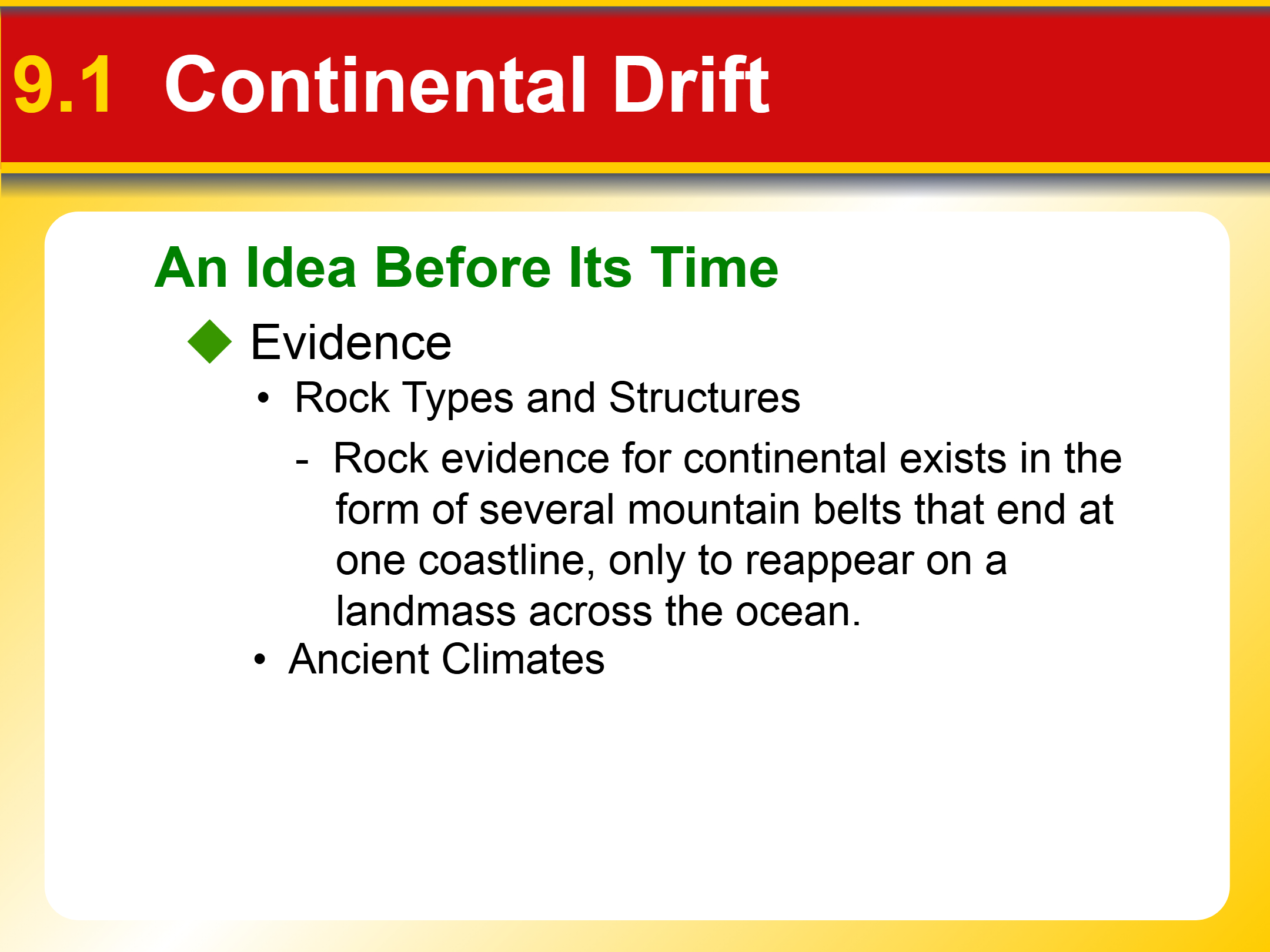
Fossil evidence for continental drift includes several fossil organisms found on different
Type answer...
11
12
13
Multiple Choice
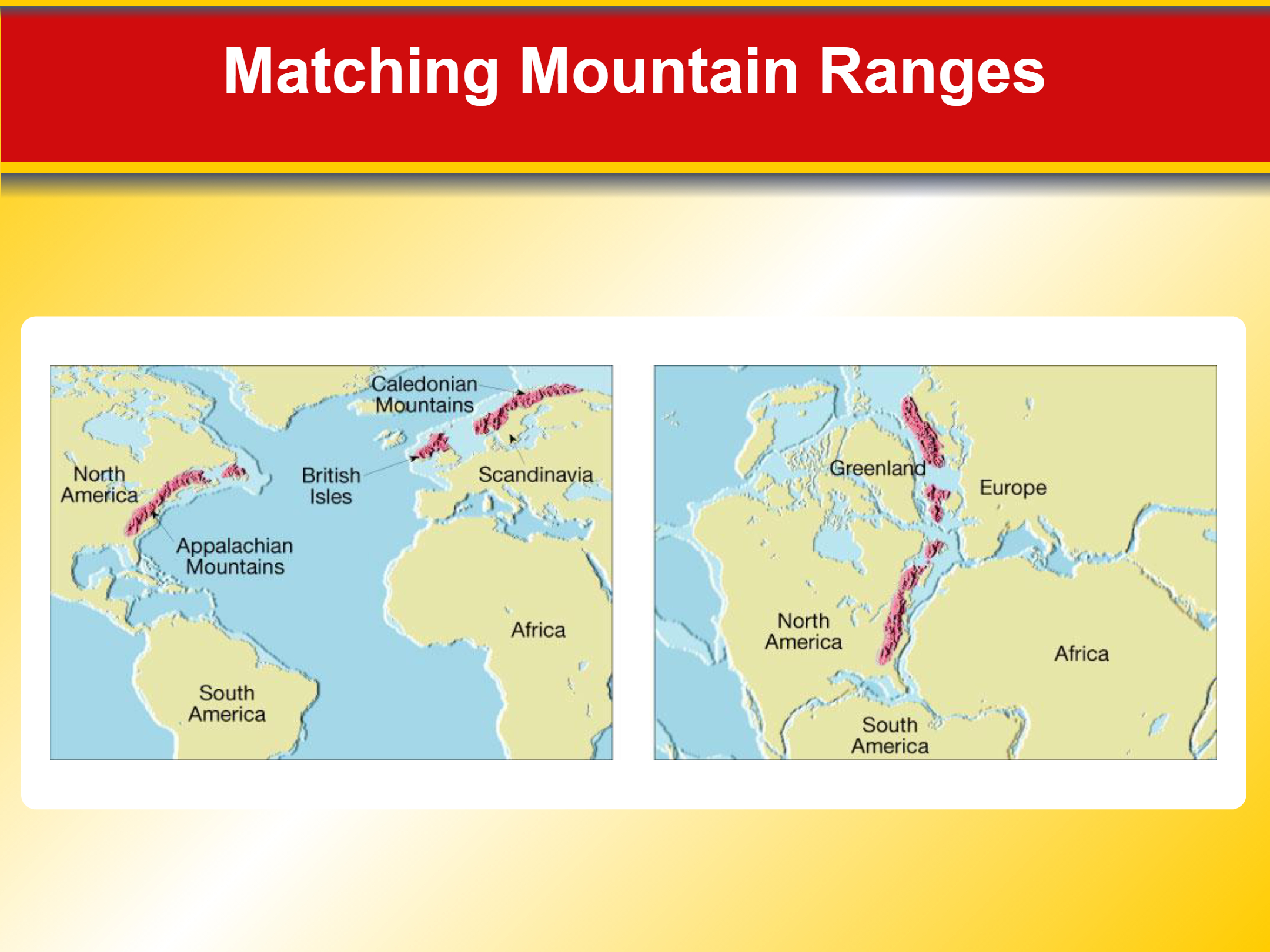
How do matching mountain ranges across continents support the idea of continental drift?
14
15
Multiple Choice
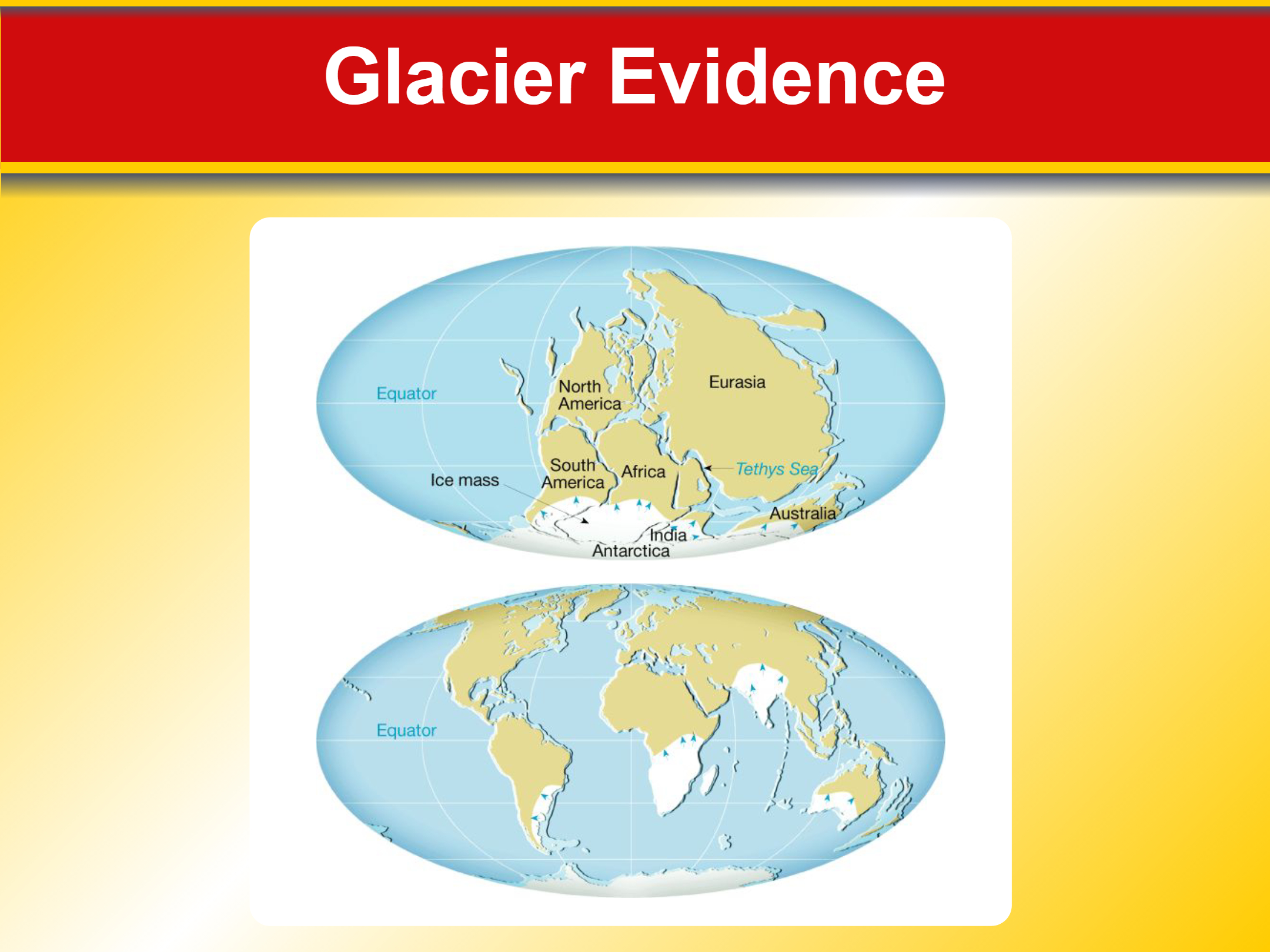
Glacial evidence suggests that continents were once located closer to the ___ than they are today.
Equator
North Pole
South Pole
Prime Meridian
16
Multiple Select
Which of the following are pieces of evidence supporting the theory of continental drift?
Matching fossils found on different landmasses
Similar rock types and structures across continents
Ancient climates indicated by glacial evidence
Presence of volcanoes on every continent
17
18
Multiple Choice
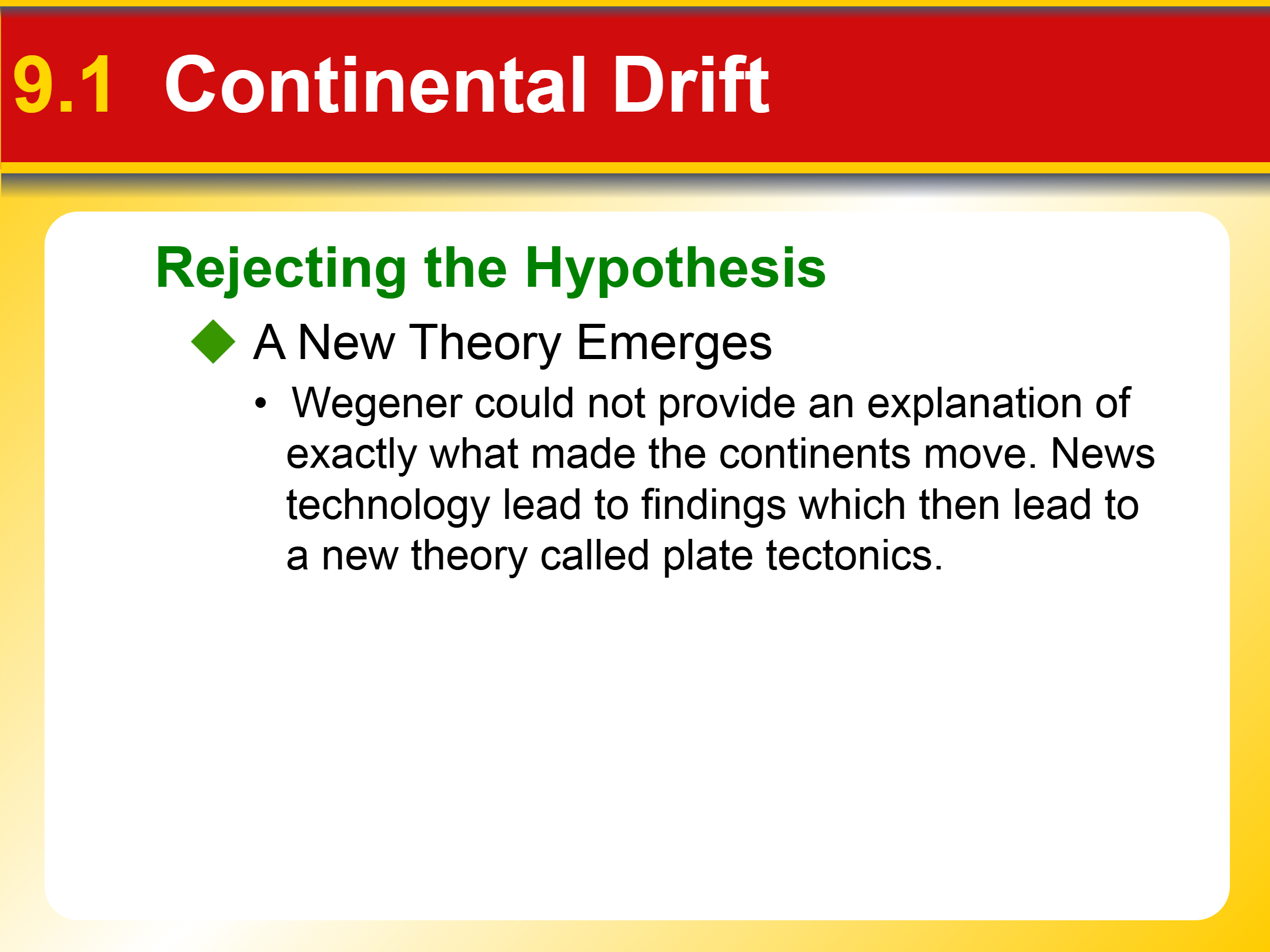
What new theory emerged after Wegener's hypothesis was rejected, and what technological advances contributed to its development?
Plate tectonics; advances in news technology
Continental drift; advances in oceanography
Seafloor spreading; advances in satellite imaging
Transform fault theory; advances in seismic technology
19
20
Multiple Choice
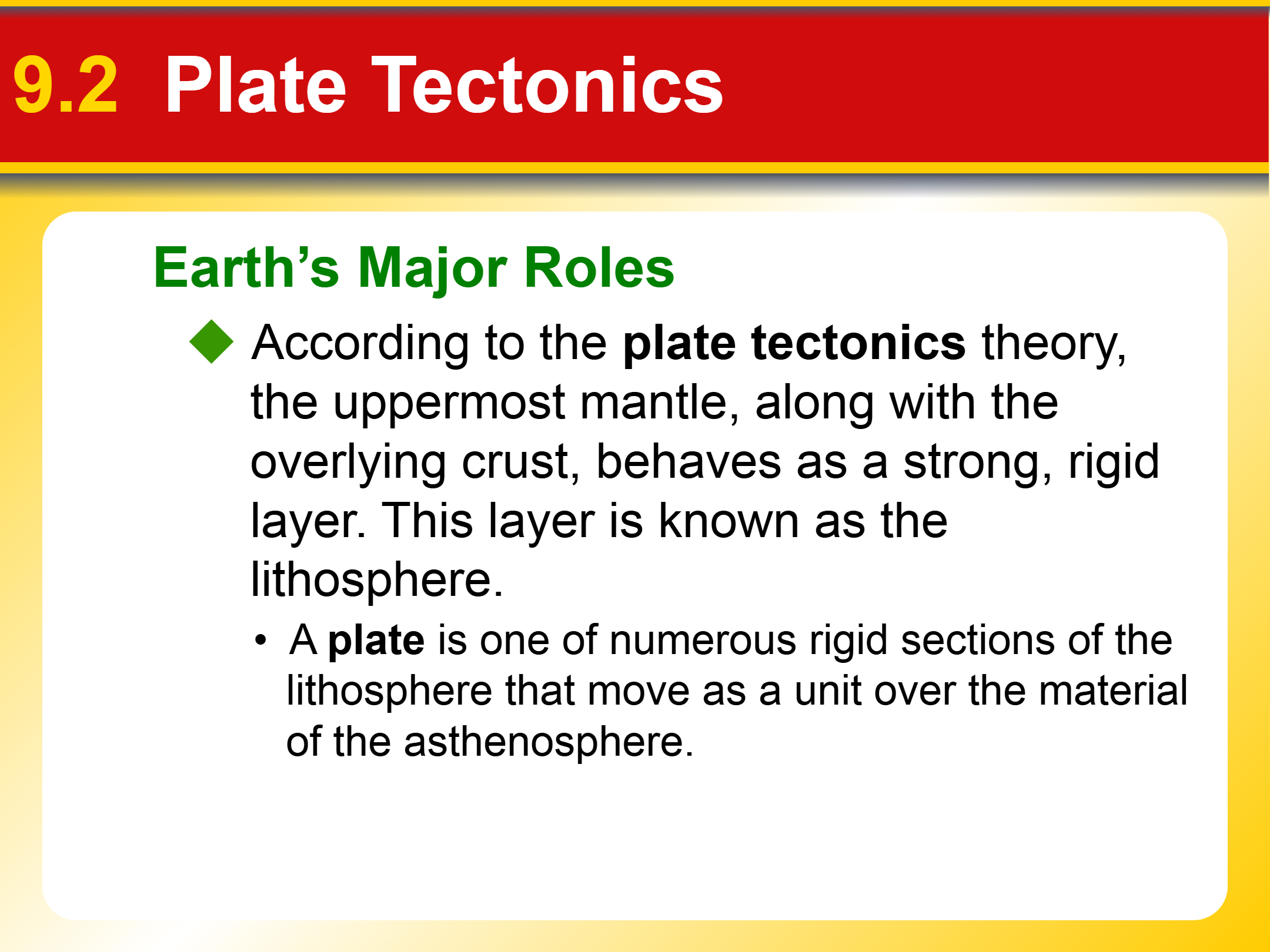
Explain the role of the lithosphere in the theory of plate tectonics.
21
22
Fill in the Blanks
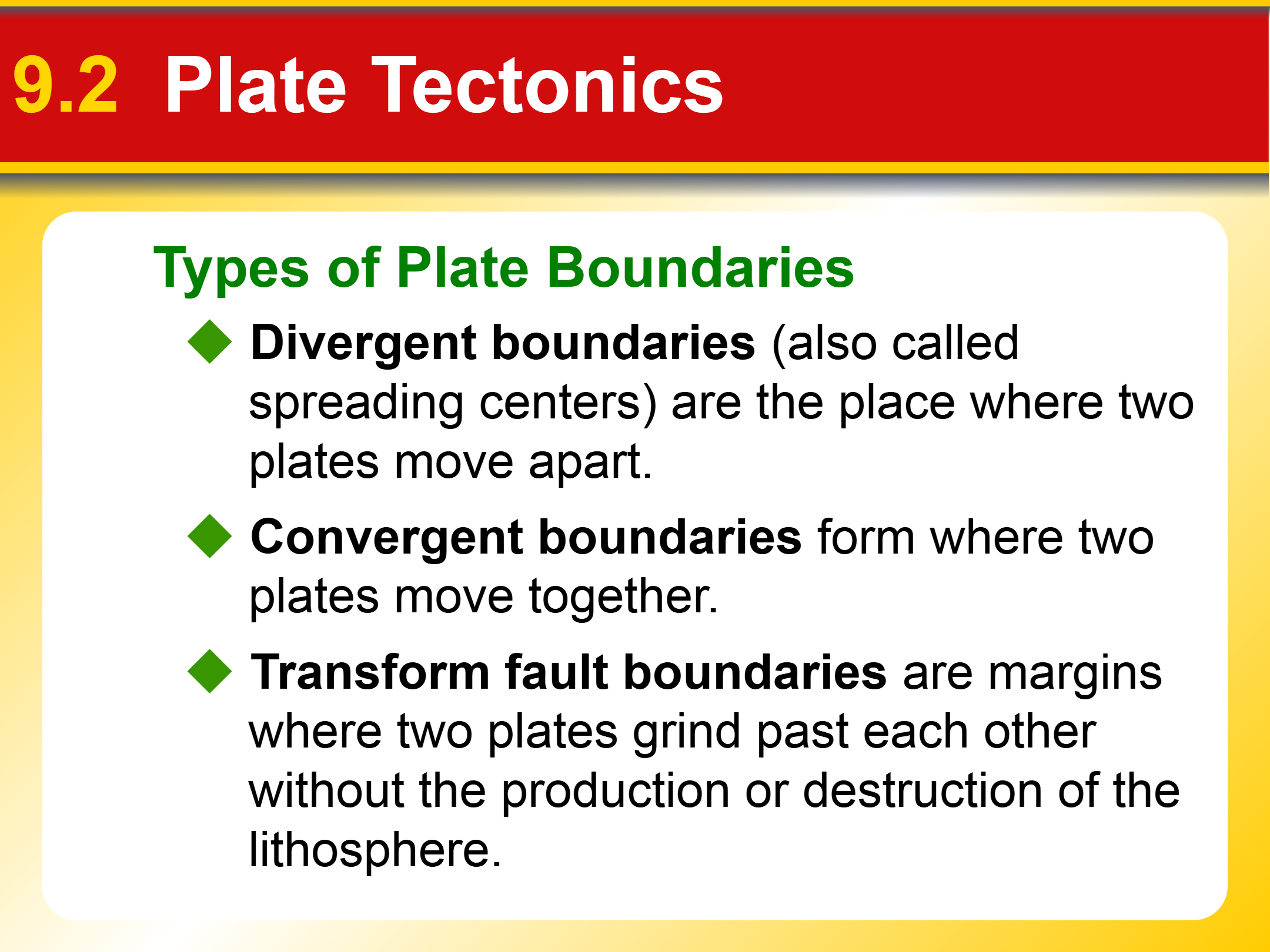
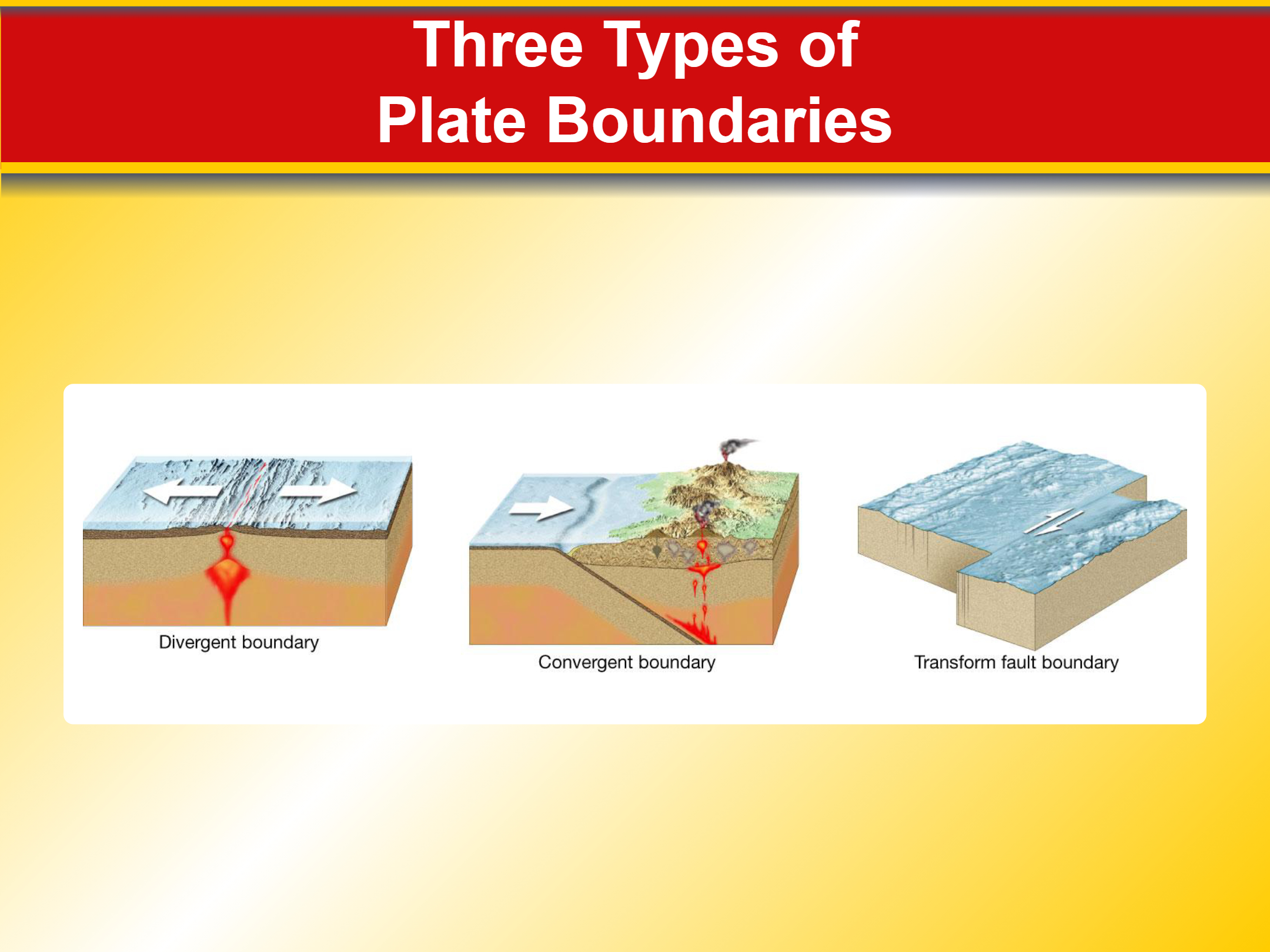
The boundary where two plates move apart is called a
Type answer...
23
Multiple Select
Which of the following statements about plate boundaries are correct?
Divergent boundaries are where two plates move apart.
Convergent boundaries are where two plates move together.
Transform fault boundaries are where two plates grind past each other without producing or destroying lithosphere.
All plate boundaries produce new lithosphere.
24
25
26
Multiple Choice
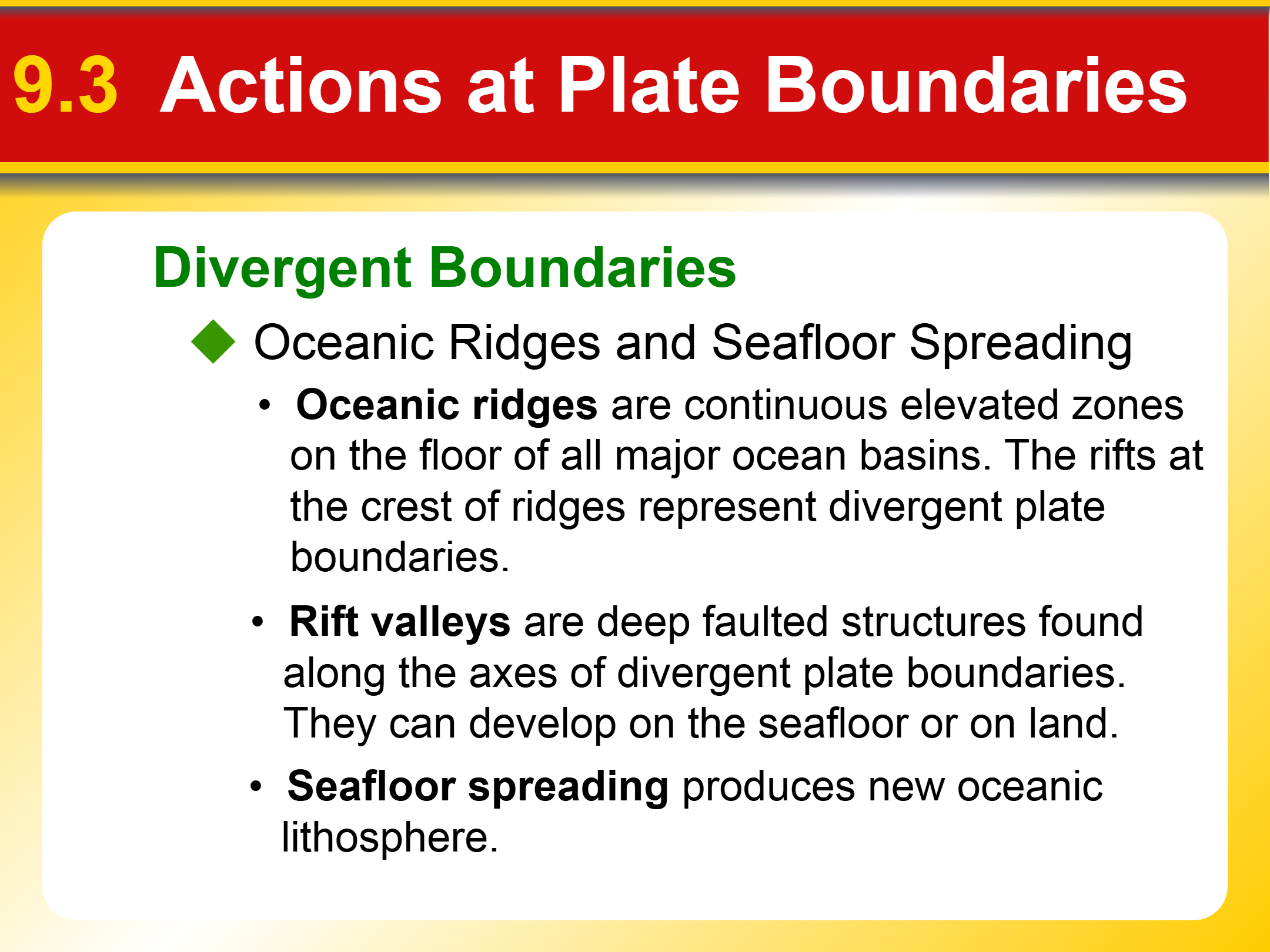
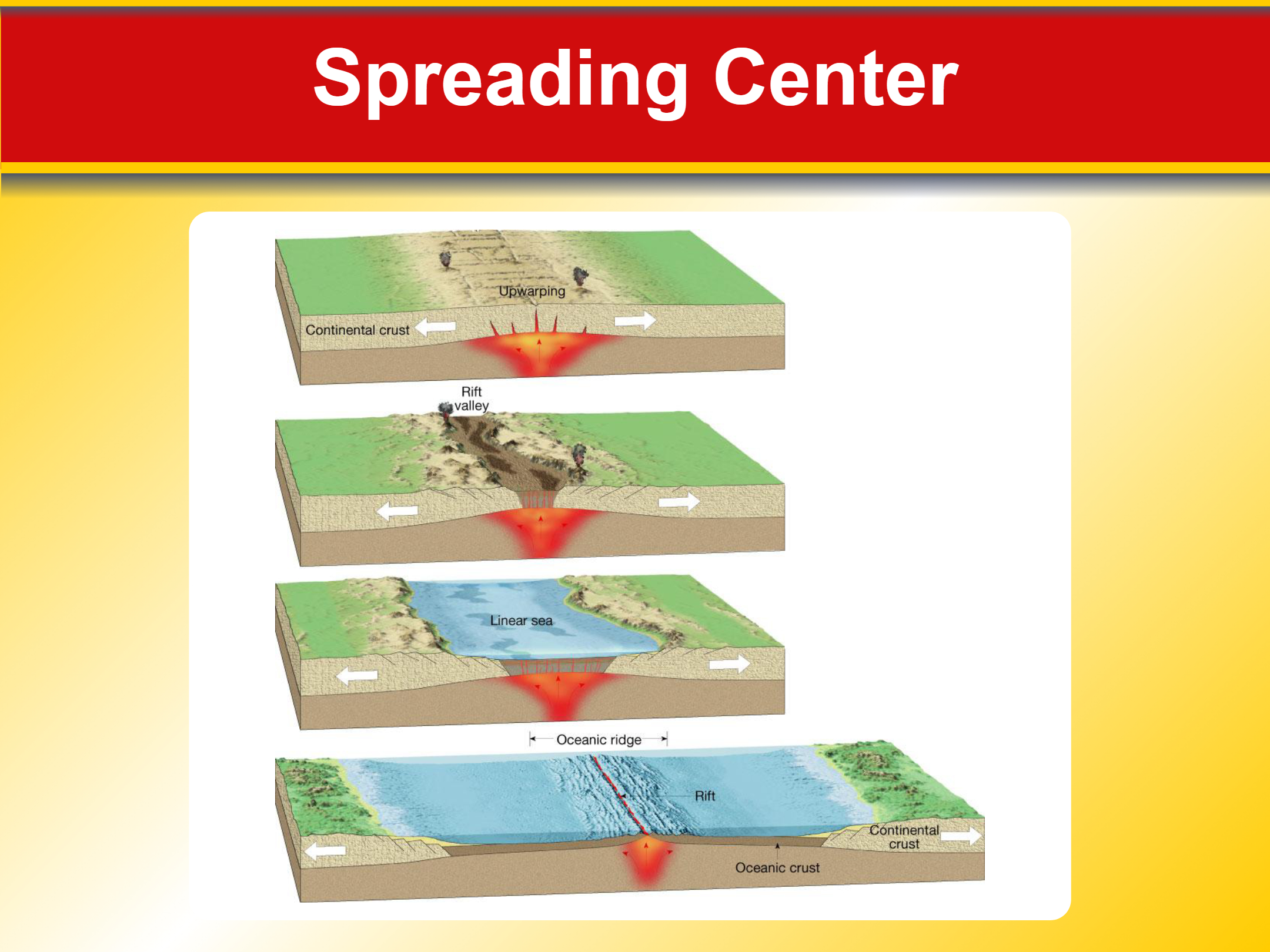
Compare and contrast the processes that occur at divergent plate boundaries on land and in the ocean.
27
28
Multiple Choice
Which feature is most likely to form first during the development of a spreading center: upwarping, rift valley, linear sea, or oceanic ridge?
Upwarping
Rift valley
Linear sea
Oceanic ridge
29
30
Multiple Choice
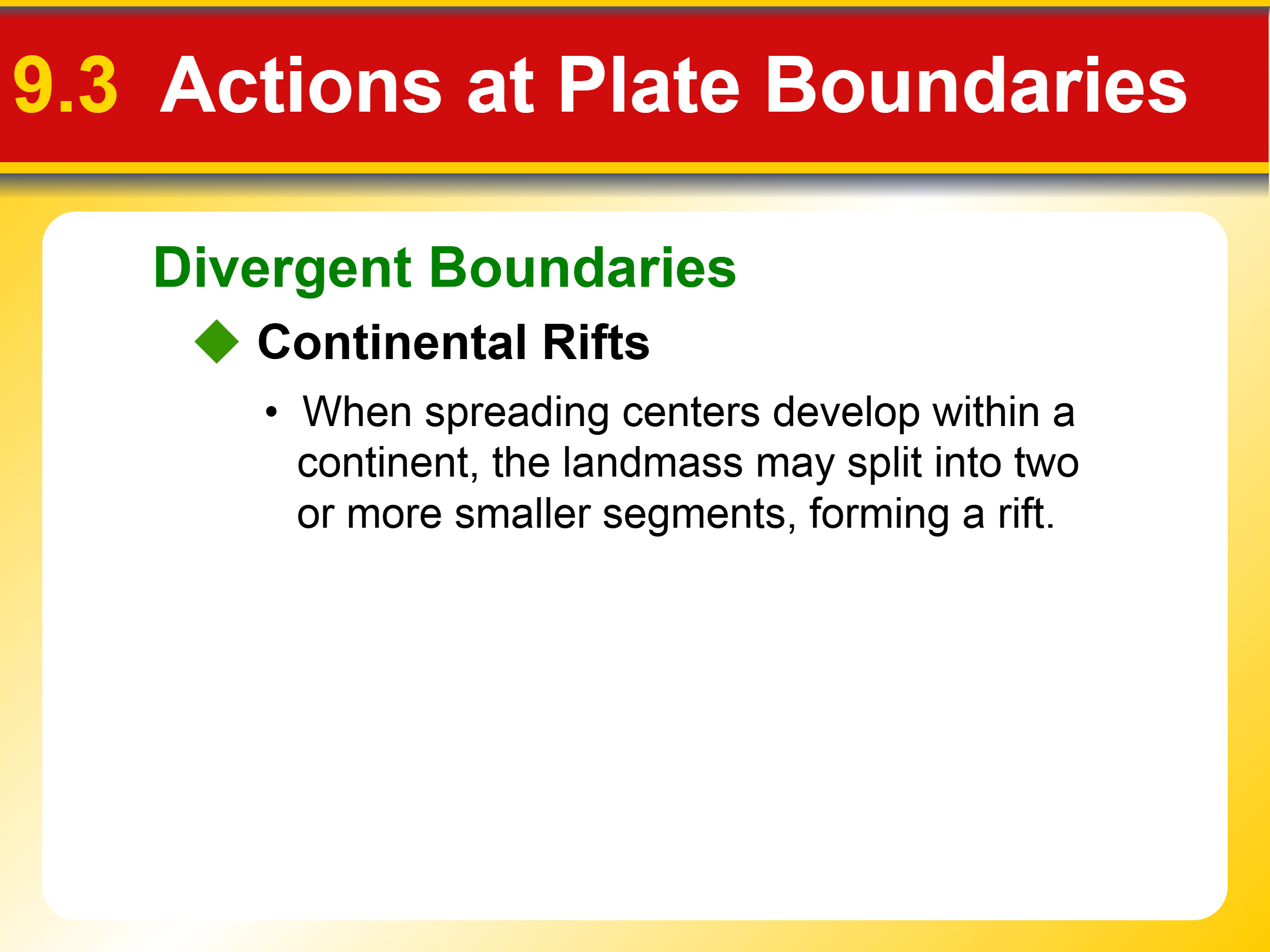
What is a continental rift and what geological process leads to its formation?
A region where two oceanic plates collide, forming mountains
A region where spreading centers develop within a continent, splitting the landmass into smaller segments
A region where two continental plates collide, forming a trench
A region where volcanic islands form due to subduction
31

32
Multiple Choice
How does the East African Rift Valley illustrate the concept of divergent boundaries?
33
34
35
Multiple Choice
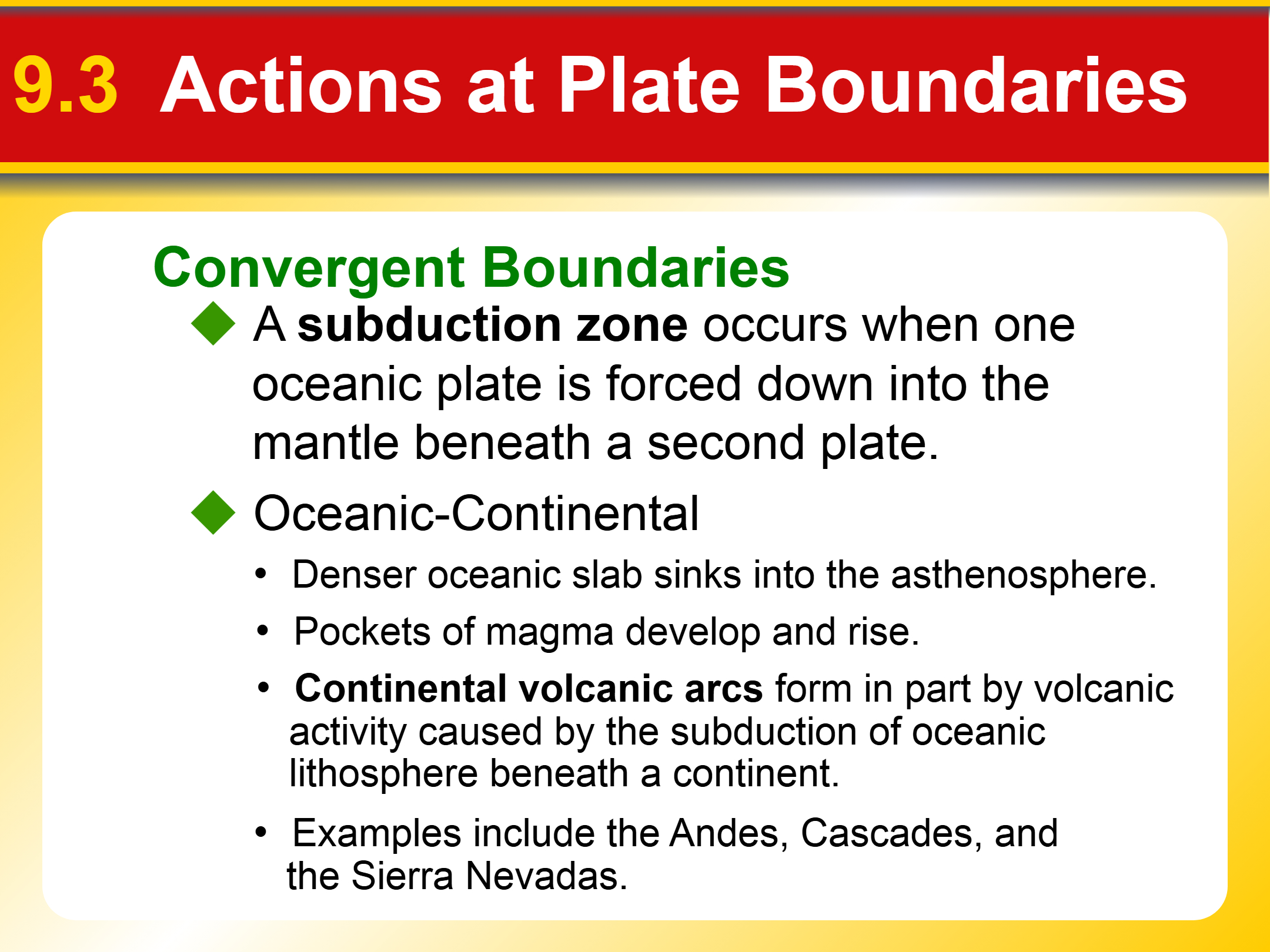
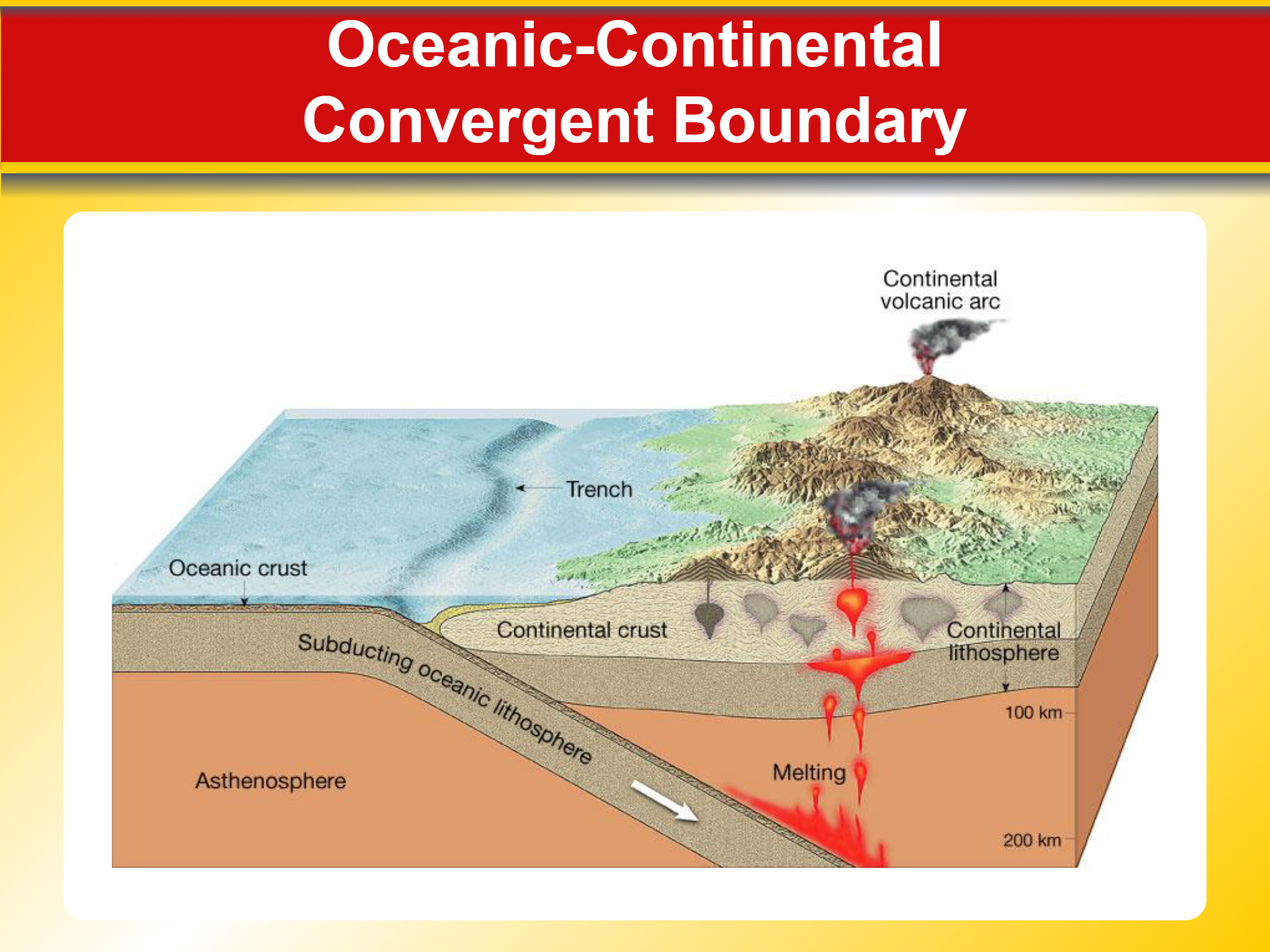
Explain the process that occurs at a subduction zone between an oceanic and continental plate, and describe its geological consequences.
36
Multiple Choice
Which of the following is a result of an oceanic-continental convergent boundary?
Formation of rift valleys
Formation of continental volcanic arcs
Formation of mid-ocean ridges
Formation of transform faults
37
38
39
Fill in the Blanks
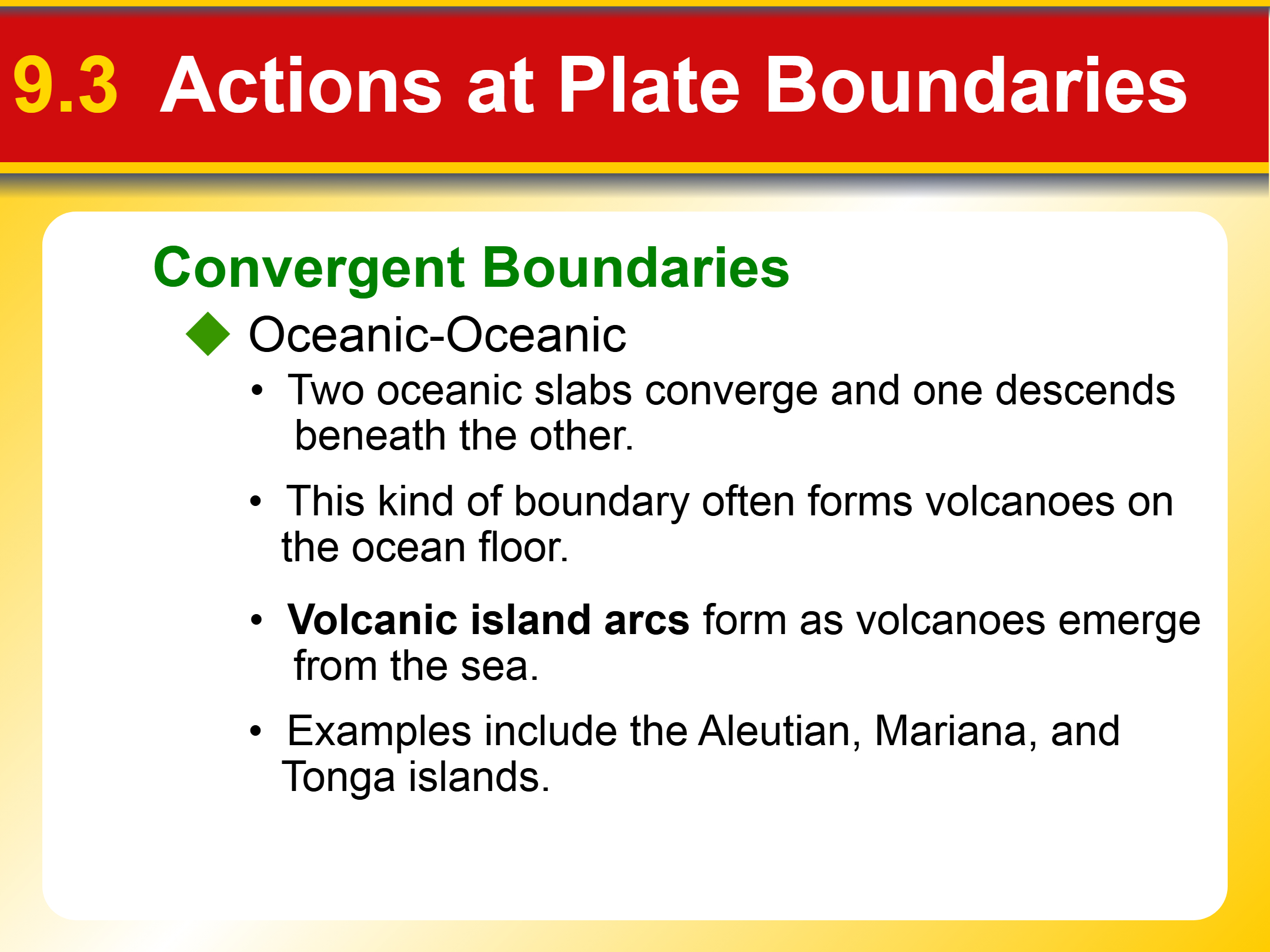
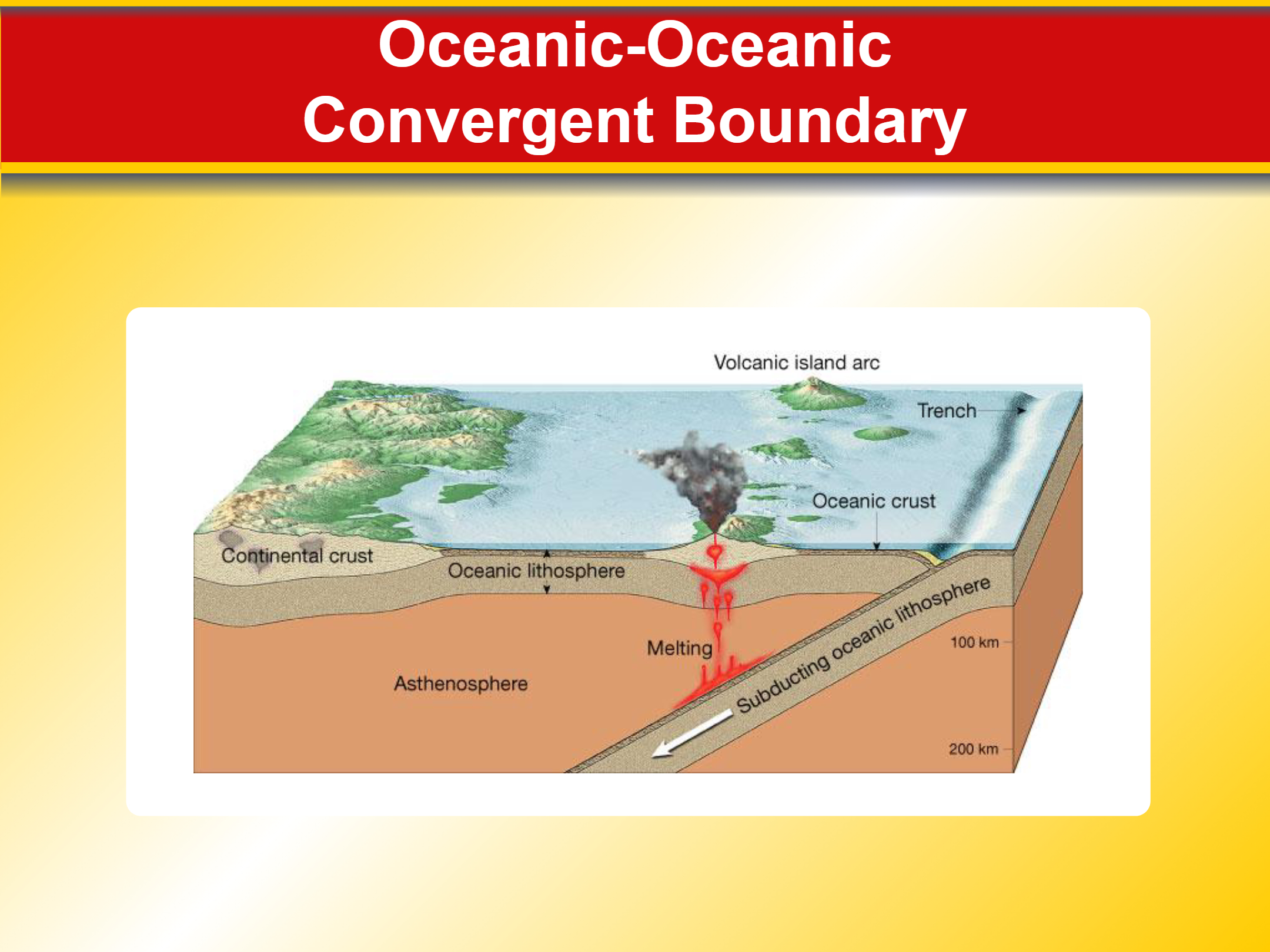
Volcanic island arcs are formed at
40
41
Multiple Choice
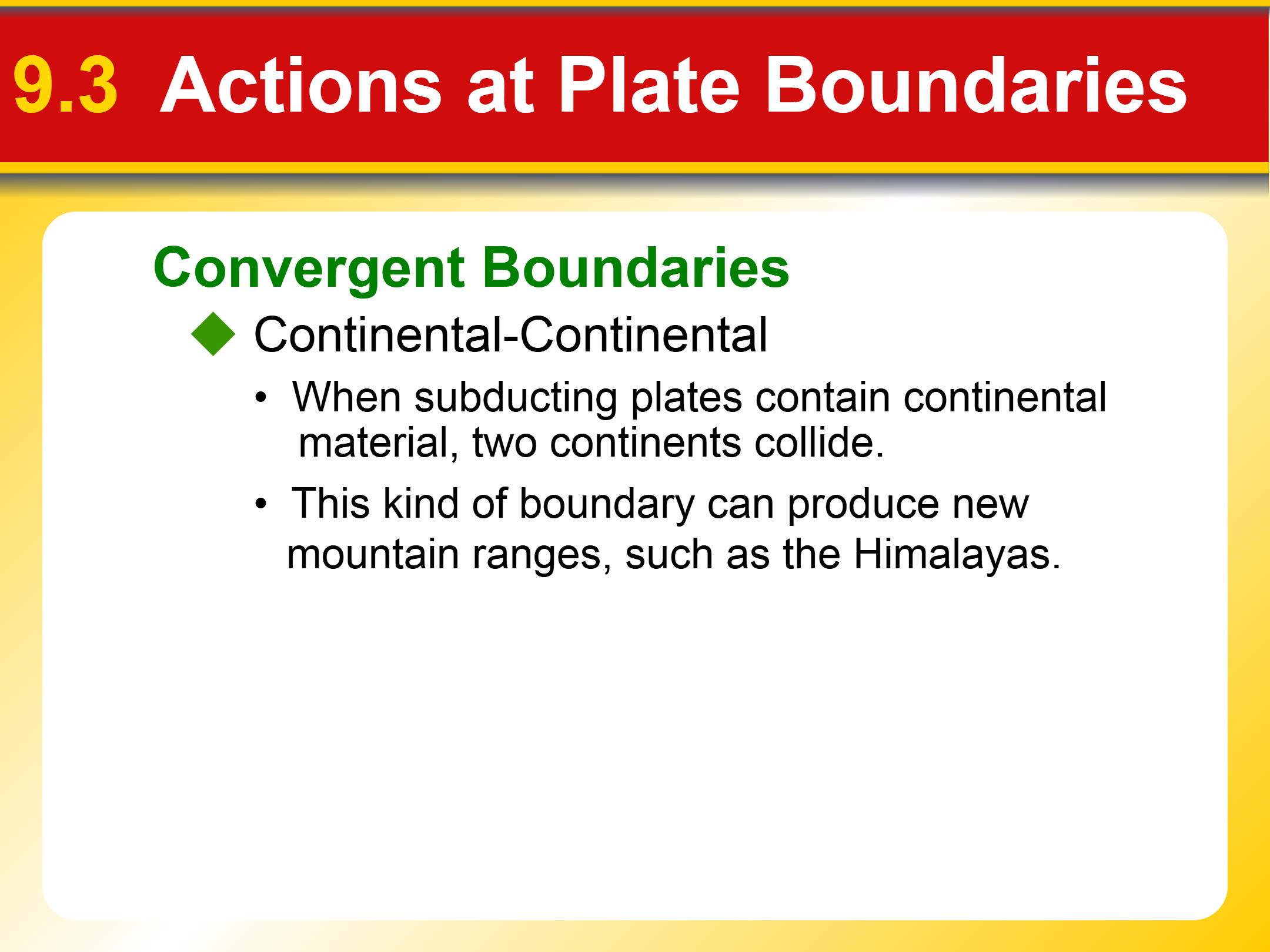
Which type of plate boundary is responsible for the formation of mountain ranges such as the Himalayas?
Transform fault boundary
Divergent boundary
Continental-continental convergent boundary
Oceanic-continental convergent boundary
42
43
Multiple Choice
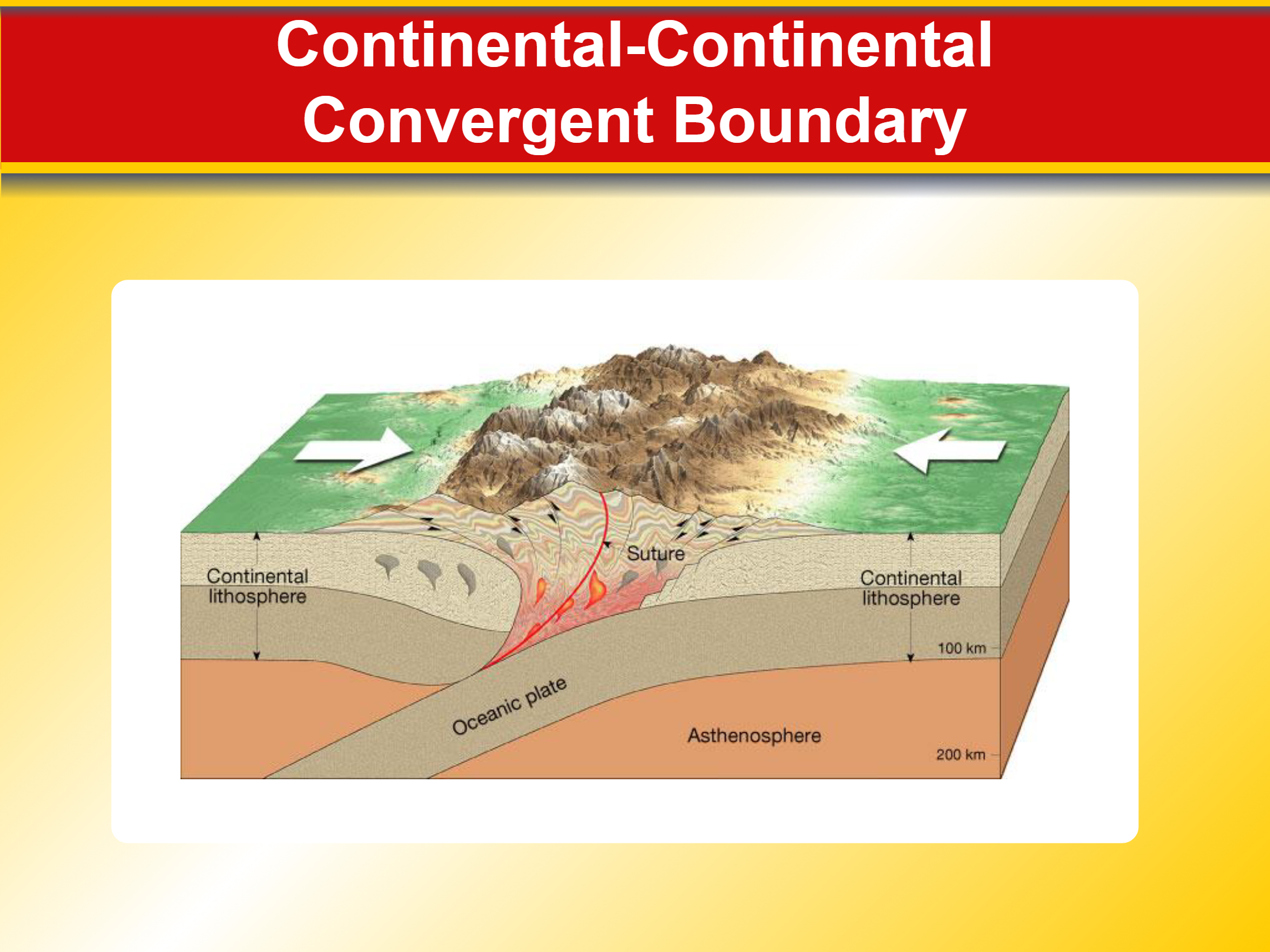
Describe what happens when two continental plates collide at a convergent boundary.
44
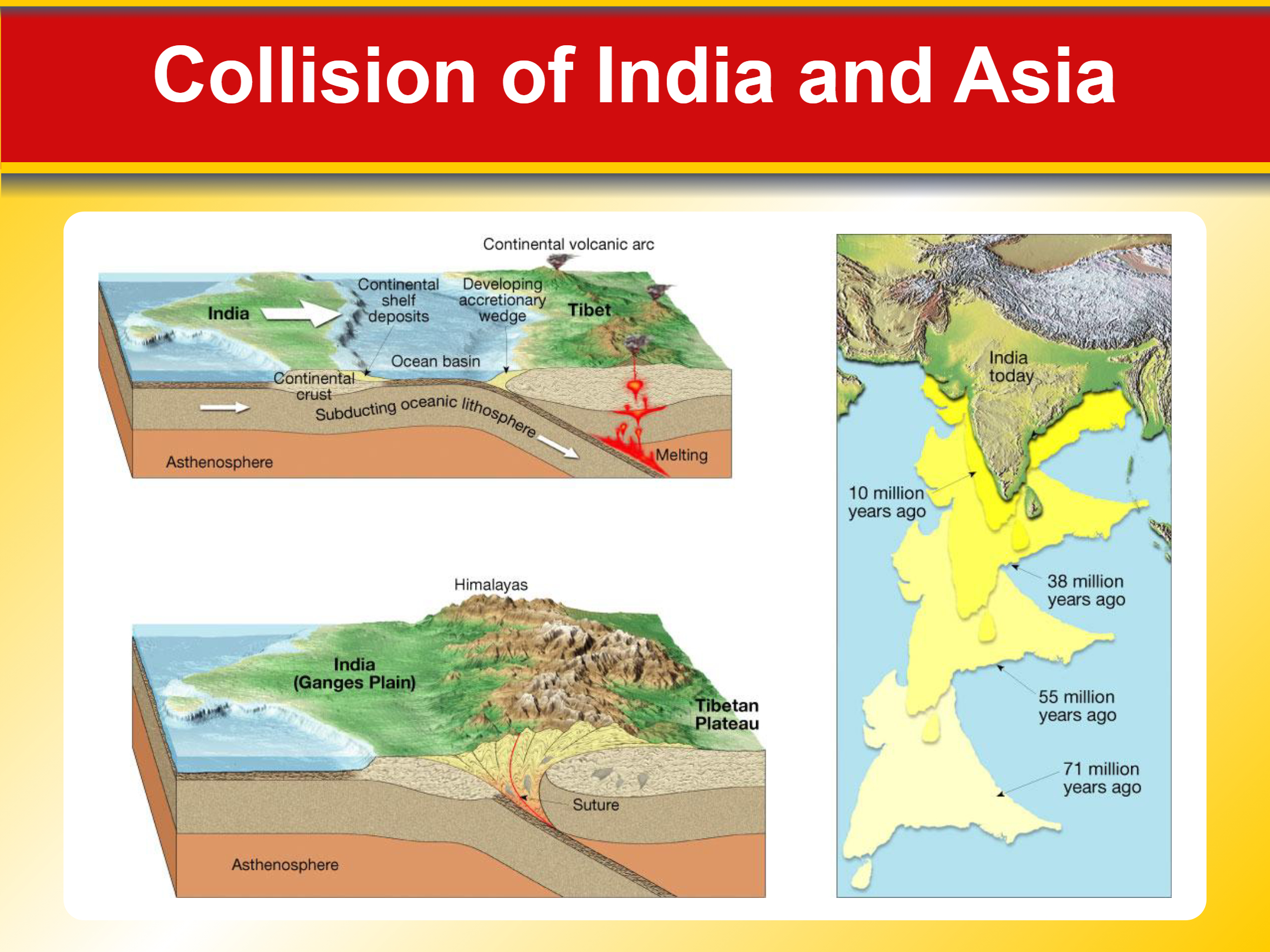
45
Multiple Select
Based on the diagrams, which of the following statements are true about the collision of India and Asia?
It resulted in the formation of the Himalayas.
The collision started more than 70 million years ago.
The oceanic plate was subducted beneath the continental plate.
India moved northward over millions of years.
46
47
Fill in the Blanks
At a transform fault boundary, plates grind past each other without destroying the
Type answer...
48
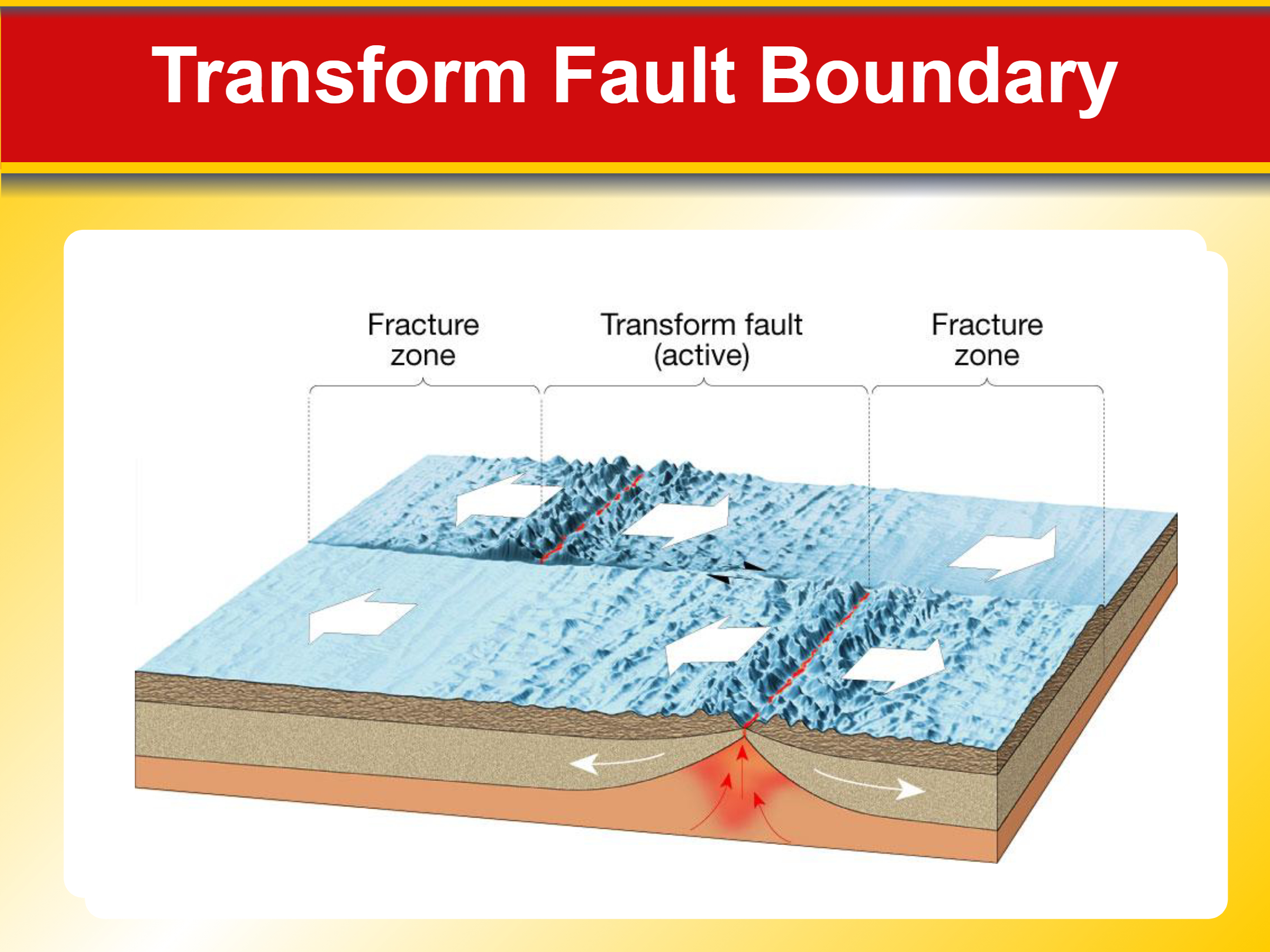
49
Multiple Choice
Explain the role of transform faults in the movement of oceanic crustal material.
50

51
Fill in the Blanks
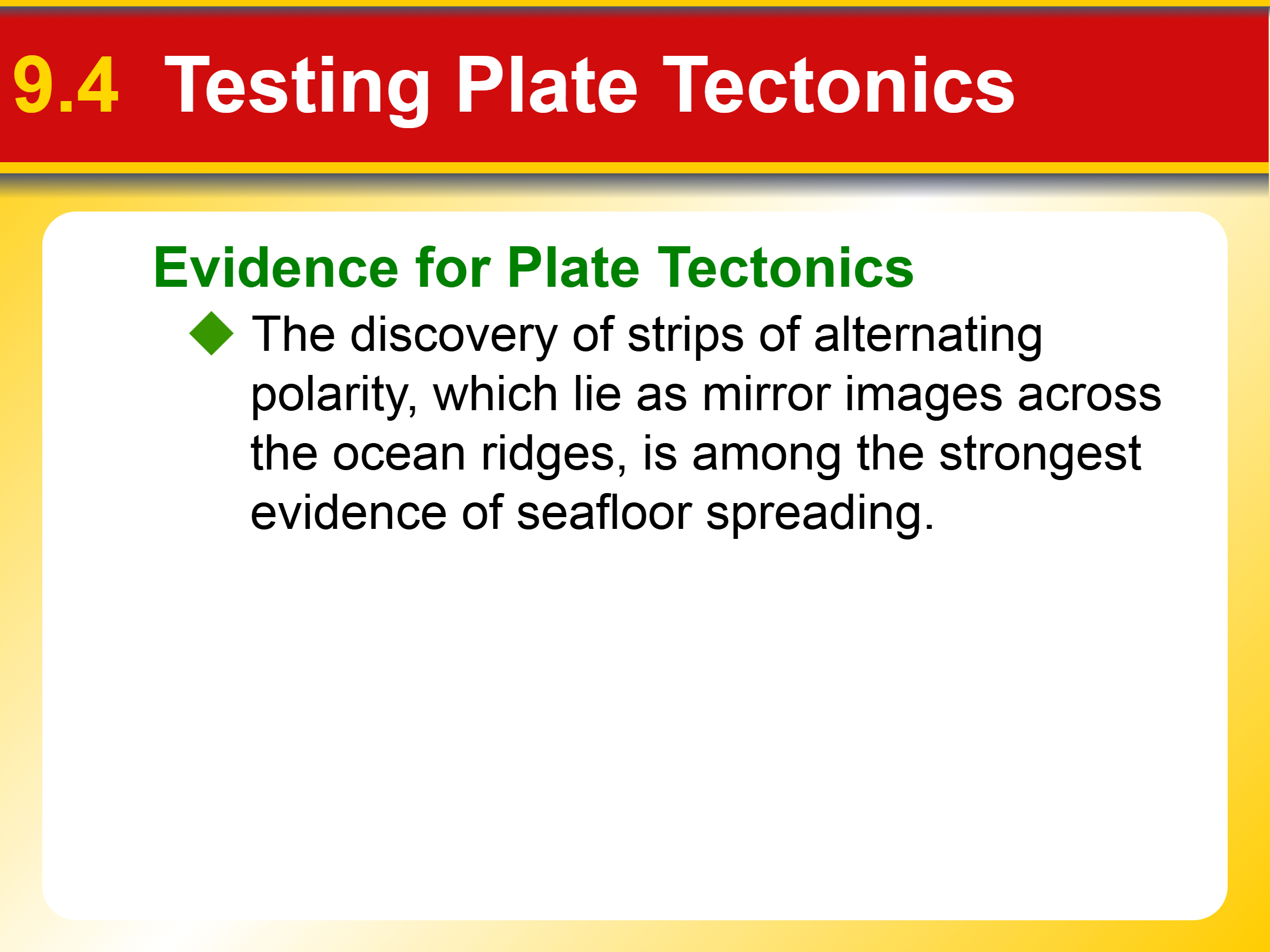
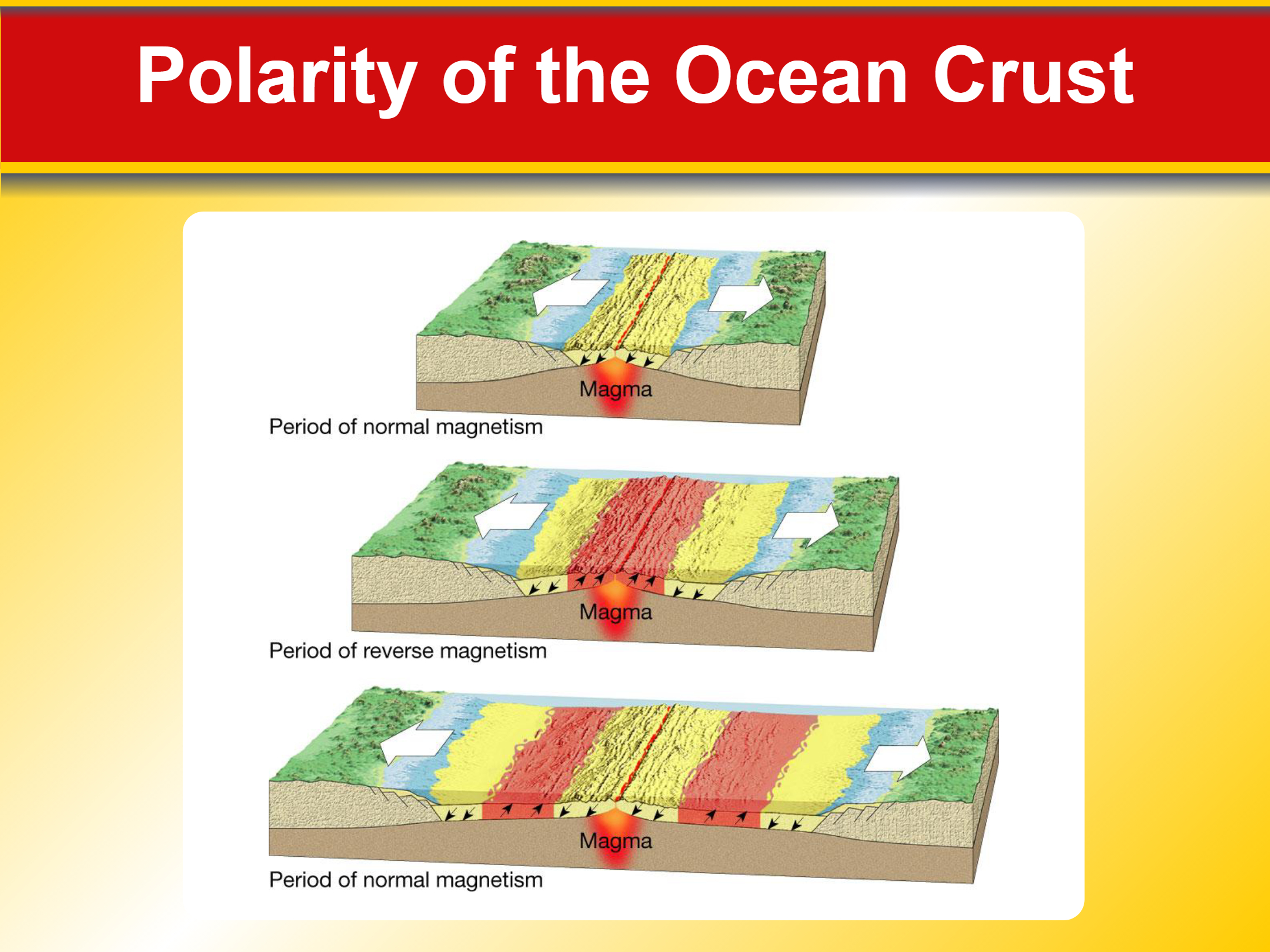
Paleomagnetism is used to determine the location of the magnetic
Type answer...
52
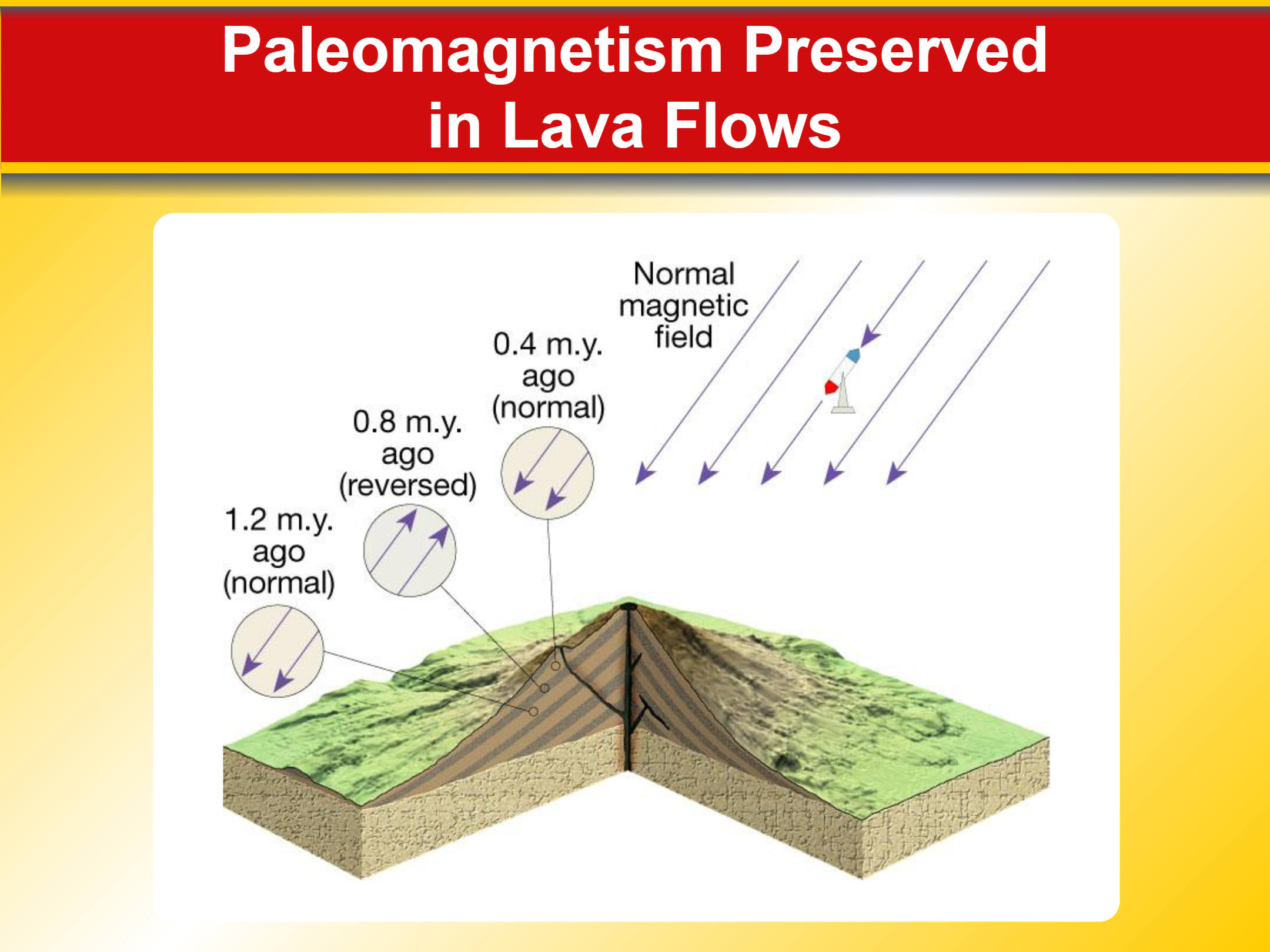
53
54
55
56
Fill in the Blanks
Plate tectonics is a key concept in
Show answer
Auto Play
Slide 1 / 56
SLIDE
Similar Resources on Wayground

51 questions
iCEV Equine 2 - Hunter Hack Lesson
Presentation
•
9th - 12th Grade
53 questions
Plate Tectonics and Boundries
Presentation
•
9th - 12th Grade
52 questions
Ecology and Biodiversity
Presentation
•
9th - 12th Grade
52 questions
SS Bio Unit 5 Lesson
Presentation
•
9th - 12th Grade
50 questions
Adjective and Adverb Prepositional Phrases
Presentation
•
9th - 12th Grade
51 questions
Surface Currents Guided Note Slides
Presentation
•
9th - 12th Grade
Popular Resources on Wayground
10 questions
Safety Day 2026 – Student Review

Quiz
•
9th Grade
21 questions
Continents and Oceans
Quiz
•
6th Grade
20 questions
Parts of Speech
Quiz
•
5th Grade
16 questions
Subject & Predicate
Quiz
•
5th Grade
25 questions
Multiplication Facts
Quiz
•
5th Grade
12 questions
Map Skills
Quiz
•
3rd Grade
22 questions
Continents and Oceans
Quiz
•
5th Grade
15 questions
Rounding Decimals
Quiz
•
5th Grade
Discover more resources for Science
10 questions
Exploring Chemical and Physical Changes

Interactive video
•
6th - 10th Grade
20 questions
Atomic Structure
Quiz
•
9th Grade
10 questions
Exploring the Electromagnetic Spectrum for Middle School Science
Interactive video
•
6th - 10th Grade
10 questions
Exploring Force and Motion Concepts
Interactive video
•
6th - 10th Grade
10 questions
Exploring Air Masses and Weather Fronts
Interactive video
•
6th - 10th Grade
14 questions
Periodic Trends
Interactive video
•
11th Grade
10 questions
Exploring the States of Matter
Interactive video
•
6th - 10th Grade
10 questions
Exploring Forces: Net Force, Normal Force, Gravity, and Friction
Interactive video
•
6th - 10th Grade