

Introduction to Salt Marshes

Presentation
•
Science
•
9th - 12th Grade
•
Practice Problem
•
Hard
+2
Standards-aligned

Jared Cunio
FREE Resource
18 Slides • 10 Questions
1
2
3
4
5
6
Fill in the Blanks
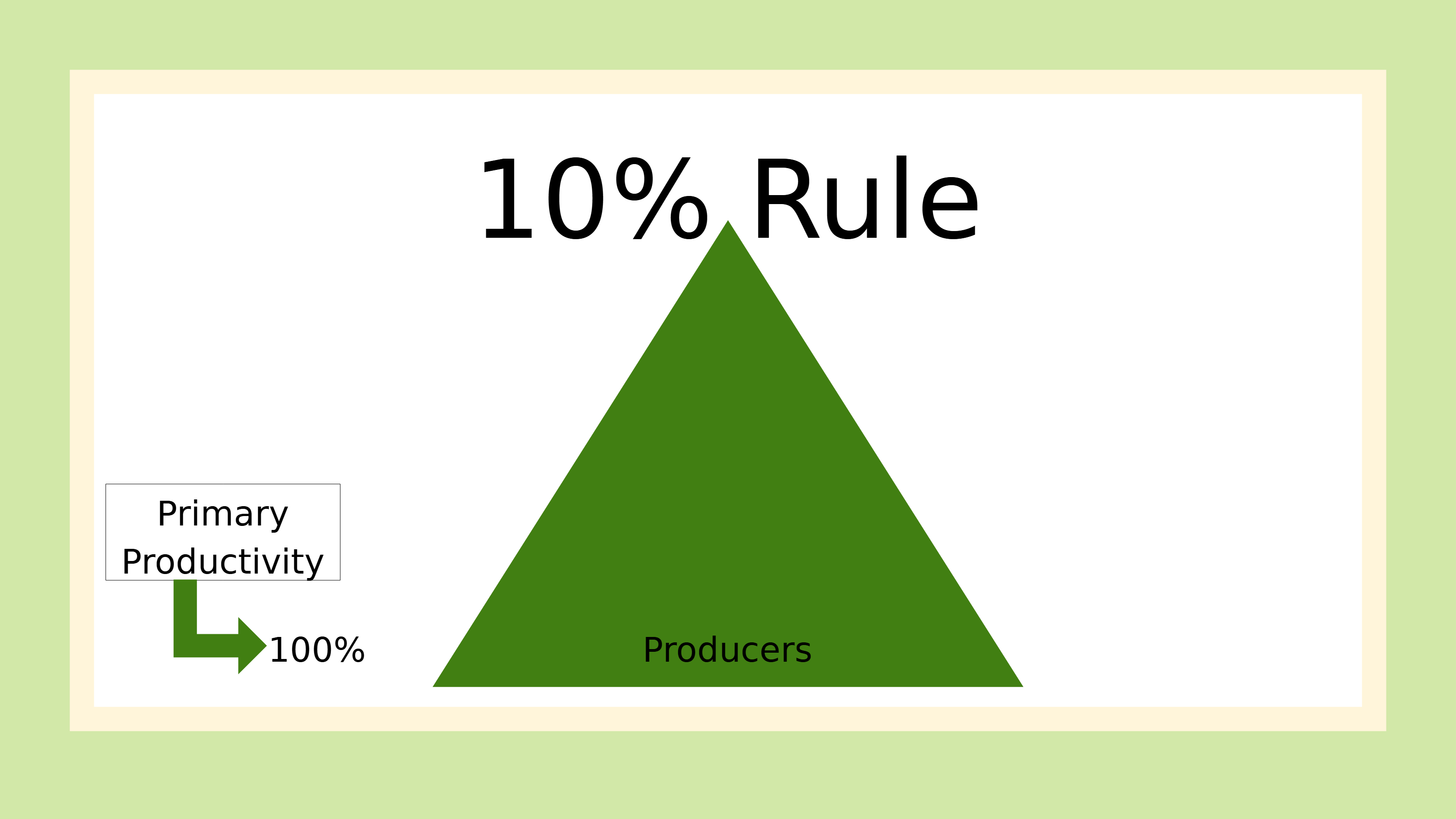
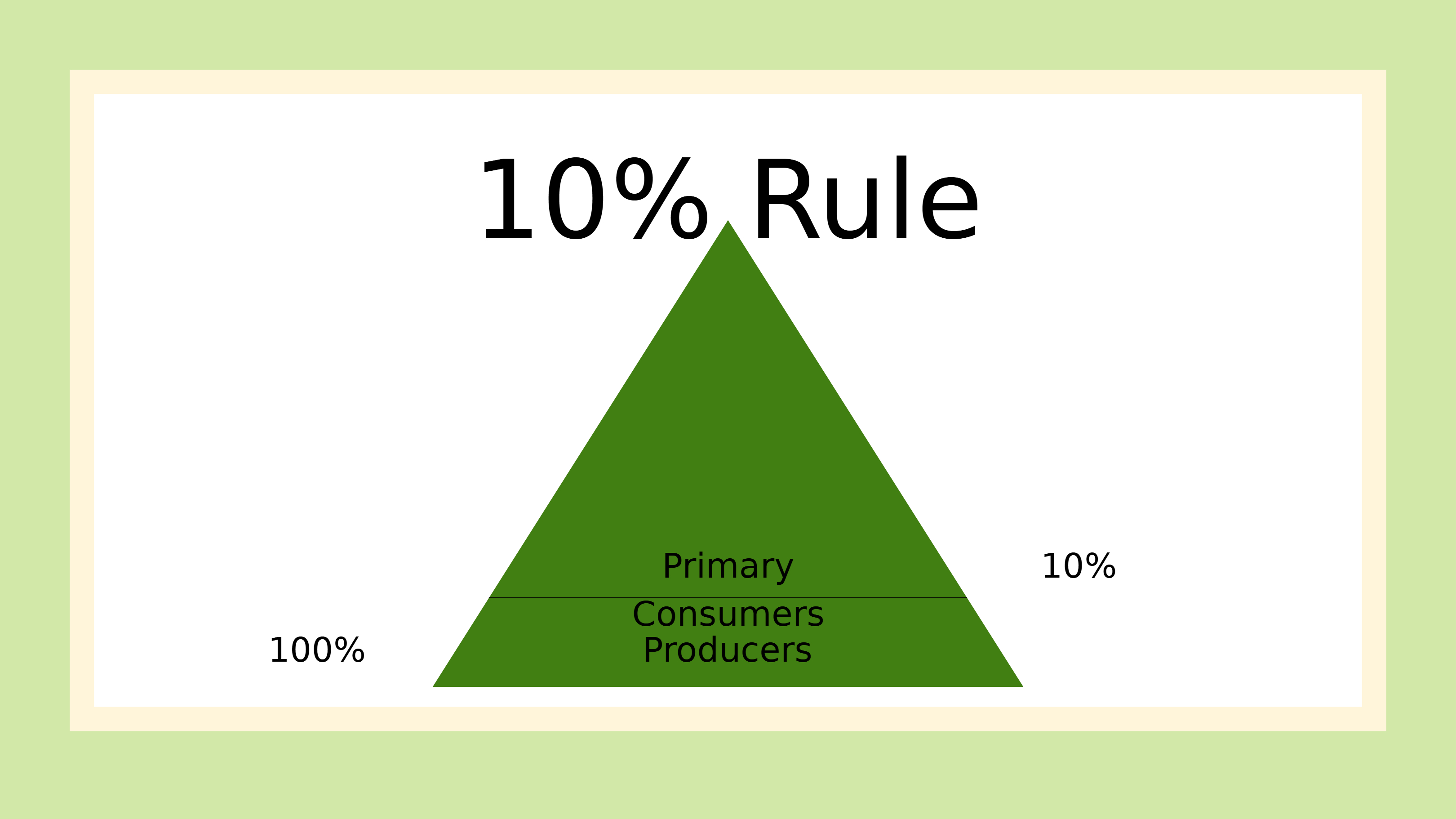
The base of the trophic pyramid represents
7
8
9
10
Multiple Choice
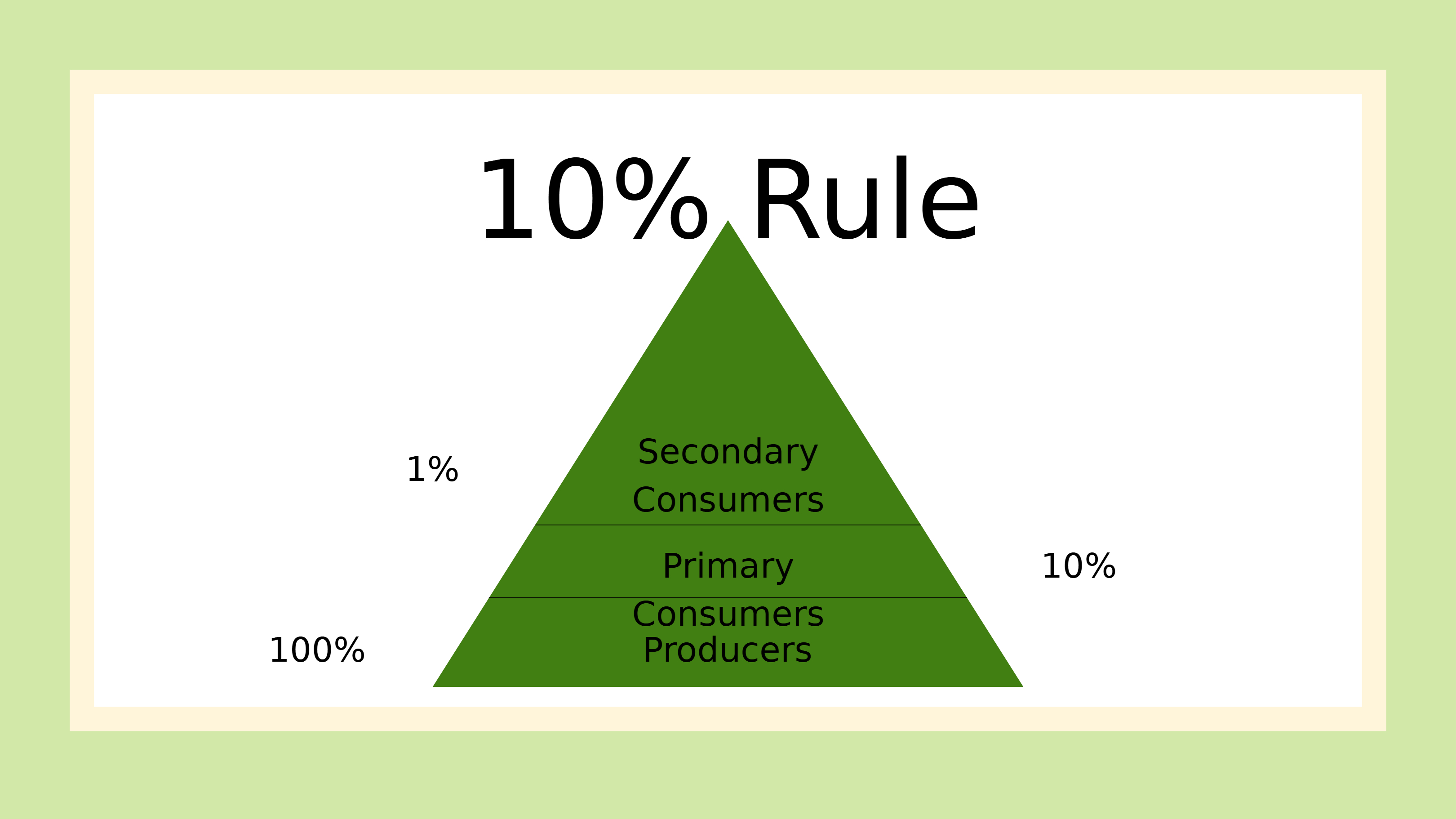
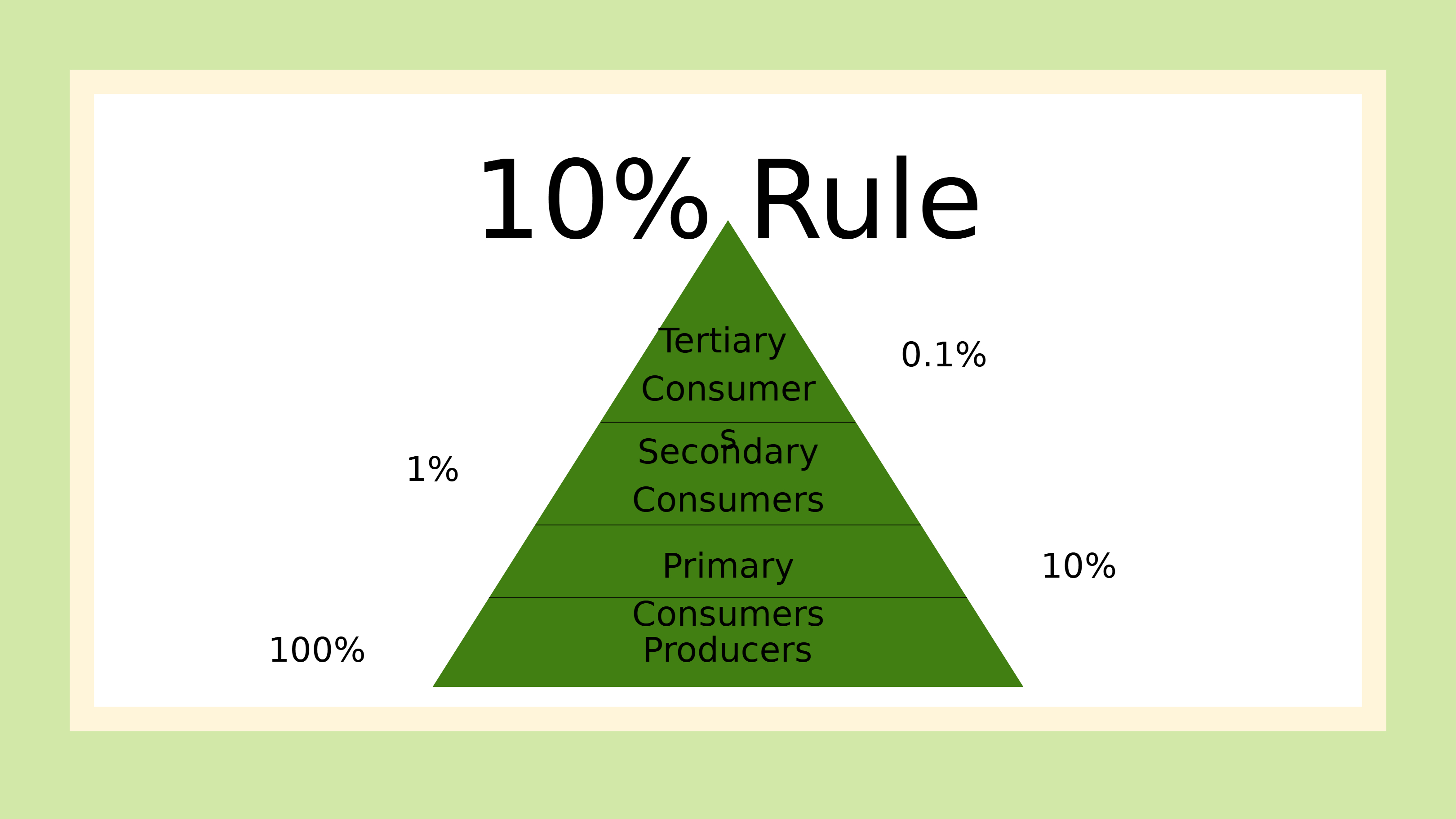
As you move up the trophic pyramid, what happens to the percentage of energy available at each level?
It increases
It stays the same
It decreases
It fluctuates randomly
11
Multiple Select
Which of the following statements about primary productivity and energy transfer in ecosystems are correct?
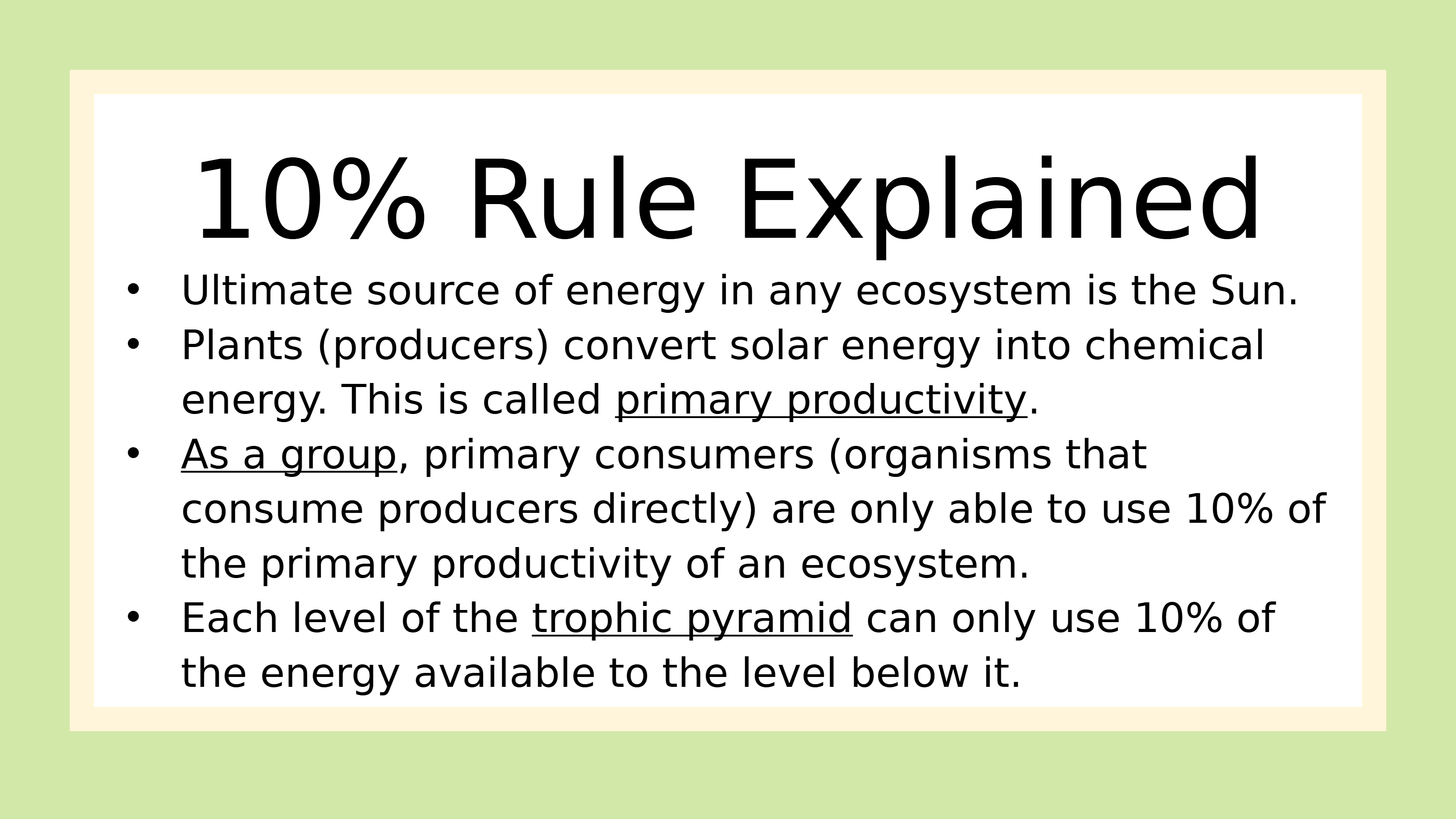
Producers convert solar energy into chemical energy.
Primary consumers use 100% of the energy from producers.
Each trophic level can only use 10% of the energy available to the level below.
The Sun is the ultimate source of energy in ecosystems.
12
13
14
15
Fill in the Blanks
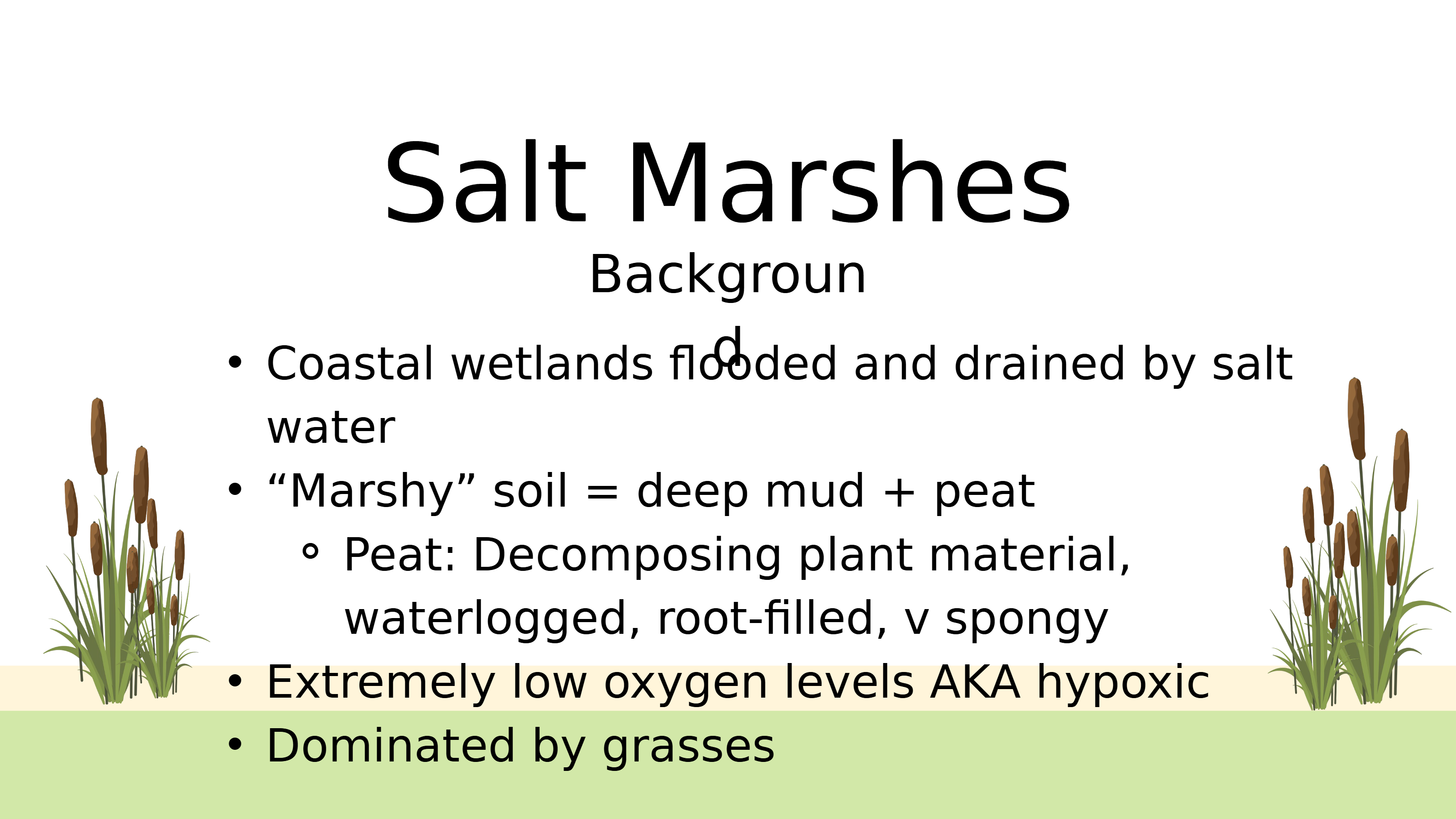
Salt marshes are dominated by
16
Multiple Choice
Which of the following best describes the soil found in salt marshes?
Dry sand with little organic material
Deep mud mixed with peat
Rocky soil with high mineral content
Clay with low water retention
17
18
Multiple Choice
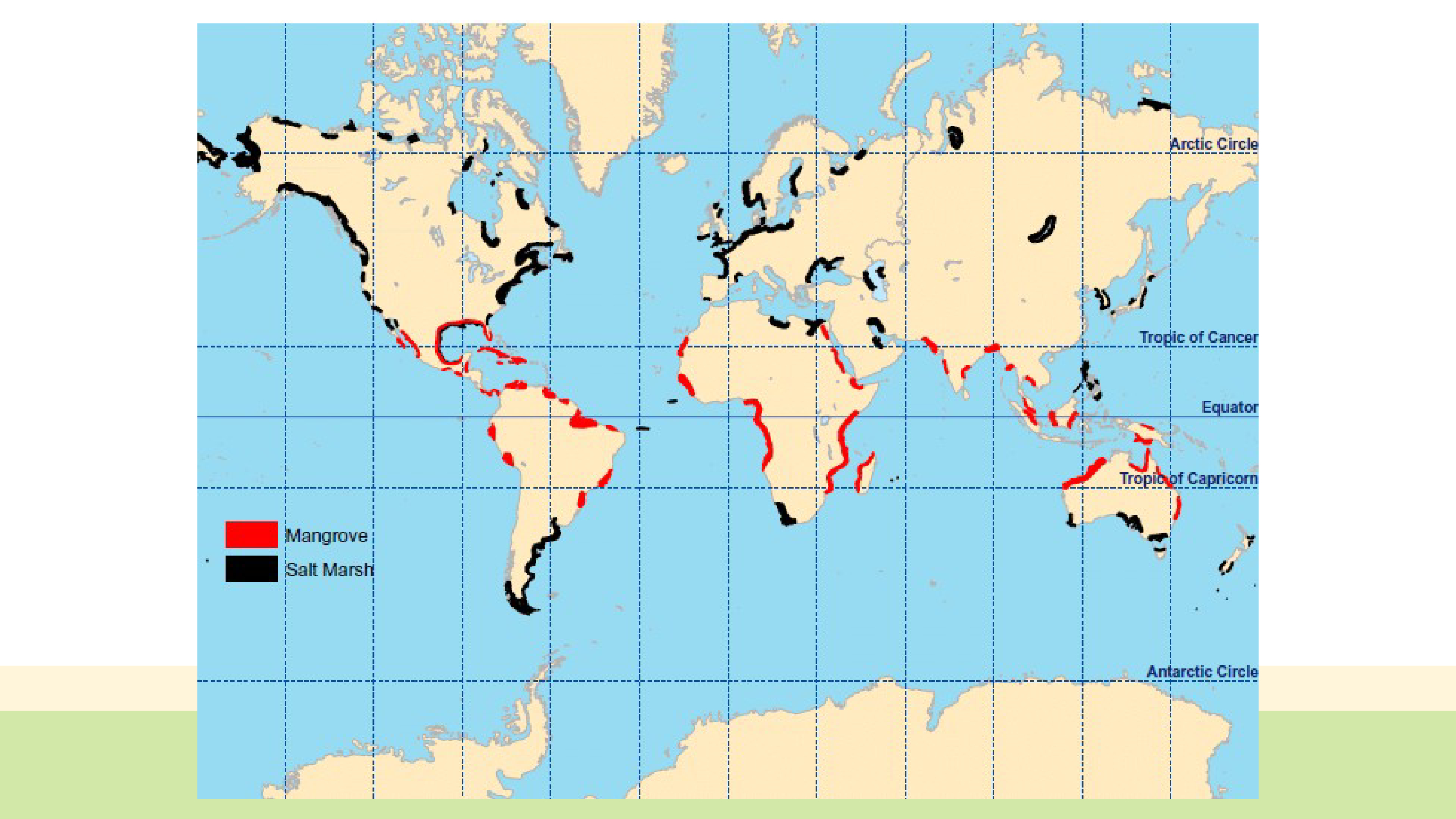
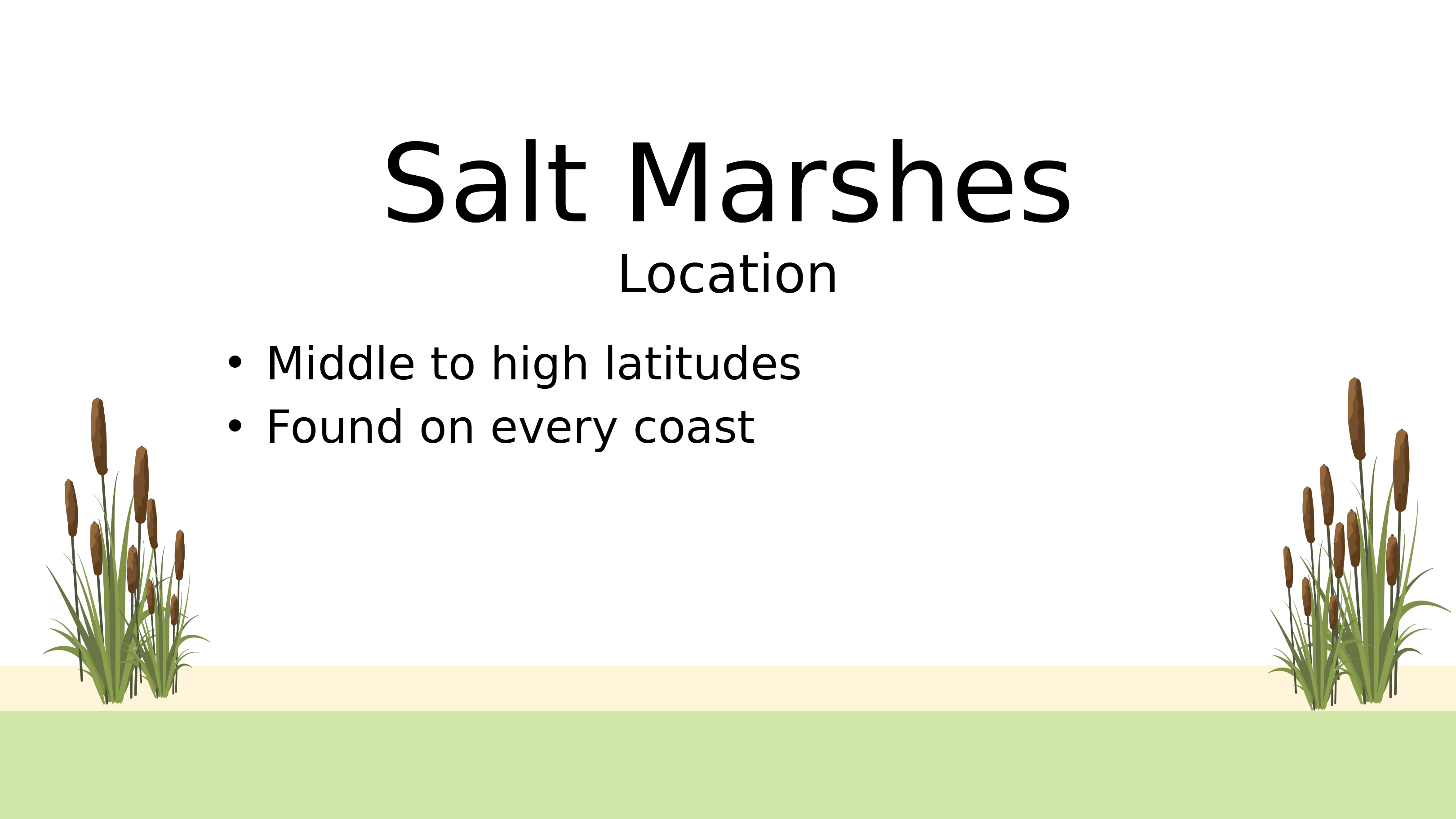
Based on the map and the location information, where are salt marshes most commonly found?
Only near the equator
On every coast at middle to high latitudes
Only in tropical regions
On inland lakes
19
20
Use the information on the websites below to fill in the "General Description", "Important Biotic Factors", and "Important Abiotic Factors" sections of your sheet.
https://www.flseagrant.org/celebrating-world-wetlands-day-all-about-floridas-salt-marshes/
https://floridadep.gov/rcp/saltmarshes
21
Use the information on the websites below to fill in the organisms on the "Food Pyramid" section of your sheet.
https://www.dnr.sc.gov/marine/pub/seascience/dynamic.html
https://soils.ifas.ufl.edu/florida-wetlands-extension-program/about-wetlands/types-of-wetlands/tidal-salt-marshes/
(HINT: Scroll to the section titled "Salt Marsh Wildlife" and read from there.)
22
You can probably already fill in the information about at least one adaptation, but the website below may help you complete this part of your sheet.
https://www.floridastateparks.org/learn/salt-marsh
23
You may have been having trouble finding examples of symbiosis in the salt marsh ecosystem. The two sites below will give you some really interesting examples of both mutualism and parasitism.
https://www.nycgovparks.org/greening/natural-resources-group/bronx-river-wetlands/estuary-section/reach-1/saltwater-marshes
https://researchblog.duke.edu/2017/06/24/marine-parasites-little-guys-that-make-a-big-difference/
Remember that in your descriptions of symbiotic relationships, you should name the type of symbiosis, name each organism involved, and specify how each organism is affected in the relationship.
24
Open Ended
Based on the second article, how can a parasite actually be beneficial to an ecosystem as a whole?
25
You should now be able to fill in the "Real-World Examples" and the "Unique or Interesting Facts" if you haven't already. If not, check out the links below.
https://oceanservice.noaa.gov/facts/saltmarsh.html
https://ocean.org/blog/the-importance-of-salt-marshes/
26
Multiple Choice
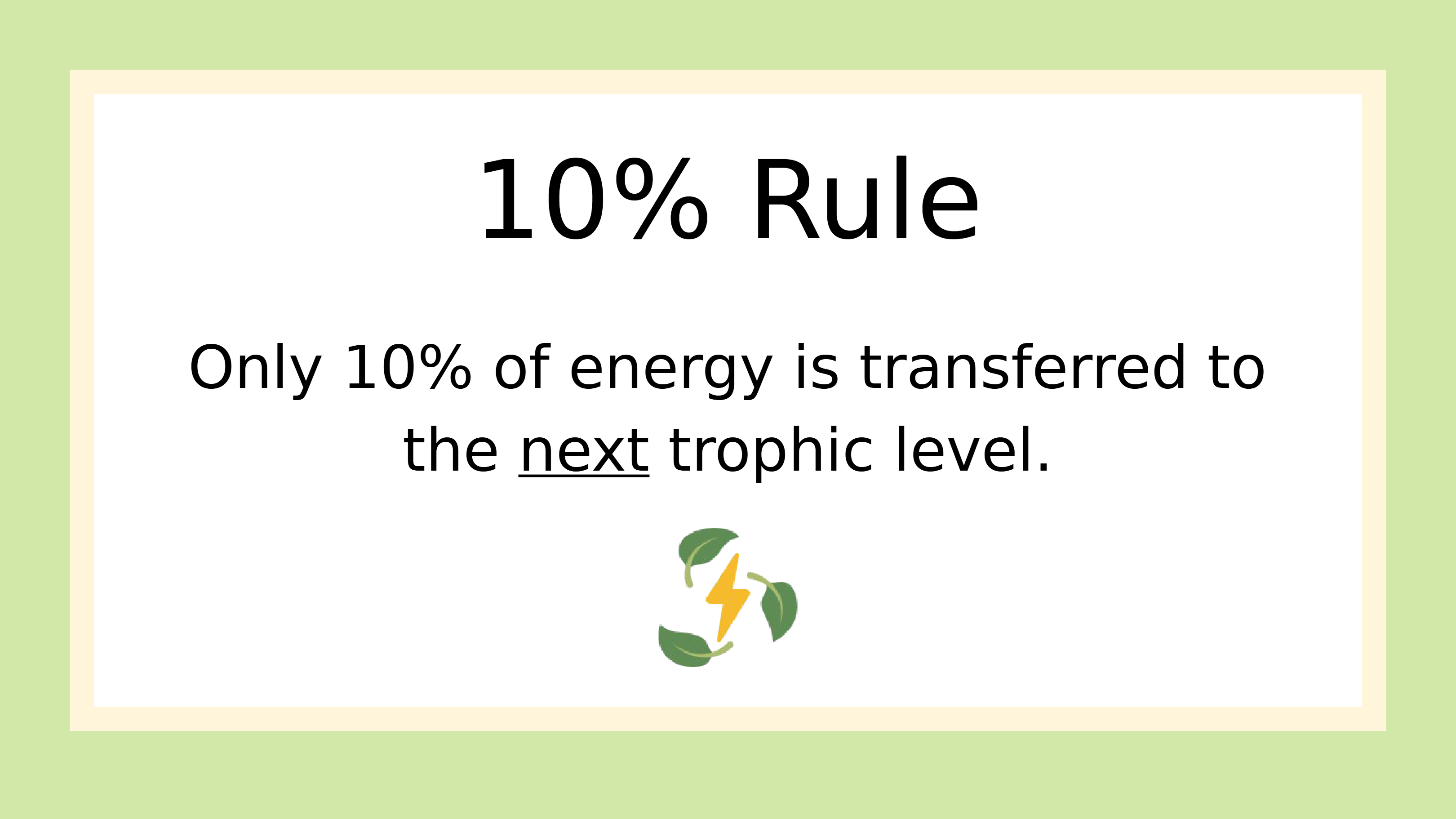
What percentage of energy is transferred from one trophic level to the next?
10%
50%
100%
1%
27
Multiple Select
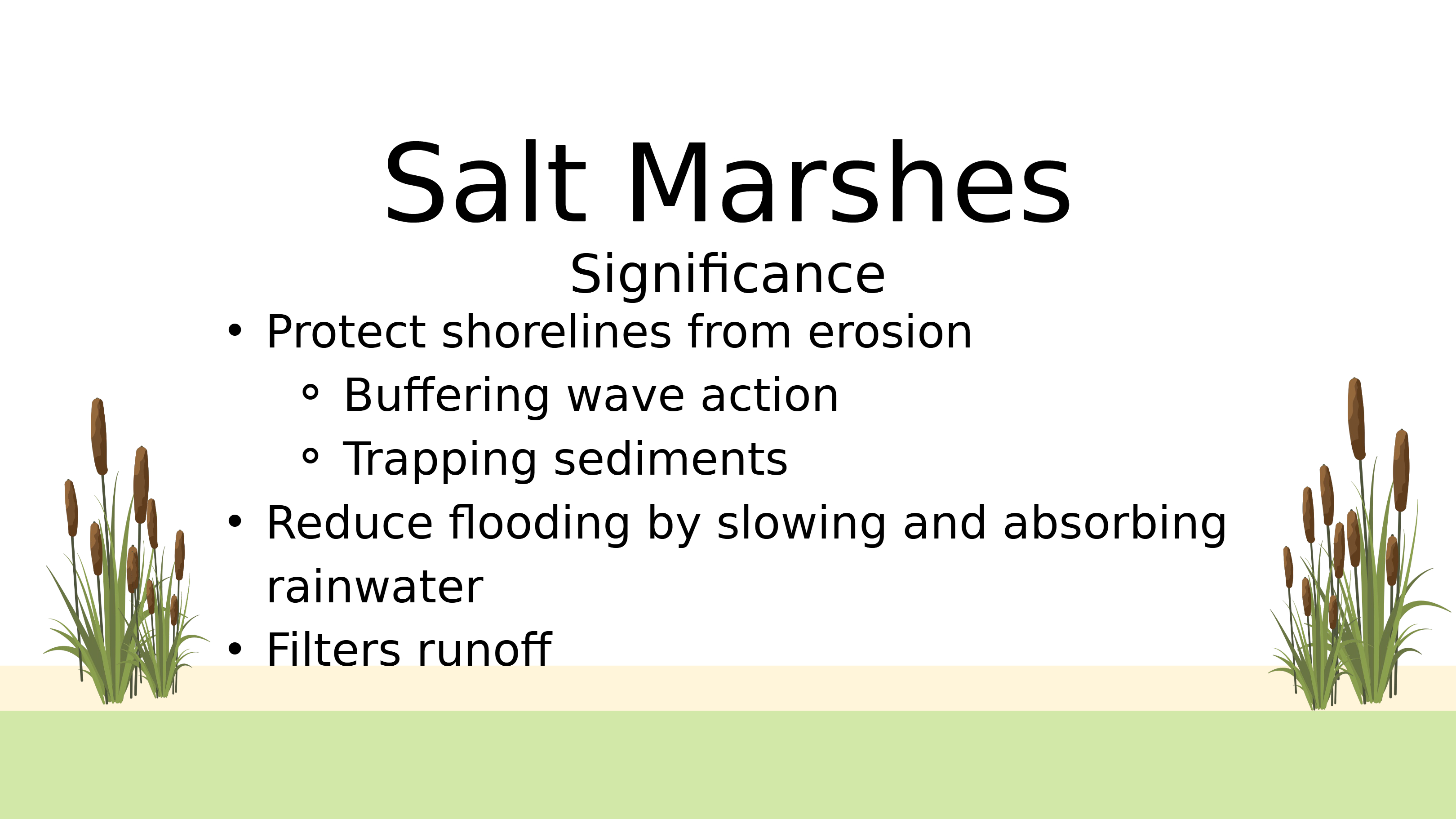
Which of the following are functions of salt marshes?
Buffering wave action
Trapping sediments
Increasing flooding
Filtering runoff
28
Multiple Select
Why is understanding energy movement, such as the '10% Rule,' important for studying ecosystems like salt marshes?
It helps explain how nutrients cycle in the ecosystem.
It shows how much energy is lost at each trophic level.
It reveals why some organisms are more abundant than others.
It helps us understand the impact of species loss on ecosystems.
Show answer
Auto Play
Slide 1 / 28
SLIDE
Similar Resources on Wayground

23 questions
Hydroelectric and Geothermal Energy
Presentation
•
9th - 12th Grade
21 questions
Active Transport
Presentation
•
9th - 11th Grade
22 questions
Physical Properties of Sea water
Presentation
•
9th - 12th Grade
25 questions
Solar and Wind Energy
Presentation
•
9th - 12th Grade
23 questions
Building Blocks of life- Biology
Presentation
•
8th - 12th Grade
24 questions
Acceleration, Velocity, Speed
Presentation
•
10th - 12th Grade
21 questions
Radical Equations Notes
Presentation
•
9th - 12th Grade
20 questions
Fossil Fuels: Coal
Presentation
•
9th - 12th Grade
Popular Resources on Wayground
10 questions
Safety Day 2026 – Student Review

Quiz
•
9th Grade
21 questions
Continents and Oceans
Quiz
•
6th Grade
20 questions
Parts of Speech
Quiz
•
5th Grade
16 questions
Subject & Predicate
Quiz
•
5th Grade
25 questions
Multiplication Facts
Quiz
•
5th Grade
12 questions
Map Skills
Quiz
•
3rd Grade
22 questions
Continents and Oceans
Quiz
•
5th Grade
15 questions
Rounding Decimals
Quiz
•
5th Grade
Discover more resources for Science
10 questions
Exploring Chemical and Physical Changes

Interactive video
•
6th - 10th Grade
20 questions
Atomic Structure
Quiz
•
9th Grade
10 questions
Exploring the Electromagnetic Spectrum for Middle School Science
Interactive video
•
6th - 10th Grade
10 questions
Exploring Force and Motion Concepts
Interactive video
•
6th - 10th Grade
10 questions
Exploring Air Masses and Weather Fronts
Interactive video
•
6th - 10th Grade
14 questions
Periodic Trends
Interactive video
•
11th Grade
10 questions
Exploring the States of Matter
Interactive video
•
6th - 10th Grade
10 questions
Exploring Forces: Net Force, Normal Force, Gravity, and Friction
Interactive video
•
6th - 10th Grade