

Foundation Child Development Week 2

Presentation
•
Education
•
Professional Development
•
Practice Problem
•
Easy

Johanna Sailor
Used 2+ times
FREE Resource
11 Slides • 8 Questions
1
Foundation for Child Development
Week 2
By Johanna Sailor
2
Draw
Draw an image or symbol that represents how you are feeling this morning.
3
Multiple Choice
The study of __________________ is the study of predictable patterns of change in children and adolescents over time.
child & adolescent development
forensic psychology
geriatrics
I can't recall right now.
4
Multiple Select
Which of the following are 2 important questions scientists ask when studying child development?
What changes?
How do the changes occur?
When did the changes occur?
Where did the changes occur?
5
Open Ended
Bonus: There's a third consideration for developmental scientists. What else might they question?
6
Stages
| Infants & Toddlers | Early Childhood | Middle Childhood | Adolescence |
|---|---|---|---|---|
Identifiers | | | | |
Application | | | | |
7
Stages
| Physical | Cognitive | Social/Emotional |
|---|---|---|---|
Examples | | | |
Non-Examples | | | |
8
Success Criteria:
I will be successful when I can:
define child and adolescent development.
define stages of development.
identify key indicators for each stage of development.
apply knowledge of stages distinguish differences in real-world examples.
apply knowledge of domains (physical, cognitive, social/emotional) to identify examples of developmental changes.
9
Critical Periods & Sensitive Periods
10
Multiple Choice
Which of the following defines critical periods?
Critical periods are periods of development when skills must develop.
Critical periods are periods during development when its advised skills be developed
Critical periods is the time when teachers should take breaks.
Critical periods are the times when schools schedule the most important classes such as English and Social Studies.
11
Multiple Choice
Which of the following defines sensitive periods?
12
Nature and Nurture
100% biology AND 100% environment
13
Multiple Choice
Which of the following correctly defines how nature influences child and adolescent development?
14
Multiple Choice
Which of the following correctly identifies how nurture supports development?
15
Competing Views of "Nature"
Puritans | Locke | Rousseau |
|---|---|---|
Inherently evil | Blank Slate | Noble Savage |
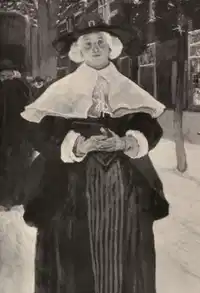
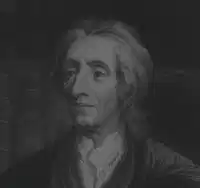
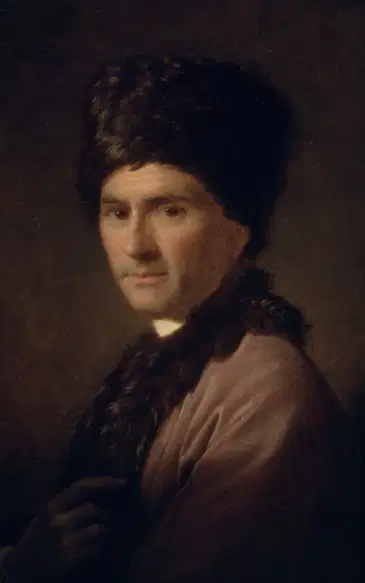
16
-John Locke
"Parents wonder why the streams are bitter, when they themselves have poisoned the fountain."
Quality of teacher-student relationship in kindergarten predicted a number of academic and behavioral outcomes through 8th grade.
-Woolfolk & Perry
17
Family Structure
Parenting Style
Peers: Friends & Others
Culture & Community
Ethnicity & Race
Social Class & Socioeconomic Status
Generational Differences
Context Shapes: Behaviors, Beliefs, Knowledge
18
What is a theory?
"...overriding purpose of theories is to explain phenomena to tell us why things happened and why will happen in the future" (Woolfolk & Perry, 2015, p. 5).
19
REFERENCES
Smithsonian Institution. (n.d.). Puritans: Religious lifestyle. Smithsonian Learning Lab. "The quiet conscience." https://learninglab.si.edu/collections/puritans-religious-lifestyle/vkunxKN0UziFUEfm
Smithsonian Libraries. (n.d.). "Portrait of John Locke." [Image]. Smithsonian Libraries. https://library.si.edu/image-gallery/71456
National Galleries of Scotland. (n.d.). Jean‑Jacques Rousseau (1712–1778) by Allan Ramsay [Artwork].
Foundation for Child Development
Week 2
By Johanna Sailor
Show answer
Auto Play
Slide 1 / 19
SLIDE
Similar Resources on Wayground

16 questions
Lesson Objective
Presentation
•
University
10 questions
Exploring the Impact of Linda Darling-Hammond on Education
Presentation
•
Professional Development
14 questions
Chapter 9
Presentation
•
University
14 questions
Scientific Method
Presentation
•
KG - Professional Dev...
14 questions
Power of Thought
Presentation
•
Professional Development
14 questions
Effective PD - Coaching vs Mentoring
Presentation
•
Professional Development
13 questions
Outdoor Learning
Presentation
•
Professional Development
17 questions
WORDWALL
Presentation
•
Professional Development
Popular Resources on Wayground
24 questions
PBIS-HGMS Day 10

Quiz
•
6th - 8th Grade
10 questions
HCS SCI 03 Summer School Review 3
Quiz
•
3rd Grade
11 questions
Home Scope
Quiz
•
7th - 8th Grade
15 questions
HCS SCI 05 Summer School Assessment 3 Review
Quiz
•
5th Grade
35 questions
Lufkin Road Middle School Student Handbook & Policies Assessment
Quiz
•
7th Grade
18 questions
Geo 11.3 Area of Circles and Sectors
Quiz
•
9th - 11th Grade