Minor Planets and Comets.
Presentation
•
Physics
•
8th Grade
•
Practice Problem
•
Medium
Solomon Imoniakemu
Used 4+ times
FREE Resource
17 Slides • 25 Questions
1
2
Multiple Choice
How many dwarf planets are there?
3
Multiple Choice
Could a dwarf planet have moons? Why or why not?
Yes, because moons are cool
No, because dwarf planets are too small to have moons
Yes, because they have gravity pulling them into a sphere
No, because they are the same as moons
4
Multiple Choice
Which of the following is classified as a minor planet in our Solar System?
Jupiter
Ceres
Venus
Neptune
5
6
7
8
Open Ended
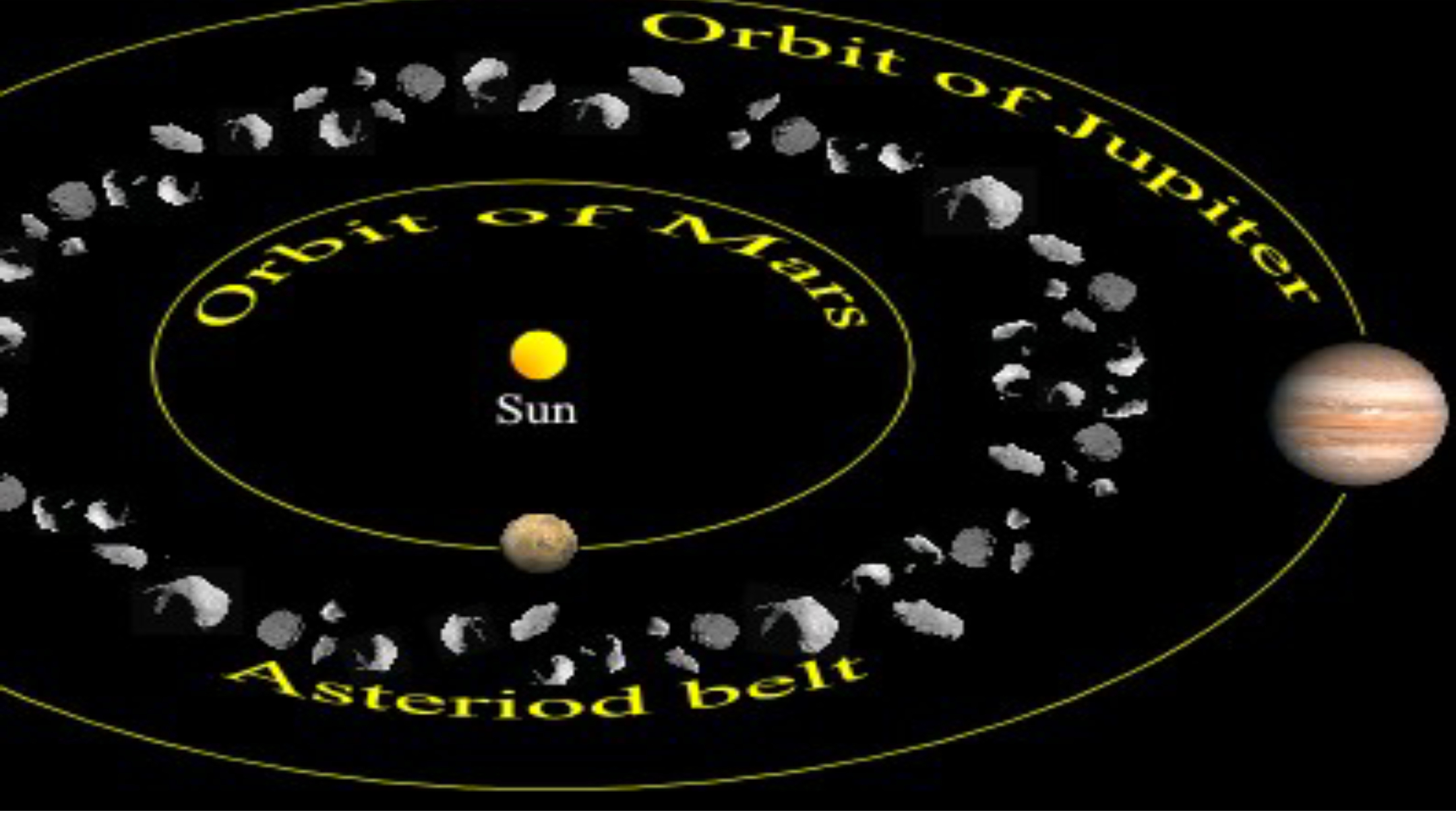
What do you think these rocky objects floating between Mars and Jupiter actually are?
9
10
Open Ended
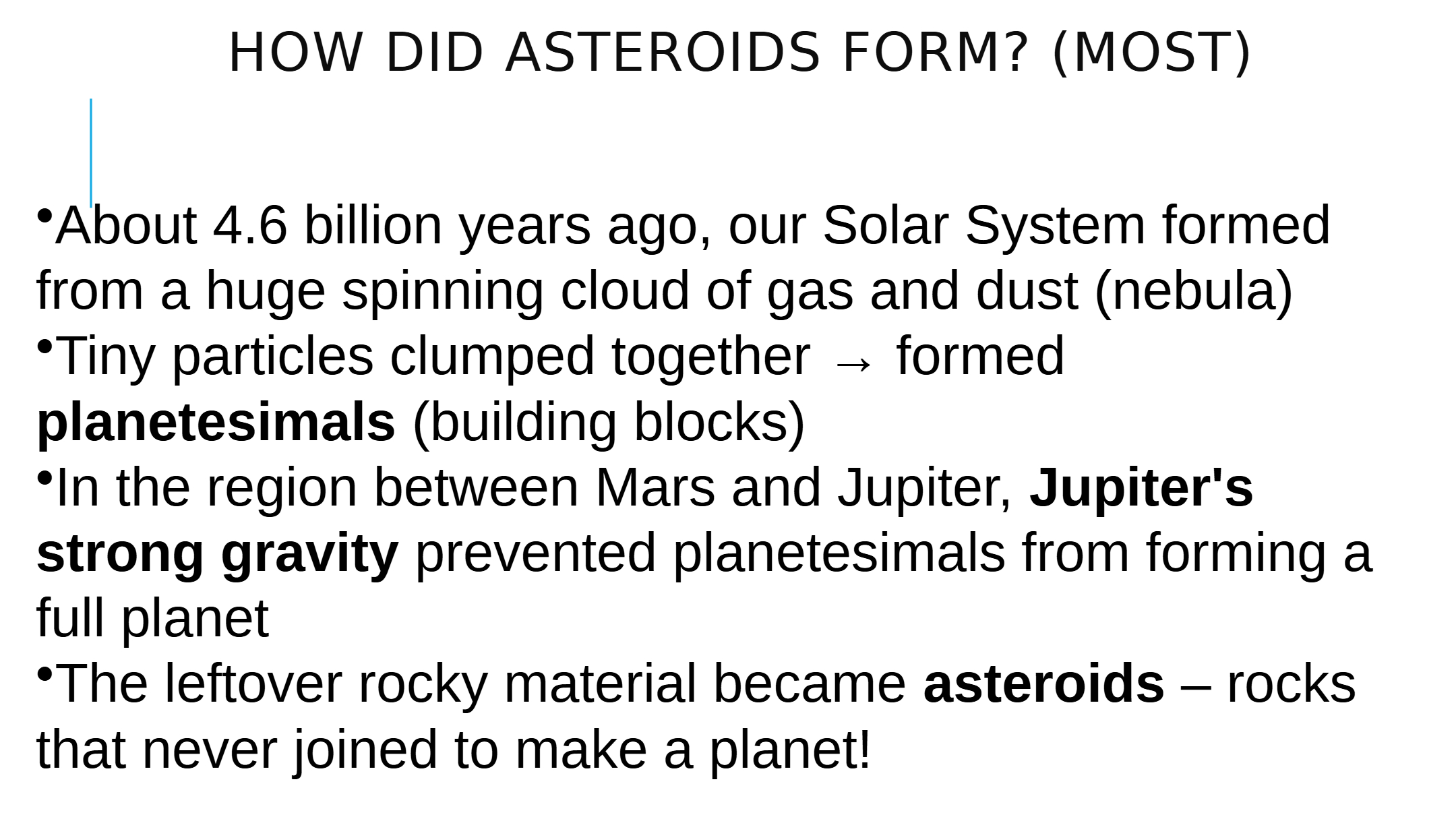
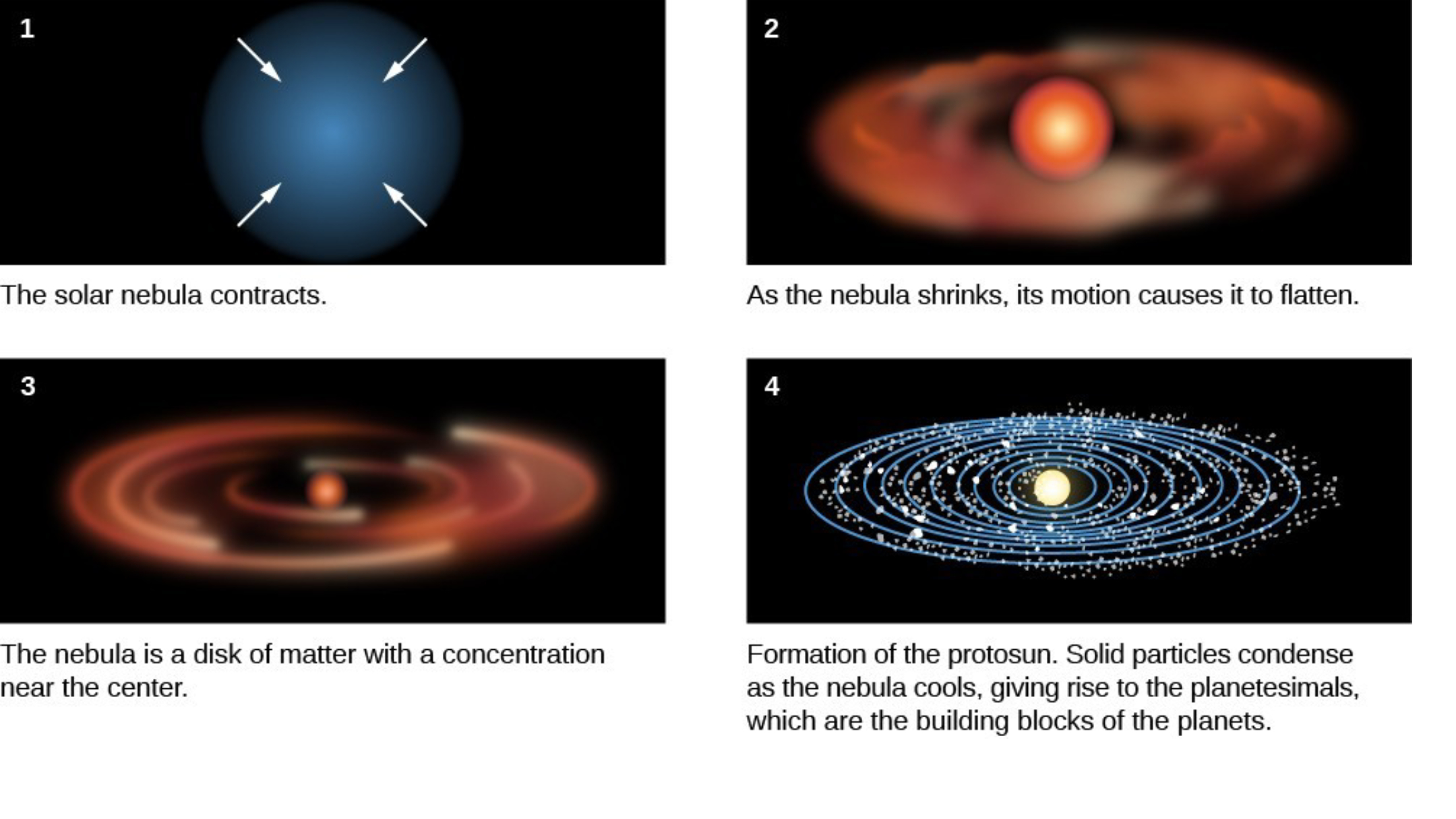
Explain how the formation of asteroids is related to the formation of a planetary system.
11
Multiple Select
Select all statements that are true about asteroids.
Asteroids orbit the Sun.
Asteroids are too small to be called planets.
Most asteroids are found between Mars and Jupiter.
Asteroids are made of ice and gas.
12
Fill in the Blanks
Asteroids are also called minor
13
14
Multiple Choice
Which of the following best describes the location of the asteroid belt in our solar system?
Between Mars and Jupiter
Between Earth and Mars
Beyond Neptune
Between Venus and Earth
15
Fill in the Blanks
The elliptical orbits of planets, minor planets, and comets around the Sun are a result of
16
17
Fill in the Blanks
A dwarf planet in the asteroid belt is called
18
Multiple Choice
Which of the following best describes the composition of most asteroids?
Mostly rock and metal, some ice
Mostly gas and dust
Mostly water and organic material
Mostly hydrogen and helium
19
20
21
Multiple Choice
What evidence from close-up photos suggests that asteroids have irregular shapes?
They appear perfectly round and smooth.
They show rocky surfaces with craters and uneven shapes.
They are covered in ice and snow.
They have bright rings around them.
22
23
Multiple Select
Select all the correct statements about the formation of the Solar System and asteroids.
The solar system formed from a spinning cloud of gas and dust called nebula.
Jupiter's gravity helped planetesimals form a full planet.
Asteroids are leftover rocky material that never joined to make a planet.
All asteroids are dangerous to Earth.
24
Open Ended
Explain how Jupiter's gravity influenced the formation of asteroids in our Solar System.
25
26
27
28
Multiple Choice
Which of the following best describes the shape of most orbits in the solar system?
Perfect circles
Ellipses
Squares
Triangles
29
Fill in the Blanks
Kepler's First Law states that planets move around the Sun in
30
Open Ended
Explain the difference between aphelion and perihelion in an elliptical orbit.
31
32
Open Ended
What is the significance of the Sun's position in an elliptical orbit?
33
34
Multiple Choice
Select all the statements that are true about the orbits of asteroids.
Asteroids have almost circular orbits.
Asteroids have more elliptical orbits than planets.
Asteroids are always close to the Sun.
Asteroids can have orbits similar to comets.
35
Multiple Choice
Which objects in the solar system typically have highly elliptical orbits?
Planets
Asteroids
Comets
Moons
36
Multiple Choice
Which region of the solar system contains most of the asteroids?
Asteroid Belt
Kuiper Belt
Comet Belt
Oort Cloud
37
38
Open Ended
How did asteroids form according to the lesson?
39
40
Fill in the Blanks
All objects orbit the Sun in
41
Multiple Select
Which of the following objects orbit the Sun in ellipses?
Planets
Asteroids
Comets
All of the above
42
Open Ended
One difference between a planet’s orbit and a comet’s orbit is...
Show answer
Auto Play
Slide 1 / 42
SLIDE

Similar Resources on Wayground
36 questions
The Era of Good Feelings- Nationalism & the Monroe Doctrine
Presentation
•
8th Grade
39 questions
LIght technology
Presentation
•
8th Grade
35 questions
International Holidays!
Presentation
•
8th Grade
36 questions
What is Matter?
Presentation
•
7th - 8th Grade
36 questions
Transformations of Graphs of Linear Functions
Presentation
•
8th - 9th Grade
37 questions
Fossils Review
Presentation
•
8th Grade
34 questions
Unit 1 Georgia physical features
Presentation
•
8th Grade
37 questions
Concave and convex mirrors
Presentation
•
8th Grade
Popular Resources on Wayground
10 questions
Safety Day 2026 – Student Review
Quiz
•
9th Grade
21 questions
Continents and Oceans
Quiz
•
6th Grade
20 questions
Parts of Speech
Quiz
•
5th Grade
16 questions
Subject & Predicate
Quiz
•
5th Grade
25 questions
Multiplication Facts
Quiz
•
5th Grade
12 questions
Map Skills
Quiz
•
3rd Grade
22 questions
Continents and Oceans
Quiz
•
5th Grade
15 questions
Rounding Decimals
Quiz
•
5th Grade