

Understanding Homeostasis

Presentation
•
Health Sciences
•
12th Grade
•
Easy

Cecilia Ogle
Used 1+ times
FREE Resource
18 Slides • 19 Questions
1

2

3
Multiple Choice
Which of the following best describes homeostasis?
The regulation of internal body conditions to keep the environment stable
The process of breaking down food for energy
The movement of muscles to produce heat
The absorption of nutrients in the intestines
4
Open Ended
Why is maintaining homeostasis important for living organisms?
5

6
Multiple Choice
Which of the following is NOT a reason why homeostasis matters?
Ensures proper organ function
Maintains balance despite external changes
Helps organisms grow larger
Regulates temperature, blood sugar, and water balance
7

8
Open Ended
Explain how the receptor, control center, and effector work together to maintain homeostasis in the body.
9

10
Multiple Select
Which of the following statements about negative feedback is/are correct?
It is the most common mechanism in homeostasis.
It amplifies changes rather than reversing them.
It restores normal conditions.
Response intensity depends on imbalance severity.
11

12
Fill in the Blanks
Positive feedback
Type answer...
13

14
Open Ended
List three body systems involved in maintaining homeostasis and briefly describe their roles.
15

16
Multiple Choice
Which of the following is an example of homeostasis?
Temperature regulation
Cell division
Muscle contraction
Protein synthesis
17

18
Open Ended
Describe the difference between how endotherms and ectotherms regulate their body temperature.
19
Multiple Choice
Which organ is primarily responsible for maintaining temperature homeostasis in the body?
Hypothalamus
Liver
Pancreas
Kidneys
20

21
Multiple Choice
What are two physiological responses that occur when body temperature is high?
Vasoconstriction and shivering
Vasodilation and sweating
Goosebumps and increased metabolism
Reduced metabolism and vasoconstriction
22

23
Fill in the Blanks
When body temperature is low, the body responds by vasoconstriction, increased metabolism, and
Type answer...
24
25
Multiple Choice
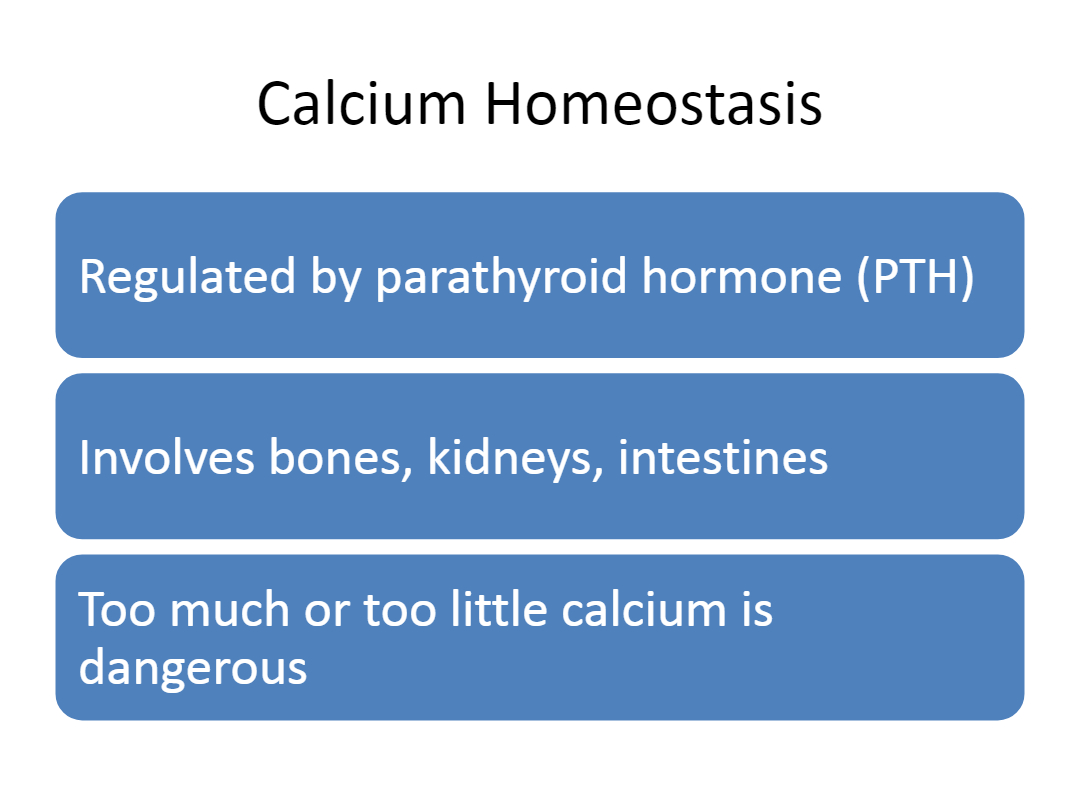
Which organs are involved in calcium homeostasis?
Bones, kidneys, intestines
Heart, lungs, liver
Pancreas, spleen, stomach
Muscles, nerves, skin
26

27
Open Ended
Explain how the pancreas and liver work together to maintain blood glucose homeostasis.
28

29

30

31
Multiple Choice
Which of the following is NOT one of the four major types of homeostasis disruption?
Genetic
Infectious
Neoplastic
Physical
32

33
Multiple Select
Which of the following are clinical indicators that may signal a disruption in homeostasis?
Platelet count
White blood cells
Temperature
Blood pressure
34
Open Ended
Explain how clinical indicators can be used to identify disruptions in homeostasis.
35

36
Fill in the Blanks
Restoring homeostasis involves identifying abnormal internal conditions, diagnosing the underlying cause, and applying appropriate
Type answer...
37
Open Ended
Summarize how homeostasis helps maintain stability in the body. Why is it important for nearly all body systems to be involved?
Show answer
Auto Play
Slide 1 / 37
SLIDE
Similar Resources on Wayground

34 questions
L2 Chap 6A Dormir & Poder
Presentation
•
12th Grade
32 questions
Nucleosynthesis
Presentation
•
KG
30 questions
Pengukuran Keasaman (pH)
Presentation
•
12th Grade
29 questions
Introduction to Forces & FBDs
Presentation
•
12th Grade
31 questions
Chap 5: Quantum Mechanical Model
Presentation
•
12th Grade
31 questions
ACT Math: Calculator
Presentation
•
11th Grade
29 questions
Lab Safety Is Common Sense
Presentation
•
KG
Popular Resources on Wayground
10 questions
Safety Day 2026 – Student Review

Quiz
•
9th Grade
21 questions
Continents and Oceans
Quiz
•
6th Grade
20 questions
Parts of Speech
Quiz
•
5th Grade
16 questions
Subject & Predicate
Quiz
•
5th Grade
25 questions
Multiplication Facts
Quiz
•
5th Grade
12 questions
Map Skills
Quiz
•
3rd Grade
22 questions
Continents and Oceans
Quiz
•
5th Grade
15 questions
Rounding Decimals
Quiz
•
5th Grade
Discover more resources for Health Sciences
26 questions
SLIME!!!!!
Quiz
•
KG - 12th Grade
21 questions
Los paises hispanohablantes y sus capitales
Quiz
•
12th Grade
20 questions
Cell Transport
Quiz
•
9th - 12th Grade
20 questions
Budgeting
Quiz
•
9th - 12th Grade
20 questions
Investing
Quiz
•
9th - 12th Grade
8 questions
DNA vs. RNA
Presentation
•
9th - 12th Grade
12 questions
Identify Rigid Transformations
Quiz
•
8th - 12th Grade
10 questions
Complementary, Supplementary, Vertical, and Linear Pairs
Quiz
•
9th - 12th Grade