

DNA History & Structure

Presentation
•
Biology
•
9th - 12th Grade
•
Medium
Standards-aligned

Lauren Parkin
Used 5+ times
FREE Resource
16 Slides • 12 Questions
1
2
3
4
5
6
7
Multiple Choice
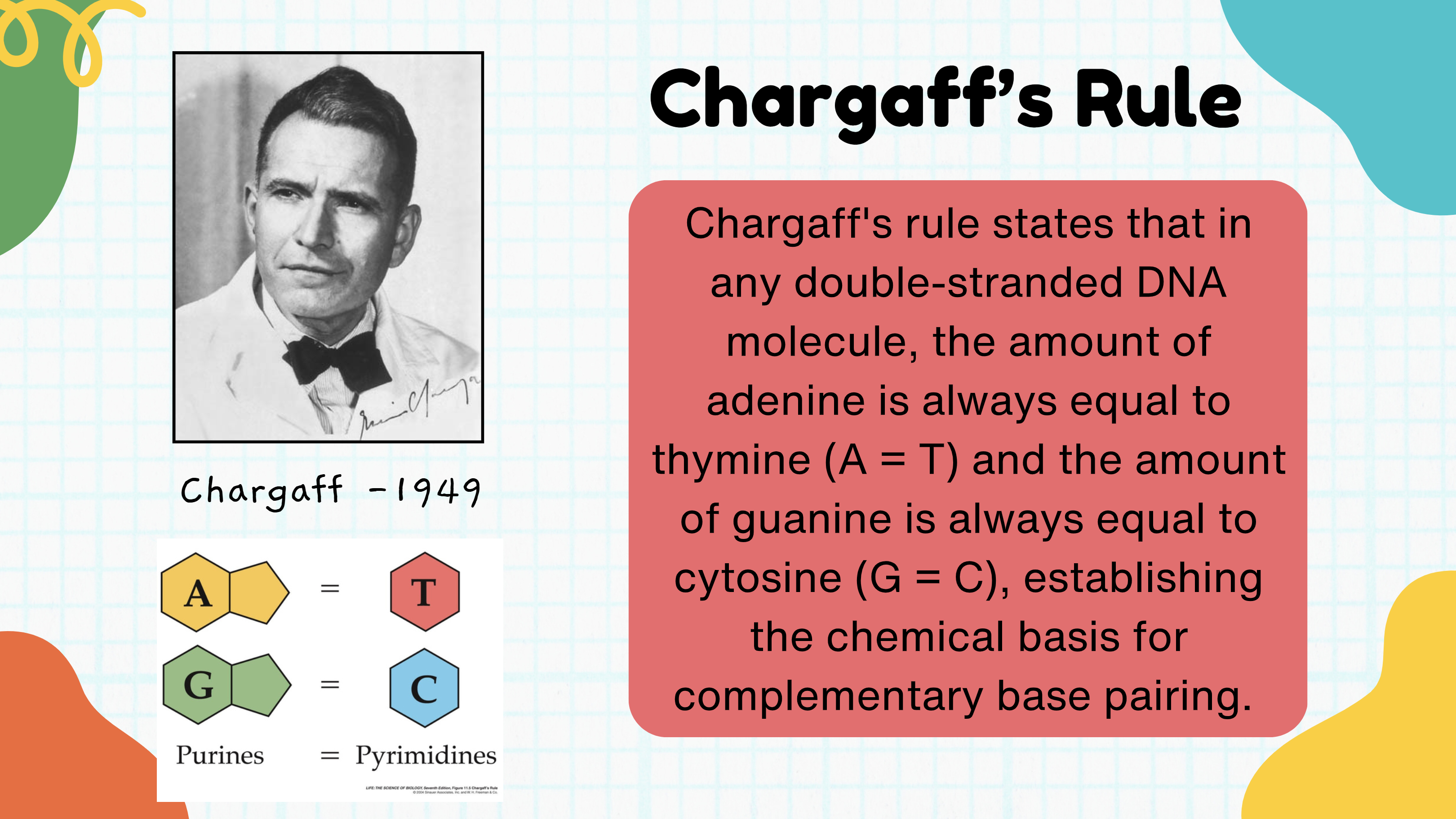
According to Chargaff's rules, the amount of adenine (A) in a DNA molecule is always equal to the amount of which base?
Cytosine (C)
Guanine (G)
Thymine (T)
Uracil (U)
8
Multiple Choice
If a DNA molecule has 40% guanine, what percentage of the molecule is adenine?
10%
20%
30%
40%
9
Multiple Choice
In a DNA molecule, if 20% of the bases are thymine, what percentage of the bases are guanine?
20%
30%
40%
60%
10
11
12
13
Multiple Choice
Which scientist's rule established the chemical basis for complementary base pairing in DNA?
Rosalind Franklin
Erwin Chargaff
James Watson
Francis Crick
14
Multiple Choice
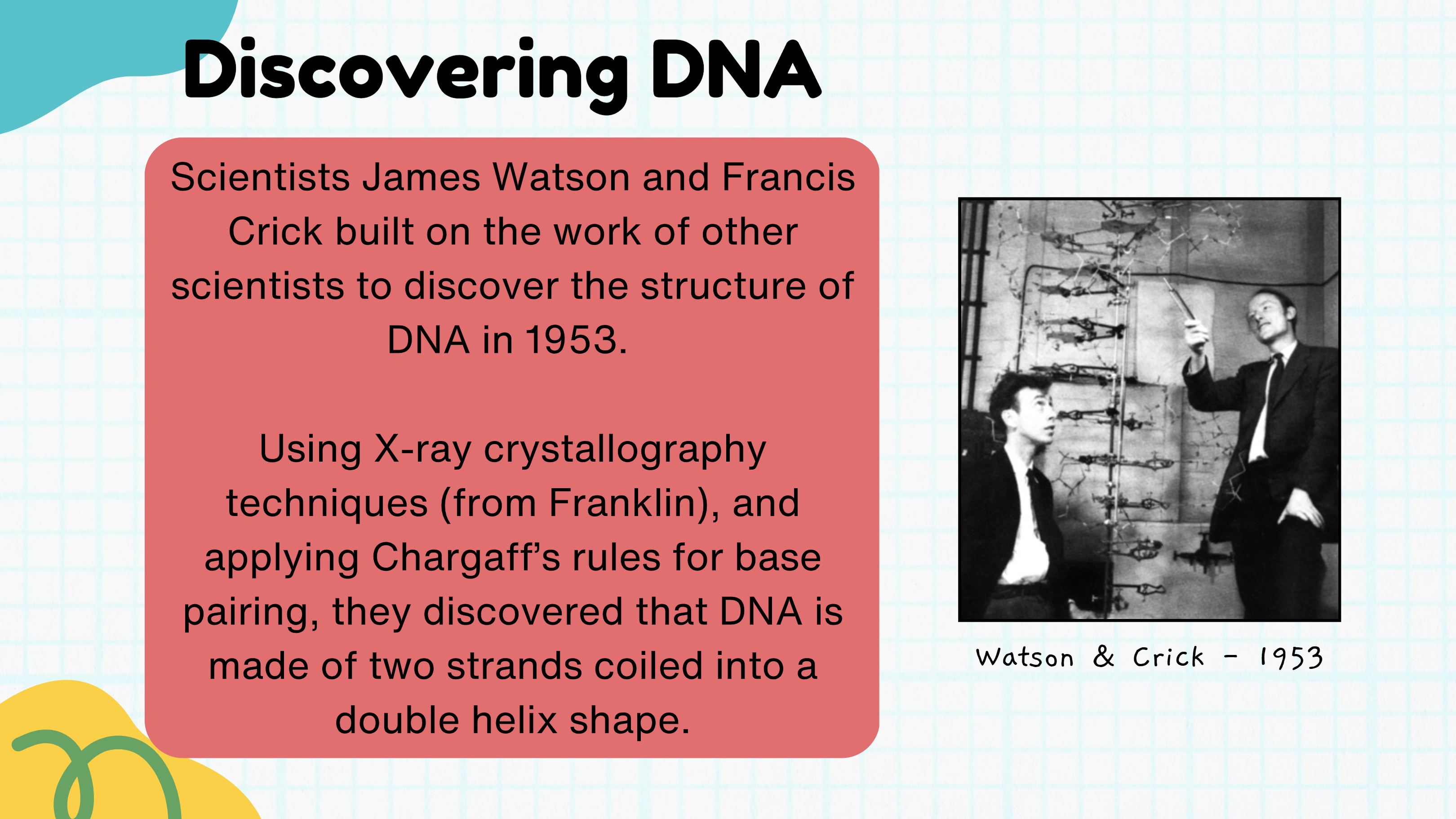
Which of the following statements about the discovery of DNA's structure is correct?
Watson and Crick discovered DNA's structure using only their own ideas.
Franklin's X-ray crystallography techniques were not important to the discovery.
Chargaff's rules for base pairing were ignored in the discovery.
Watson and Crick built on the work of other scientists to discover DNA's double helix shape.
15
16
Hotspot
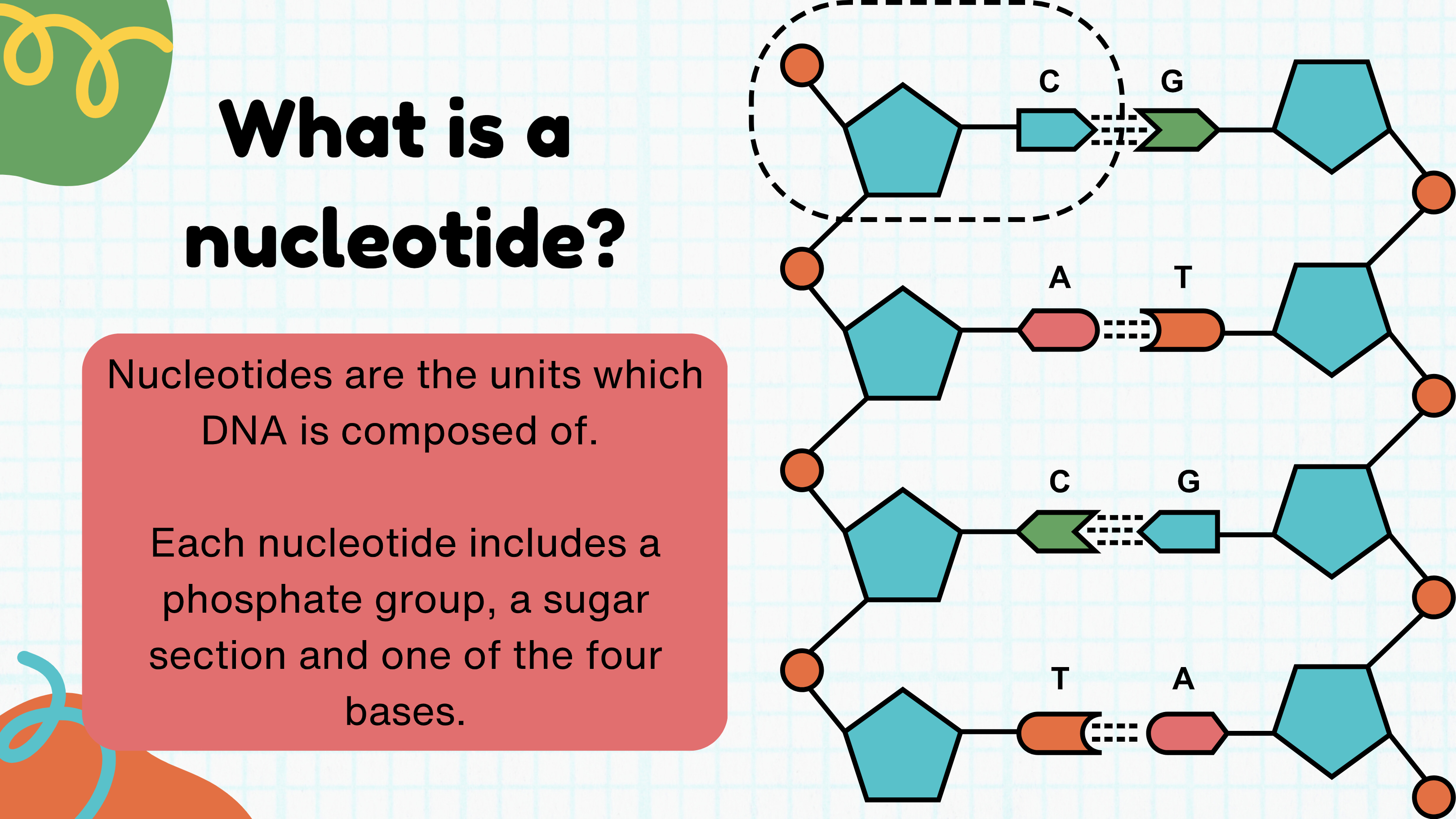
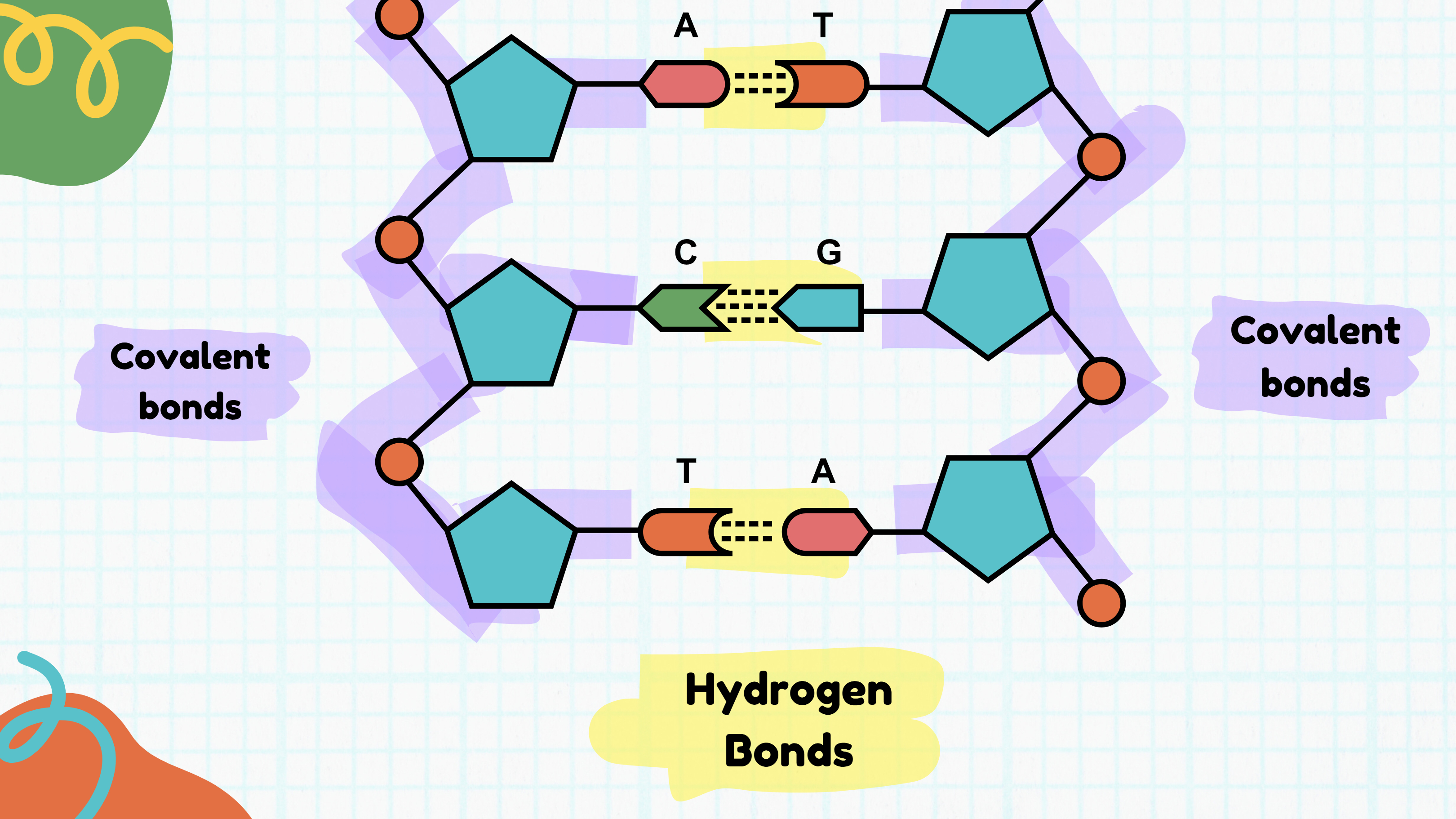
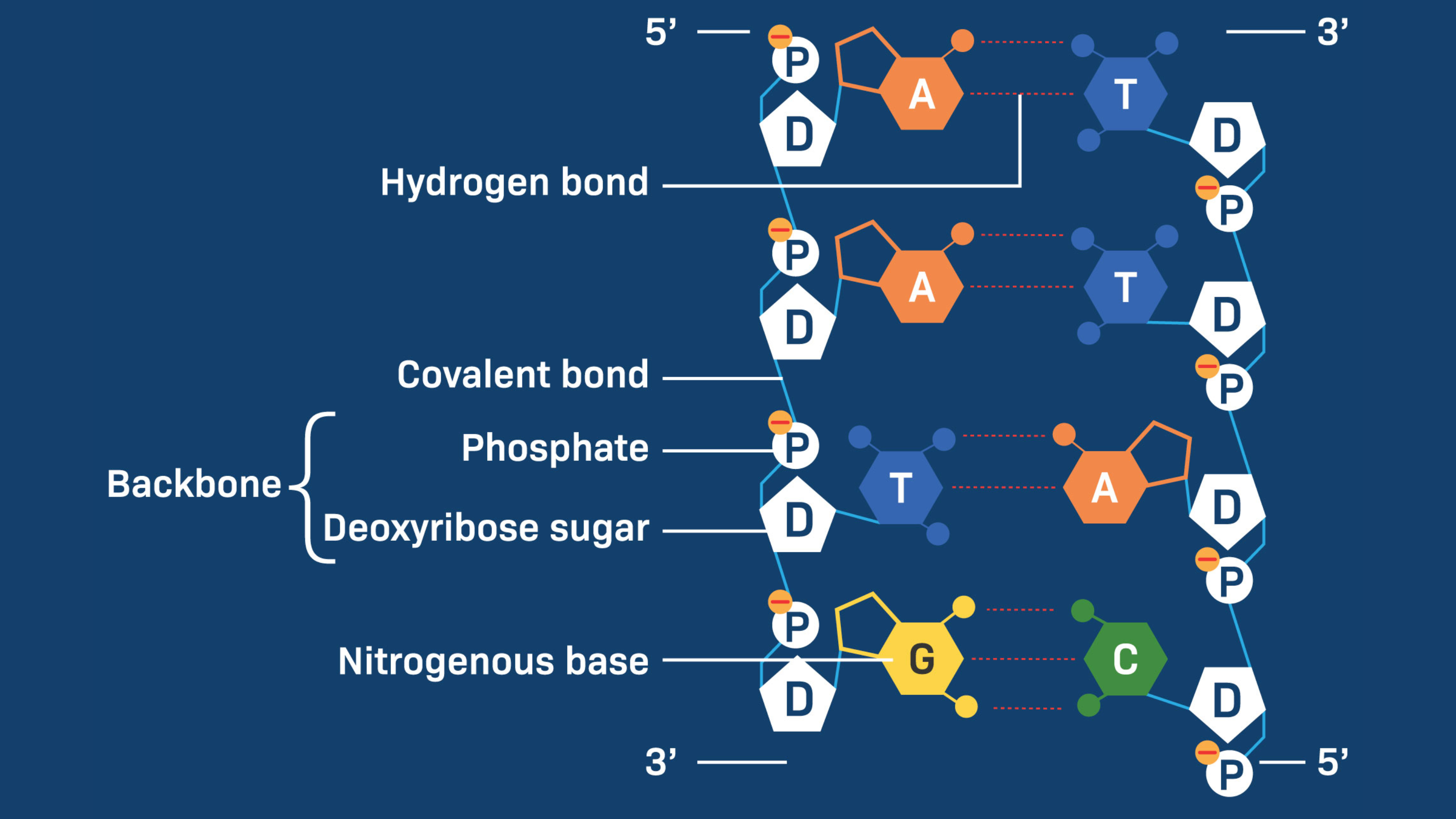
Which arrow is pointing to the hydrogen bonds that are connecting nitrogen bases?
17
18
Hotspot
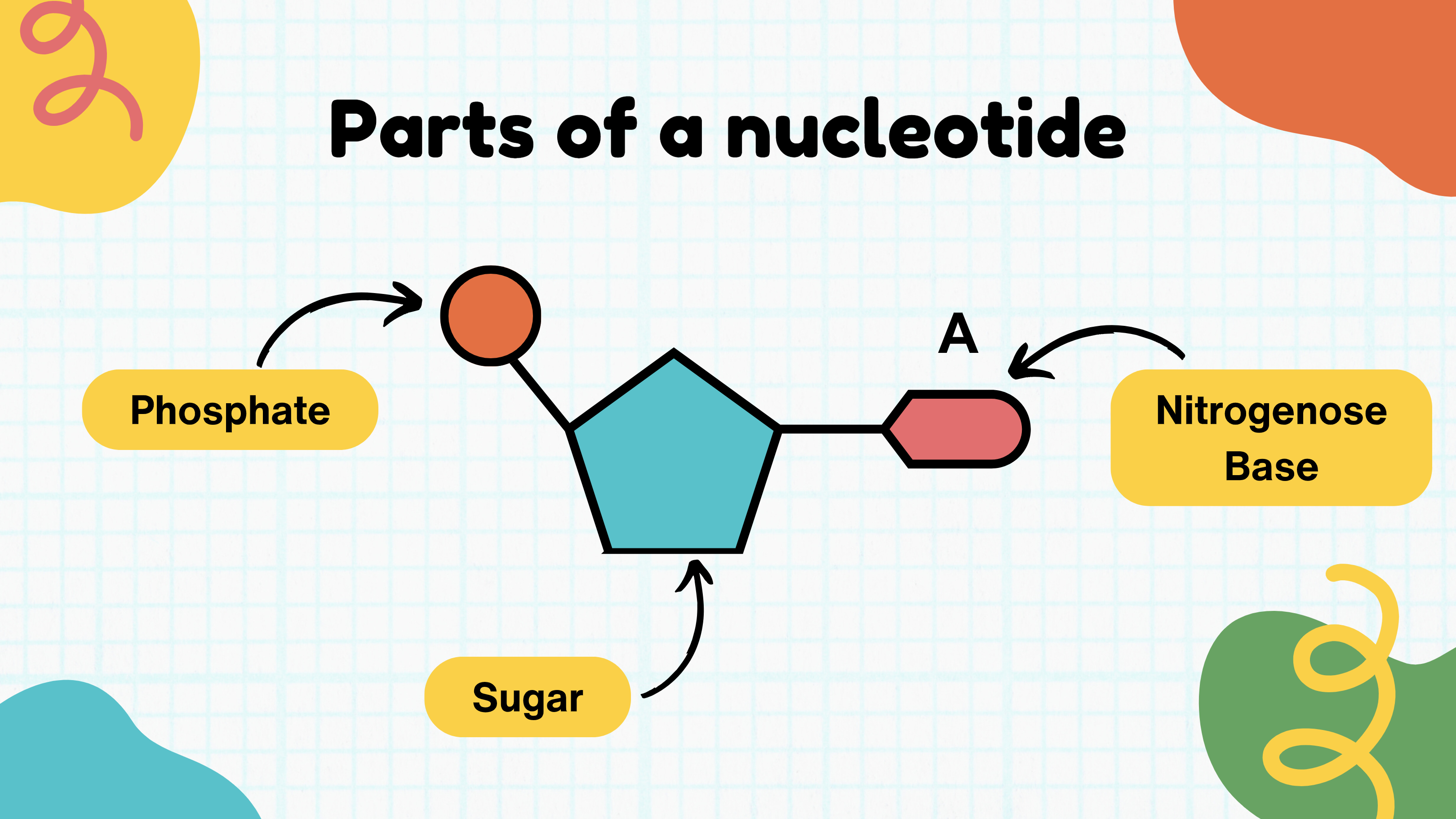
Select ALL the Phosphate Groups
19
Multiple Select
Which of the following are parts of a nucleotide?
Phosphate
Sugar
Nitrogenous base
Fatty acid
20
Labeling
Label the Nucleotide
Deoxyribose Sugar
phosphate
Nitrogen base
21
22
23
Match

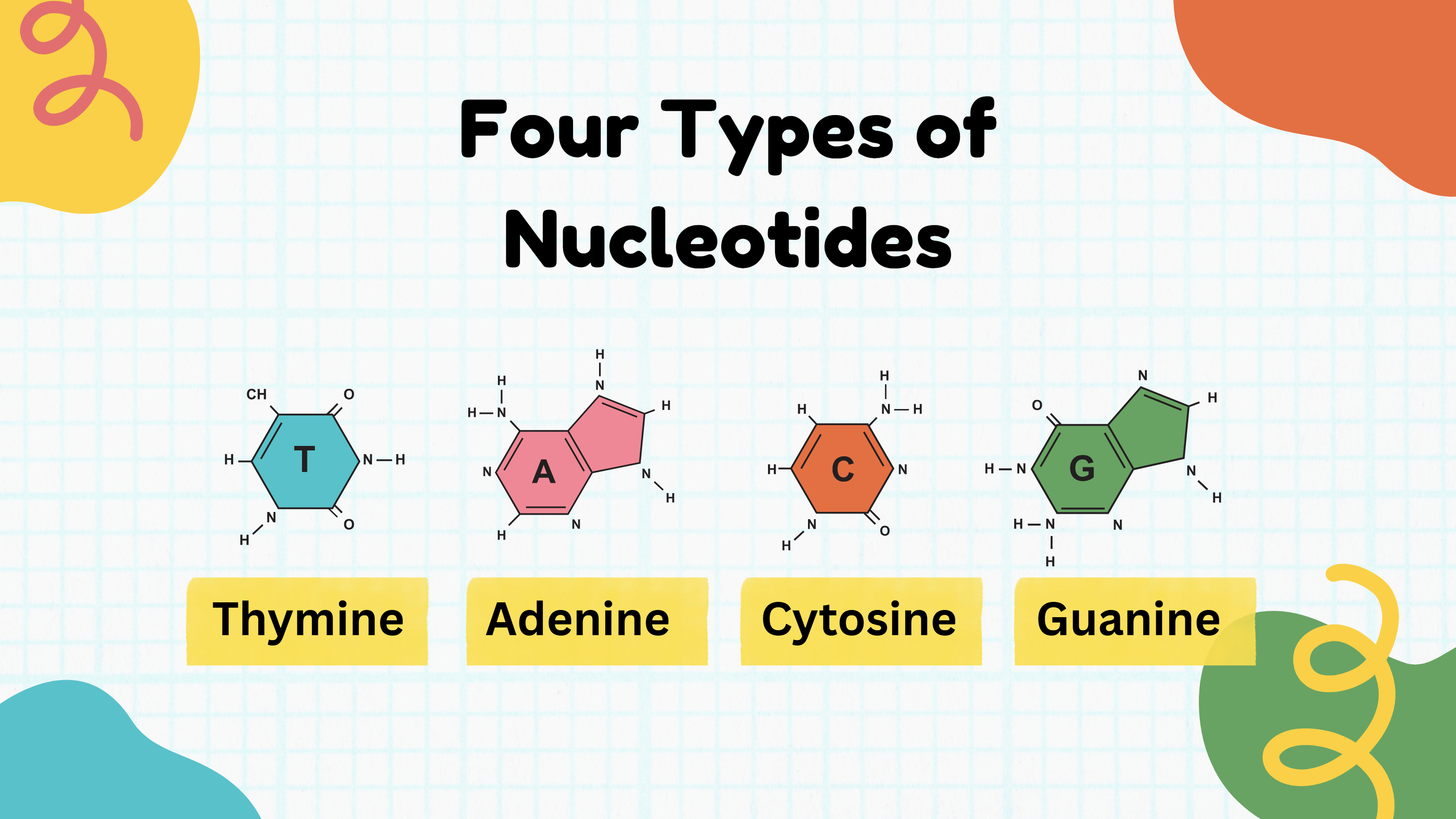
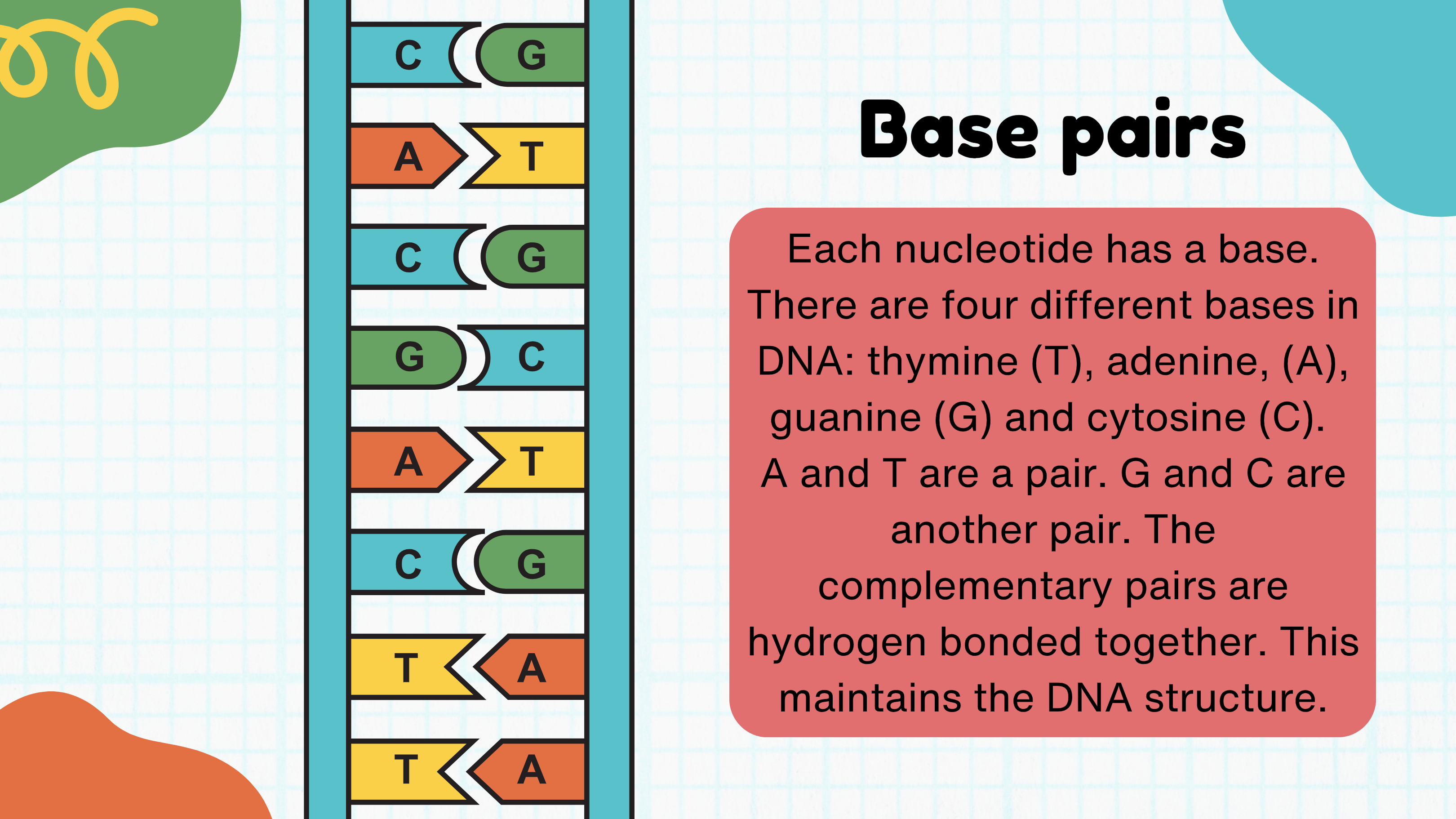
Match the following DNA base pairs.
Adenine pairs with
Thymine pairs with
Cytosine pairs with
Guanine pairs with
Thymine
Adenine
Guanine
Cytosine
Thymine
Adenine
Guanine
Cytosine
24
25
Multiple Choice
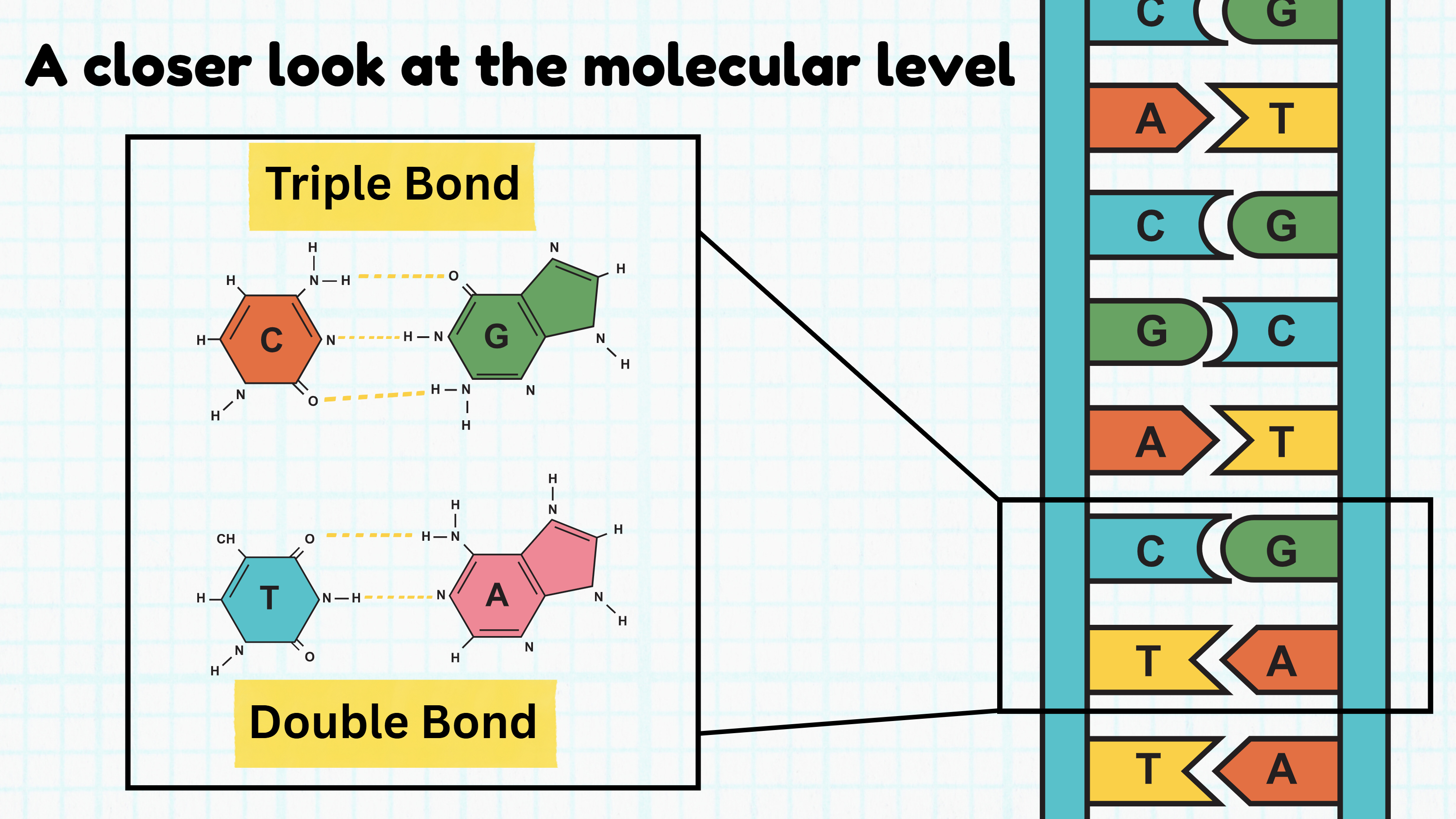
Which base pair forms a triple bond in DNA?
Adenine-Thymine
Cytosine-Guanine
Thymine-Guanine
Adenine-Cytosine
26
27
Multiple Choice
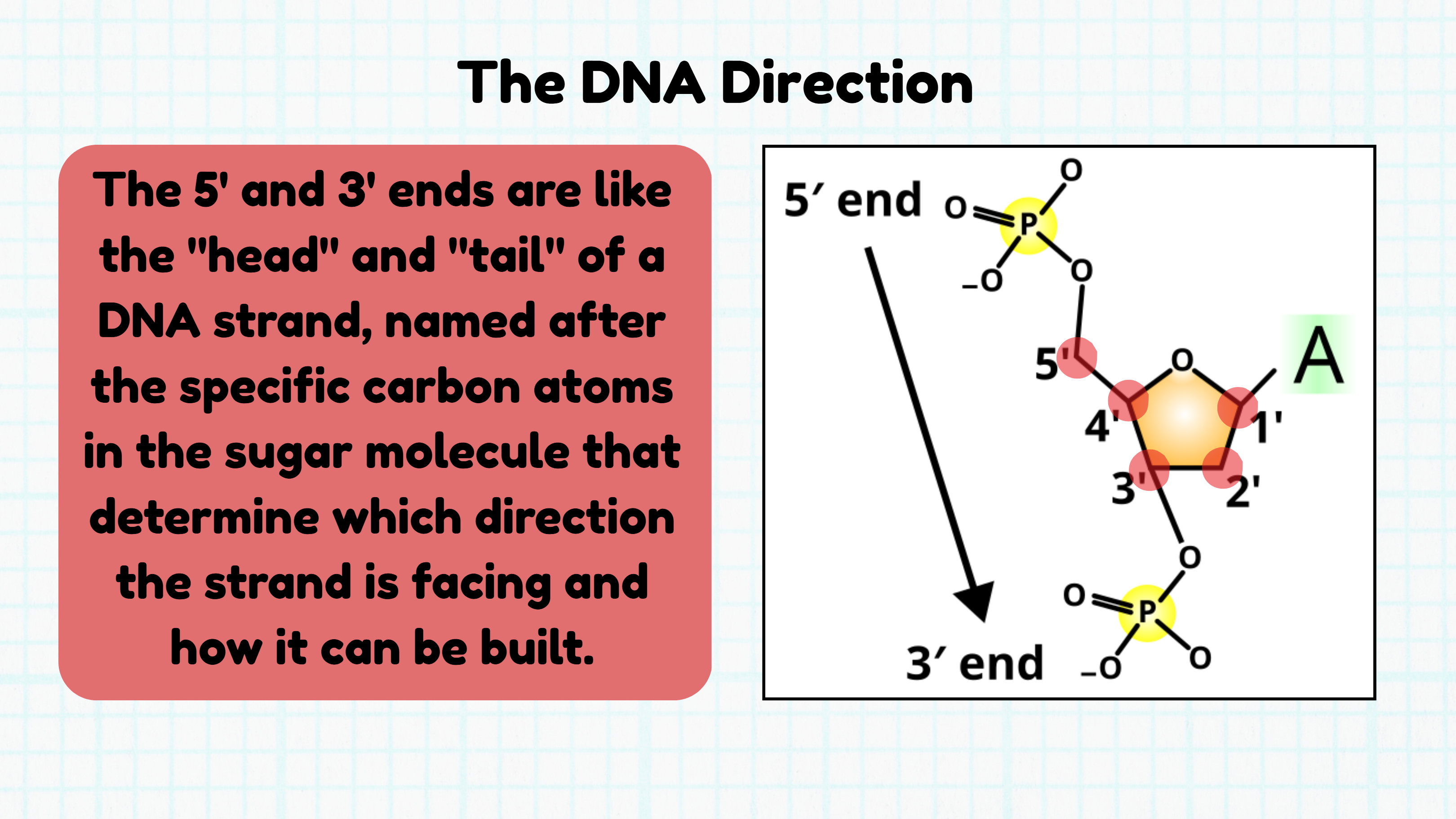
Which part of a DNA strand is referred to as the 'head' and which as the 'tail', and what determines these ends?
5' end is the head, 3' end is the tail, determined by specific carbon atoms in the sugar molecule
3' end is the head, 5' end is the tail, determined by nitrogenous bases
5' end is the head, 3' end is the tail, determined by phosphate groups
3' end is the head, 5' end is the tail, determined by hydrogen bonds
28
Show answer
Auto Play
Slide 1 / 28
SLIDE
Similar Resources on Wayground

22 questions
Reproduction Body Systems Interactions
Presentation
•
9th - 12th Grade
24 questions
Protein Synthesis
Presentation
•
9th - 12th Grade
21 questions
SAT Vocabulary #3
Presentation
•
9th - 12th Grade
21 questions
Factors of Production!
Presentation
•
9th - 12th Grade
21 questions
Atmosphere Refresher
Presentation
•
9th - 12th Grade
21 questions
FOIL Method
Presentation
•
9th - 12th Grade
21 questions
Reading Comprehension
Presentation
•
9th - 12th Grade
21 questions
Paycheck
Presentation
•
9th - 12th Grade
Popular Resources on Wayground
10 questions
Safety Day 2026 – Student Review

Quiz
•
9th Grade
21 questions
Continents and Oceans
Quiz
•
6th Grade
20 questions
Parts of Speech
Quiz
•
5th Grade
16 questions
Subject & Predicate
Quiz
•
5th Grade
25 questions
Multiplication Facts
Quiz
•
5th Grade
12 questions
Map Skills
Quiz
•
3rd Grade
22 questions
Continents and Oceans
Quiz
•
5th Grade
15 questions
Rounding Decimals
Quiz
•
5th Grade
Discover more resources for Biology
20 questions
Cell organelles and functions
Quiz
•
10th Grade
20 questions
Cell Transport
Quiz
•
9th - 12th Grade
25 questions
photosynthesis and cellular respiration
Quiz
•
9th Grade
20 questions
Cell Cycle
Quiz
•
9th Grade
8 questions
DNA vs. RNA
Presentation
•
9th - 12th Grade
14 questions
Ecological Succession: Primary and Secondary
Quiz
•
9th Grade
20 questions
Macromolecules
Quiz
•
10th Grade
20 questions
Characteristics of Life
Quiz
•
9th - 10th Grade