

Molecules

Presentation
•
Science
•
9th - 12th Grade
•
Hard

Barbara White
FREE Resource
31 Slides • 13 Questions
1

Molecules
High School
2
Learning Objectives
Define a molecule and differentiate between molecules of elements and compounds.
Explain the concept of atomicity and classify molecules accordingly.
Understand the laws of chemical combination that govern how molecules are formed.
Learn to write chemical formulas for simple compounds using the criss-cross method.
Calculate molecular mass and understand its connection to the mole concept.


3
Key Vocabulary
Molecule
The smallest particle of an element or compound that retains the chemical properties of that specific substance.
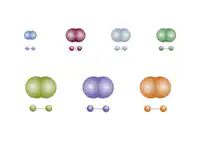
Atomicity
The total number of atoms that are present in a single molecule of an element or a compound.
Ion
An electrically charged atom or group of atoms formed by the noticeable loss or gain of electrons.
Chemical Formula
A representation of a compound that shows the elements present and the number of atoms of each element.
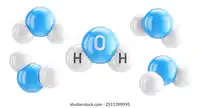
Molecular Mass
The sum of the atomic masses of all atoms present in one molecule of a particular substance.
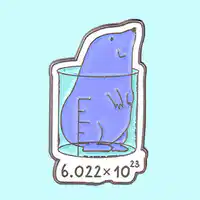
Mole
A specific quantity of a substance containing exactly 6.022 x 10²³ elementary entities of that given substance.
4
What is a Molecule?
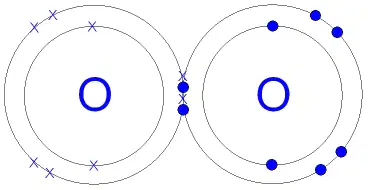
Molecules of an Element
Molecules of an element are composed of atoms of the very same type.
These identical atoms are held together by strong chemical bonds to form the molecule.
An oxygen molecule (O2) contains two oxygen atoms chemically bonded together.
Molecules of a Compound
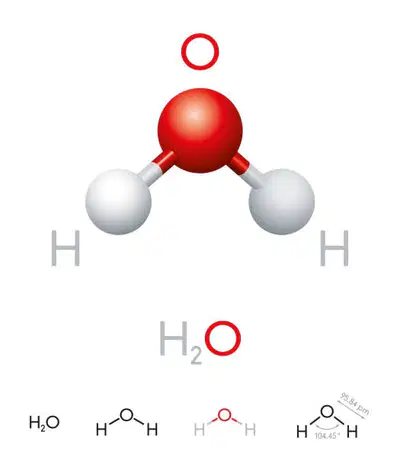
Molecules of a compound are made of atoms from different elements.
These atoms combine in a specific, fixed proportion to form the molecule.
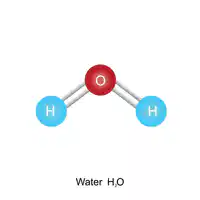
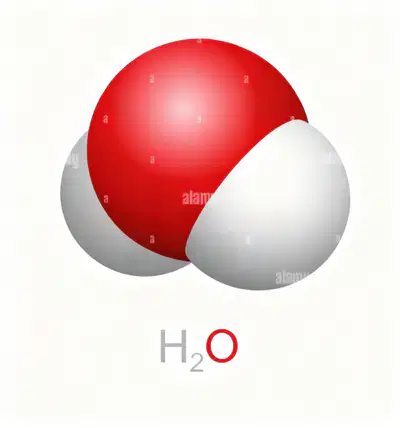
A water molecule (H2O) has two hydrogen atoms and one oxygen atom.
5
Solved Example 1
Calculate the molecular mass of a water molecule (H2O), given the atomic mass of Hydrogen is 1 u and Oxygen is 16 u.
Step 1: Analyze and Sketch the Problem
Goal: Find the molecular mass of a water molecule.
Knowns: The chemical formula is H2O. The atomic mass of Hydrogen (H) is 1 u. The atomic mass of Oxygen (O) is 16 u.
Unknown: The molecular mass of H2O.
Formula: The molecular mass is the sum of the atomic masses of all atoms in the molecule.
6
Solved Example 1
Calculate the molecular mass of a water molecule (H2O), given the atomic mass of Hydrogen is 1 u and Oxygen is 16 u.
Step 2: Solve for the Unknown
7
Solved Example 1
Calculate the molecular mass of a water molecule (H2O), given the atomic mass of Hydrogen is 1 u and Oxygen is 16 u.
Step 3: Evaluate the Answer
The calculated molecular mass of water is 18 u.
The calculation correctly sums the masses of two hydrogen atoms and one oxygen atom, as per the chemical formula H2O.
The final answer is presented in the correct atomic mass units (u).
8
Multiple Choice
Which statement accurately distinguishes between molecules of elements and molecules of compounds?
Molecules of elements have the same type of atoms, while molecules of compounds have different types.
Molecules of compounds are formed by physical mixing, not chemical bonds.
Both types of molecules are always made of a single atom.
Molecules of elements have different types of atoms, while molecules of compounds have the same type.
9
Atomicity
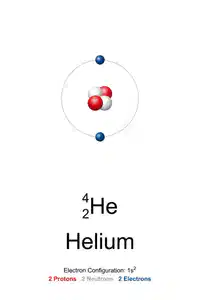
Monoatomic Molecules
These molecules consist of only a single atom of an element.
They are stable and exist independently under normal conditions.
Examples include Helium (He) and other noble gases like Neon (Ne).
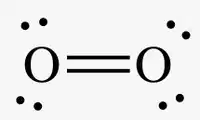
Diatomic Molecules
These molecules are composed of two atoms bonded together.
The two atoms can be of the same or different elements.
Examples are Hydrogen (H2) and Oxygen (O2).
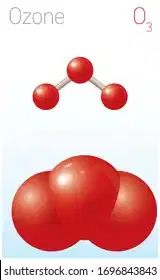
Polyatomic Molecules
These are molecules containing more than two atoms chemically bonded.
This category includes triatomic molecules like Ozone (O3).
Other examples are Phosphorus (P4) and Sulphur (S8).
10
Solved Example 2
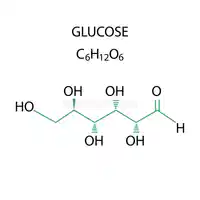
The chemical formula for glucose is C6H12O6. What is its atomicity, and how many total atoms are present in 5 molecules of glucose?
Step 1: Analyze and Sketch the Problem
Goal: Find the atomicity of one glucose molecule and the total number of atoms in five molecules of glucose.
Knowns: The chemical formula is C6H12O6. The number of molecules is 5.
Unknown: The atomicity of glucose and the total number of atoms.
11
Solved Example 2
The chemical formula for glucose is C6H12O6. What is its atomicity, and how many total atoms are present in 5 molecules of glucose?
Step 2: Solve for the Unknown
First, find the atomicity of C6H12O6 by adding the atoms of each element: 6 (Carbon) + 12 (Hydrogen) + 6 (Oxygen) = 24 atoms.
Next, calculate the total atoms in 5 molecules by multiplying the atomicity by the number of molecules: 24 atoms/molecule × 5 molecules = 120 atoms.
12
Solved Example 2
The chemical formula for glucose is C6H12O6. What is its atomicity, and how many total atoms are present in 5 molecules of glucose?
Step 3: Evaluate the Answer
13
Multiple Choice
The sulphur molecule (S8) is described as polyatomic. What does this classification mean?
It consists of two atoms.
It consists of a single atom.
It consists of more than two atoms.
It is an ion with a positive charge.
14
What are Ions?
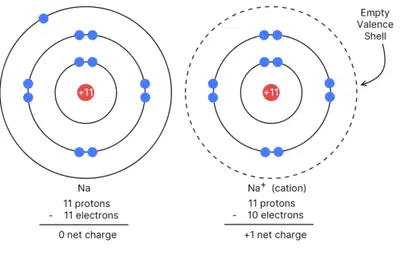
Cation
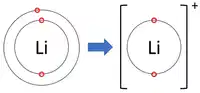
A cation is an ion that carries a positive electrical charge.
It is formed when a neutral atom loses one or more electrons.
For instance, a sodium atom forms a sodium ion, Na+, by losing an electron.
Anion
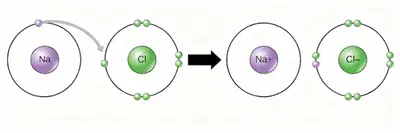
An anion is an ion that carries a negative electrical charge.
It is formed when a neutral atom gains one or more electrons.
For example, a chlorine atom forms a chloride ion, Cl-, by gaining an electron.
15
Solved Example 3
A compound is formed from magnesium (Mg2+) and chloride (Cl-) ions. Determine its chemical formula and calculate its formula unit mass. (Atomic mass: Mg = 24 u, Cl = 35.5 u)
Step 1: Analyze and Sketch the Problem
Goal: Determine the chemical formula and formula unit mass of the compound formed by Magnesium and Chloride ions.
Knowns: Cation is Magnesium (Mg2+), Anion is Chloride (Cl-). Atomic mass of Mg = 24 u, Atomic mass of Cl = 35.5 u.
Unknowns: Chemical Formula = ?, Formula Unit Mass = ?
Formulas: Criss-cross method for the formula; Sum of atomic masses for the formula unit mass.
16
Solved Example 3
A compound is formed from magnesium (Mg2+) and chloride (Cl-) ions. Determine its chemical formula and calculate its formula unit mass. (Atomic mass: Mg = 24 u, Cl = 35.5 u)
Step 2: Solve for the Unknown
17
Solved Example 3
A compound is formed from magnesium (Mg2+) and chloride (Cl-) ions. Determine its chemical formula and calculate its formula unit mass. (Atomic mass: Mg = 24 u, Cl = 35.5 u)
Step 3: Evaluate the Answer
The chemical formula MgCl2 is correct because the charges are balanced: (+2) + 2(-1) = 0.
The formula unit mass of 95 u correctly represents the total mass of one magnesium atom and two chlorine atoms.
18
Multiple Choice
How is an anion, such as a chloride ion (Cl-), formed?
An atom has no charge.
An atom loses one or more electrons.
An atom shares its electrons.
An atom gains one or more electrons.
19
Laws of Chemical Combination
Law of Conservation of Mass
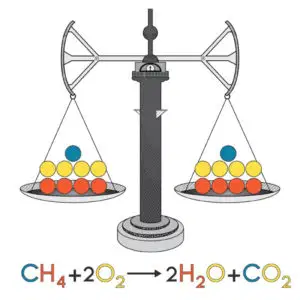
This law states that mass can neither be created nor destroyed during any chemical reaction.
Therefore, the total mass of the reactants must equal the total mass of the products formed.
A balance scale can show that the mass of reactants equals the mass of the products.
Law of Constant Proportions
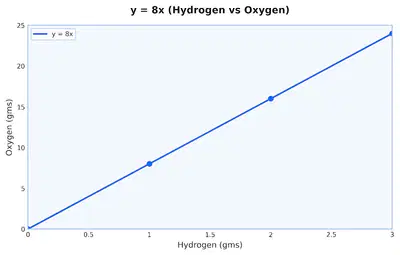
Elements in a pure chemical substance are always present in a definite proportion by their mass.
For example, in pure water H2O, the mass ratio of hydrogen to oxygen is always 1:8.
This fixed mass ratio holds true for any sample of a pure compound, regardless of its origin.
20
Solved Example 4
According to the Law of Constant Proportions, hydrogen and oxygen combine in a 1:8 mass ratio to form water. What mass of oxygen gas is required to react completely with 3 g of hydrogen gas?
Step 1: Analyze and Sketch the Problem
21
Solved Example 4
According to the Law of Constant Proportions, hydrogen and oxygen combine in a 1:8 mass ratio to form water. What mass of oxygen gas is required to react completely with 3 g of hydrogen gas?
Step 2: Solve for the Unknown
22
Solved Example 4
According to the Law of Constant Proportions, hydrogen and oxygen combine in a 1:8 mass ratio to form water. What mass of oxygen gas is required to react completely with 3 g of hydrogen gas?
Step 3: Evaluate the Answer
23
Multiple Choice
When wood burns, the mass of the resulting soot, ashes, and gases equals the original mass of the wood and the oxygen it reacted with. Which law does this demonstrate?
The Law of Conservation of Mass
The Law of Multiple Proportions
The Law of Constant Proportions
The Law of Definite Composition
24
Dalton's Atomic Theory
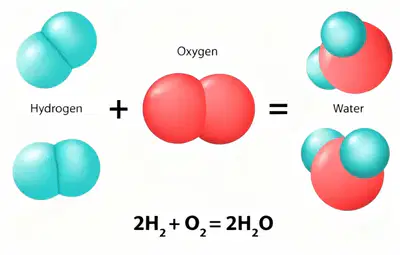
His atomic theory is the foundation of modern chemistry and describes atoms.
Atoms are indivisible and are not created or destroyed in chemical reactions.
Atoms combine in whole-number ratios to form compounds like H2O.
A given compound always has the same relative number and types of atoms.
25
Multiple Choice
Which postulate of Dalton's Atomic Theory provides the explanation for the Law of Constant Proportions?
Atoms cannot be created or destroyed.
All matter is made of atoms.
Atoms of a given element are identical in mass.
The relative number and types of atoms are constant in a given compound.
26
How to Write Chemical Formulas
A chemical formula shows the elements and number of atoms in a compound.
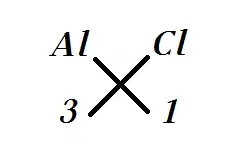
Write ion symbols and charges, then criss-cross the charge values as subscripts.
For aluminium chloride, Al3+ and Cl-1 cross over to form the compound AlCl3.
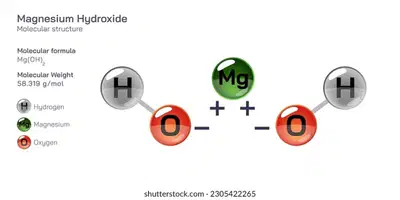
For Mg2+ and (OH)-1, use brackets to write the formula Mg(OH)2.
27
Solved Example 6
Calculate the molecular mass of Calcium Phosphate, Ca3(PO4)2. The atomic mass of Calcium (Ca) is 40u, Phosphorus (P) is 31u, and Oxygen (O) is 16u.
Step 1: Analyze and Sketch the Problem
Goal: Find the molecular mass of Calcium Phosphate.
Knowns: The formula is Ca3(PO4)2. Atomic masses are Ca=40u, P=31u, O=16u.
Unknown: The total molecular mass of the compound.
Formula: Molecular Mass = Sum of the atomic masses of all atoms in the formula.
28
Solved Example 6
Calculate the molecular mass of Calcium Phosphate, Ca3(PO4)2. The atomic mass of Calcium (Ca) is 40u, Phosphorus (P) is 31u, and Oxygen (O) is 16u.
Step 2: Solve for the Unknown
First, determine the number of atoms of each element. In Ca3(PO4)2, there are 3 Ca atoms, 2 P atoms (2*1), and 8 O atoms (2*4).
Mass of Calcium = 3 × 40u = 120u.
Mass of Phosphorus = 2 × 31u = 62u.
Mass of Oxygen = 8 × 16u = 128u.
Total Molecular Mass = 120u + 62u + 128u = 310u.
29
Solved Example 6
Calculate the molecular mass of Calcium Phosphate, Ca3(PO4)2. The atomic mass of Calcium (Ca) is 40u, Phosphorus (P) is 31u, and Oxygen (O) is 16u.
Step 3: Evaluate the Answer
The calculation correctly sums the masses of all constituent atoms based on the chemical formula. The use of parentheses in the formula indicates that the subscript '2' applies to both P and O within the phosphate ion.
The final answer of 310u is the correct molecular mass for Calcium Phosphate.
30
Multiple Choice
Using the criss-cross method, what is the correct chemical formula for a compound formed between a Calcium ion (Ca2+) and a Nitrate ion (NO3-1)?
CaN2O6
Ca(NO3)2
Ca2(NO3)
CaNO3
31
Molecular Mass and Formula Unit Mass
Molecular Mass
It is the sum of the atomic masses of all atoms in one molecule.
This is used for covalently bonded substances that exist as separate molecules.
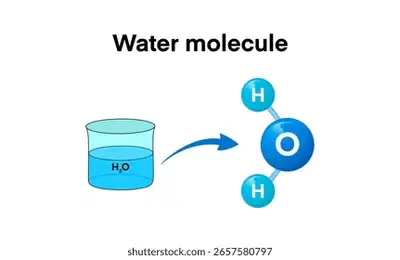
The molecular mass of water (H2O) is (2 × 1.0 u) + 16.0 u = 18.0 u.
Formula Unit Mass
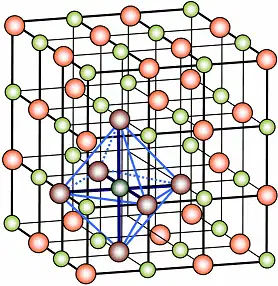
It is the sum of atomic masses of all atoms in a formula unit.
This is used for substances where the constituent particles are ions, like ionic compounds.
The formula unit mass of sodium chloride (NaCl) is 23.0 u + 35.5 u = 58.5 u.
32
Multiple Choice
Given that the atomic mass of Carbon is 12 u and Oxygen is 16 u, what is the molecular mass of Carbon Dioxide (CO2)?
60 u
44 u
32 u
28 u
33
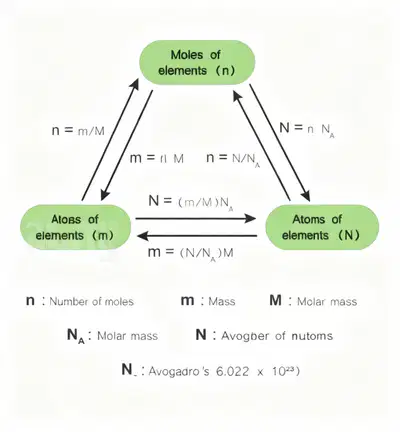
The Mole Concept
The mole is a unit for measuring the amount of a substance.
It connects a substance's mass to the number of particles it contains.
One mole contains 6.022 x 10²³ particles, called Avogadro's constant.
One mole of water (H2O) has a mass of 18 grams.
34
Solved Example 8
Calculate the number of molecules present in a 22 g sample of carbon dioxide (CO2). The atomic mass of Carbon is 12 u and Oxygen is 16 u.
Step 1: Analyze and Sketch the Problem
Goal: Find the number of CO2 molecules in 22 g.
Knowns: Mass of CO2 = 22 g; Atomic mass of C = 12 u; Atomic mass of O = 16 u.
Constants: Avogadro's number = 6.022 x 10²³ particles/mole.
Plan: First, find the molecular mass of CO2. Then, use it to convert the given mass to moles. Finally, convert moles to the number of molecules.
35
Solved Example 8
Calculate the number of molecules present in a 22 g sample of carbon dioxide (CO2). The atomic mass of Carbon is 12 u and Oxygen is 16 u.
Step 2: Solve for the Unknown
36
Solved Example 8
Calculate the number of molecules present in a 22 g sample of carbon dioxide (CO2). The atomic mass of Carbon is 12 u and Oxygen is 16 u.
Step 3: Evaluate the Answer
The given mass (22 g) is half the gram molecular mass (44 g), so the sample should contain half a mole of molecules.
Half of Avogadro's number is approximately 3.011 × 10²³, which matches our calculated answer.
37
Multiple Choice
What is the relationship between the molecular mass of a substance and the mass of one mole of that substance?
The mass of one mole is Avogadro's number times the molecular mass.
The mass of one mole is always 1 gram.
The mass of one mole (in grams) is numerically equal to the molecular mass (in u).
There is no relationship between the two values.
38
Common Misconceptions in Chemistry
Misconception | Correction |
|---|---|
Atoms and molecules are the same. | Atoms are single units; molecules are atoms chemically bonded together. |
Mass is created or destroyed in chemical reactions. | Mass is conserved; the mass of reactants equals the mass of products. |
The formula H2O means a mass ratio of 2:1. | The formula shows an atom ratio, not a mass ratio. |
Ions and atoms are the same. | Atoms are neutral, while ions are electrically charged particles. |
39
Multiple Choice
According to the Law of Constant Proportions, hydrogen and oxygen combine in a 1:8 ratio by mass to form water. What mass of oxygen gas would be required to react completely with 4 grams of hydrogen gas?
16 grams
8 grams
4 grams
32 grams
40
Multiple Choice
What is the primary difference in the application of 'molecular mass' and 'formula unit mass', and which term is correctly used for Carbon Dioxide (CO2) versus Sodium Chloride (NaCl)?
'Molecular mass' is used for covalent molecules like CO2, while 'formula unit mass' is for ionic compounds like NaCl.
'Molecular mass' is for ionic compounds and 'formula unit mass' is for covalent compounds; both terms can be used for NaCl.
'Molecular mass' is for elements and 'formula unit mass' is for compounds; both terms can be used for CO2.
There is no difference; 'molecular mass' applies to NaCl, and 'formula unit mass' applies to CO2.
41
Multiple Choice
Analyze the chemical formula for magnesium hydroxide, Mg(OH)2. What does this formula tell us about the number of atoms of each element and the charges of the ions involved?
1 Mg, 1 O, 2 H; Mg has a +1 charge and OH has a -2 charge.
1 Mg, 1 O, 1 H; Mg has a +1 charge and OH has a -1 charge.
2 Mg, 2 O, 2 H; Mg has a +2 charge and OH has a -2 charge.
1 Mg, 2 O, 2 H; Mg has a +2 charge and OH has a -1 charge.
42
Multiple Choice
If you have 16 grams of solid sulfur (S8) and the gram atomic mass of sulfur (S) is 32 g/mol, how many molecules of S8 are present? (Avogadro's number = 6.022 x 10²³)
3.011 x 10²³ molecules
0.5 molecules
1.204 x 1024 molecules
3.76 x 10²² molecules
43
Summary
Atoms combine via chemical bonds to form molecules.
The number of atoms in a molecule is known as its atomicity.
A chemical formula represents the composition of a substance.
The mole concept relates mass to the number of particles.
44
Poll
On a scale of 1-4, how confident are you about the concepts covered in today's review?
1
2
3
4
Molecules
High School
Show answer
Auto Play
Slide 1 / 44
SLIDE
Similar Resources on Wayground

38 questions
2/3 Intro to Forensics FBISD Austin HS
Presentation
•
9th - 12th Grade
37 questions
Passive and Active Transport
Presentation
•
9th - 12th Grade
37 questions
Periodic Table Review
Presentation
•
9th - 12th Grade
35 questions
Color (light Waves)
Presentation
•
9th - 12th Grade
35 questions
13.1 Solutions
Presentation
•
9th - 12th Grade
39 questions
Earth Materials: Minerals
Presentation
•
9th - 12th Grade
39 questions
Historical Skills & Evaluating Sources
Presentation
•
9th - 12th Grade
Popular Resources on Wayground
24 questions
PBIS-HGMS Day 10

Quiz
•
6th - 8th Grade
10 questions
HCS SCI 03 Summer School Review 3
Quiz
•
3rd Grade
11 questions
Home Scope
Quiz
•
7th - 8th Grade
15 questions
HCS SCI 05 Summer School Assessment 3 Review
Quiz
•
5th Grade
35 questions
Lufkin Road Middle School Student Handbook & Policies Assessment
Quiz
•
7th Grade
18 questions
Geo 11.3 Area of Circles and Sectors
Quiz
•
9th - 11th Grade