

Police Operations Chapter 7

Presentation
•
Social Studies
•
University
•
Easy

Roy Smith
Used 9+ times
FREE Resource
60 Slides • 21 Questions
1
2
3
Violence
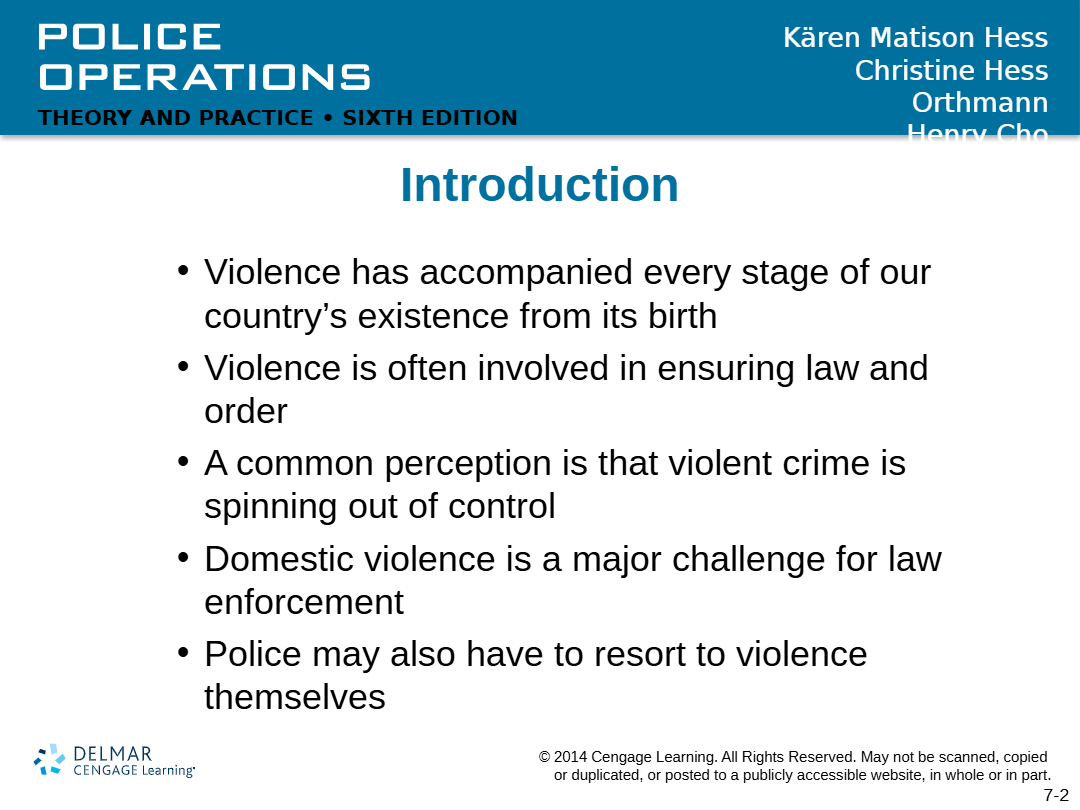
Violence has accompanied every stage of our country's existence from its birth to the present and is often involved in ensuring law and order.
Violence is connected with some of the most positive events of U.S. history:
independence from England through the Revolutionary War,
the emancipation of slaves and preservation of the Union following the Civil War, and the expansion and stabilization of frontier society via vigilante violence.
Even today, our nation is drawn into a violent fight for the preservation of its values, including the freedom to live in peace.
4
Paradox
Violence has accompanied every stage of our country's existence from its birth to the present and is often involved in ensuring law and order.
Food for thought:
A statement made by Martin Luther King Jr., more than 50 years ago seems eerily prophetic in light of recent events:
“The choice today is no longer between violence and nonviolence. It's between nonviolence and nonexistence.”
5
Dominate Violence
The dominant expression of violent behavior in the United States involves acts of interpersonal violence that occur nearly everywhere, every day.
Domestic violence is a major challenge for law enforcement.
bar fights, street fights, beatings, slashings, stabbings, and shootings are the types of violent transactions most likely to require a police response.
These “garden-variety” acts of violence require police officers to possess excellent communication skills. Police may also have to resort to violence themselves.
The paradoxes of modern law and order is that police are granted authority to use force to achieve a peaceable society.
6
Children and Violence
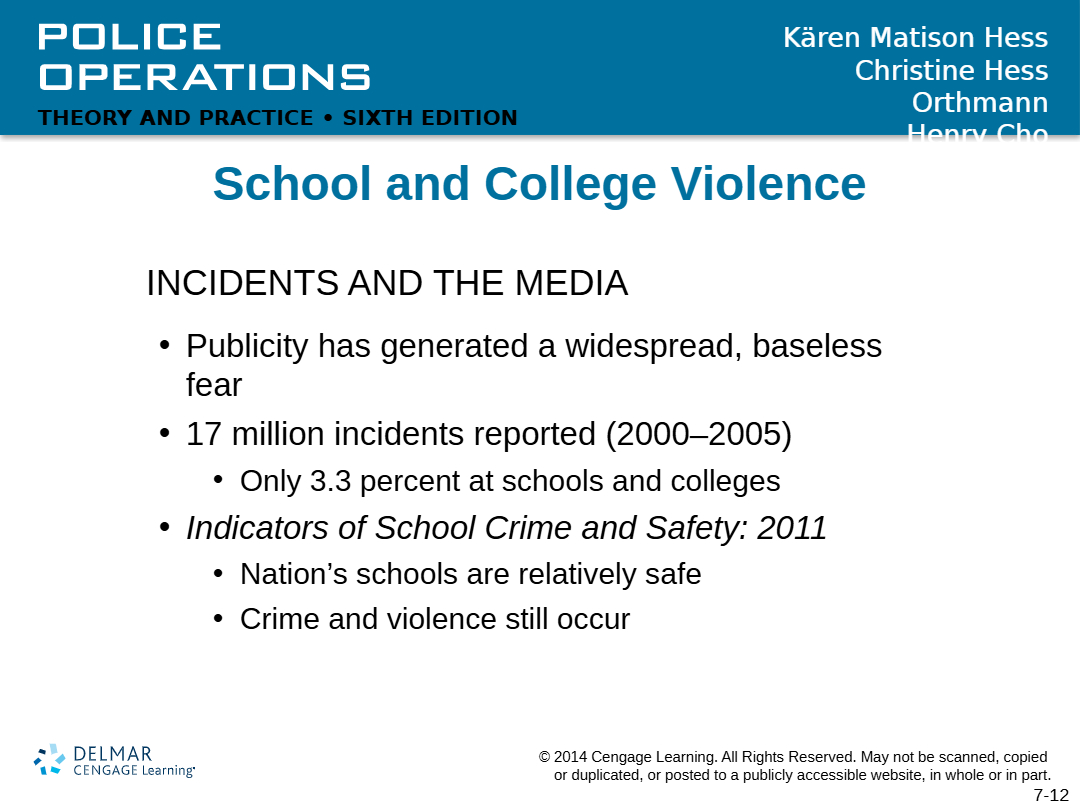
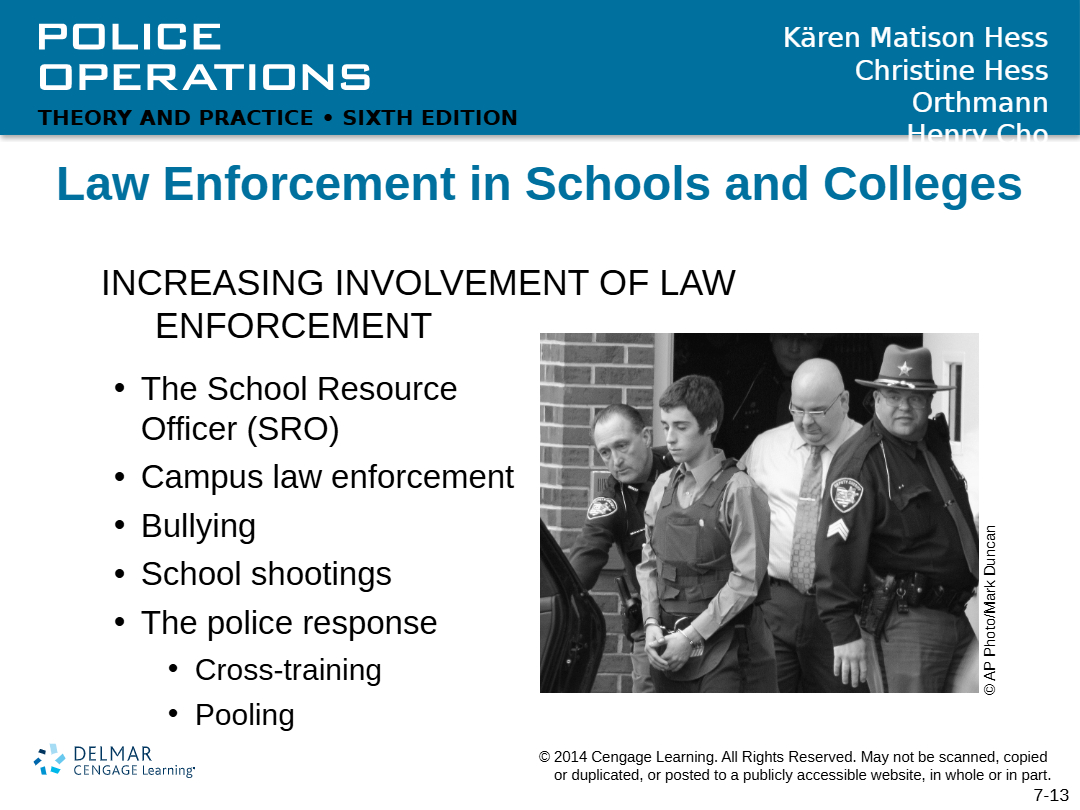
Children are also demonstrating an increased capacity for violence, which has crept into our schools and made students fearful of victimization by their classmates.
Metal detectors, surveillance cameras, and drug- and weapons-detector dogs are a growing presence on school campuses nationwide.
Violence is carried onto the extracurricular activities fields, where kids are taught to compete and win at all costs.
Aggression is rewarded and even modeled by the parents who, in front of their own children, shamelessly hurl more than words at coaches, umpires, and parents of the opposing team.
7
Multiple Choice
What are the implications of violence in ensuring law and order?
It helps maintain peace
It leads to more crime
It is unnecessary
It is always justified
8
Multiple Choice
Who is disproportionately likely to be stopped by police?
Middle easterns
African Americans and Hispanics
African Americans and Asians
Asians and Hispanics
9
10
Keep in Mind
The police have a monopoly on the legitimate use of force, they have the authority to impose themselves on conflicts as third-party agents of social control.
Therefore, police-citizen encounters are always potentially coercive relationships.
This is a particularly important factor when considering the role of the police in controlling “typical” violent encounters.
11
C
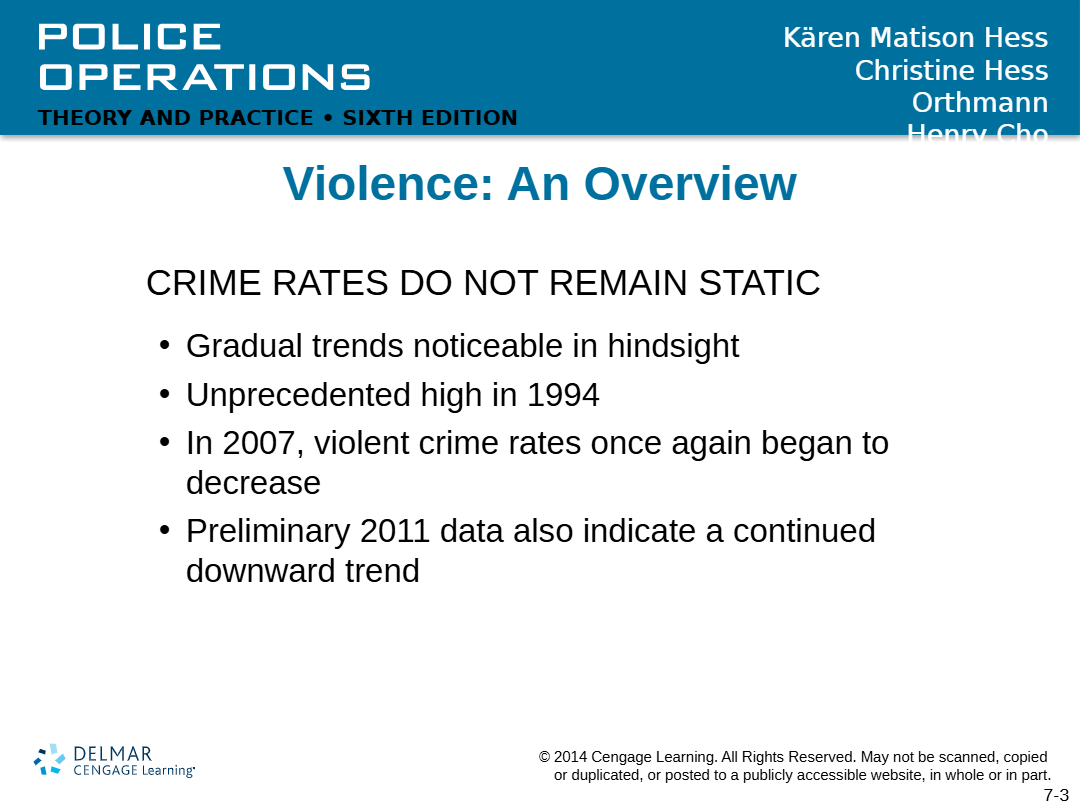
Since 1994, where crime hit its peak, crime steadily decelined until 2007
In 2007, violent crime rates once again began to decrease.
They have since continued on a downward trend, with the 2010 violent crime total 13.2 percent below the 2006 level and 13.4 percent below the 2001 level ( Crime in the United States 2010).
Preliminary 2011 data also indicate a continued downward trend in violent crime rates.
According to the FBI's 2010 Crime Clock, one violent crime occurred every 25.3 seconds ( 2010 Crime Clock 2010).
Violent crimes are perpetrated not by strangers but by people who know one another, whether they are family, school friends, or coworkers.
12
Multiple Select
What trends in crime rates can be observed from the data presented?
Crime rates are static
Crime rates have shown gradual trends
Crime rates peaked in 1994
Crime rates have consistently decreased
13
14
Contradiction
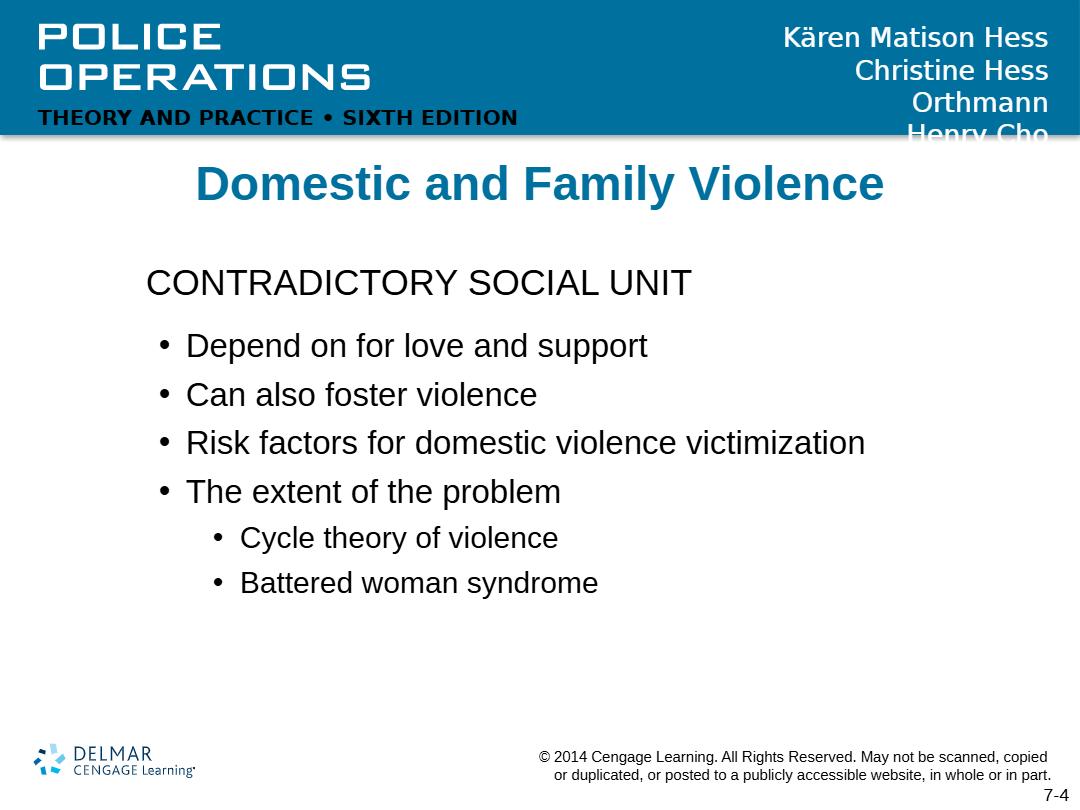
Those we love the most can also hurt us the most.
An intergenerational cycle of violence is taught by parents who use physical force to discipline their children.
Many parents also teach their children to defend themselves and to “fight their own battles.” Children then come to learn that “might makes right.”
15
Risk Factors
Research shows that domestic violence-related police calls constitute the single largest category of calls received by police, accounting for between 15 and more than 50 percent of all calls.
Many criminal justice scholars speculate “family” violence is the most widespread form of violence in the country (Sherman n.d.).
However, domestic violence is often viewed by others, including those in law enforcement, as a family matter.
Even victims may hold this perception, agonizing over the decision to report abuse to authorities.
The victim wrestles with feelings of fear, loyalty, love, guilt, and shame; often there is a sense of responsibility for other victims in the household.
16
Three-Stage Cycle
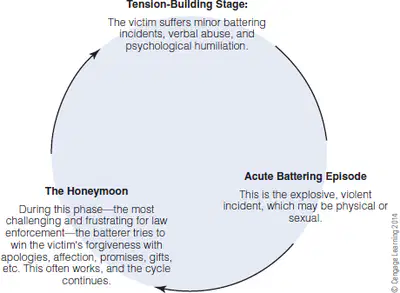
The victim also knows that reporting is a risk. All too often police or prosecutors minimize or ignore the problem, and the victim is left alone to face an attacker who will respond with anger at being reported or incarcerated.
Victims often do not want to press charges and do not want the victimizers to be put in jail. All victims want is for the violence to stop. It seldom does, however, and instead continues in an increasingly frequent and severe three-stage cycle of abuse
17
The Cycle Theory
The cycle theory of violence was developed by Dr. Lenore Walkers, whose research established the concept of the “battered woman syndrome.”
Domestic violence continues to cycle because of the delay commonly experienced in bringing domestic violence cases to court.
Police are generally called during the acute battering phase, and by the time the case is processed, the honeymoon phase has set in and the victim is ready to forgive the batterer.
Such violence tends is self-perpetuating; it can also be passed from one generation to the next.
The National Coalition against Domestic Violence (NCADV) cautions that witnessing domestic violence between one's parents, guardians, or caretakers is the strongest risk factor of transmitting violent behavior from one generation to the next, and that boys who witness domestic violence are twice as likely to abuse their own partners and children as adults
18
Open Ended
What is strongest risk factor according to National Coalition against Domestic Violence?
19
Open Ended
What are the three stages of the three-stage cycle for domestics disputes?
20
21
Battered Woman Syndrom
According to the Centers for Disease Control and Prevention (CDC), “Intimate partner violence (IPV) is a serious, preventable public health problem that affects millions of Americans.
The term intimate partner violence describes physical, sexual, or psychological harm by a current or former partner or spouse.
This type of violence can occur among heterosexual or same-sex couples and does not require sexual intimacy.
IPV can vary in frequency and severity. It occurs on a continuum, ranging from one hit that may or may not impact the victim to chronic, severe battering” (“Intimate Partner Violence” 2010).
22
Battered Woman Syndrom
Data from the National Crime Victimization Survey (NCVS) indicates there were 407,700 female and 101,530 male victims of IPV in the United States during 2010 (Truman 2011).
battering—the use of physical, emotional, economic, or sexual force to control another person.
the batterer is merely continuing a cycle of abuse witnessed as a child that later came to define how relationships “worked,” the behavior of battering is about power and control.
violence happens among married and unmarried couples. It may surface after a once-happy relationship takes a wrong turn, or battering may have actually been an element of a relationship as it was forming.
23
Open Ended
According to the Battered Woman Syndrome, what is purpose of the behavior of battering?
24
Battered Woman Syndrom
Separate research studies have reached remarkably similar findings:
“Being sexually or physically abused both as a child and as an adolescent is a good predictor of future victimization.
Child sexual abuse on its own, however, did not predict adult victimization.
Women who were victims of both sexual and physical abuse before adulthood were more likely to become adult victims of physical or sexual abuse than women who had experienced only one form of abuse or women who had not been early victims of abuse” ( Violence against Women 2004, ii).
25
Battered Woman Syndrom
“Special Needs” Victims of Domestic Violence
types of “special needs” victims of domestic violence have been identified.
An estimated 17 percent of pregnant women are battered, with the abuse either beginning or intensifying during pregnancy.
Battered immigrant women face the triple threat of being held in isolation by their batterers, being isolated by language barriers, and often being fearful and distrusting of the police and government in general.
Women with disabilities are also more vulnerable to physical, emotional, and sexual abuse. Physical disabilities resulting from injury (e.g., paralysis, amputation), disease (e.g., multiple sclerosis), or a congenital condition (e.g., cerebral palsy) can prevent victims from escaping violent situations.
26
Open Ended
What are three types of battered women as outlined in the book and the presentation?
27
Battered Woman Syndrom
“Special Needs” Victims of Domestic Violence
types of “special needs” victims of domestic violence have been identified.
Abusers may also withhold mobility-assisting apparatuses, such as prosthetic devices or wheelchairs.
Sensory disabilities, such as vision and hearing impairments, may severely hinder abused women's ability to seek help because, although they may be able to physically escape the violent environment itself, they often face communication and mobility challenges once outside.
Mental impairments, including mental retardation, mental illness, and cognitive disabilities caused by head trauma also increase a woman's risk of abuse because they may limit victims' ability to physically defend themselves and diminish their problem-solving capacity such that they do not know how to seek or where to go for help.
28
Battered Woman Syndrom
“Special Needs” Victims of Domestic Violence
types of “special needs” victims of domestic violence have been identified.
Finally, some research suggests that violence may occur more frequently in police families than among the general public;
Thus, women married to police officers face the difficulty of seeking help from their abuser's colleagues, some of whom may even be the batterer's close friends (Gallo 2004).
It is sometimes a “don't ask, don't tell” situation—ignored, hidden, or denied, protected by the “blue wall of silence.”
29
Battered Woman Syndrom
“Special Needs” Victims of Domestic Violence
Battering and Law Enforcement.
The abused intimate may also struggle with the added consequence of a complaint leading to the officer's loss of employment.
If the officer is the sole breadwinner in the family and the only source of health insurance and other benefits, a loss of employment could financially devastate a family with young children or those with chronic medical conditions.
A 1997 federal law known as the Lautenberg Amendment to the Gun Control Act prohibits any person with a misdemeanor domestic violence conviction from possessing or purchasing a firearm.
30
Open Ended
Please list at least two reasons spouses or significant others of law enforcement officers who are battered do not report or find it challenging to report battery.
31
Battered Woman Syndrom
“Special Needs” Victims of Domestic Violence
The International Association of Chiefs of Police (IACP) has issued a policy statement, Domestic Violence by Police Officers (effective in 2003), which begins, “This policy recognizes that the profession of law enforcement is not immune from members committing domestic violence against their intimate partners.… This policy offers a comprehensive, proactive approach to domestic violence by police department employees with an emphasis on victim safety. It delineates a position of zero tolerance by the department” (2003, 1).
32
Battered Woman Syndrom
Theories about Why Men Batter
Four theories generally explain why some men batter in intimate relationships (Sampson 2007, 7–8):
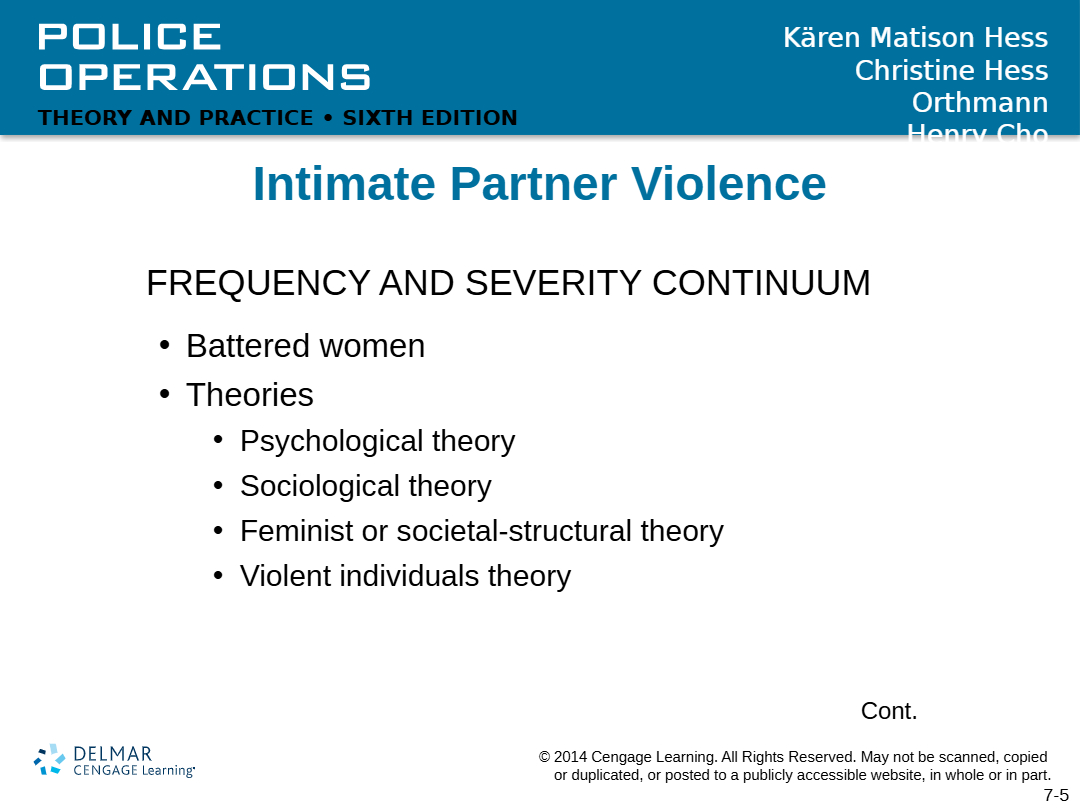
Psychological theory: Battering is the result of childhood abuse, a personality trait (such as the need to control), a personality disturbance (such as borderline personality), or a psychological disorder or problem (such as post-traumatic stress, poor impulse control, low self-esteem, or substance abuse).
Sociological theory: vary but usually contain some suggestion that intimate violence is the result of learned behavior. One theory suggests that violence is learned within a family, and a partner-victim stays caught up in a cycle of violence and forgiveness. If the victim does not leave, the batterer views the violence as a way to produce positive results.
33
Battered Woman Syndrom
Theories about Why Men Batter Continued
Sociological Theory
Children of these family members may learn the behavior from their parents (boys may develop into batterers and girls may become battering victims).
A different sociological theory suggests that lower income subcultures will show higher rates of intimate abuse because violence may be a more acceptable form of settling disputes in such subcultures.
A variant on this theory is that violence is inherent in all social systems and people with resources (financial, social contacts, prestige) use these to control family members, and those without resources resort to violence and threats to accomplish this goal.
34
Open Ended
What is the difference between Psychological theory and Sociological theory?
35
Battered Woman Syndrom
Theories about Why Men Batter
Four theories generally explain why some men batter in intimate relationships (Sampson 2007, 7–8):
Feminist or societal-structural theory: According to this theory, male intimates who use violence do so to control and limit the independence of women partners. Societal traditions of male dominance support and sustain inequities in relationships.
Violent individuals theory: Although the full extent of violence batterers perpetuate is unknown, evidence indicates that many batterers are violent beyond domestic violence, and many have prior criminal records for violent and nonviolent behavior. This suggests that domestic violence batterers are less unique and are more accurately viewed as violent criminals, not solely as domestic batterers.
36
Open Ended
What does the violent individual theory say?
37
38
Battered Woman Syndrom
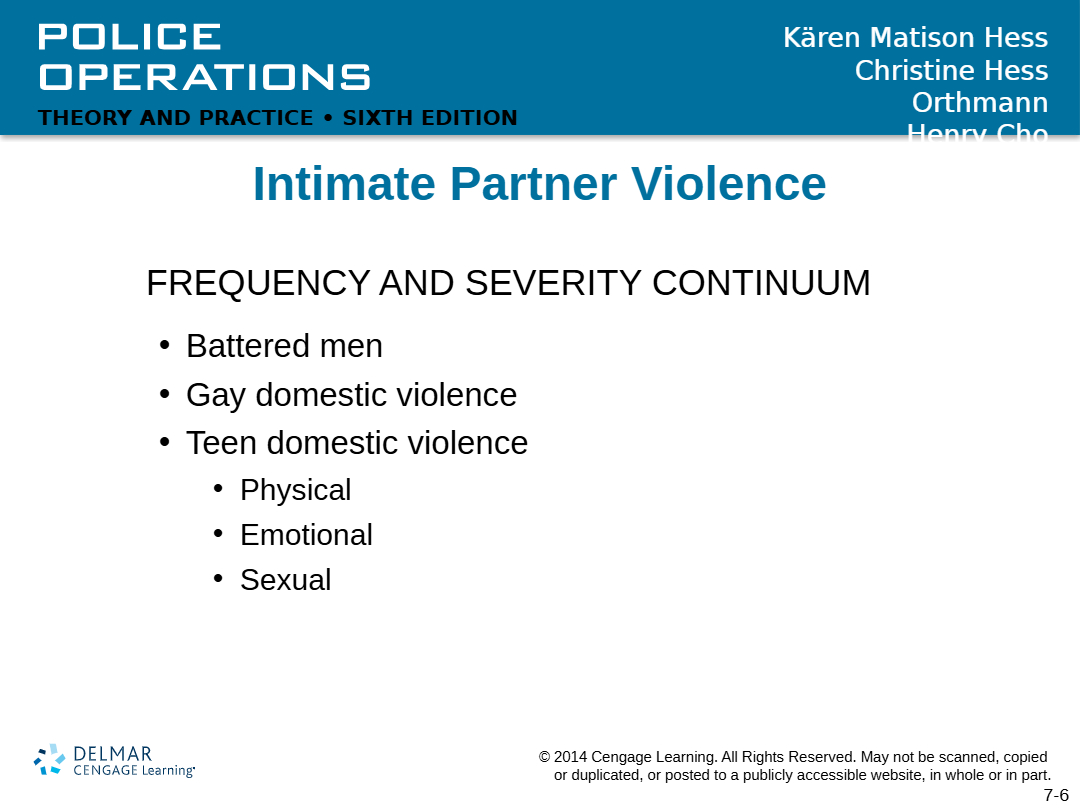
Battered Men Batter
Women tend to use weapons as equalizers; therefore, the physical harm may be greater.
Data indicate that women are twice as likely as men are to use a knife or other sharp object and three times more likely than men are to use a blunt object during an IPV incident (Smith and Farole 2009).
Husbands and boyfriends can also be emotionally abused through belittling, name-calling, ridiculing in public, and the like.
In extreme cases, some battered women use their abuse as justification to kill their batterers, a phenomenon known as battered woman syndrome, now recognized as a legal defense by the courts. Some studies suggest a trend in young women becoming more aggressive in domestic relationships.
39
Battered Woman Syndrom
Battered Men Batter
For example, a longitudinal study involving 360 couples found,
Many young women believe they can hit male partners with impunity; significantly more young women than young men believed that:
their hitting would not injure their partner,
that the police would not intervene, and
that their partner would not hit back.
However, these beliefs are misguided, as women's abuse does have consequences…Women inflict a substantial minority of domestic injuries and deaths,…women make up as many as one quarter of police arrests for abuse in some jurisdictions,… and men do abuse women who abuse them.
40
Open Ended
List three beliefs that women batterers have?
41
Battered Woman Syndrom
Battered Men Batter
Men are less likely to report acts of violence against them by their intimate partner, fearing negative reactions of others.
Men who endure abuse often let it go unreported because such victimization is not socially or culturally acceptable, nor is it often believed by the general public.
This is true for men who are sexually assaulted by woman as well.
42
Battered Woman Syndrom
Battered LGBTQ
Partner abuse among the lesbian, gay, bisexual, transgender, and queer (LGBTQ) community does exist and is increasingly being brought to the attention of law enforcement.
Data from the National Coalition of Anti-Violence Programs (NCAVP) indicates that 3,419 incidents of IPV involving lesbians, gays, bisexuals, transgender, or queer people were reported in 2008, and 9 of these incidents resulted in murder ( Lesbian, Gay, Bisexual, Transgender, and Queer 2009).
Regarding these IPV incidents in 2008, 51 percent of the LGBTQ victims were women, 42 percent were men, and 5 percent were transgender.
43
Battered Woman Syndrom
Battered LGBTQ
As with other types of IPV, it is believed the reported incidents of LGBTQ domestic violence are an undercount of the true extent of the problem.
The reasons given for not reporting a victimization to the police include:
fear of retaliation,
fear of loss of emotional support,
a desire to avoid embarrassment or shame,
fear of being “outted,”
a distrust of law enforcement, and
a lack of confidence in the courts.
44
Open Ended
Provide at least three reasons LGBTQ batter victims do not report battery?
45
46
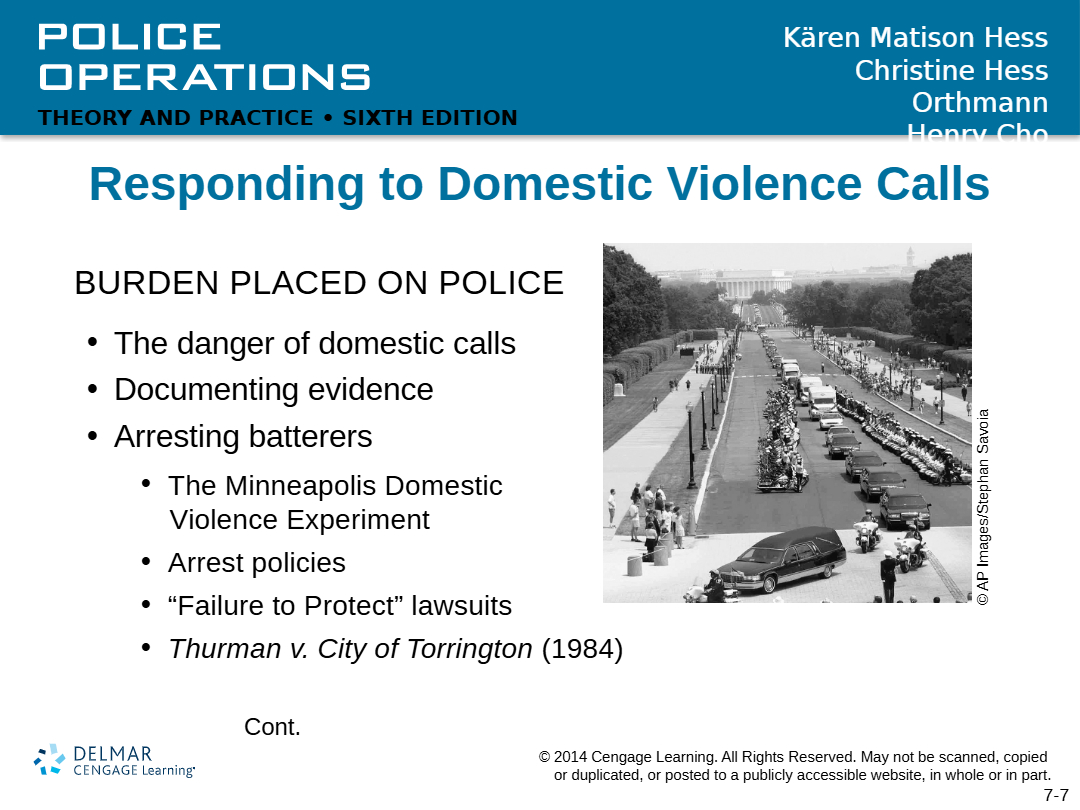
Dangers with Responding to IPV
Because researchers originally did not separate domestic disputes from other types of “disturbance” calls, using data from all disturbance calls “stretched the findings beyond what they reasonably meant” (Sampson 2007, 1).
Furthermore, the frequency of domestic disturbance calls likely adds to the exaggerated claims of dangerousness regarding such calls in terms of injury to officers.
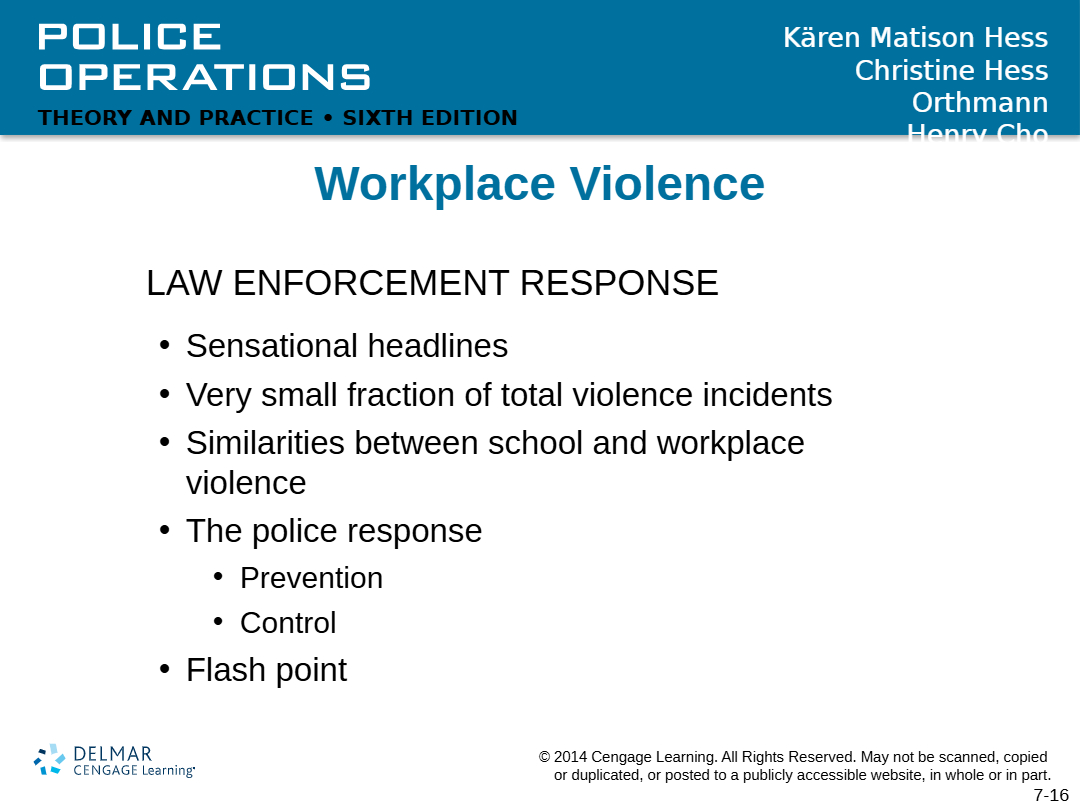
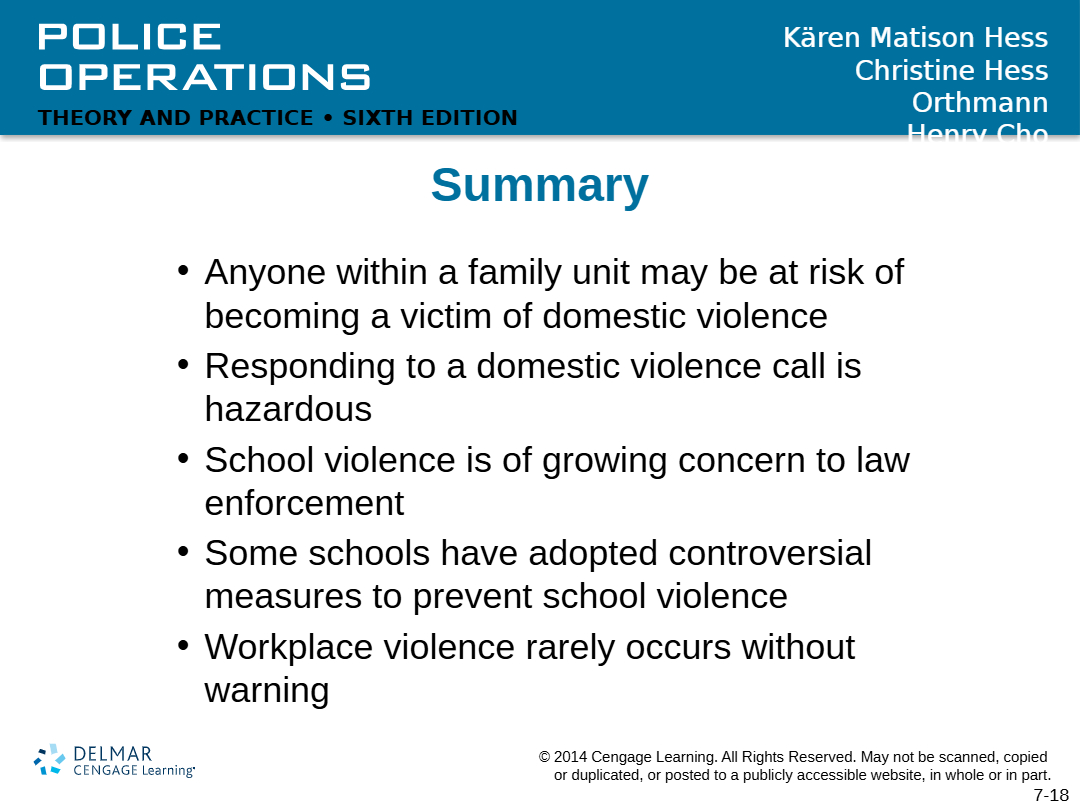
Responding to a domestic violence call is hazardous, but not as hazardous as is often thought.
47
Responding to Domestic Violence
An effective response to domestic disputes requires special skills, especially communication and negotiating skills, by law enforcement.
Family violence has a strong tendency to repeat itself, and officers often are called back several times—sometimes in the same evening. It also tends to escalate.
Effective handling of the first few calls can greatly decrease the number of further calls.
48
Responding to Domestic Violence
The IACP policy states, in the section on patrol response,
“Upon arrival on the scene of a domestic violence call or incident involving a police officer, the primary patrol unit shall immediately notify dispatch and request a supervisor of higher rank than the involved officer report to the scene, regardless of the involved officer's jurisdiction” ( Domestic Violence by Police Officers 2003, 4).
Furthermore, if probable cause exists that the involved officer committed an assault, the responding officer shall make an arrest.
49
Responding to Domestic Violence
Responsibilities at the scene of domestic violence include these:
Stop the violence.
Separate those in conflict.
Administer medical assistance if required.
Determine if assault has occurred.
If no probable cause for an arrest exists, mediate the situation.
Get them to talk it out, to stop shouting and fighting and to start talking and thinking about their situation.
If mediation is not possible, order the abusive spouse out of the house.
Suggest possible solutions and sources of assistance to the abused person.
If probable cause supporting the crime of assault does exist, make an arrest.
50
Responding to Domestic Violence
Dual Arrests
Dual arrest occurs when officers arrest both parties in a domestic violence incident.
Research indicates that approximately 2 percent of IPV incidents result in dual arrests, and officers are more likely to make dual arrests in incidents involving same-sex couples (Hirschel 2009).
However, dual arrest usually has limited effectiveness because there is almost always one primary aggressor.
51
Responding to Domestic Violence
Consequently, more than 20 states have enacted primary aggressor or “predominant aggressor” laws.
Factors officers consider when determining whether one or both parties are arrested:
such as any history of domestic abuse between the parties,
the relative severity of the injuries inflicted on each person,
the likelihood of future injury to each person, whether one of the persons acted in self-defense,
evidence from the persons involved in the domestic abuse,
and evidence from witnesses of the domestic abuse.
52
Responding to Domestic Violence
An Officer's Perspective Dual Arrests
Dual arrests occur when victim suffers “battered partner syndrome.”
Police respond to a domestic situation and arrest the aggressor. But the victim then obstructs the legal process in an attempt to protect his or her abuser and, may end up being placed under arrest for separate offenses that stem from the original domestic assault.
Psychology behind why this occurs is complex, officers must be aware arresting primary aggressor may set off defensive response by victim.
Police officers responding to a domestic violence call are responsible for investigating it thoroughly as an assault and for making an arrest if probable cause exists.
53
Multiple Choice
What are the main burdens placed on police when responding to domestic violence calls?
The danger of domestic calls
Documenting evidence
Arresting batterers
All of the above
54
Multiple Select
What are some ways police can help victims of domestic violence?
Support groups
Counseling and shelters
Restraining orders
Using GPS to track abusers
55
56
Responding to Domestic Violence
Burden on Law Enforcement
Batterer intervention programs (BIPs) are also known as spouse abuse abatement programs or SAAPs.
Several studies have found little or limited support for court-ordered treatment for batterers. Some studies have found the batterer's “stake-in-conformity” as the most significant factor in rehabilitation.
Stake-in-conformity variables include marital status, employment, and residential stability—all variables offenders might lose if convicted for a repeat offense.
The batterer's age has also been found to be a factor, when linked to residential stability, in whether abuse occurs or reoccurs, with younger men lacking a stable residence being significantly more likely to self-report committing acts of severe intimate partner violence than are older, more residentially stable men.
57
Responding to Domestic Violence
Burden on Law Enforcement
Batterer intervention programs (BIPs) are also known as spouse abuse abatement programs or SAAPs.
Several studies have found little or limited support for court-ordered treatment for batterers. Some studies have found the batterer's “stake-in-conformity” as the most significant factor in rehabilitation.
Stake-in-conformity variables include marital status, employment, and residential stability—all variables offenders might lose if convicted for a repeat offense.
The batterer's age has also been found to be a factor, when linked to residential stability, in whether abuse occurs or reoccurs, with younger men lacking a stable residence being significantly more likely to self-report committing acts of severe intimate partner violence than are older, more residentially stable men.
58
Responding to Domestic Violence
Burden on Law Enforcement
Officers responding to calls of domestic assault can help battering victims by making them aware of resources:
Support groups, counseling programs, and shelters
Other strategies that also may effectively address the problem establishing programs to rehabilitate those who commit domestic violence
and using protective and restraining orders and ensuring that such orders are adhered to.
Restraining Orders A civil restraining order (RO), also called a temporary restraining order (TRO) or order for protection (OFP), is a legally enforceable document that limits physical contact between abuser and abusee.
Furthermore, a TRO is valid anywhere a victim might go within the country. Article IV, Section 1 of the U.S. Constitution
59
Open Ended
What does RO, TRO, and OFP stand for?
60
Responding to Domestic Violence
Burden on Law Enforcement
This provision allows such things as marriage licenses and driver's licenses to have nationwide validity, regardless of which state issued them.
Federal law requires officers to honor out-of-state protection orders,
In fact, officers may be held liable for not checking for any existing protection orders when encountering these situations; failure to check may be considered a dereliction of duty.
Some states differentiate between orders that protect individuals involved domestically and orders that have no domestic involvement. This discrepancy may confuse victims as to which order to apply for.
Harassment orders may cost a court fee; however,
restraining order fees are often waived because of the domestic violence it may stem from.
61
Open Ended
When responding to an IPV, what could potentially happen to officers who fail to check for out-of-state protection orders?
62
Responding to Domestic Violence
Burden on Law Enforcement
Using GPS to Track Abusers
Thirteen states have passed legislation expanding the use of global positioning devices to include domestic abusers and stalkers who have violated orders for protection.
In cases of extreme violence, judges have been known to order global positioning system (GPS) use before trial, as a condition of bail or as a sentence,
Jurisdictions must be mindful of the Supreme Court ruling in United States v. Jones (2012), discussed in Chapter 3, in which the use of a GPS device to track a suspect was held to constitute a search under the Fourth Amendment and, as such, required a warrant. In other words, using GPS to monitor individuals is legal but comes with strict warrant requirements.
63
Open Ended
What does the Supreme Court Case US v. Jones (2012) state?
64
65
Responding to Domestic Violence
Stalking
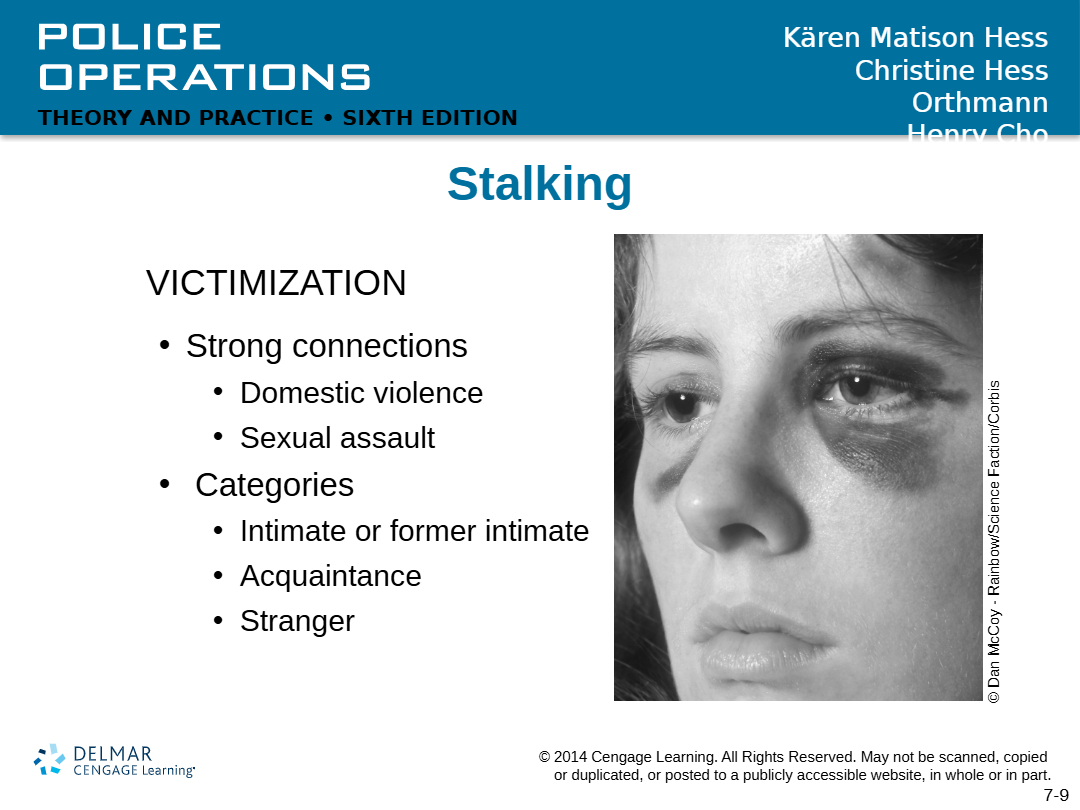
Current data indicate an estimated 3.4 million persons age 18 or older are victims of stalking each year (Baum et al. 2009).
The most common types of stalking behavior reported are receiving unwanted phone calls (66 percent),
receiving unsolicited letters or e-mail (31 percent), or
having rumors spread about oneself (36 percent).
About half (46 percent) of stalking victims experienced at least one unwanted contact per week, and
11 percent had been stalked for 5 years or more (Baum et al. 2009).
The risk of stalking victimization is highest for individuals who are divorced or separated—34 per 1,000 individuals.
About 1 in 4 stalking victims reports some form of cyberstalking such as e-mail (83 percent) or instant messaging (35 percent).
66
Responding to Domestic Violence
Stalking
The risk of stalking victimization is highest for individuals who are divorced or separated—34 per 1,000 individuals.
About 1 in 4 stalking victims reports some form of cyberstalking such as:
e-mail (83 percent) or
instant messaging (35 percent).
67
Responding to Domestic Violence
Burden on Law Enforcement
An effective police response to stalking requires:
that officers understand the nature of the crime,
its legal definition,
its various forms,
its relationships with other crimes, and
its impact on victims
Stalking behavior often escalates over time, and an inability or unwillingness of the criminal justice system to promptly and effectively intervene may allow some stalkers the opportunity to engage in increasingly violent acts (Model Stalking Code Revisited 2007).
68
Open Ended
What does §210-A. Stalking statute require officers to establish before making an arrest or writing a warning to a stalking suspect? In other words, the actor intentionally or knowingly engages in a course of conduct directed at or concerning a specific person that would cause what to happen? (Hint: there are five elements.)
69
Responding to Domestic Violence
Burden on Law Enforcement
A first step is to understand that stalking differs from many other crimes in two ways:
“First, because it involves repeat victimization of a targeted individual, stalking is, by its very nature, a series of acts rather than a single incident.
Second, this crime is defined at least partly by its effect on the victim”
To document these two elements and help prosecutors build a stronger case,
stalking victims should be instructed to keep a log of specific incidents and
to include their initial, visceral reactions.
Officers should also obtain as much information about the stalker as possible and then make an effort to talk with the suspect, recording the conversation if possible.
It should be made clear that stalking is a crime and must stop or an arrest will be made.
70
Multiple Choice
Stalking is considered (select the best answer):
stalking is, by its very nature, a series of acts rather than a single incident.
stalking is, by its very nature, a singular act rather than a series of incidents.
stalking is, by its very nature, a series of acts which could be a single incident as well.
71
Open Ended
What should officers do when they respond to a stalking call?
72
73
74
75
76
77
78
79
80
81
Multiple Select
What are the different contexts in which violence can occur as mentioned in Chapter 7?
At Home
In the Classroom
On the Job
In the Community
Show answer
Auto Play
Slide 1 / 81
SLIDE
Similar Resources on Wayground

73 questions
Accounting period & Accounting cycle
Presentation
•
University
76 questions
Hotel Operation - Week 10 and 11
Presentation
•
University
75 questions
Kode Etik dan Dewan Kehormatan Guru Indonesia
Presentation
•
University
75 questions
Review - Week 13
Presentation
•
University
77 questions
Non-Human Primates
Presentation
•
KG - University
74 questions
ITCC102-W15(SY24-25_103i)
Presentation
•
University
74 questions
Superstructure-BEAM & SLAB
Presentation
•
University
75 questions
AP Bureaucracy
Presentation
•
12th Grade
Popular Resources on Wayground
24 questions
PBIS-HGMS Day 10

Quiz
•
6th - 8th Grade
10 questions
HCS SCI 03 Summer School Review 3
Quiz
•
3rd Grade
11 questions
Home Scope
Quiz
•
7th - 8th Grade
15 questions
HCS SCI 05 Summer School Assessment 3 Review
Quiz
•
5th Grade
35 questions
Lufkin Road Middle School Student Handbook & Policies Assessment
Quiz
•
7th Grade
18 questions
Geo 11.3 Area of Circles and Sectors
Quiz
•
9th - 11th Grade