

module 6

Presentation
•
Computers
•
University
•
Practice Problem
•
Medium

Carlos Theran
Used 3+ times
FREE Resource
29 Slides • 27 Questions
1
2
3
Open Ended
How do primary and foreign keys contribute to the process of database design?
4
Multiple Choice
Why is it important to understand relationships when designing a database?
To improve database performance
To ensure data integrity and accurate representation
To reduce the cost of database software
To make databases look visually appealing
5

6
Multiple Choice
Which SQL command is used to create a view of data from a relational database?
INSERT INTO
CREATE VIEW
UPDATE VIEW
SELECT VIEW
7
8
9
Multiple Choice
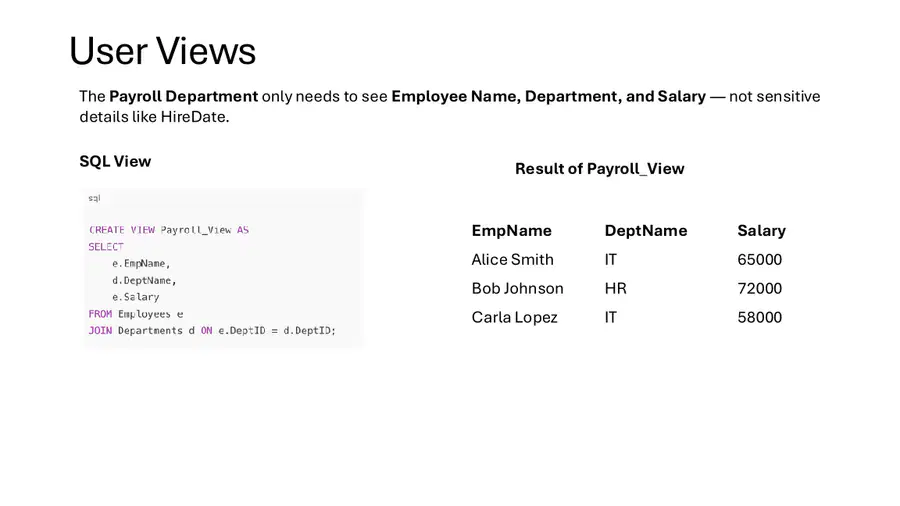
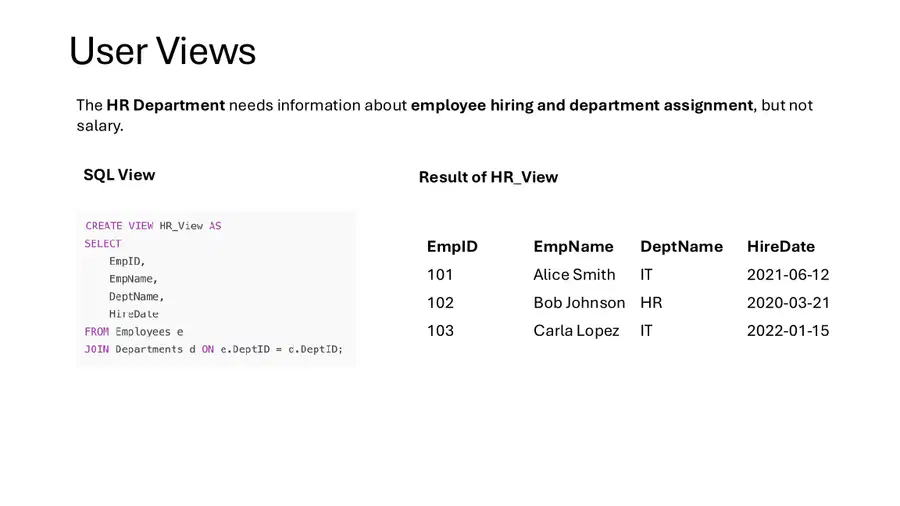
Which of the following attributes are included in the Payroll_View but not in the HR_View?
Salary
HireDate
EmpName
DeptName
10
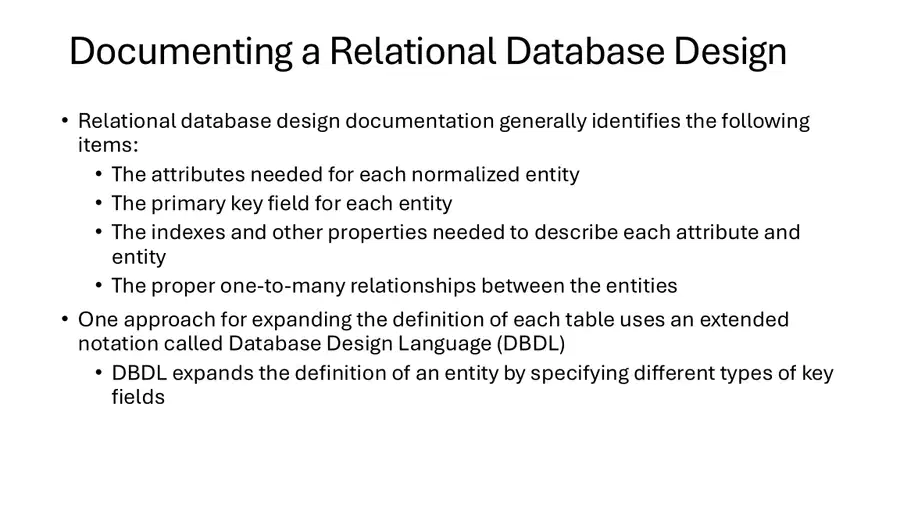
11
Fill in the Blanks
12
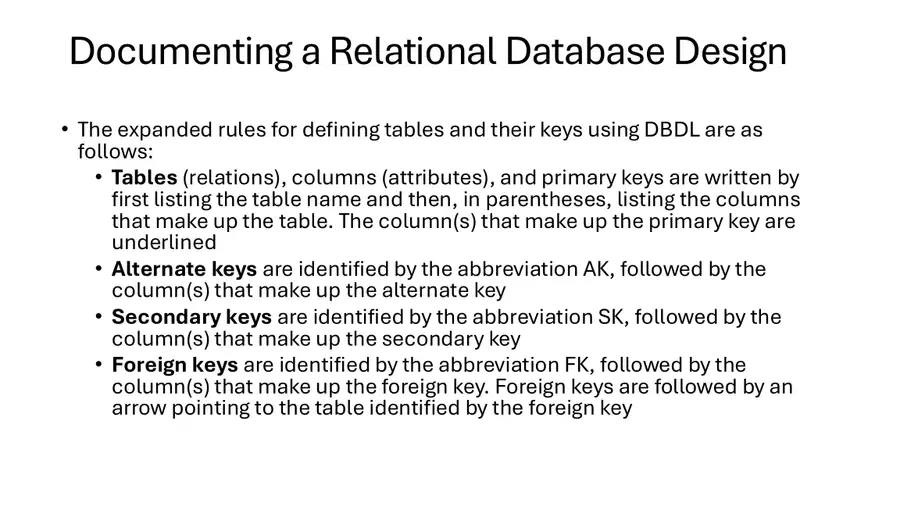
13
Multiple Choice
Which abbreviation is used to identify alternate keys in Database Design Language (DBDL)?
PK
AK
SK
FK
14
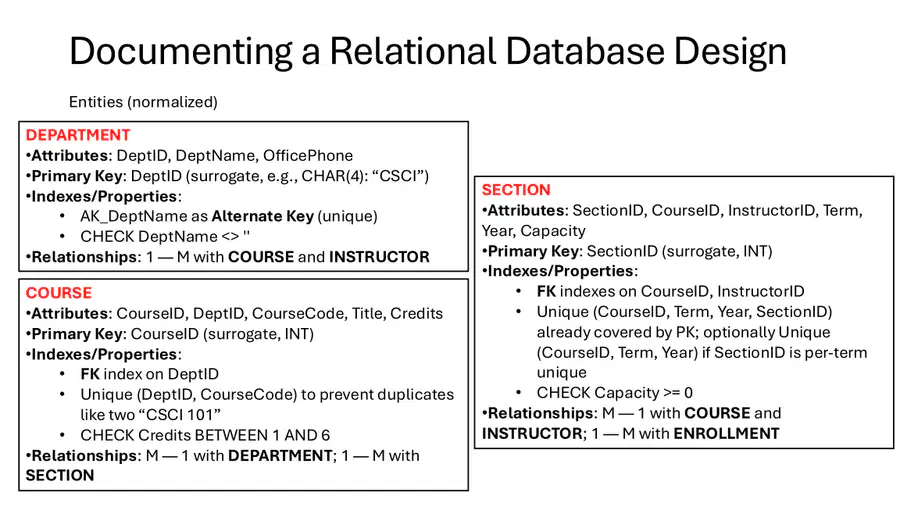
15
Multiple Choice
Based on the entity definitions, which attributes are used as foreign keys in the SECTION entity?
CourseID and InstructorID
SectionID and Year
DeptID and OfficePhone
Term and Capacity
16
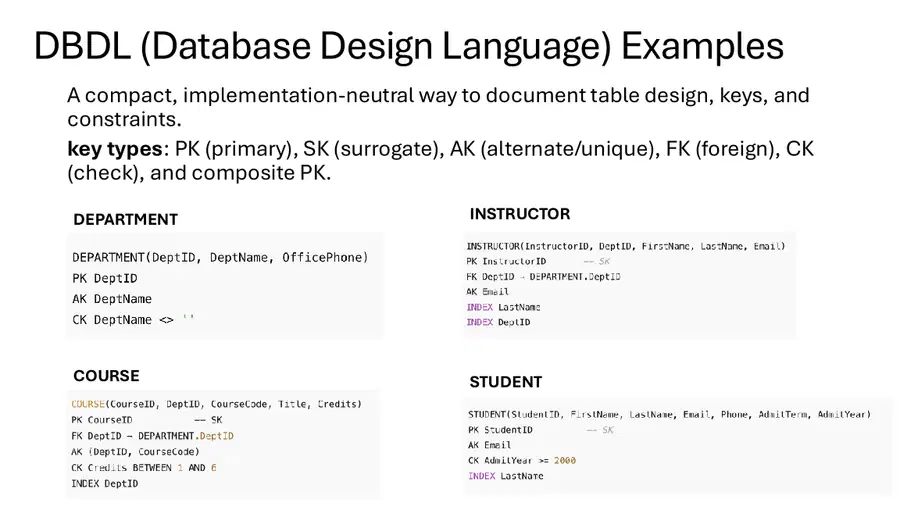
17
Multiple Choice
Which of the following key types in DBDL notation is used to enforce uniqueness but is not the primary key?
SK (surrogate key)
AK (alternate/unique key)
FK (foreign key)
CK (check key)
18
19
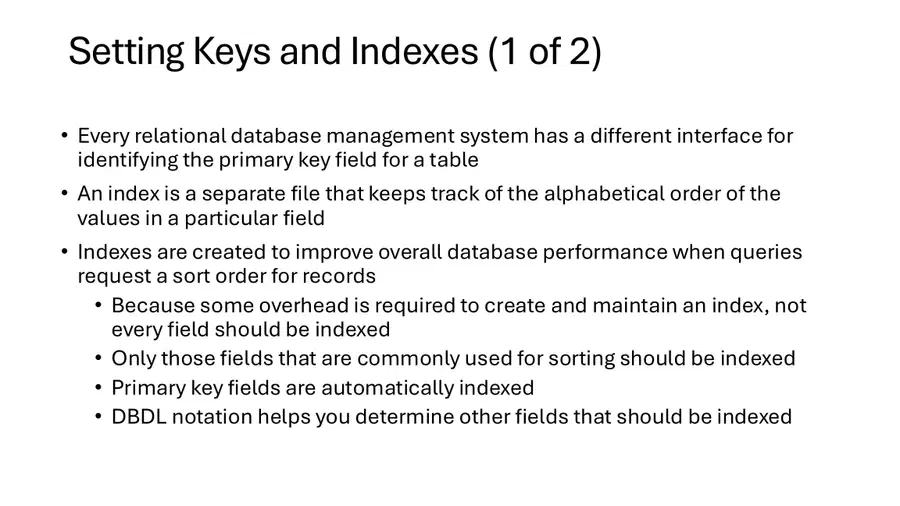
Fill in the Blanks
20
Open Ended
Explain how DBDL notation helps in determining which fields should be indexed in a relational database.
21
22
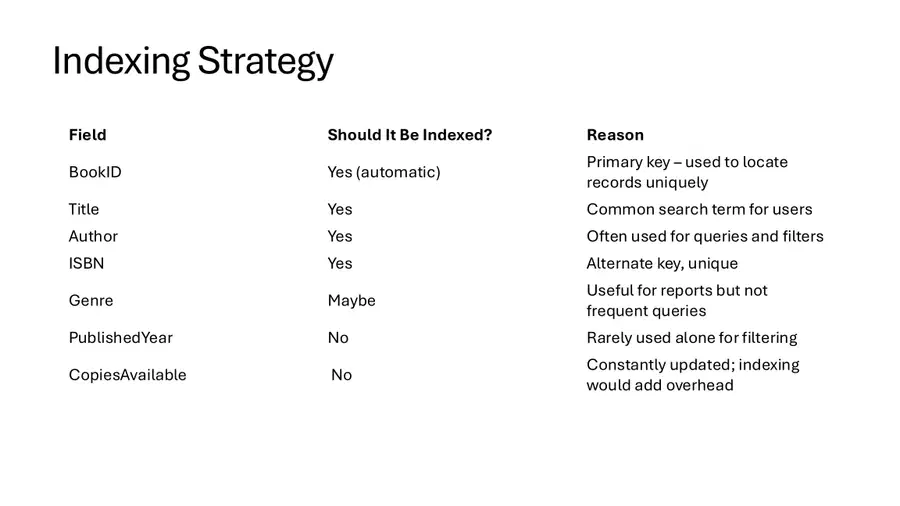
Multiple Choice
Which fields in the book database should NOT be indexed according to the indexing strategy, and why?
PublishedYear and CopiesAvailable, because they are rarely used for filtering and are constantly updated
Title and Author, because they are common search terms
ISBN and Genre, because they are unique and useful for reports
BookID and Title, because they are primary keys
23
24
25
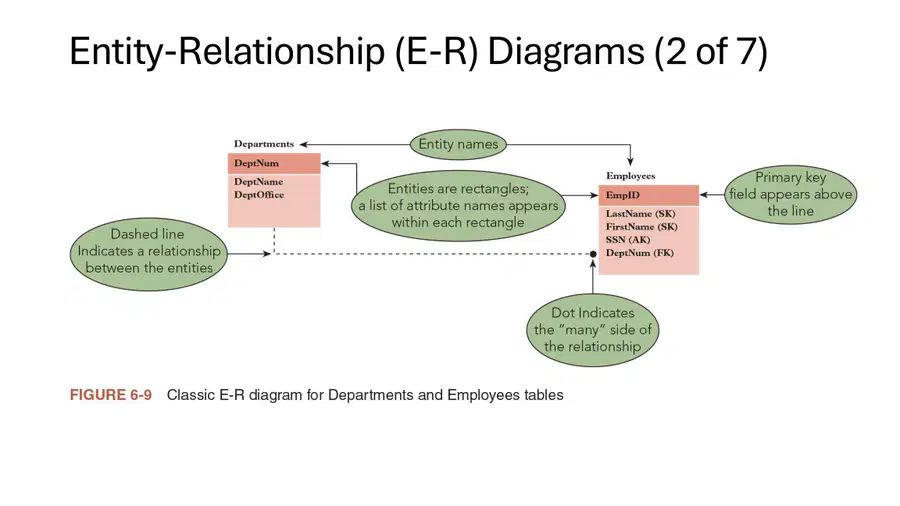
Open Ended
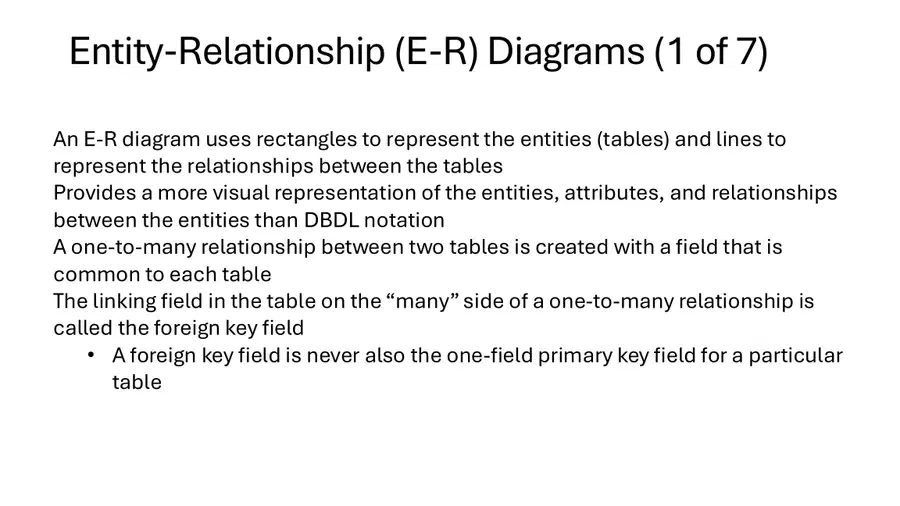
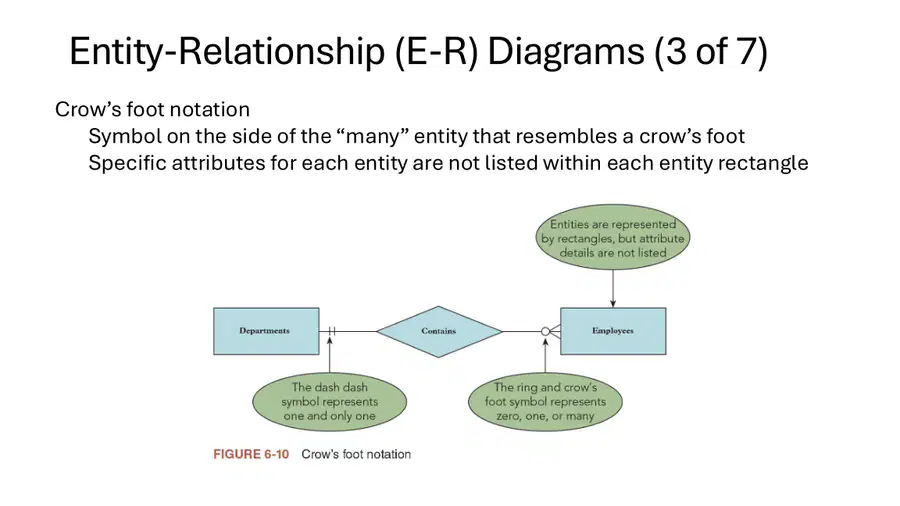
Describe the difference between DBDL notation and E-R diagrams in representing relationships between tables. Use examples from the images to support your answer.
26
27
Multiple Choice
In a crow's foot E-R diagram, what does the dash dash symbol represent on the side of the relationship?
Zero, one, or many
One and only one
Primary key
Foreign key
28
29
Open Ended
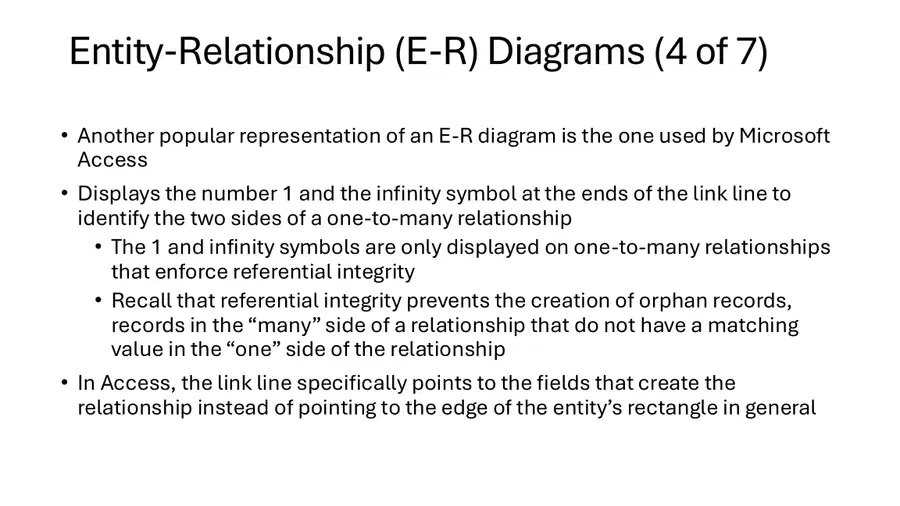
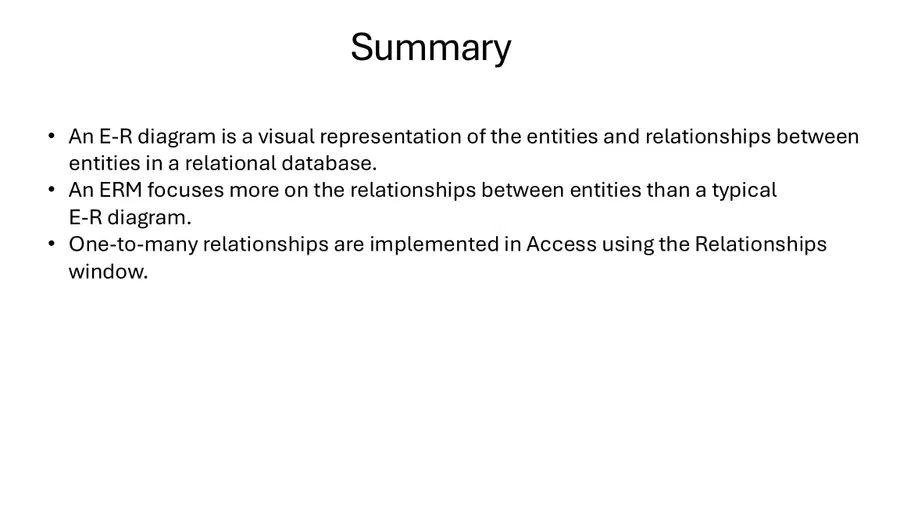
Explain how referential integrity is enforced in a one-to-many relationship in Microsoft Access E-R diagrams.
30
Multiple Choice
Which symbols are used in Microsoft Access E-R diagrams to represent the two sides of a one-to-many relationship?
1 and infinity
1 and zero
zero and infinity
one and many
31
32
Multiple Choice
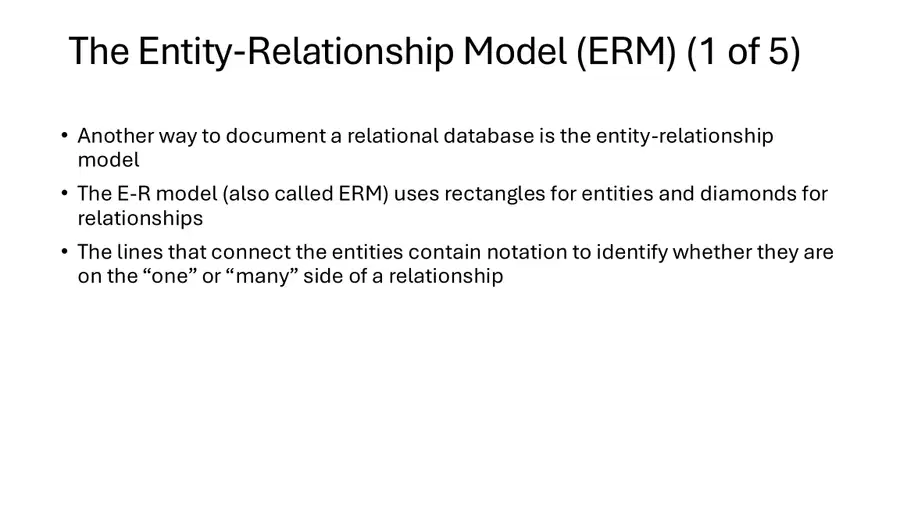
Which shapes are used in the E-R model (ERM) to represent entities and relationships?
Rectangles for entities, diamonds for relationships
Circles for entities, squares for relationships
Diamonds for entities, rectangles for relationships
Triangles for entities, circles for relationships
33
34
Fill in the Blanks
Type answer...
35
36
37
Multiple Select
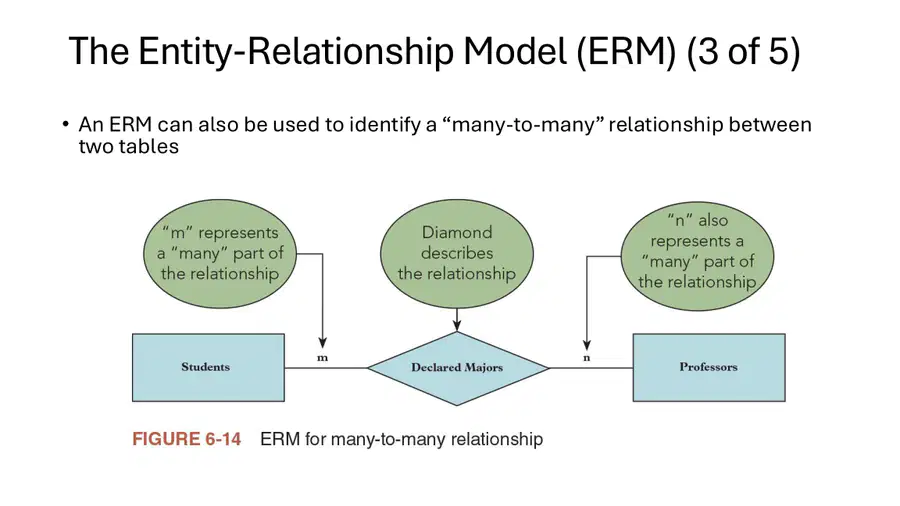
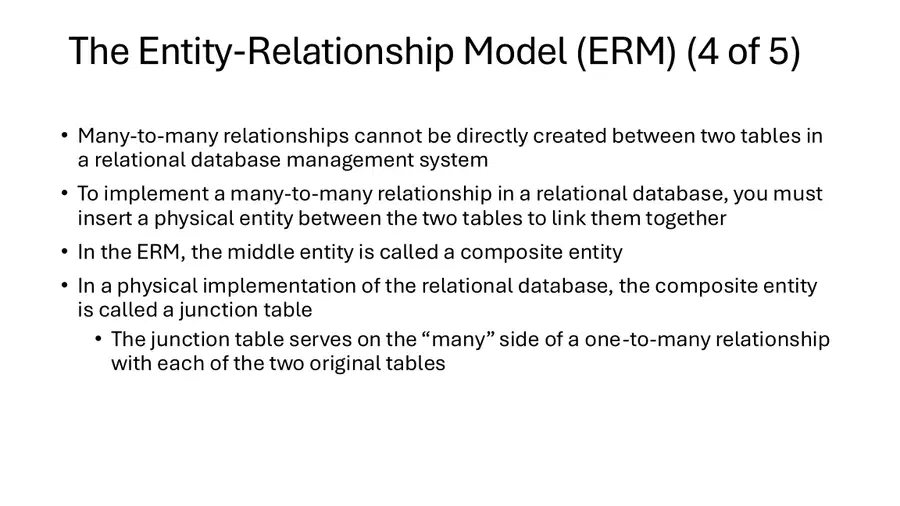
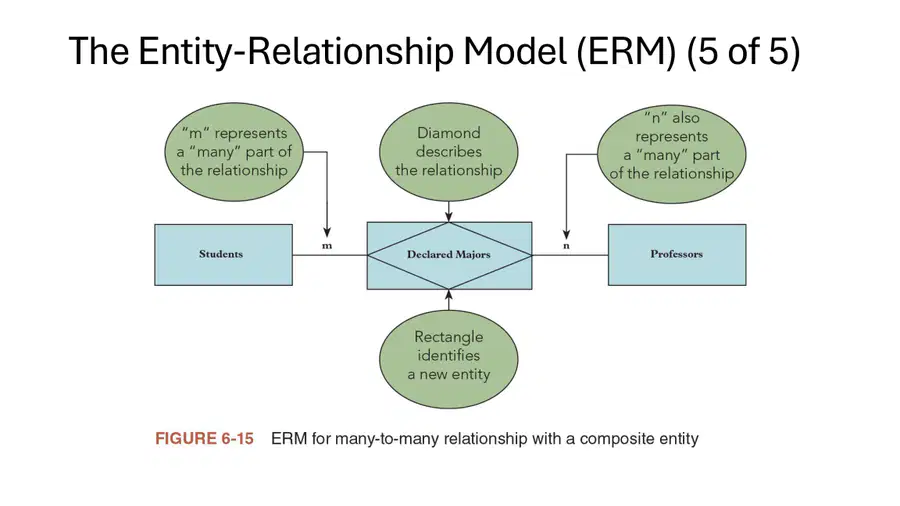
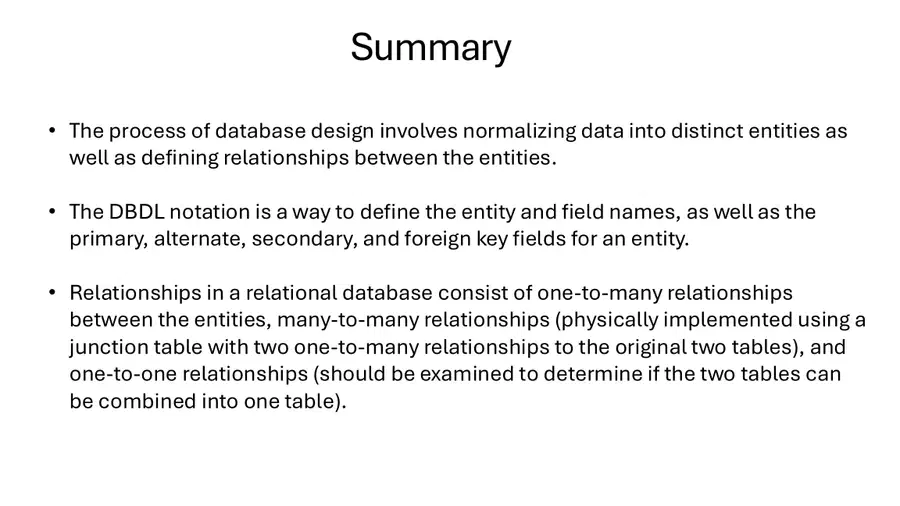
Select all correct statements about many-to-many relationships in relational databases.
They require a composite entity to link tables
They can be directly created between two tables
A junction table is used in physical implementation
The composite entity serves on the 'many' side of one-to-many relationships
38
39
Open Ended
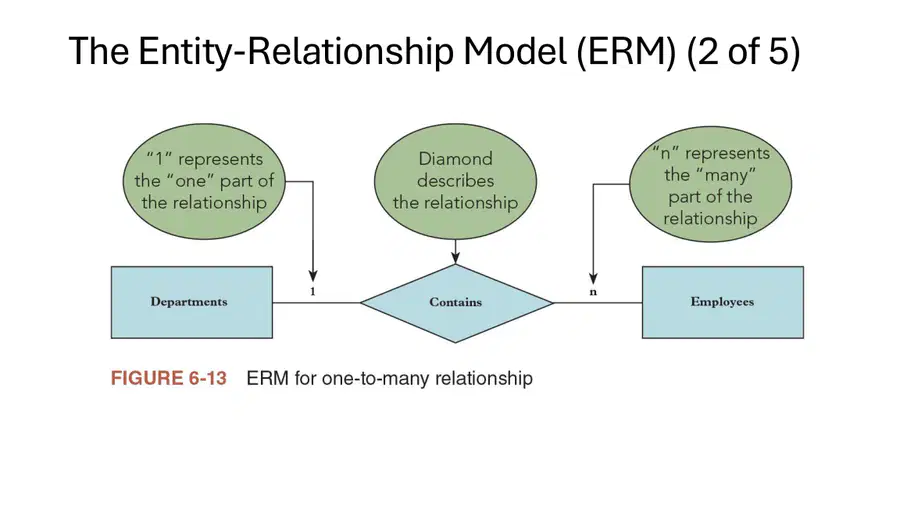
Compare how one-to-many and many-to-many relationships are represented in ERM diagrams, using examples from Departments/Employees and Students/Professors.
40
41
Multiple Choice
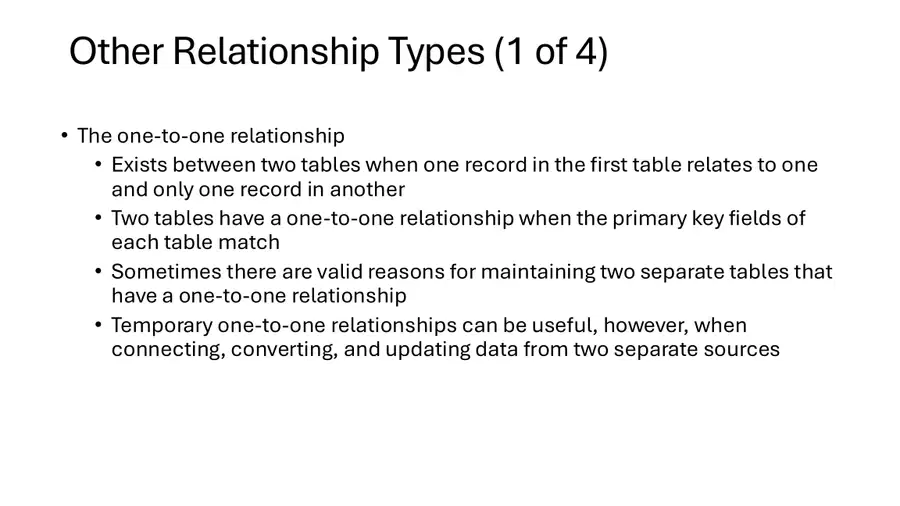
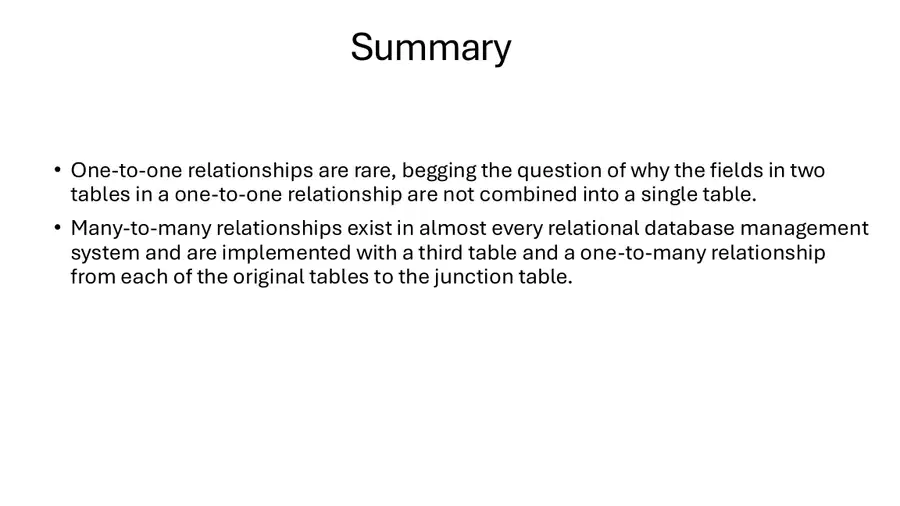
Which of the following best describes a one-to-one relationship in a relational database?
A relationship where each record in one table relates to only one record in another table
A relationship where each record in one table relates to multiple records in another table
A relationship where multiple records in one table relate to multiple records in another table
A relationship where tables are temporarily connected for data conversion
42
43
44
Multiple Select
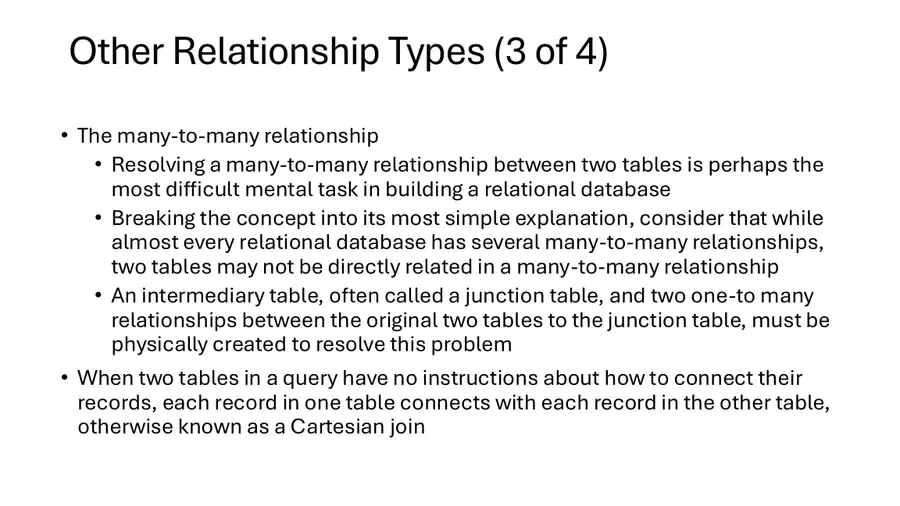
Which of the following statements are true about many-to-many relationships in relational databases?
They require an intermediary table to resolve the relationship
They can be directly linked without any intermediary table
They can result in a Cartesian join if not properly resolved
They are less common than one-to-one relationships
45
46
Fill in the Blanks
Type answer...
47
Open Ended
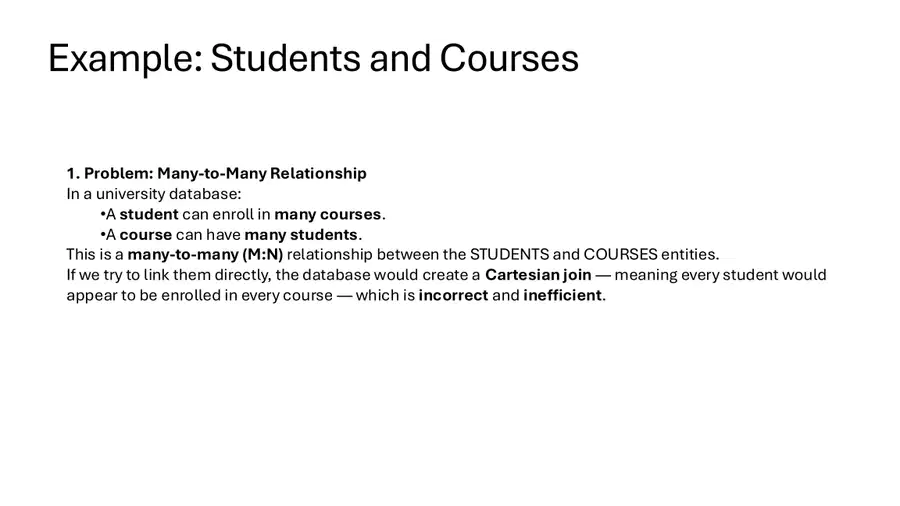
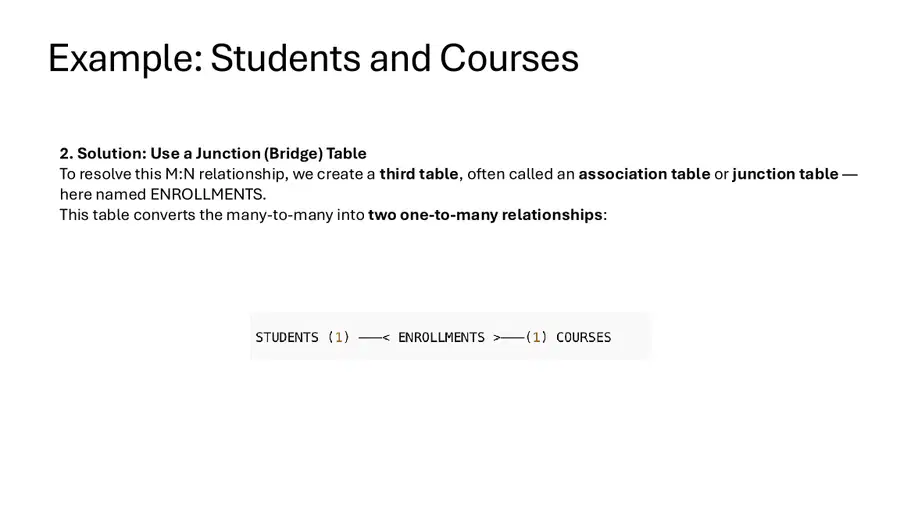
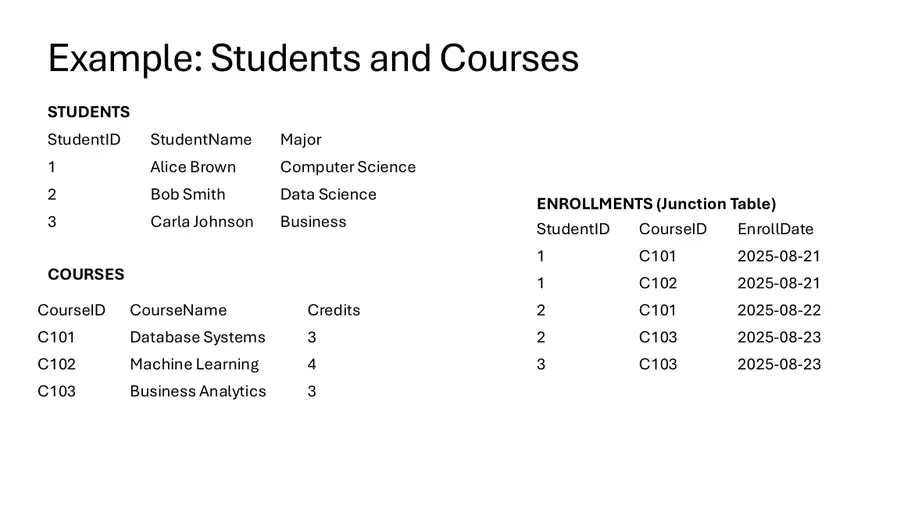
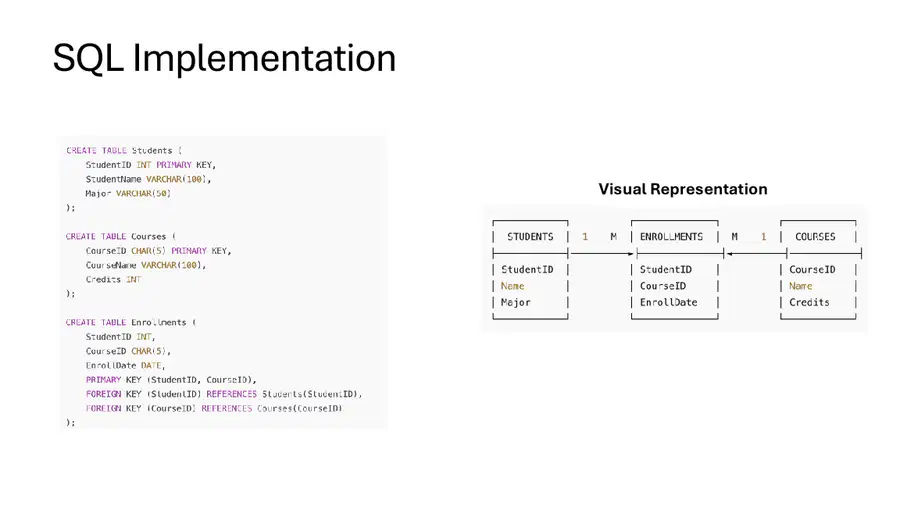
Explain why a junction table is necessary to resolve a many-to-many relationship in a relational database. Use the students and courses example to support your answer.
48
49
Multiple Choice
What is the primary purpose of the ENROLLMENTS table in the students and courses database schema?
To store student grades
To link students to the courses they enroll in
To list available courses
To record course prerequisites
50
51
Open Ended
Describe how foreign keys are used in the ENROLLMENTS table to maintain referential integrity in the students and courses database schema.
52
53
54
55
Multiple Choice
One-to-many relationships in databases are typically implemented using:
Primary keys only
Foreign keys
Unique constraints
Indexes
56
Open Ended
Reflecting on today's lesson about database design relationships, what aspect of entity-relationship diagrams do you find most challenging or interesting, and why?
Show answer
Auto Play
Slide 1 / 56
SLIDE
Similar Resources on Wayground

53 questions
Topic 2 & 3 Networking Fundamentals II
Presentation
•
University
50 questions
APA Format
Presentation
•
University
48 questions
Data Mining - Tipe dan Kualitas Data
Presentation
•
University
48 questions
Data Mining - Type and Quality of Data
Presentation
•
University
51 questions
KULIAH HORMON BS4
Presentation
•
University
51 questions
3.0 Introduction to Java
Presentation
•
University
50 questions
IIS Topic 9
Presentation
•
University
Popular Resources on Wayground
24 questions
PBIS-HGMS Day 10

Quiz
•
6th - 8th Grade
10 questions
HCS SCI 03 Summer School Review 3
Quiz
•
3rd Grade
11 questions
Home Scope
Quiz
•
7th - 8th Grade
15 questions
HCS SCI 05 Summer School Assessment 3 Review
Quiz
•
5th Grade
35 questions
Lufkin Road Middle School Student Handbook & Policies Assessment
Quiz
•
7th Grade
18 questions
Geo 11.3 Area of Circles and Sectors
Quiz
•
9th - 11th Grade