

12 natural disruptions

Presentation
•
Biology
•
12th Grade
•
Practice Problem
•
Hard

Jason Gvazdauskas
FREE Resource
32 Slides • 32 Questions
1
2
3
4
5
Open Ended
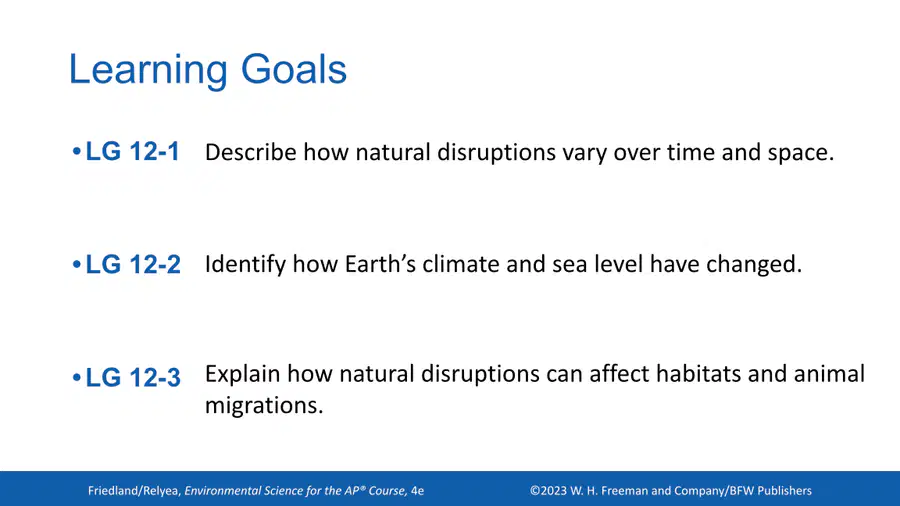
How might changes in Earth's climate and sea level impact animal migrations and habitats?
6
Multiple Choice
Why is it important to study natural disruptions to ecosystems?
To understand how ecosystems recover and adapt
To predict future changes in biodiversity
To identify ways to protect endangered species
To learn about human impacts on the environment
7
Multiple Choice
Why is it important to study natural disruptions to ecosystems?
To understand how ecosystems recover from disturbances
To predict future changes in biodiversity
To develop strategies for conservation
All of the above
8
9

10
Multiple Choice
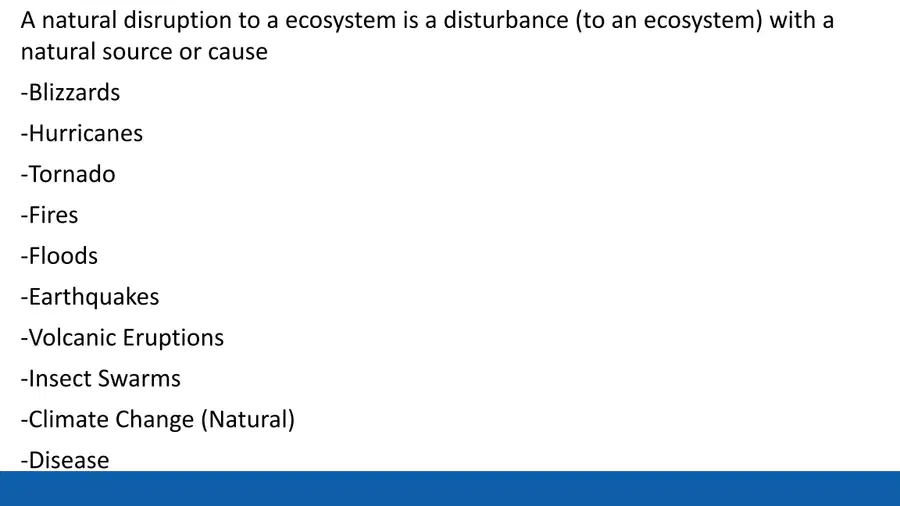
Which of the following is NOT considered a natural disruption to an ecosystem?
Blizzards
Hurricanes
Deforestation
Volcanic Eruptions
11
12
13
Multiple Choice
Which of the following is NOT considered a natural disruption to an ecosystem?
Blizzards
Hurricanes
Urbanization
Volcanic Eruptions
14
Open Ended
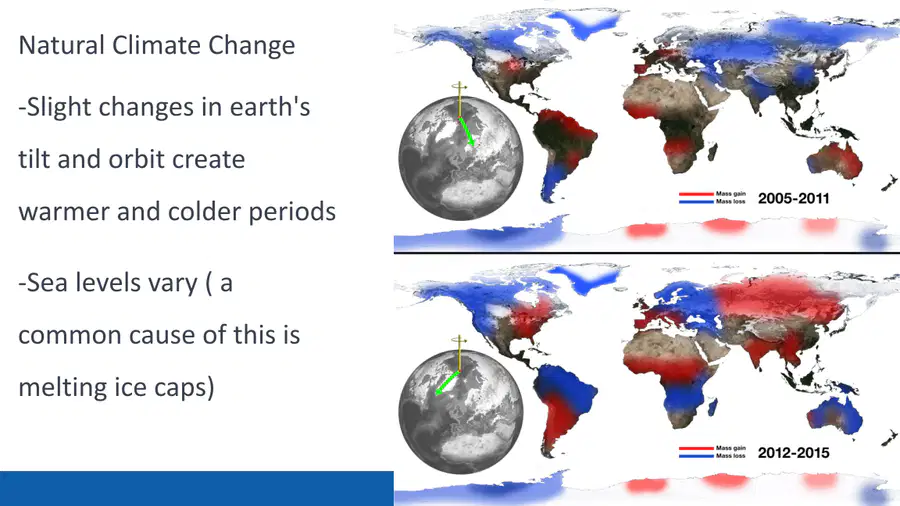
Explain how changes in Earth's tilt and orbit can affect natural climate change and sea levels.
15
16
17
Open Ended
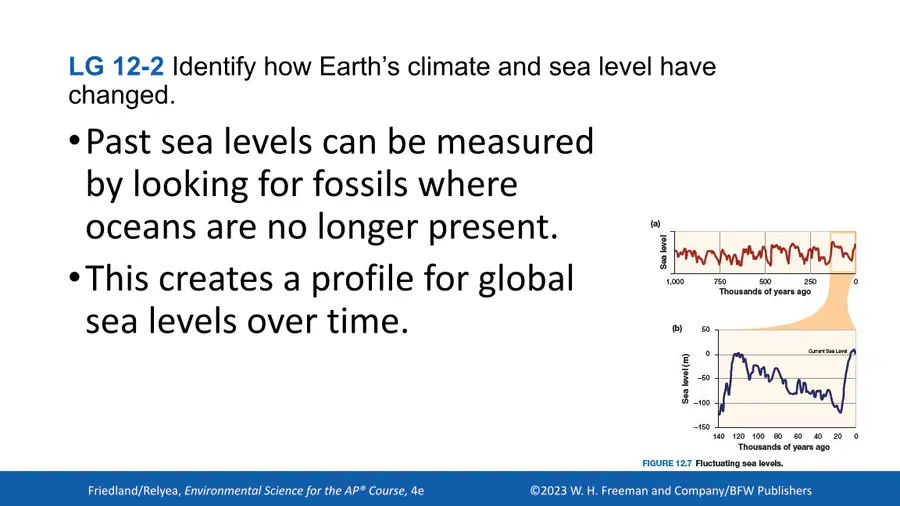
Explain how natural climate change can affect sea levels and provide an example based on the maps shown.
18
Multiple Select
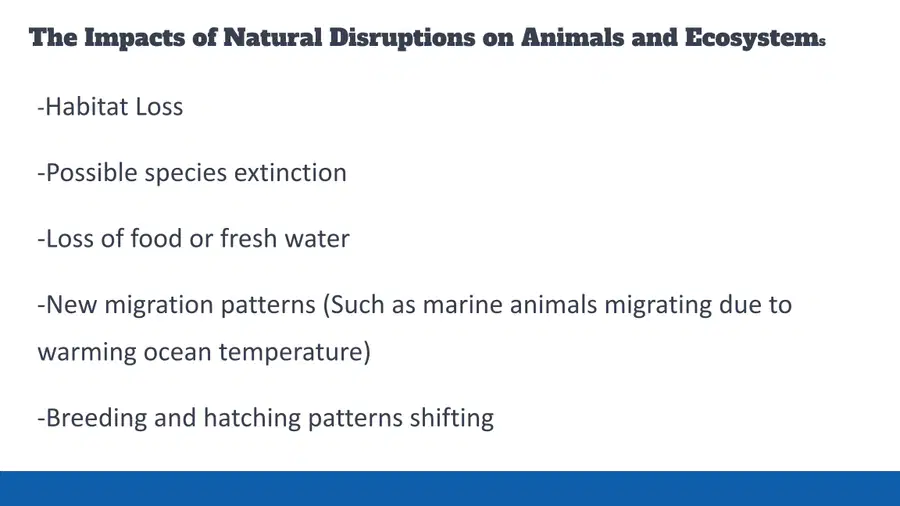
Which of the following are possible impacts of natural disruptions on animals and ecosystems?
Habitat loss
Species extinction
Increase in food supply
New migration patterns
19
20
21
Multiple Select
Which of the following are possible impacts of natural disruptions on animals and ecosystems?
Habitat loss
Species extinction
Increase in food supply
New migration patterns
22
Fill in the Blanks
23
24
25
Multiple Choice
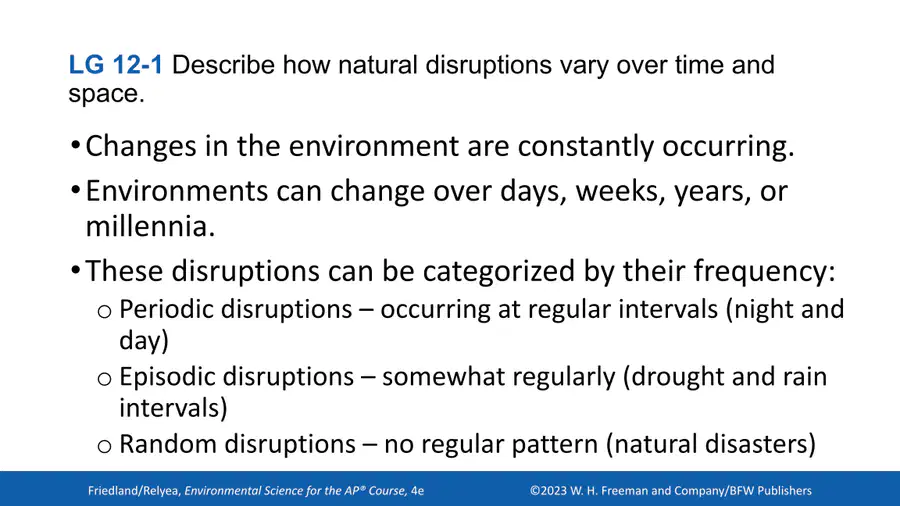
Which of the following disruptions is most likely to occur at regular intervals?
Night and day
Droughts
Natural disasters
Floods
26
Multiple Choice
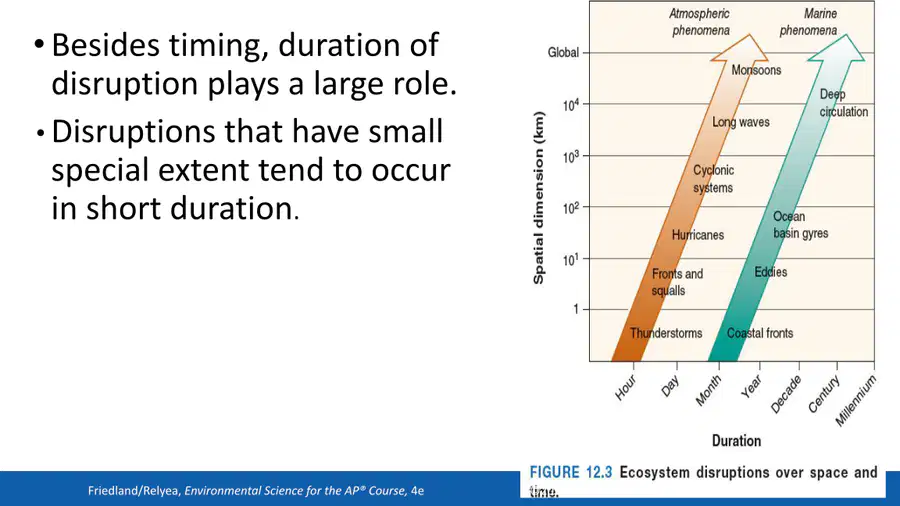
Which of the following disruptions are most likely to occur at a global scale and over a long duration?
Thunderstorms
Hurricanes
Deep circulation
Fronts and squalls
27
Fill in the Blanks
Type answer...
28
Open Ended
Describe how the duration and spatial extent of a disruption can influence its impact on ecosystems, using examples from atmospheric and marine phenomena.
29
30
31
Open Ended
Describe how the timing and duration of a disruption can influence its impact on an ecosystem, using the diagram as a reference.
32
Multiple Choice
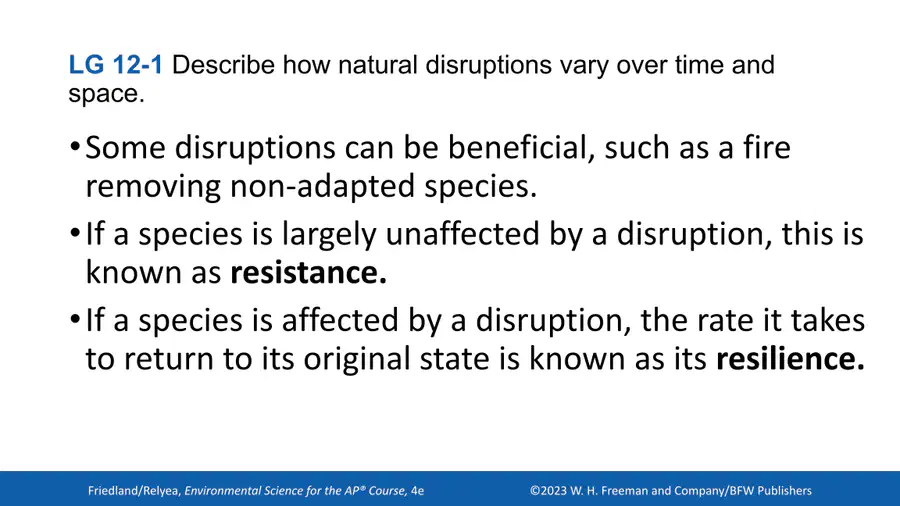
Which of the following best describes the difference between resistance and resilience in species when faced with natural disruptions?
Resistance is the ability to return to the original state after a disruption, while resilience is being unaffected by the disruption.
Resistance is being unaffected by the disruption, while resilience is the ability to return to the original state after a disruption.
Resistance and resilience both mean being unaffected by disruptions.
Resistance and resilience both refer to the speed of recovery after a disruption.
33
34
35
Multiple Choice
Which of the following best describes 'resilience' in an ecosystem?
The ability of a species to remain unaffected by a disruption
The rate at which a species returns to its original state after a disruption
The removal of non-adapted species by a fire
The process of adaptation to new environments
36
Multiple Choice
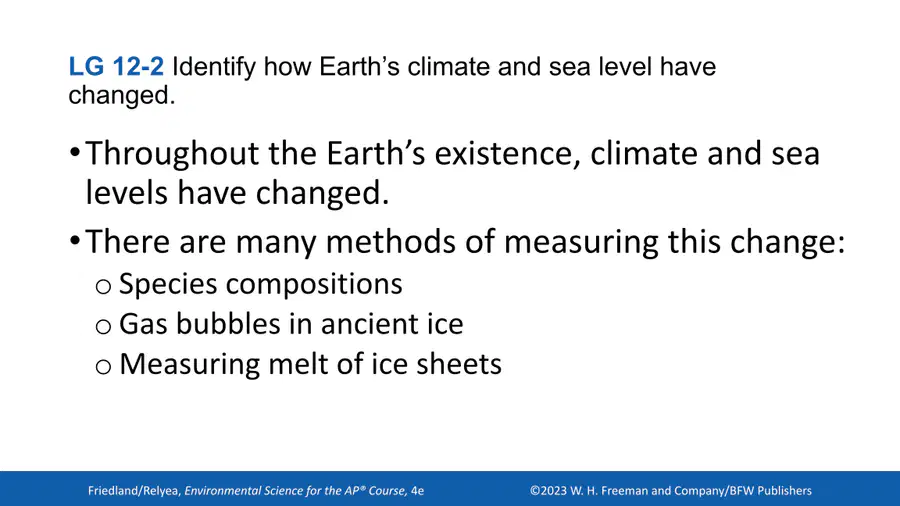
Which of the following methods can be used to measure changes in Earth's climate and sea levels?
Species compositions
Gas bubbles in ancient ice
Measuring melt of ice sheets
All of the above
37
38
39
40
Open Ended
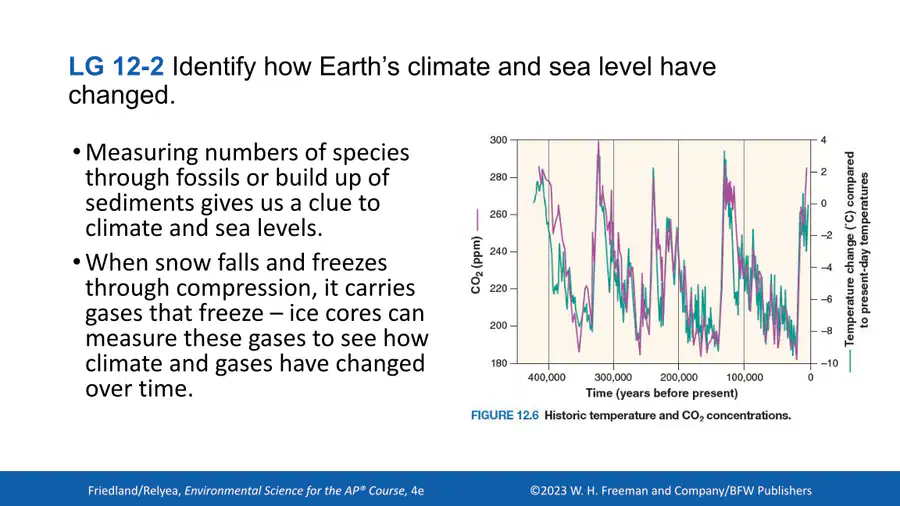
Explain how scientists use ice cores to study changes in Earth's climate and atmospheric gases over time.
41
42
43
44
Fill in the Blanks
45
46
47
Multiple Choice
Which of the following statements about natural disruptions and animal migrations is correct?
All disruptions cause permanent habitat loss.
Frequent, rapid disruptions always lead to extinction.
Disruptions can cause large habitat changes and animal migrations.
Resistance and resilience have no effect on ecosystem recovery.
48
Open Ended
How can long, rare natural disruptions impact ecosystems compared to frequent, rapid disruptions?
49
50
Open Ended
How can long, rare natural disruptions affect animal migrations and habitats?
51
Multiple Choice
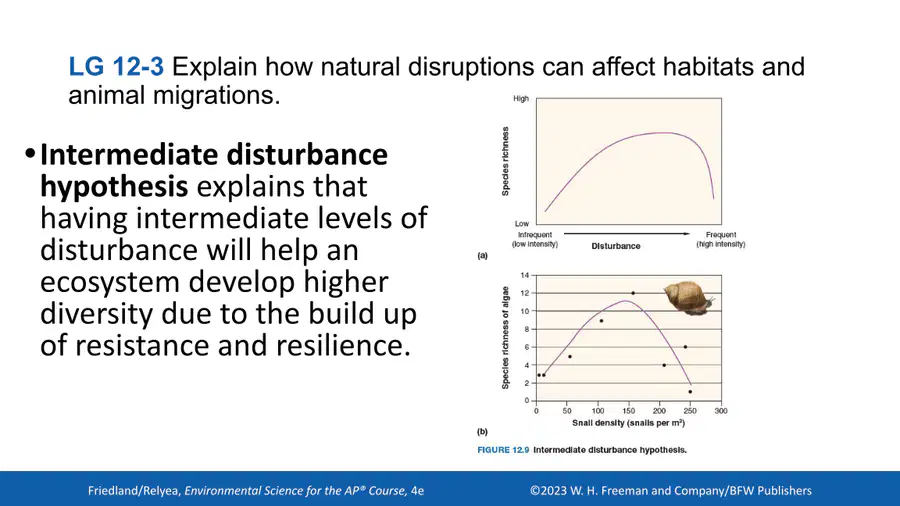
According to the intermediate disturbance hypothesis, what effect do intermediate levels of disturbance have on an ecosystem?
They decrease species diversity due to constant stress.
They increase species diversity by building resistance and resilience.
They have no effect on species diversity.
They cause extinction of most species.
52
Open Ended
Explain how natural disruptions can be both beneficial and harmful to ecosystems, using examples from the slides.
53
54
55
Multiple Select
Which of the following are possible reasons for animal migration as discussed in the slides?
To find more abundant resources
To escape from predators
To find mates
To move to areas with more favorable conditions
56
Multiple Choice
According to the intermediate disturbance hypothesis, what is the effect of intermediate levels of disturbance on ecosystem diversity?
It decreases diversity due to constant change.
It increases diversity due to the build up of resistance and resilience.
It has no effect on diversity.
It causes extinction of most species.
57
58
59
Multiple Choice
Natural disruptions can affect habitats and animal migrations. Which of the following is an example of such a disruption?
A volcanic eruption causing animals to relocate
A city building a new road through a forest
Farmers planting new crops in spring
A zoo introducing new animals
60
Fill in the Blanks
Type answer...
61
62
Open Ended
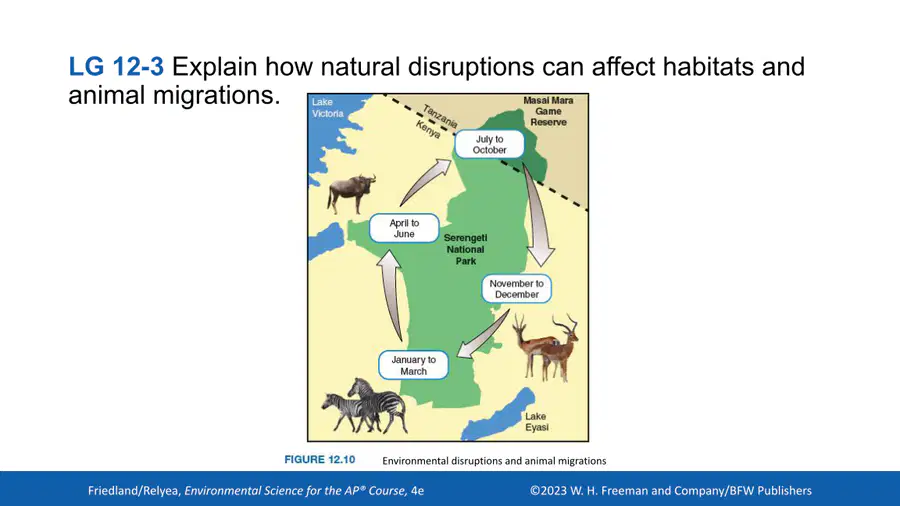
Explain how natural disruptions can influence animal migration patterns, using the information from the provided images.
63
Multiple Choice
Which of the following is an example of how natural disruptions can affect animal migrations?
A volcanic eruption causes birds to change their migration route.
A city builds a new road through a forest.
Farmers plant crops in a new area.
A zoo relocates animals to a different enclosure.
64
Open Ended
Reflecting on today's lesson about natural disruptions to ecosystems, what is one question you still have or something you would like to learn more about?
Show answer
Auto Play
Slide 1 / 64
SLIDE
Similar Resources on Wayground

59 questions
DC Government
Presentation
•
12th Grade
63 questions
Law of Supply
Presentation
•
12th Grade
59 questions
REVISION BEFORE THE FINAL TEST Grade 12
Presentation
•
12th Grade
61 questions
Photosynthesis part 2
Presentation
•
11th Grade
60 questions
Introduction to the Bats 2025
Presentation
•
12th Grade
60 questions
Cells and Cell Processes
Presentation
•
10th - 12th Grade
58 questions
APB - Unit 7.1 - Evolution
Presentation
•
11th - 12th Grade
58 questions
Web technologies
Presentation
•
11th - 12th Grade
Popular Resources on Wayground
24 questions
PBIS-HGMS Day 10

Quiz
•
6th - 8th Grade
10 questions
HCS SCI 03 Summer School Review 3
Quiz
•
3rd Grade
11 questions
Home Scope
Quiz
•
7th - 8th Grade
15 questions
HCS SCI 05 Summer School Assessment 3 Review
Quiz
•
5th Grade
35 questions
Lufkin Road Middle School Student Handbook & Policies Assessment
Quiz
•
7th Grade
18 questions
Geo 11.3 Area of Circles and Sectors
Quiz
•
9th - 11th Grade