

Travel and Tourism-Unit 2-Physical Appeal

Presentation
•
Geography
•
KG - Professional Development
•
Practice Problem
•
Easy

Aimee Cooper
Used 1+ times
FREE Resource
24 Slides • 13 Questions
1
Features of Destinations: Physical & Infrastructural Appeal
Enquiry question:
How do the physical environment and transport systems make tourist destinations appealing?
By Aimee Cooper
2
Learning Objectives
By the end of this lesson, you should be able to: Describe key physical and infrastructural features of destinations. Explain how these features attract different types of tourists. Apply examples from real destinations to show understanding.

3
Open Ended

Choose one you’d most like to visit and explain why.
→ Link answers to features (location, weather, scenery, access).Choose one you’d
4
What Makes a Destination Appealing?
Tourists choose destinations based on a combination of: Physical geography (landscape, weather) Accessibility (ease of travel) Facilities and infrastructure Attractions and culture Today we focus on the first two.

5
Labelling
label the continents
North America
South America
Africa
Australia
Antarctica
Asia
Europe
6
The Continents

7
Labelling
Label the oceans
Arctic
Southern
Pacific
Indian
Atlantic
8

9
Physical Feature 1: Location
Location refers to where a destination is found in the world.
It affects: Climate and daylight hours
Proximity to tourist markets
Travel time and cost
Example: The Maldives attract long-haul luxury tourists because of remote, tropical location. Spain attracts short-haul Europeans due to proximity and warm weather.

10
Open Ended

Identify one long-haul and one short-haul destination from your country.
11
Physical Feature 2: Weather and Seasonality
Weather and climate determine the best time to visit. Hot, dry conditions → beach tourism. Cold, snowy conditions → winter sports. Mild, dry seasons → cultural city breaks. Example: Thailand’s dry season (Nov–Apr) suits beach holidays; monsoon months reduce visitor numbers.

12
Seasonal Appeal
Different tourist types prefer different seasons: Families travel during school holidays. Retired tourists travel in off-peak seasons (cheaper, quieter). Adventure tourists seek specific climates (snow, surf, trekking).

13
Open Ended

Why do ski resorts in the Alps have a short peak season?
14
Physical Feature 3: Topography
Topography means the shape of the land – mountains, plains, rivers, coasts.
It influences activities available: Mountains → skiing, hiking, scenery.
Coasts → beaches, diving, cruises. Plains → safaris, national parks. Example: Switzerland’s Alps attract winter-sports and adventure tourists.

15
Match
Match Activity to Topography
safari
skiing
snorkelling
Trekking
savannah
mountains
coral reef
volcanic area
savannah
mountains
coral reef
volcanic area
16

17
Open Ended

What kind of topography might appeal to these different types of tourists
18

19
Accessibility & Gateways
Accessibility refers to how easily tourists can reach a destination. It depends on: Distance from major markets Availability of flights, roads, or ferries Presence of gateways (airports, ports, rail hubs)

20
Example: Singapore – A Global Gateway
Singapore Changi Airport serves over 100 airlines to 400 cities. This makes Singapore both a stopover and a destination. Easy connections attract business travellers and regional short-break tourists.

21
Transport Hubs
Major hubs increase accessibility for surrounding regions: Dubai International Airport – links Europe, Asia & Africa. Heathrow (London) – gateway to UK & Europe. Atlanta (USA) – North America’s busiest airport.

22
Open Ended
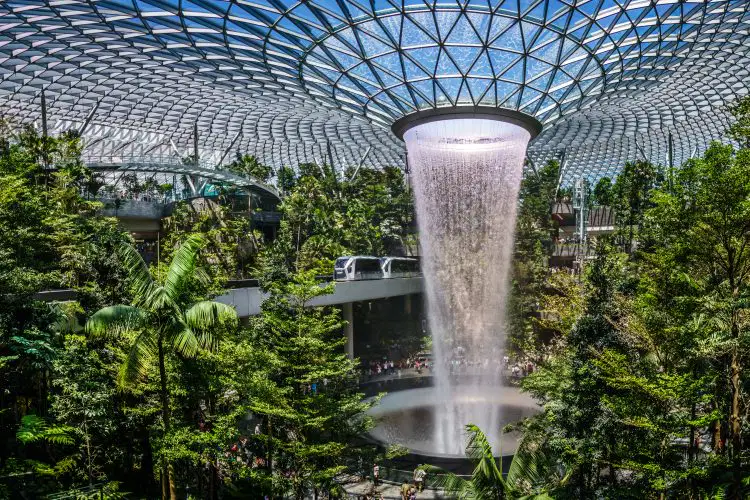
Why do hubs make destinations more appealing even if travellers only visit briefly?
23
Local Accessibility
Once tourists arrive, they need to move within the destination. Good internal transport improves visitor experience: Metro systems (Paris, Tokyo) Tourist buses & trams (Barcelona, San Francisco) Ferries and cable cars (Hong Kong)

24
Infrastructure: What Does It Include?
Infrastructure is everything that supports tourism operations: Transport networks (roads, ports, airports) Utilities (water, power, sanitation) Communication systems (Wi-Fi, mobile coverage) Accommodation and visitor facilities

25
Case Study: Switzerland
High-quality rail network links all resorts.
Integrated public transport passes (e.g. Swiss Travel Pass). Excellent signage and multilingual staff.
Result: Highly accessible for all tourist types – families, skiers, and elderly visitors.

26
27
Infrastructure and Tourist Satisfaction
Infrastructure affects how easy, safe, and comfortable a trip feels.
Poor roads or unreliable electricity can discourage repeat visits.
Model answer: A destination with modern transport and clean facilities attracts more tourists because it feels organised and trustworthy.

28
Open Ended

Compare Dubai and Kenya for accessibility and infrastructure.
How might this difference affect tourist types?
29
Dubai has world-class accessibility with one of the busiest international airports in the world, a modern metro network, and high-quality roads that link luxury hotels, malls, and attractions.
This makes travel fast, safe, and comfortable for visitors.
Kenya’s infrastructure is less developed. Although it has an international airport in Nairobi, transport between national parks and resorts often involves long road journeys or internal flights on small aircraft. Roads may be rough and travel times unpredictable.
As a result, Dubai mainly attracts business travellers, families, and luxury tourists who value comfort, convenience, and short travel times. Kenya appeals more to adventure tourists and nature enthusiasts who are willing to travel further and tolerate basic facilities in exchange for unique wildlife experiences.

30
Open Ended

Choose one destination (e.g. Maldives, Switzerland, Thailand, or Dubai).
Create a short written profile using sub-headings:
Location and accessibility
Weather and seasonality
Landscape and topography
Infrastructure and transport
Add one sentence explaining which tourist type it appeals to most.
31
Model Profile: Maldives
Location: Indian Ocean, SW of India. Weather: Hot, tropical climate, dry season Dec–Apr. Topography: 1 200 low coral islands – white sand beaches. Accessibility: Reached by long-haul flights via Doha or Dubai. Infrastructure: Luxury resorts with private airports and speedboats. Appeal: Honeymoon and luxury tourists seeking peace and scenery.

32
Open Ended
Explain how improvements in accessibility can change the types of tourists who visit a destination.
Hint: Think about the impact of new airports, cruise terminals, or high-speed rail.
33
Challenges of Infrastructure Growth
Cost of building and maintenance is high. Environmental damage from expansion (e.g. airport runways). Over-tourism and crowding in popular areas. Unequal benefits – urban areas develop faster than rural ones.

34
Sustainability Link
Infrastructure should be: Environmentally friendly (e.g. electric buses). Socially inclusive (benefits locals too). Economically viable (long-term maintenance costs). Example: Switzerland’s electric trains reduce emissions while supporting tourism.

35
Open Ended
1️⃣ Which term describes the shape of the land?
2️⃣ Give one example of a transport gateway.
3️⃣ Why is seasonality important for tourism planning?
4️⃣ Which country is known for excellent internal transport?
36
Learning Objectives
By the end of this lesson, you should be able to: Describe key physical and infrastructural features of destinations. Explain how these features attract different types of tourists. Apply examples from real destinations to show understanding.
37
Open Ended
The most important feature of a tourist destination is _____ because _____.”
location, weather, scenery, or infrastructure.
Features of Destinations: Physical & Infrastructural Appeal
Enquiry question:
How do the physical environment and transport systems make tourist destinations appealing?
By Aimee Cooper
Show answer
Auto Play
Slide 1 / 37
SLIDE
Similar Resources on Wayground

33 questions
Intro to circle vocabulary
Presentation
•
7th - 10th Grade
29 questions
Density
Presentation
•
7th - 9th Grade
29 questions
Reporting Category 2
Presentation
•
9th Grade
32 questions
Volume Lesson
Presentation
•
7th Grade
32 questions
Conflict Resolution
Presentation
•
6th - 8th Grade
31 questions
CS Lesson 4
Presentation
•
6th - 8th Grade
34 questions
Changes in States of Matter Notes
Presentation
•
8th Grade
30 questions
Oxidation and Chemical Formulas
Presentation
•
9th - 12th Grade
Popular Resources on Wayground
10 questions
HCS SCI 03 Summer School Review 4

Quiz
•
3rd Grade
11 questions
HSMS - Standard Response Protocol
Quiz
•
6th - 8th Grade
16 questions
1.1-1.2 Quiz Review
Quiz
•
9th - 12th Grade
12 questions
Exponent Expressions
Quiz
•
6th Grade
20 questions
Adding and Subtracting Integers
Quiz
•
6th - 7th Grade
11 questions
Northeast States
Quiz
•
3rd - 4th Grade
10 questions
Characterization
Quiz
•
3rd - 7th Grade
10 questions
Common Denominators
Quiz
•
5th Grade