

Probiotics and Human health

Presentation
•
Health Sciences
•
University
•
Hard

Active CMU
Used 3+ times
FREE Resource
39 Slides • 8 Questions
1
By Active CMU
Biochemistry Staffs
2
09:00 – 10:00 น. : ศึกษา clip VDO จำนวน 2 clips สามารถอ่านเพิ่มเติมได้ตามต้องการ
10:00 – 12:00 น. : ทำ team quiz by Kahoot จำนวน 8 ข้อ จากความรู้ที่ศึกษามาใน
VDO clips และเฉลย

4
10:00 – 14:00 น. ทำ team quiz “quizzes” จำนวน 8 ข้อ จากความรู้ที่ศึกษามาใน VDO clips และเฉลย
การแข่งขันระหว่างทีม แข่งเวลาและความถูกต้อง
การเก็บคะแนนดูจากแค่ความถูกต้อง
5


6
Multiple Choice
1.Which of the following have significantly co-contributed with microbiome to understand health and disease in individual? According to this clip
Xenobiotics metabolism
Metabolism
Epigenetics
Genome sequence
Telomere length
7
Multiple Choice
2. How does diet impact the gut microbiome?
A) Changes of diet improve all gut flora growth as their energy source
B) Diet drives changes in the type of gut flora
C) Lipid-rich diets suppress all gut flora growth
D) Protein-rich diets increase all bacteria equally
E) Choline containing diets improve good bacteria growth
8
Multiple Choice
3. How can fiber affect the gut microbiome?
A) Increases good bacteria
B) Feeds bacteria that produce harmful gases
C) Promotes carcinogenic bacteria
D) Reduce all bacterial growth
E) Causes bacteria to produce trimethylamine oxide
9
Multiple Choice
4. How have modern genetic sequencing techniques transformed our understanding of the colon's function?
A) They showed that the colon’s primary role is still water absorption and waste retention
B) They helped reveal that the colon hosts a complex microbiome crucial for overall health
C) They proved that all bacteria in the gut can be easily cultured in labs for research
D) They confirmed that bacteria strains are conserved in the gut of human body
E) They demonstrated that the colon's role in digestion is insignificant compared to other organs
10

11


12

13

14

15

16

17

18

19
20

21

22
Health-promoting effects of good bacteria include boosting our immune system, improving digestion and absorption. They make vitamins, inhibit the growth of potential pathogens, and keep us from feeling bloated. Should bad bacteria take roost, they can produce carcinogens, putrefy protein in our gut, produce toxins, mess up our bowel function, and cause infections.
Researchers are still in the process of figuring out which bacteria are which.
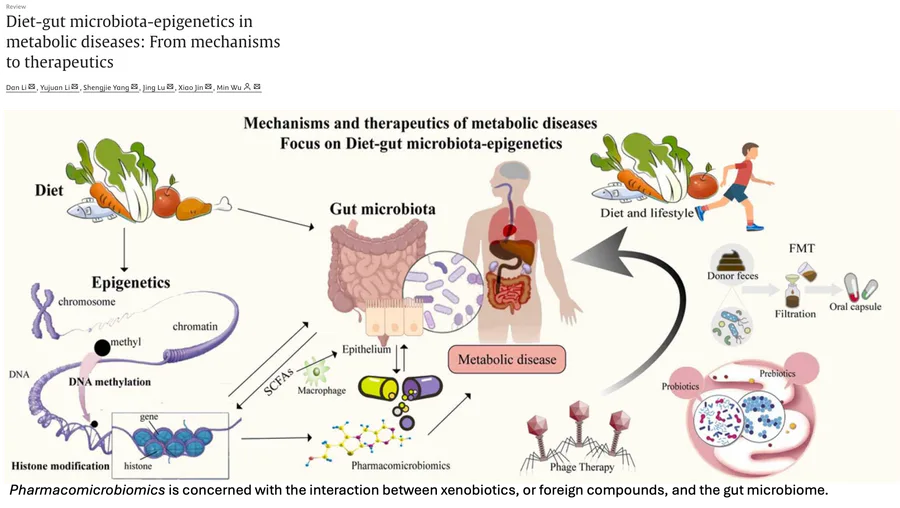
Based on studying what comes out of twins, those that eat different habitual diets and stools from around the world, it has become evident that diet has a predominant role on the bacteria in our colon, and the diet-driven changes in it occur within days to weeks.
23
Milk fat on a piece of pizza, for example, may complex with bile and feed a bacteria that produces the rotten egg gas, hydrogen sulfide, and has experimentally been associated with colitis, inflammatory bowel disease.
Fiber, on the other hand, feeds our good bacteria and decreases inflammation in the colon.
Choline, found in eggs, seafood, and poultry, as well as carnitine in red meat, can be turned into trimethylamine oxide and contribute to heart disease and perhaps fatty liver disease.
And excess iron may muck with our good bacteria and contribute to inflammation as well
24

25

26

27

28

29

30

31

32
Multiple Choice
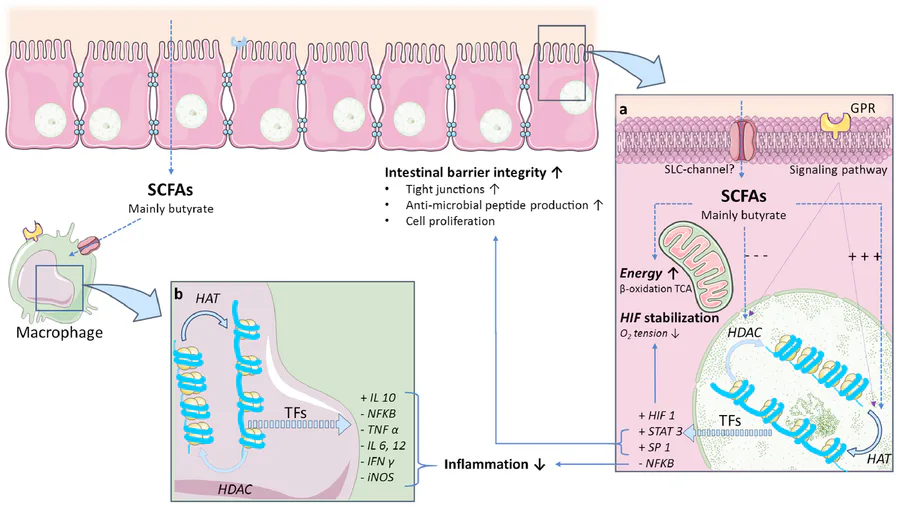
What is the role of short-chain fatty acids produced by gut bacteria?
They cause steatosis (fatty stool)
They cause type 2 diabetes or cardiovascular disease
They suppress inflammation
They suppress iron toxicity in colon
They promote colon cancer
33
Multiple Choice
2. Which of the following components is highly found in beans and helps increase good bacteria in the gut?
Essential amino acids
Vitamin B6
Resistant starch
Complex carbohydrates
Resistant protein
34
Multiple Choice
3. Which of the following is correct about dysbiosis in the gut?
Consumption of too many MACs
It is caused by an imbalance of bacterial metabolites
It is caused by short-chain fatty acids
It results in imbalance of normal flora
It is activated by fiber
35
Multiple Choice
4. How can dysbiosis in the gut microbiome lead to an increase risk of cardiovascular disease, type 2 diabetes, and metabolic syndrome?
It decreases digestion
It directly affects neurotransmitter production
It leads to systemic inflammation
It activates immunity
It increases production of short chain fatty acids
36

37

38

39

40
41

42

43

44

45

46

47

By Active CMU
Biochemistry Staffs
Show answer
Auto Play
Slide 1 / 47
SLIDE
Similar Resources on Wayground

42 questions
Introduction to Medical Terminology
Presentation
•
12th Grade
41 questions
25-26 Unit 2 Day 4 DHO CH 14 (2) prev accid PPP
Presentation
•
KG - University
44 questions
Peds GI
Presentation
•
KG - University
42 questions
B1 week 2
Presentation
•
University
41 questions
EJS Week II (14-19 Aug 2023)
Presentation
•
University
41 questions
Chapter 4: Muscular System - Waground
Presentation
•
12th Grade - University
41 questions
The Properties of Real Numbers
Presentation
•
Professional Development
Popular Resources on Wayground
10 questions
Safety Day 2026 – Student Review

Quiz
•
9th Grade
21 questions
Continents and Oceans
Quiz
•
6th Grade
20 questions
Parts of Speech
Quiz
•
5th Grade
16 questions
Subject & Predicate
Quiz
•
5th Grade
25 questions
Multiplication Facts
Quiz
•
5th Grade
12 questions
Map Skills
Quiz
•
3rd Grade
22 questions
Continents and Oceans
Quiz
•
5th Grade
15 questions
Rounding Decimals
Quiz
•
5th Grade
Discover more resources for Health Sciences
20 questions
Disney Trivia
Quiz
•
University
10 questions
Spanish Greetings and Goodbyes!
Presentation
•
6th Grade - University
20 questions
Physical or Chemical Change/Phases
Quiz
•
8th Grade - University
39 questions
Unit 7 Key Terms
Quiz
•
11th Grade - University
25 questions
SER and Subject Pronouns
Quiz
•
8th Grade - University
38 questions
Unit 6 Key Terms
Quiz
•
11th Grade - University
19 questions
Key Concepts in Buddhism
Quiz
•
University
0 questions
Cell Domain Basic Review (Biology)
Quiz
•
University