

ch13_3.ppt

Presentation
•
Physics
•
12th Grade
•
Practice Problem
•
Hard

Wayground Resources
FREE Resource
30 Slides • 28 Questions
1
2
Open Ended
Why is the idea that 'everything pulls on everything else' significant in understanding the universe?
3
4
Multiple Choice
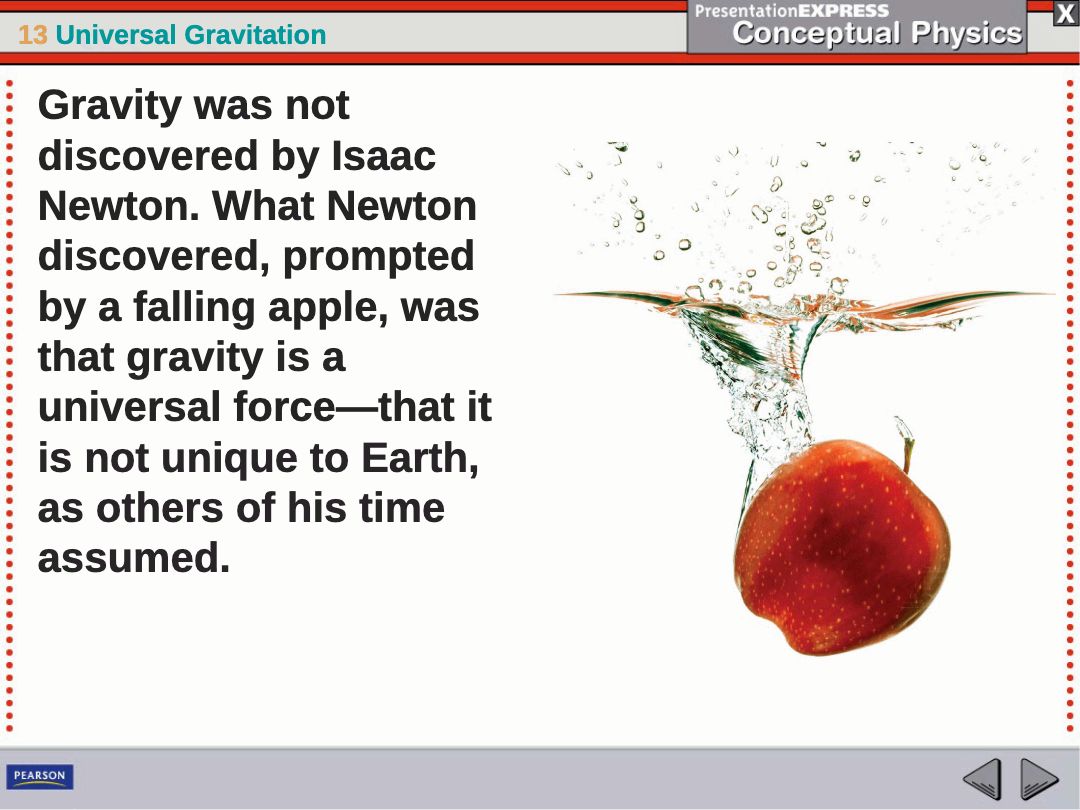
What did Isaac Newton discover about gravity that was different from what people believed at his time?
Gravity is a universal force, not unique to Earth
Gravity only exists on Earth
Gravity was first discovered by Newton
Gravity is caused by falling apples
5
6
Multiple Choice
According to Newton, why does the moon fall toward Earth just like an apple falls from a tree?
Because both are pulled by Earth's gravity
Because the moon is heavier than the apple
Because the apple is attracted to the moon
Because of air resistance
7
8
Multiple Choice
How did Newton use the concept of inertia to understand the motion of objects?
He realized that objects move in circles naturally
He believed that objects stop unless pushed
He understood that without an outside force, objects continue in a straight line at constant speed
He thought that gravity only affects falling objects
9
10
Open Ended
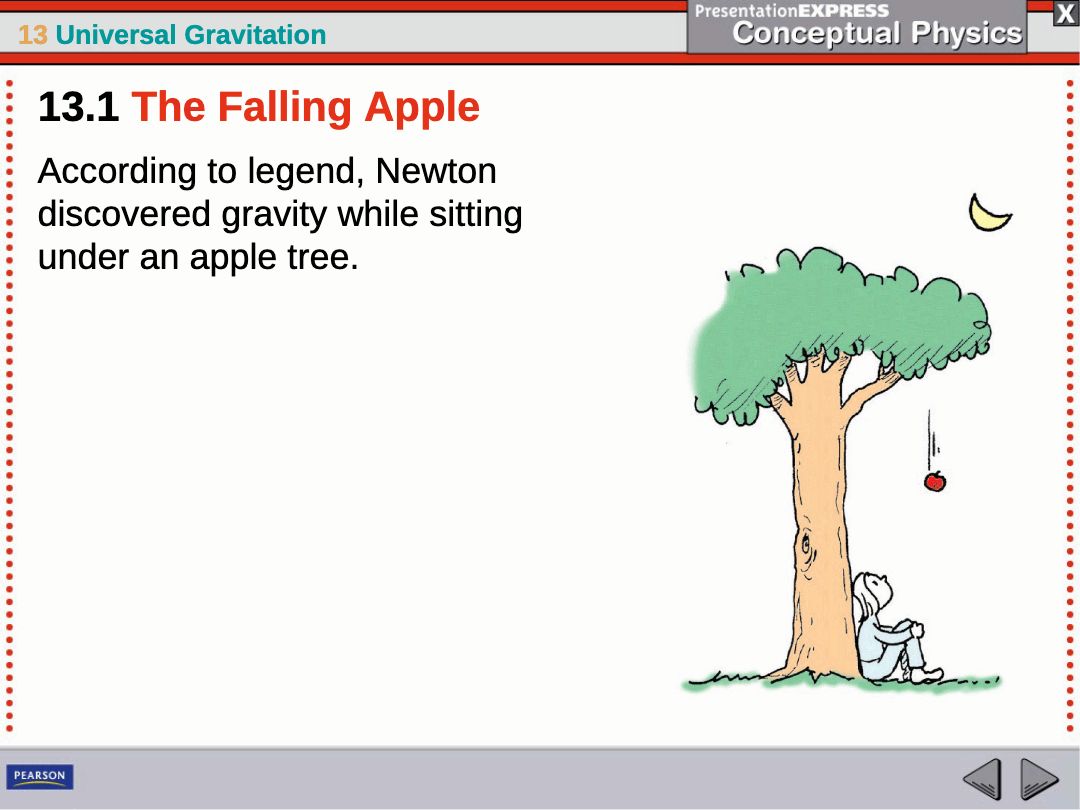
Describe the significance of Newton observing the apple fall while sitting under the apple tree. How did this observation contribute to his understanding of gravity?
11
12
Multiple Select
Which of the following statements are correct about Newton's insights regarding the moon and the apple?
The moon circles Earth because of a force
Circular motion is accelerated motion, which requires a force
The moon follows a straight-line path around Earth
Newton realized the moon is falling toward Earth like the apple
13
14
Fill in the Blanks
What was Newton’s reasoning about the apple falling from the tree?
Type answer...
15
16
Fill in the Blanks
The moon is actually falling toward Earth but has great enough
Type answer...
17
18
Multiple Choice
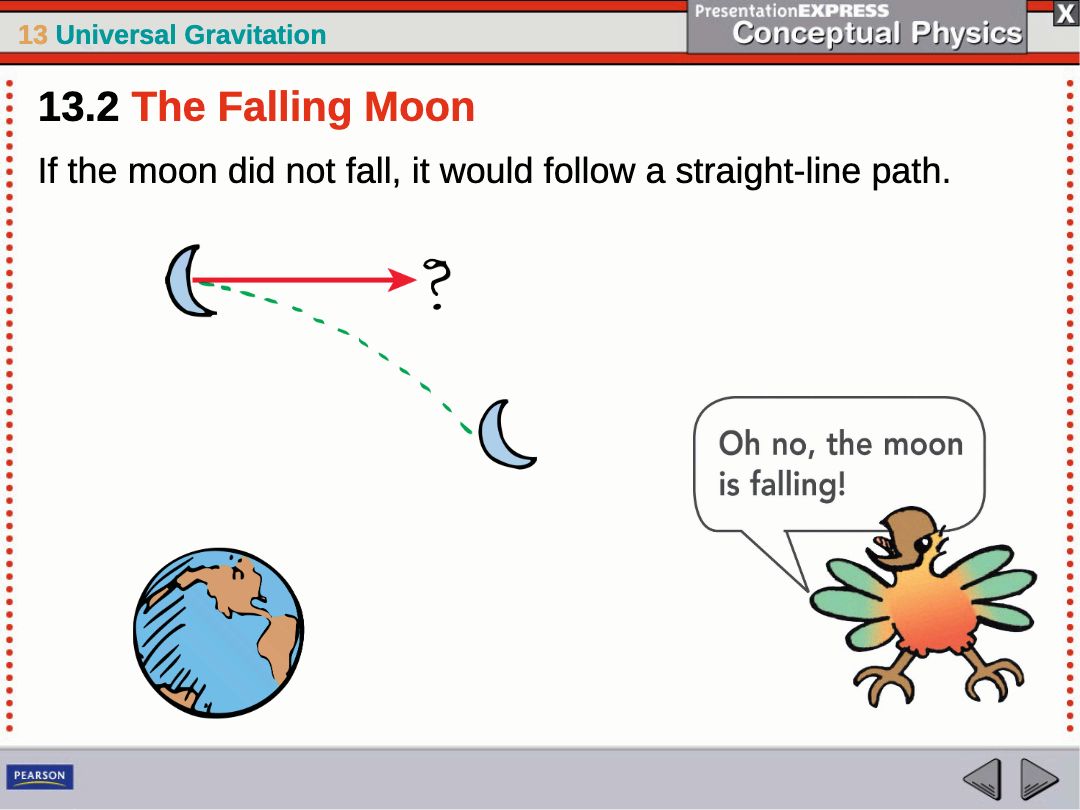
According to Newton, what would happen to the moon if it did not 'fall' toward Earth?
It would crash into Earth
It would move in a straight line and leave its orbit
It would stop moving
It would speed up and orbit faster
19
20
Open Ended
Explain the concept of 'falling around Earth' as it applies to the moon's motion. How does this differ from simply falling toward Earth?
21
22
Multiple Select
Which of the following statements about Newton's cannonball hypothesis are correct?
A cannonball fired with a small horizontal speed will follow a parabolic path and hit Earth.
A cannonball fired fast enough will circle Earth indefinitely.
A cannonball fired faster will hit Earth farther away.
A cannonball fired slowly will escape Earth's gravity.
23
24
Fill in the Blanks
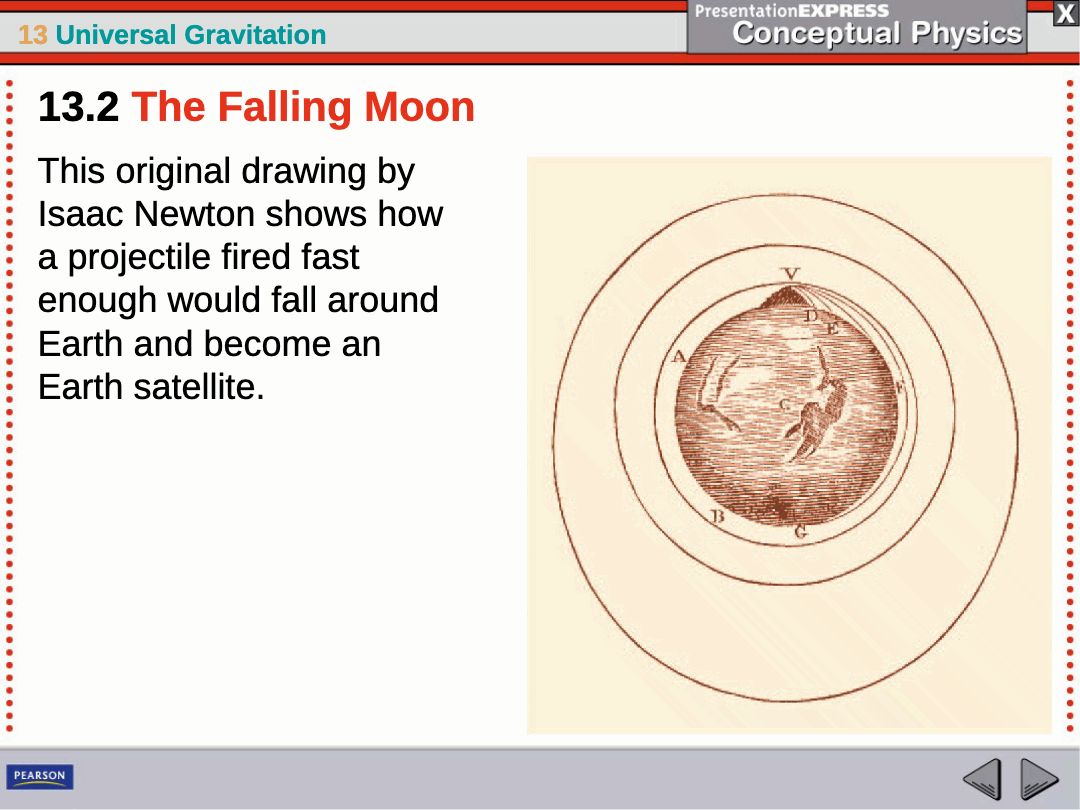
This original drawing by Isaac Newton shows how a projectile fired fast enough would fall around Earth and become an Earth
Type answer...
25
26
27
Open Ended
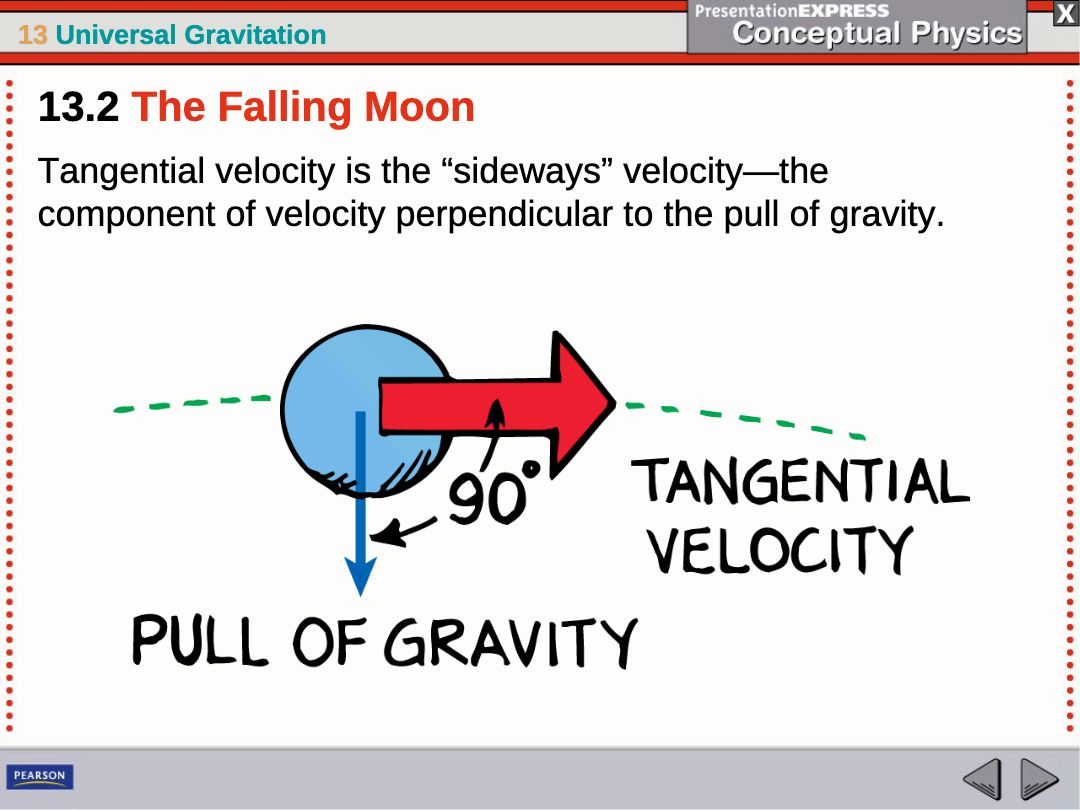
Describe how tangential velocity prevents the moon from crashing into Earth, using the concept of gravity and motion.
28
Multiple Choice
Both the moon and an orbiting cannonball have a component of velocity parallel to Earth's surface. What is this component called?
Radial velocity
Tangential velocity
Orbital velocity
Linear velocity
29
30
Multiple Choice
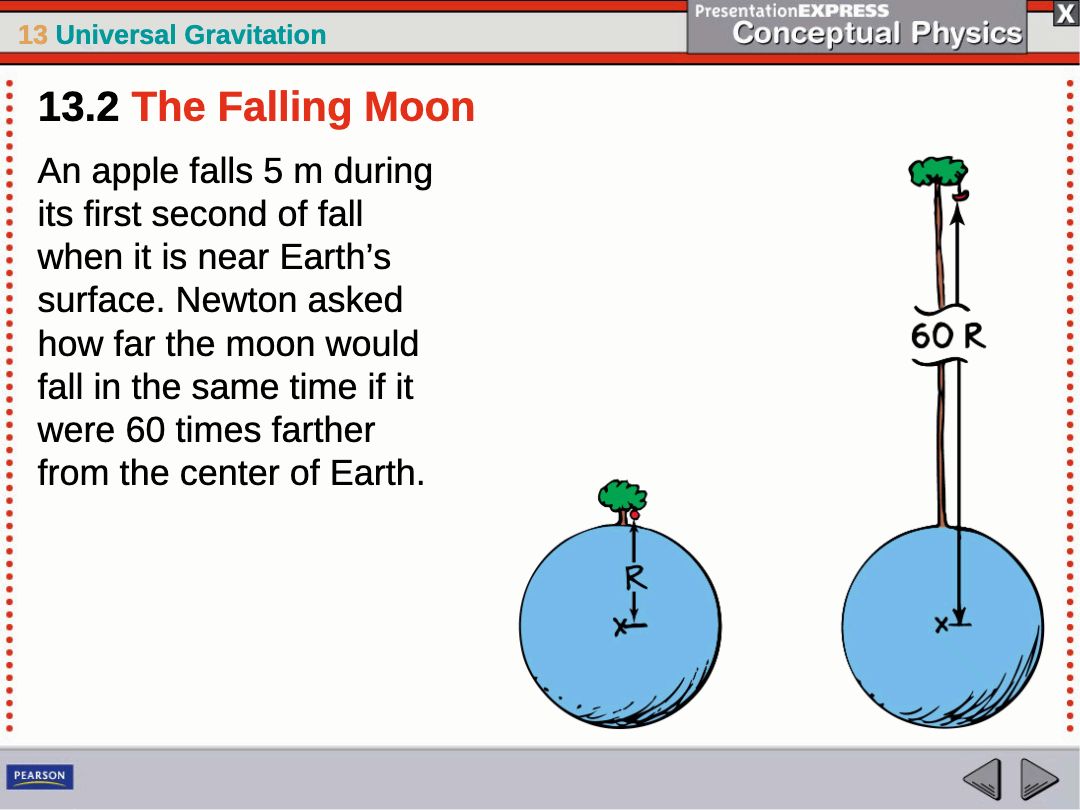
According to Newton, what factor determines how far an object falls, whether it is the moon or an apple at Earth's surface?
Its mass
Its distance from Earth's center
Its speed
Its volume
31
32
33
Open Ended
Explain why Newton believed the gravitational attraction to Earth must be 'diluted' by distance when considering the moon's motion compared to an apple's fall.
34
35
Multiple Select
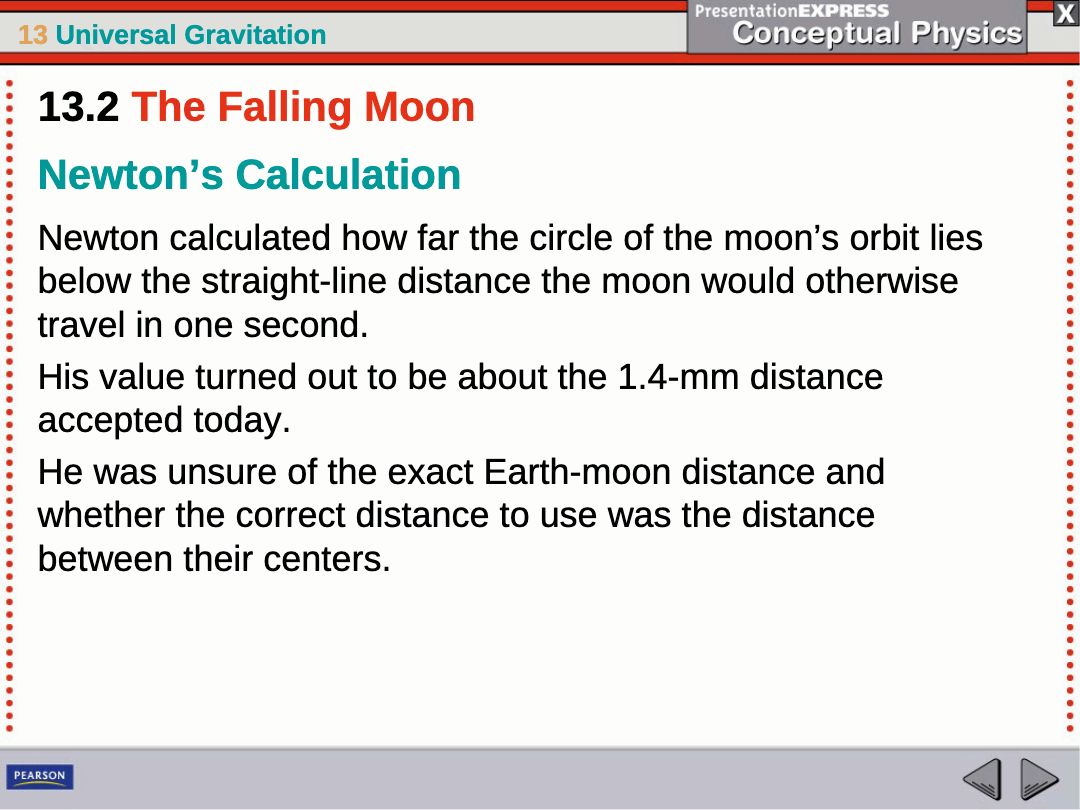
Which of the following statements are correct regarding Newton's calculation of the moon's fall?
Newton calculated the moon should fall 1.4 mm in one second.
Newton's value was very different from what is accepted today.
Newton was unsure about the exact Earth-moon distance.
Newton considered the distance between the centers of Earth and the moon.
36
37
Open Ended
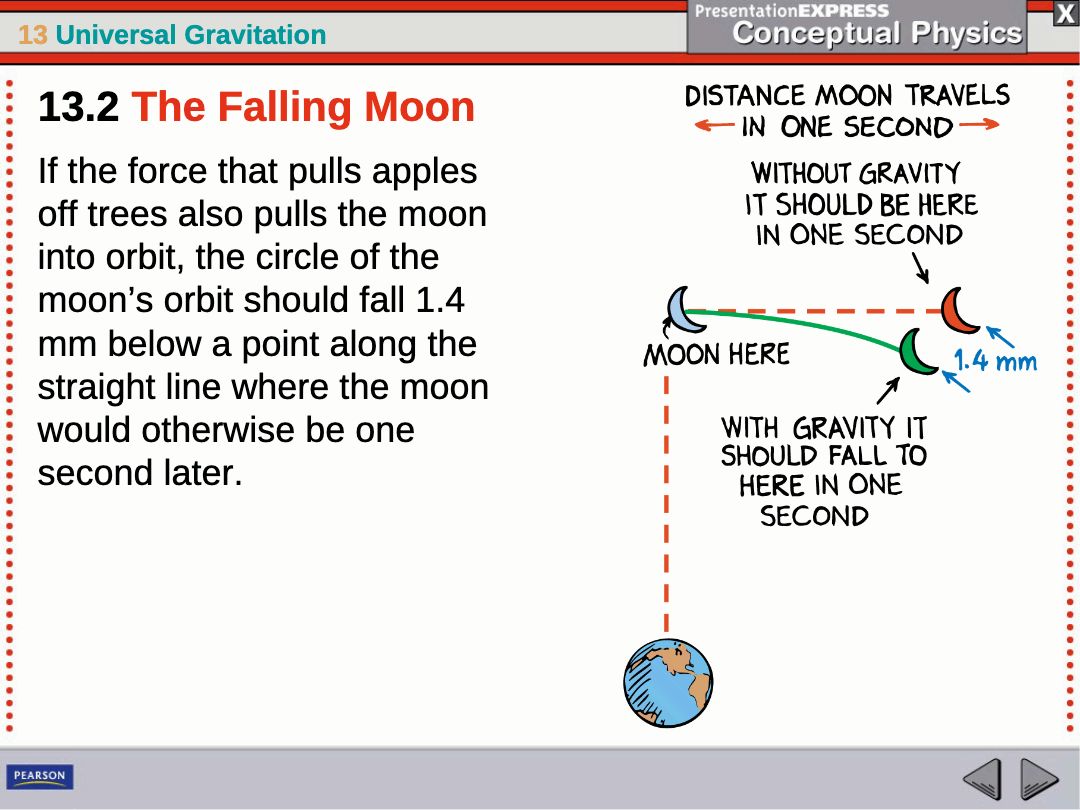
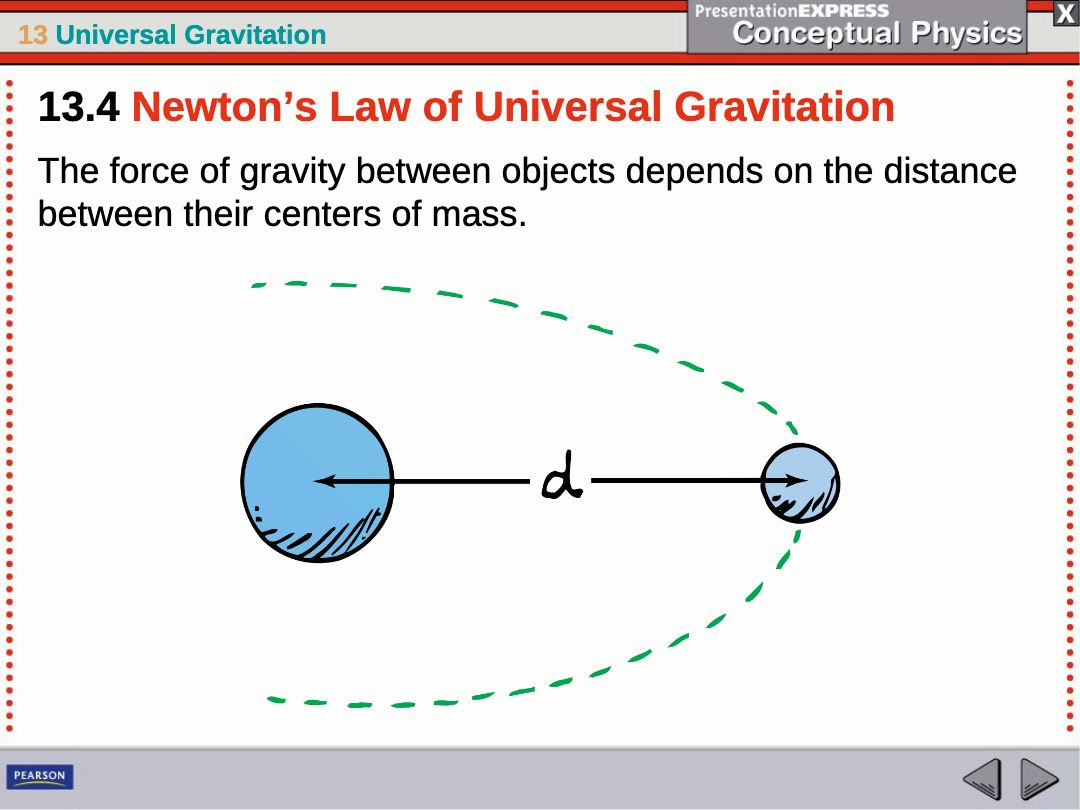
What does the diagram on the fifth slide illustrate about the moon's motion in its orbit due to gravity?
38
Fill in the Blanks
The moon falls
Type answer...
39
40
Fill in the Blanks
Newton's law of universal gravitation states that all objects in the universe
Type answer...
41
42
Open Ended
Why doesn’t the moon hit Earth?
43
44
45
Fill in the Blanks
The planets continually "
Type answer...
46
47
Open Ended
Describe how the motion of the planets around the sun is similar to the motion of the moon around Earth.
48
49
Multiple Choice
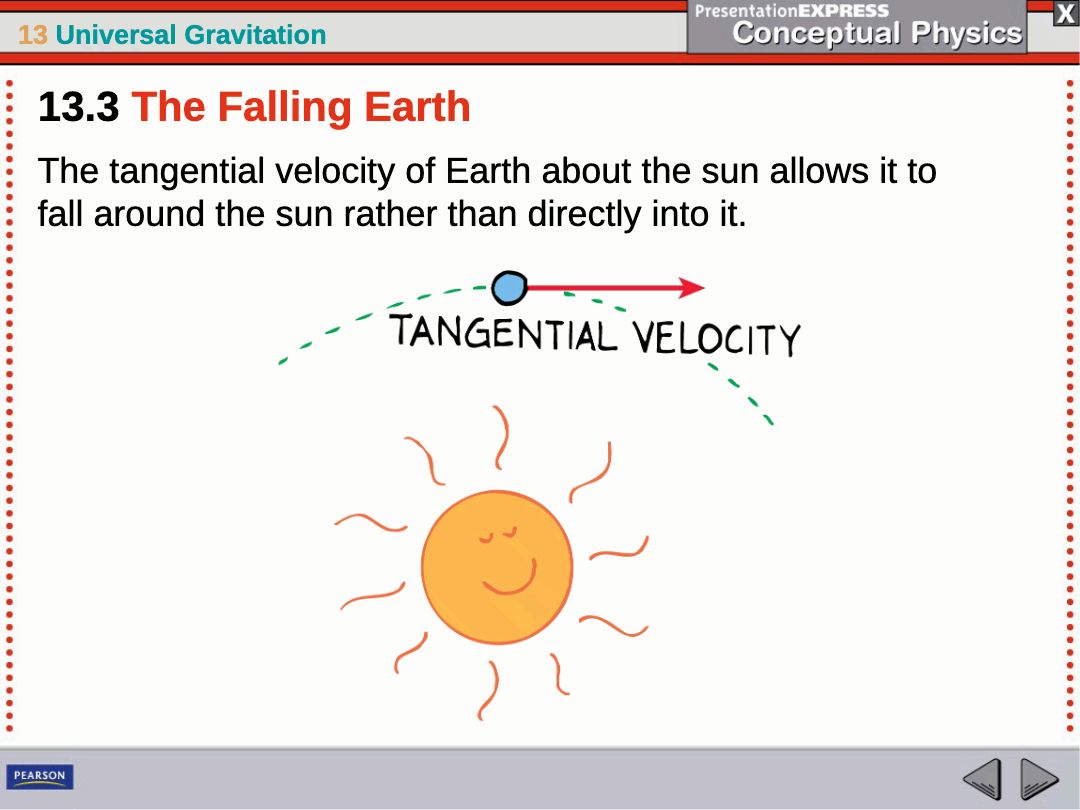
According to Newton’s theory of gravity, what would happen if the tangential velocities of the planets were reduced to zero?
They would crash into the sun
They would orbit faster
They would move away from the sun
Nothing would happen
50
Multiple Choice
Which of the following best explains why the planets do not crash into the sun?
Because of their tangential velocity around the sun
Because the sun repels them
Because they are too far away
Because of their size
51
52
Open Ended
What theory of the solar system did Newton’s theory of gravity confirm?
53
54
55
56
57
Open Ended
After learning about universal gravitation, what is one question you still have or something you would like to explore further?
58
Multiple Choice
How did Isaac Newton's understanding of gravity differ from the common belief of his time?
He believed gravity was only on Earth.
He discovered gravity for the first time.
He realized gravity is a universal force, not unique to Earth.
He thought gravity did not exist.
Show answer
Auto Play
Slide 1 / 58
SLIDE
Similar Resources on Wayground

53 questions
Kryteria oceniania wypowiedzi pisemnych na poziomie podstawowym
Presentation
•
12th Grade
53 questions
Gilded Age
Presentation
•
11th Grade
53 questions
Atomic Structure and the Periodic Table Lesson
Presentation
•
12th Grade
49 questions
مراجعة الفصل الاول مدخل الى عالم الفيزياء
Presentation
•
12th Grade
53 questions
Evolutionary History- chapter 15
Presentation
•
12th Grade
54 questions
Unit 14 - Art, Identity and Diversity + Subordinating Conjuctio
Presentation
•
12th Grade
54 questions
Collisions and Impulses
Presentation
•
11th Grade
Popular Resources on Wayground
10 questions
Safety Day 2026 – Student Review

Quiz
•
9th Grade
21 questions
Continents and Oceans
Quiz
•
6th Grade
20 questions
Parts of Speech
Quiz
•
5th Grade
16 questions
Subject & Predicate
Quiz
•
5th Grade
25 questions
Multiplication Facts
Quiz
•
5th Grade
12 questions
Map Skills
Quiz
•
3rd Grade
22 questions
Continents and Oceans
Quiz
•
5th Grade
15 questions
Rounding Decimals
Quiz
•
5th Grade
