

Acute Shoulder Injuries

Presentation
•
Health Sciences
•
University
•
Practice Problem
•
Easy

Nirmal Maxwell
Used 3+ times
FREE Resource
38 Slides • 9 Questions
1

2

3
4
5

6
7
8
9
Open Ended
What is your Differential Diagnoses for Acute Shoulder Injuries? Consider Bone, Muscle, Ligament, Neurovascular causes
10
11
Multiple Choice
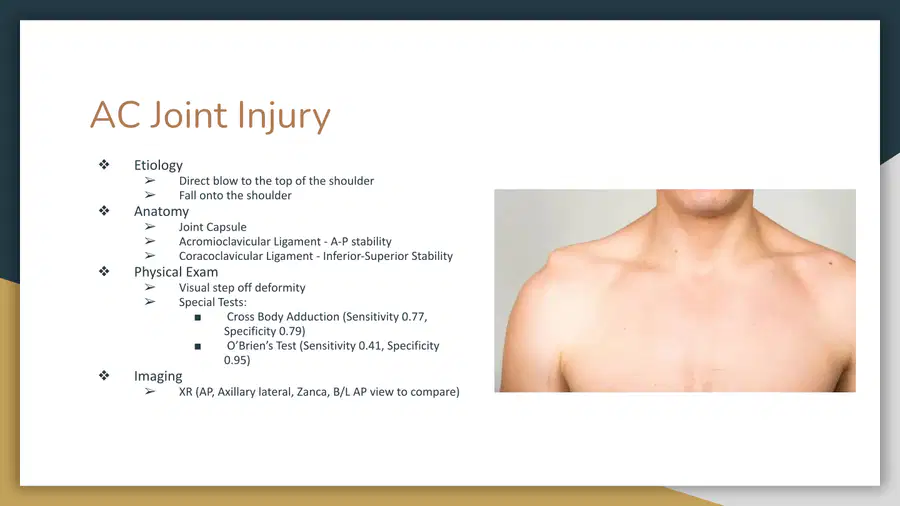
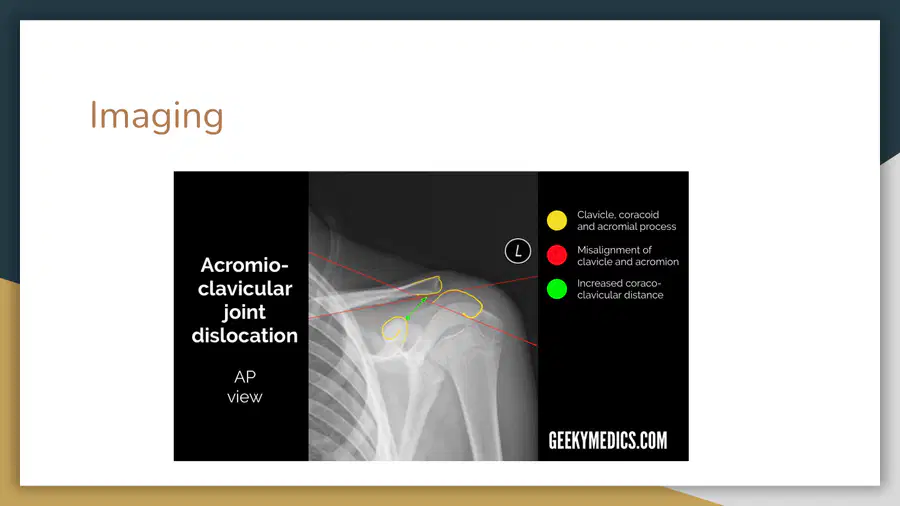
A 17-year-old high school football wide receiver is tackled during a game and lands directly on the lateral aspect of his shoulder while his arm is adducted. He complains of pain at the top of the shoulder. On exam, there is a prominent step-off at the distal clavicle and tenderness over the AC joint. Pain is reproduced with cross-body adduction. What is the likely diagnosis?
ACJ Sprain, Grade III
Clavicle Fracture
RTC Tear
SCJ Sprain
12
13
14
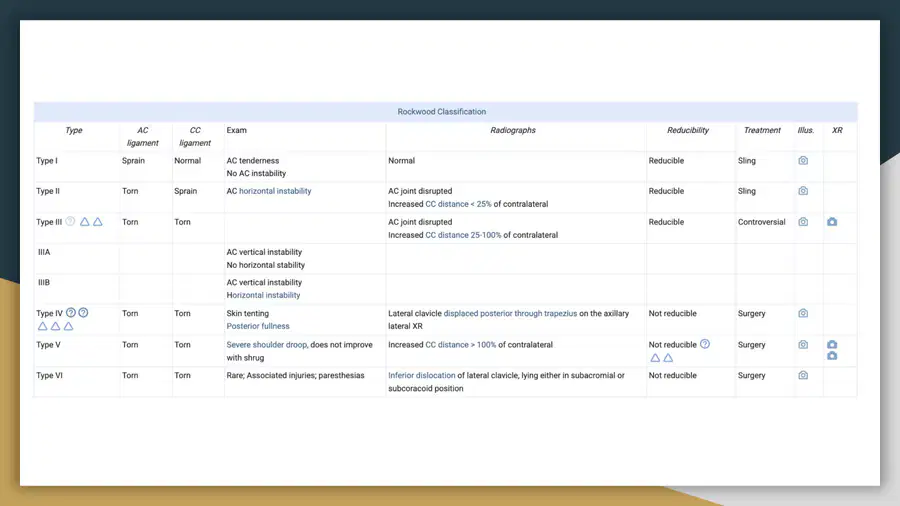
15
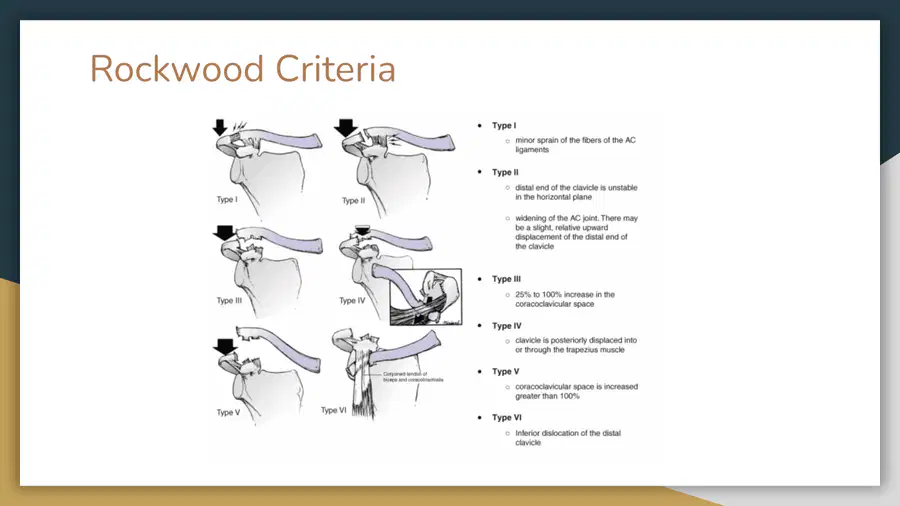
16
Multiple Choice
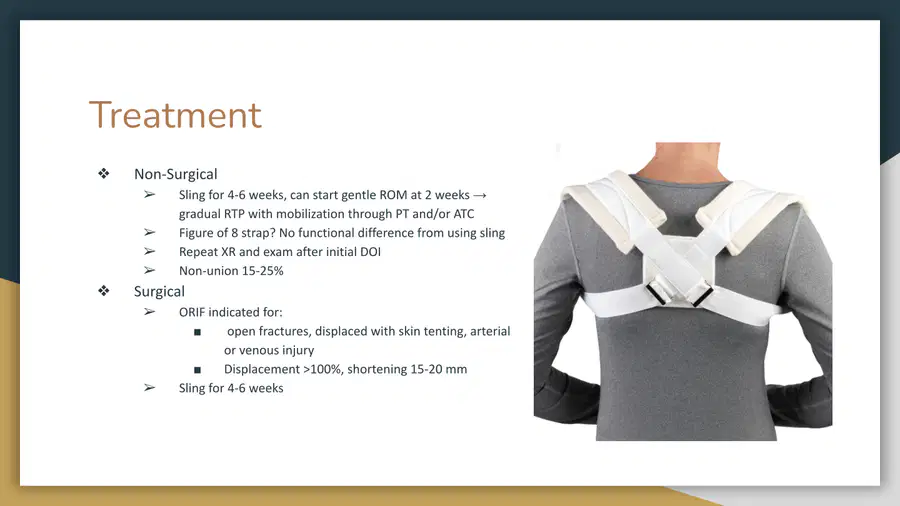
A 15-year-old soccer player falls onto the lateral shoulder during a collision. He holds his arm close to his chest and reports pain over the mid-shaft of the clavicle. On exam, there is swelling, tenderness, and visible skin tenting. Gentle palpation produces crepitus.
What is the diagnosis, and does it require emergent surgical evaluation?
Mid-clavicular Fracture, no
ACJ Dislocation, no
Mid-clavicular Fracture, yes
SCJ sprain, yes (reread the question stem)
17
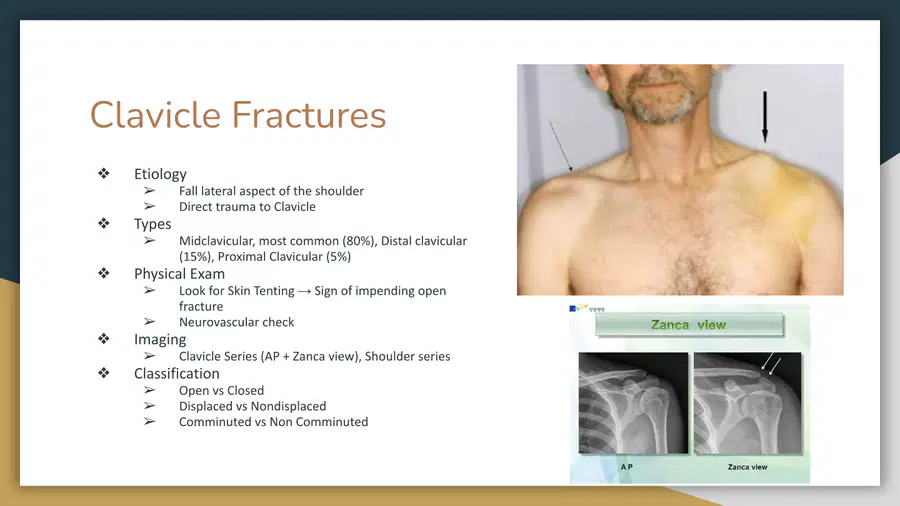
18
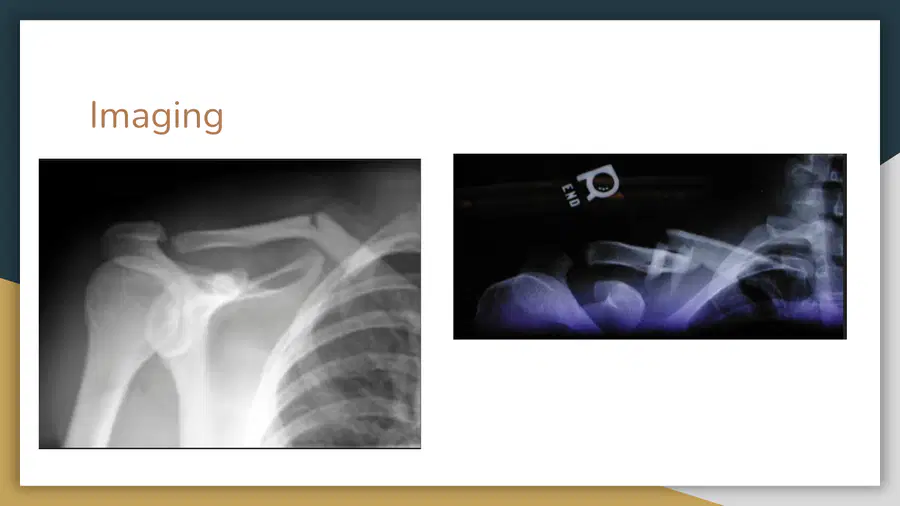
19
20
Multiple Choice
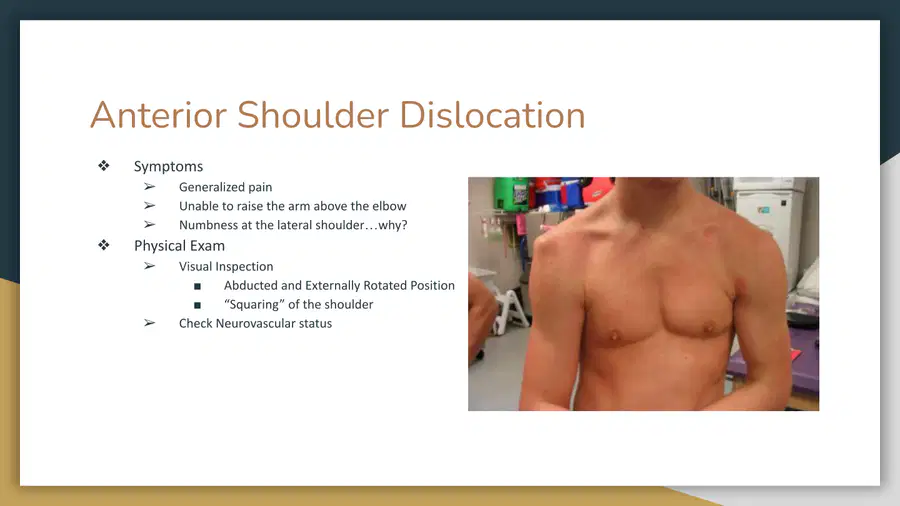
A 21-year-old college basketball player goes up for a rebound and lands on his arm and shoulder after being pushed in the air. He has difficulty lifting up his arm. He gets subbed out, and on evaluation, The shoulder appears squared-off and he cannot lift his arm up. He is neurovascularly intact except for mild decreased sensation over the lateral deltoid. What is his diagnosis?
RTC Tear
Anterior Shoulder Dislocation
Posterior Shoulder Dislocation
Inferior Shoulder Dislocation
21
22
23
Multiple Select
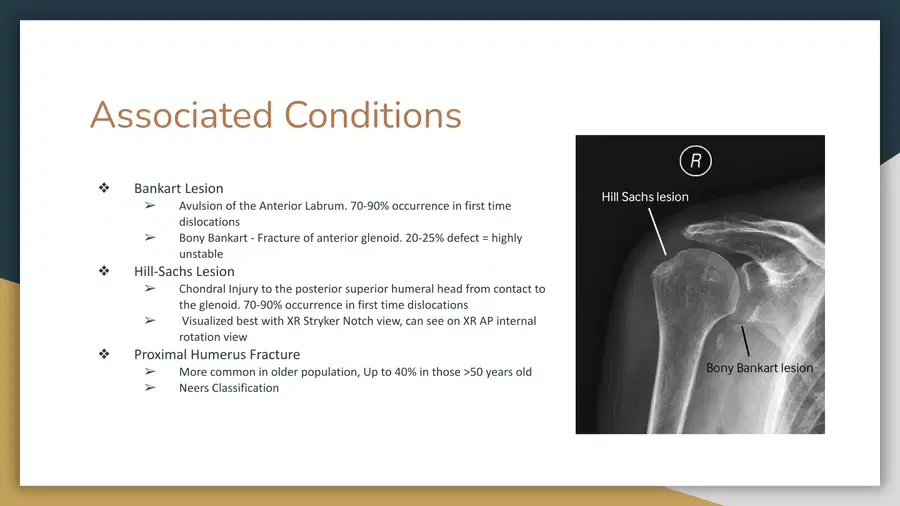
What is the most common finding(s) after an anterior shoulder dislocation?
Bankart lesion
Hill-Sachs lesion
Proximal humerus fracture
Rotator cuff tear
24
25
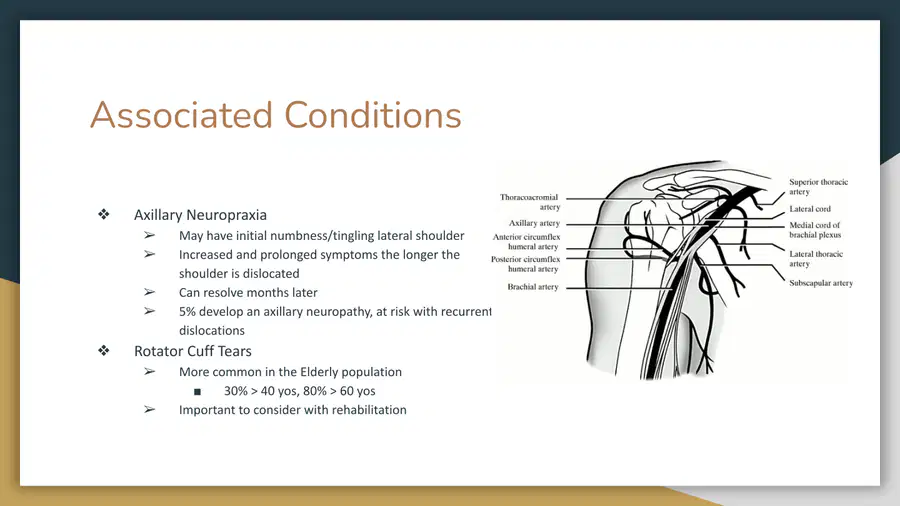
26
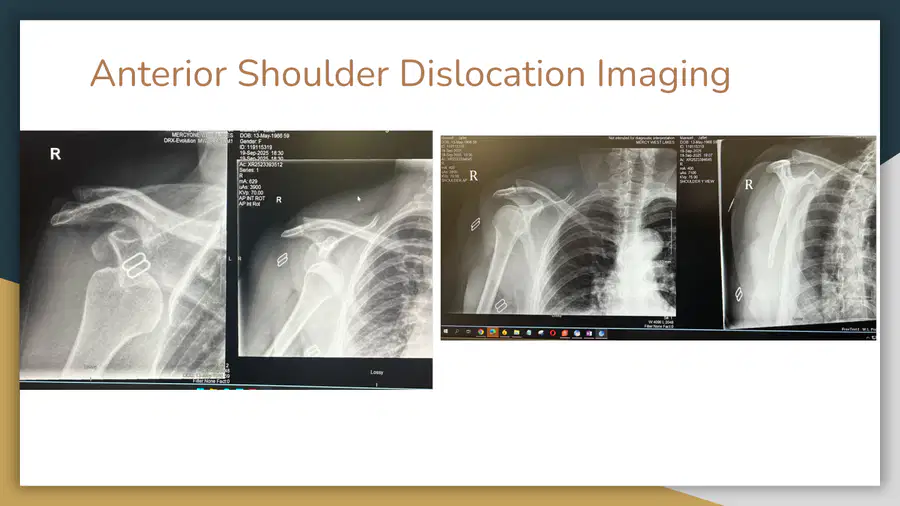
27
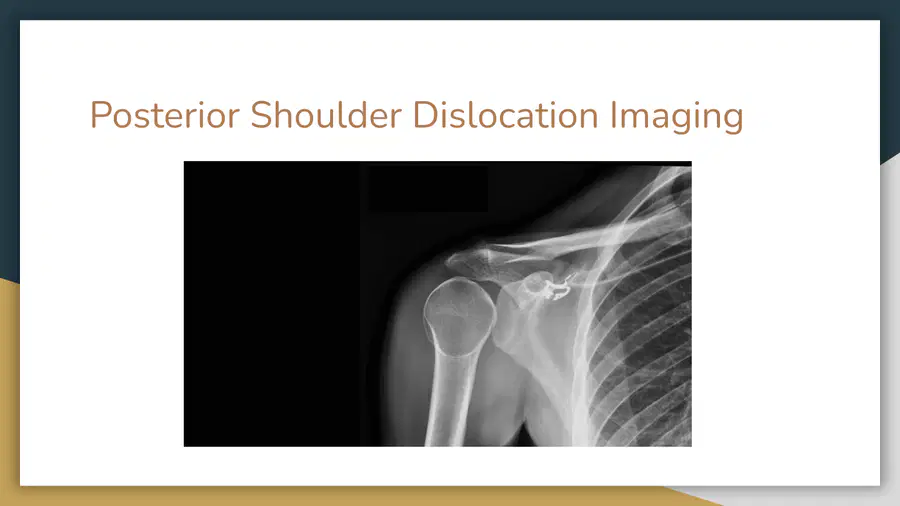
28
Multiple Select
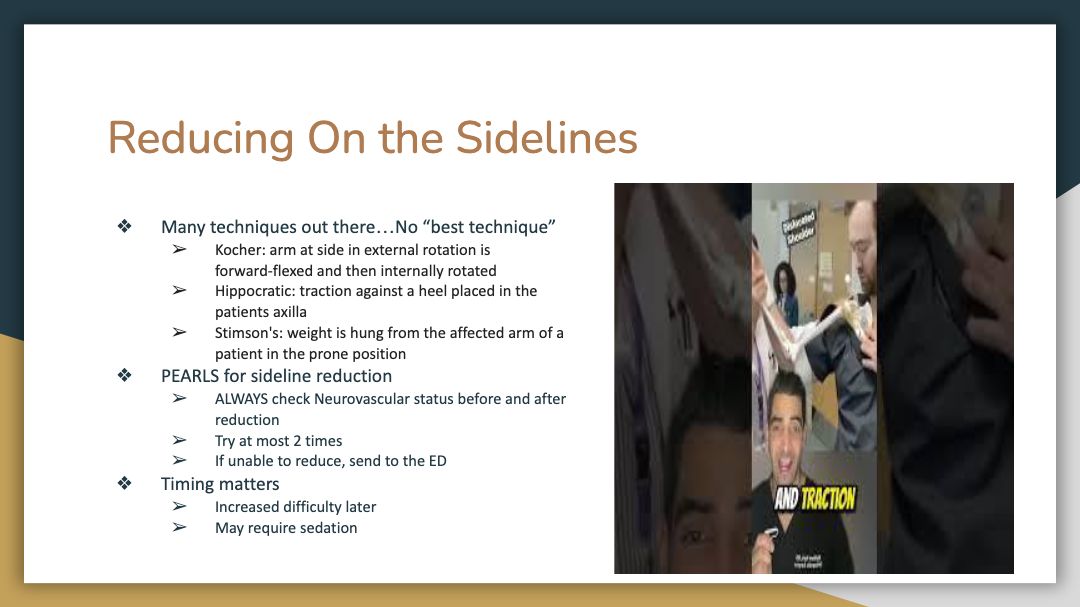
Which of the following are important pearls for sideline reduction of a shoulder dislocation?
Always check neurovascular status before and after reduction
Try at most 2 times
If unable to reduce, send to the ED
The gold standard reduction technique is the Kocher method
29
30
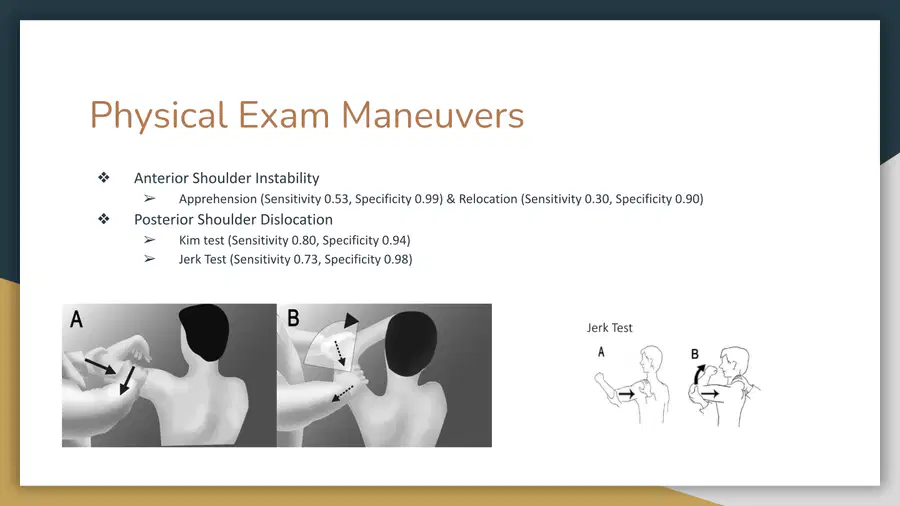
31
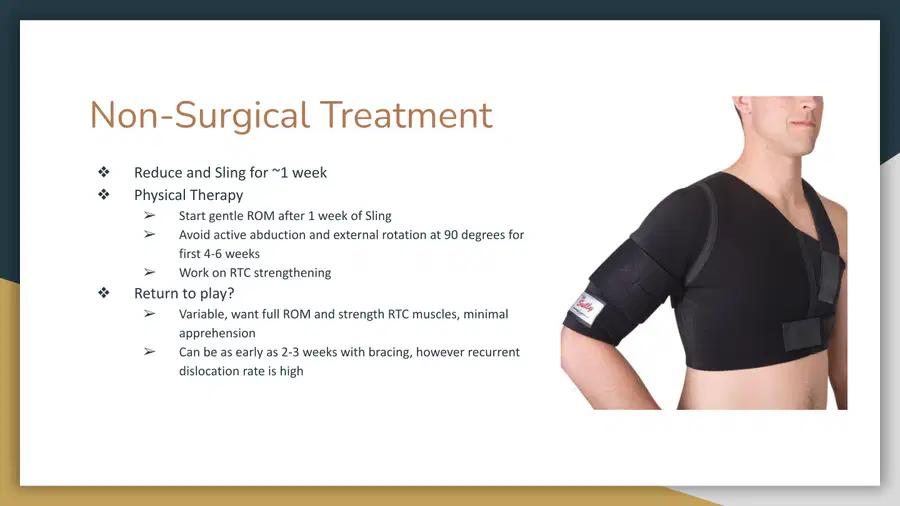
32
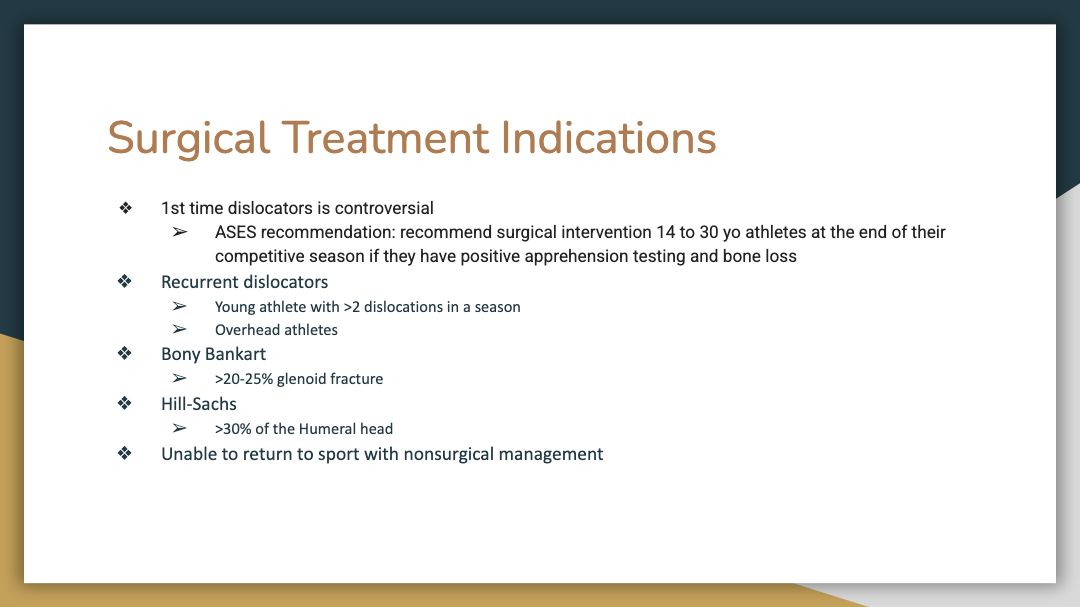
33
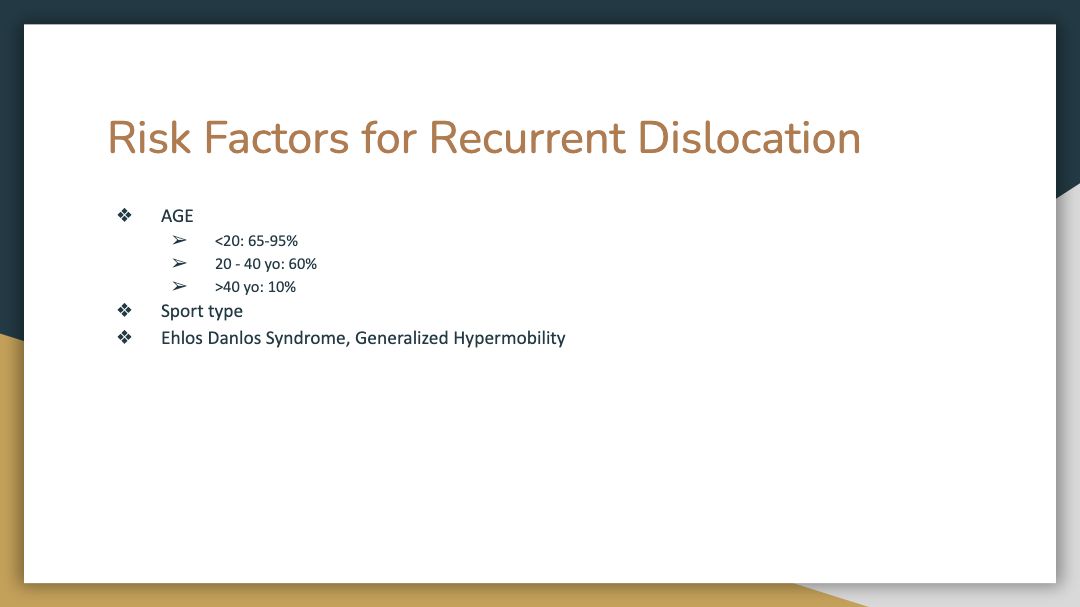
34
Multiple Choice
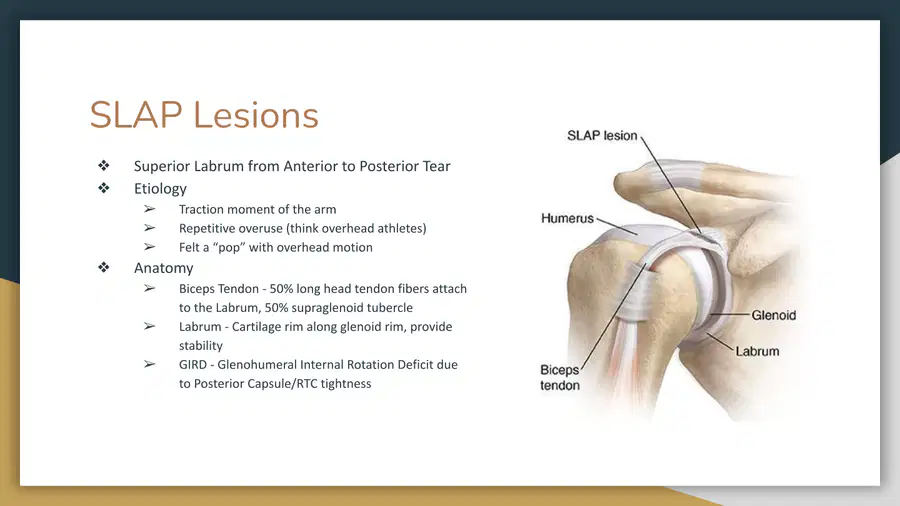
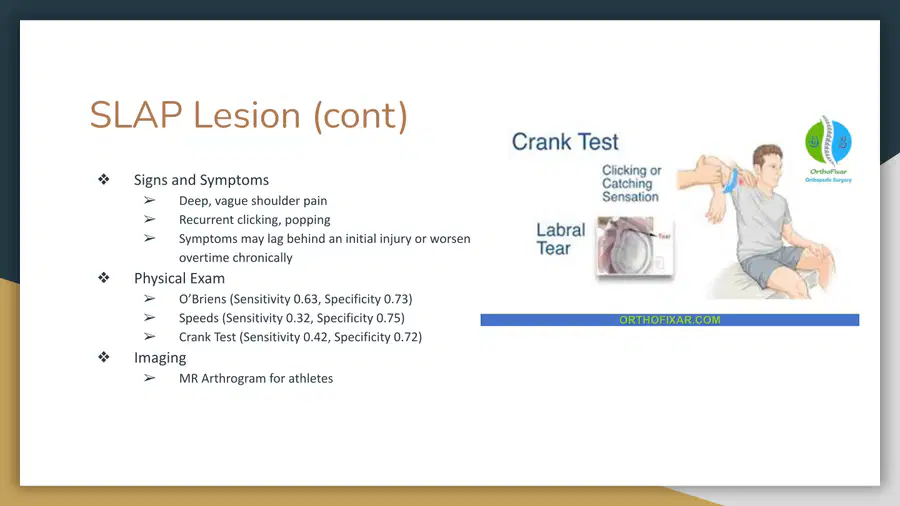
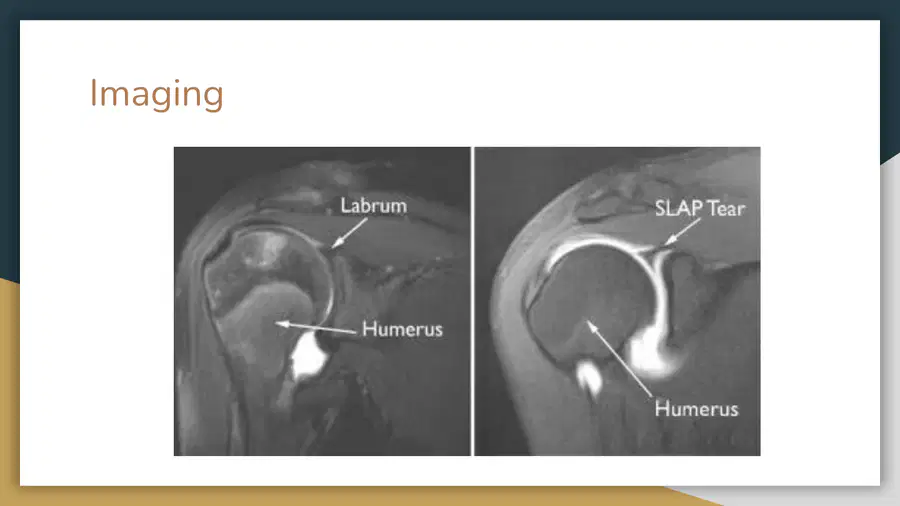
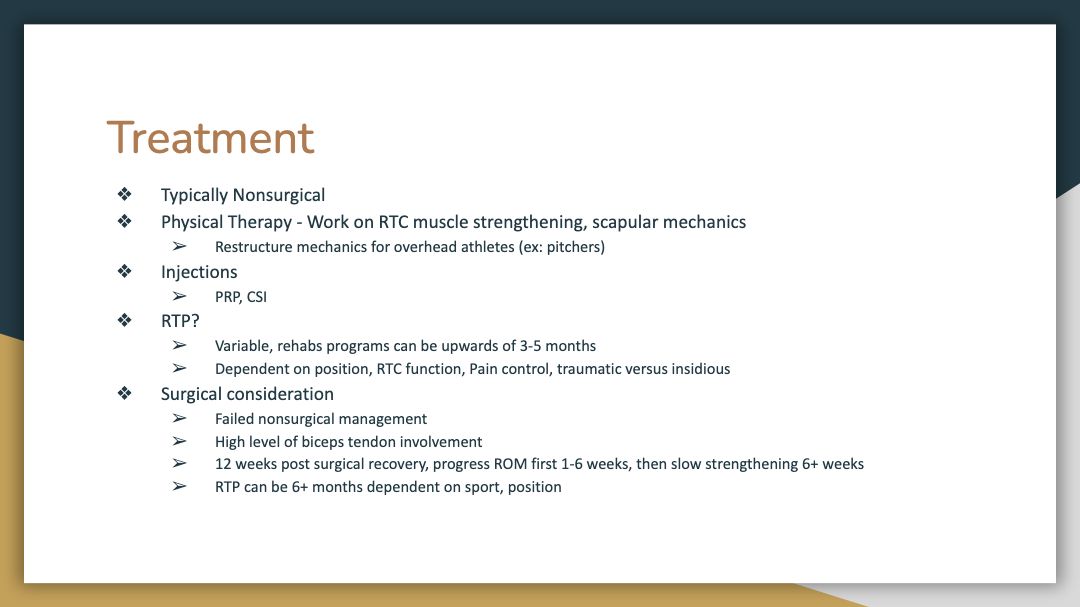
A 21-year-old college baseball pitcher slid headfirst into second base and felt a sudden pop in his shoulder. He immediately developed deep shoulder pain and noticed a catching sensation when trying to throw. Shoulder ROM is full but painful at the extremes of abduction and external rotation. Lift-off and belly-press tests are negative. What is the most likely diagnosis and a commonly used special exam test?
Posterior Impingement, Kim's Test
Acute SLAP Tear, O'Brien's
Anterior Shoulder Subluxation, Apprehension
Distal Biceps tendon rupture, Hook Test
35
36
37
38
39
Multiple Choice
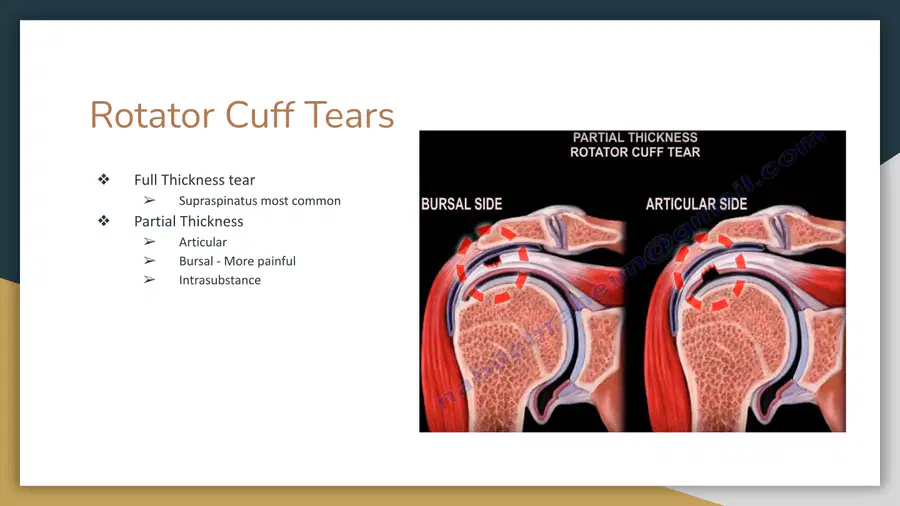
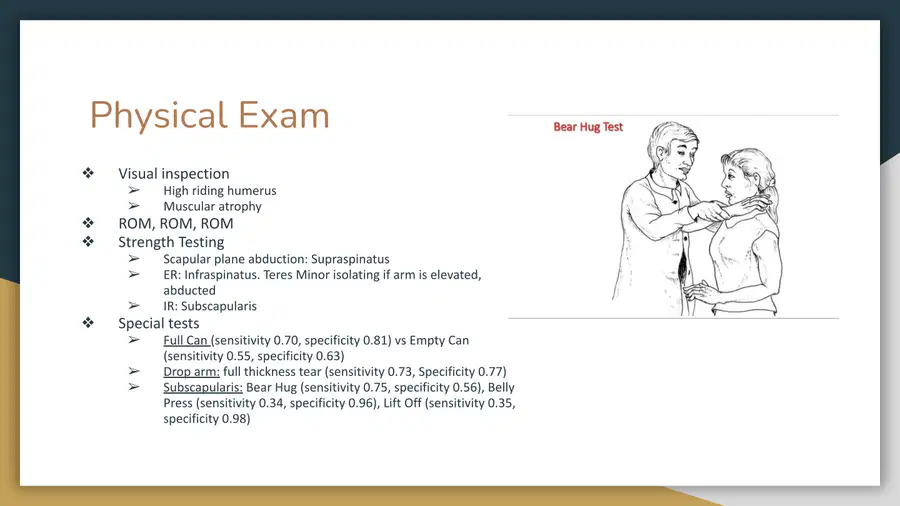
A 47-year-old recreational tennis player felt a sudden “pop” in the shoulder while reaching overhead for a serve. He has weakness with lifting his arm up. What is the likely diagnosis, and what is the likely tendon involved?
RTC Tear, Subscapularis
Labral Tear
RTC Tear, Infraspinatus
RTC Tear, Supraspinatus
40

41
42
43

44
Multiple Choice
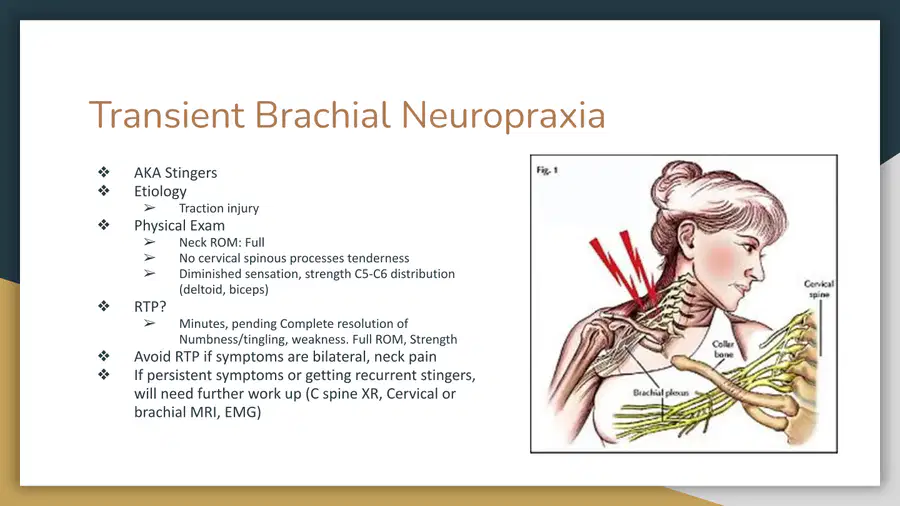
A 16-year-old high school linebacker experiences a sharp burning sensation radiating down the arm after a tackle where his head was forced laterally. Weakness is noted in shoulder abduction and elbow flexion but resolves within 10 minutes. Exam shows normal cervical spine alignment, full ROM, and symmetric reflexes. What is the diagnosis, and can he return to play?
Cervical Radiculopathy, yes
Brachial Plexus Neuropraxia, No
Cervical Radiculopathy, no
Brachial Plexus Neuropraxia, Yes
45
46

47
Show answer
Auto Play
Slide 1 / 47
SLIDE
Similar Resources on Wayground

44 questions
7.05 & 7.06
Presentation
•
12th Grade
43 questions
Sepsis/Shock/MODS/AKI
Presentation
•
University
41 questions
Application of Colligative Properties
Presentation
•
12th Grade
44 questions
PAST SIMPLE AND PAST PROGRESSIVE
Presentation
•
University
41 questions
C++ Programming (Basic)
Presentation
•
University
41 questions
Untitled Presentation
Presentation
•
KG - University
43 questions
Chapter 16 The Resident Unit slides and study guide
Presentation
•
KG - University
39 questions
25-26 Unit 1 Day 4 DHO CH 14 (3) Fire Safety
Presentation
•
KG - University
Popular Resources on Wayground
10 questions
HCS SCI 03 Summer School Review 4

Quiz
•
3rd Grade
11 questions
HSMS - Standard Response Protocol
Quiz
•
6th - 8th Grade
16 questions
1.1-1.2 Quiz Review
Quiz
•
9th - 12th Grade
12 questions
Exponent Expressions
Quiz
•
6th Grade
20 questions
Adding and Subtracting Integers
Quiz
•
6th - 7th Grade
11 questions
Northeast States
Quiz
•
3rd - 4th Grade
10 questions
Characterization
Quiz
•
3rd - 7th Grade
10 questions
Common Denominators
Quiz
•
5th Grade