

Exam 1 Test Corrections Assignment

Presentation
•
Biology
•
9th - 12th Grade
•
Easy
+7
Standards-aligned

Jane Claussen
Used 7+ times
FREE Resource
12 Slides • 35 Questions
1

2

3

4
Match
Review Question Match the following
Chloroplast
Cell Wall
Nucleus
Vacuole
Absorbs sunlight to make glucose
Provides support and protection
Stores and protects DNA
Water and nutrient storage for cell
Absorbs sunlight to make glucose
Provides support and protection
Stores and protects DNA
Water and nutrient storage for cell
5
Categorize
Chloroplast
Cell Wall
Vacuole
Nucleus
Organize these options into the right categories
6
Hotspot
Review Question
Which organelle is only found in plant cells and identifies it as such? (hint - not in bacterial cells or animal cells)
7
Hotspot
*Test Question*
The image below is a plant cell.
Which numbered cellular structure in the image indicates that it is a plant cell?
Select ONE correct answer.
8

9
Match
Review Question Match the following
free living bacteria were engulfed by a host cell leading to a relationship
proposes that organelles evolved
internally within cells
animal cells make other animal cells
endosymbiosis
autogenous
a principal of cell theory
endosymbiosis
autogenous
a principal of cell theory
10
Hotspot
Review Question
Which image depicts the theory that a free living bacteria was engulfed by a host cell leading to a relationship called endosymbiosis?
11
Multiple Choice
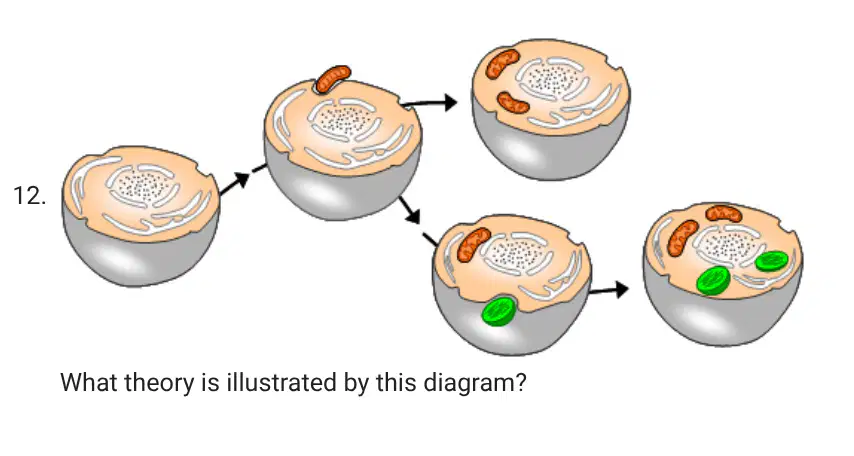
*Test Question*
What theory is illustrated by this diagram?
Darwin's Theory of Evolution
Endosymbiotic Theory
Miller-Urey Theory
Cell Theor
12
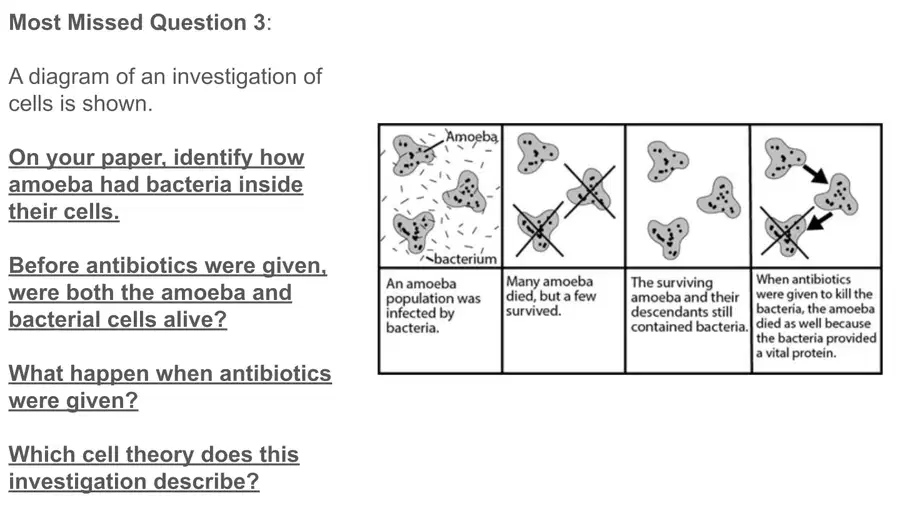
13
Multiple Select
Review Question Identify the 3 principles of cell theory.
cells make other cells
cells make up all living things
cells are the most basic unit of life
cells only make up plant and animal cells
cells make up non living things
14
Match
Review Question Match the following
free living bacteria were engulfed by a host cell leading to a relationship
proposes that organelles evolved
internally within cells
animal cells make other animal cells
endosymbiosis
autogenous
a principal of cell theory
endosymbiosis
autogenous
a principal of cell theory
15
Multiple Choice
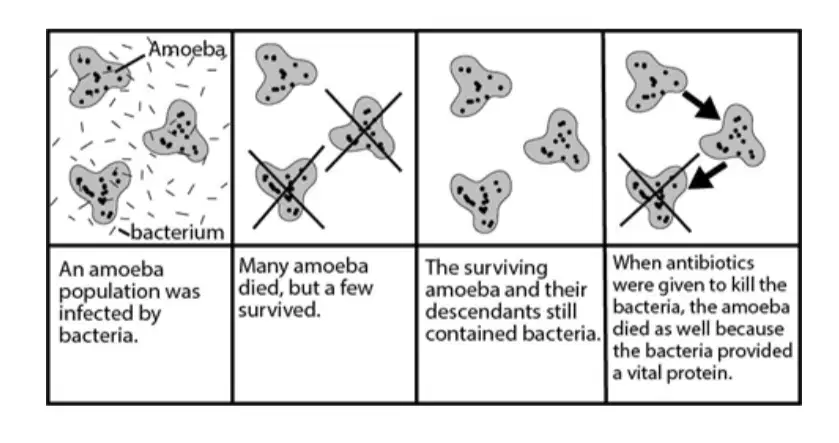
*Test Question
The diagram represents the results of an investigation led by Kwang Jeon in 1966.
How are the results of the investigation related to scientific explanations for cellular complexity?
Natural selection can happen within a population of single-celled organisms as well as in a population of eukaryotic organisms.
Eukaryotic and prokaryotic cells likely have similar evolutionary histories.
The evolution of prokaryotic cells came after that of eukaryotic cells.
Eukaryotic cells are actually descendants of separate prokaryotic cells that joined together in an endosymbiotic union.
16
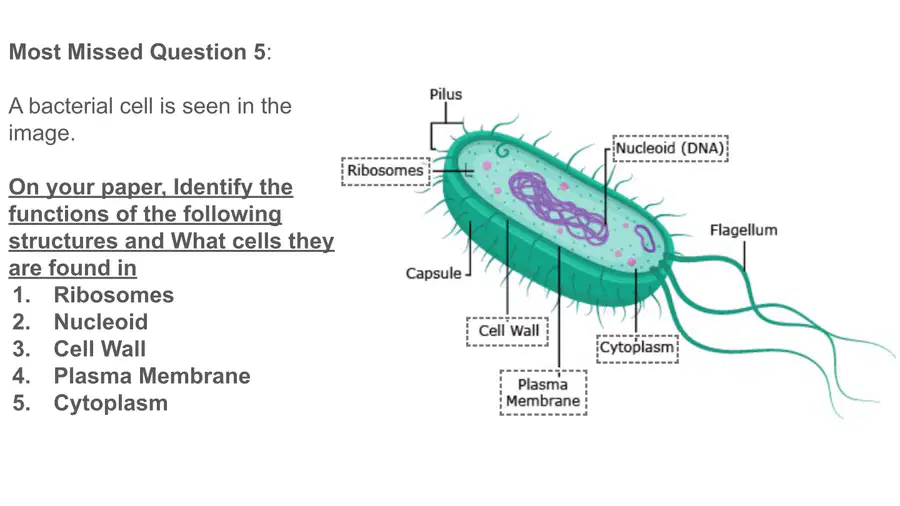
17
Match
Review Question Match the following organelles to their functions
make proteins through protein synthesis
makes proteins, lipids and carbohydrates
sorts, packages, and modifies protein
stores and protects DNA
ribosomes
endoplasmic reticulum
golgi
nucleus
ribosomes
endoplasmic reticulum
golgi
nucleus
18
Match
Review Question Match the following
provides support and protections
controls what enters and exit
makes cell energy
protein synthesis to make proteins
instructions of proteins, and cell control
cell wall
cell membrane
mitochondria/ mitochondrion
ribosomes
nucleus
cell wall
cell membrane
mitochondria/ mitochondrion
ribosomes
nucleus
19
Hotspot
Question from Review
Which structure is in plant cells and bacterial cell but not present in our cells?
20

21
Match
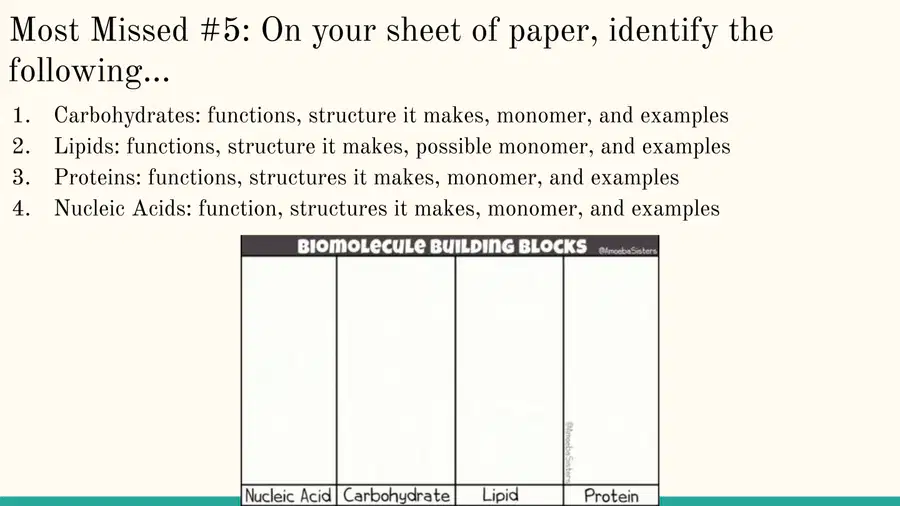
Review Question Match the following functions of each macromolecule
provides quick or short term energy
provides long term energy and insulation
builds muscles, catalyzes chemical reactions
instructions of proteins, hereditary information
carbohydrate
lipids
proteins
nucleic acid
carbohydrate
lipids
proteins
nucleic acid
22
Match
Review Question Match the following examples to biomolecules
waxes, fats, oils
antibodies, hemoglobin, keratin, enzymes
chitin - exoskeleton of bugs, glucose, starch
DNA and RNA
lipids
proteins
carbohydrates
nucleic acids
lipids
proteins
carbohydrates
nucleic acids
23
Match
Review Question Match the following monomers to their macromolecules
nucleotides
monosaccharides
amino acids
fatty acids or glycerol
nucleic acids
carbohydrates
proteins
lipids
nucleic acids
carbohydrates
proteins
lipids
24
Categorize
Fructose is an example
contains your hereditary information
insoluble in water; waxes are examples
building blocks are amino acids
good source of quick energy
helps make up the cell membrane

*Test Question*
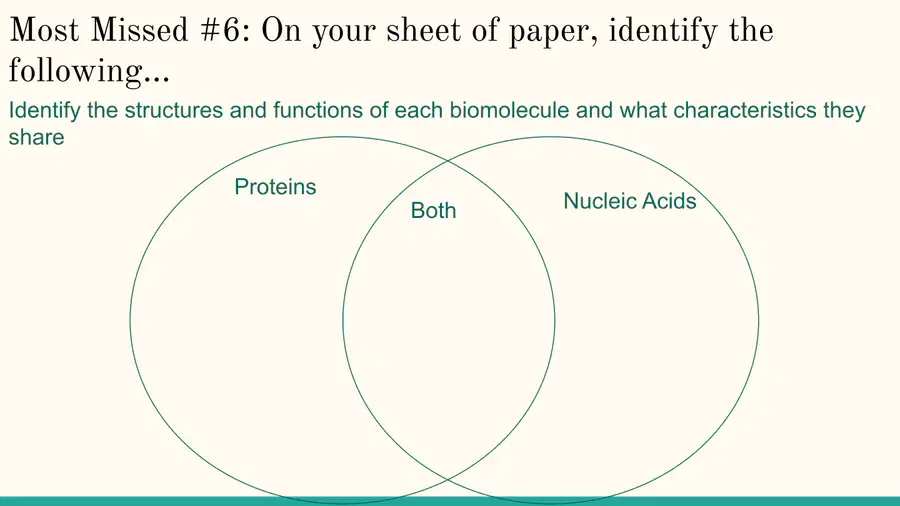
There are four major macromolecules. Determine whether the descriptions below apply to carbohydrates, lipids, proteins, or nucleic acids. Place the description in the correct category.
25
26
Match
Review Question: Match the following functions of each macromolecule
provides quick or short term energy
provides long term energy and insulation
builds muscles, catalyzes chemical reactions
instructions of proteins, hereditary information
carbohydrate
lipids
proteins
nucleic acid
carbohydrate
lipids
proteins
nucleic acid
27
Match
Review Question: Match the following examples to biomolecules
waxes, fats, oils
antibodies, hemoglobin, keratin, enzymes
chitin - exoskeleton of bugs, glucose, starch
DNA and RNA
lipids
proteins
carbohydrates
nucleic acids
lipids
proteins
carbohydrates
nucleic acids
28
Multiple Choice
Test Question
The human body uses specialized proteins to speed up chemical reactions. These proteins are called enzymes. Without enzymes, the reactions in the body would happen too slowly to keep you alive. Enzymes are made during protein synthesis, which occurs at a cell's ribosomes.
Which biomolecule provides the instructions to build enzymes?
Proteins
Carbohydrates
Nucleic acids
Lipids
29
30
Match
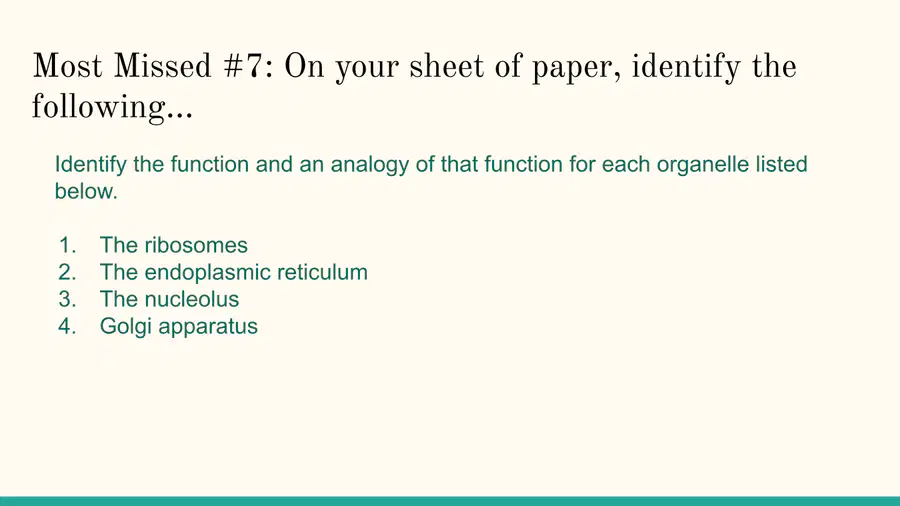
Review Question Match the following organelles to their functions
make proteins through protein synthesis
makes proteins, lipids and carbohydrates
sorts, packages, and modifies protein
stores and protects DNA
ribosomes
endoplasmic reticulum
golgi
nucleus
ribosomes
endoplasmic reticulum
golgi
nucleus
31
Match
Review Question Match the following
provides support and protections
controls what enters and exit
makes cell energy
protein synthesis to make proteins
instructions of proteins, and cell control
cell wall
cell membrane
mitochondria/ mitochondrion
ribosomes
nucleus
cell wall
cell membrane
mitochondria/ mitochondrion
ribosomes
nucleus
32
Multiple Select
Which group of organelles is directly responsible for the production of new molecules within a cell? (select 3 that apply)
The ribosomes
The endoplasmic reticulum
The nucleolus
Golgi apparatus
33
34
Categorize
smaller
larger
no nucleus
nucleus holding DNA
Cell Membrane
Ribosomes
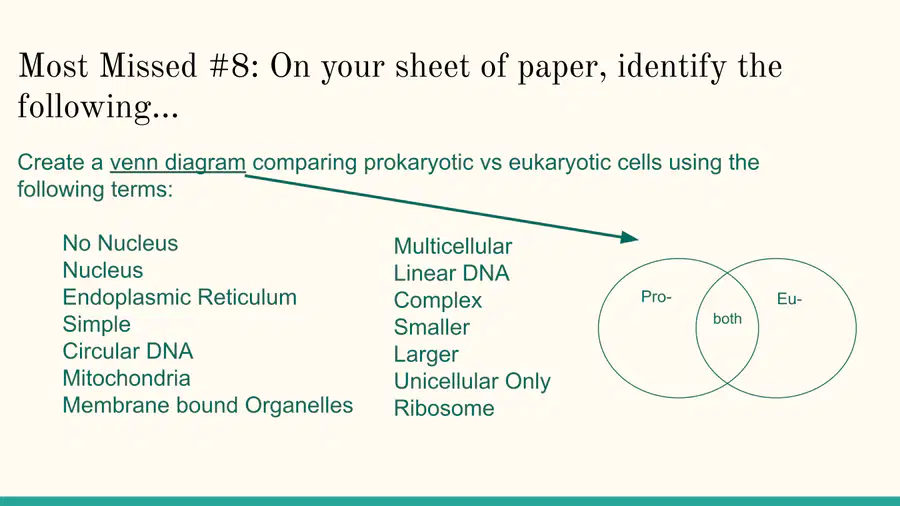
Review Question Organize these options into the right categories
35
Categorize
simple
complex
circular DNA
linear DNA
nucleic acid
ribosomes
Review Question Organize these options into the right categories
36
Categorize
no membrane bound organelles
mitochondria
no nucleus
nucleus
nucleic acid
ribosomes
chloroplast
Review Question Organize these options into the right categories
37
Dropdown

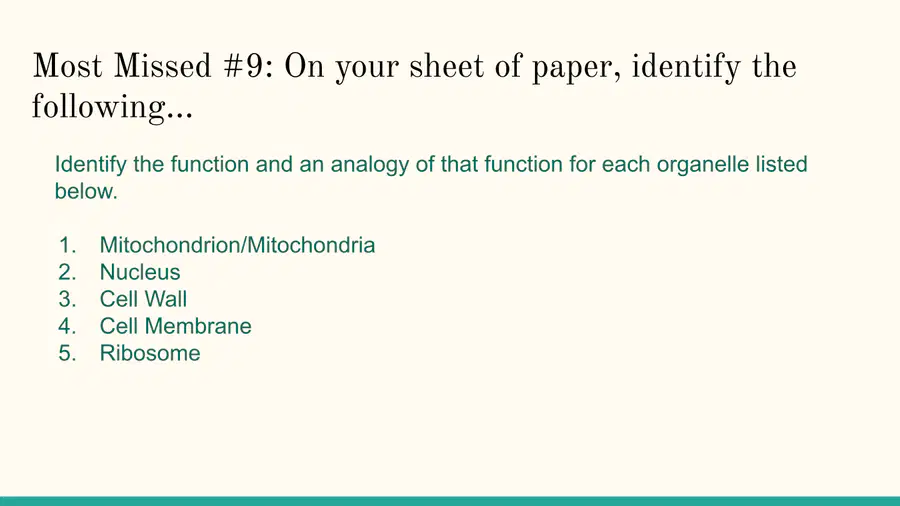
Test Question Use the image and your notes to identify each slide in the table
Slide 1:
Slide 2:
Slide 3:
Slide 4:
38
39
Match
Review Question: Match the following structures to their biomolecule
rigid, stiff Cell Wall
Cell Membrane/Plasma Membrane
muscles, enzymes
chromosomes, DNA
carbohydrates
lipids
proteins
nucleic acid
carbohydrates
lipids
proteins
nucleic acid
40
Match
Review Question: Match the following organelles to their functions
make proteins through protein synthesis
makes proteins, lipids and carbohydrates
sorts, packages, and modifies protein
stores and protects DNA
ribosomes
endoplasmic reticulum
golgi
nucleus
ribosomes
endoplasmic reticulum
golgi
nucleus
41
Match
Review Question: Match the following
provides support and protections
controls what enters and exit
makes cell energy
protein synthesis to make proteins
instructions of proteins, and cell control
cell wall
cell membrane
mitochondria/ mitochondrion
ribosomes
nucleus
cell wall
cell membrane
mitochondria/ mitochondrion
ribosomes
nucleus
42
Match
Test Question
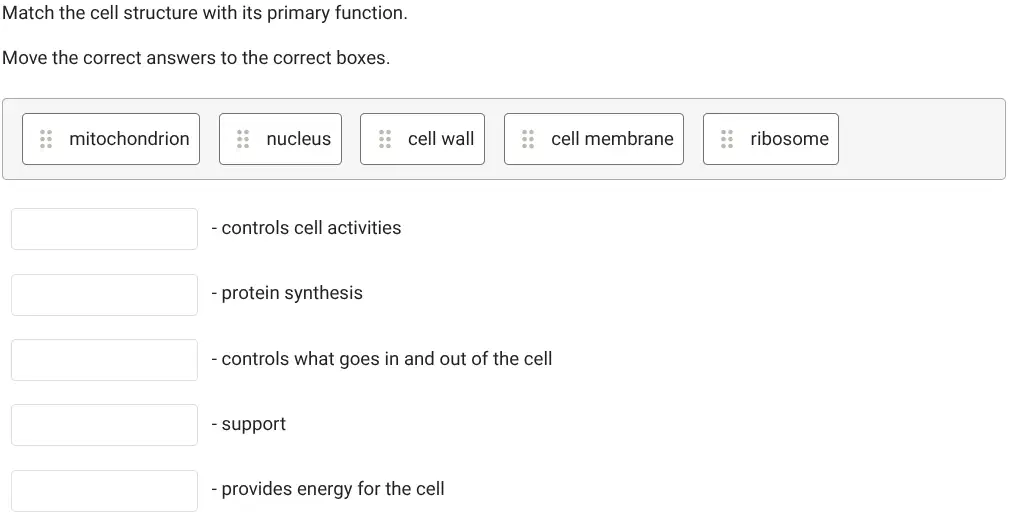
Match the cell structure with its primary function.
Move the correct answers to the correct boxes.
controls cell activities
protein synthesis
controls what goes in and out of the cell
Support
Provides energy for the cell
Nucleus
Ribosome
Cell Membrane
Cell Wall
Mitochondrion
Nucleus
Ribosome
Cell Membrane
Cell Wall
Mitochondrion
43

44
Match
Match the following functions of each macromolecule
provides quick or short term energy
provides long term energy and insulation
builds muscles, catalyzes chemical reactions
instructions of proteins, hereditary information
carbohydrate
lipids
proteins
nucleic acid
carbohydrate
lipids
proteins
nucleic acid
45
Match
Match the following structures to their biomolecule
rigid, stiff Cell Wall
Cell Membrane/Plasma Membrane
muscles, enzymes
chromosomes, DNA
carbohydrates
lipids
proteins
nucleic acid
carbohydrates
lipids
proteins
nucleic acid
46
Match
Match the following
provides support and protections
controls what enters and exit
makes cell energy
protein synthesis to make proteins
instructions of proteins, and cell control
cell wall
cell membrane
mitochondria/ mitochondrion
ribosomes
nucleus
cell wall
cell membrane
mitochondria/ mitochondrion
ribosomes
nucleus
47
Multiple Choice
Test Question
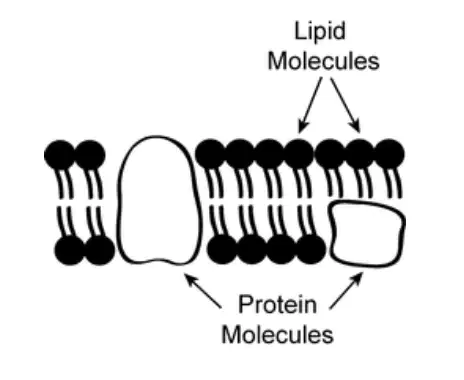
Look at the cell membrane below. The diagram reveals that lipids and proteins are both parts of the cell membranes. They have different functions because -
lipids work to hold the cell membrane together, and proteins move chemicals across the cell membrane.
lipids work to move chemicals across the cell membrane, and proteins work to store water in the cell membrane.
lipids work to stiffen the cell membrane, and proteins create fibers that attach to the ends of the lipids.
lipids work to remove nucleic acids from the cell membrane, and proteins work to hold the cell membrane together.
Show answer
Auto Play
Slide 1 / 47
SLIDE
Similar Resources on Wayground

40 questions
PHET_ Energy
Presentation
•
9th - 12th Grade
43 questions
Unit 4 Review - Genetics & Biotechnology
Presentation
•
9th - 12th Grade
38 questions
RNA and Protein Synthesis Lesson
Presentation
•
9th - 12th Grade
38 questions
Classification terms part 1
Presentation
•
9th - 12th Grade
44 questions
STAAR review vocabulary terms 2
Presentation
•
9th - 12th Grade
41 questions
Unit 5- Lesson 4- Powers of Congress
Presentation
•
9th - 12th Grade
41 questions
Photosynthesis
Presentation
•
9th - 12th Grade
41 questions
intro to enzymes & cell metabolism miller levine 2.4 2010
Presentation
•
9th - 12th Grade
Popular Resources on Wayground
10 questions
Safety Day 2026 – Student Review

Quiz
•
9th Grade
21 questions
Continents and Oceans
Quiz
•
6th Grade
20 questions
Parts of Speech
Quiz
•
5th Grade
16 questions
Subject & Predicate
Quiz
•
5th Grade
25 questions
Multiplication Facts
Quiz
•
5th Grade
12 questions
Map Skills
Quiz
•
3rd Grade
22 questions
Continents and Oceans
Quiz
•
5th Grade
15 questions
Rounding Decimals
Quiz
•
5th Grade
Discover more resources for Biology
20 questions
Cell organelles and functions
Quiz
•
10th Grade
20 questions
Cell Transport
Quiz
•
9th - 12th Grade
25 questions
photosynthesis and cellular respiration
Quiz
•
9th Grade
20 questions
Cell Cycle
Quiz
•
9th Grade
8 questions
DNA vs. RNA
Presentation
•
9th - 12th Grade
14 questions
Ecological Succession: Primary and Secondary
Quiz
•
9th Grade
20 questions
Macromolecules
Quiz
•
10th Grade
20 questions
Characteristics of Life
Quiz
•
9th - 10th Grade