

Comm Skills and Barriers Std 2.4

Presentation
•
Other
•
9th - 12th Grade
•
Practice Problem
•
Medium

JESSICA Lynn THIEL WEBB
Used 2+ times
FREE Resource
38 Slides • 16 Questions
1
2
3
Multiple Choice
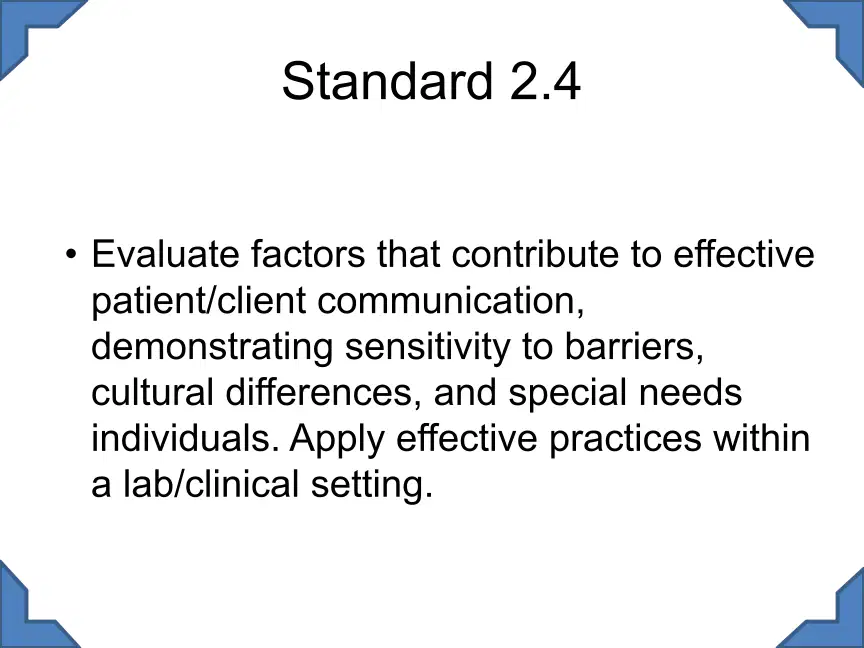
Which of the following is a barrier to effective patient/client communication in a healthcare setting?
Language differences
Clear instructions
Active listening
Empathy
4
5
Multiple Choice
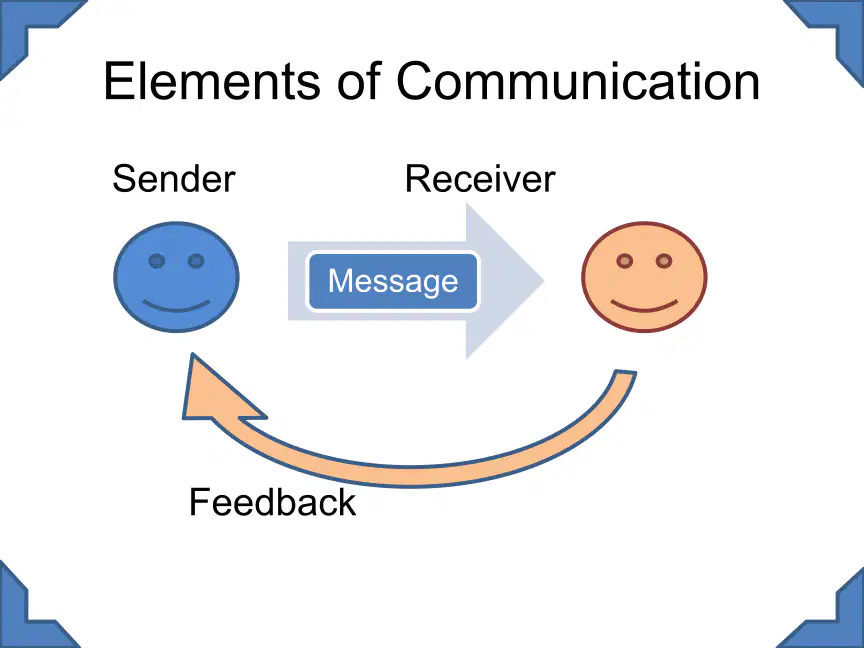
Which of the following is NOT an element of the basic communication model shown in the diagram?
Sender
Receiver
Message
Channel
6
7
8
Multiple Select
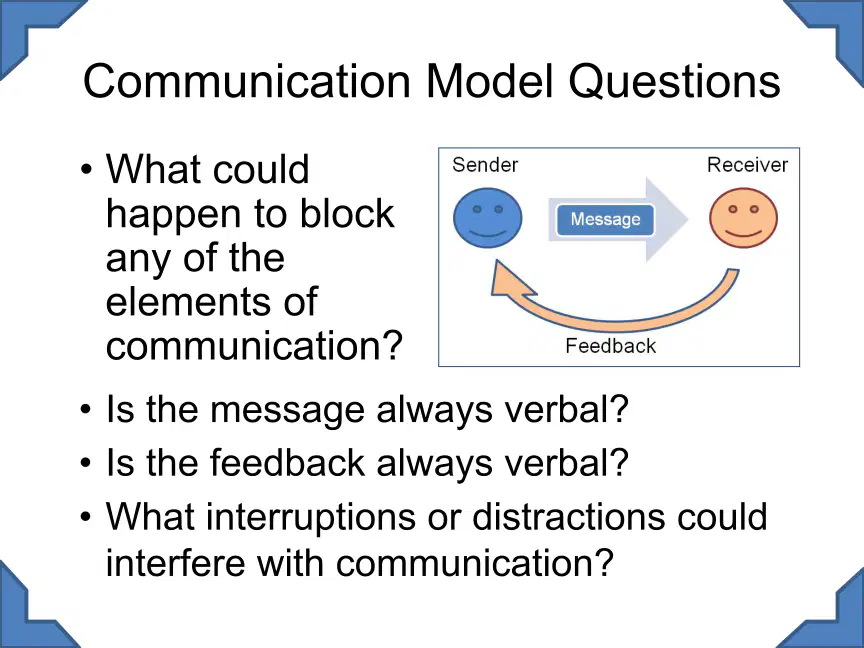
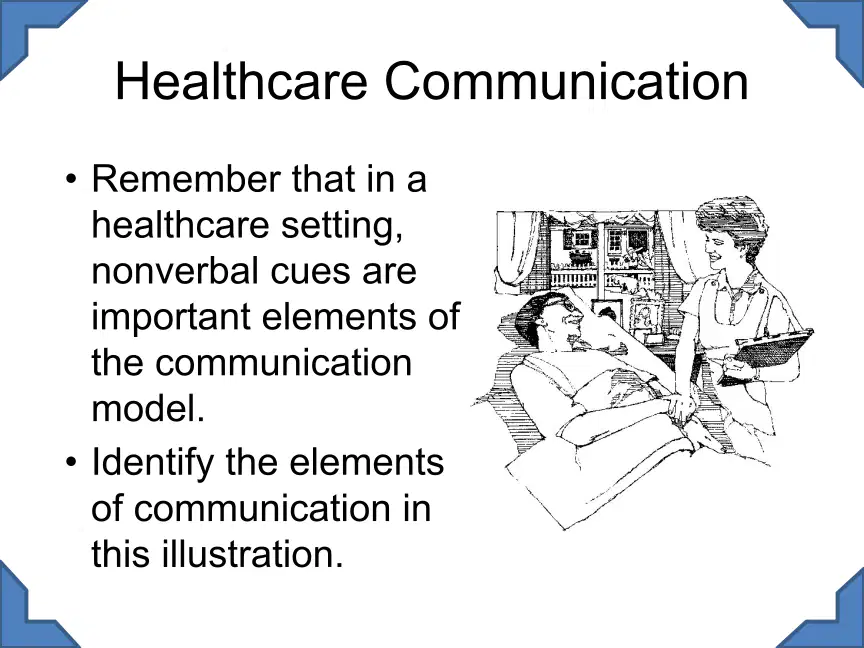
In a healthcare setting, which of the following are important elements of the communication model?
Nonverbal cues
Written instructions
Electronic devices
Physical distance
9
10
11
Multiple Choice
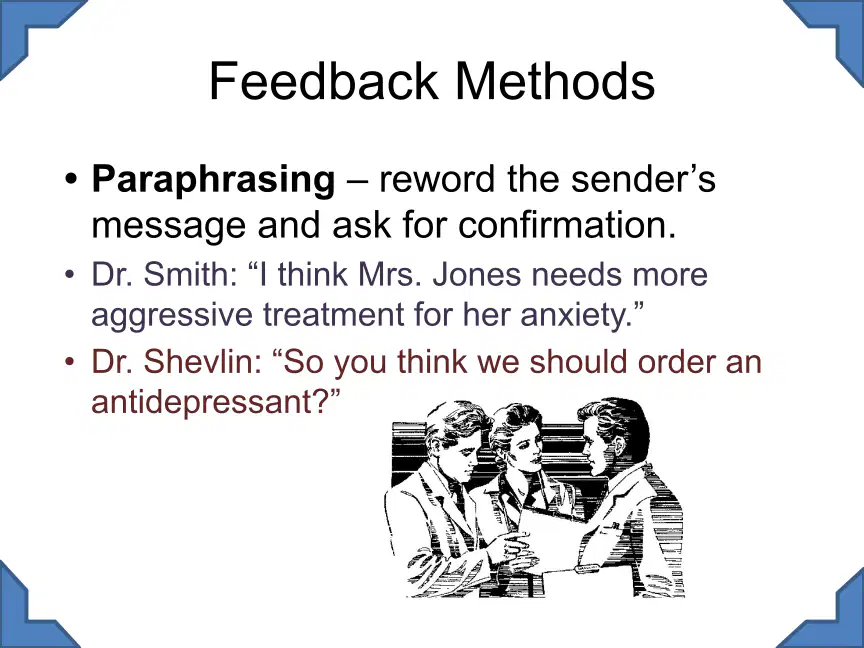
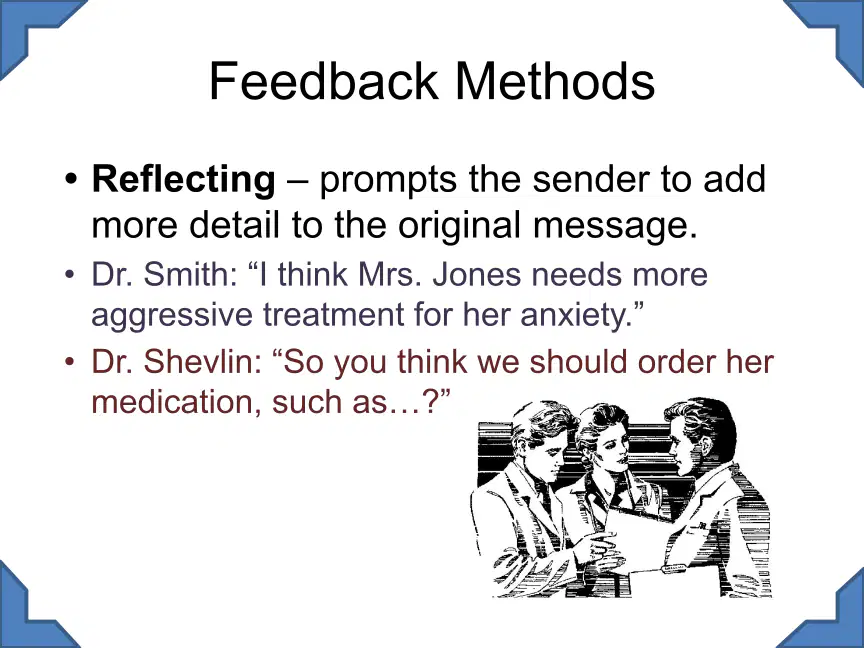
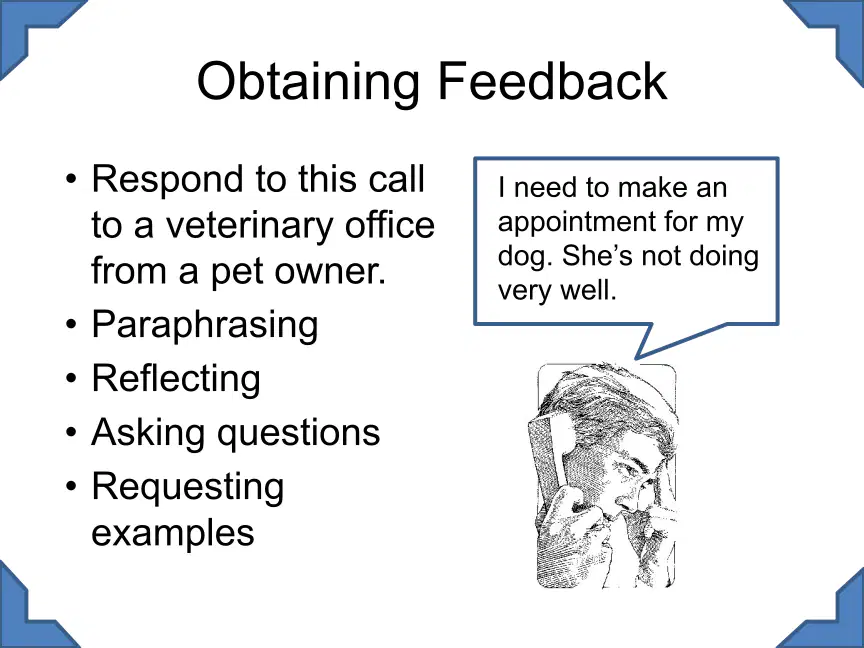
Which feedback method prompts the sender to add more detail to the original message?
Paraphrasing
Reflecting
Summarizing
Asking Questions
12
13
14
Multiple Choice
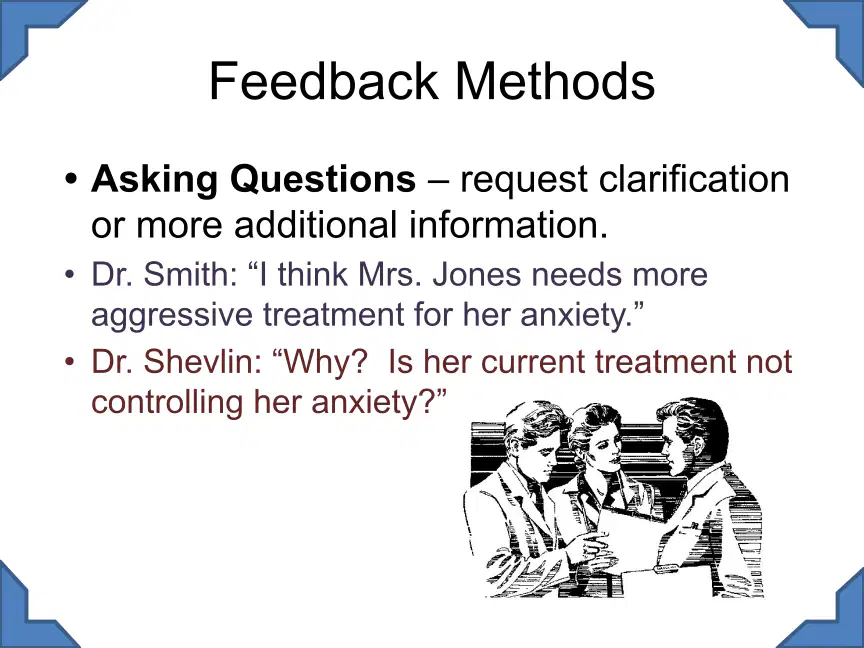
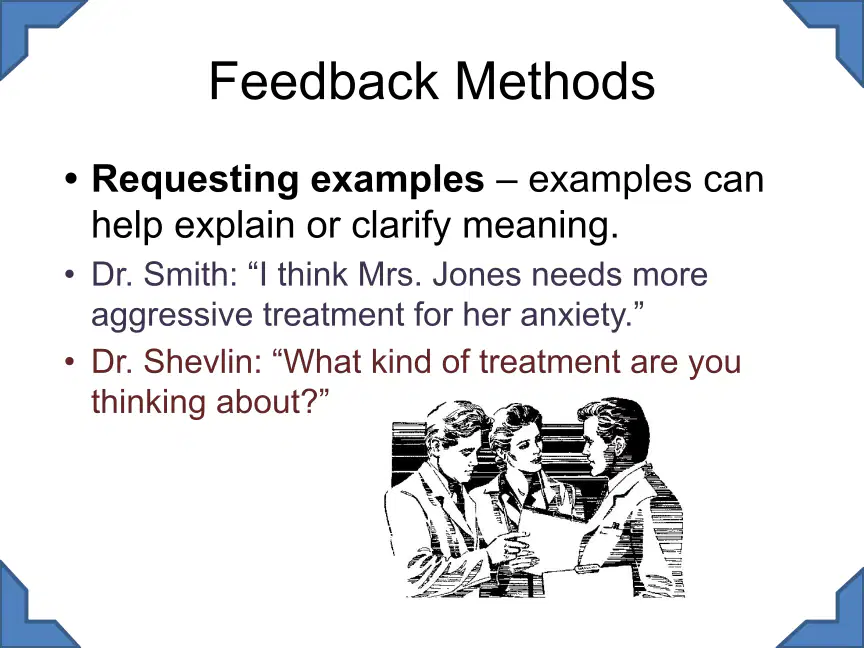
Which of the following is an example of requesting clarification during feedback?
Asking for specific examples to explain a statement
Ignoring the speaker's concerns
Changing the subject
Giving unrelated advice
15
16
17
Multiple Select
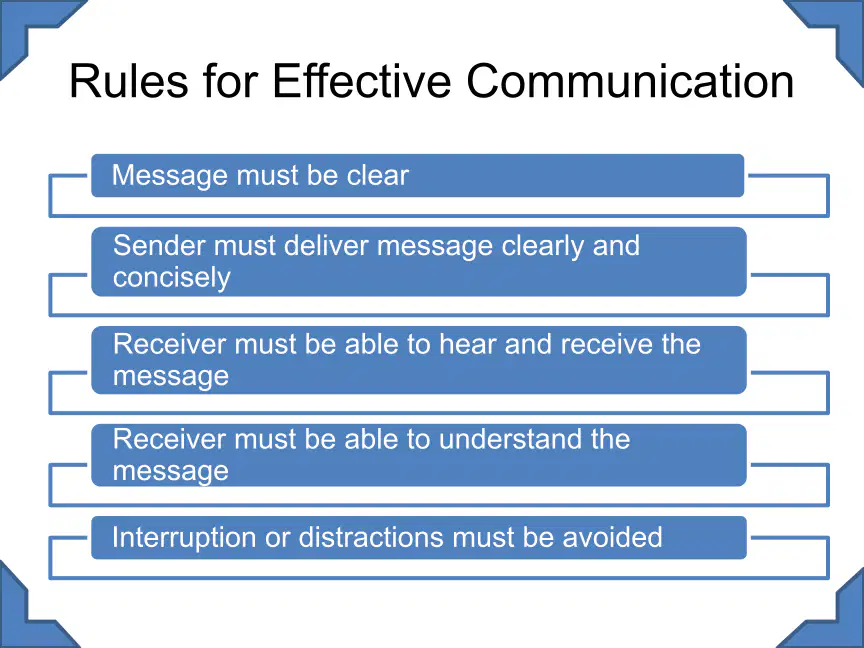
Which of the following are rules for effective communication?
Message must be clear
Sender must deliver message clearly and concisely
Receiver must be able to hear and receive the message
Interruption or distractions must be avoided
18
19
20
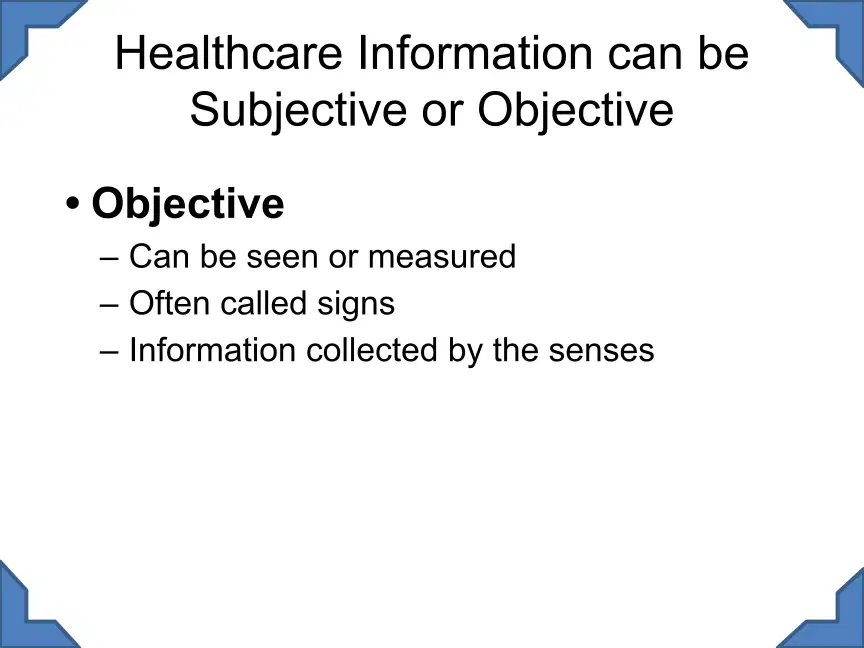
Multiple Choice
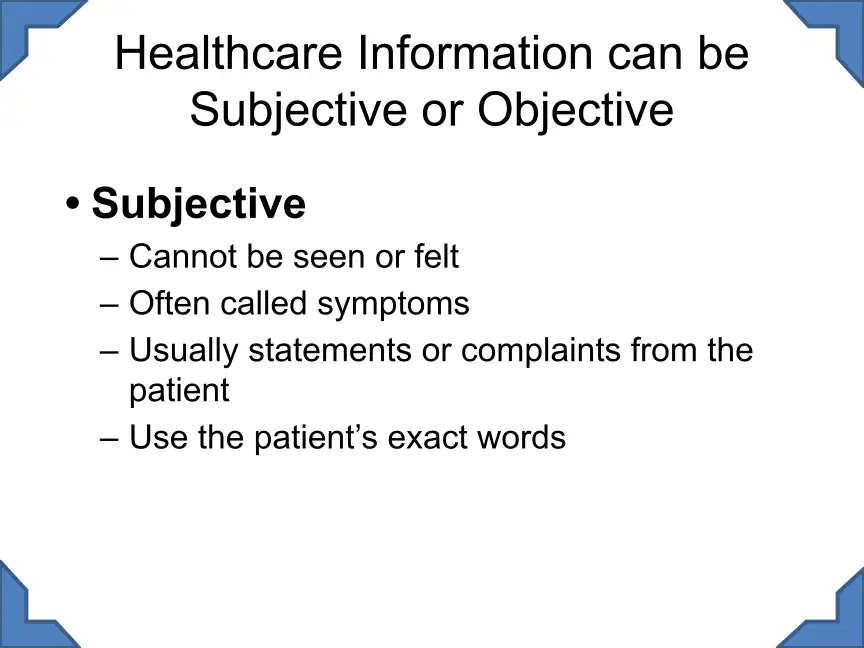
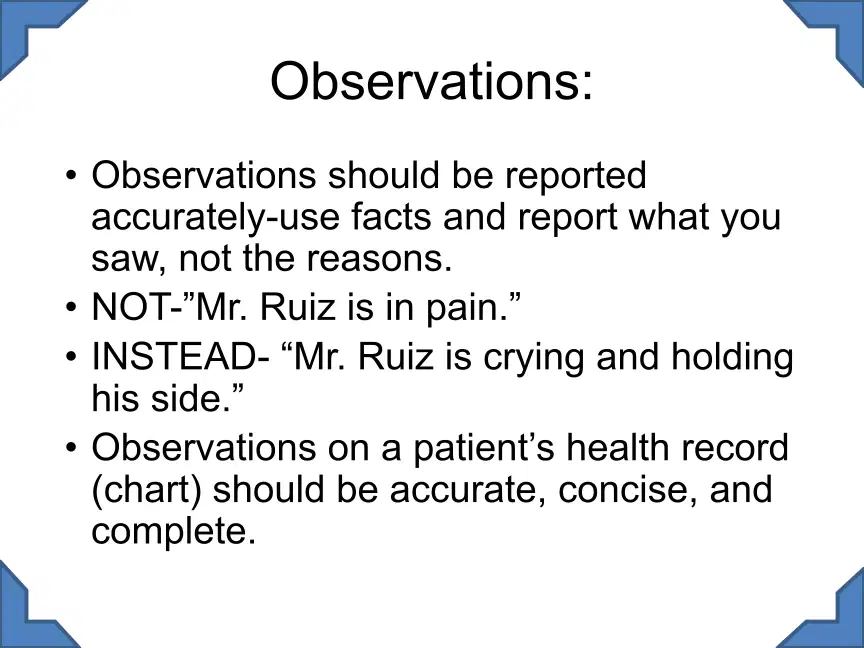
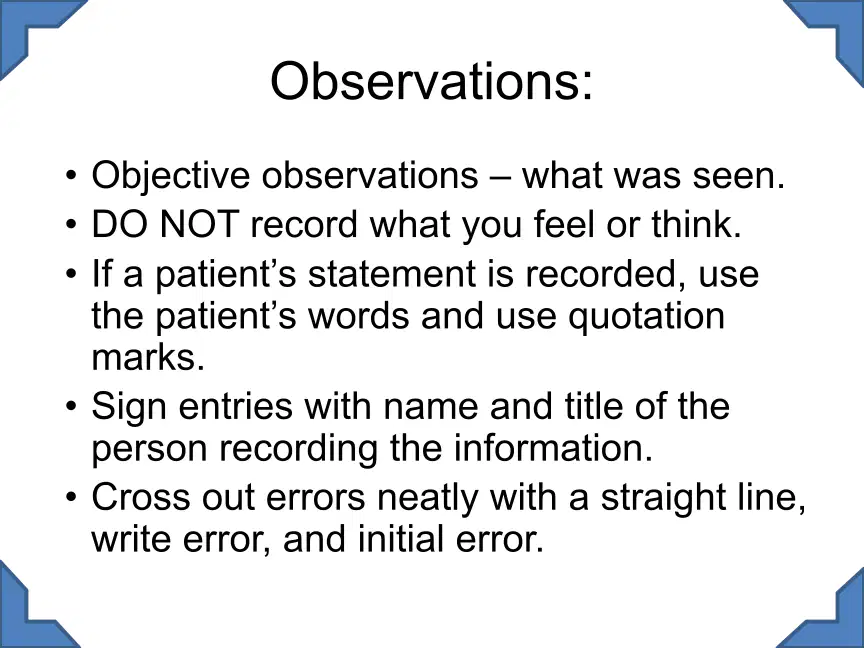
Which of the following best describes objective healthcare information?
Can be seen or measured
Is based on patient feelings
Cannot be measured
Is always inaccurate
21
22
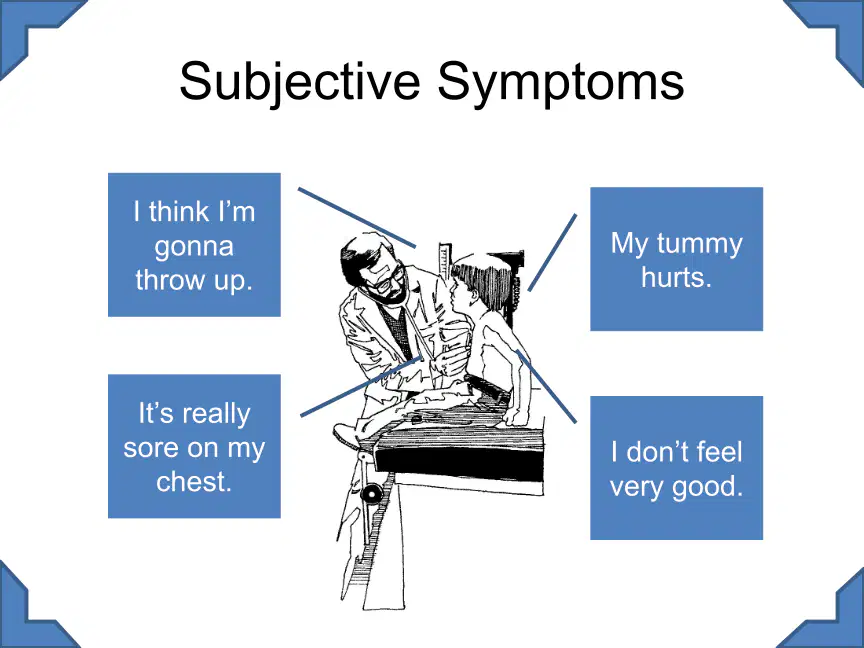
Multiple Choice
Which of the following statements is an example of a subjective symptom?
I think I’m gonna throw up.
Temperature is 101°F.
Blood pressure is 120/80.
Skin is pale.
23
24
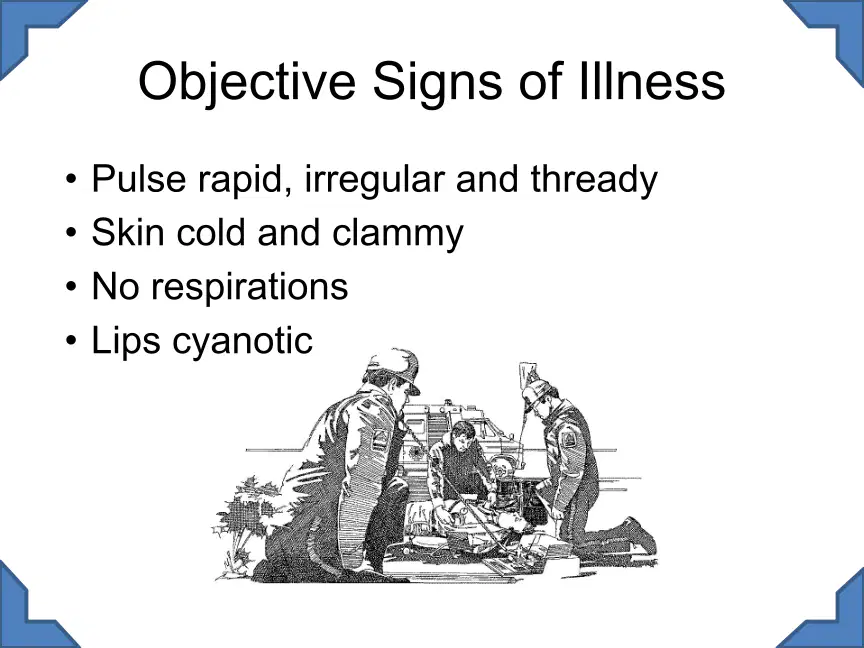
Multiple Choice
Which of the following is NOT an objective sign of illness?
Pulse rapid, irregular and thready
Skin cold and clammy
No respirations
Headache
25
26
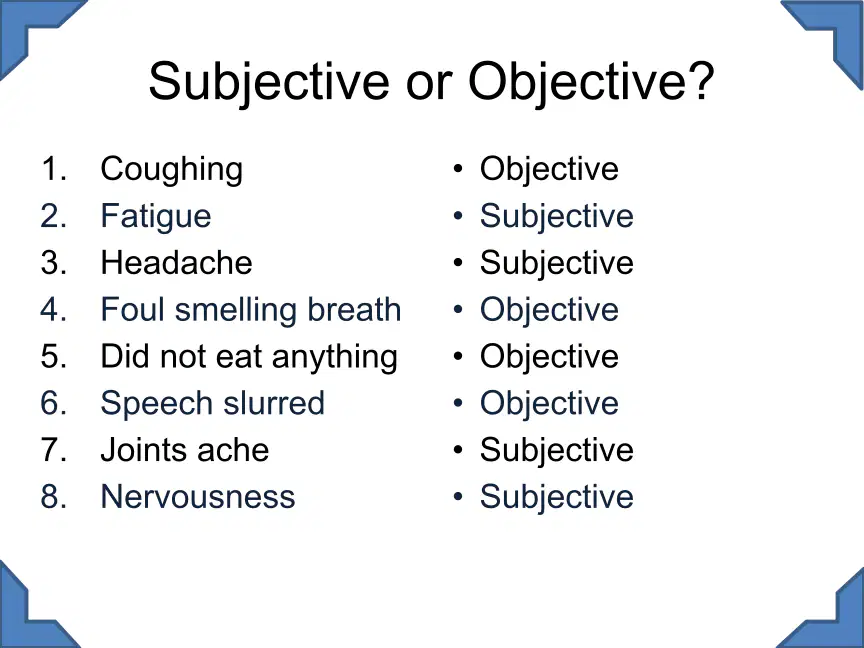
Multiple Select
Which of the following are examples of subjective symptoms?
Fatigue
Speech slurred
Headache
Joints ache
27
28
29
Multiple Choice
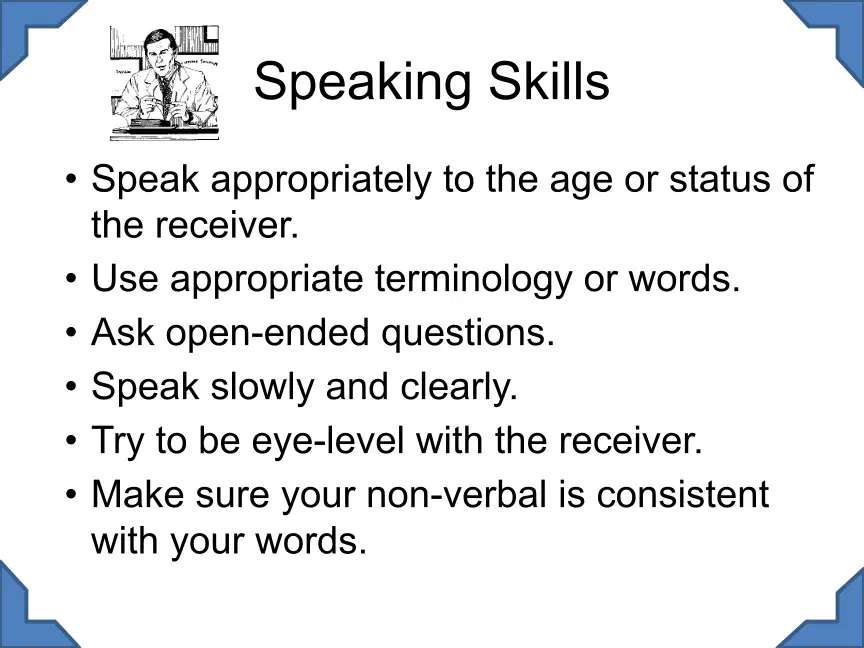
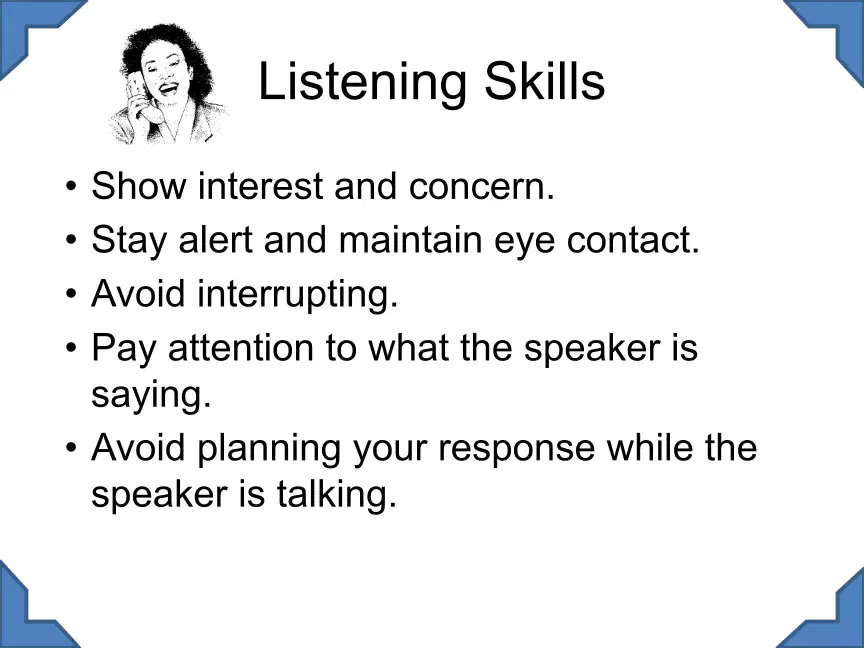
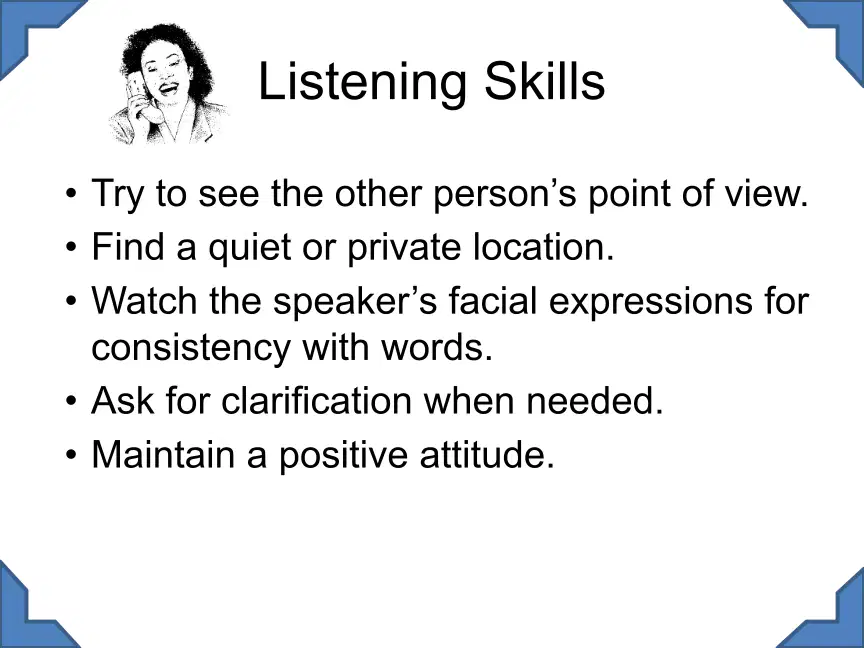
Which of the following is NOT a recommended listening skill?
Show interest and concern
Avoid interrupting
Plan your response while the speaker is talking
Pay attention to what the speaker is saying
30
31
32
33
Multiple Choice
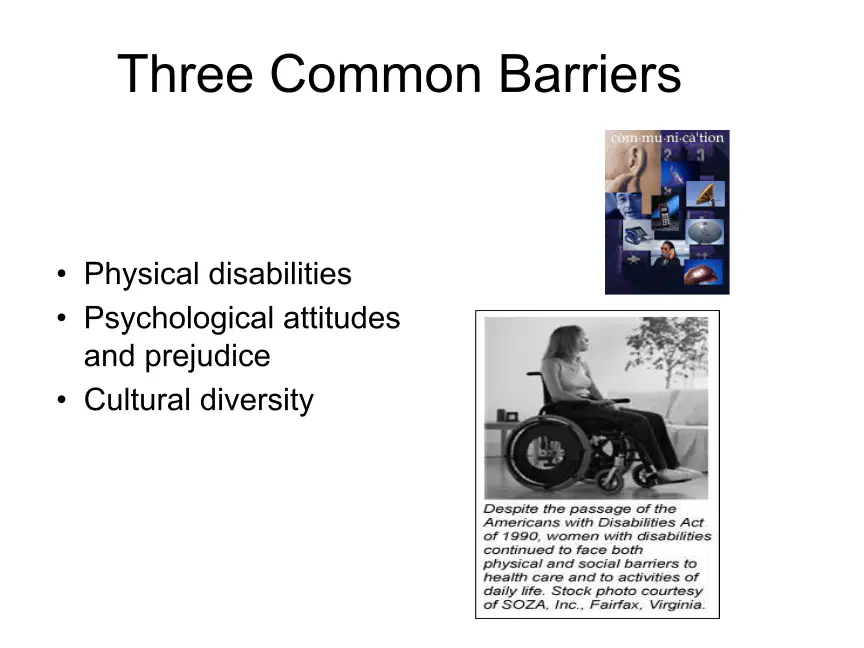
Which of the following is NOT one of the three common barriers to communication mentioned in the lesson?
Physical disabilities
Psychological attitudes and prejudice
Cultural diversity
Economic status
34
35
Multiple Select
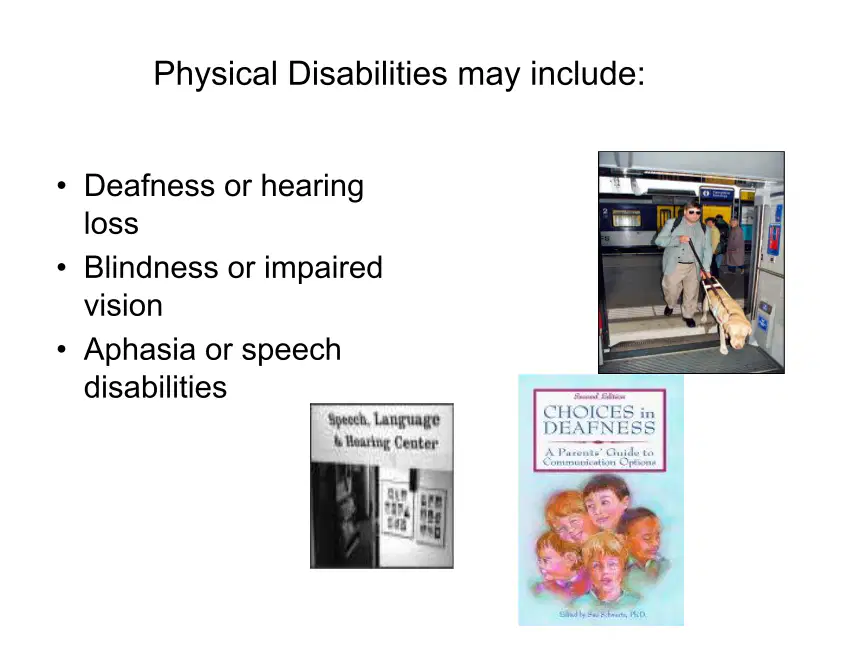
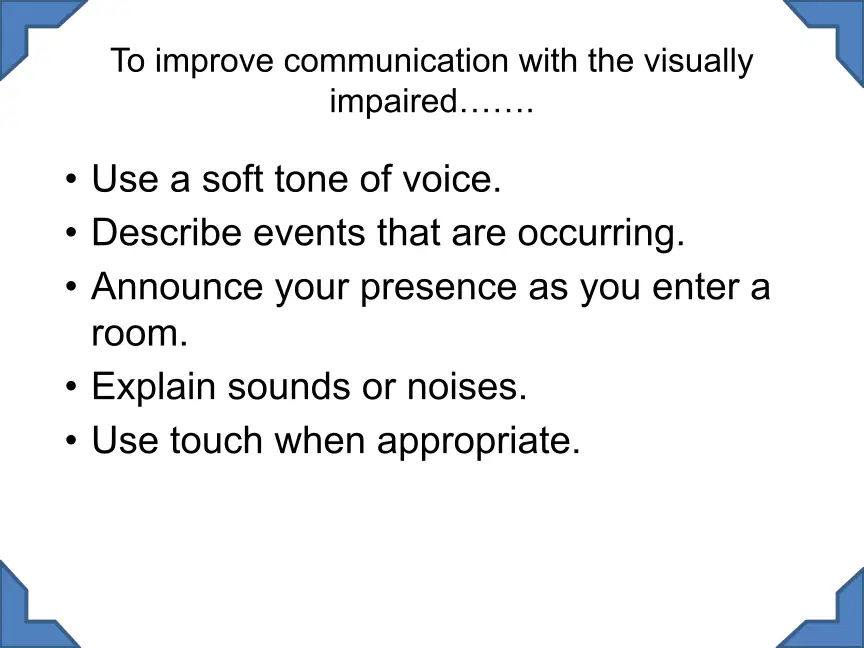
Which of the following are examples of physical disabilities that may affect communication?
Deafness or hearing loss
Blindness or impaired vision
Aphasia or speech disabilities
Prejudice
36
37
38
39
Multiple Choice
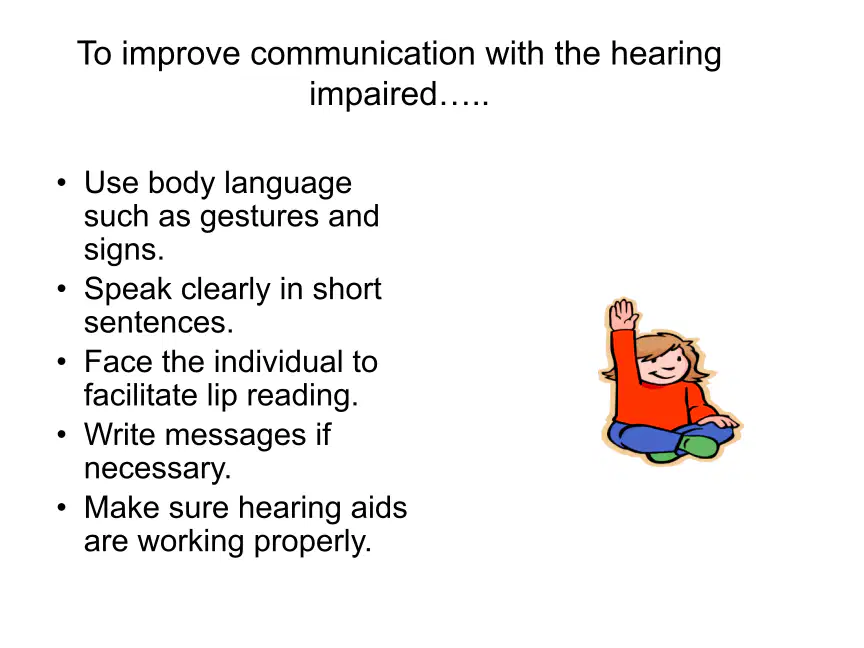
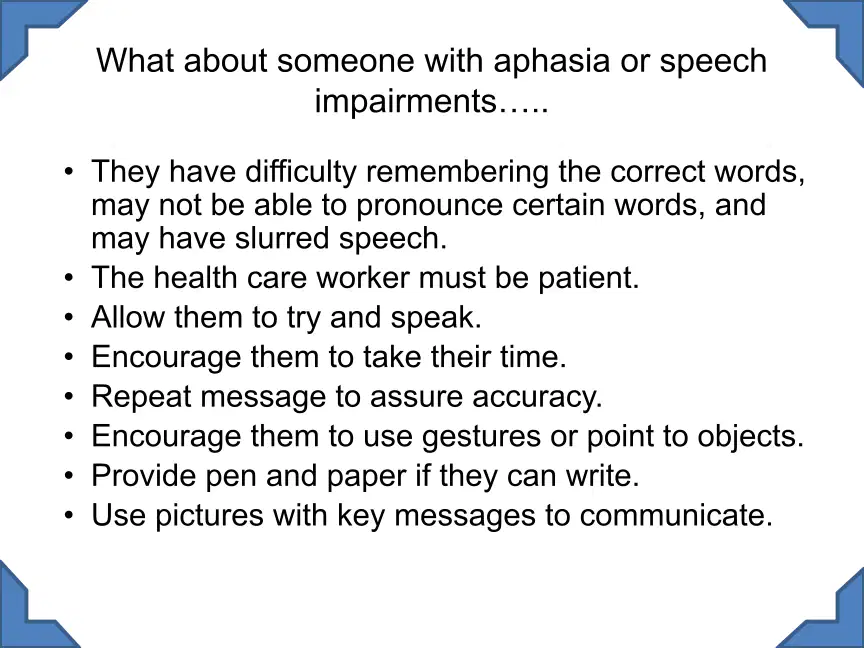
What is an important approach when communicating with someone who has aphasia or speech impairments?
Speak quickly to save time
Be patient and allow them to try and speak
Avoid using gestures
Ignore their attempts to communicate
40
41
Multiple Choice
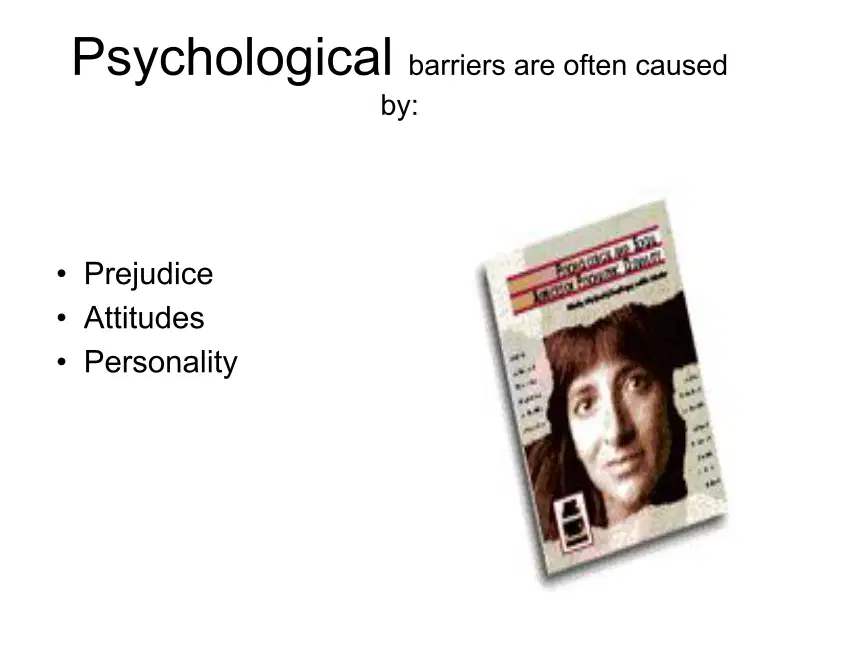
Psychological barriers to communication are often caused by:
Physical disabilities
Prejudice, attitudes, and personality
Cultural diversity
Economic status
42
43
44
45
46
47
48
49
50
51
52
53
54
Multiple Choice
What are some key factors that contribute to effective communication between healthcare professionals and patients/clients?
Sensitivity to barriers, cultural differences, and special needs
Ignoring cultural differences
Focusing only on medical jargon
Assuming all patients understand instructions
Show answer
Auto Play
Slide 1 / 54
SLIDE
Similar Resources on Wayground

47 questions
Chp 16 Tourism Lesson
Presentation
•
9th - 12th Grade
49 questions
Spring Final Review 2023_Culinary Arts ONE. (INTRODUCTION)
Presentation
•
9th - 12th Grade
47 questions
Cycle 3 DSA Review Slide Deck
Presentation
•
9th - 12th Grade
47 questions
Unit 8- Lesson 4: Trade and Globalization
Presentation
•
9th - 12th Grade
46 questions
Interior Design Obj 1.01 Review
Presentation
•
9th - 12th Grade
52 questions
Ancient China
Presentation
•
9th - 12th Grade
48 questions
Microsoft Word Vocabulary
Presentation
•
9th - 12th Grade
48 questions
The verb "ir" (to go) Intro
Presentation
•
9th - 12th Grade
Popular Resources on Wayground
10 questions
HCS SCI 03 Summer School Review 4

Quiz
•
3rd Grade
11 questions
HSMS - Standard Response Protocol
Quiz
•
6th - 8th Grade
16 questions
1.1-1.2 Quiz Review
Quiz
•
9th - 12th Grade
12 questions
Exponent Expressions
Quiz
•
6th Grade
20 questions
Adding and Subtracting Integers
Quiz
•
6th - 7th Grade
11 questions
Northeast States
Quiz
•
3rd - 4th Grade
10 questions
Characterization
Quiz
•
3rd - 7th Grade
10 questions
Common Denominators
Quiz
•
5th Grade