

Enterobacteriaceae

Presentation
•
Science
•
Professional Development
•
Hard

Wengel Araya
FREE Resource
47 Slides • 28 Questions
1
2
3
Open Ended
How do Enterobacteriaceae impact drug therapy decisions and infection control in healthcare settings?
4
Multiple Choice
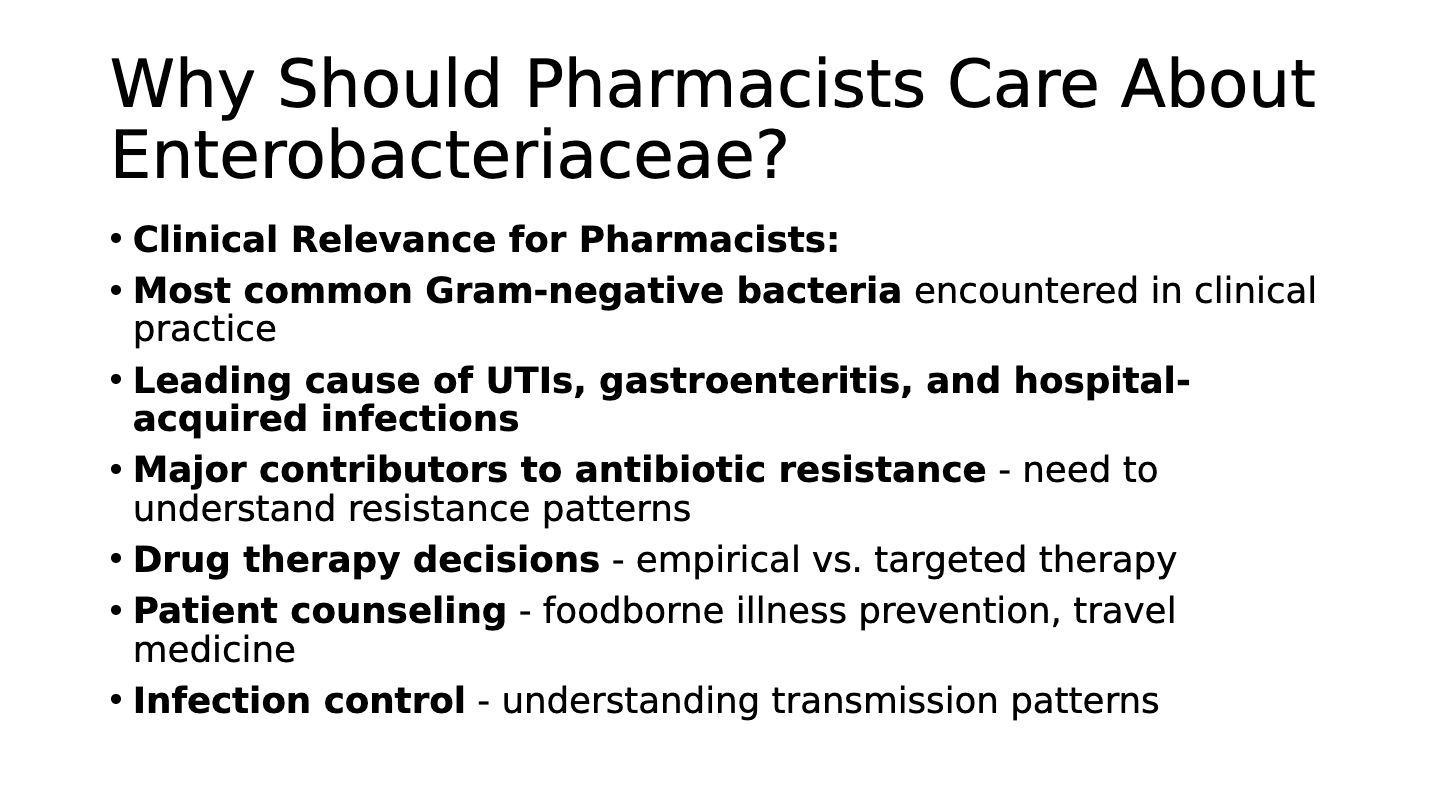
Why is it important for pharmacists to understand Enterobacteriaceae in clinical practice?
Because they are the most common Gram-negative bacteria encountered and are major contributors to antibiotic resistance.
Because they are only found in laboratory settings and rarely cause infections.
Because they are Gram-positive bacteria and do not affect drug therapy decisions.
Because they are not relevant to patient counseling or infection control.
5

6
7
Open Ended
How does understanding the characteristics of Enterobacteriaceae impact patient outcomes in different healthcare settings such as the emergency department, ICU, and long-term care?
8
9
Multiple Choice
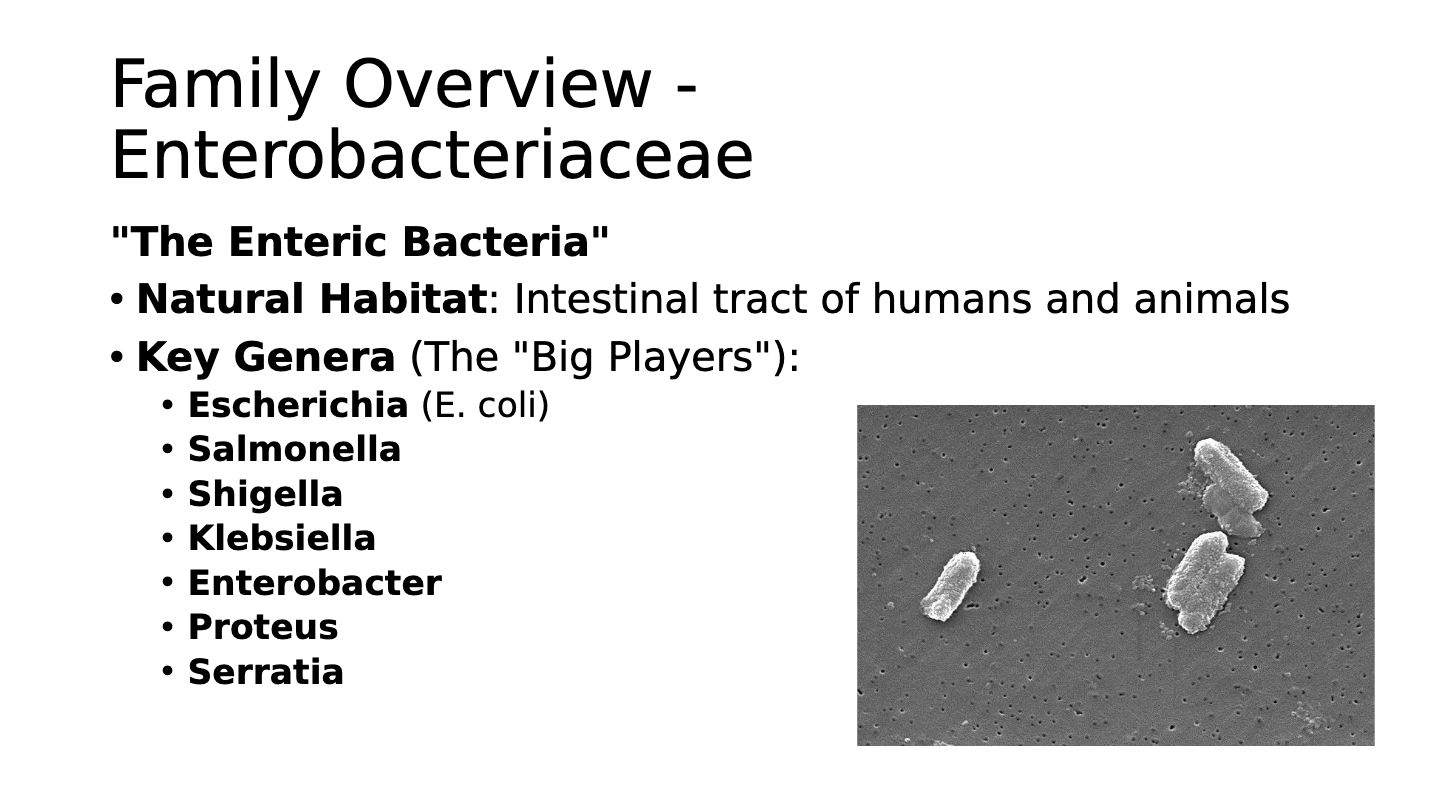
Which of the following is NOT a key genus within the Enterobacteriaceae family?
Escherichia
Salmonella
Staphylococcus
Klebsiella
10
11
Multiple Select
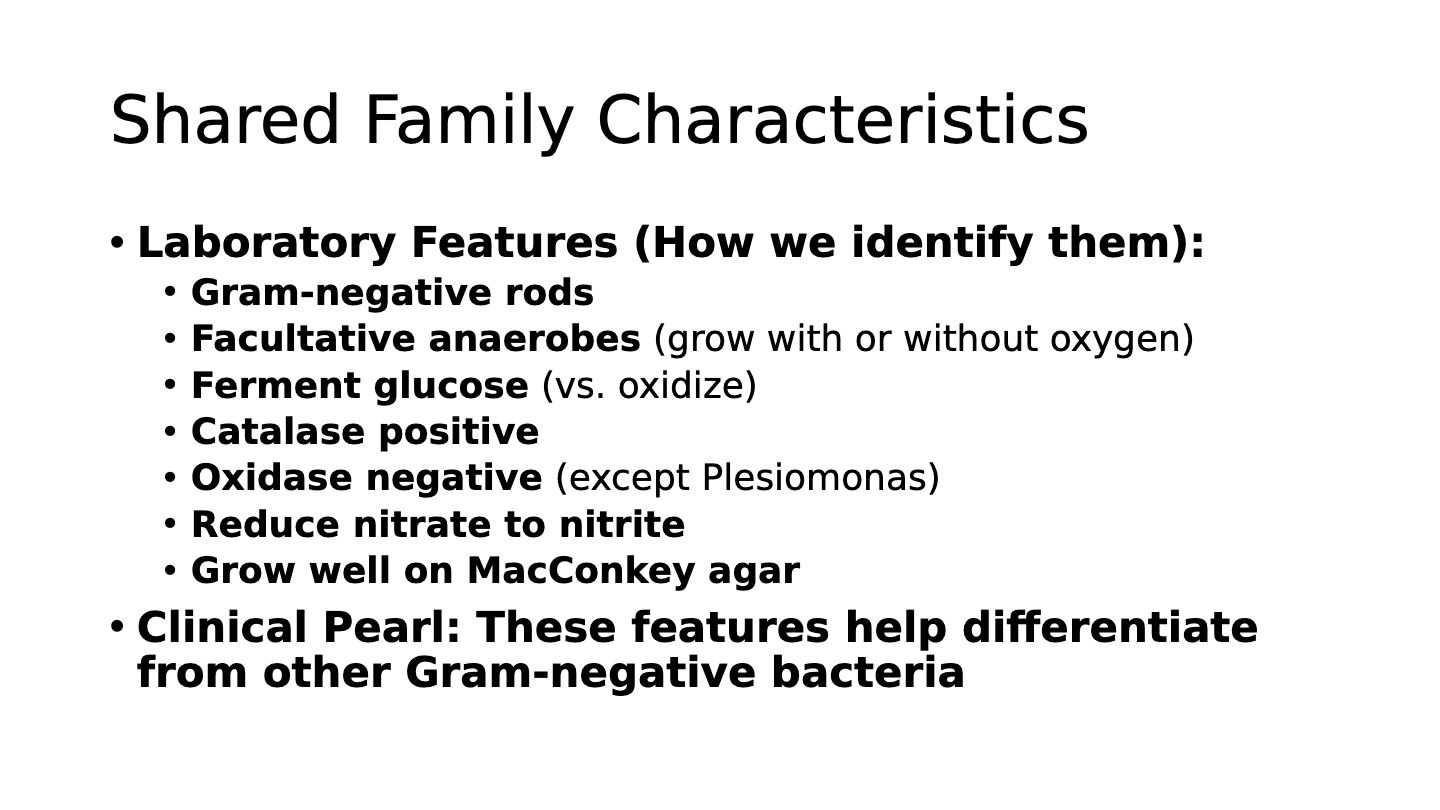
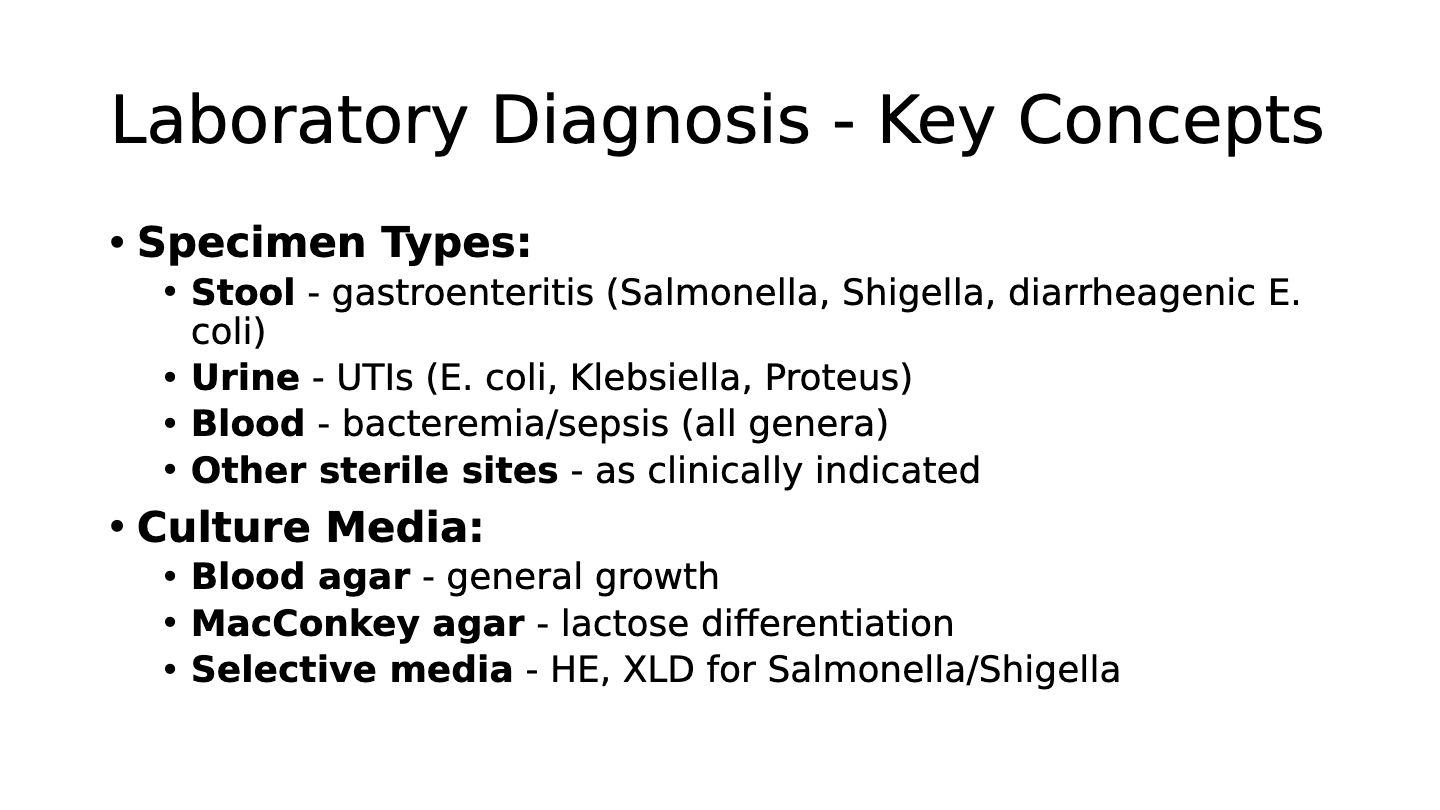
Which of the following are laboratory features used to identify members of the Enterobacteriaceae family?
Gram-negative rods
Oxidase positive
Ferment glucose
Grow well on MacConkey agar
12
13
Fill in the Blanks
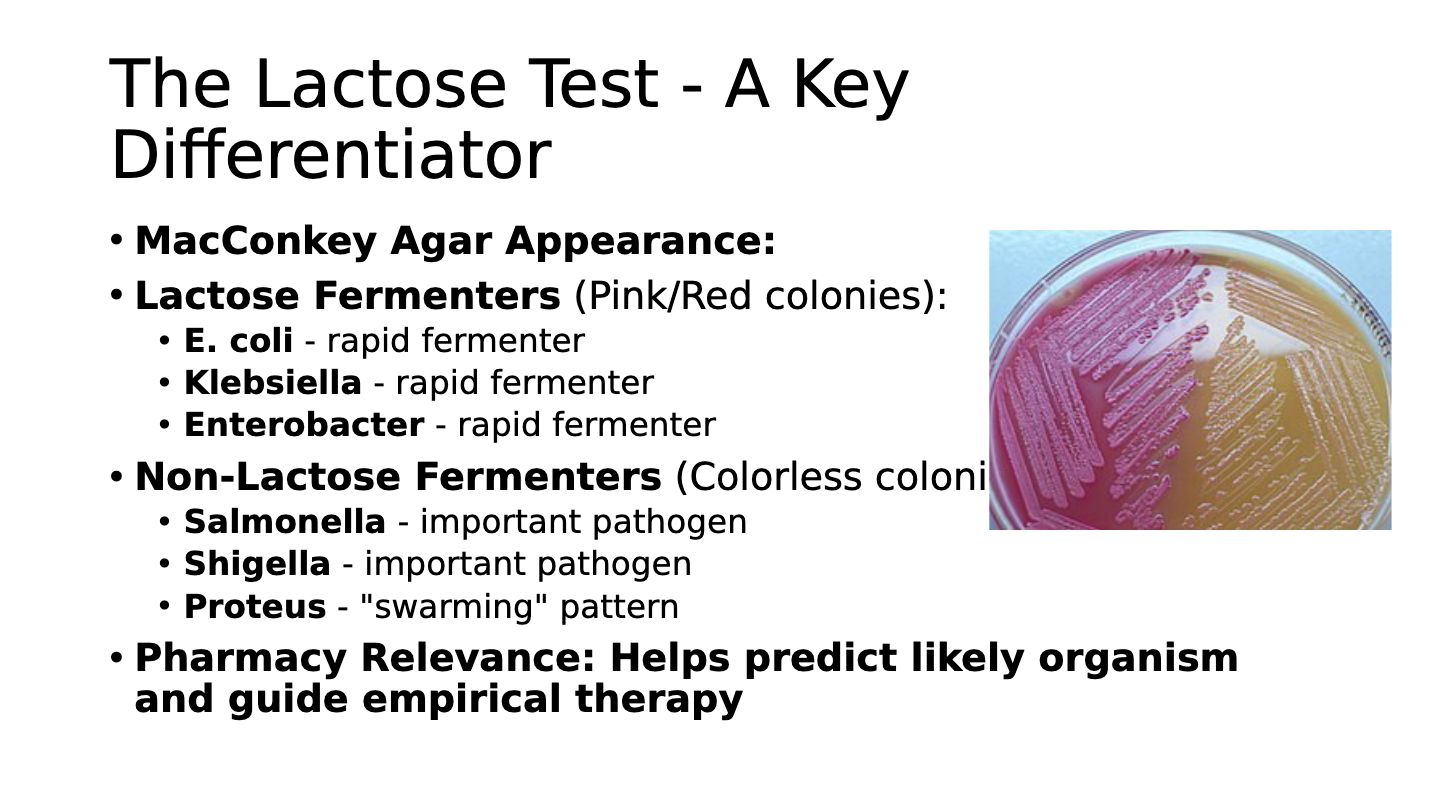
On MacConkey agar, lactose fermenters appear as
Type answer...
14
15
Open Ended
Explain the clinical importance of serotyping Enterobacteriaceae and how it can influence public health measures.
16
Multiple Choice
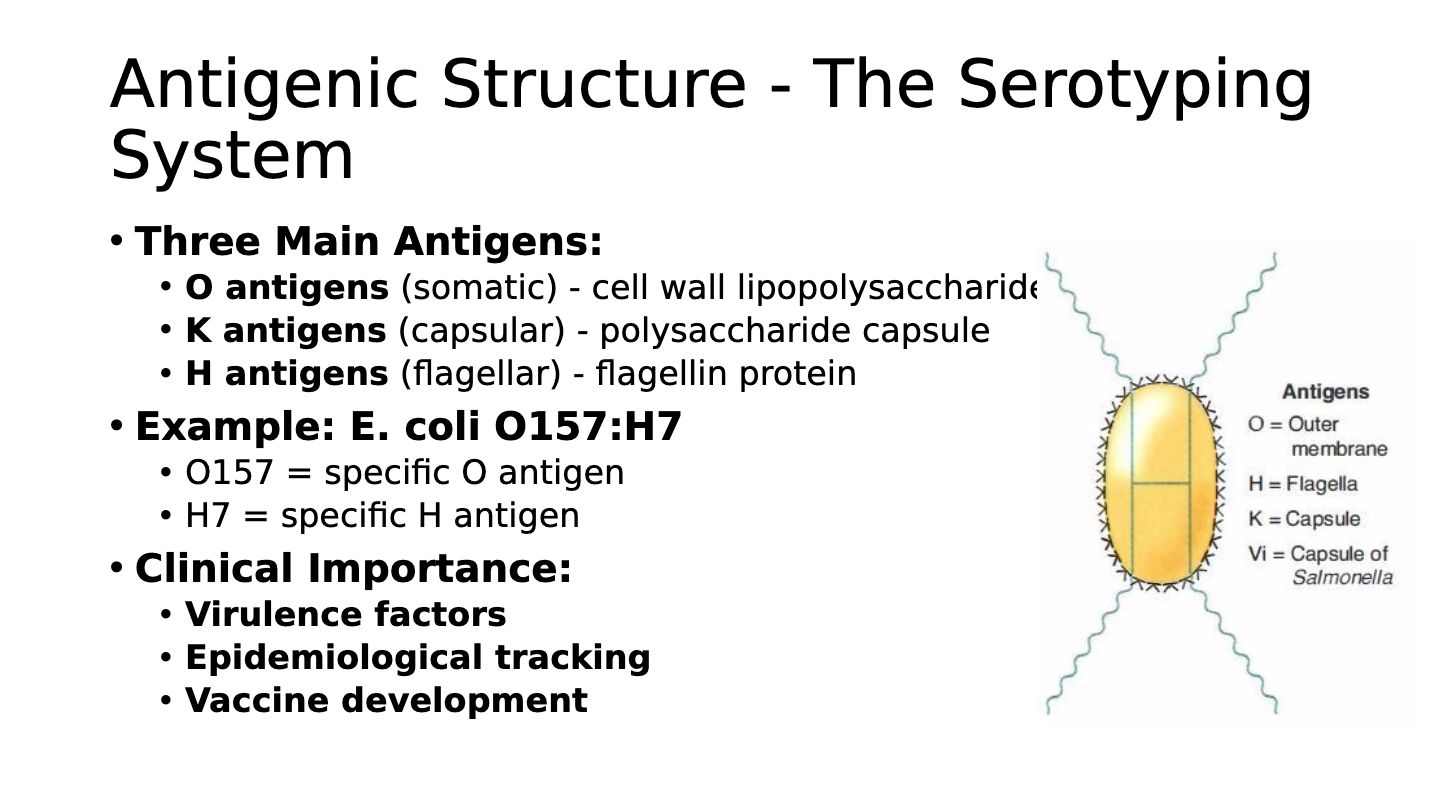
Which antigen is associated with the flagellin protein in the serotyping system of Enterobacteriaceae?
O antigen
K antigen
H antigen
Vi antigen
17
18
Multiple Choice
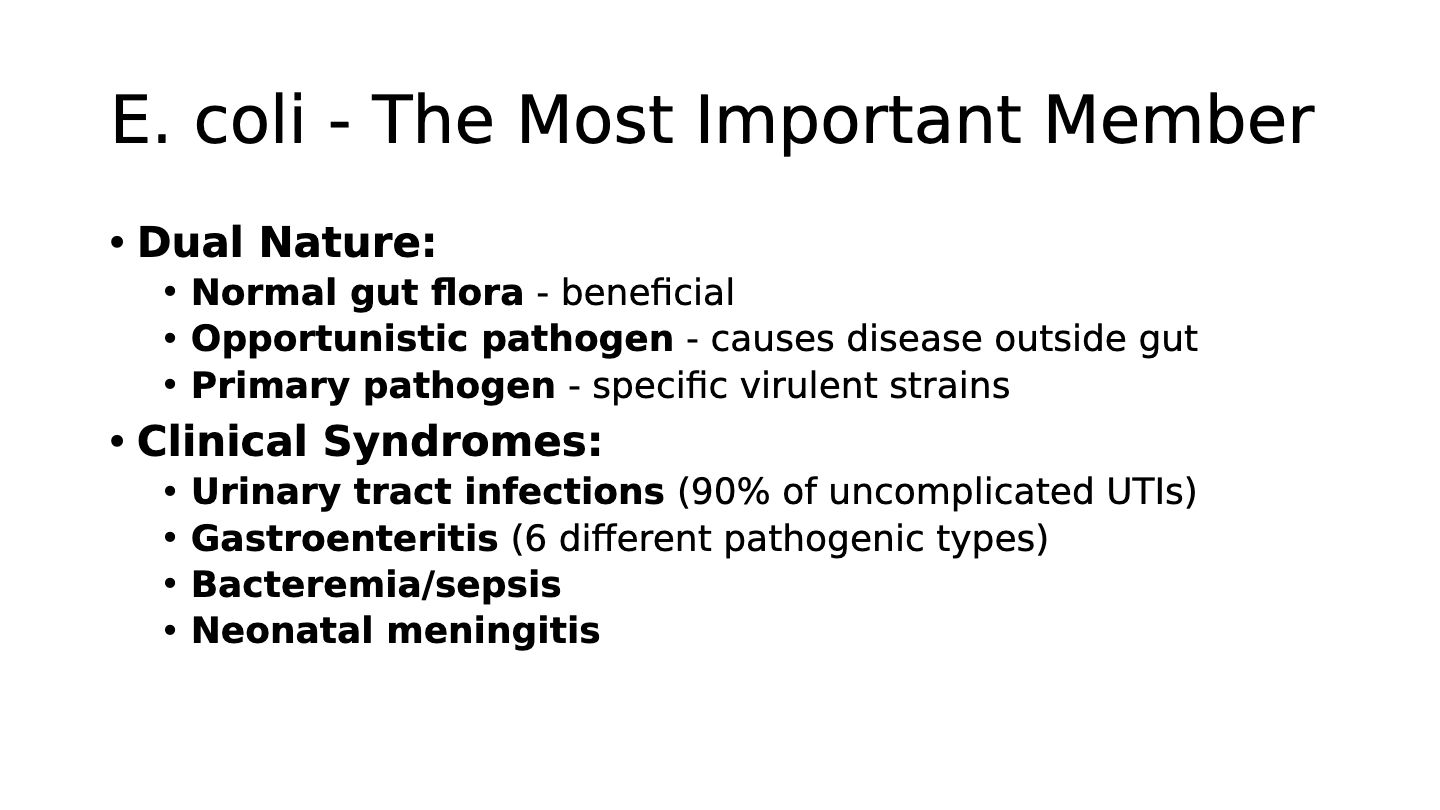
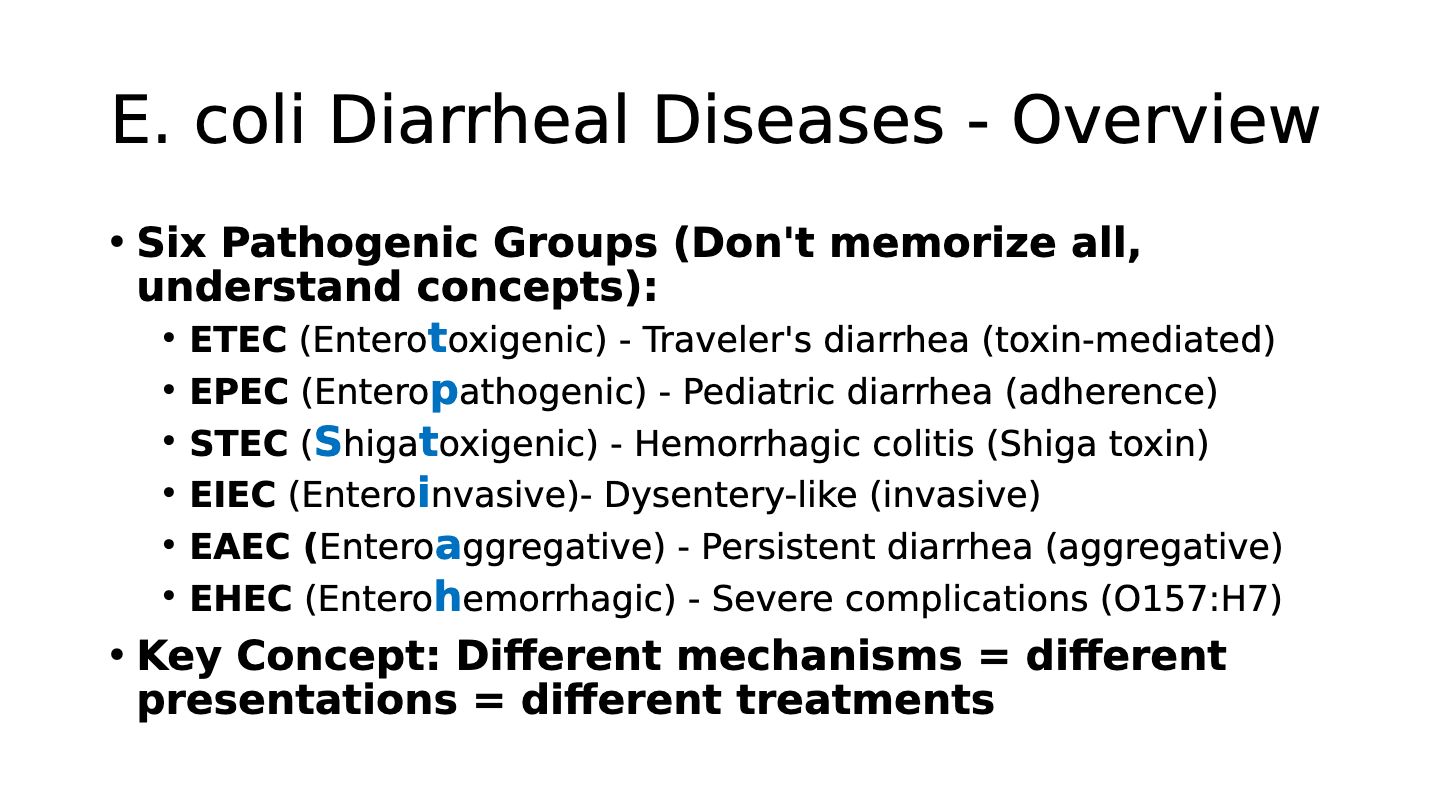
Which of the following is NOT a clinical syndrome commonly associated with E. coli?
Urinary tract infections
Gastroenteritis
Pneumonia
Neonatal meningitis
19
20
Multiple Select
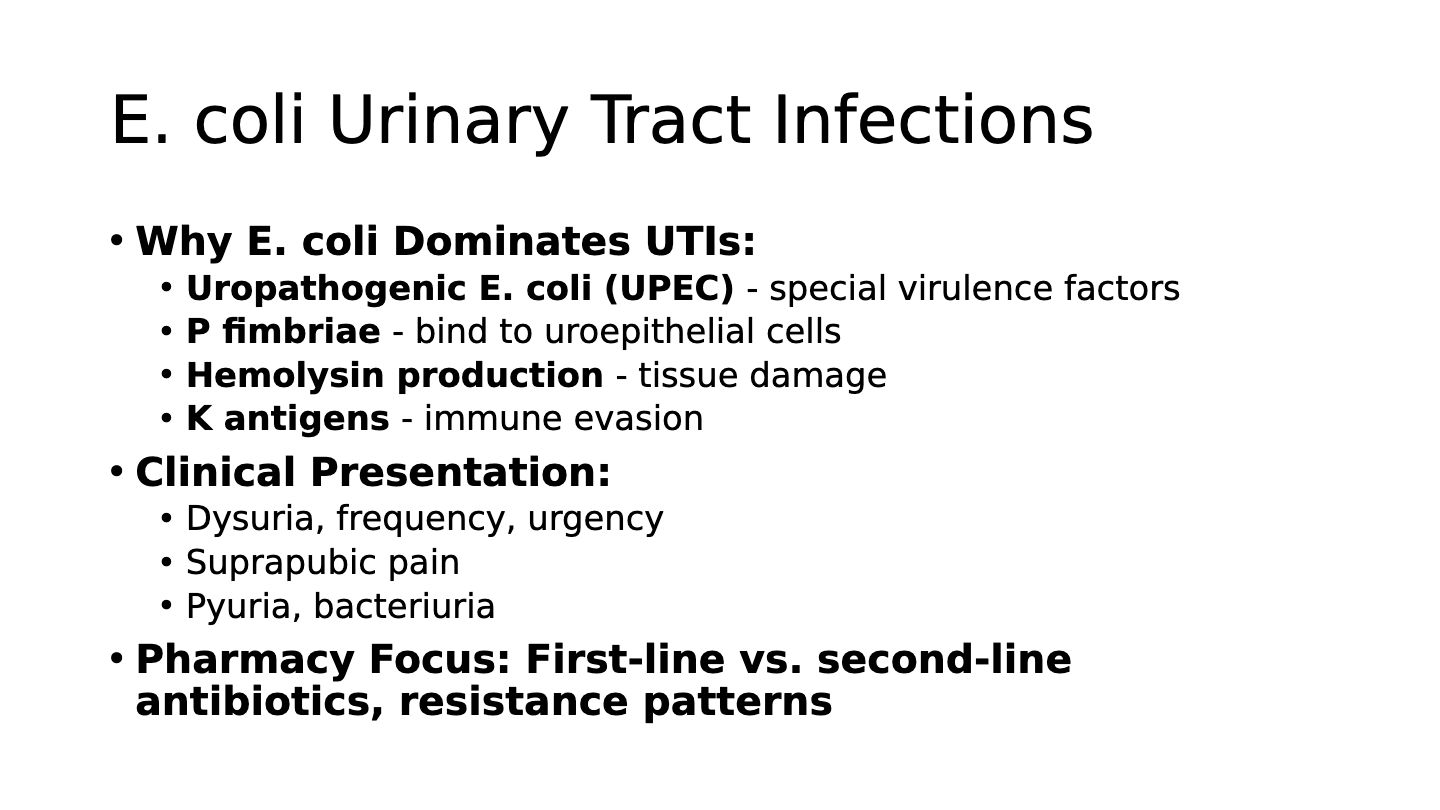
Which of the following are special virulence factors that help E. coli dominate urinary tract infections?
P fimbriae
K antigens
Hemolysin production
Capsule formation
21
22
Open Ended
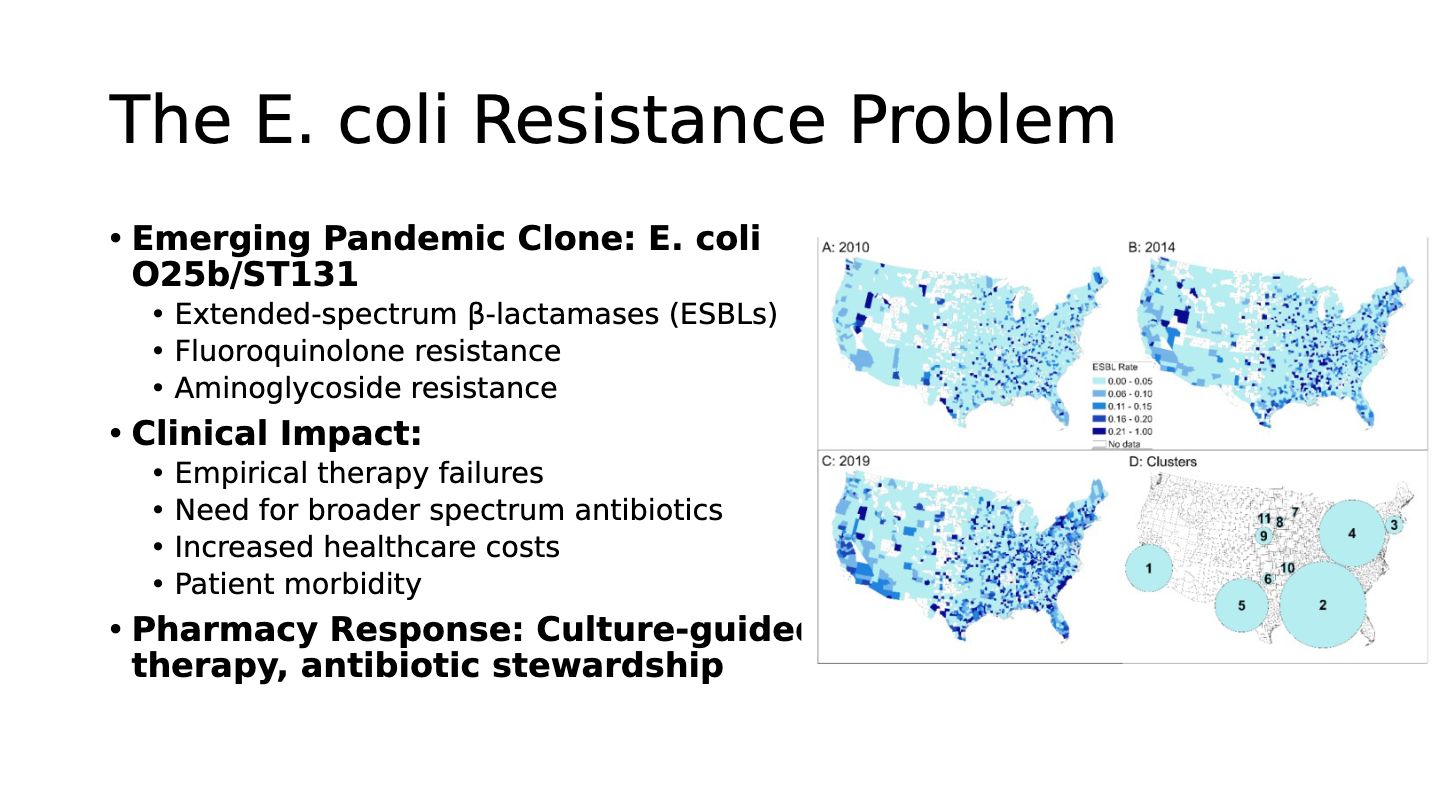
Explain the clinical impact of the emerging pandemic clone E. coli O25b/ST131 and the recommended pharmacy response.
23
24
25
Multiple Choice
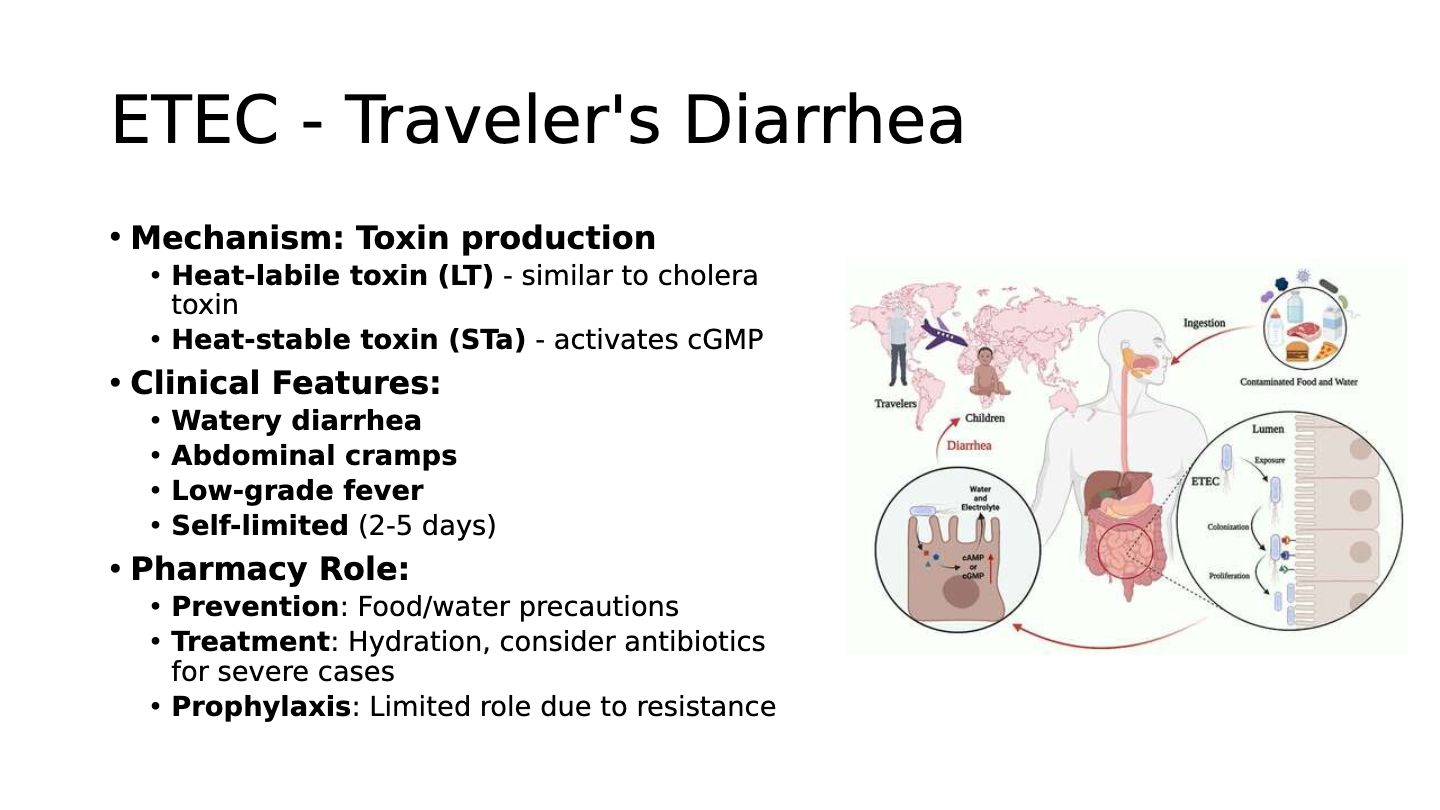
Which toxin is produced by ETEC and is similar to cholera toxin?
Shiga toxin
Heat-labile toxin (LT)
K antigen
Hemolysin
26
Fill in the Blanks
The E. coli group responsible for traveler's diarrhea is known as
Type answer...
27
28
Multiple Choice
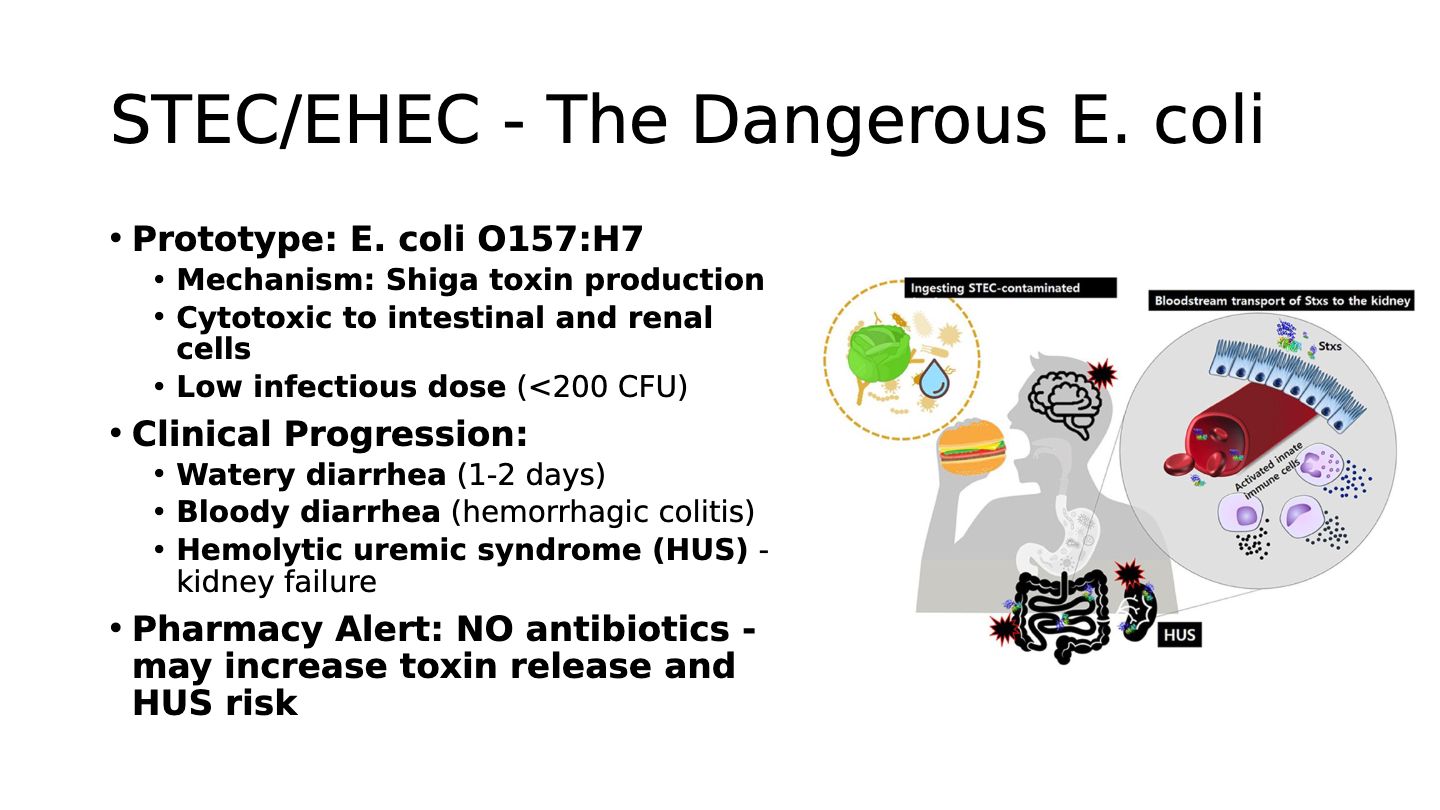
Why are antibiotics NOT recommended in STEC/EHEC infections?
They are ineffective against E. coli
They may increase toxin release and HUS risk
They cause allergic reactions
They are too expensive
29
30
Multiple Choice
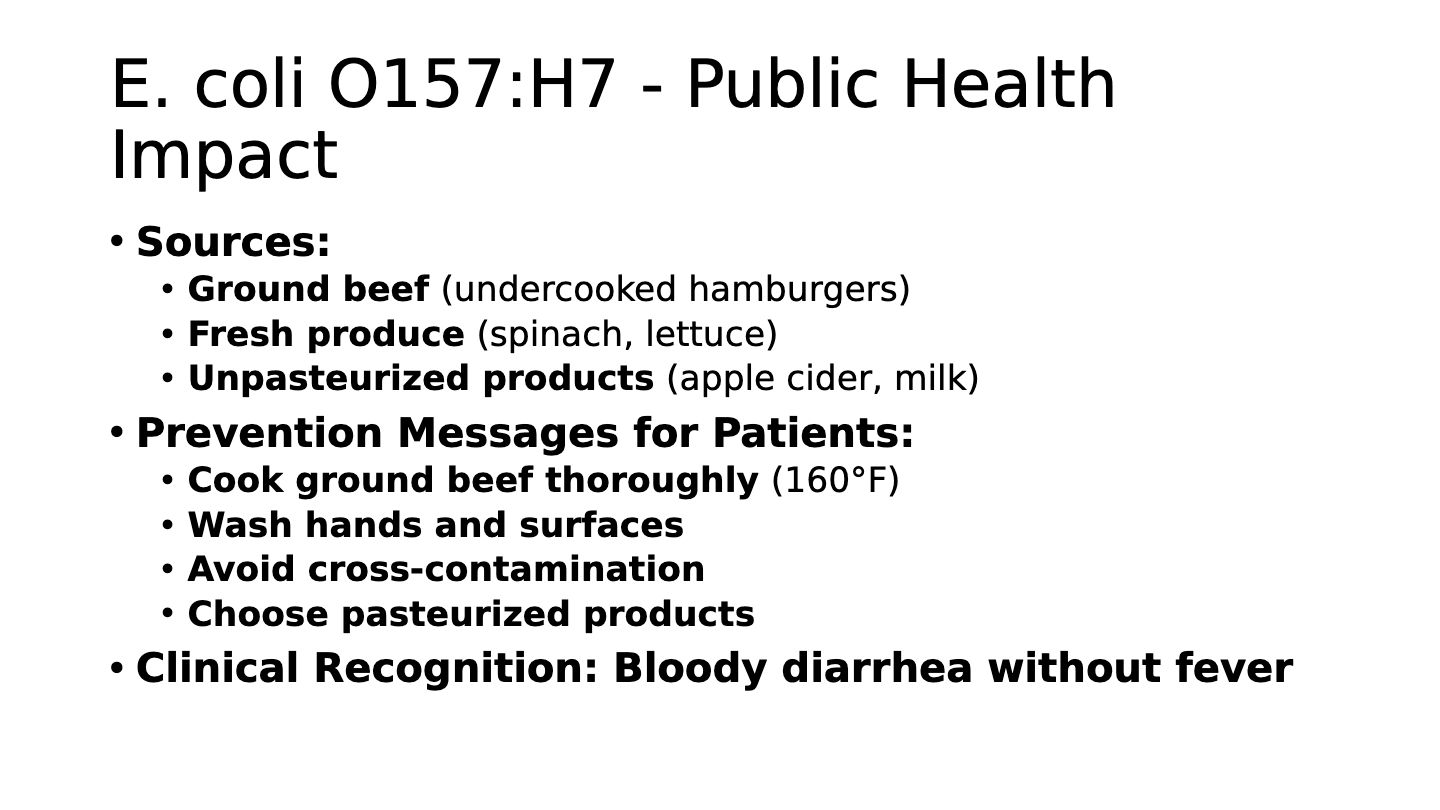
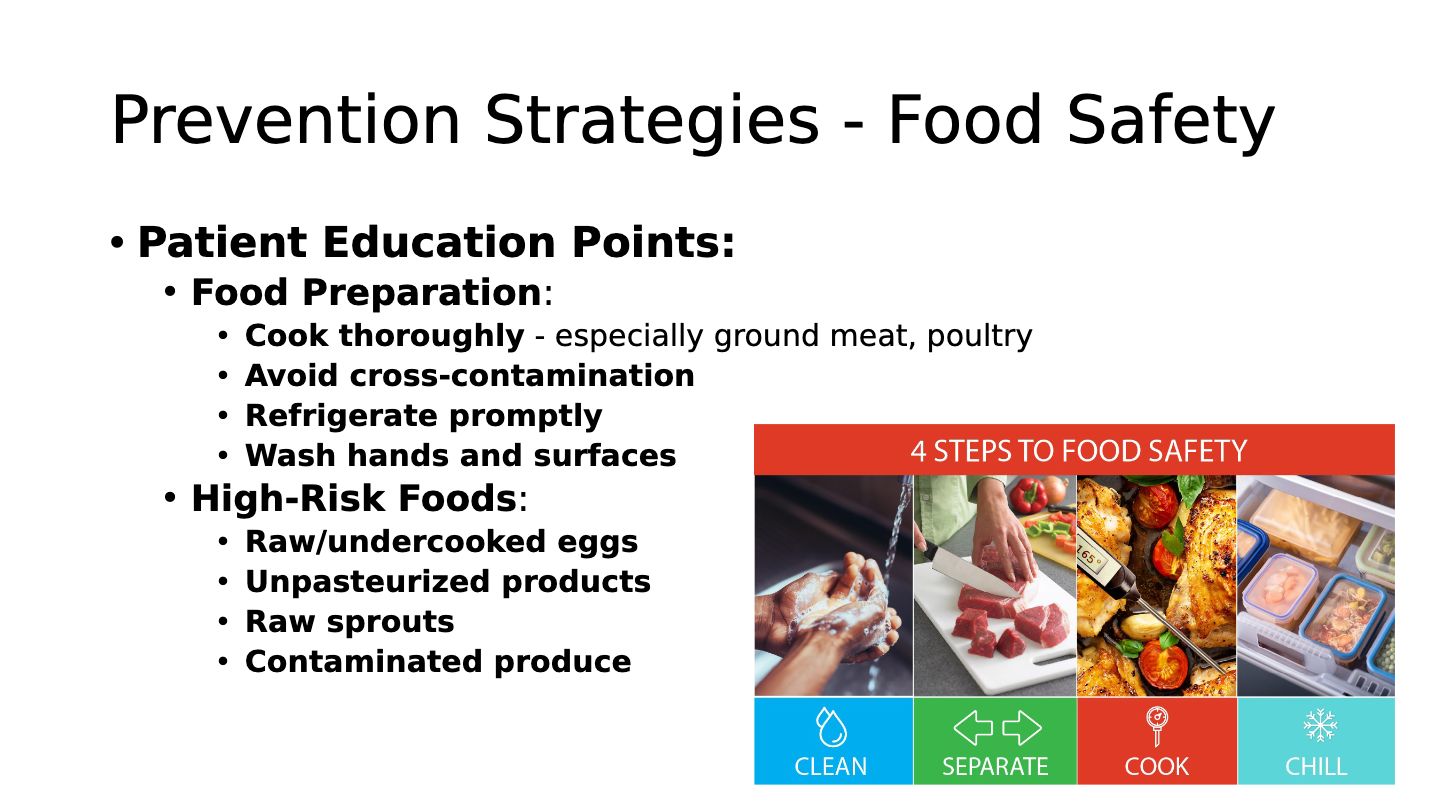
Which of the following is NOT a recommended prevention message for patients to avoid E. coli O157:H7 infection?
Cook ground beef thoroughly
Wash hands and surfaces
Avoid cross-contamination
Consume unpasteurized products
31
32
Multiple Select
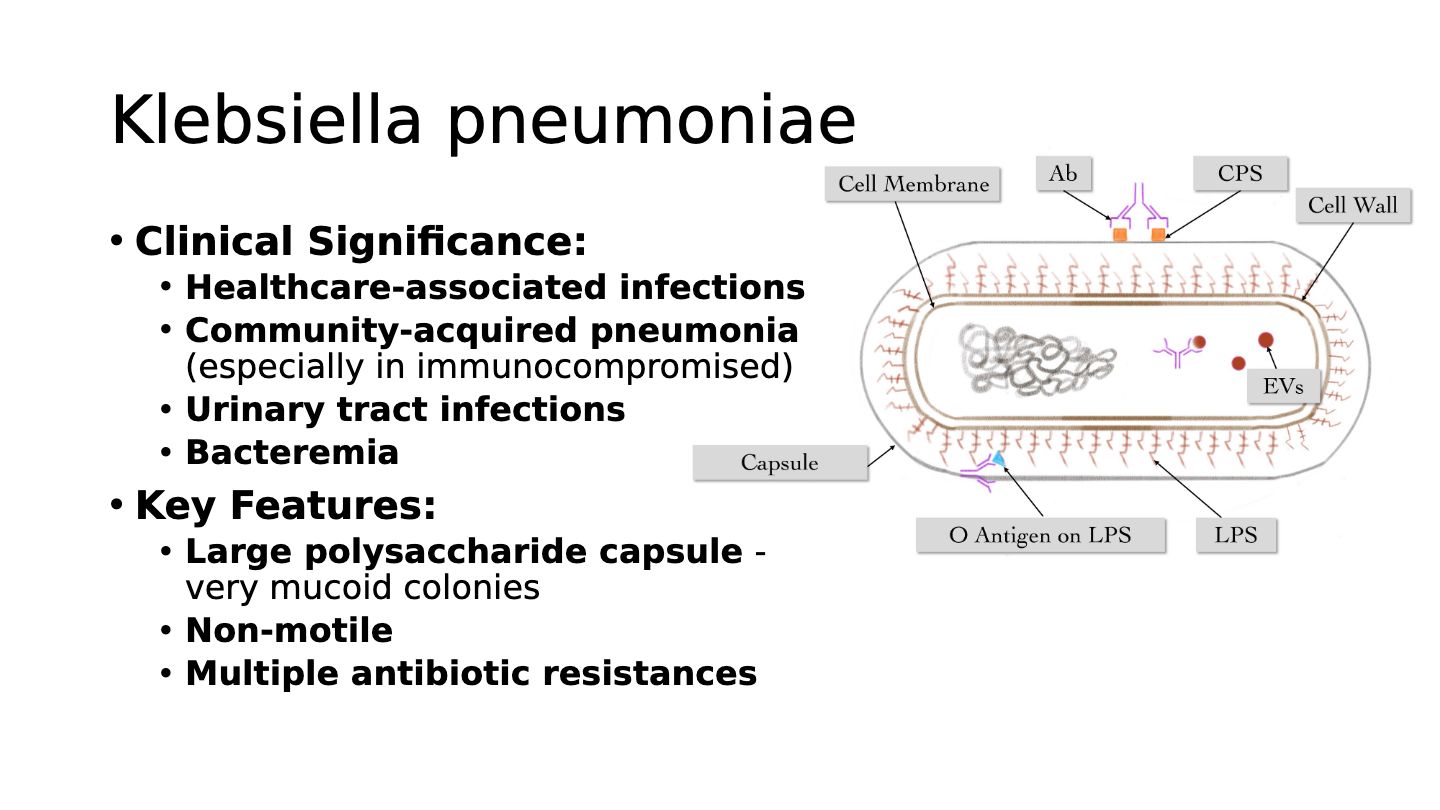
What are the key features that help distinguish Klebsiella pneumoniae from other bacteria?
Large polysaccharide capsule
Motile with flagella
Multiple antibiotic resistances
Non-motile
33
34
Open Ended
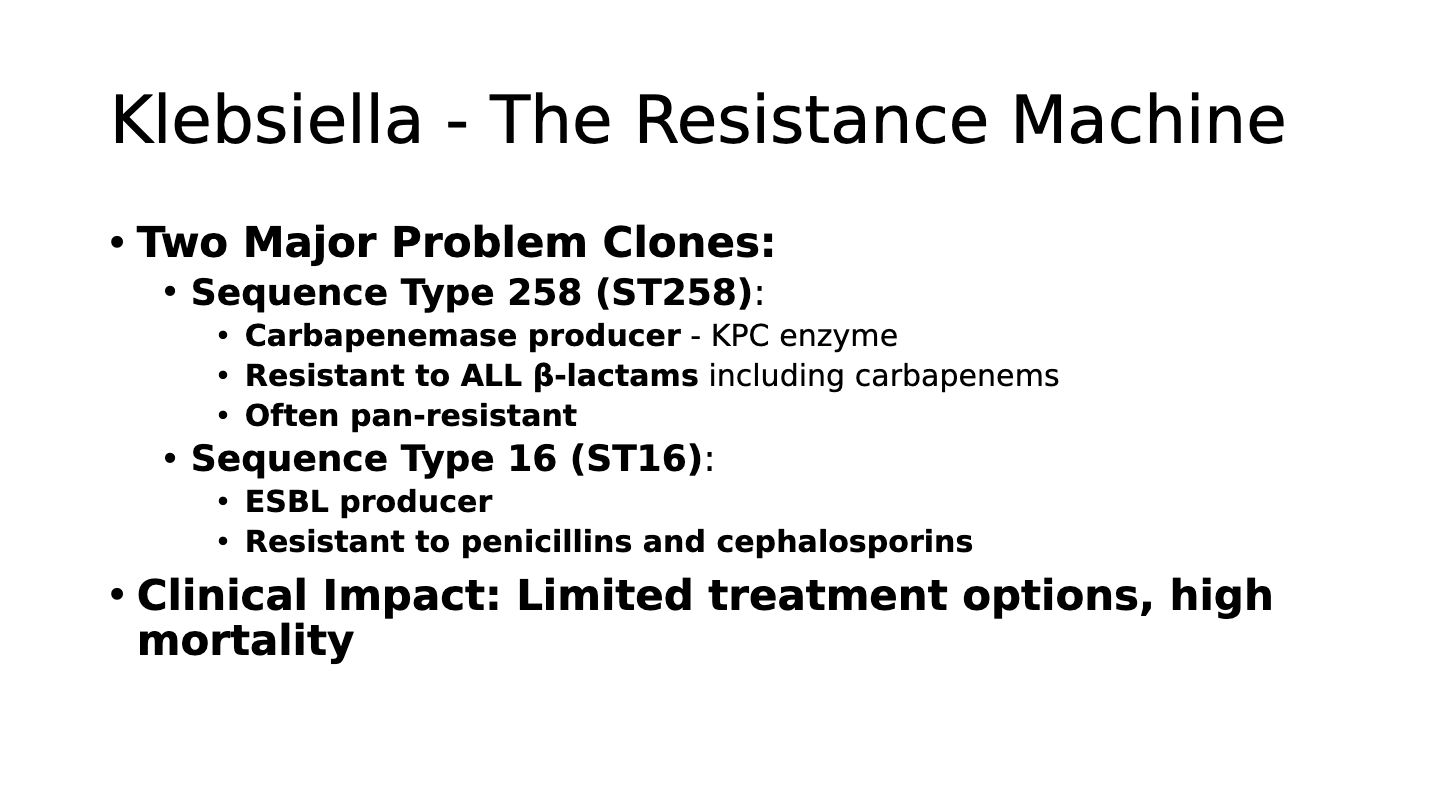
Explain why Klebsiella is referred to as 'The Resistance Machine' and discuss the clinical impact of its major problem clones.
35
36
Fill in the Blanks
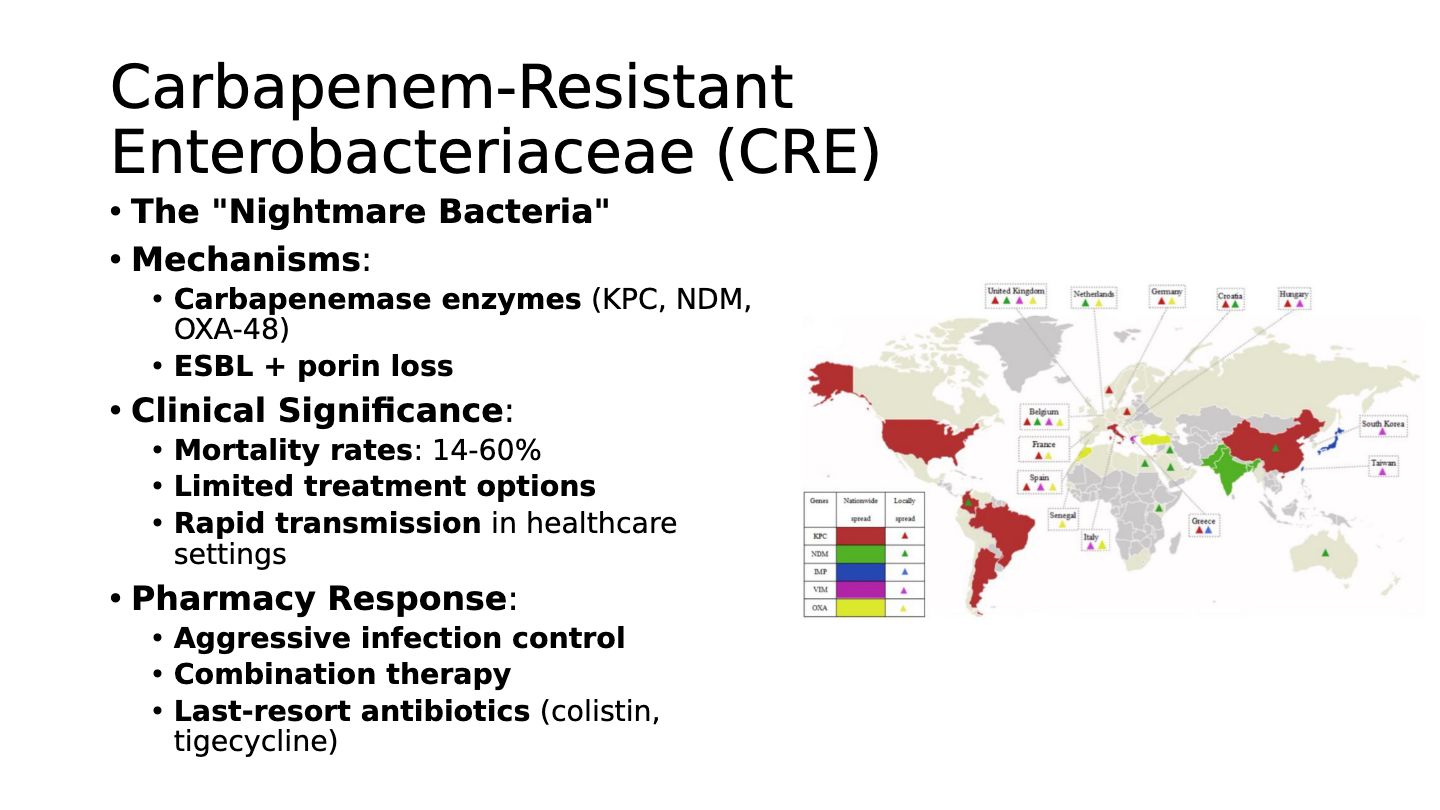
Carbapenem-resistant Enterobacteriaceae (CRE) are often called the 'nightmare bacteria' because of their high
Type answer...
37
38
Multiple Choice
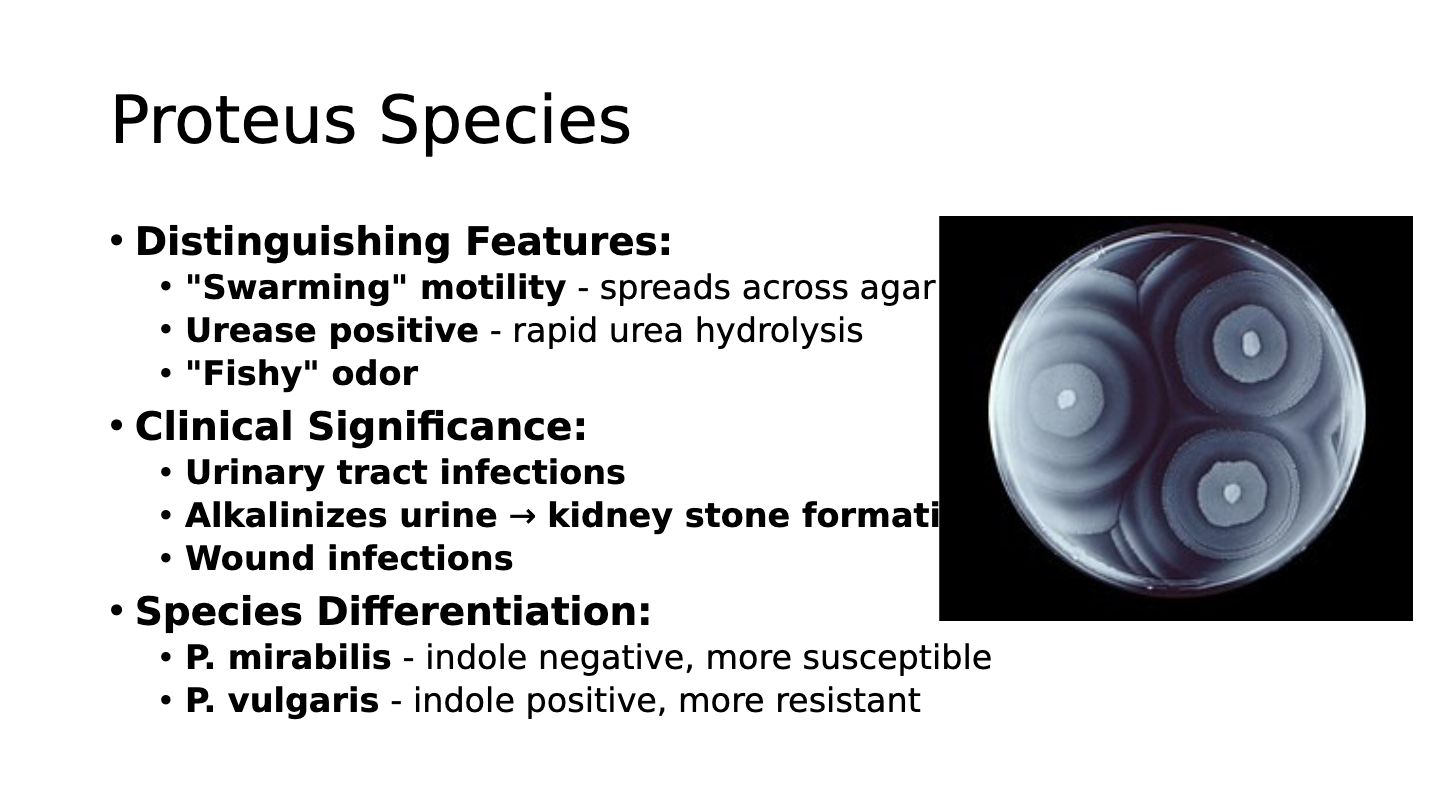
Which distinguishing feature is characteristic of Proteus species?
Red pigment production
Swarming motility
Inducible resistance to cephalosporins
Large polysaccharide capsule
39
40
Open Ended
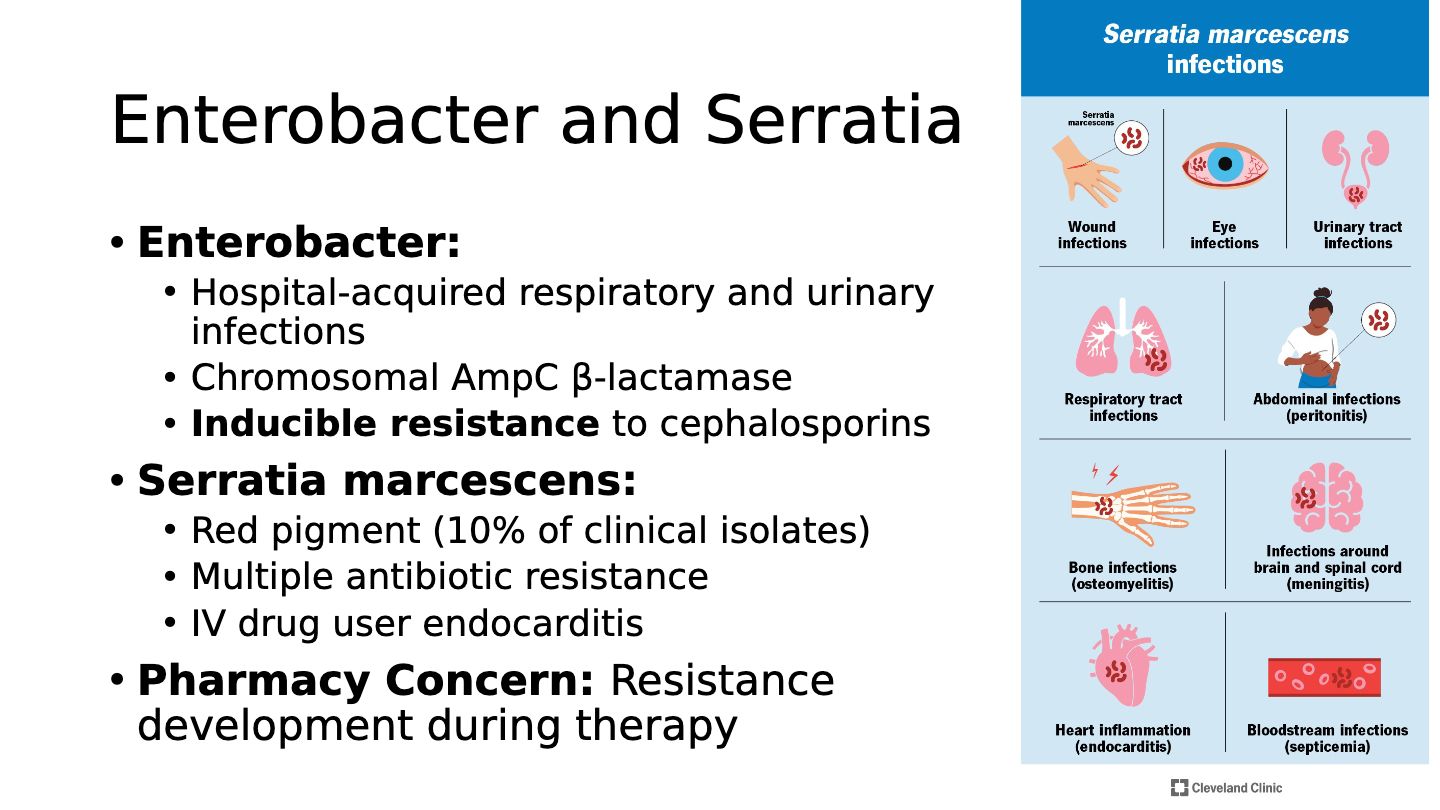
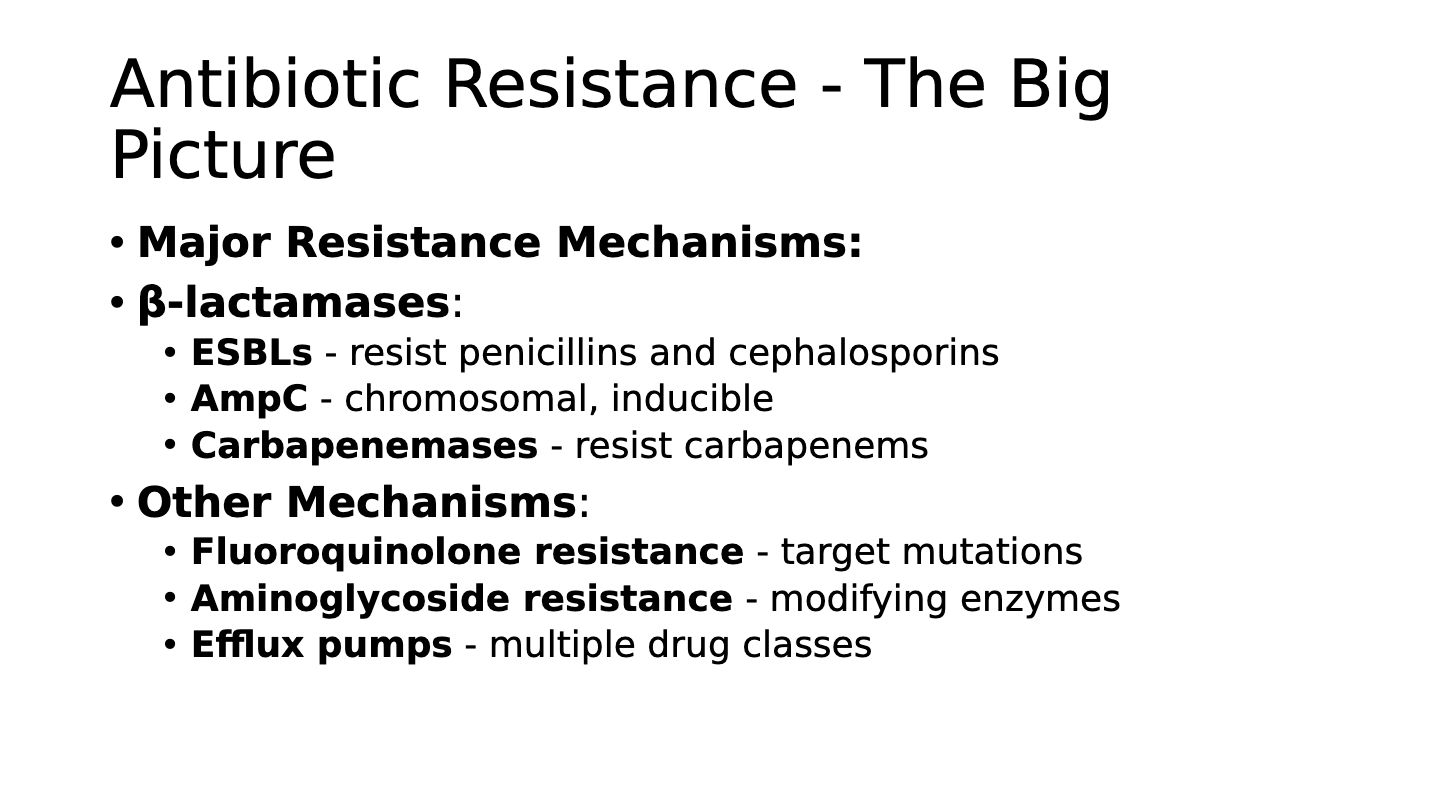
Compare the mechanisms of antibiotic resistance in Enterobacter, Serratia, and Klebsiella based on the information provided in the images.
41
42
Multiple Choice
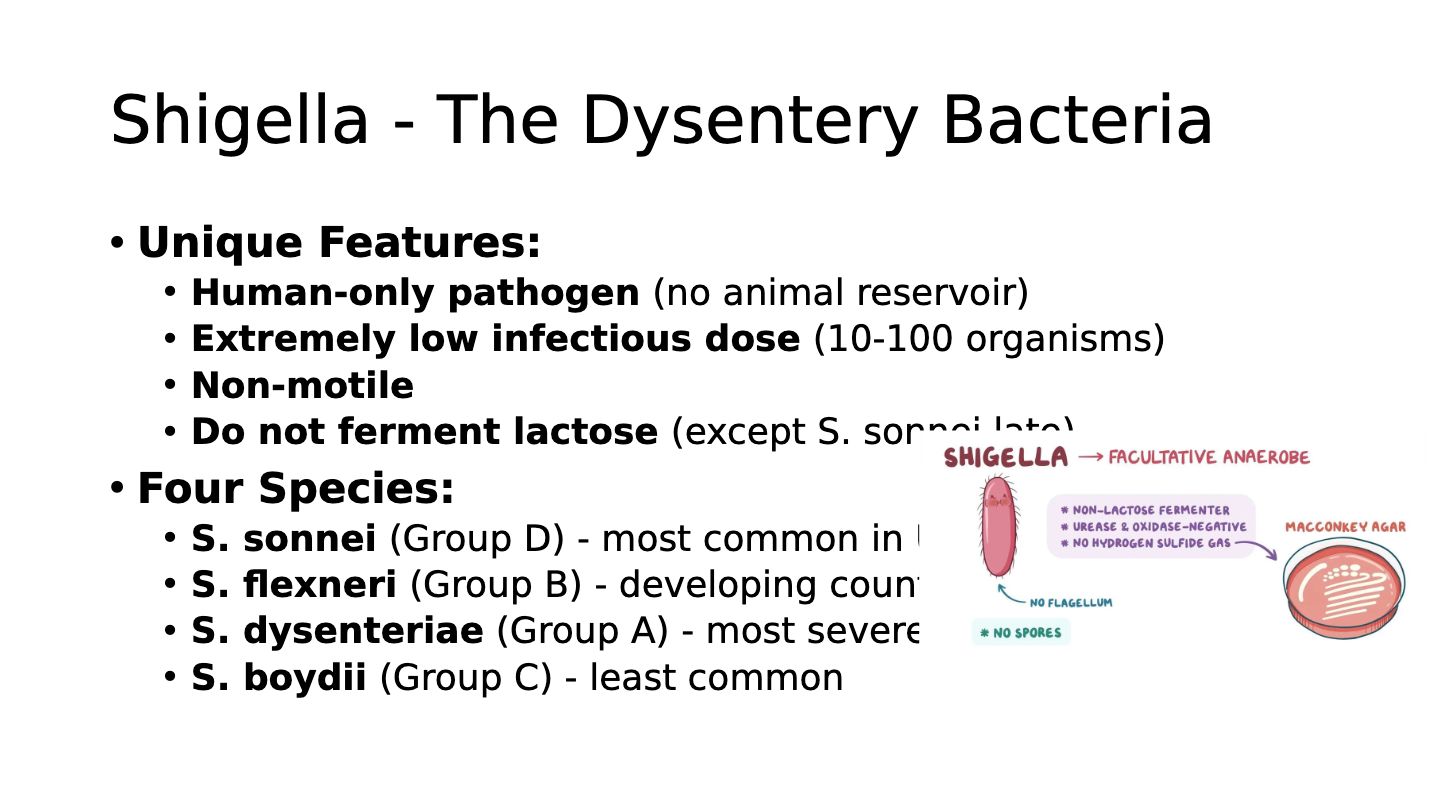
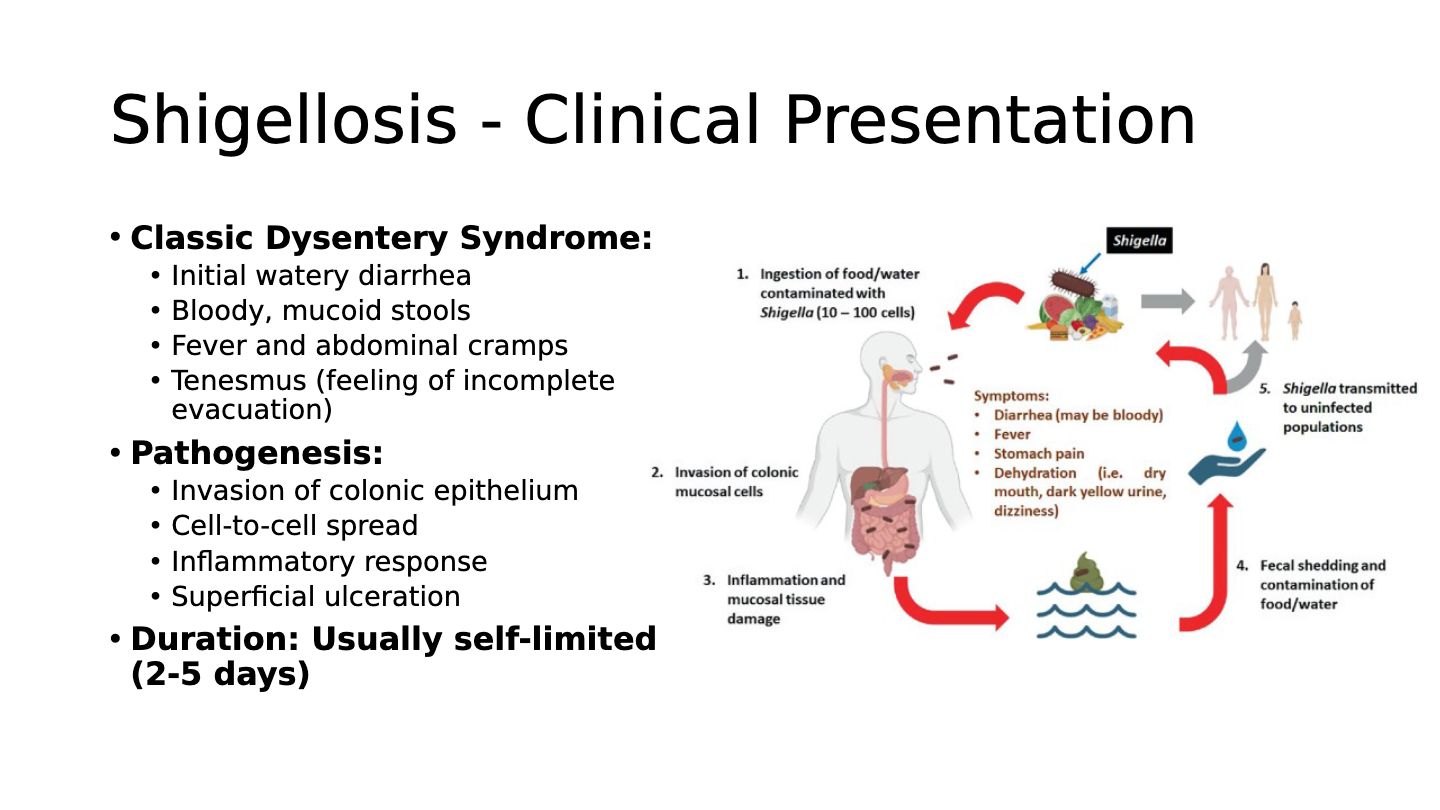
Which of the following is NOT a unique feature of Shigella?
Human-only pathogen
Extremely low infectious dose
Motile
Do not ferment lactose
43
44
45
Multiple Choice
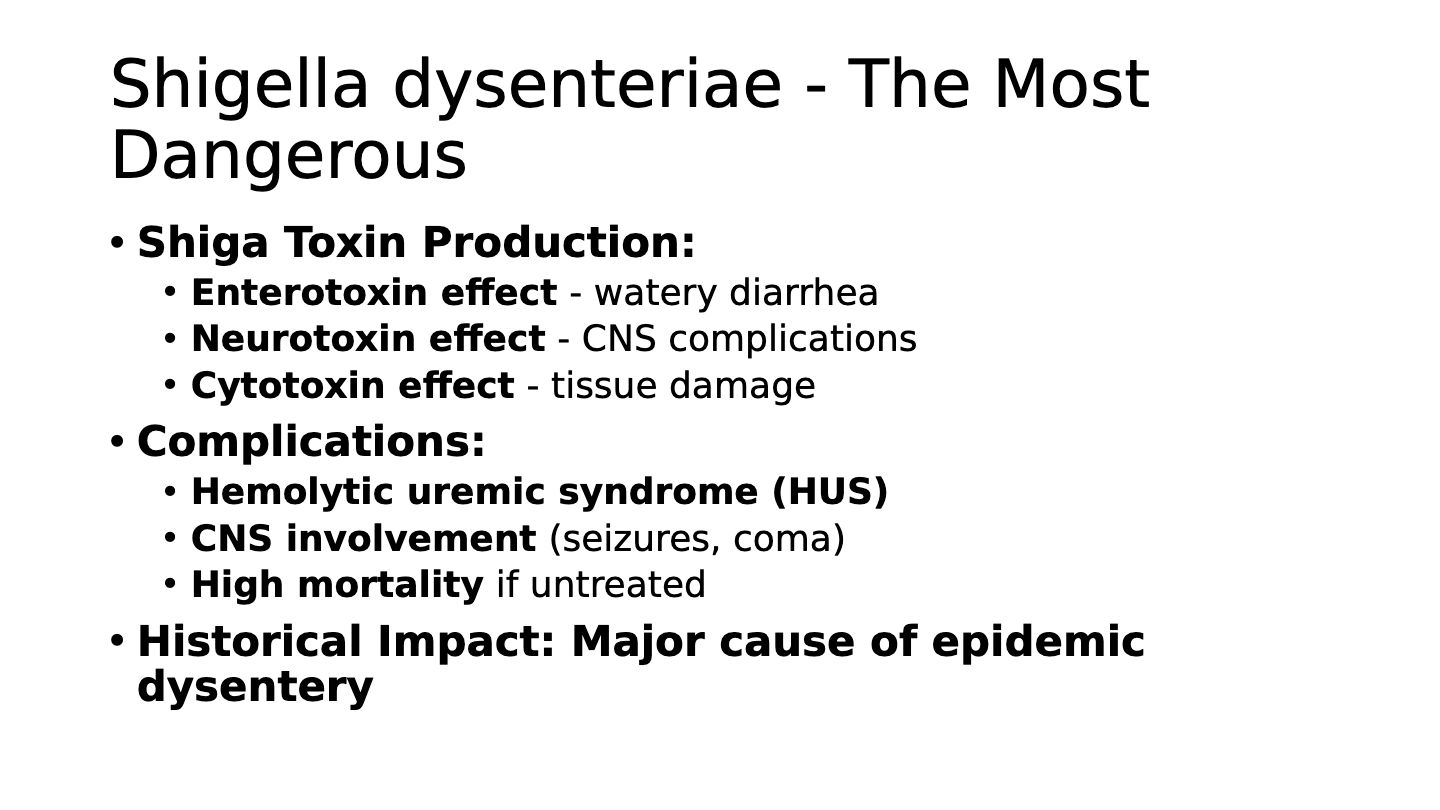
Which of the following complications is associated with Shigella dysenteriae infection?
Hemolytic uremic syndrome (HUS)
Guillain-Barré syndrome
Rheumatic fever
Toxic shock syndrome
46
47
Fill in the Blanks
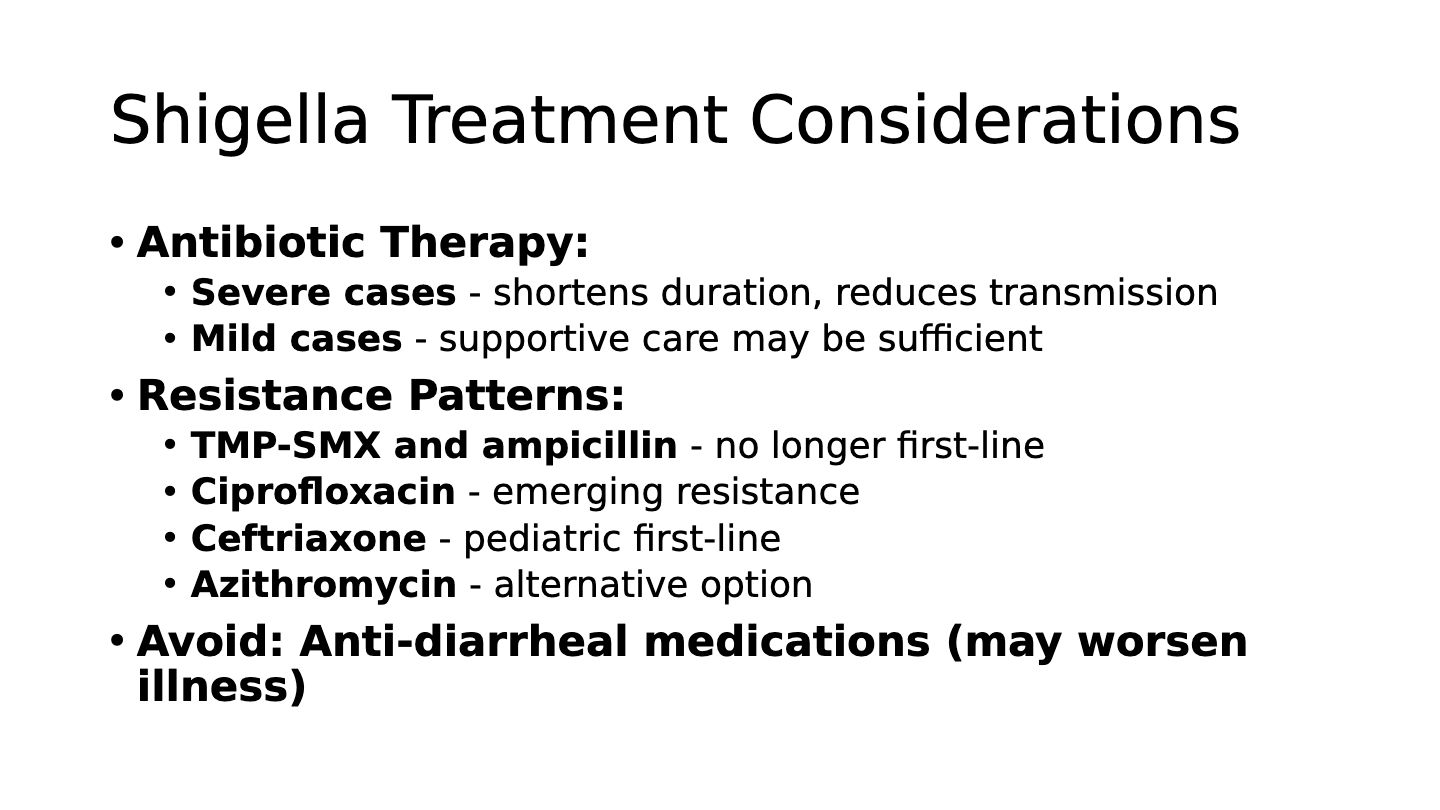
Fill in the blank: The antibiotic that is no longer first-line for Shigella due to resistance is
Type answer...
48
49
Multiple Select
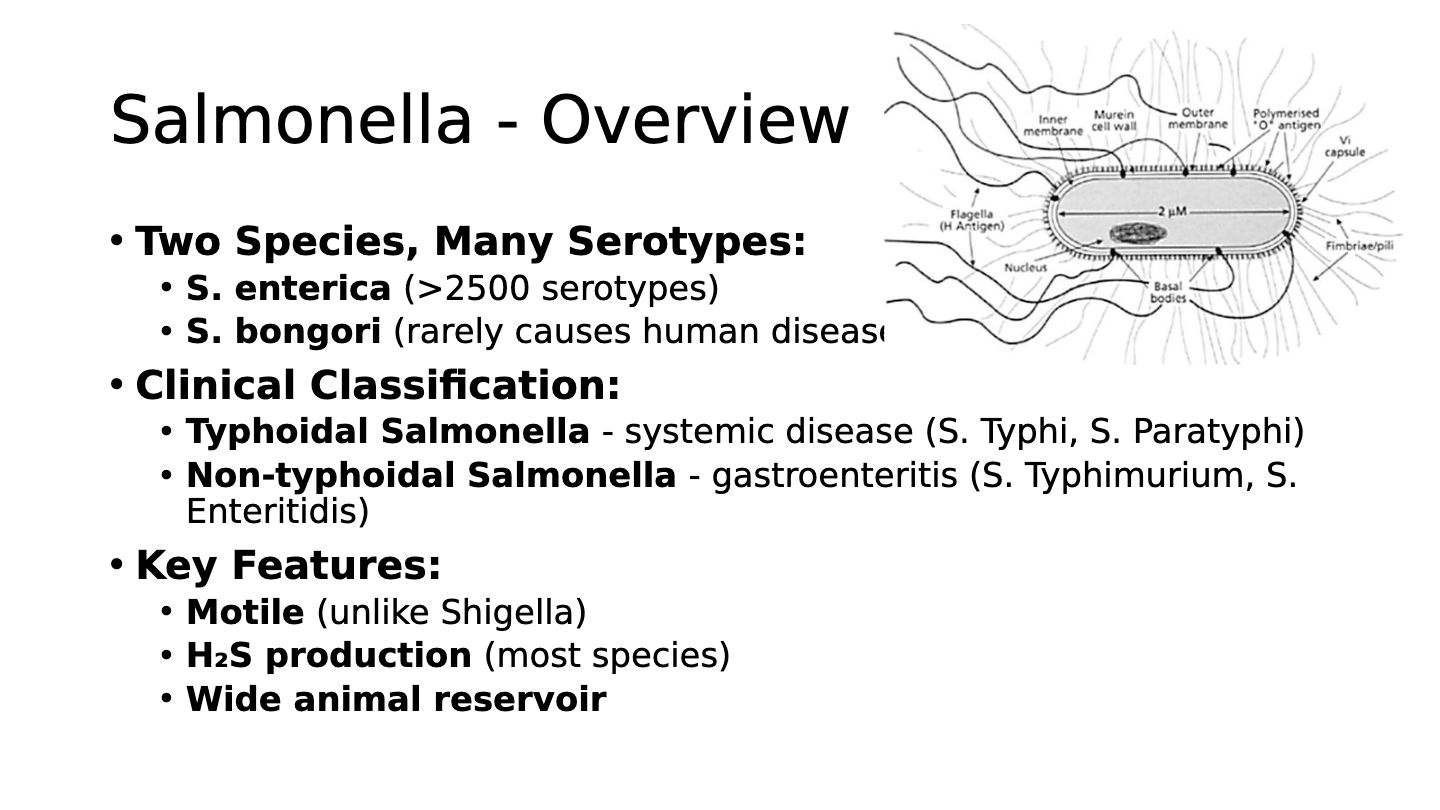
Which of the following are key features that differentiate Salmonella from Shigella?
Motility
H2S production
Wide animal reservoir
Non-lactose fermenter
50
51
Open Ended
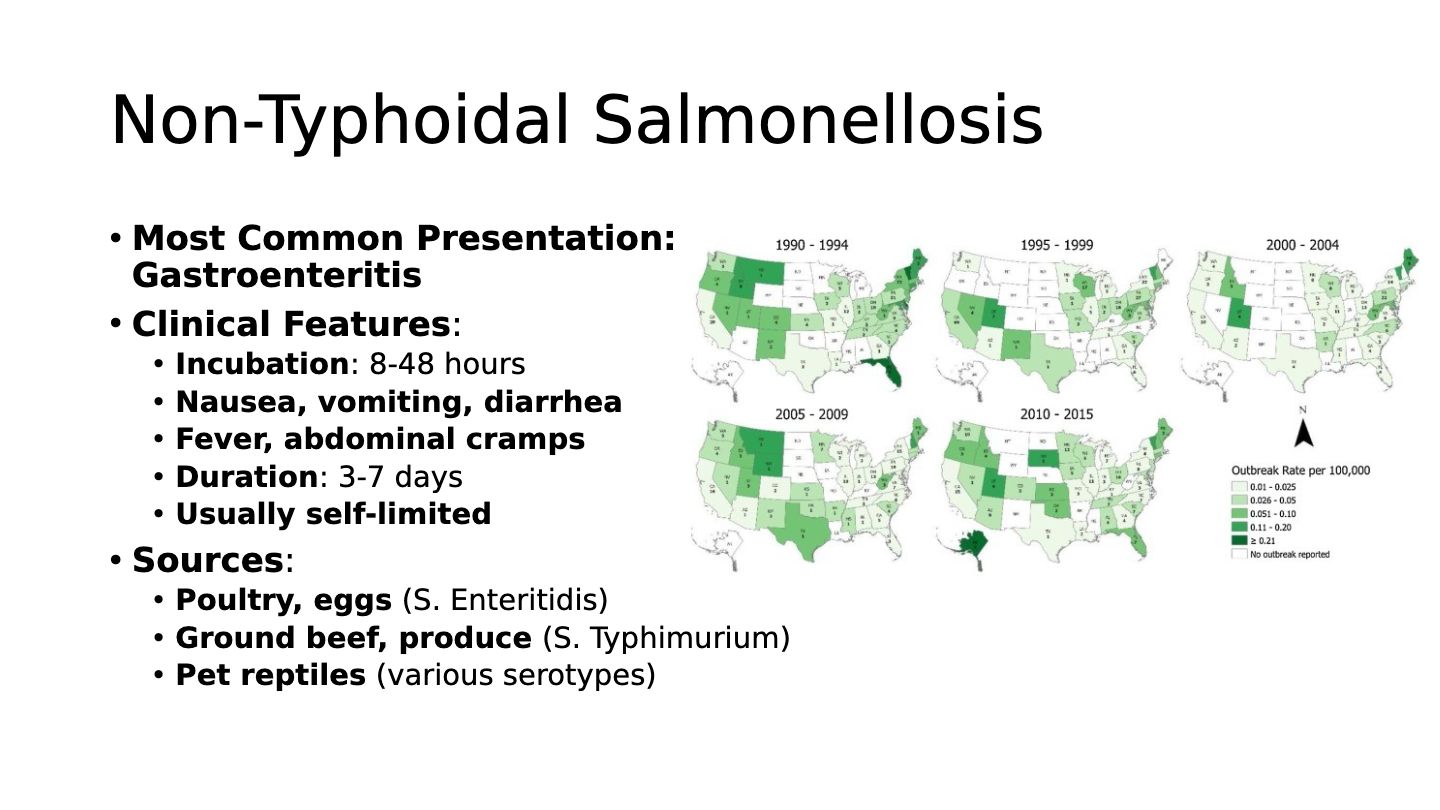
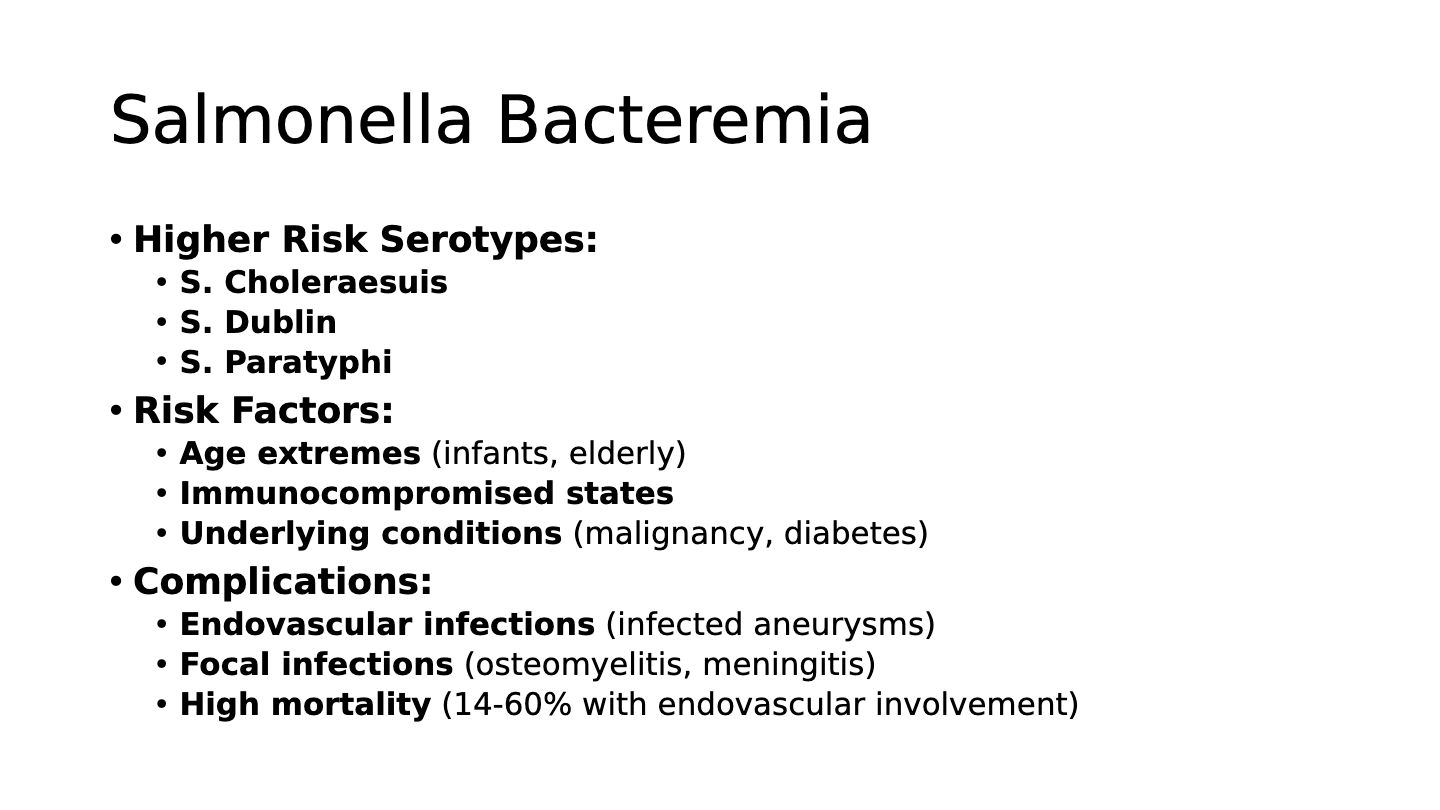
What are the most common sources of non-typhoidal Salmonellosis, and how do these sources contribute to outbreaks?
52
Open Ended
Compare and contrast the clinical presentations and pathogenesis of Shigellosis and Non-Typhoidal Salmonellosis.
53
54
55
56
57
58
59
60
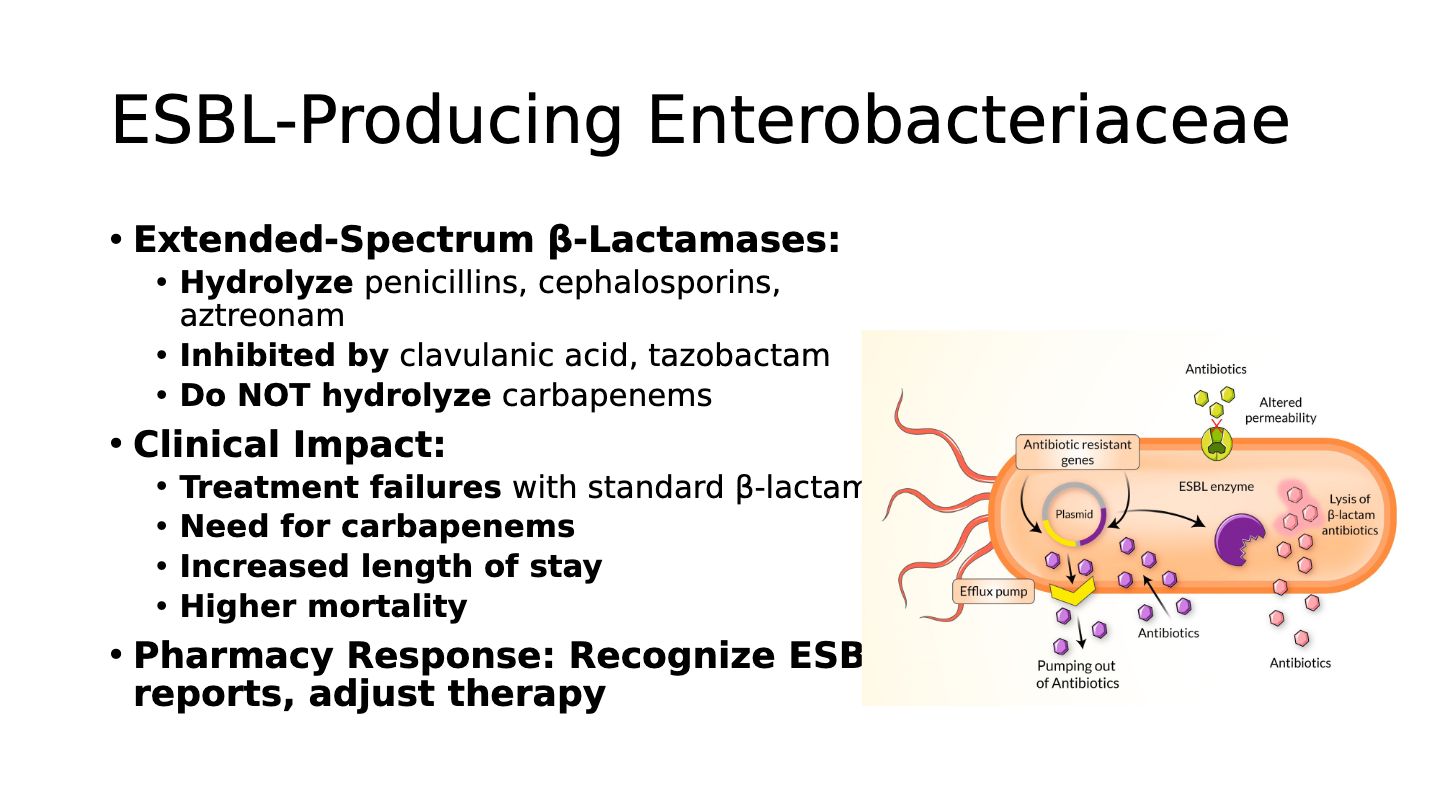
61
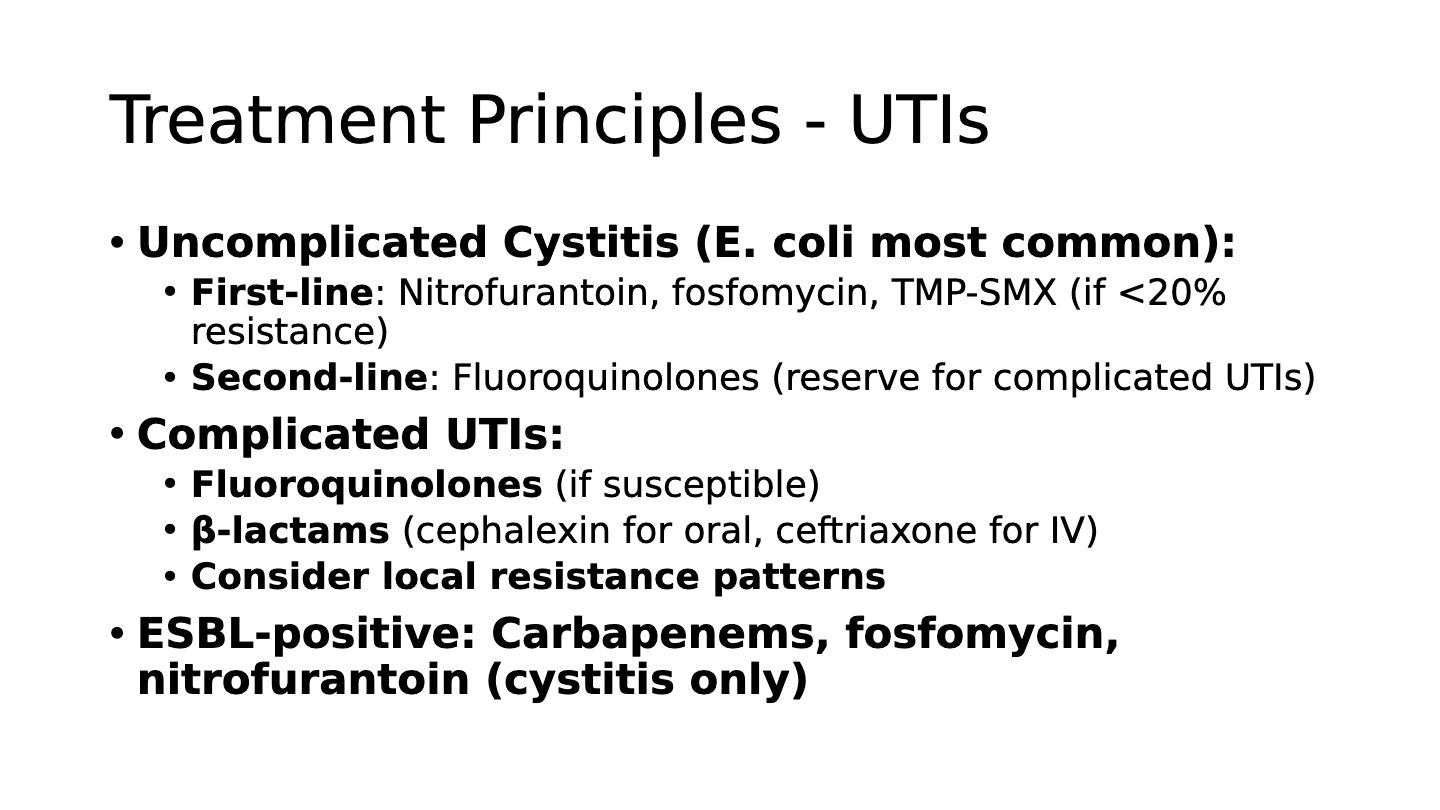
62
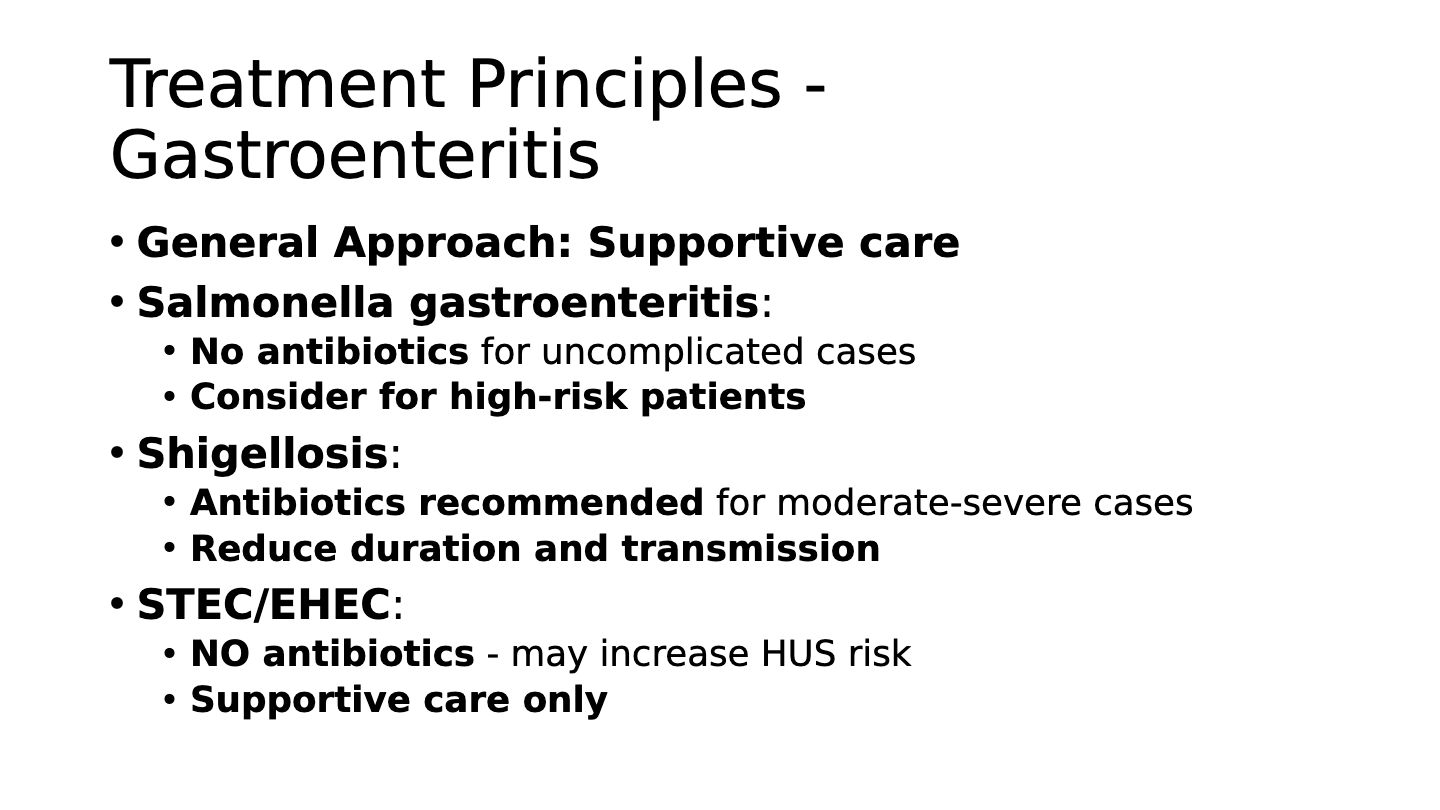
63
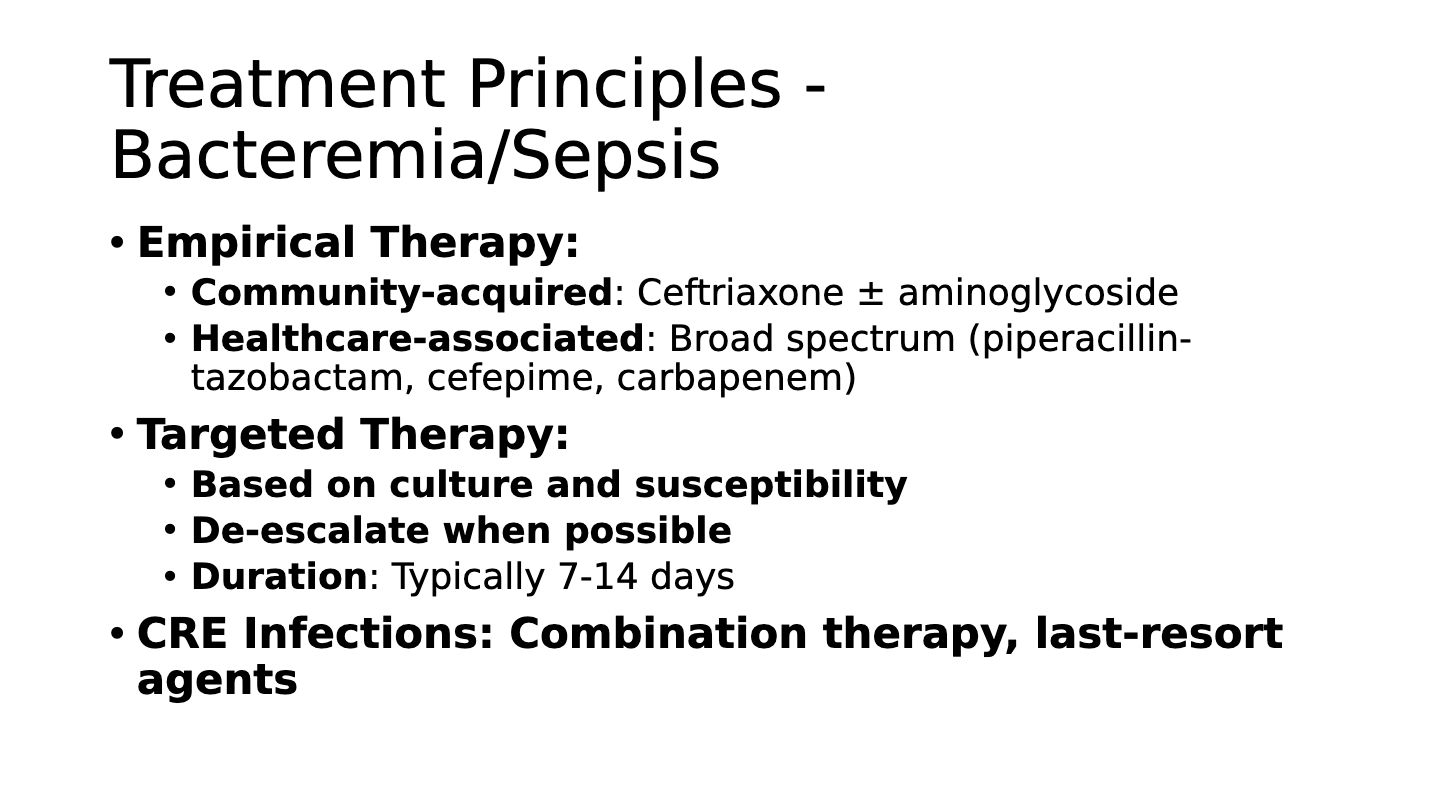
64
65
66
67
68
69
70
71
72

73

74
Multiple Choice
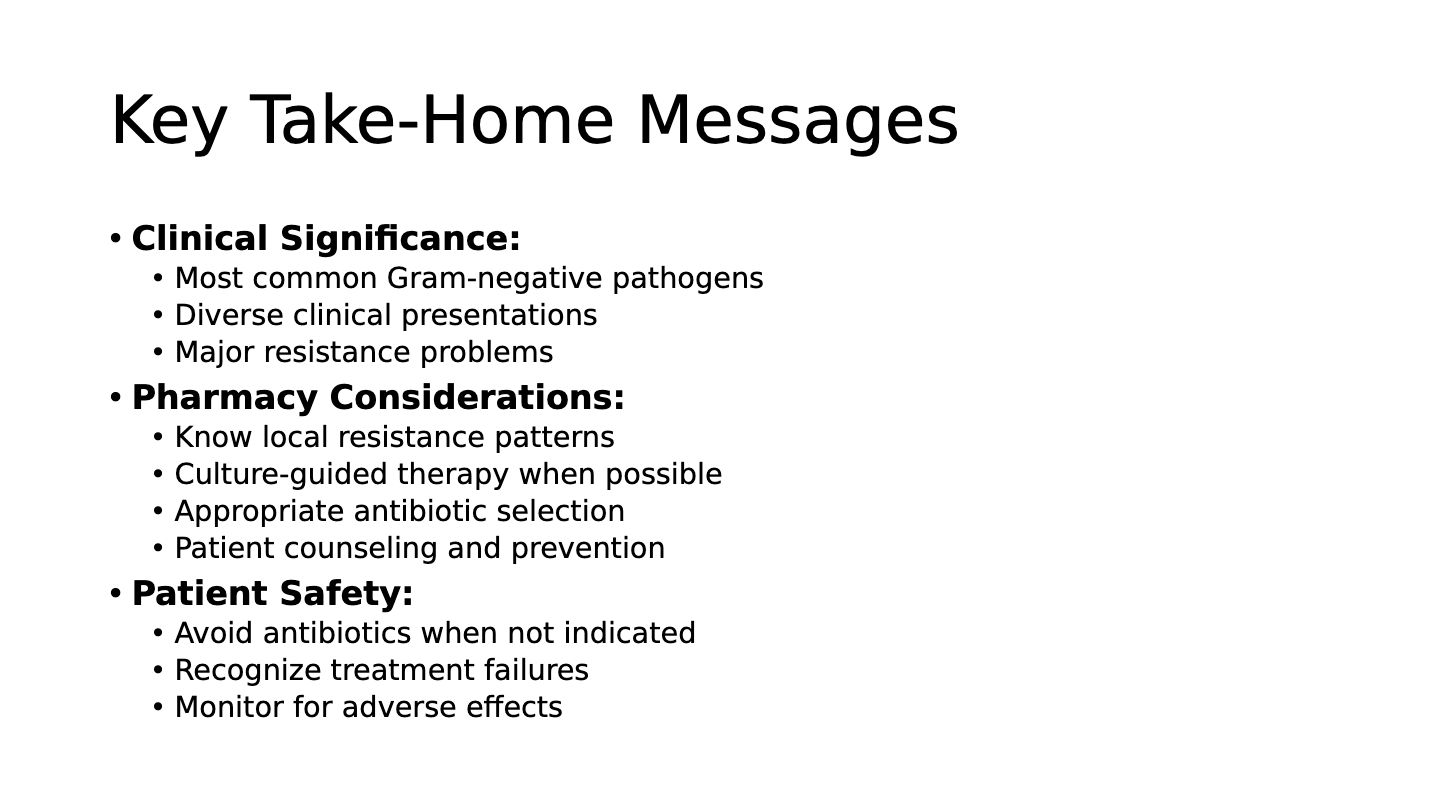
Which of the following is a major reason why Enterobacteriaceae are clinically relevant to pharmacists?
They are the most common Gram-negative bacteria encountered in clinical practice.
They are the leading cause of viral infections.
They are not associated with antibiotic resistance.
They rarely cause hospital-acquired infections.
75
Open Ended
Summarize one key reason why pharmacists should care about Enterobacteriaceae and explain its significance in clinical practice.
Show answer
Auto Play
Slide 1 / 75
SLIDE
Similar Resources on Wayground

70 questions
Unit 1 level 3
Presentation
•
University
72 questions
Ready, Set, SCHEDULE (correctly)!
Presentation
•
Professional Development
72 questions
Exploring the Pediatric Neurologic System
Presentation
•
University
69 questions
Greetings and Introductions - 1
Presentation
•
Professional Development
70 questions
Gerund vs Infinitive in English
Presentation
•
Professional Development
70 questions
Features of erosion
Presentation
•
KG - Professional Dev...
71 questions
Sick Simon
Presentation
•
Professional Development
70 questions
Review (Whole Year w/ Slides)
Presentation
•
KG - University
Popular Resources on Wayground
10 questions
Safety Day 2026 – Student Review

Quiz
•
9th Grade
21 questions
Continents and Oceans
Quiz
•
6th Grade
20 questions
Parts of Speech
Quiz
•
5th Grade
16 questions
Subject & Predicate
Quiz
•
5th Grade
25 questions
Multiplication Facts
Quiz
•
5th Grade
12 questions
Map Skills
Quiz
•
3rd Grade
22 questions
Continents and Oceans
Quiz
•
5th Grade
15 questions
Rounding Decimals
Quiz
•
5th Grade