

Proteins and Enzymes

Presentation
•
Science
•
9th - 12th Grade
•
Practice Problem
•
Medium
+10
Standards-aligned

Chelsea Briggs
Used 6+ times
FREE Resource
35 Slides • 25 Questions
1

2

3

4

5
Fill in the Blanks
Proteins are made of long chains of
6
Multiple Choice
Which of the following are examples of proteins in the human body?
Muscle, pepsin, insulin
Glucose, starch, cellulose
Cholesterol, phospholipid, triglyceride
DNA, RNA, ATP
7

8
Multiple Choice
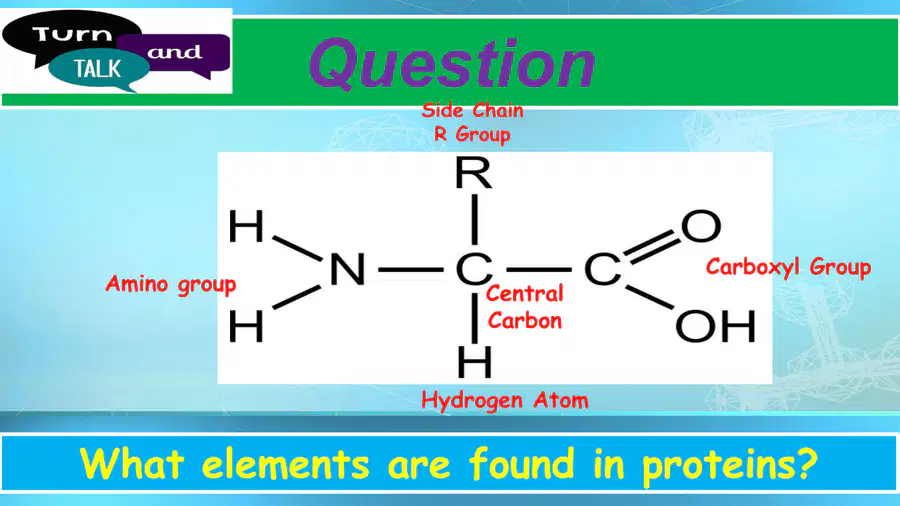
Which elements are found in all amino acids?
Carbon, Hydrogen, Oxygen, Nitrogen
Carbon, Hydrogen, Oxygen, Phosphorus
Carbon, Hydrogen, Nitrogen, Calcium
Carbon, Oxygen, Sulfur, Phosphorus
9
Multiple Choice
Which element is NOT found in all amino acids?
Carbon
Oxygen
Nitrogen
Phosphorus
10

11

12
13
Multiple Choice
What are proteins made of?
Amino acids
Nucleotides
Fatty acids
Monosaccharides
14

15
Fill in the Blanks
The bond that holds amino acids together in a protein is called a
16
17

18
Multiple Select
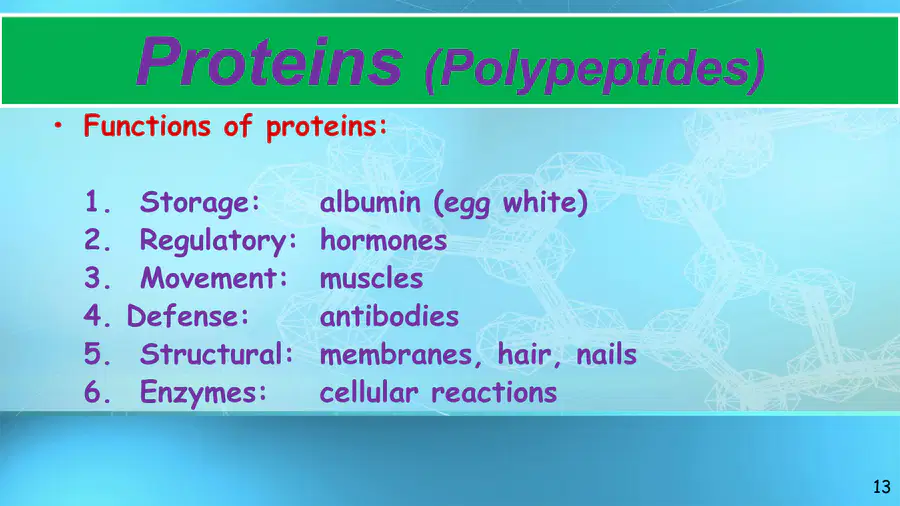
Which of the following are functions that proteins can perform in the body?
Transporting molecules through membranes
Carrying oxygen through the blood
Sending signals through the body
Storing genetic information
19
Multiple Choice
Which of the following best describes the main function of proteins in living organisms?
They provide energy for cellular processes.
They store genetic information.
They help build and repair tissues.
They transport oxygen in the blood.
20
21
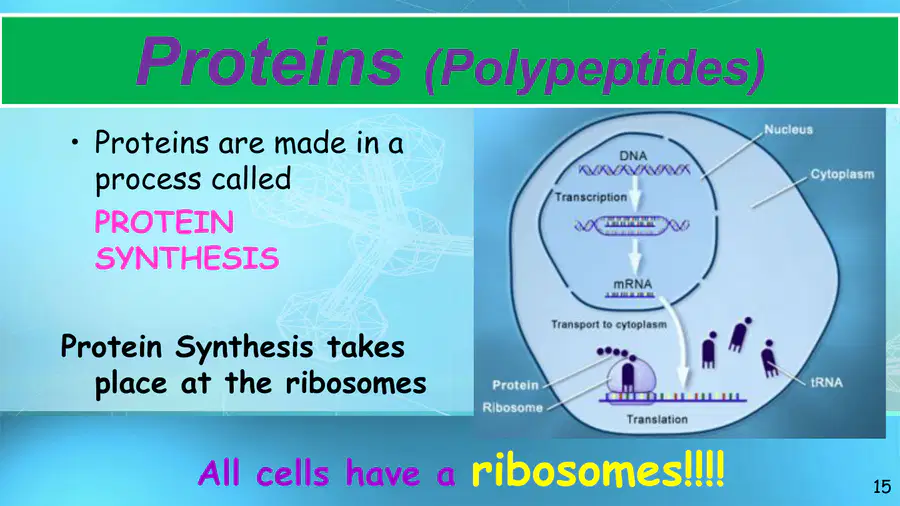
Fill in the Blanks
Protein synthesis takes place at the
22
23
24
25
26
27
Fill in the Blanks
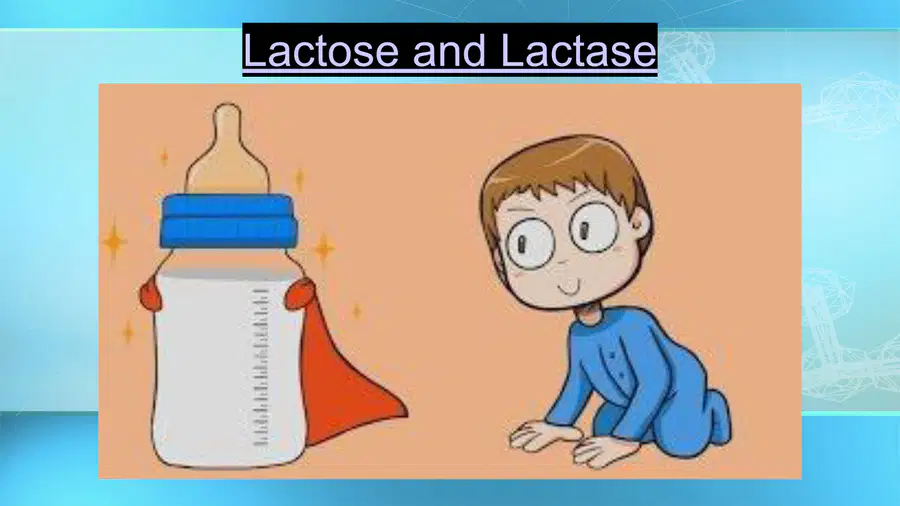
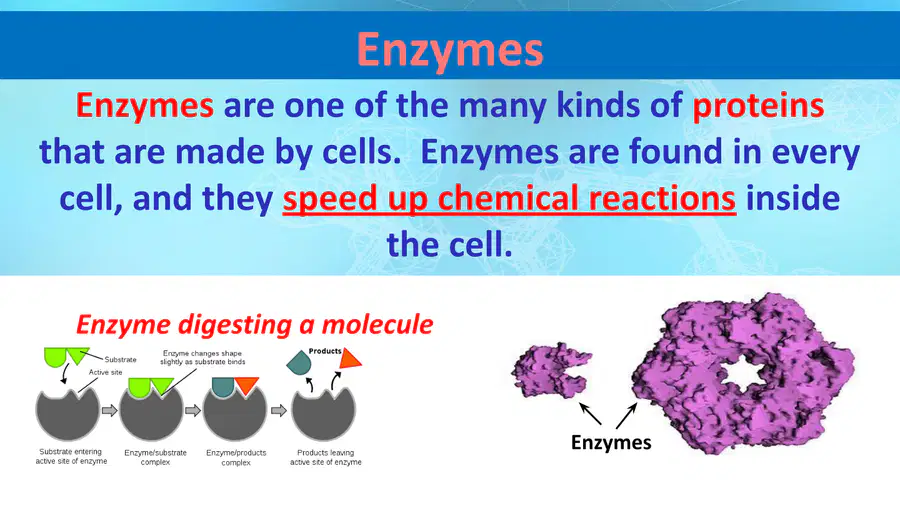
The enzyme that helps digest lactose is called
28
29
30
31
32
33
34
Fill in the Blanks
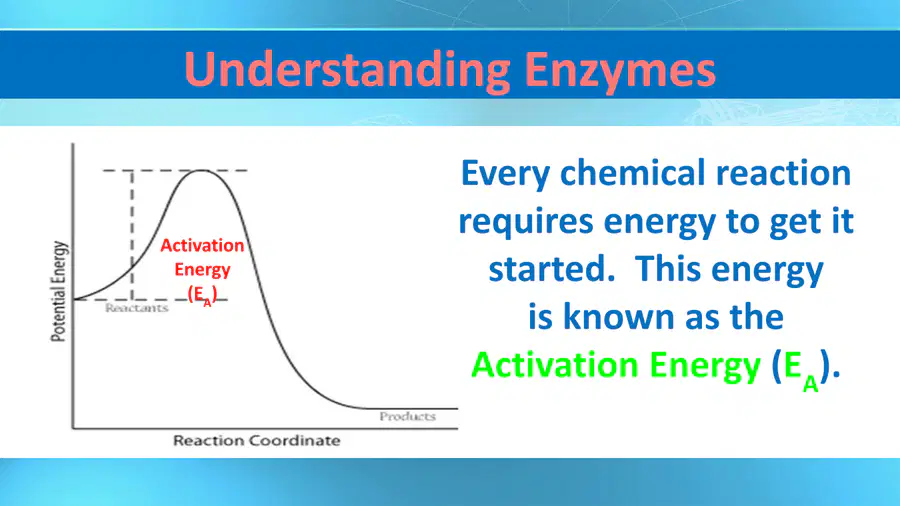
The energy required to start a chemical reaction is called
35
Multiple Choice
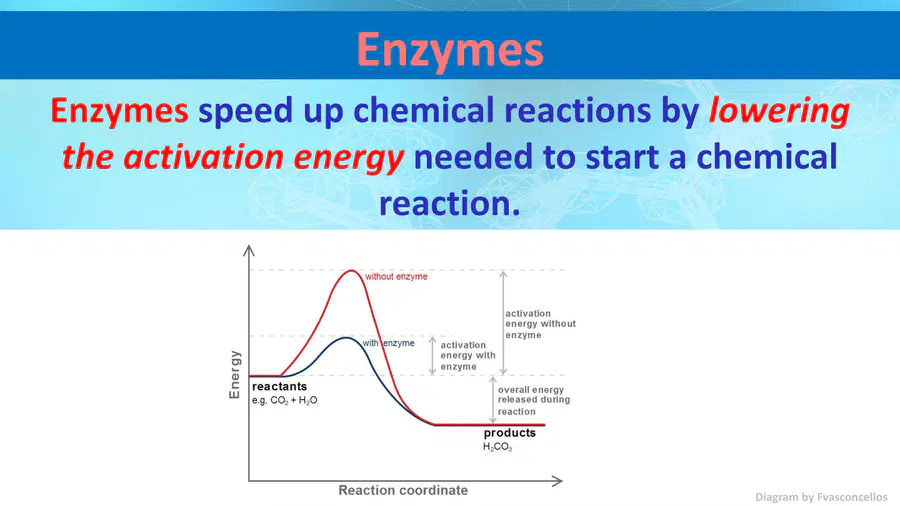
How do enzymes speed up chemical reactions?
By increasing the temperature
By lowering the activation energy
By increasing the amount of reactants
By changing the products
36
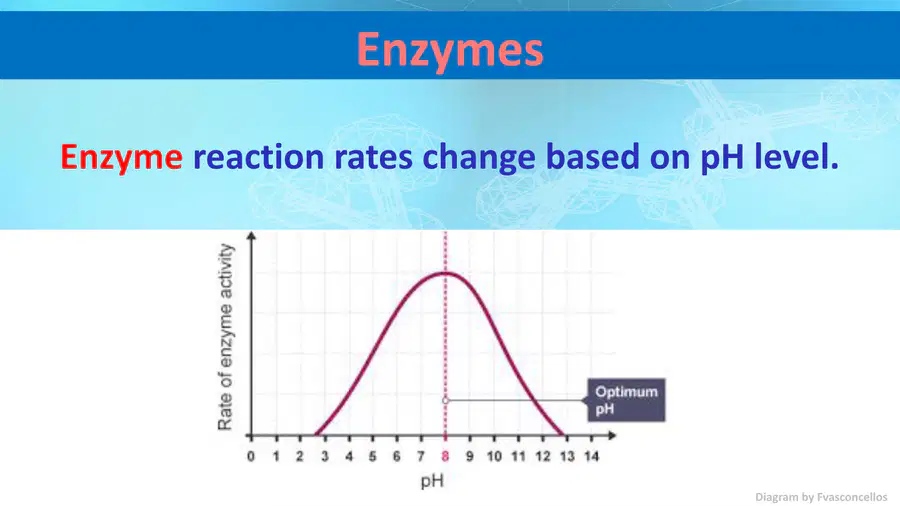
37
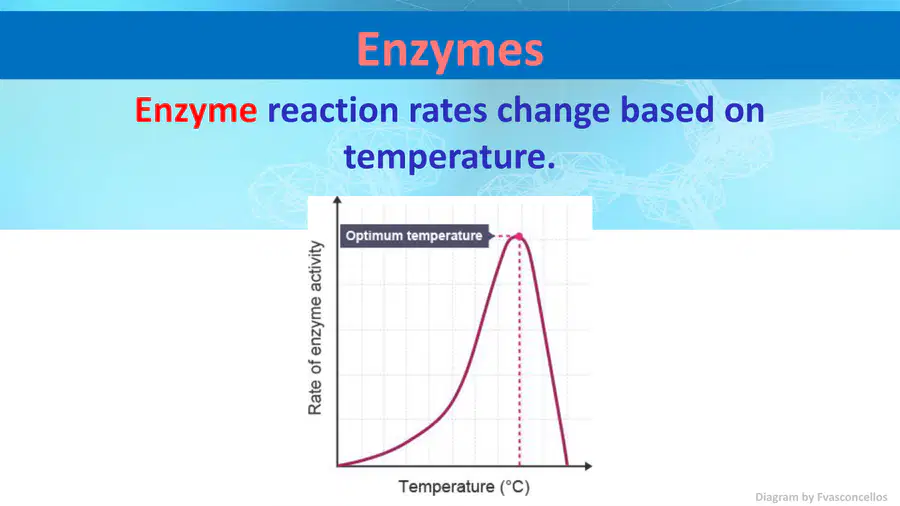
38
Observation
Amylase is an enzyme found in saliva that breaks down starch which is a carbohydrate. Iodine is an element that detects the presence of starch. If starch is present, the mixture turns dark blue or black
What is the optimal temperature for the enzyme Amylase to break down starch?
Carbohydrates such as bread or potatoes which contain starch seem to begin dissolving as soon as you put them in your mouth
39
Open Ended
What is your hypothesis?
40
3 Beakers
6 Test Tubes
Prepared Amylase Solution
Prepared Starch Solution
Iodine Solution
Wells
41
Methods
Label 3 Test Tubes The letter S for starch and the Temperature in degrees celsius
Label 3 Test Tubes with the Letter A for Amylase and the Temperature in degrees celsius
add a drop of iodine to each well
Add 5ml of amylase solution to the 3 labeled tubes
Add 5ml of starch solution to 3 tubes
Let each solution sit in the temperature baths for 5 minutes
Add the amylase solution to the starch solution
Mix thoroughly, then add the new mixture to each well with iodine, time for every 30 seconds each time you add to an iodine well
Record the results in the data table
42
Analysis/Conclusion
Did your hypothesis match your results?
Why or why not?
What factors might have impacted the results of the experiment?
43
Open Ended
What is your conclusion?
44
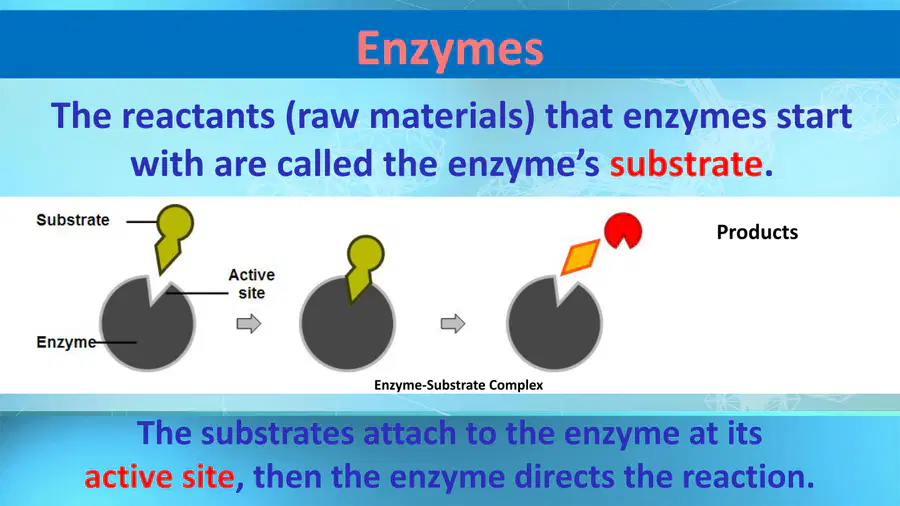
45
46
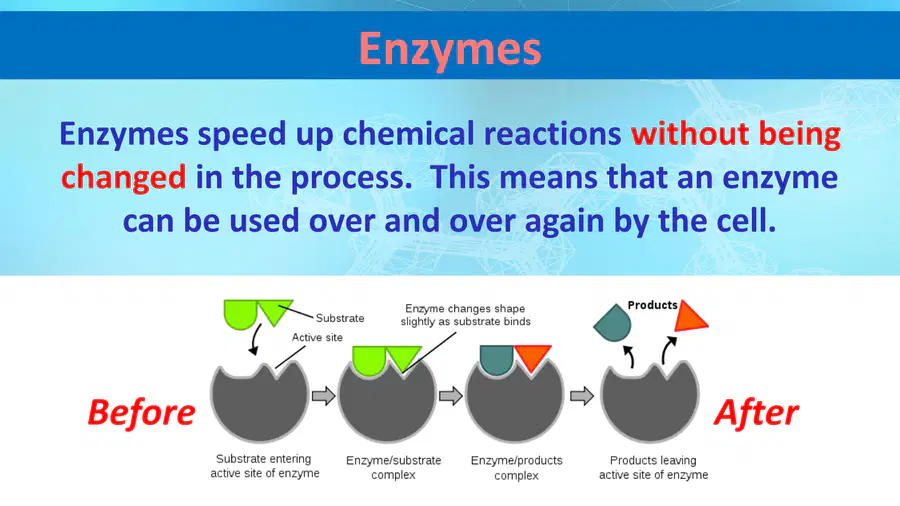
47
48
49
Multiple Choice
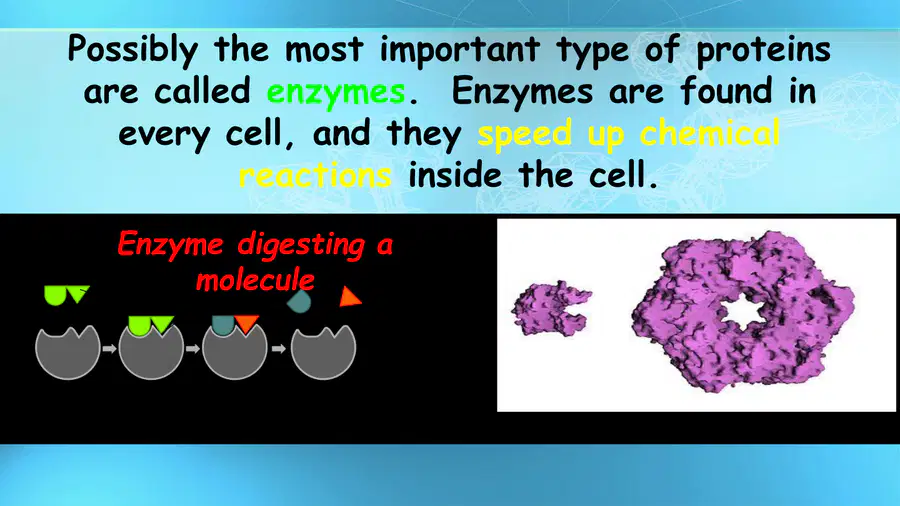
What is the main role of enzymes in cells?
Speeding up chemical reactions
Providing structural support
Transporting oxygen
Storing energy
50
Multiple Choice
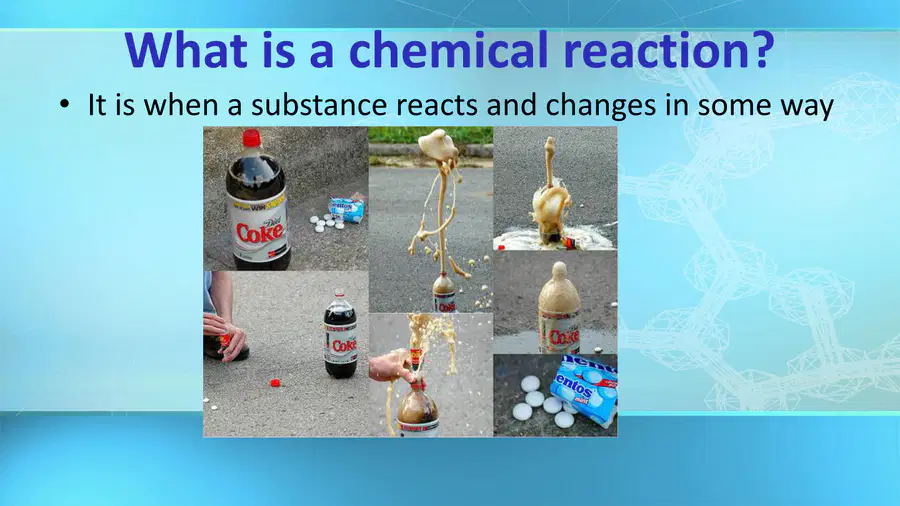
Which of the following best describes a chemical reaction?
A substance reacts and changes in some way.
A substance is mixed but does not change.
A substance is heated but remains the same.
A substance is dissolved in water.
51
Multiple Select
Which statements about enzymes are correct?
Enzymes are proteins made by cells.
Enzymes speed up chemical reactions.
Enzymes can only break down molecules, not build them.
Enzymes are found in every cell.
52
Multiple Select
Which of the following are functions of proteins in the body?
Storage
Regulatory
Movement
Photosynthesis
53
Multiple Select
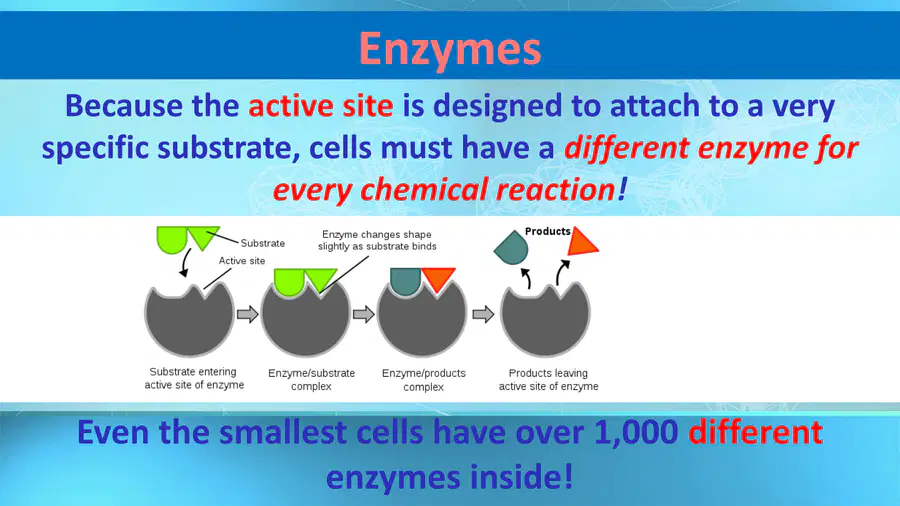
Which of the following statements about enzyme substrates and active sites are correct?
Substrates bind to the enzyme's active site
The enzyme is changed permanently after the reaction
The enzyme directs the reaction after binding the substrate
Products are released after the reaction
54
Multiple Select
Which of the following statements about enzymes is/are correct?
Enzymes are proteins that speed up chemical reactions.
Enzymes are found in every cell.
Enzymes slow down chemical reactions inside the cell.
Enzymes are only found in animal cells.
55
Fill in the Blanks
A chemical reaction occurs when a substance reacts and
56
Multiple Choice
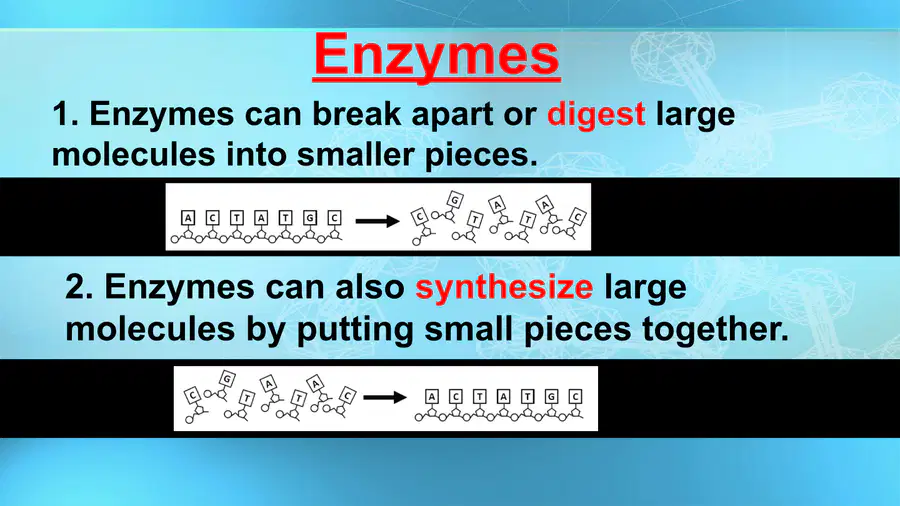
What is one of the main functions of enzymes in cells?
To break apart or digest large molecules
To store genetic information
To transport oxygen
To provide structural support
57
Multiple Select
Which of the following statements about enzymes are correct?
Enzymes can digest large molecules into smaller pieces.
Enzymes can synthesize large molecules from smaller pieces.
Enzymes are found only in animal cells.
Enzymes are a type of protein.
58
Multiple Choice
What is the energy required to start a chemical reaction called?
Activation energy
Potential energy
Kinetic energy
Thermal energy
59
Multiple Choice
Which of the following best describes the main learning goal of this lesson?
To explain the structure and function of proteins
To memorize the names of amino acids
To compare carbohydrates and lipids
To draw the structure of DNA
60
Show answer
Auto Play
Slide 1 / 60
SLIDE
Similar Resources on Wayground

53 questions
Unit 9: Surface Processes Review
Presentation
•
9th - 12th Grade
57 questions
Ch 2 Connecting Tech & Eng through Science & Math
Presentation
•
9th - 12th Grade
58 questions
Carbohydrates Lipids Proteins Lesson
Presentation
•
9th - 12th Grade
57 questions
Genes and Punnett squares
Presentation
•
9th - 12th Grade
59 questions
NAMING BINARY IONIC COMPOUNDS
Presentation
•
10th - 12th Grade
54 questions
PS.Chem 2.1 Coloring the PT's Groups
Presentation
•
9th - 12th Grade
Popular Resources on Wayground
10 questions
Safety Day 2026 – Student Review

Quiz
•
9th Grade
21 questions
Continents and Oceans
Quiz
•
6th Grade
20 questions
Parts of Speech
Quiz
•
5th Grade
16 questions
Subject & Predicate
Quiz
•
5th Grade
25 questions
Multiplication Facts
Quiz
•
5th Grade
12 questions
Map Skills
Quiz
•
3rd Grade
22 questions
Continents and Oceans
Quiz
•
5th Grade
15 questions
Rounding Decimals
Quiz
•
5th Grade
Discover more resources for Science
10 questions
Exploring Chemical and Physical Changes

Interactive video
•
6th - 10th Grade
20 questions
Atomic Structure
Quiz
•
9th Grade
10 questions
Exploring the Electromagnetic Spectrum for Middle School Science
Interactive video
•
6th - 10th Grade
10 questions
Exploring Force and Motion Concepts
Interactive video
•
6th - 10th Grade
10 questions
Exploring Air Masses and Weather Fronts
Interactive video
•
6th - 10th Grade
14 questions
Periodic Trends
Interactive video
•
11th Grade
10 questions
Exploring the States of Matter
Interactive video
•
6th - 10th Grade
10 questions
Exploring Forces: Net Force, Normal Force, Gravity, and Friction
Interactive video
•
6th - 10th Grade